

DISTANT PLACES
Travel tips for destinations far from the Hanseatic City of Bremen
Flensburg on the Baltic Sea
On the Förde at the border to Denmark
Page 3 / 6
… in the heart of the city
At the end of Oluf-Samson-Gang, heading up from the harbor, you find yourself on Norderstraße in the heart of Flensburg’s central district - a stretch that is quite long indeed. "Do I go left or do I go right?" If you have enough time and want to get to know the city, take the other way: head toward the harbor until you reach the Museumwerft, where you can find not just boats, but also a stand selling Fischbrötchen (fish sandwiches).
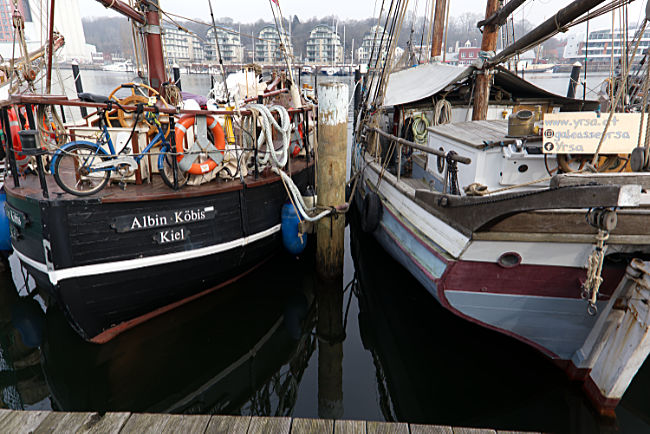
View of the harbor from the Museumwerft
A little further along, "The Flensburger Christophorus" stands in bronze since 2022. He carries a ship on his left shoulder as a symbol of the world.
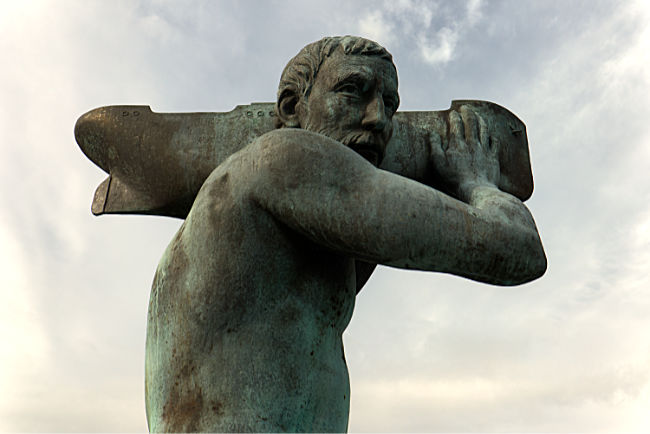
St. Christopher is, among other things, the patron saint of seafarers; the statue is a collaborative work by sculptor Claus Lindner and painter/illustrator Hans-Ruprecht Leiß.
Along the busy "Schiffbrücke" road along the harbor - level with the Skultur - the next turn is to the left at "Am Nordertor." It stands there, marking the entrance to Norderstraße.
Known in Danish as Nørreport, this gate of the old city fortifications was likely built between 1595 and 1596 and is today considered one of the city's landmarks. The coats of arms of Flensburg and the Danish King Christian IV are embedded into the facade. In the past, urban planners would have loved to tear it down - as many urban planners throughout history seem to enjoy doing by stripping cities of their historical insight and social empathy. Fortunately, someone intervened in time. Good thing.
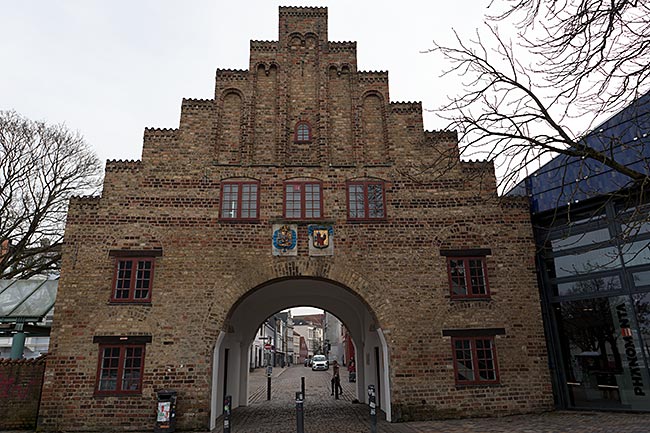
The Nordertor next to Phänomenta
Norderstraße stretches from the former city gate and eventually turns into Große Straße, leading through Holm and Südermarkt toward St. Nikolai Church. At the end of this stretch, a turn to the right and a second turn to the left lead onto "Rote Straße," which provides the perfect finishing touch to your tour of the inner city. But until you get there, as mentioned - it’s quite a walk. It is a path with plenty to discover if you take a closer look.
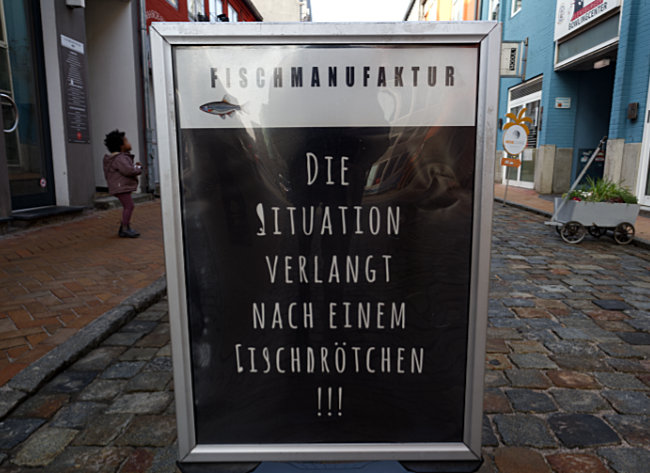
Sign in Rote Straße: The situation calls for a fish sandwich !!!
In the section of Norderstraße between the former gate and Neue Straße, you’ll find many alternative cafés, restaurants, and independent shops creating a unique atmosphere, as well as the aforementioned Oluf-Samson-Gang turnoff.
If you look up, you’ll discover numerous objects hanging high in the air - things that are usually located much further down, at the feet of humans: shoes. Many shoes, tied together in pairs by their laces.
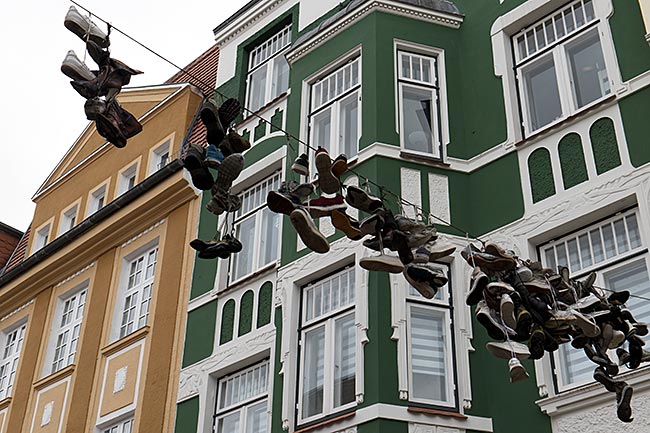
Hanging shoes in Norderstraße
In the narrow alleys of old towns (for example, in the Mediterranean), it is not uncommon to string clotheslines from one side of the street to the other between the upper floors of houses. However, this practice is often banned on tourist routes, at least during the day - to preserve the "scenic" cityscape ... Do you wash your shoes in the washing machine regularly? No? Neither do I.
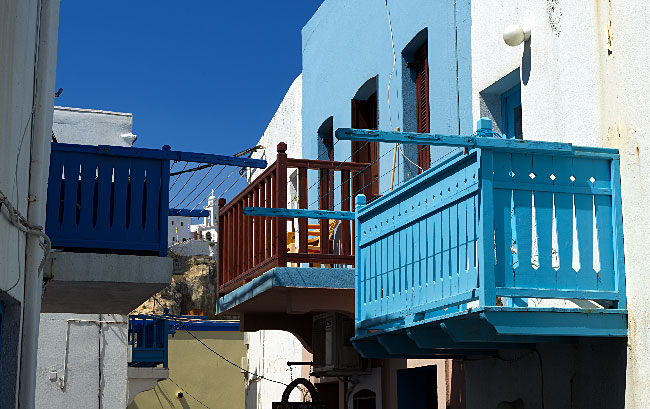
Once the day guests leave the island, laundry is hung out, but here it is done on individual balconies. A picture of a Greek volcanic island, Nisyros
Here, hundreds of worn-out "beaters" hang and have become a well-known attraction across the region. Numerous legends surround this quirk, which has existed in Flensburg since 2007. Followers have appeared elsewhere as well, and because every child needs a name, it is now known as "Shoefiti."
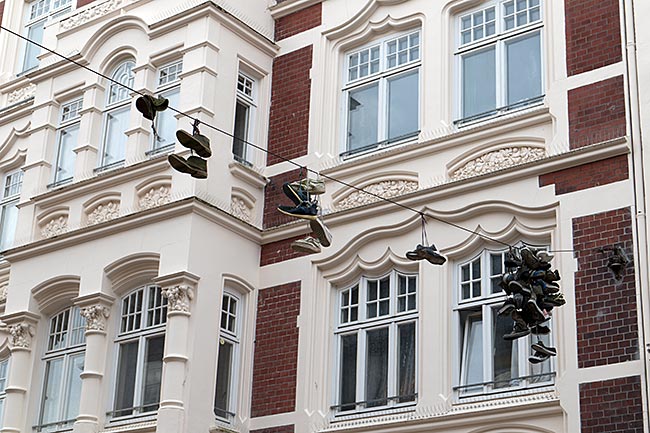
The shoes hang from the supports of the dismantled overhead lines of the defunct tram
"The best thing about the North is our tolerance." This likely explains how, following the first pair of shoes, many more followed suit by hanging from city property - specifically, the remaining support systems for the power supply of Flensburg’s discontinued tram. So: no "mold-growers under current," but perhaps the throwing technique will one day become an Olympic sport ...
After these rather amusing scenes in the harbor district, crossing Neue Straße brings a mix of history and commerce that is quite interesting.
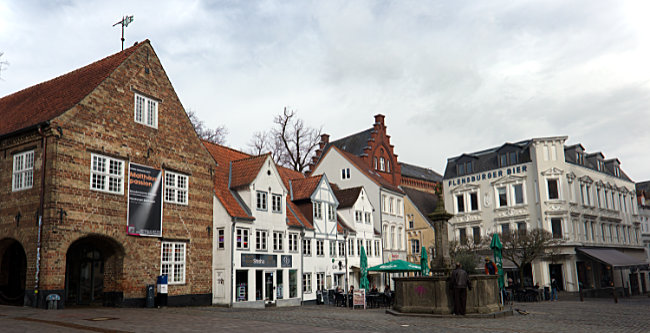
Nordermarkt
The Nordermarkt is one of Flensburg’s oldest marketplaces. In the Middle Ages, trade was far less decentralized and diversified than it is today; merchants often owned the ships that carried their cargo and were frequently on board during their trading voyages. Aside from the unpredictable forces of nature, many dangers lurked - posed by pirates or war-profiteers who were rarely friendly toward neighbors.
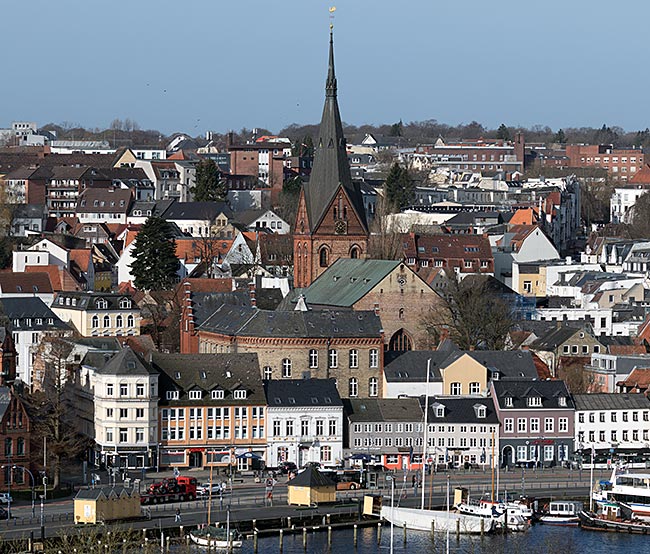
View of St. Marien Church in Norderstraße from the Captain's Quarter
In the St. Marien Church, originally built in 1284, people of that era found a place for their fears and hoped for divine support. The parish church - part of the European Route of Brick Gothiced Architecture like many other buildings in Flensburg - was renovated, expanded, and redesigned several times between the 16th and 20th centuries. In addition to the pulpit, the main altar, and the bronze baptismal font from the Renaissance period (16th century), the epitaph of Georg Beyer from 1591 is a must-see; it features the oldest painted view of the city, showing the harbor and various types of ships.


Map
More impressions
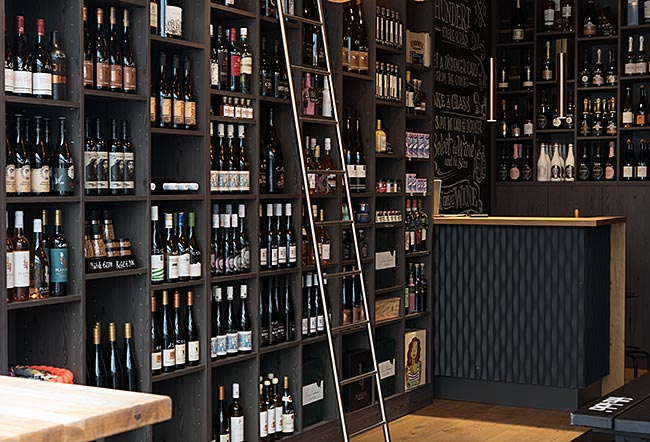
Weinhundert - Store & Bar on Rote Straße
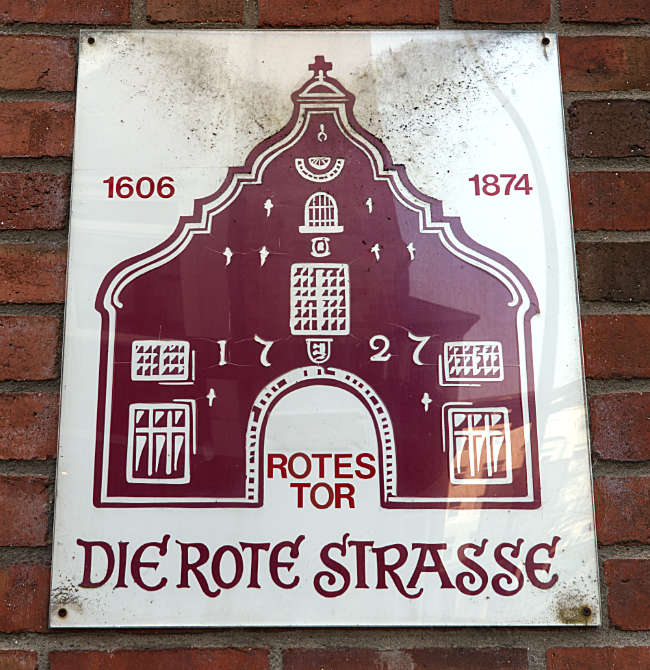
... only the red gate no longer stands
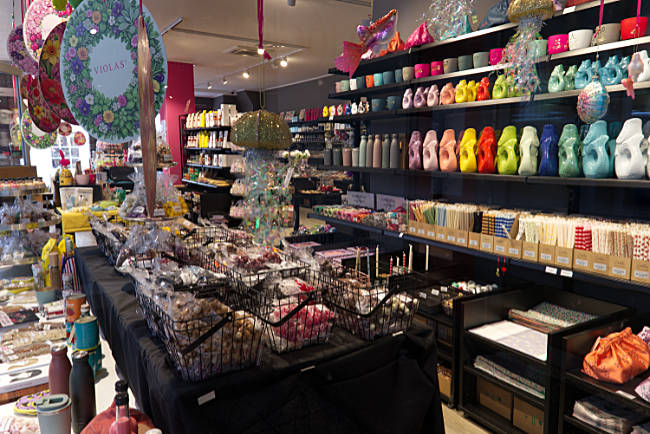
Tasteful selection
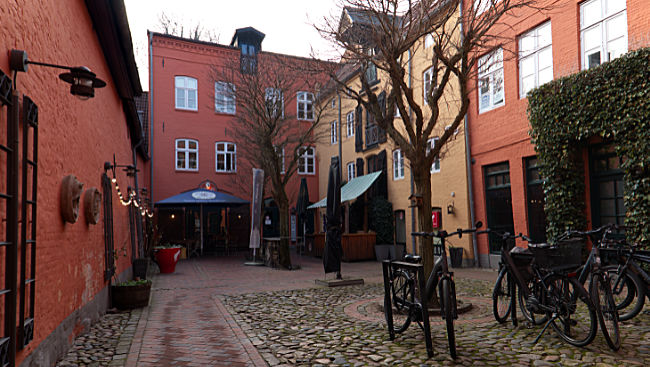
Courtyard with dining options
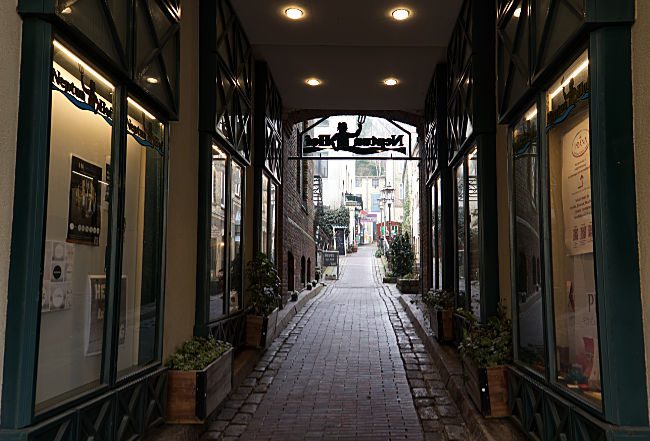
Entrance to Neptun-Hof at Nordermarkt
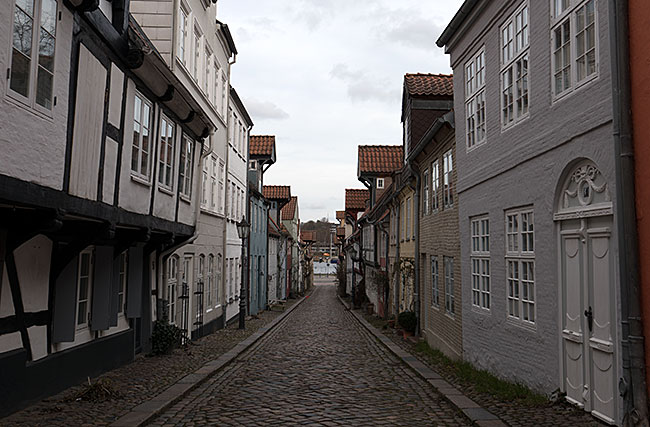
Oluf-Samson-Gang between Norderstraße and the Museum Harbor
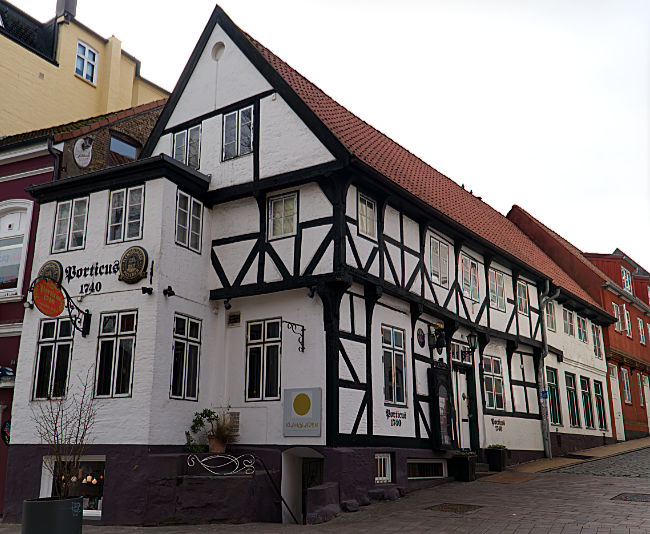
Historic building from the 18th century opposite St. Marien Church
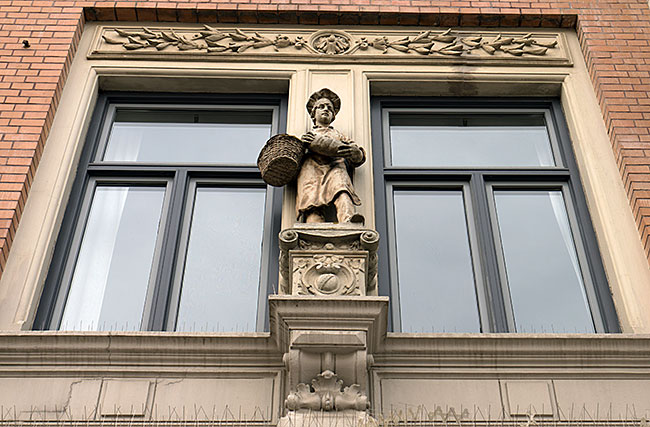
Window
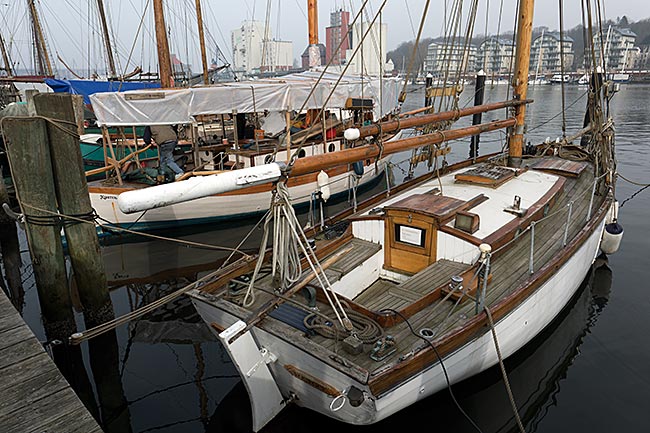
At the museum shipyard
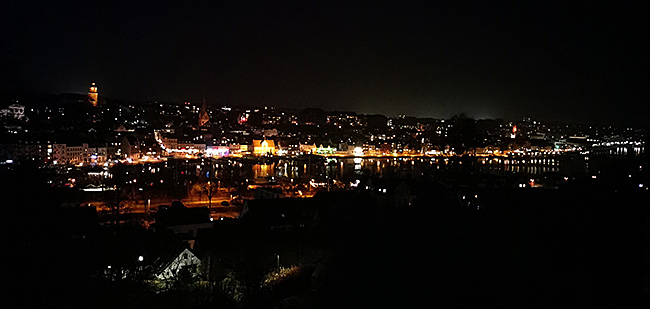
Night view of the historic harbor from the Captain’s Quarter
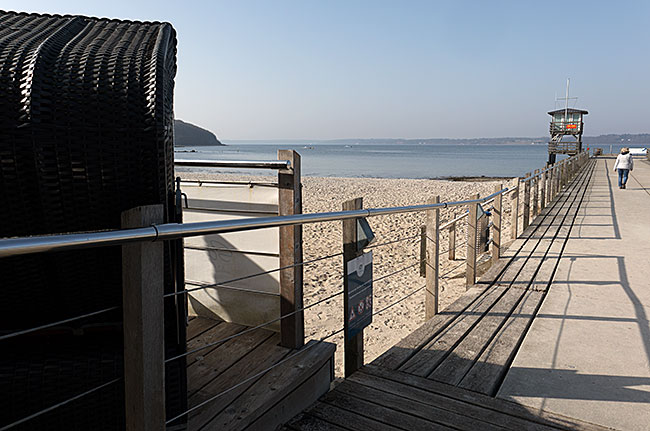
The pier in Glücksburg
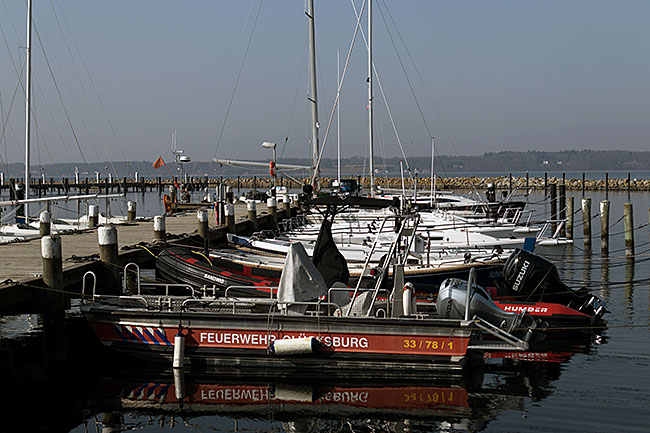
Marina in Glücksburg
In the Probstei in late summer
Schönberger Strand and sea and more
Can you walk or ride a bike from Brasilien (Brazil) to Kalifornien (California) in just a few minutes, always with a view of the water? No, not with your finger on the globe or map, but in person. You’ll have to forgo Copacabana and the Sunset Strip with the Angels in Los Angeles (Spanish for "The Angels"). Instead, you get Germany’s "True North" with all its bright sides. Of course, there are sometimes shadows here too, but they belong only on the margins of this story.
read more about Schönberger Strand ...