

DISTANT PLACES
Travel tips for destinations far from the Hanseatic City of Bremen
Flensburg on the Baltic Sea
On the Förde at the border to Denmark
Page 2 / 6
Around the Historic Harbor
The areas surrounding the Flensburger Förde were settled as early as the mid-12th century. The rapid growth of these settlements into a town was solidified in 1284 with the granting of city rights by the Danish King, later confirmed by the Duke of Schleswig. This original document still exists today. Today, the cultural ties to Denmark remain visible: local bus lines connect Flensburg - historically the most important city in the duchy - with neighboring Danish towns; cars with Danish license plates are a common sight, and Danish flags fly frequently. Furthermore, the northernmost German state maintains a recognized Danish minority.
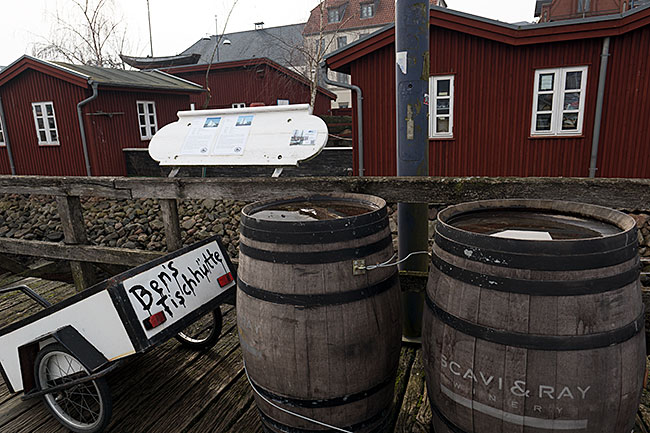
Even on overcast, rainy days, the signature "Scandinavian Red" brings a vibrant splash of color to the scenery
However, relations between the Danish Crown and its German neighbors were not always harmonious. The Danish-Prussian War of 1864 ended the struggle over the duchies of Schleswig and Holstein in favor of the Prussian-Austrian coalition. This alliance fractured shortly thereafter, leading to the 1866 war between Prussia and the German Confederation led by Austria. Following Prussia’s victory and the establishment of the German Empire under Prussian leadership, Schleswig-Holstein became part of Germany.
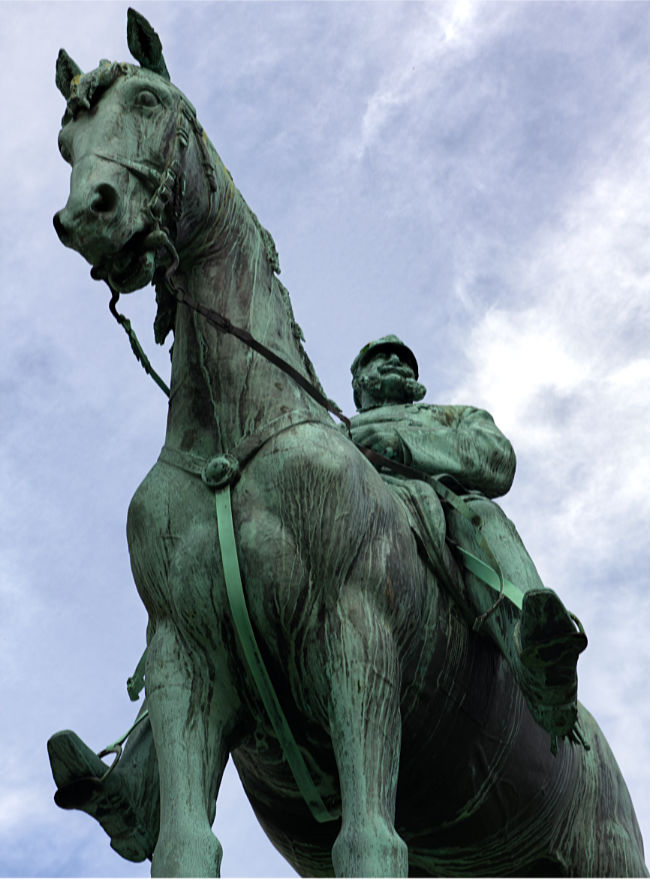
Monument to Kaiser Wilhelm I in Kiel; inscription on the base: "To Wilhelm the First. The liberated Schleswig-Holstein." At that time, he was still King of Prussia; he only became Emperor in 1871
Returning to the harbor: because the path from the inner-city harbor to the open Baltic Sea is quite long, the area served as a relatively safe haven for ships. It became a bustling center of commerce and remained a sought-after trading post even after the powerful Hanseatic League - of which Flensburg was never a member - largely pulled back from trade. Along with herring, common goods included blubber (from the lucrative whaling industry off Greenland) and sugar. While wars like the Thirty Years' War in the 17th century devastated many trading structures and caused immense loss of life, the port’s importance endured.
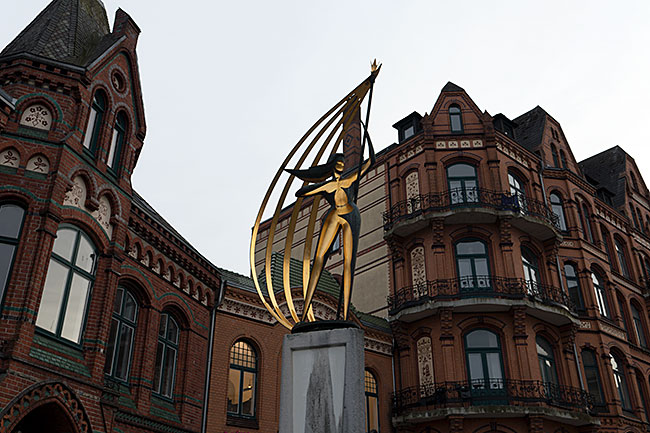
“Windsbraut” by Hermann Menzel (1972) set against a building from 1883 at Alten Schiffbrückplatz
The city on the Förde and its harbor experienced another economic boom in the 18th century, driven by the rum trade. The entrepreneurs in Flensburg were primarily traders rather than producers; they imported and blended rum for local consumption. Although the sourcing of these ingredients shifted after the shift in power in 1864 (see above), the fact remained that this trade was anything but fair. Many raw materials, such as the sugarcane refined in the city, were produced through exploitation and slave labor.
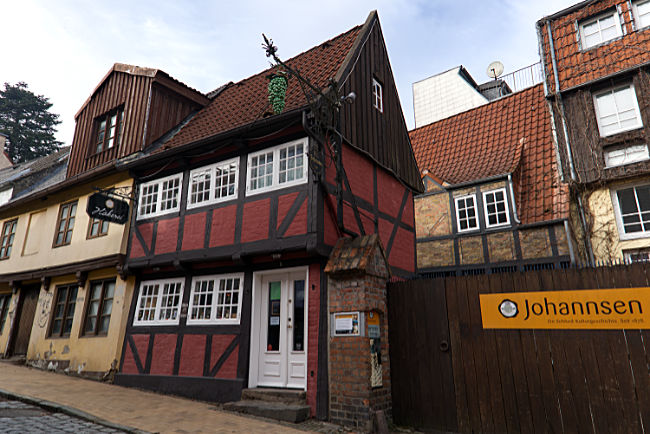
Rum Tradition: A. H. Johannsen on Marienstraße
Even today, rum remains a central theme in the city - notably in the "Rote Straße" (Red Street), where the tradition lives on through modern, ethical trading. For those seeking more maritime history, the Maritime Museum located directly at the harbor is a must-visit.
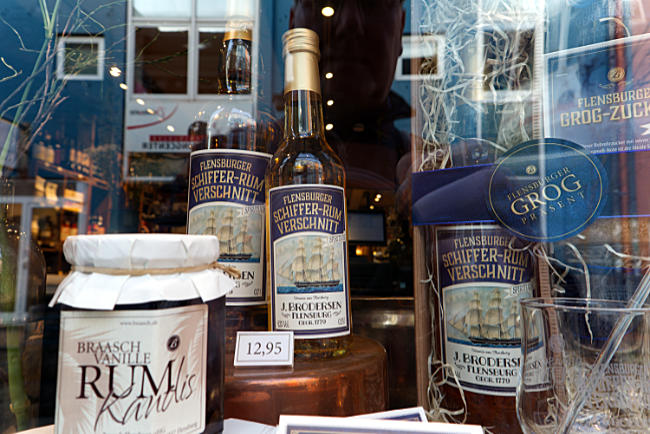
Products on display at Wein & Rumhaus Braasch in Roter Straße
On the western side of the harbor, you will find several historic buildings that survived the Second World War largely intact. Among these is the "Kompagnietor," built in 1602, which ranks among the city’s oldest secular buildings. Beside flood marks from Baltic storms in 1694, 1835, and 1872, the façade of the former assembly house for local sailors features colorful coats of arms. One is the city's coat of arms with the inscription (translated): "To be just and moderate at all times, with God’s help, brings great profit." Above it are the coats of arms of Christian IV (King of Denmark and Norway, 1588–1648) with his motto "Ragna firmat pietas" (Piety strengthens the realm), and his wife Anna Katharina of Brandenburg with the motto "Patientia vincit omnia" (Patience conquers all).
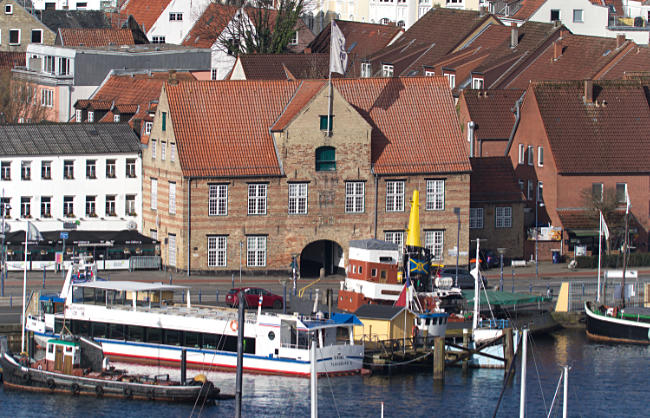
View of the Kompagnietor, built in 1602
Patience is also required during peak hours at Hansen’s Brewery, nestled within historic walls. At the very least, you can claim to have enjoyed a beer in Germany's northernmost "Gasthaus" brewery.
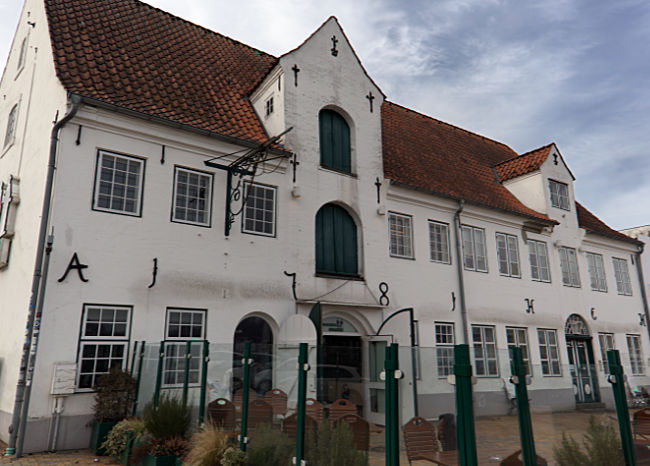
Hansen’s Brewery in historical surroundings
A true gem of urban history is the Oluf-Samson-Gang (alley). It is certainly worth seeing today; prior to a municipal renovation project in 2015, these small houses had seen better days. The cobblestone path is named after the merchant and shipping magnate Oluf Samson. He became a citizen in 1582 and gained access to properties in this lane through marriage. There, he built several houses to rent out to sailors - a fitting joke at the time was that "a shirt without pockets has no room for loot," as he had little wealth left of his own at the time of his death.
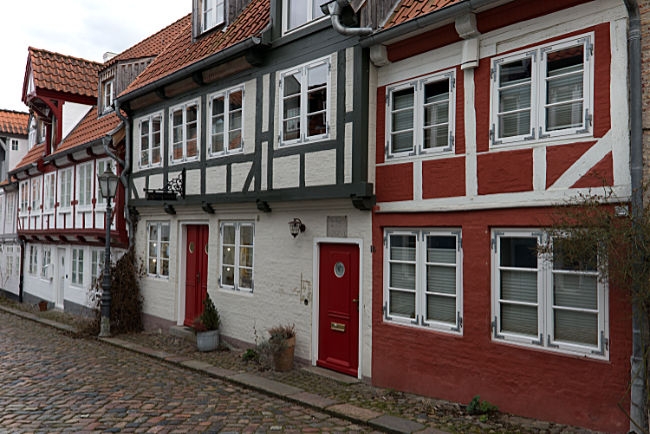
Several houses in Oluf-Samson-Gang; the middle one dates back to 1780
The current buildings are significantly newer, mostly dating from the 18th century. While they now present a charming and historic atmosphere, this lane was once the city's "red light district." Many windows feature signs with a nod to this history; for example, the widow Emma Buchholz was famously known for "selling coffee and condoms in packs of ten to the women."
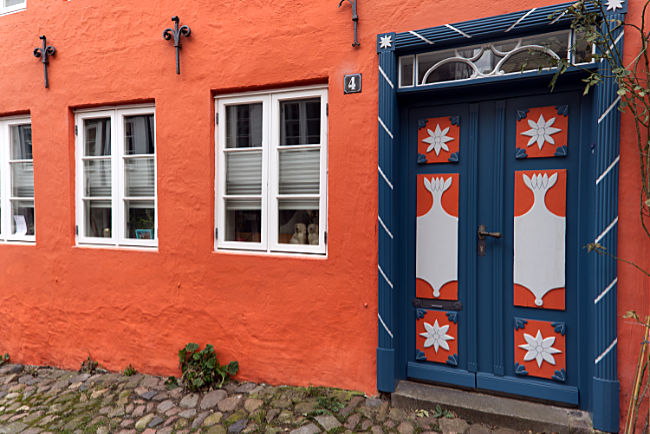
House in Oluf-Samson-Gang


Map
More impressions
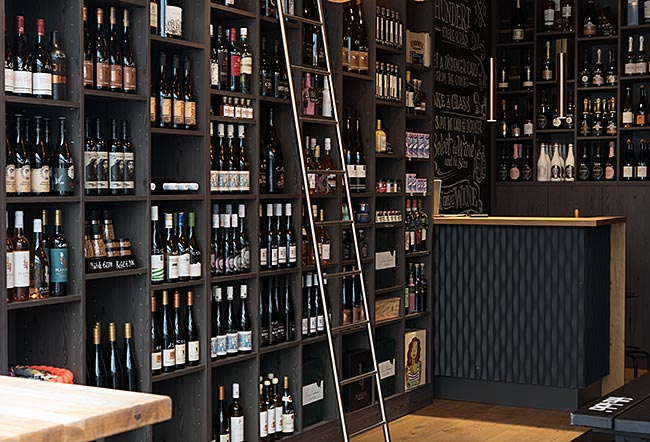
Weinhundert - Store & Bar on Rote Straße
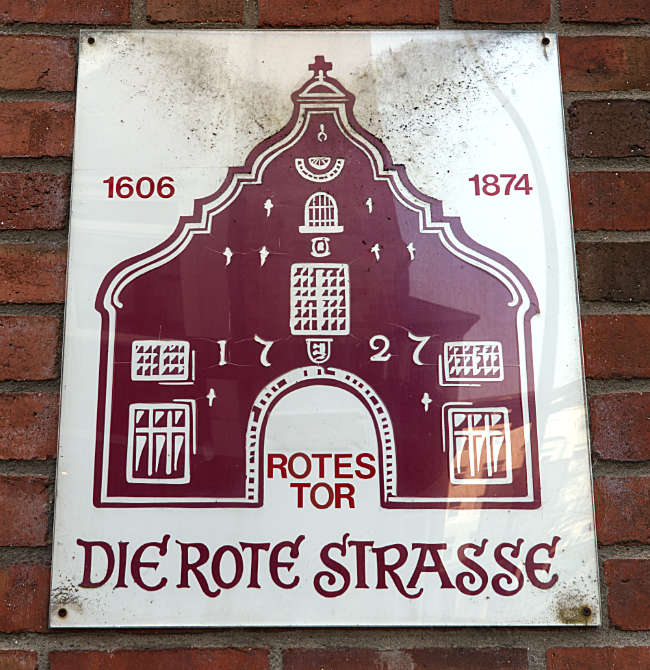
... only the red gate no longer stands
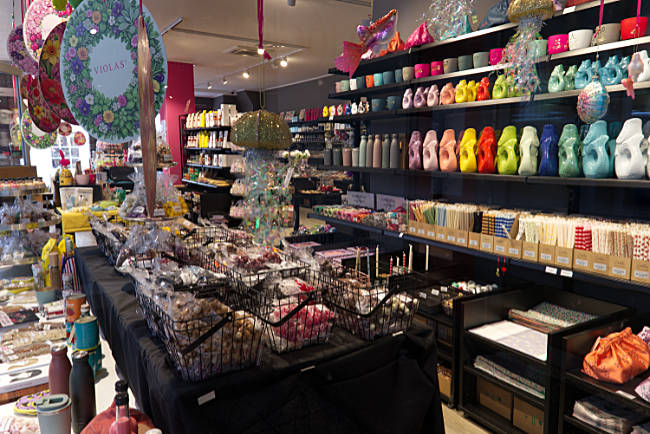
Tasteful selection
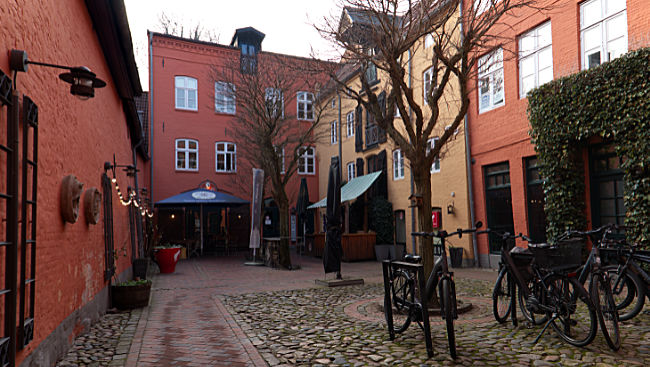
Courtyard with dining options
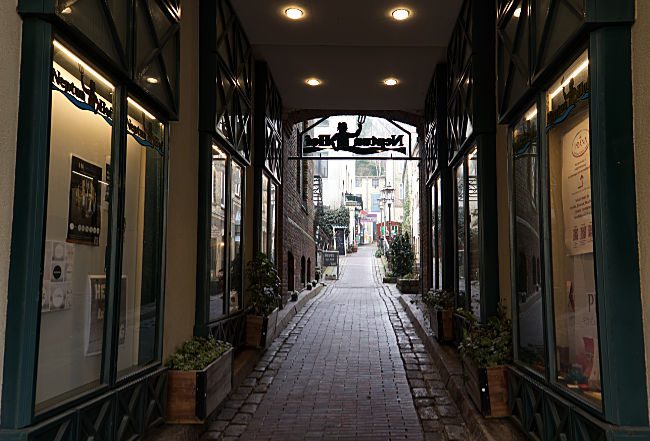
Entrance to Neptun-Hof at Nordermarkt
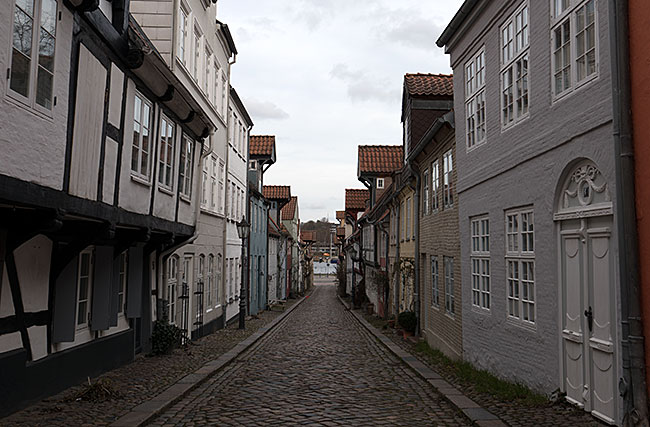
Oluf-Samson-Gang between Norderstraße and the Museum Harbor
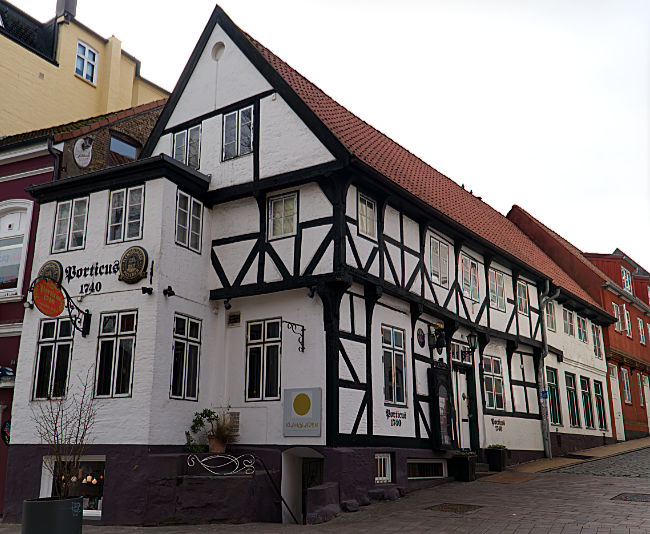
Historic building from the 18th century opposite St. Marien Church
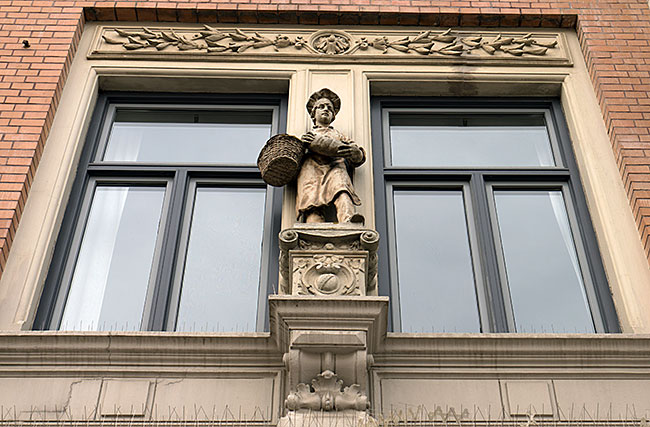
Window
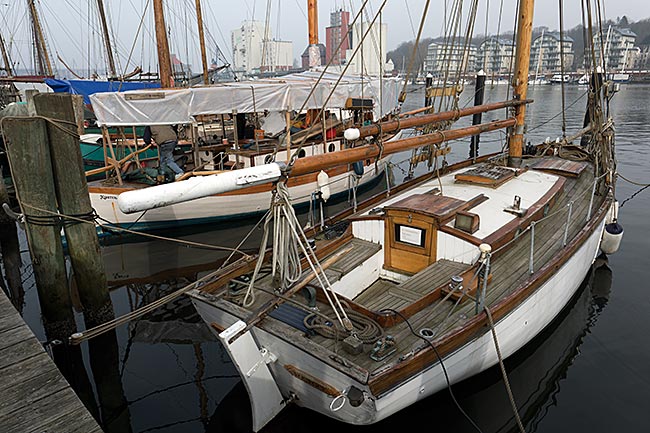
At the museum shipyard
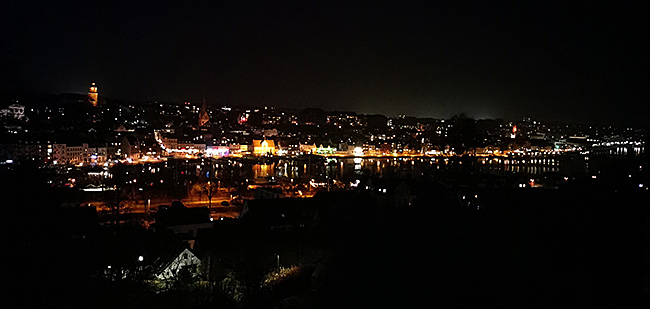
Night view of the historic harbor from the Captain’s Quarter
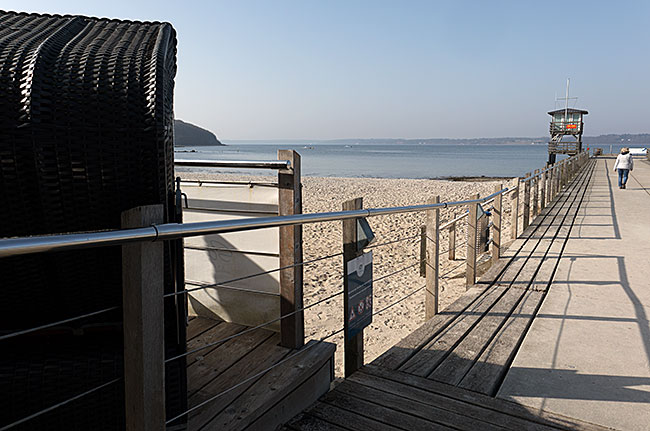
The pier in Glücksburg
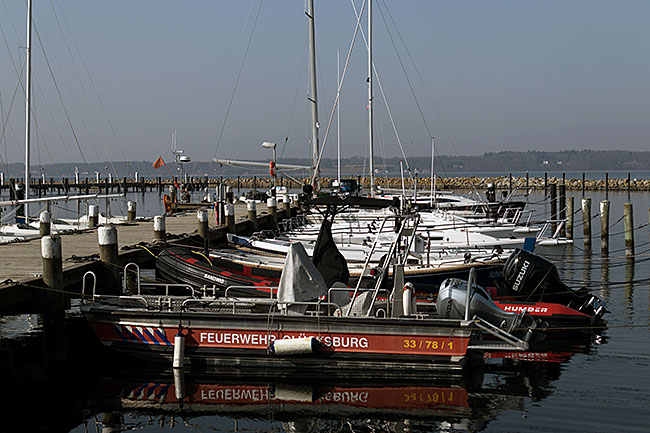
Marina in Glücksburg
Wismar
The Hanseatic City on the Baltic Sea and its UNESCO World Heritage
The World Heritage House is a building with a stone front house and an attached timber-framed Kemladen on a foundation of loose fieldstones from a medieval predecessor building. This beautifully restored small building complex visually illustrates and provides information via text panels about the lives of past generations in the hall houses typical for Wismar, along with their outbuildings. Additionally, there is extensive information about the city’s history and numerous protected buildings in the old town - there are 1,754 in total, with 306 designated as individual monuments. In the old town, one is right in the middle of Wismar’s UNESCO World Heritage Site.
read more about Wismar ...