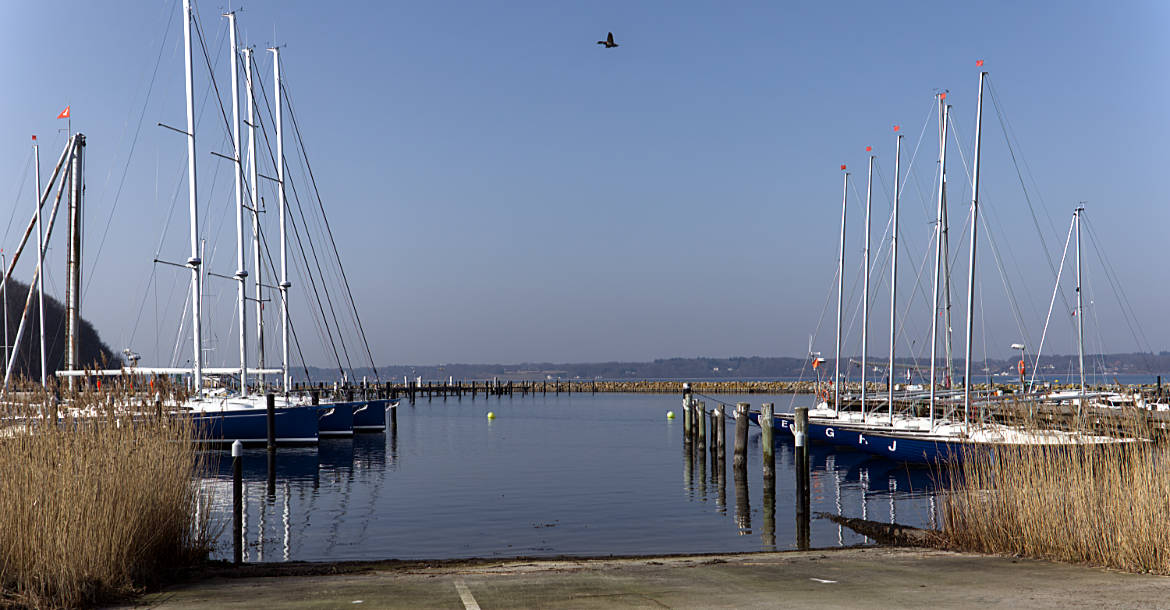


DISTANT PLACES
Travel tips for destinations far from the Hanseatic City of Bremen
Flensburg on the Baltic Sea
On the Förde at the border to Denmark
Page 5 / 6
By bus along the bay to Glücksburg
No beach at the Baltic Sea? While it is understandable that the shorelines of this historic harbor are reinforced, those looking to lounge on the sand and take a dip in the water will need to leave Flensburg for the outskirts. This journey is easy and swift by bus, which serves both the east and west banks of the Förde (the bay). One convenient boarding point is the well-equipped central bus station (ZOB), located not far from the harbor head.
The Dynamics of the Sea: Ballast Water
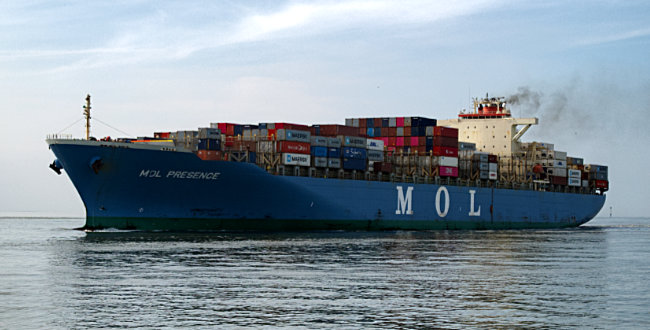
Today’s freighters transport massive amounts of cargo, requiring them to take in "ballast water" during unloading and pump it out when loading.
As we travel along the east bank on bus lines 21 or 22 toward Glücksburg, the route passes by the "Ballastkai" - a path directly along the water's edge next to the busy main road (Ballastbrücke). While large industrial installations are no longer visible near the dining establishments today, this area was once vital for maritime trade. Ships used these docks to take on ballast water to maintain stability when not fully loaded. Even today, ships use sophisticated tank systems, but the challenge remains global: ballast water can carry pathogens (like cholera) or "unwilling passengers" - small fish, crabs, and jellyfish - that can become invasive species and disrupt local ecosystems when released in new territories. International agreements now require these waters to be exchanged on the high seas or treated before they are pumped out.

Animals, like these little fish, usually have a natural habitat
A Fortress of History: The Mürwik Naval School
The bus route also passes through a military restricted zone. Since 1910, the Navy has been training officers at the Marine-Schule Mürwik in the same-named district of Flensburg. Originally for the Imperial Navy, then the War Navy, and today for the German Navy, this complex is affectionately known by locals as "the red castle on the sea." Built in 1906 for Kaiser Wilhelm II, its red brick construction, stepped gables, and Gothic influences give it the majestic air of a former manor. The sheer scale is emphasized by a massive square tower standing 60 meters high. Its striking resemblance to the 13th-century Ordensburg Marienburg in Poland was no coincidence.
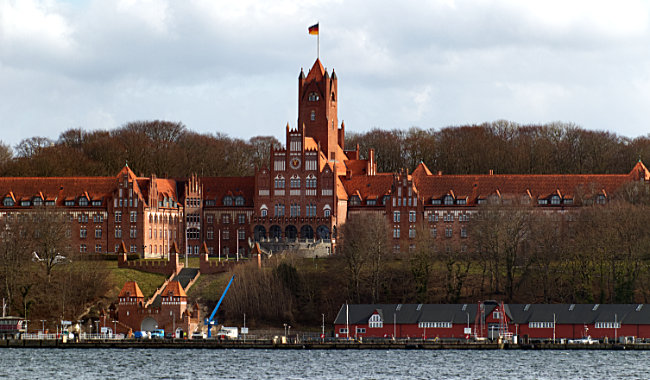
View of the Naval School Mürwik from the Baltic Sea resort on the opposite side of the inlet
Today, the flag of the Federal Republic flies atop the tower in the Baltic breeze - a stark contrast to 1945. In those final days, Grand Admiral Dönitz and his command took refuge here as a "last bastion." On May 8th, the war ended nearby. Dönitz was among the 24 defendants in the Nuremberg trials; many of the U-boat sailors he sent into battle did not share such a fate - 30,000 out of 40,000 never returned. Many of the civilians on the ships they sank were also lost.
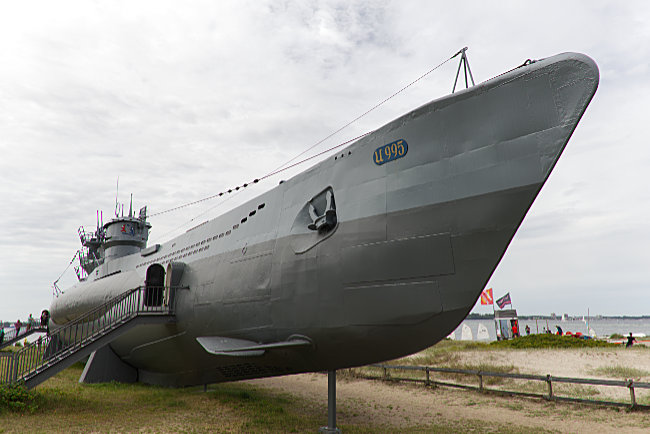
Memories of Wolfgang Emmerich's film "Das Boot" are awakened: A World War II submarine serves as an attraction for visitors in Laboe
Finding your "Glück" (happiness & luck)
Glück. A short word that can inspire us to build castles in the air or remind us of how small and precious luck can feel in reality. Have you found your Glück in Glücksburg - or have you already found it?
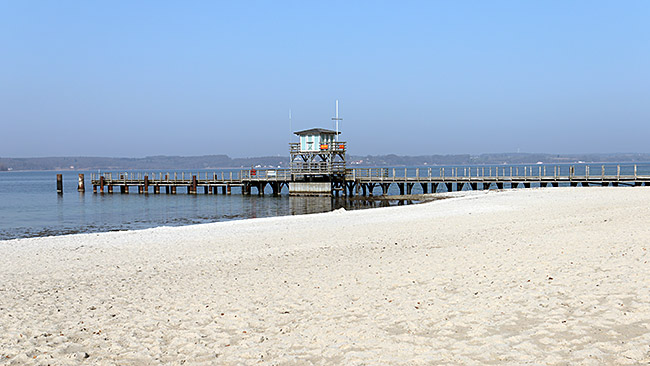
Beach in Glücksburg
For those seeking a beach, they will find exactly what they are looking for in Glücksburg. The coastal stretch is clear and easy to navigate - a relief for families with small children or those who prefer shorter strolls by the water. If you stay at the Strandhotel, which sits almost directly in line with the small pier, the water is just a few steps away.
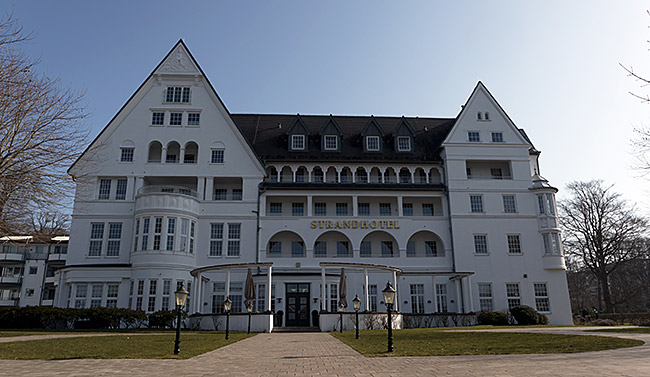
Beach Hotel in Glücksburg
The Castle of the Waters
But what about the castle? It is actually a "Wasserschloss" - a moated castle - and is considered one of the most significant Renaissance castles in Northern Europe. Its history dates back to 1582, when it was built as a country estate. Over the centuries, it hosted Danish kings and dukes, Prussian officials, a German Emperor, and even Albert Speer. The high-ranking official was taken into custody here on May 23, 1945, before serving his sentence in Nuremberg.
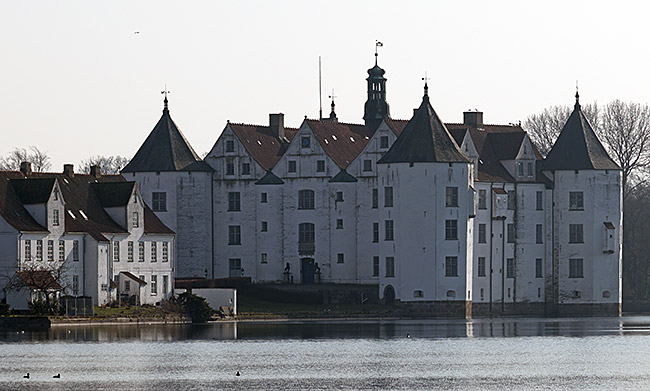
The water castle in the hazy backlight of a spring afternoon
The ornate interior of the castle stands in stunning contrast to its weathered exterior, which bears the marks of constant contact with the water. The entire complex is a must-see and a favorite for photography; visitors are encouraged to explore the museum inside. For those who enjoy a walk, a well-marked path through a small woodland stretch connects the beach directly to the castle grounds.
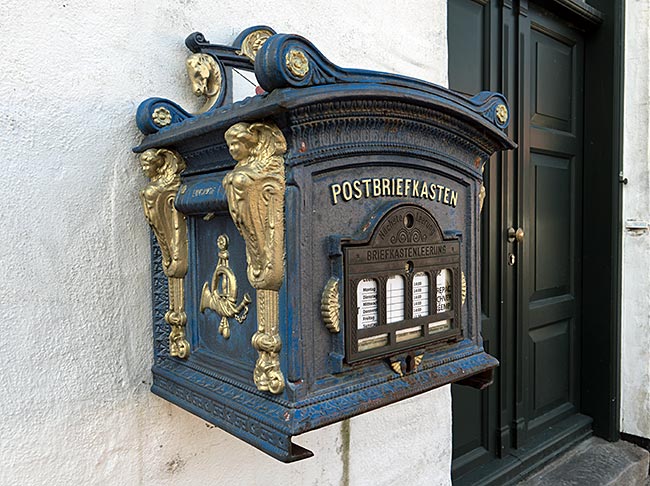
And when did you last write a letter by hand?


Map
More impressions
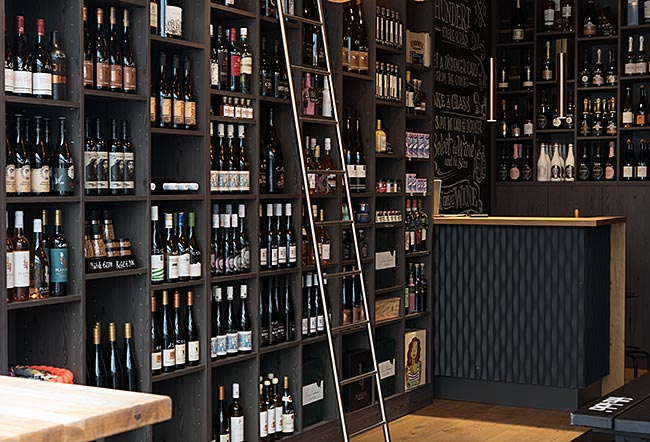
Weinhundert - Store & Bar on Rote Straße
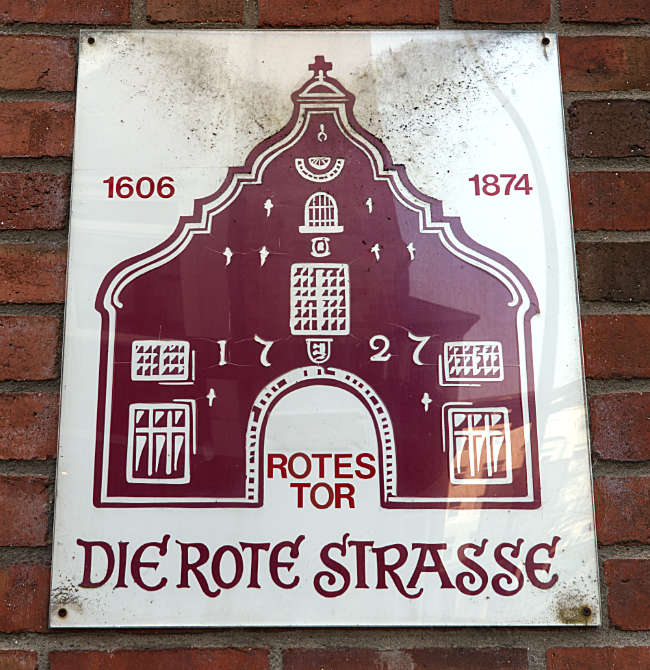
... only the red gate no longer stands
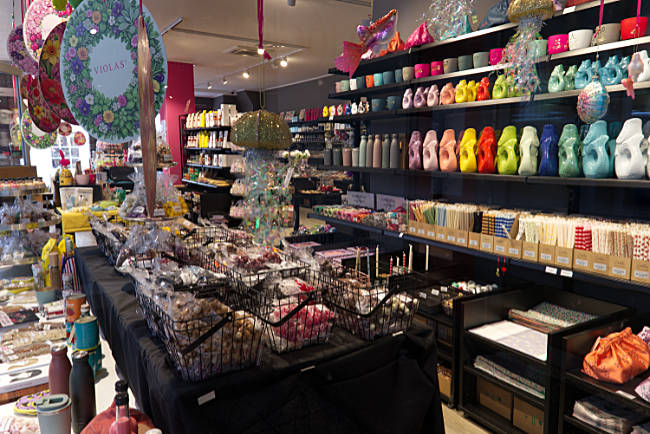
Tasteful selection
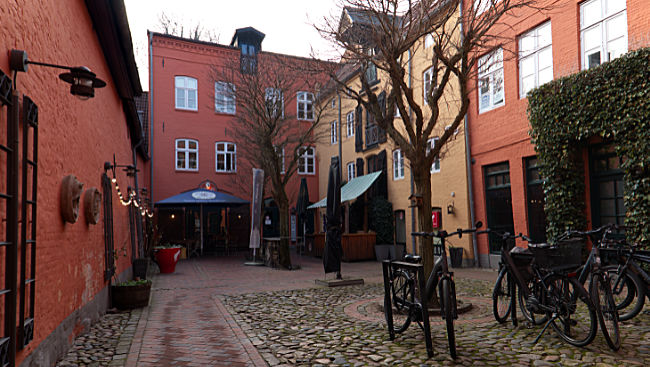
Courtyard with dining options
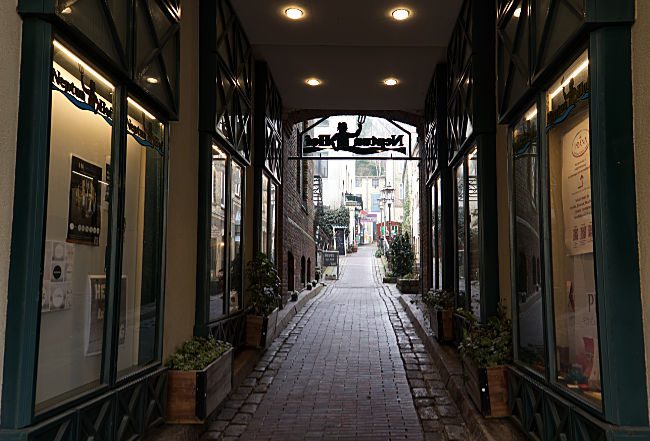
Entrance to Neptun-Hof at Nordermarkt
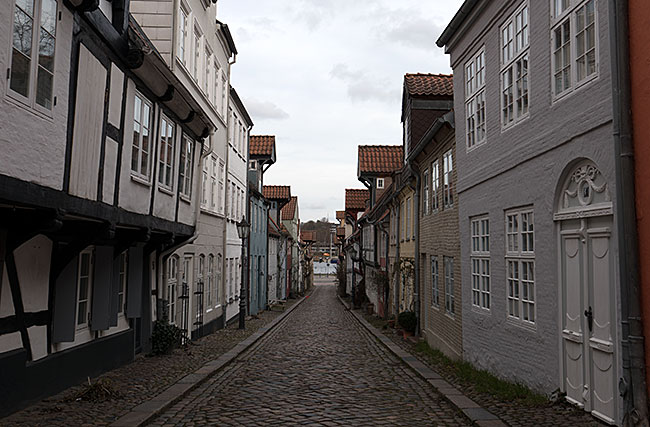
Oluf-Samson-Gang between Norderstraße and the Museum Harbor
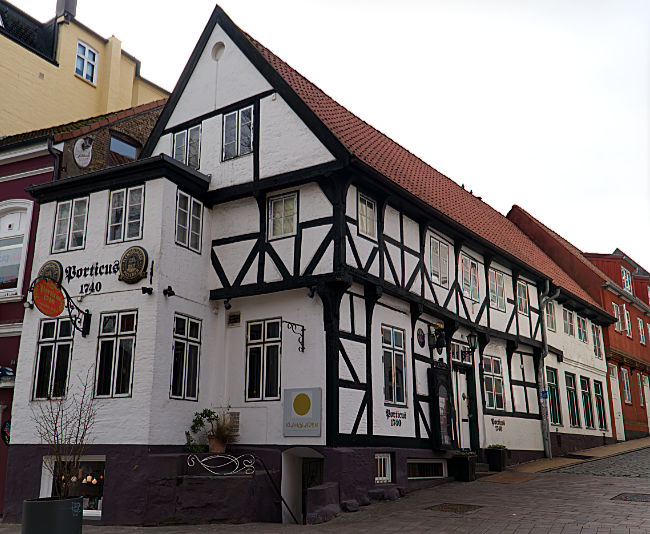
Historic building from the 18th century opposite St. Marien Church
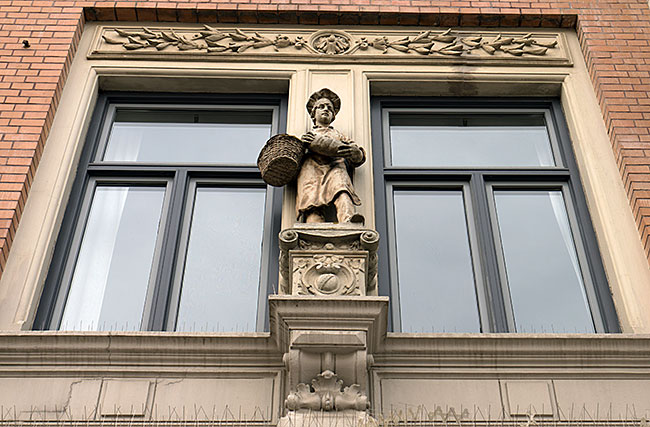
Window
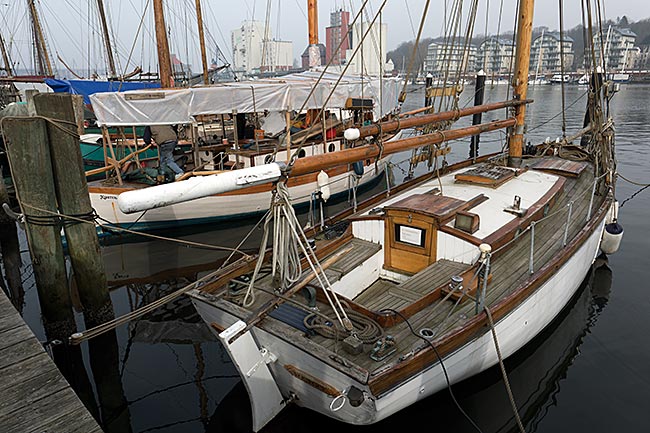
At the museum shipyard
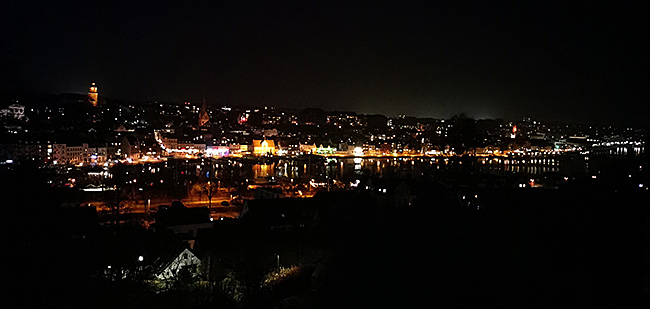
Night view of the historic harbor from the Captain’s Quarter
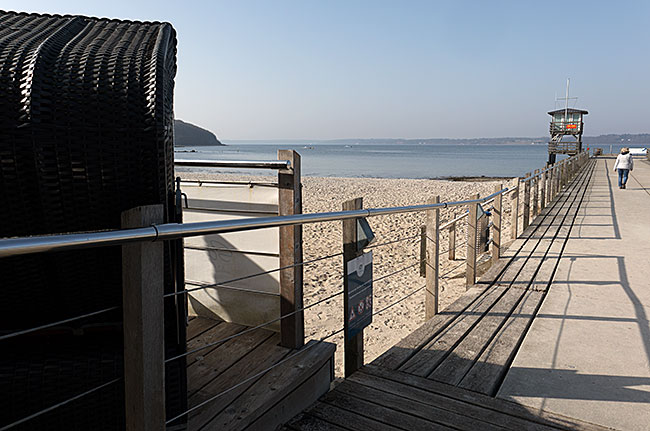
The pier in Glücksburg