

DISTANT PLACES
Travel tips for destinations far from the Hanseatic City of Bremen
Flensburg on the Baltic Sea
On the Förde at the border to Denmark
Page 6 / 6
To the border on bus line 7
What is written on the other pages belongs to the history of Flensburg and, further, to the history of Germany and Europe. As an author and cultural scholar, did I strictly have to include all of it? Not necessarily - but perhaps it helps clarify why a border crossing in the past was not as taken for granted as the one today between Schleswig-Holstein and Denmark, which at certain points goes almost unnoticed. It is quite comforting.
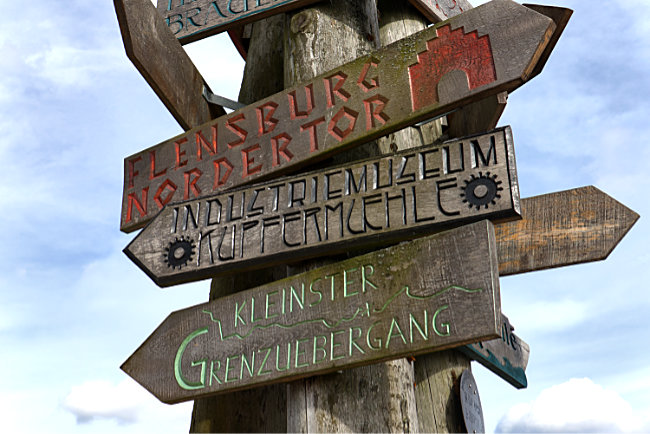
Signposts among others to the German-Danish Border
Come, let’s take a ride on Bus Line 7. All the way to the border? No, we go to the border and then beyond it. The bus crosses at the Kupfermühle crossing toward Krusau in Denmark. Europe!
Ostseebad
In fact, we got off the bus a few stops before the border, at the "Am Lachsbach" stop. There, a path leads through a wooded area extending to Wassersleben toward Ostseebad. At the foot of the high bank in Ostseebad, the aforementioned Lachsbach flows as a small, channeled stream into the Förde (a bay in the Baltic Sea) in an unremarkable fashion.
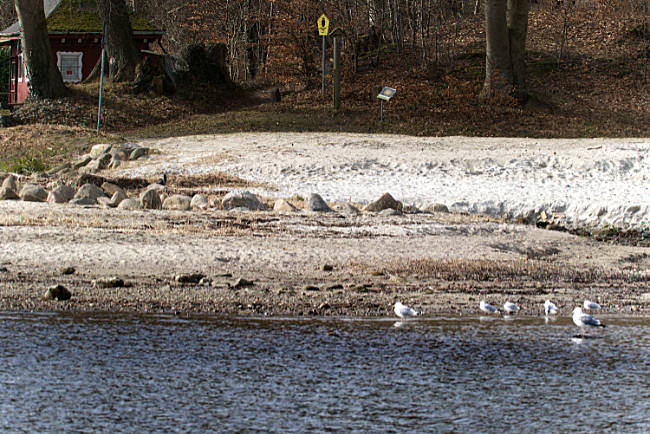
Stretch of beach next to the mouth of the Lachsbach in Ostseebad; behind it, a small forest extends across the steep slope/high bank
Largely shielded from road traffic, Ostseebad is a meeting point on the Förde where swimming is possible. A small sandy beach with an adjacent playground, kiosk, and restrooms make this little spot a place for relaxing hours by the water. The central structure is a pier bridge with a changing cabin on the platform at its end. From here, the view reaches not only across the Förde to the aforementioned Marine School - with its former water tower whose tip rises just above the treetops - but all the way to the Danish coast.
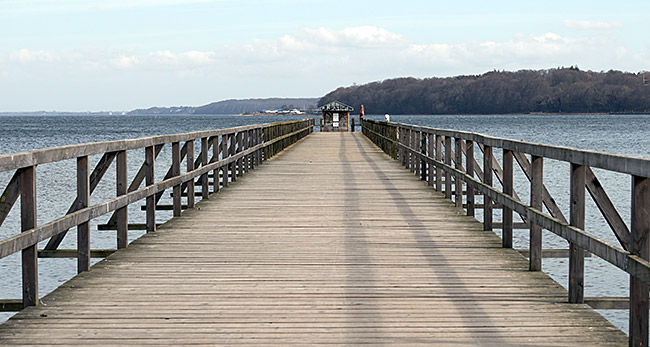
Pier bridge with a changing cabin
Not far away stands the shipbuilding hall of the Flensburger Schiffbau-Gesellschaft (FSG), founded in 1872, which has operated as FSG Shipyard GmbH and FSG Design GmbH since its takeover in 2025. Shipbuilding in Germany has been a difficult business for a long time; nonetheless, there is hope in Flensburg for the continuation of the tradition.
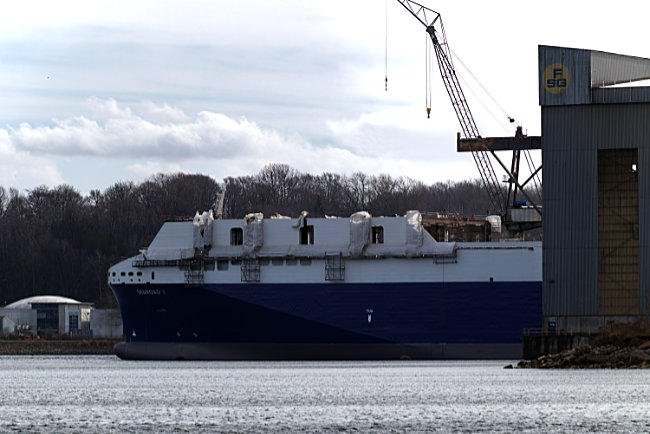
The 210-meter-long cargo ferry "SEAROAD I," powered by LNG for the Australian shipping company Searoad, was launched off the slipway in early November 2025
From Ostseebad, one can walk directly along the water toward Wassersleben; however, during the warmer seasons, one is by no means alone on this well-developed path. Several regional and supra-regional cycling routes, such as the "Ostsee Küsten-Radweg" (Baltic Coast Cycle Path), include this stretch as part of their routes.
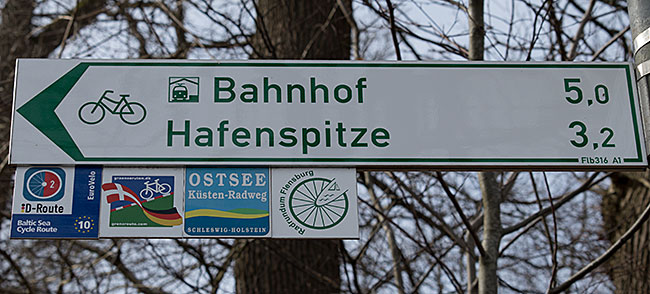
Signpost
Wassersleben
The small village of Wassersleben exudes a bit of the atmosphere of a Scandinavian holiday resort on the Baltic Sea, which - by the way - reaches its westernmost point here. Well, it isn't exactly far from the beach to Scandinavia anymore. An unmistakable signpost indicates the direction toward the "smallest border crossing."
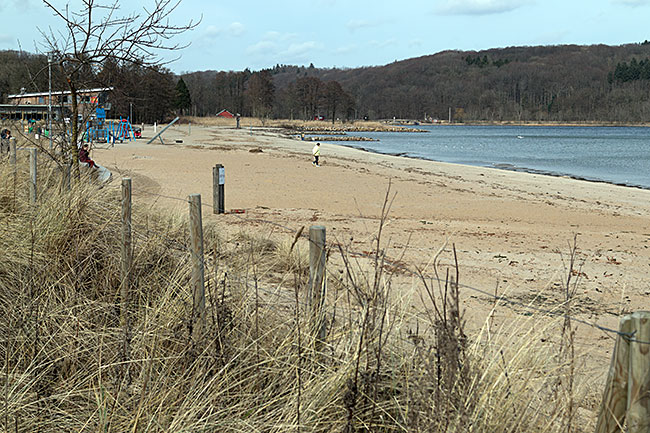
Beach in Wassersleben
"Auf Wiedersehen. På gensyn," reads a sign by the municipality of Harrislee on a gravel path, followed by a wooden bridge and a stone. A border stone? Yes, one dated 15.6.1920. After the end of the Imperial era during the Weimar Republic, North Schleswig was returned to Denmark following a referendum in 1920 after 56 years. The border stone at the Schusterkate crossing is the first of a total of 280 stones and posts along the German-Danish border. The name Schusterkate comes from the house that is the first thing visible on the Danish side after crossing the border.
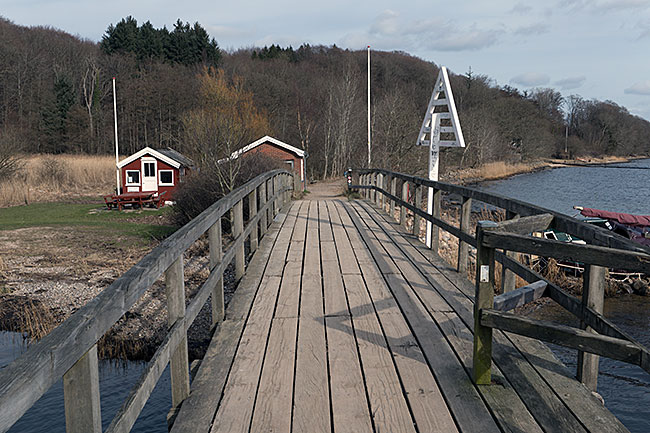
Border crossing to Denmark
During the Nazi dictatorship, 41 men of the 337-strong Danish border gendarmerie died here; they also served in this area and performed their daily patrols along the so-called "Gendarmenstieg" (Gendarme Path). Since the Schengen Agreement of 2001, the border is no longer monitored here.
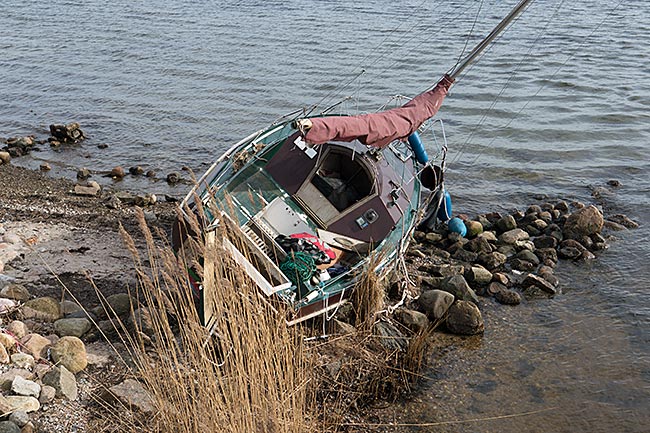
Shipwreck on the Danish shore
The Gendarmenpfad is today part of a hiking trail in the Kollunder Forest nature reserve on the Danish side. A large area of the forest belonged to the city of Flensburg from 1879 to 2006, which acquired the area as a local recreation zone for its population. Current management intentionally intervenes very little in the development of the deciduous forest.
previous page
 next page
Map
More impressions
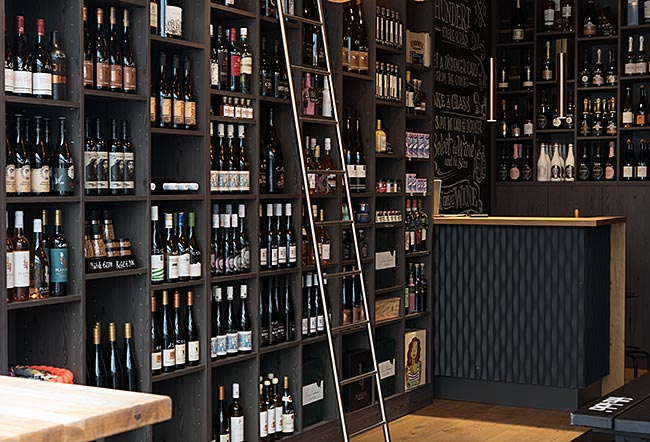
Weinhundert - Store & Bar on Rote Straße
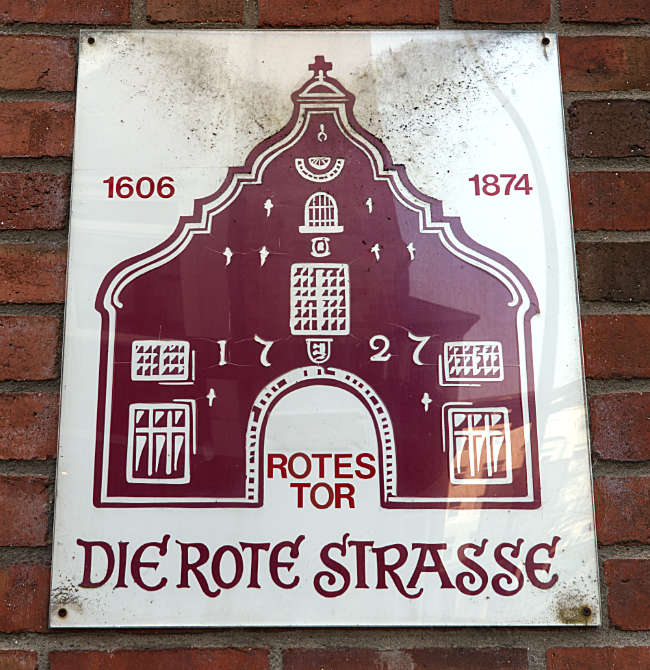
... only the red gate no longer stands
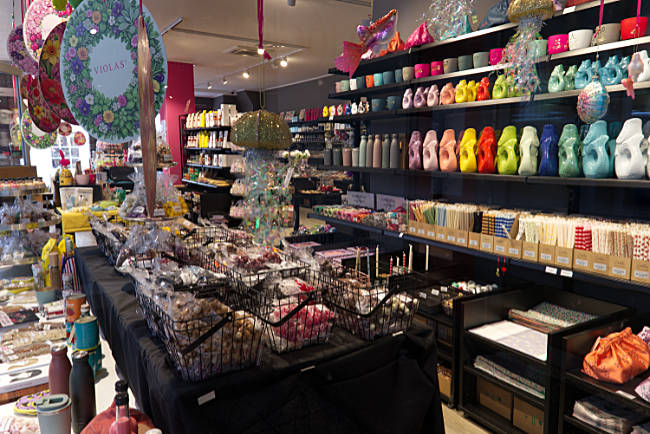
Tasteful selection
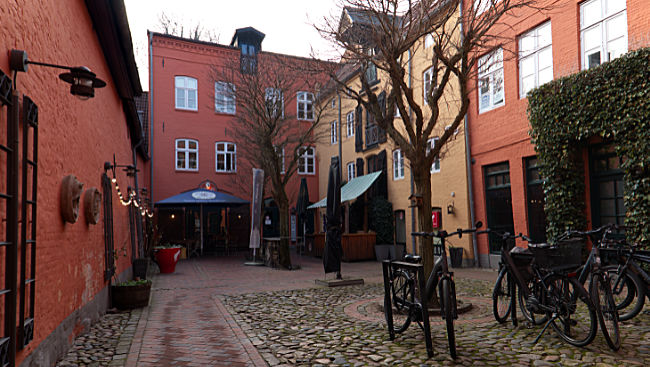
Courtyard with dining options
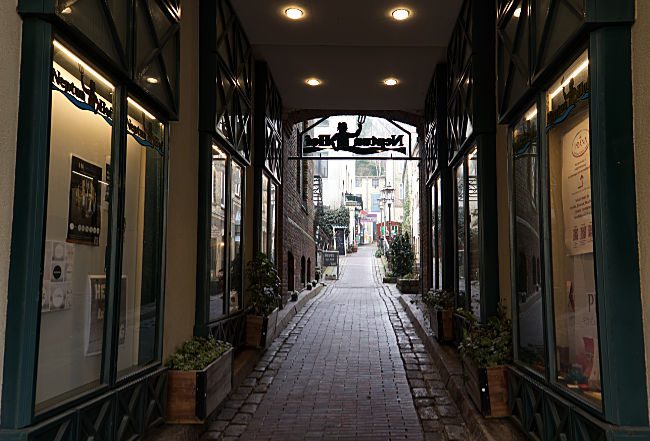
Entrance to Neptun-Hof at Nordermarkt
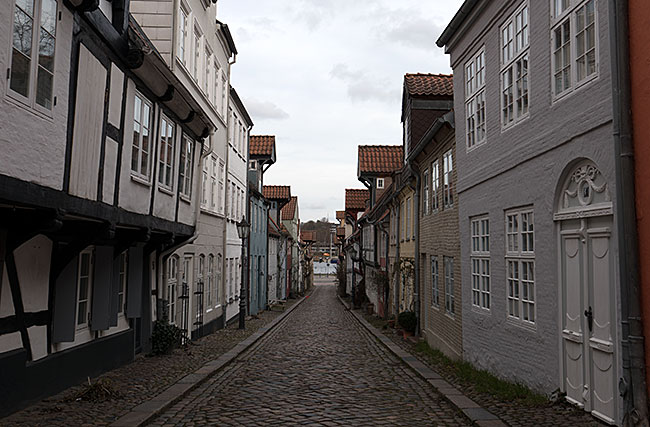
Oluf-Samson-Gang between Norderstraße and the Museum Harbor
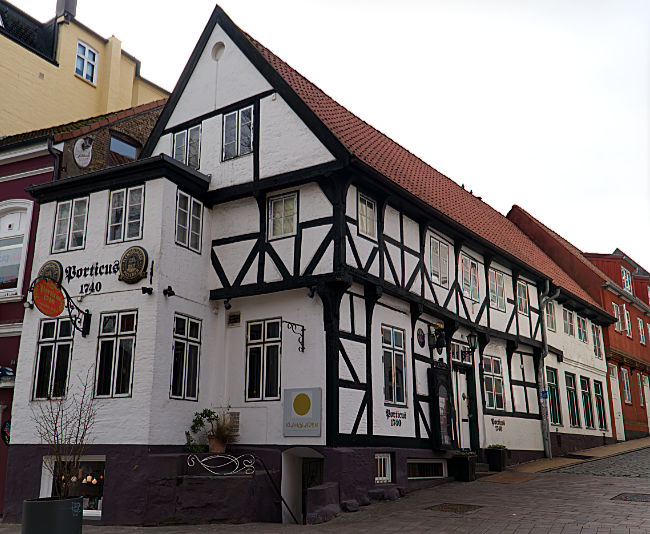
Historic building from the 18th century opposite St. Marien Church
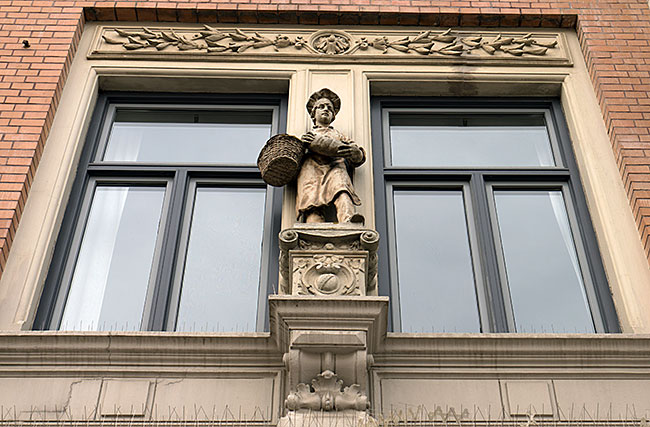
Window
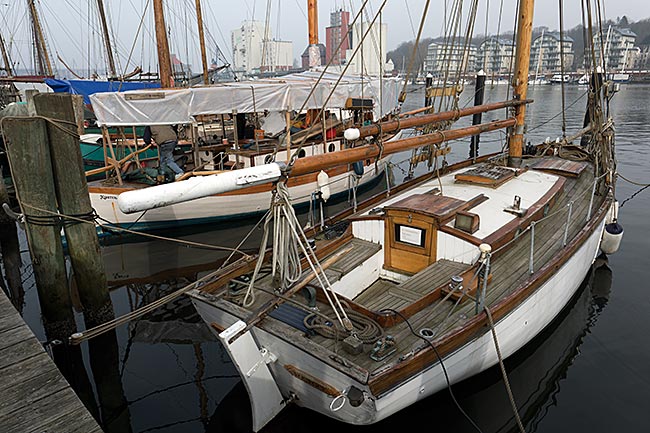
At the museum shipyard
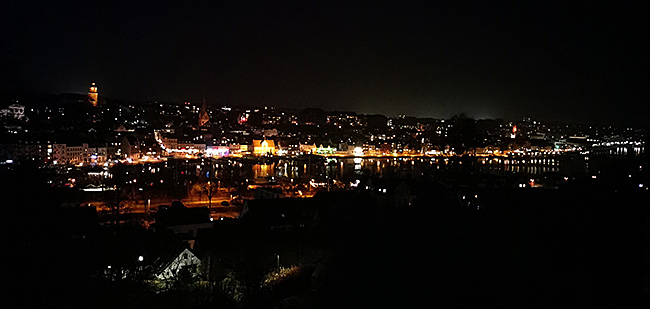
Night view of the historic harbor from the Captain’s Quarter
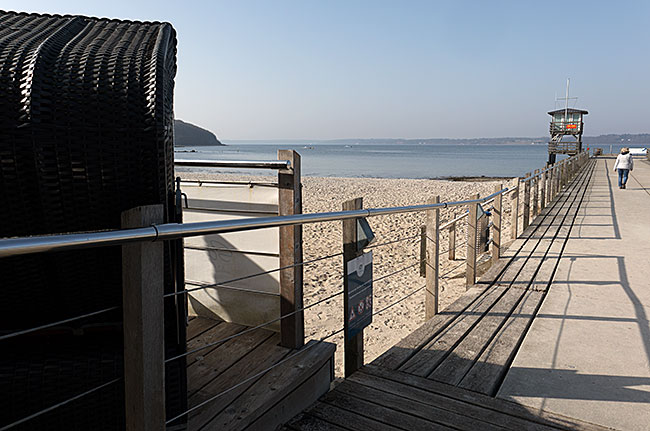
The pier in Glücksburg