

DISTANT PLACES
Travel tips by Bremen sehenswert far from the Hanseatic City of Bremen
Zakynthos
An island defined by the Caretta caretta
Page 3 / 3
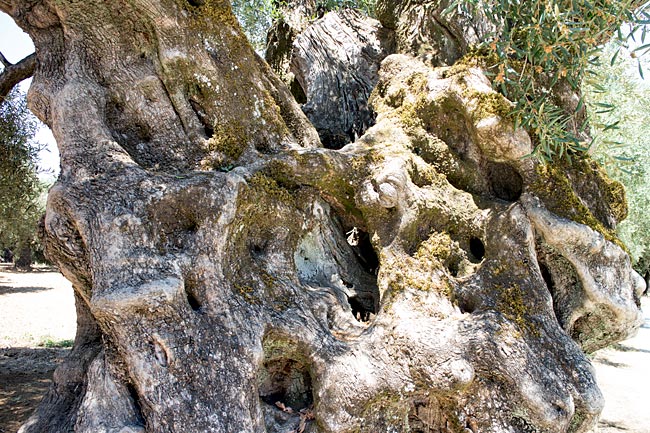
The trunk of a very old olive tree by the roadside, spanning several meters in circumference
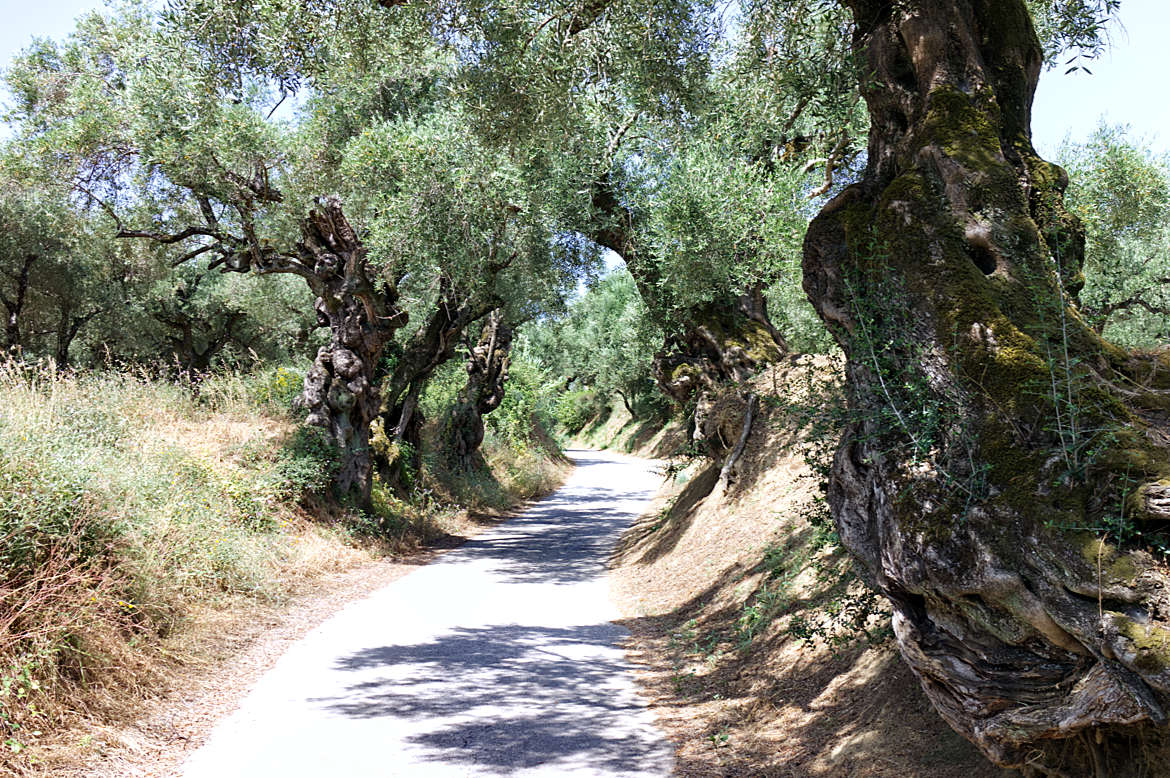
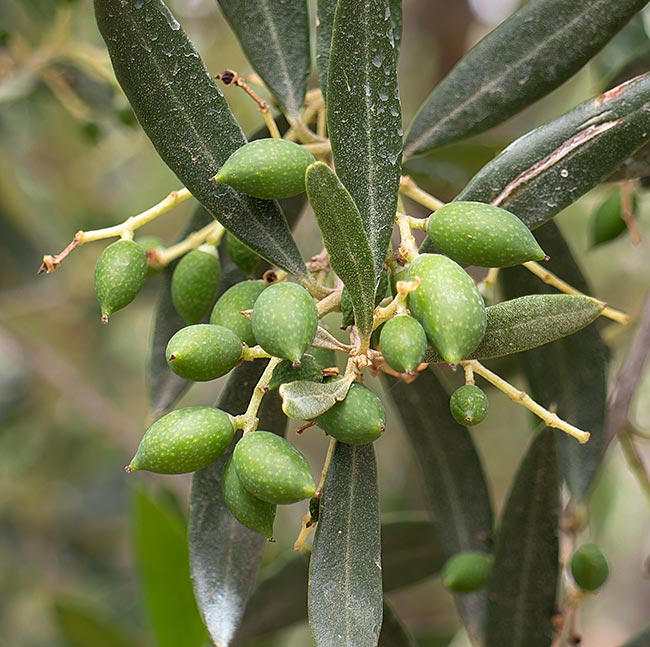
On Zakynthos, naturally, the best olive oil is produced so claims an articulate local woman during the remainder of the tour, speaking with a tone of conviction. At the sudden thought that everyone says this, the likable woman follows up those exact words with a wink and a brief introduction to olive oil production. The fruits are harvested and processed within three days of ripening, which ensures the high quality.
The fact that the oil from these oval fruits - which darken as they ripen - can be used for more than just nutrition is demonstrated by olive oils infused with fragrant essences for body massages or soaps. It is "natural cosmetics: back to the roots." Unlike industrially produced products with unpronounceable ingredients, those who doubt the benefits of natural oils can at least be certain that it won't cause harm and at least smells good.
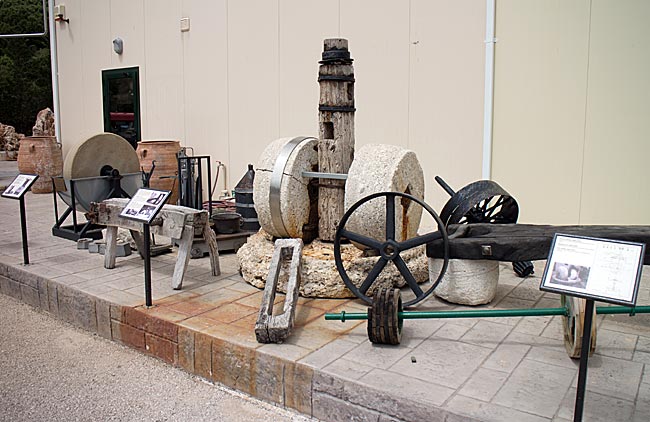
Historical equipment in the Aristeon Olive Oil Press Museum
However, the fact that reliably enforcing quality standards according to industrial measures is not entirely simple becomes clear at the "Aristeon Olive Oil Press Museum," which describes itself as "ecological." In the outdoor area of the grounds, the museum displays several pieces of historical equipment - some produced in Italy - used in past times to press juice from the fruit. However, inside the production hall, everything is modern and made of stainless steel. Behind opaque covers designed to ensure necessary hygiene, the olives undergo a purification process aimed at producing the best possible final product.
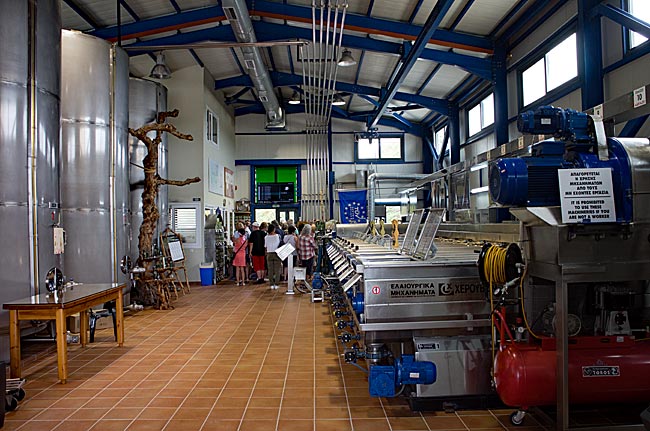
A look into the production and storage hall
The oil remains shelf-stable for about 18 months after it is finally moved into large stainless steel tanks via a pumping system. Depending on the quantity of raw material delivered, the finished product belongs to the individual plantation owners, who can collect it at any time. The museum retains 10% as its share for the processing costs and for profit-oriented sales. So far, so good; all visitors can convince themselves of the quality of the taste during a tasting.
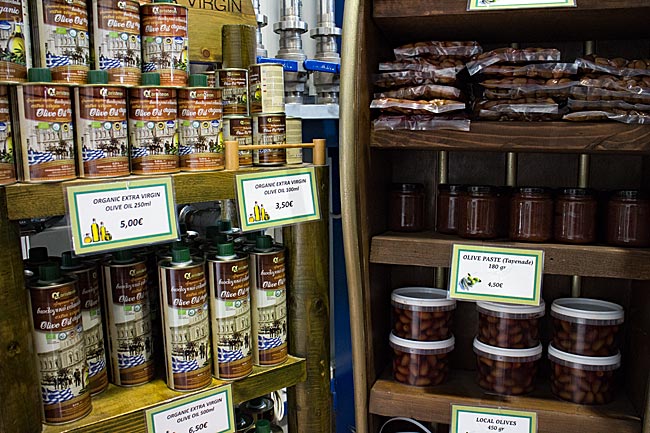
Selection of olive products offered for sale at the museum, such as oil, paste, or whole fruits
Olives do indeed grow "ecologically"; the problem arises more beneath the trees, where the fruit is caught with nets during harvest. This is because growing grass and shrubs compete with the gnarled growth for soil nutrients during the critical ripening phase. Consequently, some plantation owners choose to use herbicides in addition to mowing and plowing. Where they have been used can be seen on the trees themselves, as old rags or similar materials are hung there. In the museum, however, it is the word of the raw material supplier that determines whether something is "organic" or not; extensive laboratory analyses cannot be carried out here, let alone separately for every delivery. Here, it is simply a matter of trust.
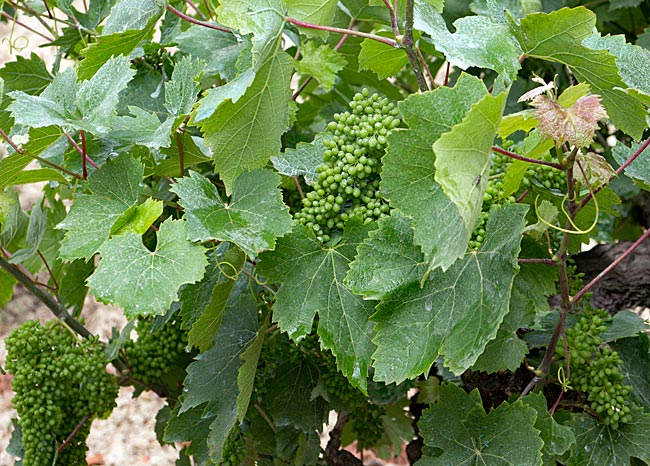
Vineyards are frequently encountered on Zakynthos
In addition to olive oil, approximately 650 hectares of grapes are cultivated on a large scale on Zakynthos. It was the Venetians who intensively cultivated viticulture on the Ionian Islands. Much of the red and white wine produced is exported, while the locals prefer to keep the rosé for themselves. In addition to the white dry Retsina - which, due to the added resin, is not a delight for every palate - the Verdea is frequently pressed on the island. This high-alcohol white wine, whose name reflects the Italian word for "green" (verde), consists of several grape varieties such as Goustoldi and Robola and features a high acidity content. Following the Retsina, this Greek wine was also granted the special "OKP" status due to its designation of origin and pressing method. For this, the Verdea must contain at least 75% of the Skiadopoulo grape variety. If the wine is not further filtered after blending before it goes into small oak barrels for aging and storage, it appears somewhat cloudy during tasting. Prost or Jamas, as they say in Greece.
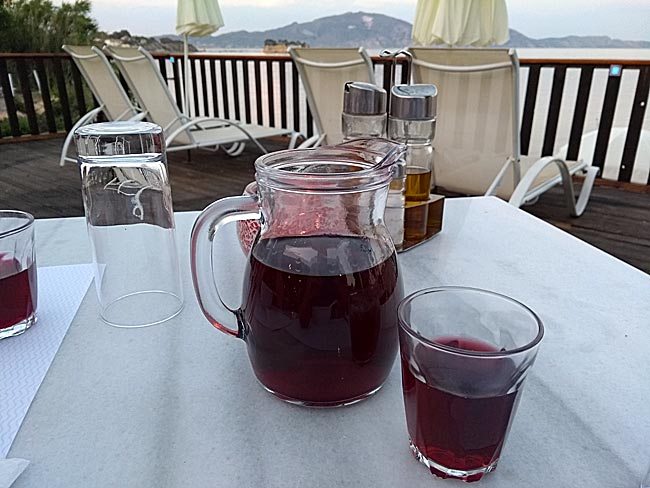
Perhaps a red wine would be nice too
However, it isn't just grape varieties for winemaking that are cultivated on Zakynthos; table grapes are grown as well. One variety grown for both purposes is Korinthiaki, which is known in German as "Schwarze Korinthe" and in English as "Zante currant," named after the Italian name "Zante" for Zakynthos. After harvesting, the grapes are primarily dried and finally processed as currants in kitchens in many countries worldwide, whether served with couscous, in desserts like pudding, or in pastries. The almost black, sweet fruits are smaller and firmer than the widely distributed sultanas, which - like the currants - are gathered under the general heading of "raisins." At many breakfast buffets, they can be found baked into fresh rolls or as a natural sweetener for muesli; that is certainly a good way to start the day on Zakynthos.
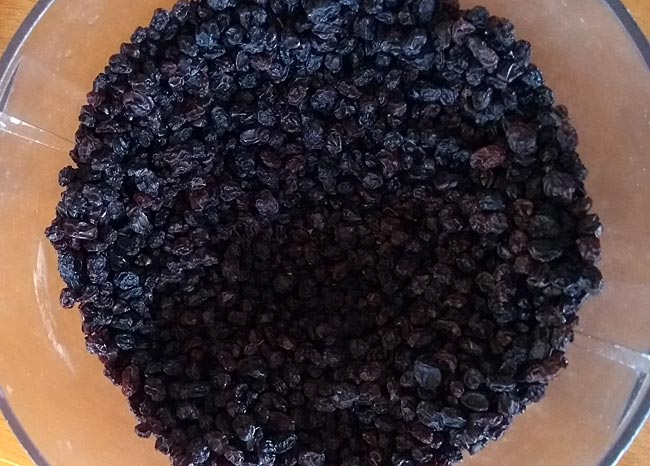
Currants from local production
And so, a day on this Ionian island can also be largely free of tourist hustle and bustle. If you are seeking peace, short distances are often enough, and you will find yourself in olive groves or on lonely or sparsely visited beaches. Similarly, hiking enthusiasts on Zakynthos will find plenty of opportunities to explore the landscape. On foot, paths lead through deserted mountainous areas and through small villages.
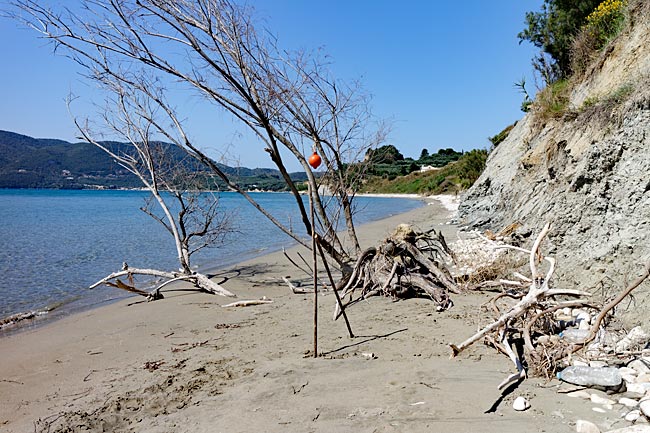
A little-visited beach
Travel Information
Official tourism site for Greece: www.discovergreece.com/de/ionian-islands/zante-zakynthos
En route on Zakynthos: If you plan to travel around Zakynthos, you should consider renting a car. Not every destination can be reached by scheduled buses, and bicycles are not well suited for transportation on the island because they often require using main roads that have neither shoulders nor dedicated bike lanes. This makes it not only dangerous but also not much fun.
More about sea turtles in Greece: www.archelon.gr/index_eng.php
Aristeon Olive Oil Press Museum: www.aristeon.gr
previous page
 next page
Map
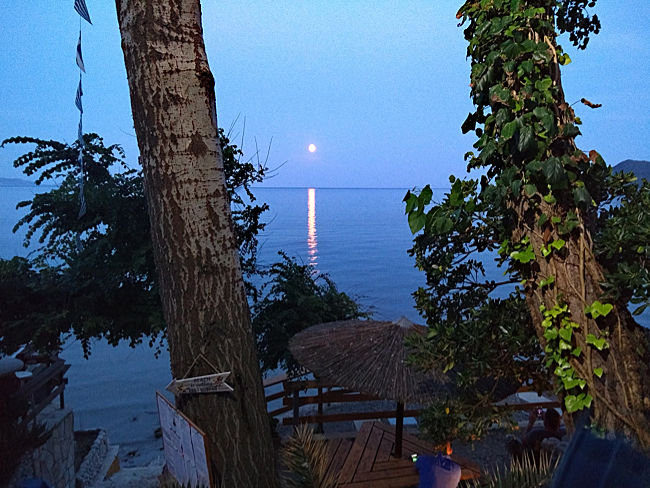
UNESCO World Heritage Site on Rhodes
A journey through the historic Old Town of Rhodes
Relics from various eras - ranging from antiquity to the period of Italian occupation - can be found almost everywhere on the island. Many have left their mark; in some places, they must be sought out, while in others, they appear in clustered, fascinating density and variety. Yet, nowhere else on the island are these traces as prominent as they are in the city of Rhodes. It is not for nothing that the historic Old Town was declared a UNESCO World Heritage site in 1988.
read more about Rhodes Old Town ...
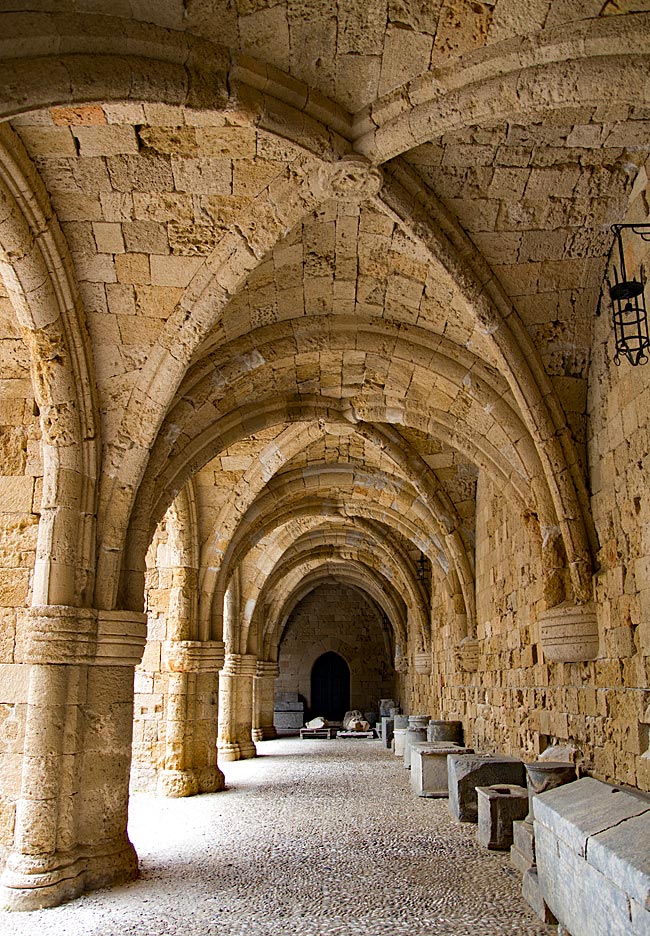
The "Green" Island of Corfu
From the sights of the capital, Kerkyra, to the Corfu Trail
The Greeks call not only the city but the island itself Kerkyra. According to legend, it was named after the nymph Gorgyra (also known as Kerkyra), who was brought to the island by the sea god Poseidon. A legend, indeed. In fact, the name appears in a modified form, "Korkyra," on written records as early as 1200 BC. The current name, Corfu, dates back to the Byzantine era. Once an independent island and later the first Roman province of modern Greece, it became part of the Eastern Roman (Byzantine) Empire after the fall of the Western Roman Empire in 395 AD. On a rocky promontory jutting into the sea, the Byzantines built a fortress in the early 6th century and named the city emerging from this core "Koryfo."
read more about Kerkyra ...
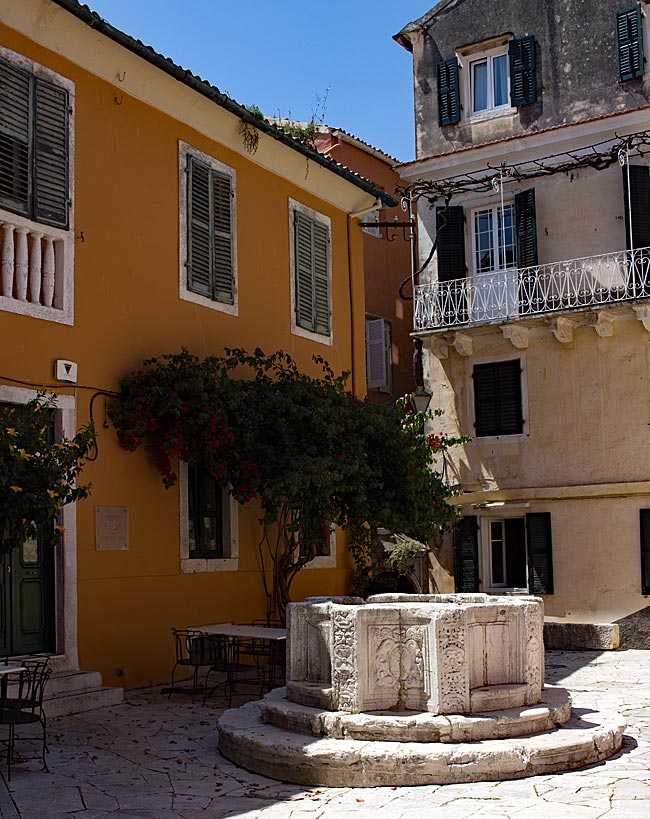
Symi
An excursion to the Greek Dodecanese island off the Turkish coast
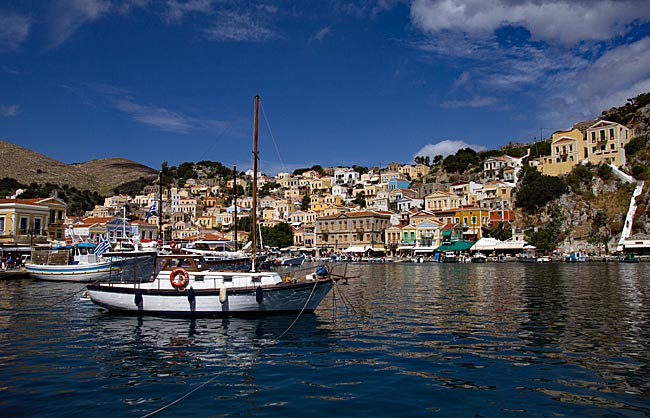
A visit to this sparsely populated rocky island of about 60 square kilometers, with its namesake picturesque harbor town, is part of the standard tour itinerary offered in many locations on the Greek island of Rhodes. From the main island, it takes ships approximately two hours to reach the port of the small island located 23 kilometers north of Rhodes off the Turkish coast, which has belonged to Greece since 1947. As more of the Greek coast recedes into the distance to the port side, the ship draws closer to the Turkish shore; this part of the southern Aegean essentially connects Europe and Western Asia.
read more about Symi ...