

DISTANT PLACES
Travel tips by Bremen sehenswert far from the Hanseatic City of Bremen
Symi
An excursion to the Greek Dodecanese island off the Turkish coast
Page 1 / 2
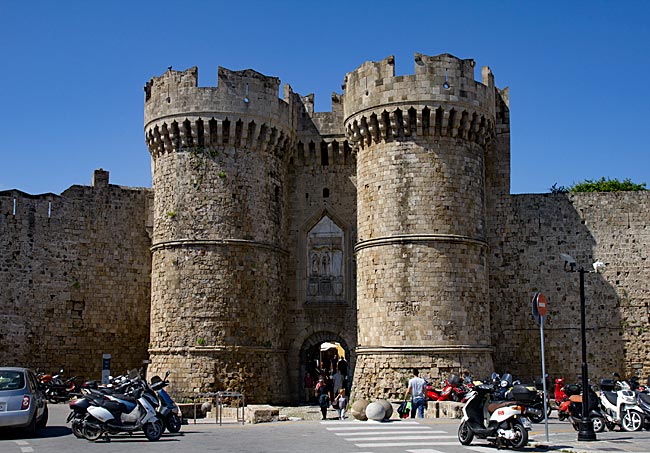
One of the old gates leading into the historic heart of Rhodes City
The sun shines from a cloudless, deep blue sky. It is still early, and only slowly does the cool of the night give way to the warmth of a summer day. It is exactly the right weather for an excursion by boat. More and more buses line up at the pier at the end of the port facilities in Rhodes City, and people stream through the ship's hull onto the upper deck, hoping to snag a good seat in the open air. As the decks fill - accompanied by the constant, deep hum of the ship's diesel engine - one's gaze falls upon the truly noteworthy historical city center on the other side of the harbor. Finally, it is time to cast off, and the ferry sets sail for Symi.
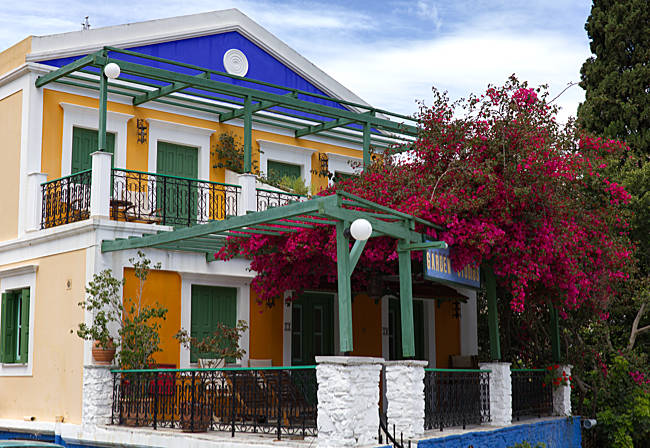
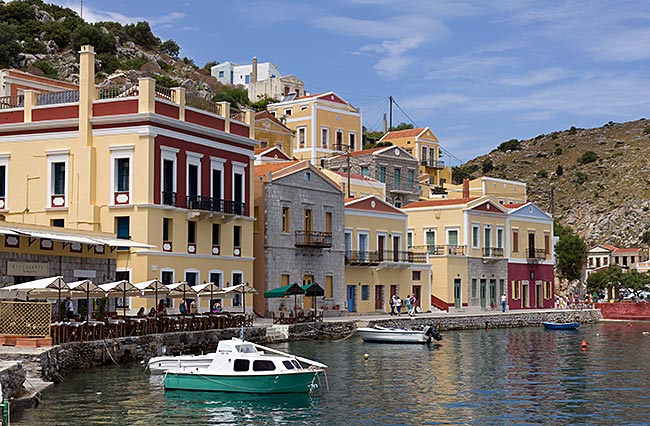
House at the harbor of Symi
A visit to this sparsely populated rocky island of about 60 square kilometers, with its namesake picturesque harbor town, is part of the standard tour itinerary offered in many locations on the Greek island of Rhodes. From the main island, it takes ships approximately two hours to reach the port of the small island located 23 kilometers north of Rhodes off the Turkish coast, which has belonged to Greece since 1947. As more of the Greek coast recedes into the distance to the port side, the ship draws closer to the Turkish shore; this part of the southern Aegean essentially connects Europe and Western Asia. A barren landscape rises within reach, appearing almost deserted - and in fact, this part of Turkey is only a sparsely populated peninsula jutting into the sea. There is no sign of the bustling Marmaris located several kilometers to the east.
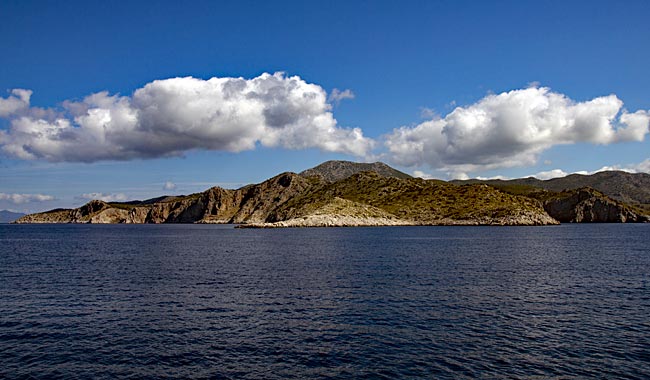
Not very spectacular: the Turkish coast from the ship
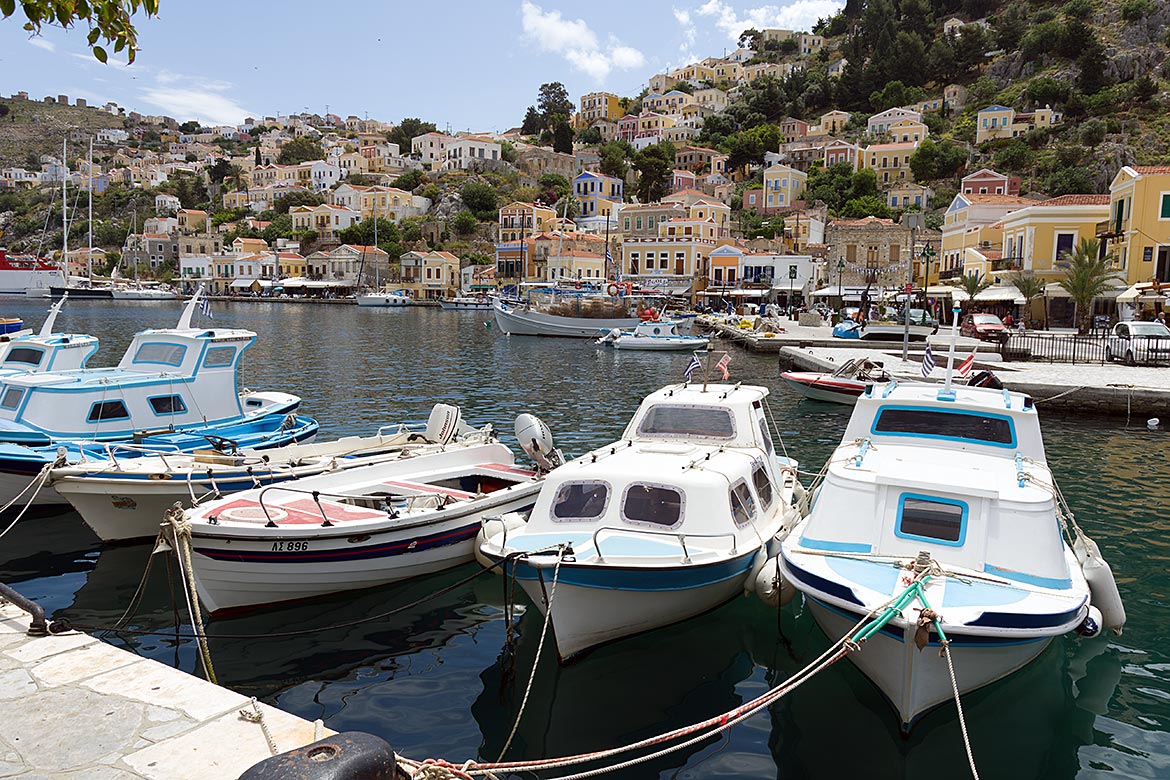
But then the destination of our journey - the harbor town of Symi in the north of the island - comes into view. Movement stirs among the passengers on deck; items are packed away, and cameras are brought out to capture the beautiful sight onto memory cards. In an open bay, the small village stretches like a terrace across the steep side walls surrounding the harbor. Many of the houses are painted in shades of yellow and brown typical for Symi, with occasional red buildings, and naturally, the bright white-blue so characteristic of Greece is not missing.
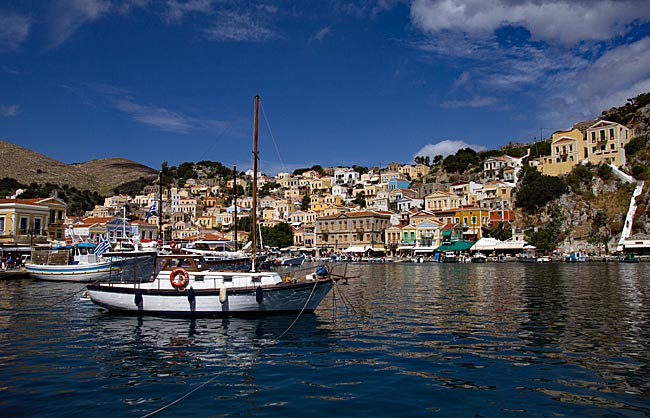
A view of part of the town of Symi
Until the end of the 19th century, the people on this sparsely vegeted island lived primarily from sponge diving - practiced under life-threatening conditions - and from fishing; accordingly, this was where the heart of the island beat. With the decline of sponge diving, accelerated by the invention of synthetic sponges after World War II in the 1950s and devastating environmental impacts that affected the animals a few decades later, many residents subsequently left the island. Instead of about 30,000 during its peak, the island today counts fewer than 3,000 inhabitants.
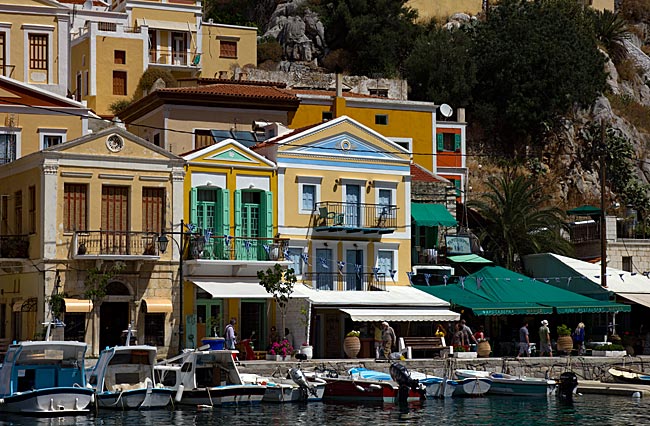
Harbor promenade
Yet the heart of this island - also popular among leisure sailors - still beats in the harbor of the town, especially between May and October during the travel season, as tourism that emerged in the 1970s is now the primary source of income for the locals. While small hotels and guesthouses in the few settlements on the island offer the possibility of a longer stay, most visitors are still day guests who cross over from the Turkish mainland or from neighboring islands like Kos and Rhodes.
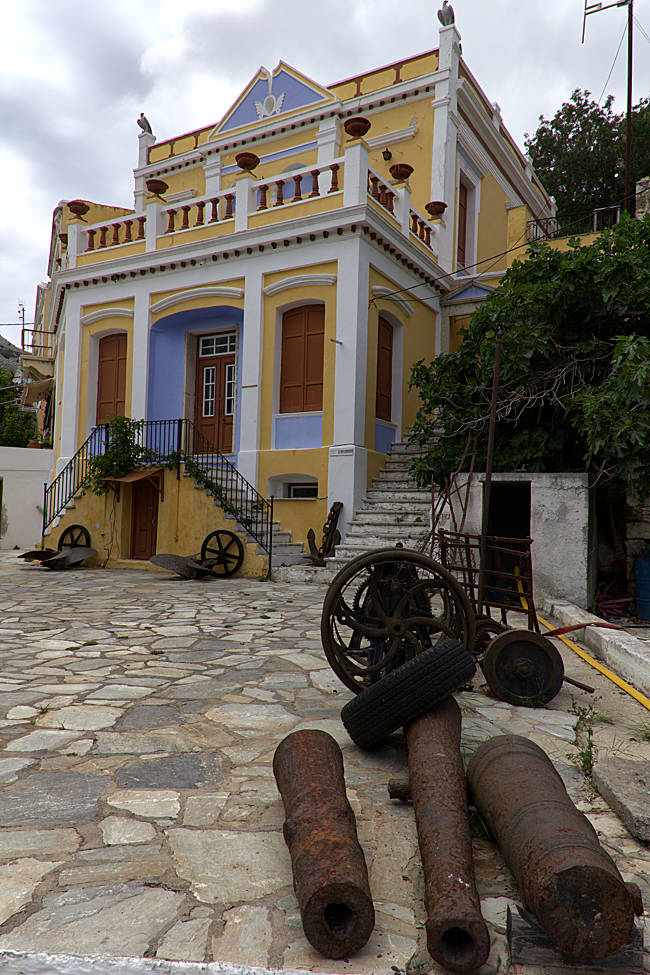
Relics from the past
Thus, the busy hustle sets in - especially in the lower, protected part of the town around the harbor (Gialos) - at the latest when the first large excursion ship comes into view. Ultimately, the goal is for visitors to buy, eat, and drink as much as possible during their stay of only a few hours - the nature of tourist business. And the culinary temptations line up like pearls on a chain along the promenade from one end of town to the other; after all, sea air makes one hungry. In addition to numerous restaurants, cafés, stands for a quick snack, and shops with kitsch or art, there are naturally also stores with sponges in many sizes and colors, even though these are now imported.
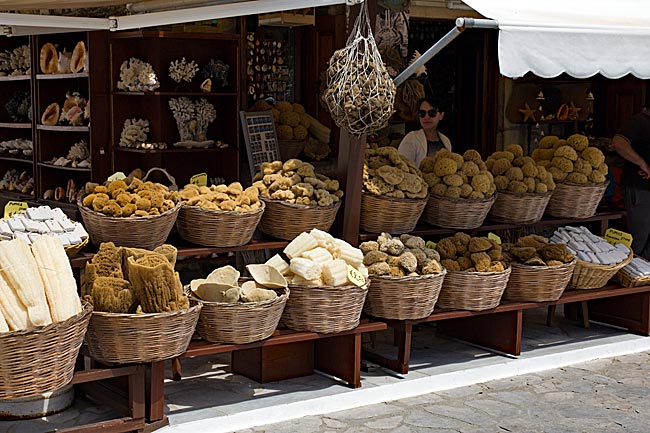
Sponges in various colors and sizes
"And they are so soooft ..." What a large confectionery manufacturer in Germany claimed in an advertisement about one of its products applies partly to natural sponges as well. Dozens of hands take practical conviction of this, especially when day guests - often guided in groups - are led specifically toward the open stands of the vendors. But do most people know, or even realize at all, that they are actually holding animals - more precisely, the skeletons of the animals? Scientists distinguish approximately 5,000 species of sponge, of which only four are used for household purposes. And by the way, not all sponges are soft.
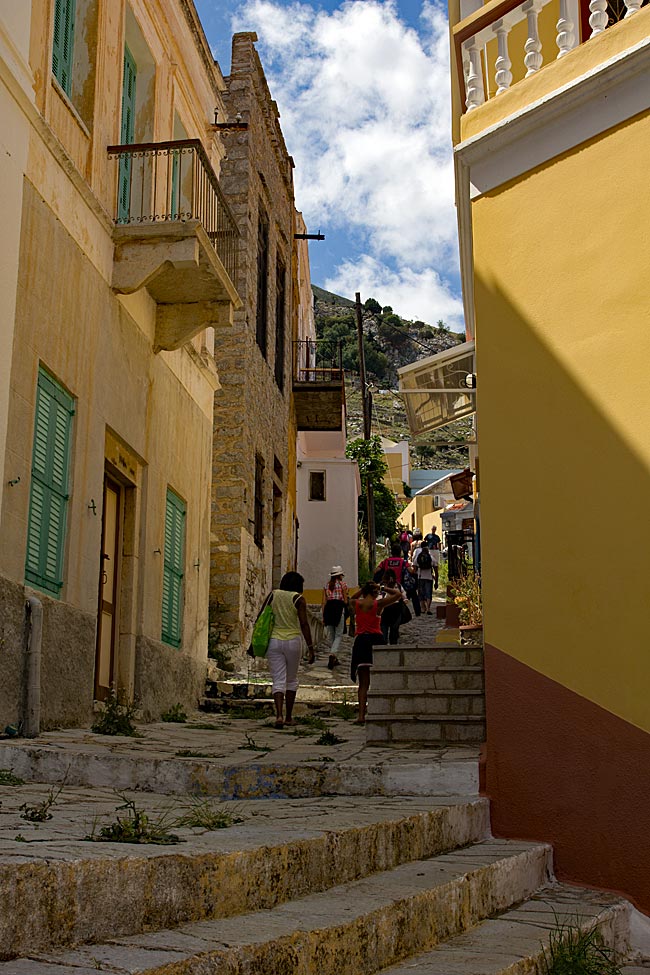
Up through small alleys into the town
Visitors who do not wish to join a group but prefer to set out on their own will likely see more of the town in the limited time available - provided they are capable of walking well, as the paths are often steep and full of stairs. Originally, the settlement of Symi consisted of two parts: the aforementioned Gialos, the area at the harbor, and Chorio, the area on the slope - today's upper town - to which a wide, seemingly endless staircase leads from the center in the harbor area via Kali Strata. As in many other alleys of the town, transportation is only possible on foot or by donkey or mule, though there are also roads leading up.
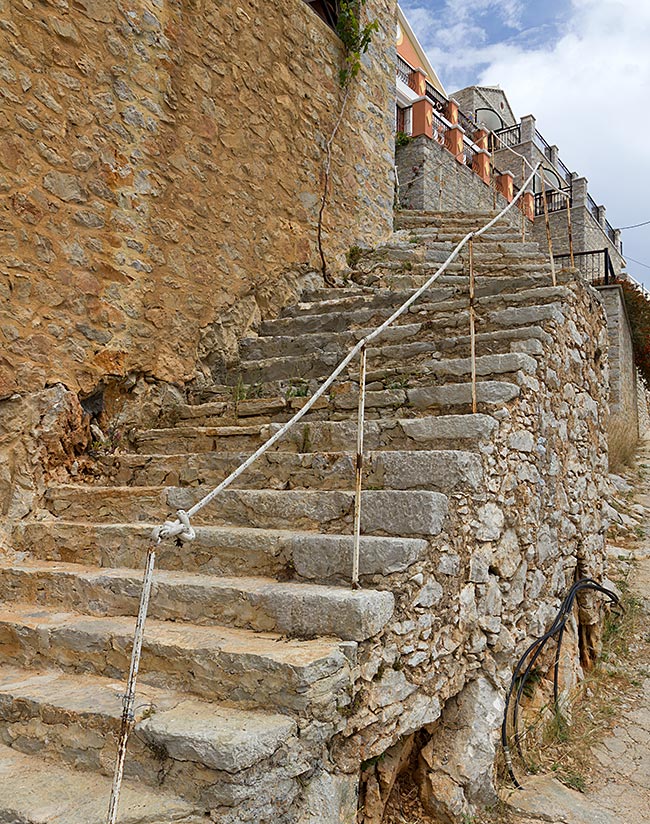
Old stairway
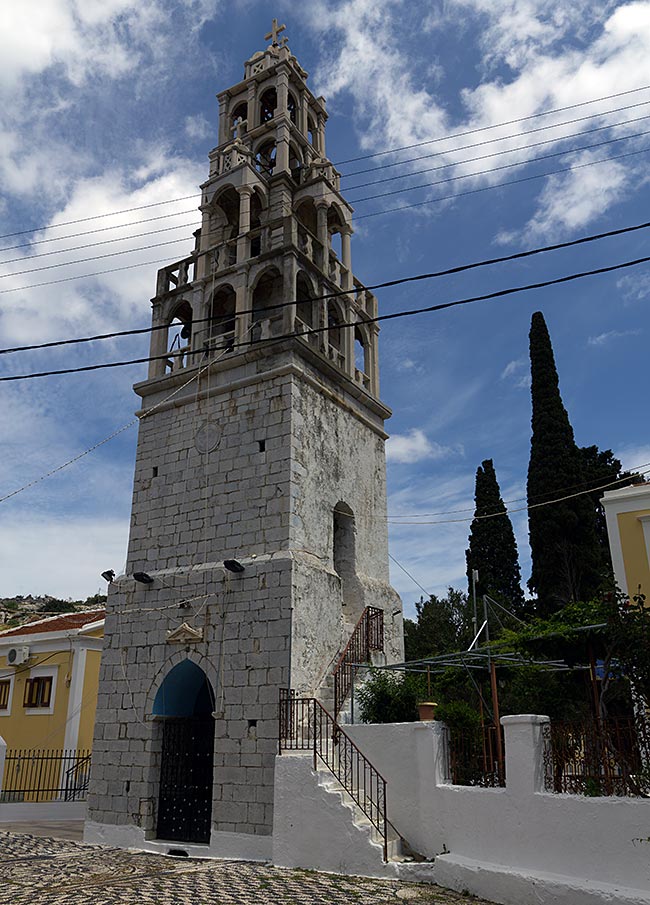
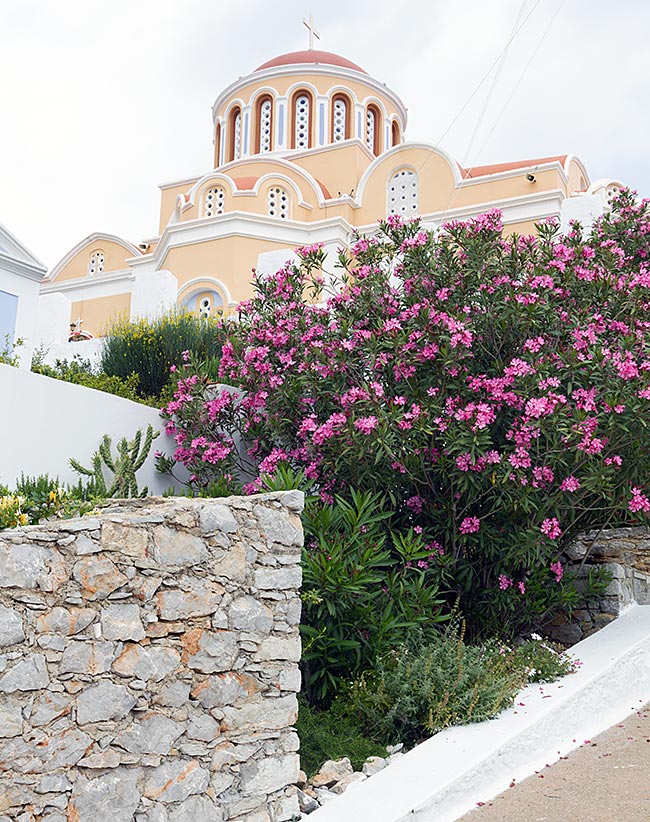
On the castle rock in the upper town stood a fortress of the Knights Hospitaller in the 13th century, who had their main seat on Rhodes. The fortress and the preceding ancient acropolis have largely disappeared today, but the Panagia Church rising there today is well worth the effort of climbing the many steps, if only for the beautiful view over the town of Symi, with the harbor on one side and the sea on the other.
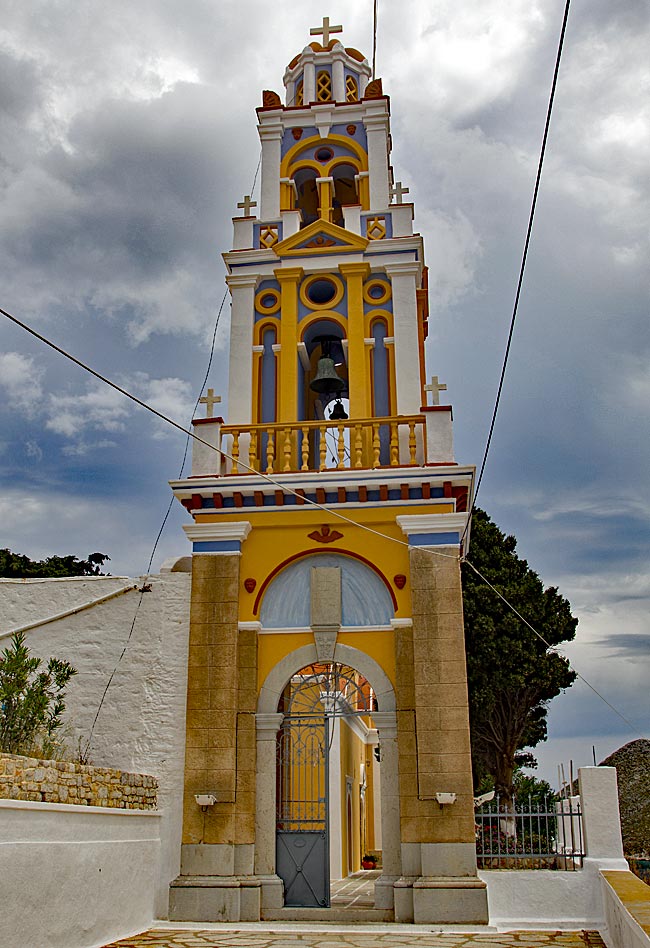
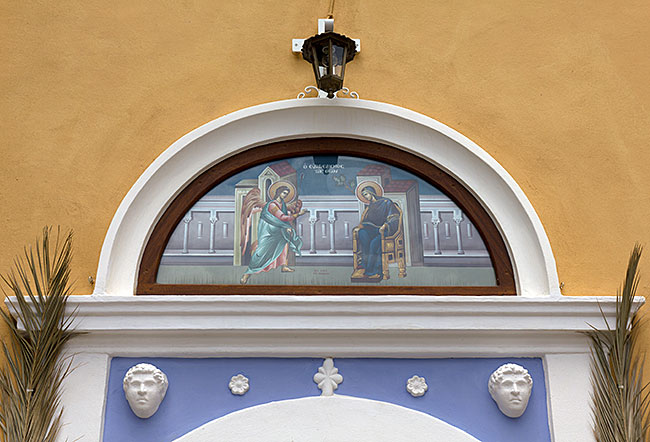
Panagia Church
previous page
 next page
Map
More photos
Kos - The Greek Dodecanese Island
A Travel Guide
Greece, the cradle of democracy. While some may think of great philosophers like Plato and Aristotle, or mathematicians such as Archimedes and Euclid; others might think of victorious generals like Alexander the Great, who founded Alexandria in present-day Egypt with its legendary library. Yet others may have sun, beach, Mediterranean flair, or the scent of thyme in mind when Greece is mentioned.
read more about Kos ...
UNESCO World Heritage Site on Rhodes
A journey through the historic Old Town of Rhodes
Relics from various eras - ranging from antiquity to the period of Italian occupation - can be found almost everywhere on the island. Many have left their mark; in some places, they must be sought out, while in others, they appear in clustered, fascinating density and variety. Yet, nowhere else on the island are these traces as prominent as they are in the city of Rhodes. It is not for nothing that the historic Old Town was declared a UNESCO World Heritage site in 1988.
read more about Rhodes Old Town ...
The "Green" Island of Corfu
From the sights of the capital, Kerkyra, to the Corfu Trail
The Greeks call not only the city but the island itself Kerkyra. According to legend, it was named after the nymph Gorgyra (also known as Kerkyra), who was brought to the island by the sea god Poseidon. A legend, indeed. In fact, the name appears in a modified form, "Korkyra," on written records as early as 1200 BC. The current name, Corfu, dates back to the Byzantine era. Once an independent island and later the first Roman province of modern Greece, it became part of the Eastern Roman (Byzantine) Empire after the fall of the Western Roman Empire in 395 AD. On a rocky promontory jutting into the sea, the Byzantines built a fortress in the early 6th century and named the city emerging from this core "Koryfo."
read more about Kerkyra ...
Zakynthos
An island defined by the Caretta caretta
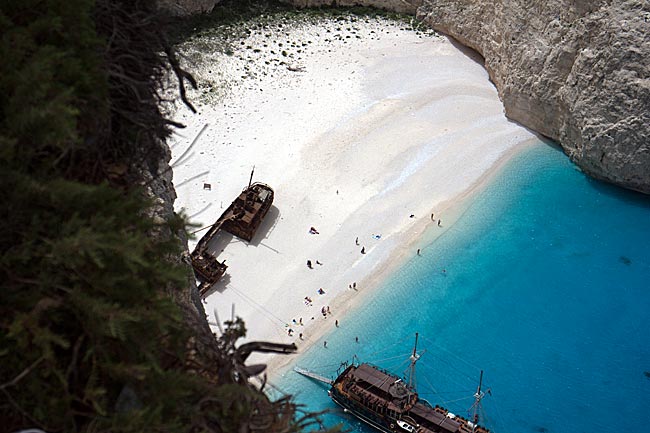
When searching for images of the 406 km² island online, one primarily encounters a very common recurring motif that has been captured from a similar angle by various photographers over the years: Navagio Bay on the northwestern coast. It's all junk, right? Well, that is a matter of perspective, and there are plenty of those during the season, whether they have a camera or not. The fact remains, however, that the rusting wreck of the motor vessel "Panagiotis" has become a landmark for Zakynthos.
read more about Zakynthos ...