

DISTANT PLACES
Travel tips by Bremen sehenswert far from the Hanseatic City of Bremen
UNESCO World Heritage Site on Rhodes
A journey through the historic Old Town of Rhodes
Page 1 / 2
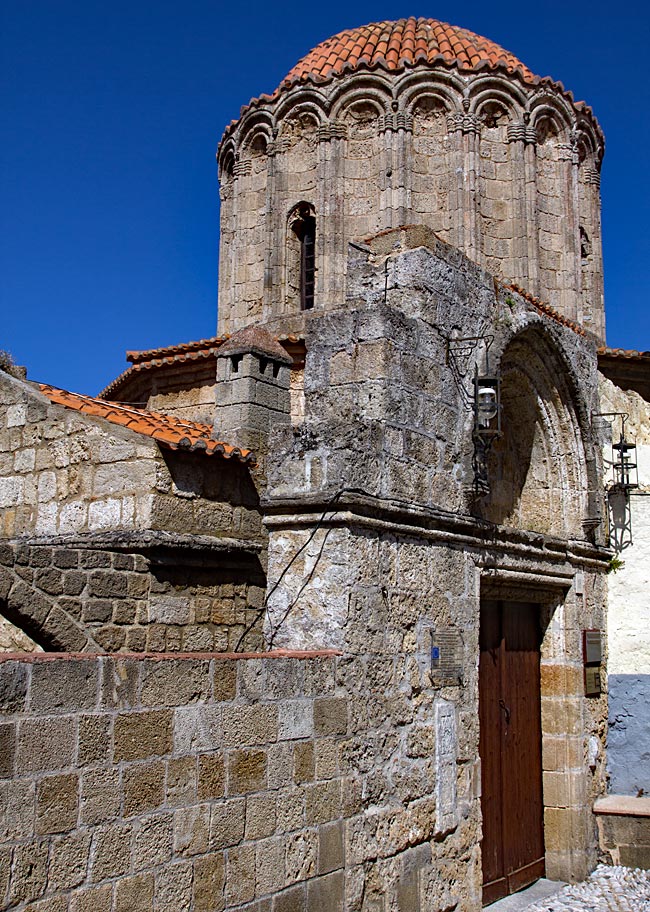
Relics from various eras - ranging from antiquity to the period of Italian occupation - can be found almost everywhere on the island. Many have left their mark; in some places, they must be sought out, while in others, they appear in clustered, fascinating density and variety. Yet, nowhere else on the island are these traces as prominent as they are in the city of Rhodes. It is not for nothing that the historic Old Town was declared a UNESCO World Heritage site in 1988.
From Mandraki Harbor to the Old Town
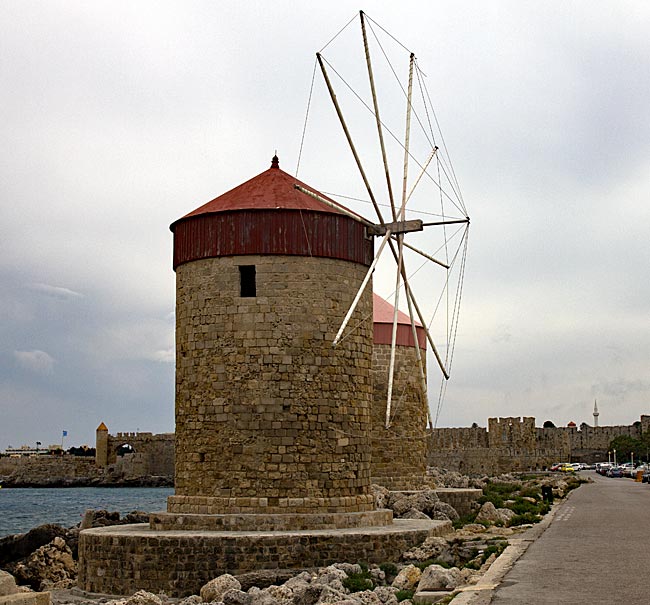
For visitors arriving as independent tourists from nearby locations, it is recommended to travel by one of the local buses that stop at the terminus near the Mandraki Harbor. Today, the harbor at the gateway to the Old Town is filled primarily with yachts, their masts swaying gently in the wind and on the waves. A recurring photographic motif is the three windmills standing side-by-side on the pier, where the Fortress of Agios Nikolaos presents itself somewhat defensively to newcomers from the sea. A few meters further, right at the harbor entrance, boats are greeted by the island's landmarks: the deer Elafos and the cow Elafina. From here, one can look across toward the buildings on the shore of the opposite New Town, such as the Church of Evangelismos, the Bishop’s Palace, and the Murad Reis Mosque. When your gaze shifts toward the Old Town, you can see how the Palace of the Grand Master - the former seat of power for the Knights of St. John - towers over the massive city walls, overlooking the harbor. Little of what took place in the harbor could have remained hidden from those watchful eyes above.
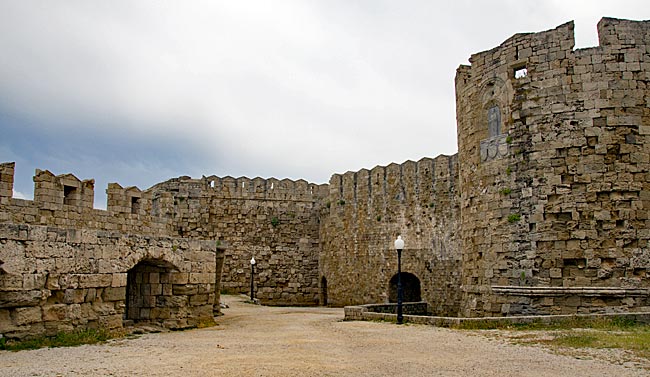
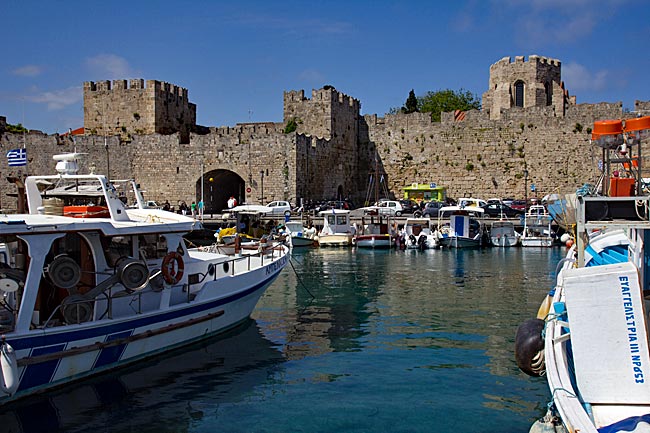
Once the center of power, it is now a destination for many tourists; from the pier, one proceeds uphill toward the Palace into the Old Town. If you remain on the pier, you reach the St. Paul’s Bastion (Pili Agios Pavlos) at its end. This well-preserved complex provides a small sense of how well-defended the city must have been against attacks from the sea in the past. Leaving the bastion on the other side, you find yourself directly in front of the city wall at the fishing port, where the remains of the Naillac Tower rise at its entrance.
In the Old Town
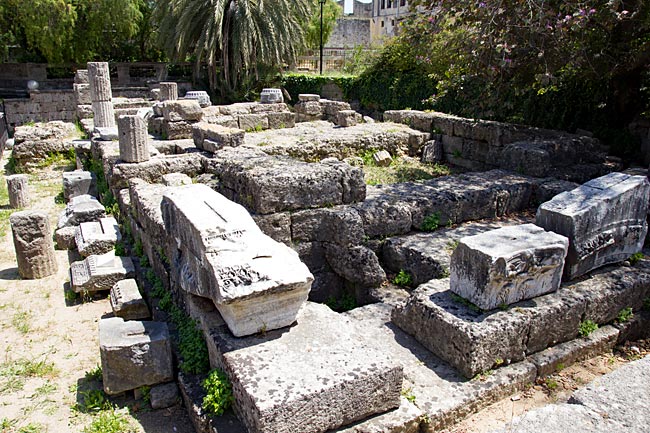
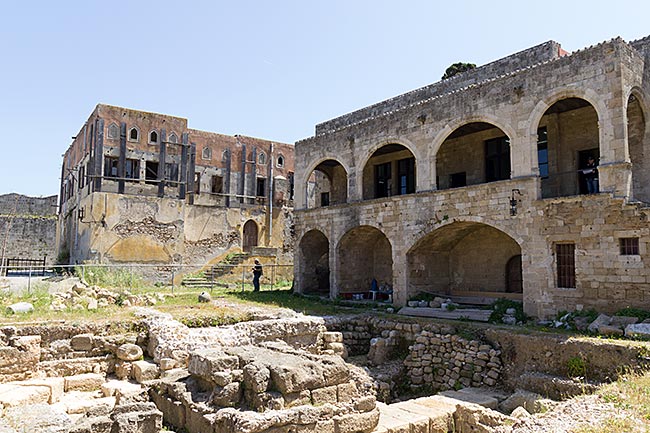
An interesting route from the pier into the Old Town is to follow the sometimes-endless convoy of cars on the main road through the Gate of Liberty (Pili Elefterias). On the Old Town side, in the Knights' Quarter, you soon encounter the ruins of a Doric Aphrodite Temple on Simi Square, dating back to the 3rd century BC. One can sense more of the layout of the former temple complex than what is visible today; nevertheless, the ruins are quite significant for those interested in archaeology. Perhaps nowhere else in Rhodes could there be such a stark clash of millennia: medieval city walls and gates on one side, an ancient temple site on the other, and in between, the clatter and exhaust of modern motor vehicle traffic - which quickly fades from the senses as you pass through the Arsenal Gate (Pili Navarinou) toward the fishing port.
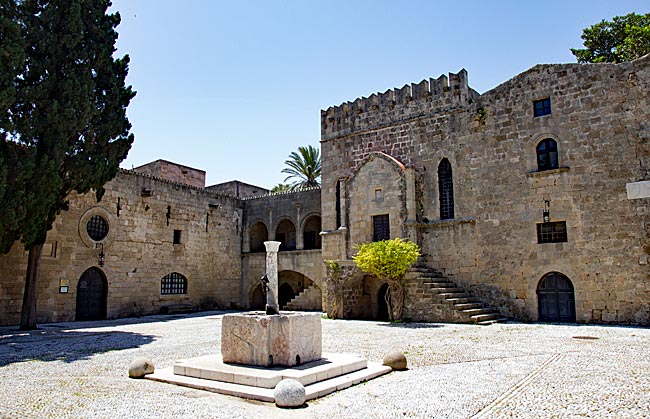
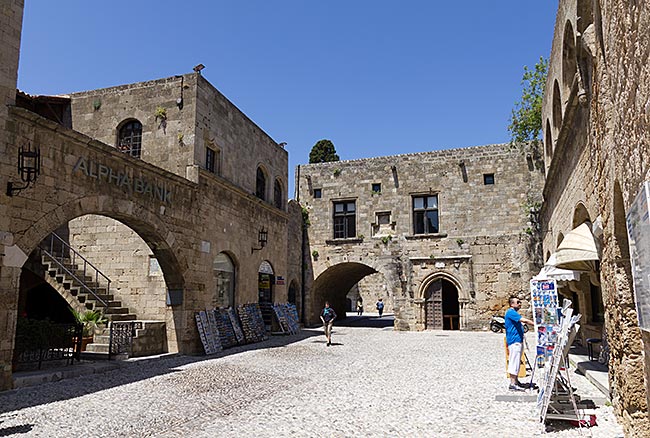
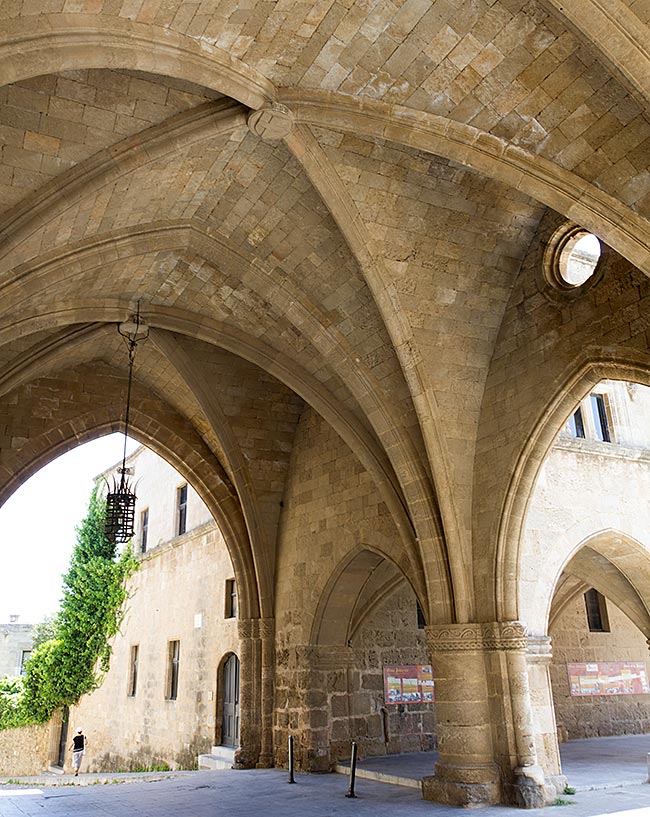
Opposite the temple complex is one of the locations for the Museum of Modern Greek Art, which houses an art gallery. Adjacent to this building on Argyrokastrou Square is the Old Hospital, commissioned by the Grand Master of the Knights of St. John, Roger de Pins, in the mid-14th century. The main gate - a crenelated, preserved structure that was later expanded with a grand staircase and a separate entrance to the upper floor - is flanked by additions made only in the 20th century. In the square before the building stands a small well; its basin served as a font in early Christian times, while the column originates from the Church of Agia Irini near Arnitha. Between this ensemble and the Auvergne Inn (built in the late 15th century) on the opposite side, the path continues through an archway past the entrance to the Knights' Road toward Museum Square. Here stands one of the most impressive and well-preserved structures from the era of the Knights: the New Hospital.
A Visit to the New Hospital
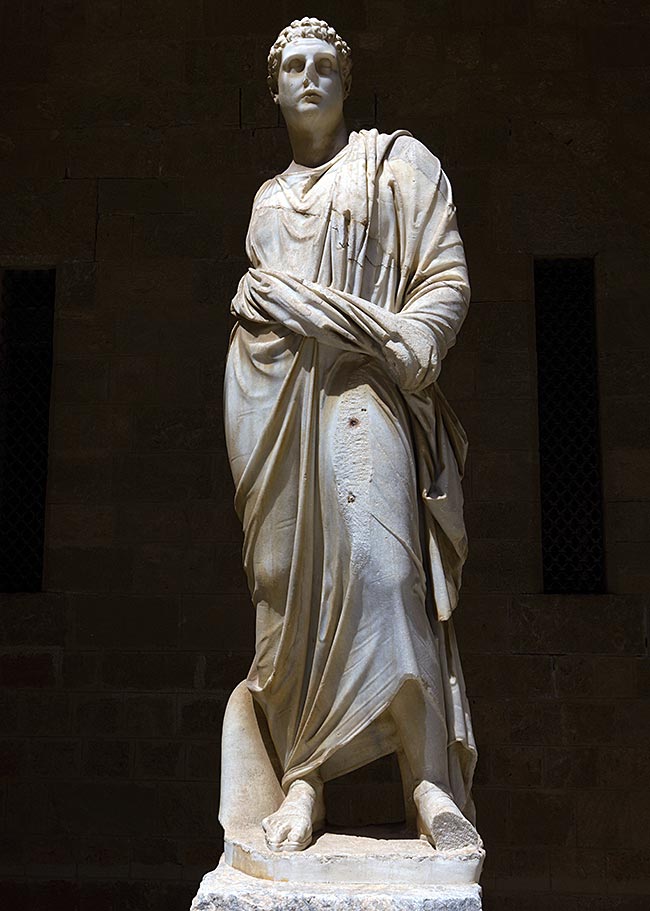
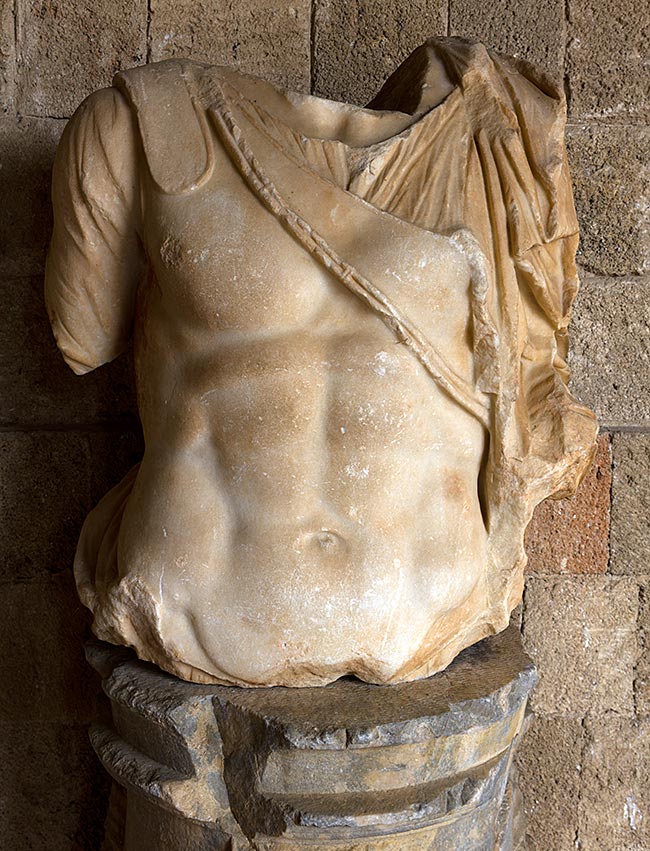
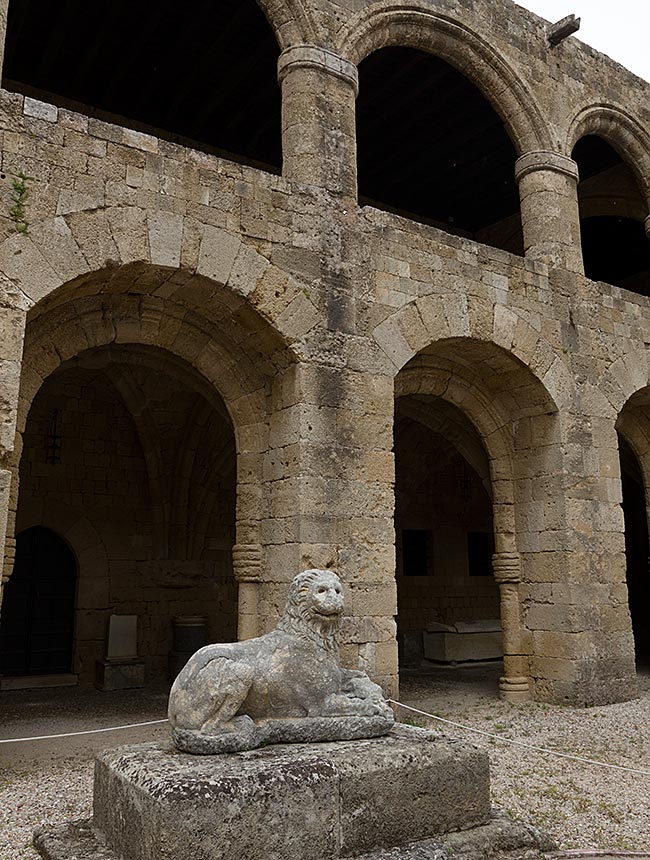
The former Order hospital, commissioned in 1485, now houses the Archaeological Museum. Its noteworthy collection of archaeological finds from the Dodecanese islands includes pieces from pre-Christian times, such as the small marble statue of "Crouching Aphrodite" from approximately 100 BC.
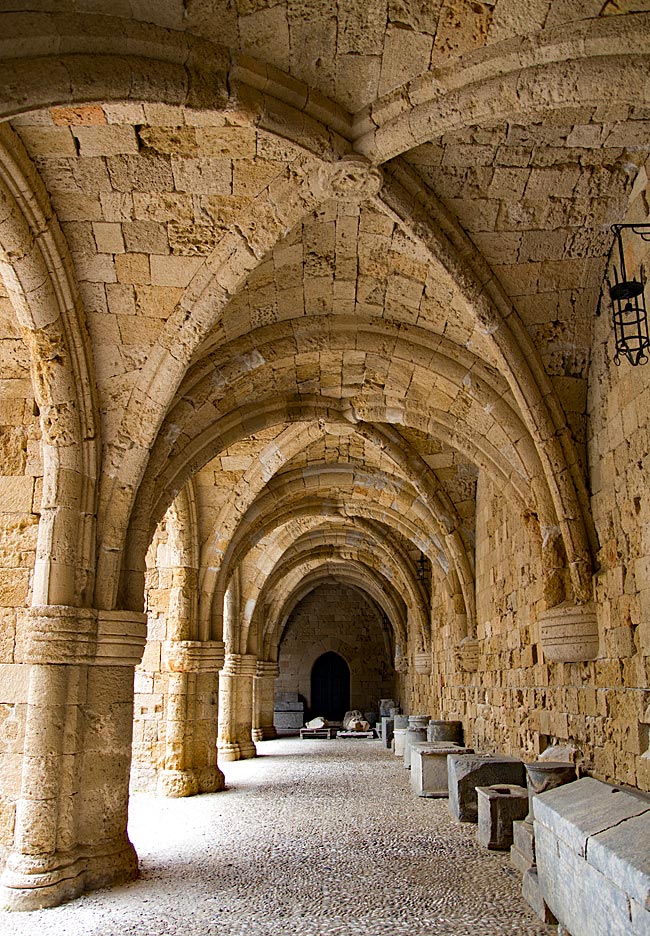
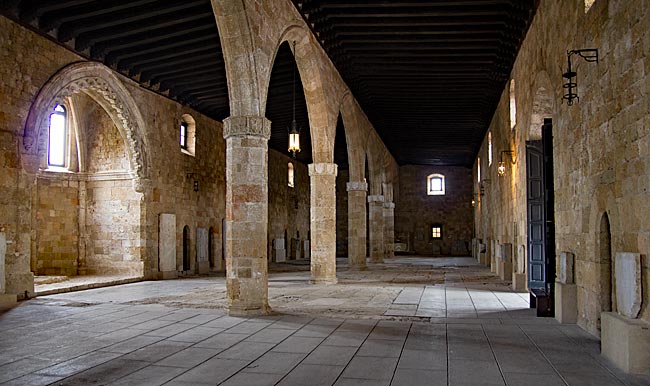
The building itself is no less interesting; behind its plain facade lies a two-story structure with a large courtyard and a surrounding arcade. While the many relatively small rooms on the upper floor - accessible via a wide grand staircase - house glass display cases for artifacts, the infirmary hall (over 50 meters long) remains empty except for numerous old gravestones and stone coats of arms belonging to the Knights, lined up along the walls. The 12-meter-wide room is divided along its length by Gothic pointed arches supported by seven pillars. Resting on these arches are the crossbeams of the roof construction made of dark wood.
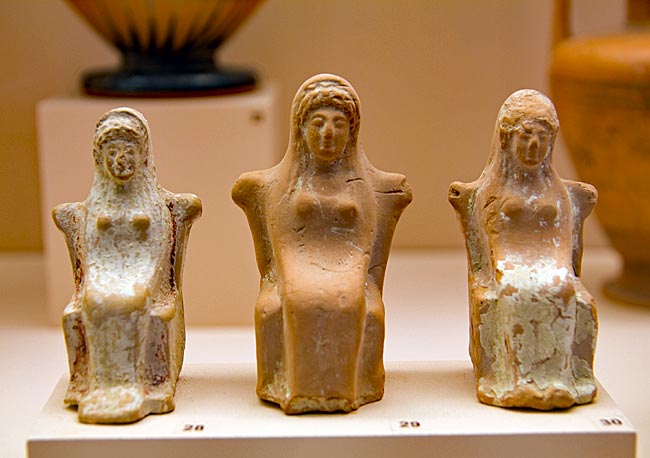
People of all religions and from distant regions were treated in this hospital, as it enjoyed a prestigious reputation beyond the island's borders. All Knights, including the Grand Master, were required to perform service here.
Knights’ Road
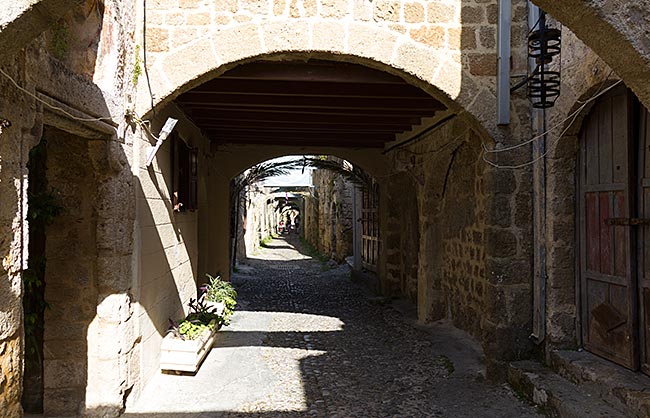
Next to the museum complex, turn onto the Knights’ Road (Odos Ippoton), which leads up to the Palace of the Grand Master. This was the main street in the "Collachium" district in the northern part of the city, where only buildings belonging to the Order were located. The buildings are exceptionally well-preserved and unique in their cohesion for this era in all of Europe. Since there were Knights of the Order of St. John in many countries across Europe, it was not surprising that representatives from various national divisions were stationed here at the order's headquarters.
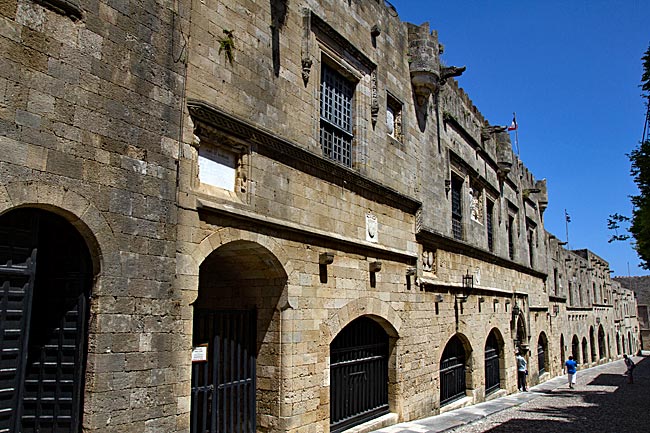
On the Knights’ Road stood what could be described as the "inns of different tongues" - the administrative buildings for each nationality - such as the residence for the Italian Knights, as well as those for the French, the Aragonese, or the Provençals; others had their inns elsewhere, such as the English at Museum Square. These houses were used for communal dining, receiving official guests, and holding meetings; however, no Knight resided there permanently. Stone coats of arms on the facades indicate where each knight lived.
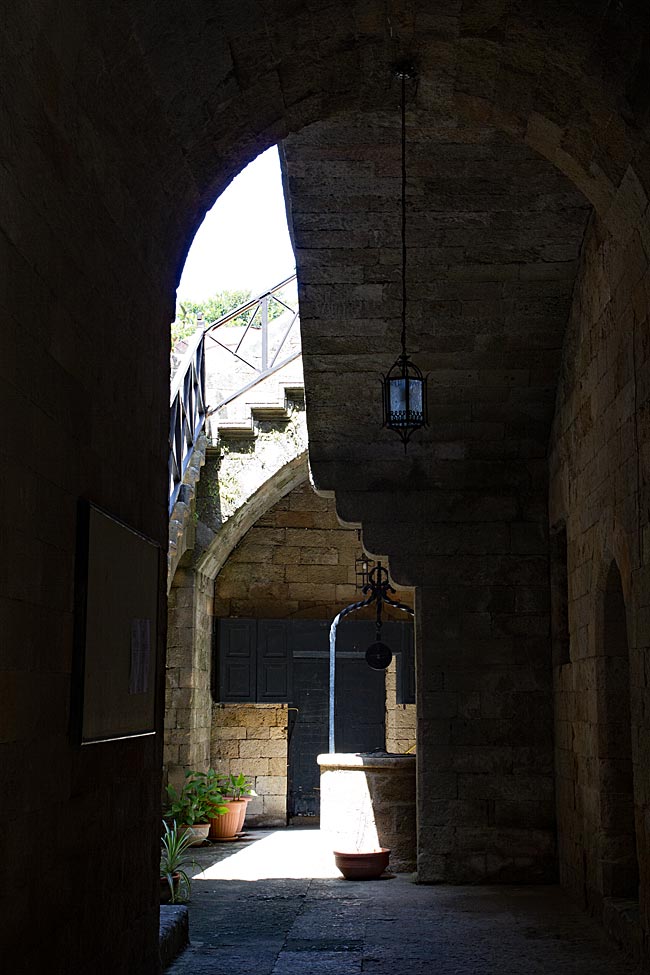
After the Turks took control of the city in the 16th century, they often added multi-paned wooden bay windows to the building fronts - following their tradition - so that women could participate in life on the street. After the Italians took over, they removed these bay windows and restored the houses to their current exterior appearance. Today, many state institutions house their offices behind these old walls.
The Palace of the Grand Master - as impressive as it is controversial
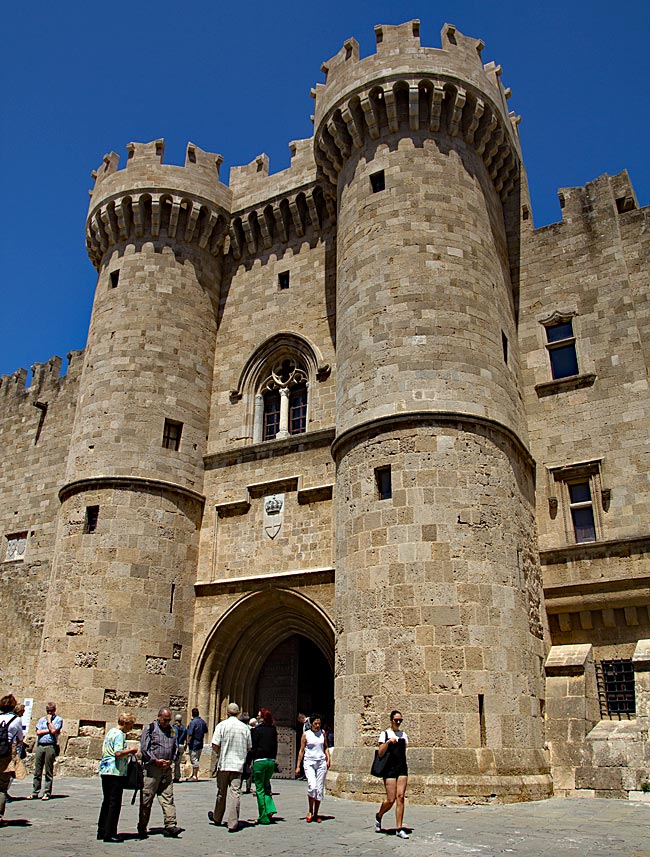
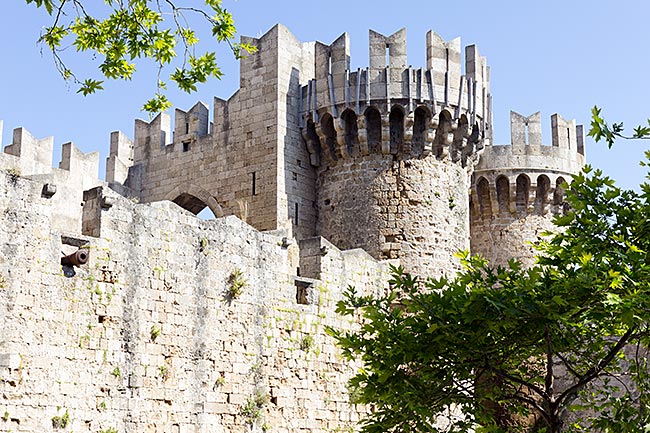
At the end of the Knights’ Road, at the highest point of the medieval Old Town, stands the Palace of the Grand Master. In the 14th century, the Knights converted a fortress (likely dating back to the 8th century) into a residence for their Grand Master. It simultaneously served as the seat of government for the independent state of Rhodes, established by the Order. The building was severely damaged during the period of Ottoman rule - during which it was occasionally used as a prison - first by earthquakes in 1851 and 1856 (when the powder magazine of St. John's Church blew up). It was not until the 1930s, under Italian rule, that the palace was rebuilt; however, it was not reconstructed exactly to original specifications, but rather according to the prevailing taste of monumental Fascist architecture of that time, which led to criticism. Original fragments of the palace structure were incorporated into the new construction, such as parts of the outer walls and the main gate with its two towering turrets.
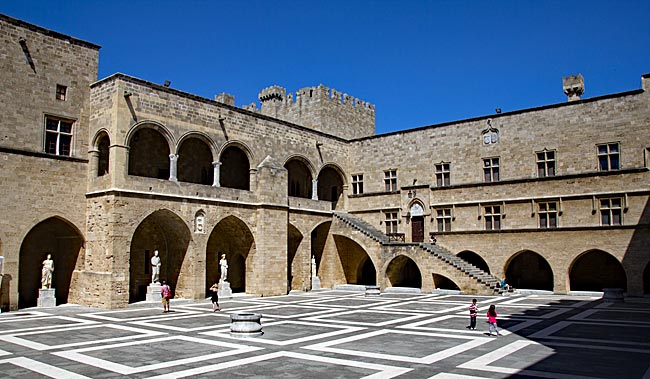
Nevertheless, the structure is impressive even just by looking at the massive interior courtyard measuring 40 by 50 meters. An exhibition of archaeological finds, primarily from the Greek region, is accessible directly from the square. Various rooms on both the ground and upper floors can be reached through an entrance in the main gate. The furnishing of these rooms with furniture and artwork, however, does not reflect the history of the palace; rather, it was chosen freely and includes pieces from different eras and regions.
Amboise Gate and City Wall
Just a stone's throw from the Palace of the Grand Master - which borders the city wall directly - lies perhaps the most impressive of the seven medieval city gates: the Amboise Gate. To the left of the palace grounds, you can reach the gate named after the 41st Grand Master of the Order, Emery d’Amboise, and admire the massive city wall with its moat up to 25 meters wide.
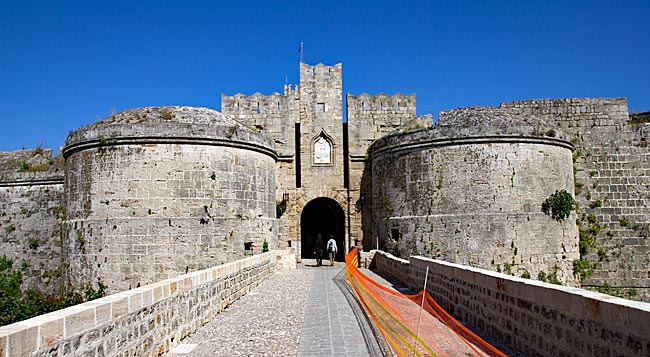
The city was already surrounded by a wall during Byzantine times, which the Knights further expanded after taking power on Rhodes in 1309. In 1480, a Turkish force of 70,000 soldiers besieged the city for less than 90 days; however, it became evident that the walls would not withstand a potentially more intense attack in the future. Consequently, under Grand Master Pierre d’Aubusson, the Order commissioned some of the best fortress builders to reinforce the defenses so they could withstand the increasing firepower of that era. Upon completion, the wall - now up to 12 meters thick - rose approximately 20 meters above the moat; the wall crests were wide enough to accommodate cannons.
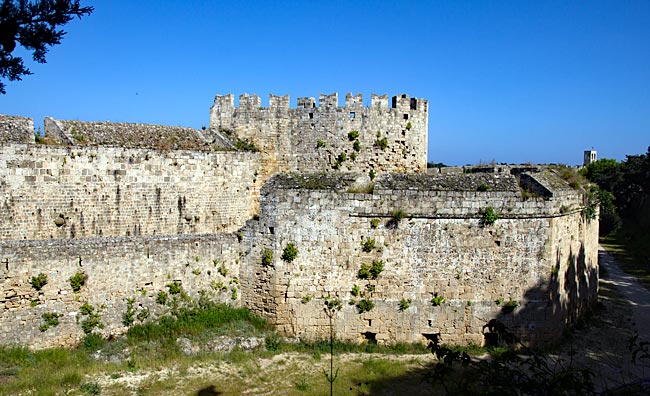
The total length of the wall was roughly four kilometers and was divided into sections, for which different national divisions of the Knights were responsible; for example, the section at the Amboise Gate was under the jurisdiction of the German Knights of St. John.
previous page
 next page
Map
More photos
Kos - The Greek Dodecanese Island
A Travel Guide
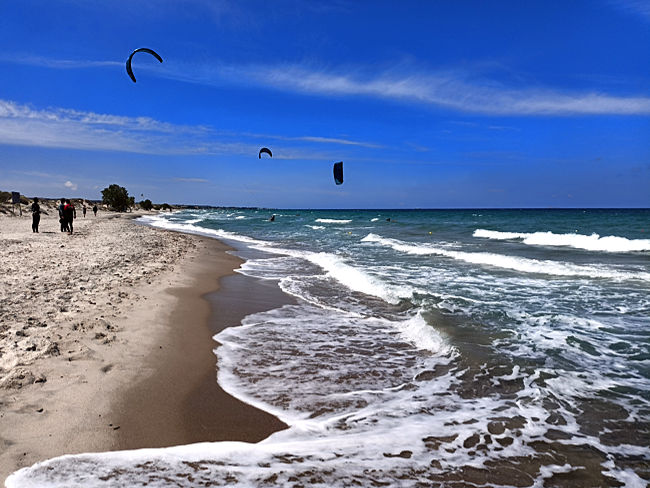
Greece, the cradle of democracy. While some may think of great philosophers like Plato and Aristotle, or mathematicians such as Archimedes and Euclid; others might think of victorious generals like Alexander the Great, who founded Alexandria in present-day Egypt with its legendary library. Yet others may have sun, beach, Mediterranean flair, or the scent of thyme in mind when Greece is mentioned.
read more about Kos ...
Zakynthos
An island defined by the Caretta caretta
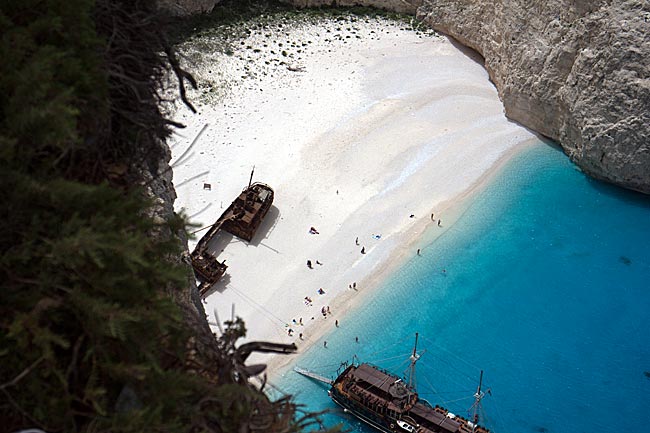
When searching for images of the 406 km² island online, one primarily encounters a very common recurring motif that has been captured from a similar angle by various photographers over the years: Navagio Bay on the northwestern coast. It's all junk, right? Well, that is a matter of perspective, and there are plenty of those during the season, whether they have a camera or not. The fact remains, however, that the rusting wreck of the motor vessel "Panagiotis" has become a landmark for Zakynthos.
read more about Zakynthos ...
The "Green" Island of Corfu
From the sights of the capital, Kerkyra, to the Corfu Trail
The Greeks call not only the city but the island itself Kerkyra. According to legend, it was named after the nymph Gorgyra (also known as Kerkyra), who was brought to the island by the sea god Poseidon. A legend, indeed. In fact, the name appears in a modified form, "Korkyra," on written records as early as 1200 BC. The current name, Corfu, dates back to the Byzantine era. Once an independent island and later the first Roman province of modern Greece, it became part of the Eastern Roman (Byzantine) Empire after the fall of the Western Roman Empire in 395 AD. On a rocky promontory jutting into the sea, the Byzantines built a fortress in the early 6th century and named the city emerging from this core "Koryfo."
read more about Kerkyra ...
Symi
An excursion to the Greek Dodecanese island off the Turkish coast
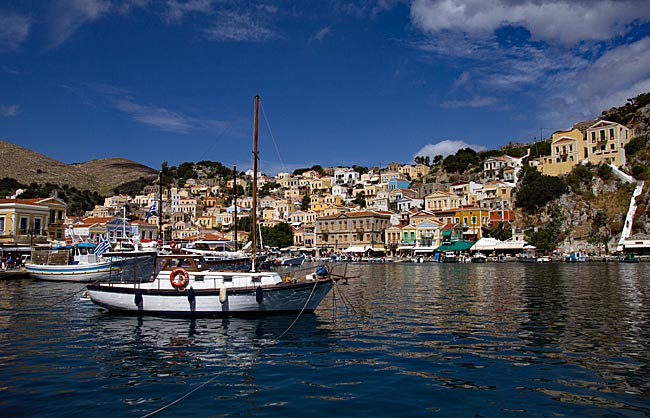
A visit to this sparsely populated rocky island of about 60 square kilometers, with its namesake picturesque harbor town, is part of the standard tour itinerary offered in many locations on the Greek island of Rhodes. From the main island, it takes ships approximately two hours to reach the port of the small island located 23 kilometers north of Rhodes off the Turkish coast, which has belonged to Greece since 1947. As more of the Greek coast recedes into the distance to the port side, the ship draws closer to the Turkish shore; this part of the southern Aegean essentially connects Europe and Western Asia.
read more about Symi ...