
 exploring Bremen & its surrounding areas
 your are here: attractions in the city center
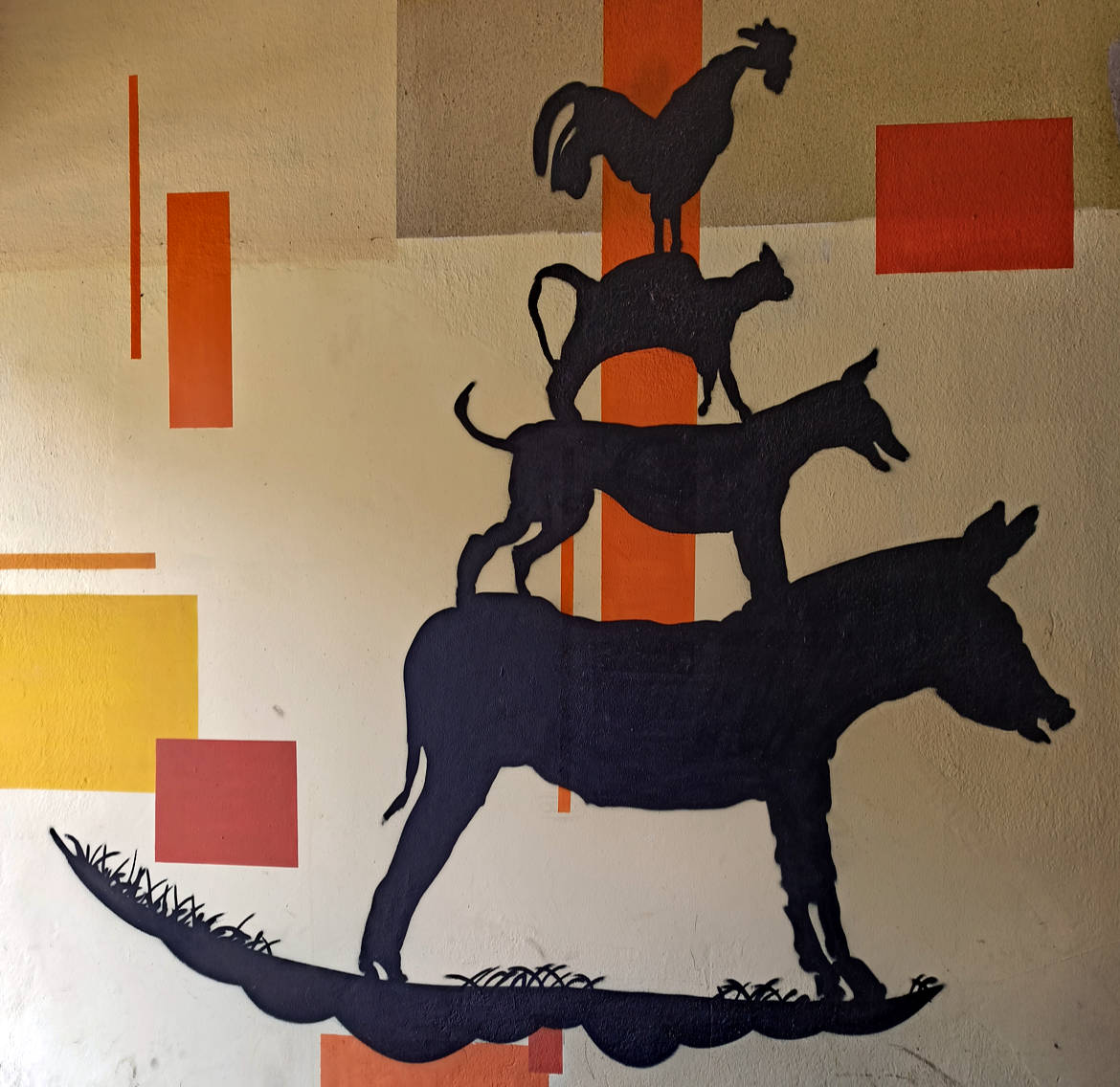
 The Bremen Town Musicians
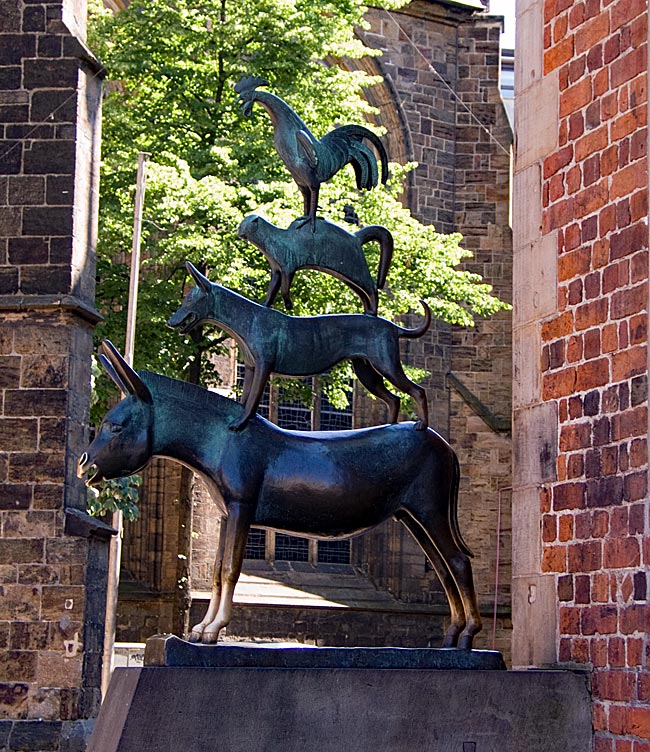
The animal quartet is often visited and touched, as their shiny legs show
On the left side of the Old Town Hall, next to the entrance to the lower town hall hall, stand four bronze heroes from a world-famous fairy tale - the Bremen Town Musicians. However, it remains a contentious point whether these mismatched four - donkey, dog, cat, and rooster - actually made it to Bremen, as the fairy tale does not provide a clear answer. But perhaps that doesn’t matter, because what counts is the message conveyed in the fairy tale: “Come with us instead; we’re going to Bremen. You’ll find something better than death anywhere …” This line from the fairy tale alludes to the free-thinking and aspirations of the people of Bremen.
This aspect is more pronounced in the first recorded version of the fairy tale from the 12th century than in the version known today. In that version, the four do not scare off robbers but rather a lion, wolf, and bear - all heraldic animals of the nobility. The core theme of the fairy tale has been known since antiquity and has been adapted in many variations, with the Brothers Grimm’s version being the most famous. The fairy tale expresses social grievances - the defenselessness and suffering of subordinates under poor treatment by their masters, for example. In reality, many dependent farmers fled from their feudal lords to cities to hide. They could gain freedom if they were not found by their lords after a certain period, often just one year and one day.
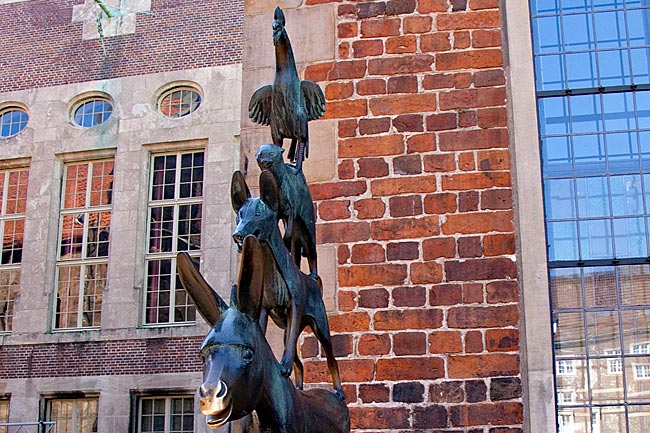
Behind the Town Musicians: on the right, the Old Town Hall, and on the left, the New Town Hall
Bremen is either the end or - looking at it another way - the beginning of the German Fairy Tale Route, a tourist road that stretches for 818 kilometers, mostly along the Weser River from Bremen to Hanau, the birthplace of the Brothers Grimm. Therefore, Gerhard Marcks’ 1953 bronze statue of the Town Musicians of Bremen, visible from the market square, is a popular stop for tourists and many locals alike. Notably, the donkey’s front legs are shiny. According to folklore, wishes come true if you touch them with both hands.
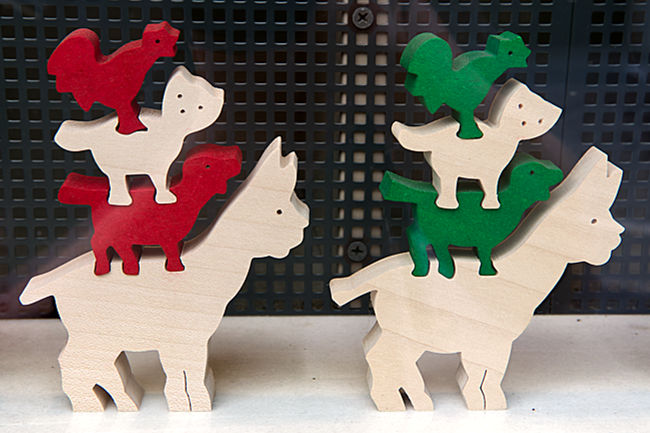
The wooden Town Musicians seen in a shop window - and if they’re colorful, then naturally in red-white, the colors of Bremen’s Speckflagge (Bremen's flag), and green-white, the colors of the Bundesliga football club Werder Bremen
previous page
 next page
Map
Town Hall
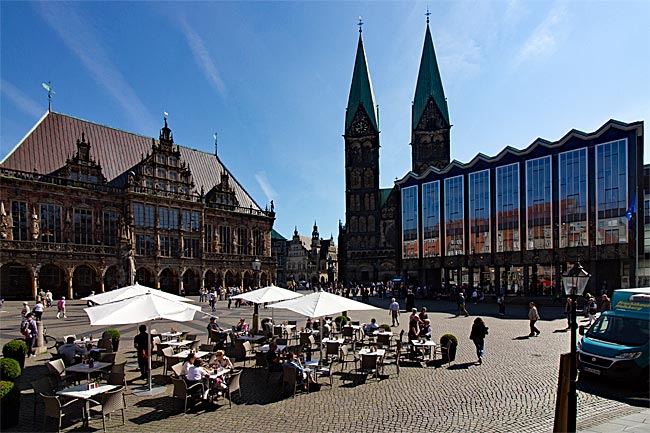
The original Old Town Hall on the market square was built between 1405 and 1412. Little remains today of this rather plain late Gothic brick building. The Renaissance façade that gives the UNESCO-protected structure its distinctive appearance was erected by Lüder von Bentheim between 1608 and 1614. Particularly above the arcades, it is lavishly adorned with various depictions from ancient mythology, which uniquely blend with Christian symbolism, Bremen city symbols, and other representations.
read more ...
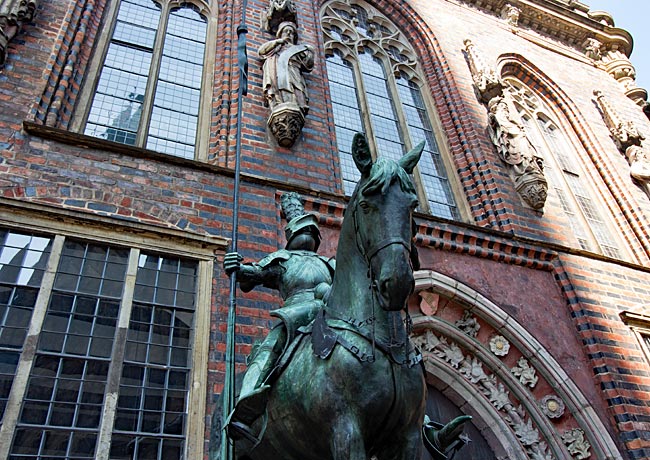
Liebfrauenkirche & Liebfrauenkirchhof
Around 1020, the first parish church outside the enclosed cathedral precinct was built of wood on the site of today's Liebfrauenkirche. The church was dedicated to St. Vitus, venerated as a saint in the Roman Catholic Church. About 80 years later, the building received its current south tower, which is now the oldest preserved part of the structure. Parts of this church, the second-oldest after St. Petri Cathedral, were reused when, around 1160, a three-aisled basilica with three apses was constructed on the same site - the city's oldest market square.
read more ...
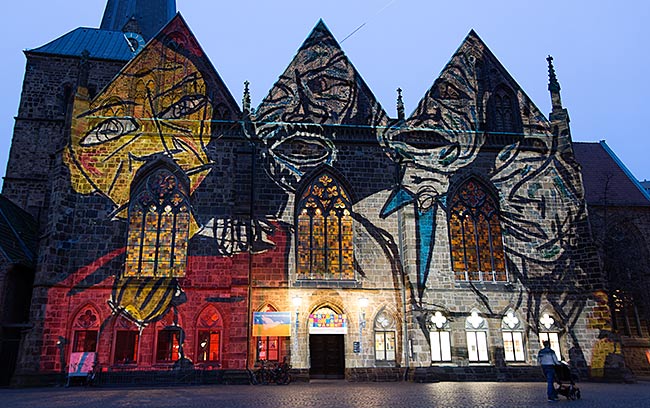
Market Square
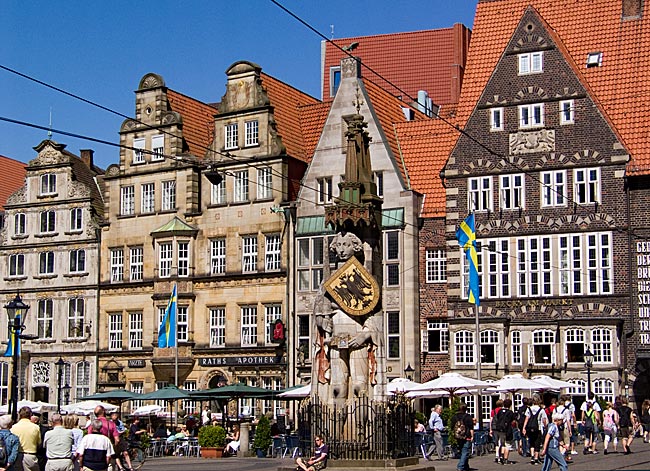
As it was in the past and as it is today, the market square is the political center of Bremen and also a major attraction for thousands of tourists, undoubtedly due to its unique architectural atmosphere. Almost unobtrusive and plain in appearance, the Bürgerschaft (Bremen's parliament) stands next to the magnificent Old Town Hall.
read more ...