
 exploring Bremen & its surrounding areas
 You are here: worth seeing in Walle district
 Überseestadt (1/2)
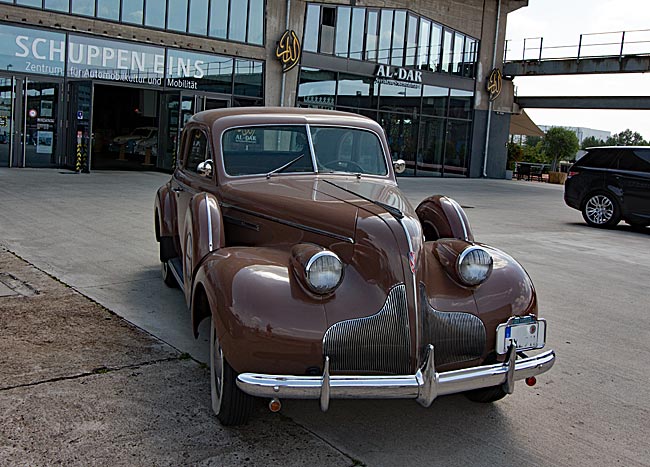
Vintage car in front of Shed One (Schuppen Eins), including the "Center for Automobile Culture and Mobility" next to the Syrian restaurant Al-Dar
Due to the recurring silting up of the Weser River and the increasing size of ships with ever greater drafts, the city of Bremen had already established Bremerhaven as its port in the 18th century. The municipal ports lost significance until the 1980s, and when one of the harbor basins, the Overseas Port (Überseehafen), needed renovation, the decision was made in 1991 to simply close it. In 1998, the Overseas Port was finally filled with sand from dredging operations in the Outer Weser. Together with the also decommissioned but still existing Europa Harbor basin, this formed the basis for the conceptual development and creation of today's Überseestadt.
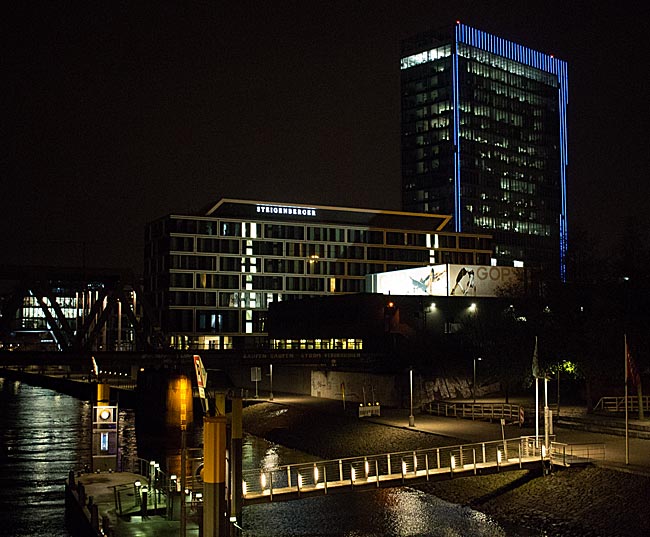
View of the blue-lit Weser Tower, with the GOP Variety Theater and Steigenberger Hotel in front
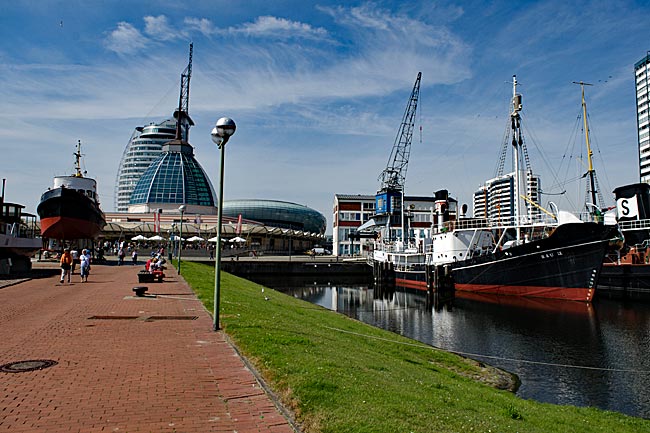
The Weser Tower is prominently visible, marking the entrance to Überseestadt from the adjacent Stephani district. Drivers coming from Oldenburg and train travelers pass almost directly by this building, completed in 2010 on the former site of the Weserbahnhof railway station. The 22-story office tower with its glass-and-steel facade next to the GOP Variety Theater is certainly not a beauty, but it is quite impressive after dusk when it glows in blue light.
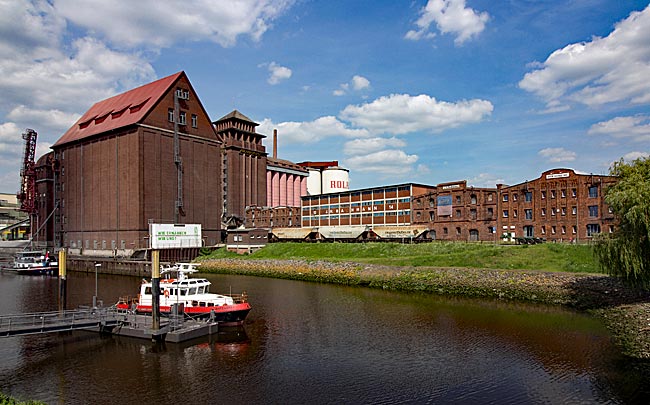
In the vicinity of the "Fire Station": the historic Roland Mill, whose history dates back to the late 19th Century
Not only near the tower but across the entire Überseestadt area, numerous commercial buildings and residential blocks have since been constructed, though unfortunately too few stand out from the architectural monotony. Both large and small companies have settled here alongside those already established, such as logistics firms - a development undoubtedly positive for Bremen as an economic hub. Parts of Überseestadt remain harbor territory, as both the Grain Port and the 1890/91-established Timber and Factories Harbor are still actively used. Among other facilities, the protected Roland Mill with its silos and storage buildings stands here.
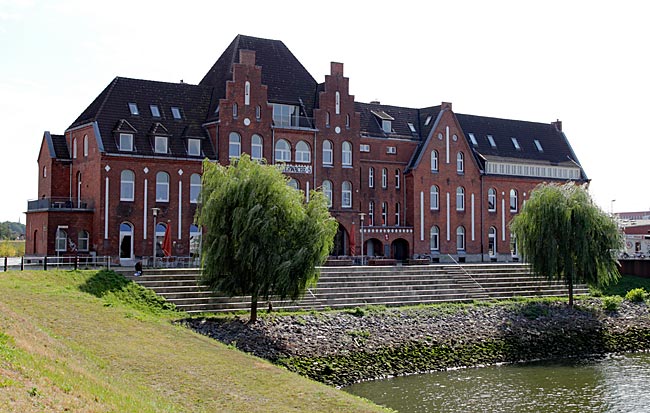
The "Fire Station" at the head of the Timber and Factories Harbor
On sunny days, visitors can watch the harbor activity from the terrace of the former fire station, now operating as a restaurant, located at the head of the harbor basin. Occasionally, dust may drift over, but that is part of the unique charm. A massive flour dust explosion on February 6, 1979, also destroyed parts of this economically significant mill and shattered windows even farther away. The explosion injured 17 people, some severely, and claimed 14 lives. However, visiting the magic theater opened in 2020 by professional magician David Lavé above the restaurant is certainly not life-threatening - unless you laugh yourself to death ... and there is plenty to laugh about during the show.
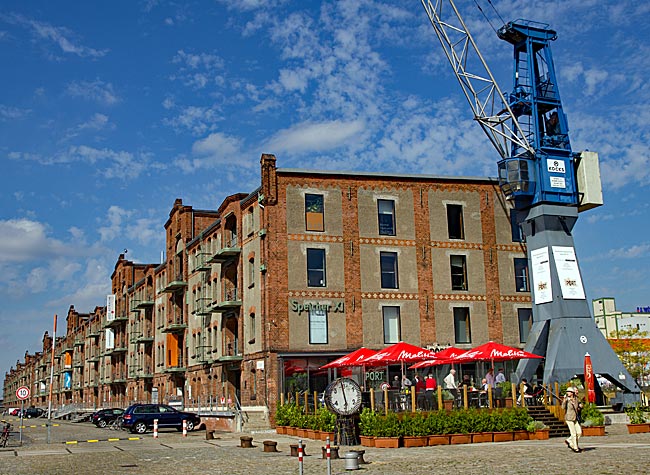
Renovated old Speicher XI warehouse
Unusual is the location of the University of Arts a few meters away. Alongside gastronomy and the Harbor Museum, it uses parts of the renovated old Speicher XI warehouse after its previous premises became too small.
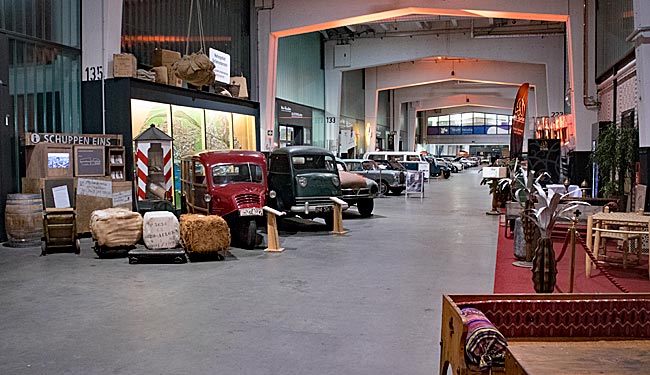
View inside Shed One with some of the numerous vintage cars in the "Center for Automobile Culture and Mobility"; on the right, the entrance to Al-Dar
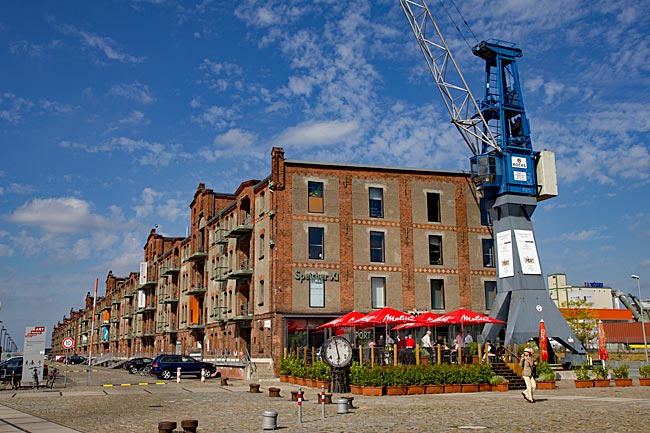
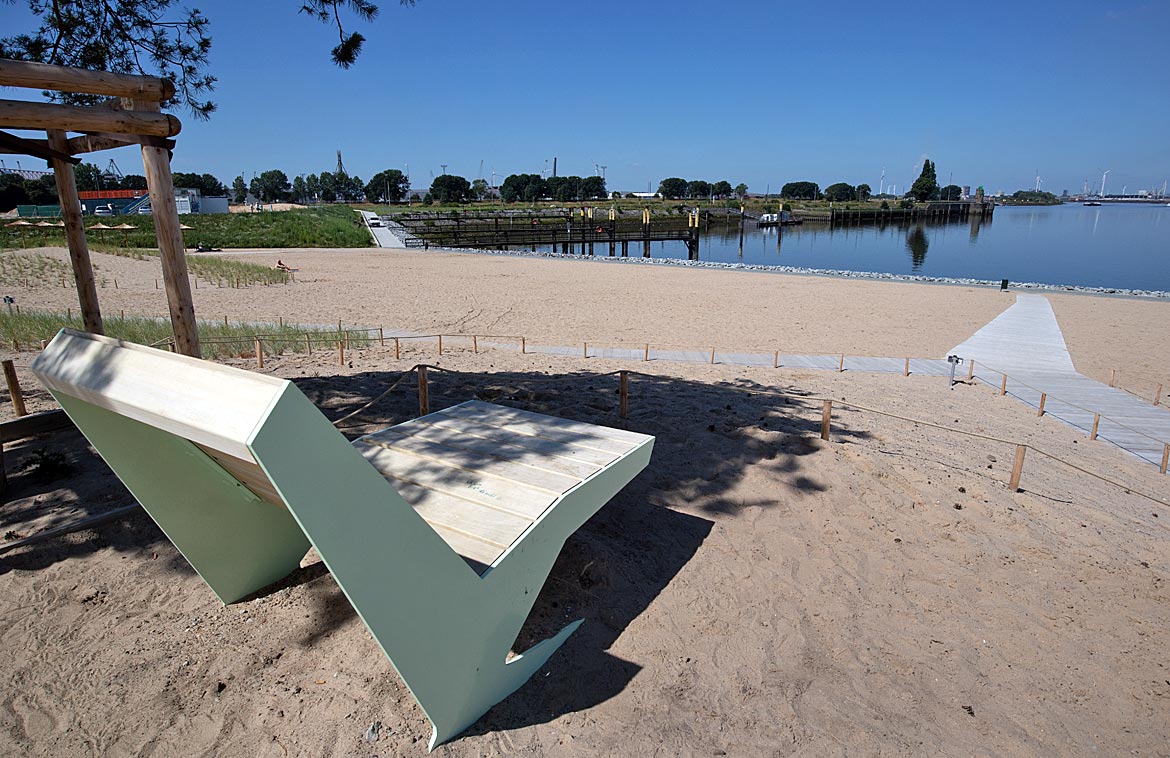
Other restored and converted warehouses can be found in Überseestadt. Visitors are particularly drawn to Shed One at Europa Harbor, featuring vintage cars in the "Center for Automobile Culture and Mobility" with some truly impressive "jewels," a glass workshop, the Syrian restaurant Al-Dar, high-tech bicycles, and more. On this side of the harbor basin, a pleasant promenade has emerged with several dining options. A special appeal comes from the mix of modern architecture and refurbished historic buildings. The tiered seating at the head of the basin and the small marina add the perfect finishing touch.
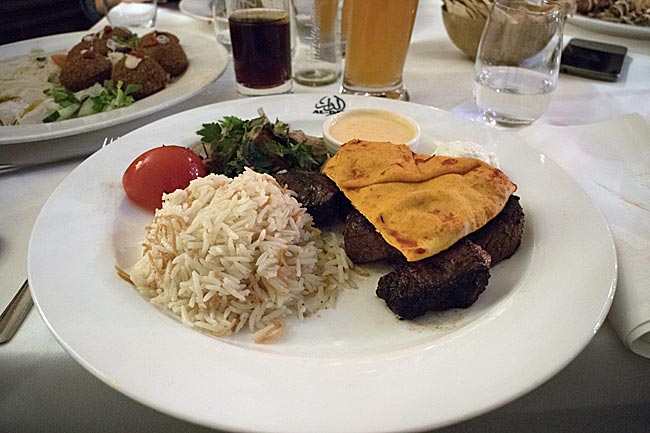
Menu at the Syrian restaurant Al-Dar in Shed One
previous page
 next page
Map
Bremerhaven in general
It was not until 1827 that Bremerhaven was founded. To secure its status as a port city in the face of the impending silting up of the Weser - the lifeline of Bremen - Bremen acquired 342 acres of land from the Kingdom of Hanover for 74,000 talers under then-mayor Johann Smidt. Approximately 60 kilometers downstream from Bremen, this became the site of the first urgently needed seaport built by Bremen, known as the Old Harbor, completed by 1830.
read more ...
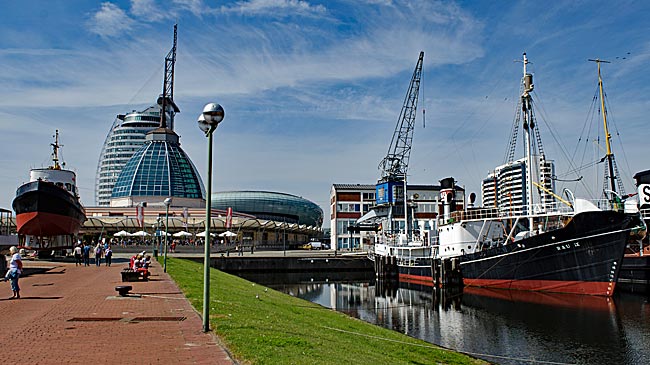
Through Walle district to the industrial ports
The history of Walle began, like that of many other districts in Bremen, long ago as an independent village, more precisely, it started only as the seat of the Ministerial family von Walle. The first mention of the old village dates back to the year 1139. From this family came both farmers and citizens. Thus, with the settlement of more people, the family estate grew into a village around the manor. Walle was incorporated into the Hanseatic city in several steps, first between 1885 and 1902.
read more ...
Stephani district
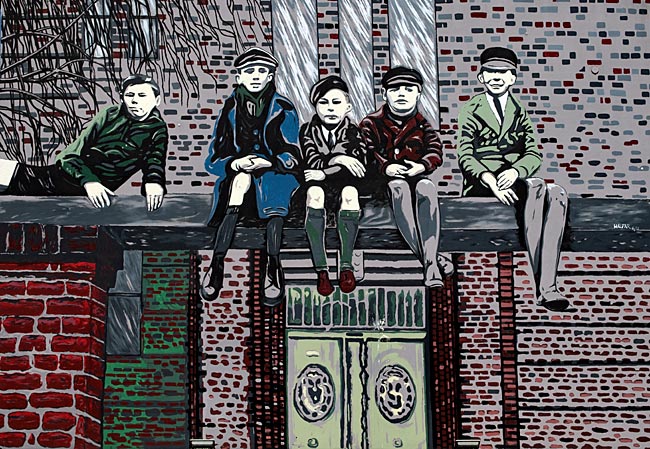
The Stephani district forms the western end of Bremen's Old Town and is considered the birthplace of the city, making it one of its oldest districts. As early as 1050, Archbishop Adalbert I founded a priory in honor of Saint Stephen. The priory, located on a dune, was called Steffensberg (mons sancti Stephani) in German translation. Adalbert's episcopal successors established a parish and built the first church in what was then also known as Steffensstadt (Stephen’s City).
read more ...
Through Woltmershausen to Lankenauer Höft
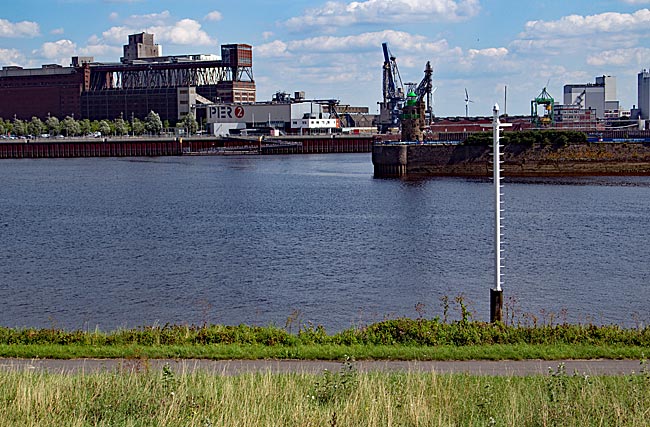
A truly maritime bike tour takes you from the Stephani Bridge through Hohentorshafen and Woltmershausen all the way to Lankenauer Höft, which is almost entirely surrounded by water. Behind the Höft, several ships, including the 1957-built tugboat Greif, are moored in an unrestricted section of Neustädter Harbor. This view of the harbor marks the end of this tour.
read more ...
Weser cruise from Bremen to Bremerhaven
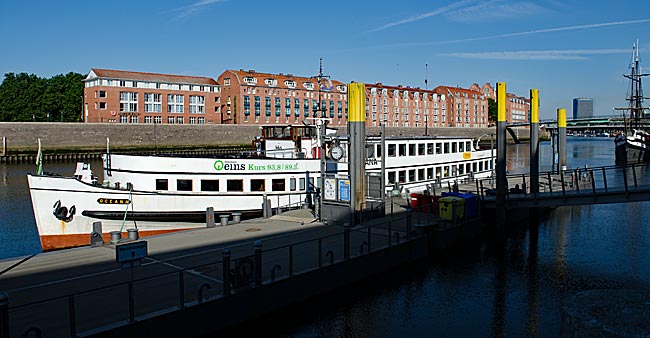
Of course, you can take a car for a visit to Bremerhaven from Bremen or board the regional train at the main station. However, with suitable weather and enough time, it is more interesting to cover the route on the Weser by ship. The shipping company "Hal över" operates the connection from May to September. The ship departs from the Martinianleger near the city center along the Schlachte. Those who wish can even take their bicycle with them; additionally, you can pre-book a breakfast onboard.
read more ...
City Center: the main shopping streets
Another traditional café can be found at Sögestraße 42/44. The Knigge confectionery was established in 1889 and offers a variety of baked goods, chocolates, and ice cream, making it well-known throughout the city. Diagonally across from the café, branching off from the row of shops, is the glass-covered Katharinen-Passage, which - with an interruption - leads into the Domshof-Passage, ending at the Domshof. On this site, which now houses retail stores and a parking garage, once stood the namesake St. Katharine's Monastery.
read more ...