
 exploring Bremen & its surrounding areas
 You are here: attractions in the city center
 Market Square
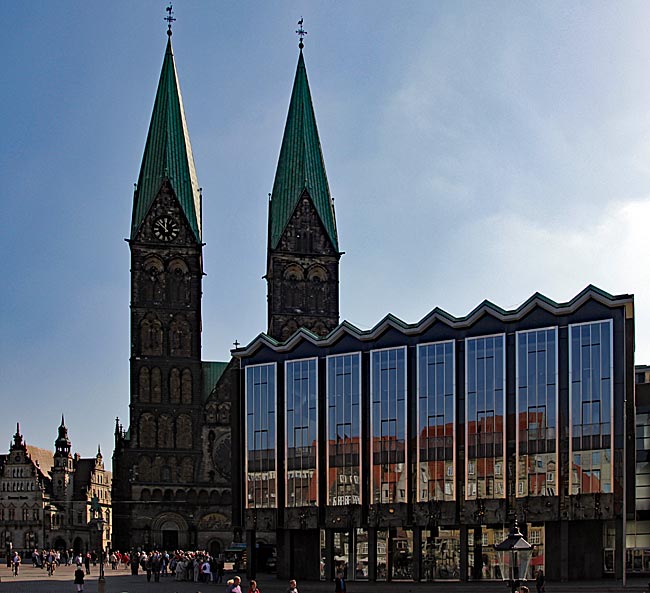
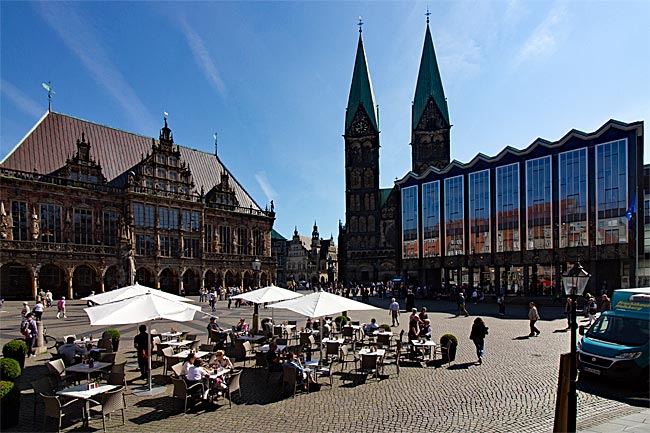
View of the Bürgerschaft, with the cathedral rising behind it
As in the past, the market square remains the political center of Bremen and today attracts thousands of tourists, undoubtedly due to its unique architectural ambiance. The Bürgerschaft (Bremen's parliament) stands almost unobtrusively and plainly next to the magnificent Old Town Hall. The design for the Bremian Bürgerschaft building was controversial; the winning architect of the 1961 competition, internationally renowned Wassili Luckhardt, had to modify his plans several times before the building could finally open in 1966.
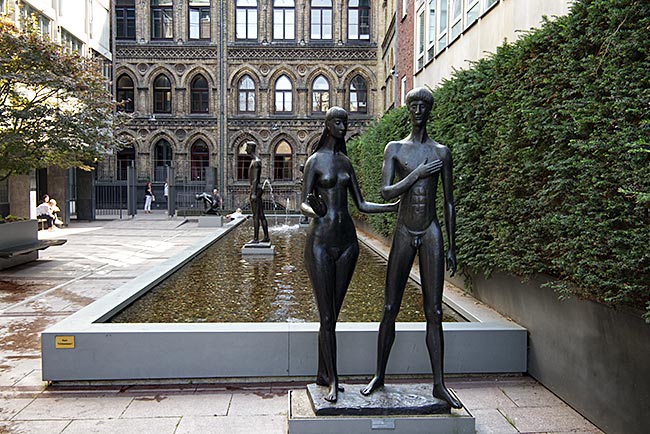
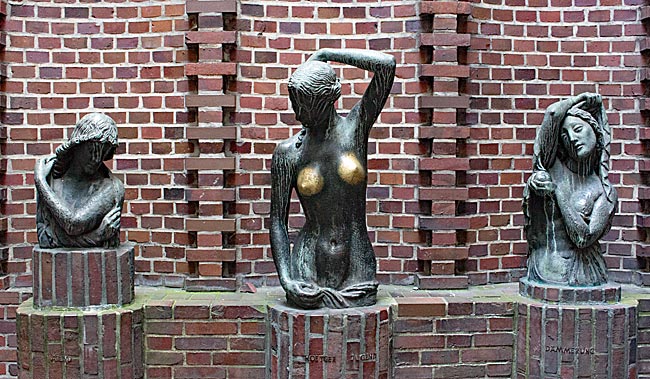
View into the Bürgerschaft Garden with the artwork "Prima Vera" (1958) in the foreground and the Old Stock Exchange in the background
Next to the Bürgerschaft lies the Bürgerschaft Garden, featuring several bronze sculptures by Gerhard Marcks (who died in 1981), a fountain, and numerous benches. Those interested in the artist’s work will find it at the Gerhard-Marcks-Haus, which manages his estate. However, the sculpture garden is not always open; visitors can sometimes only peer through the metal fence.
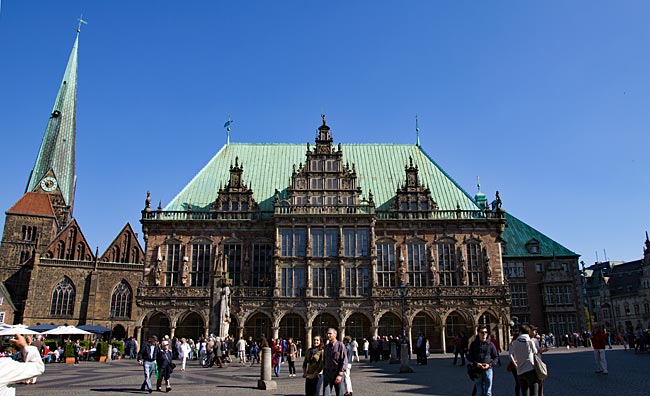
View of the Old Town Hall, with the New Town Hall to the right and Liebfrauenkirche to the left
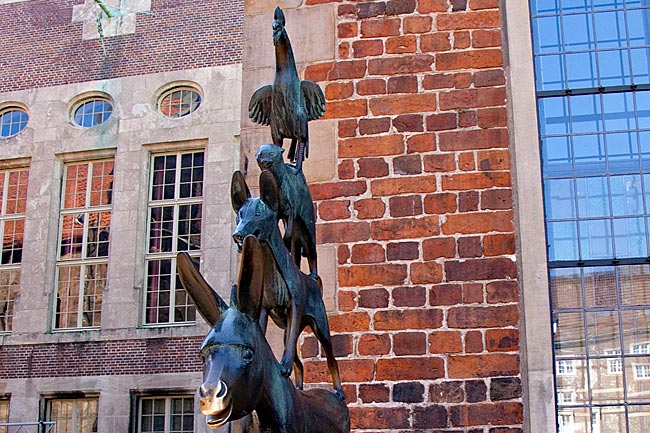
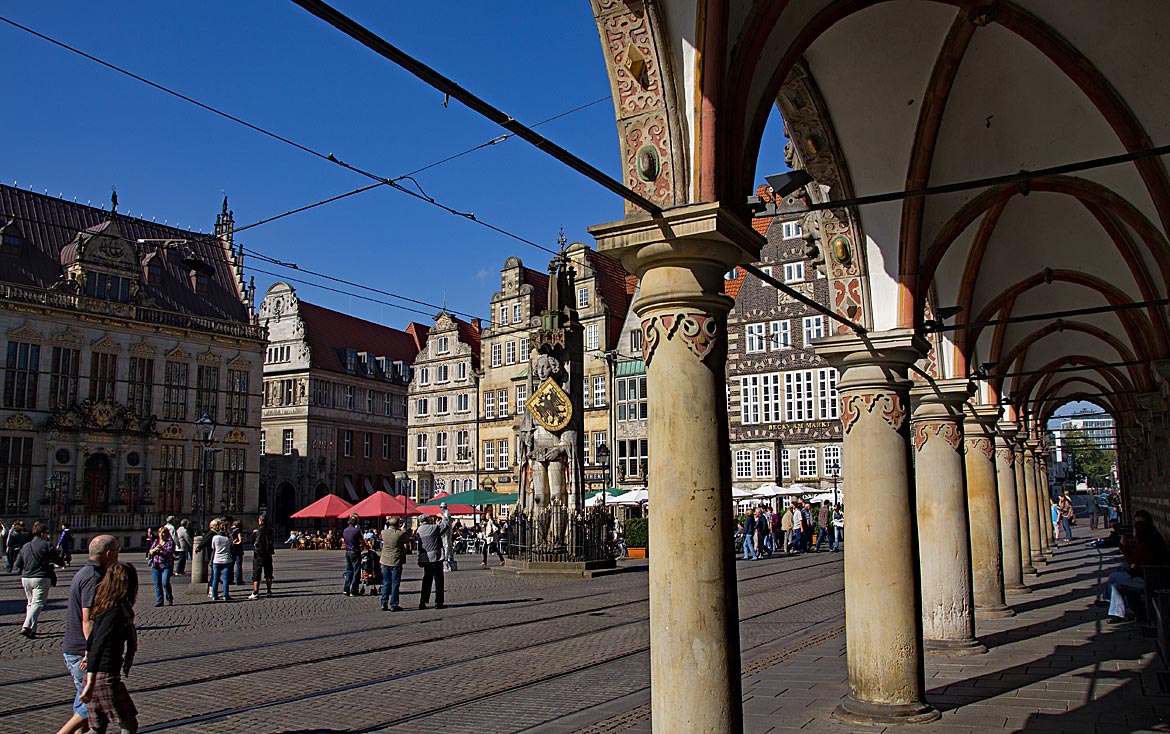
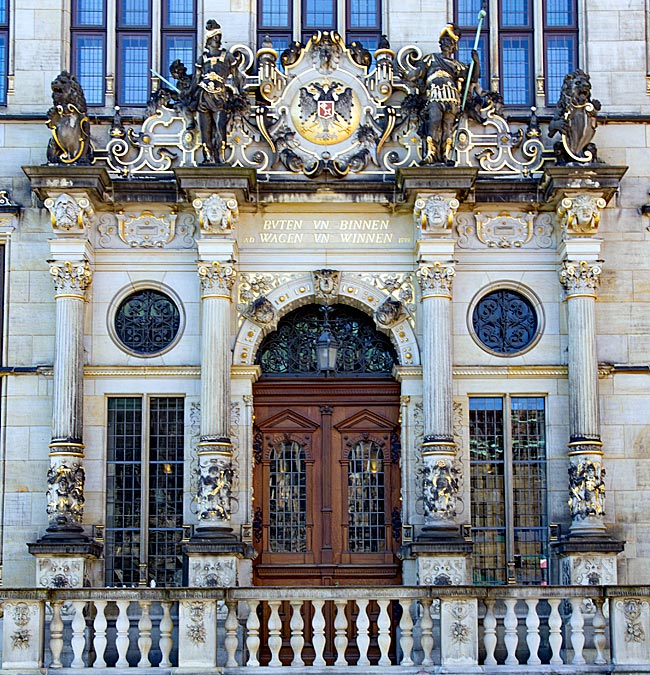
In contrast, the aforementioned Old Town Hall is undeniably attractive, having been built at the beginning of the 15th century. Its Renaissance façade, added between 1605 and 1612, is particularly striking. Together with the New Town Hall behind it and the Roland statue - a sandstone knight that has stood on the market square since 1404, facing toward the cathedral - this ensemble has been a UNESCO World Heritage Site since 2004. Incidentally, one of the city’s landmarks, the Bremen Town Musicians, can be found near the western entrance to the lower town hall.
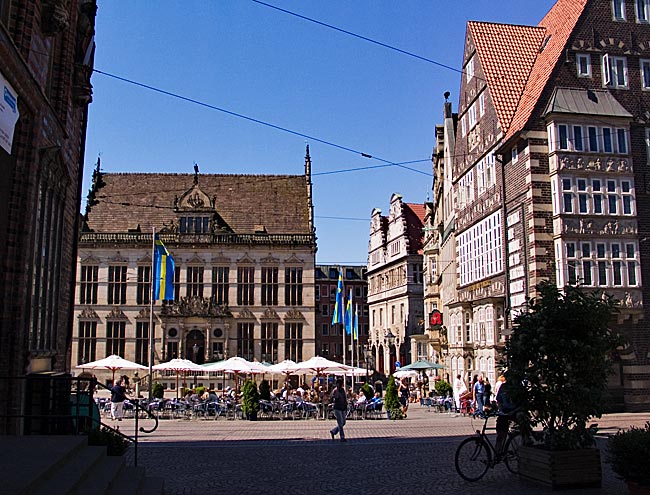
View from the Town Musicians across the market square to the Schütting
Opposite the town hall stands the Schütting, the guildhall of the merchants. The fact that the merchants built such a powerful structure in the 16th century could be seen as a clear statement against the political authorities of the time. About 70 years later, those same authorities gave the town hall its new façade. The small, rather unassuming alley to the left of the Schütting leads to the traffic-free Böttcherstraße, one of Bremen’s most beautiful streets.
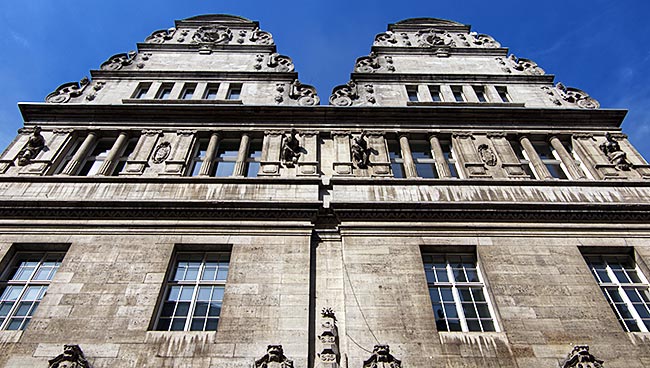
View between the Schütting and Bürgerhäuser toward the Kontorhaus (1910-1912) on Stintbrücke Street. The street name indirectly refers to the Balge River, a tributary of the Weser River that once flowed here. In earlier times, large numbers of smelts (Stinte) were caught in the Weser - and probably also in the Balge
In front of the 18th- and 19th-century merchant houses opposite the Bürgerschaft, one can enjoy a refreshing drink at one of the café tables on the market square. From here, you have a clear view of the entire market square and the cathedral, almost as if transported to another time, were it not for the Bürgerschaft’s architecturally jarring presence and the tram rumbling past at regular intervals.
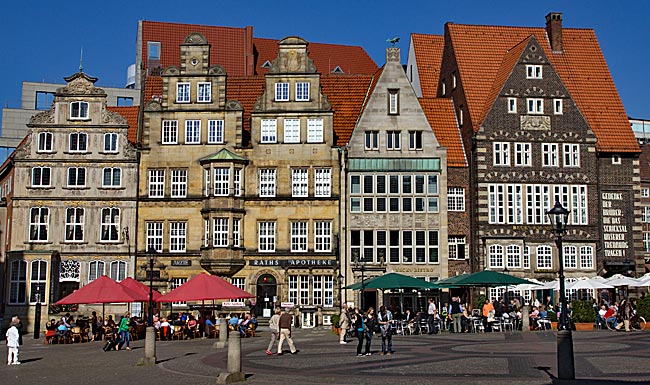
Merchant houses opposite the Bürgerschaft. The Rococo facade of the left building belonged to the Pflüger house built around 1755 on the Schlachte. However, the building burned down in 1944 and the preserved facade was moved to the market for a new construction in 1957
Archival footage shows that in the post-war era, the market square, known as Bremen’s "good room," presented a very different picture. It took many years to repair the war damage, and there was no city tourism of today’s scale. The market square was primarily for locals, who loved driving right up to the door - especially since no restaurants were competing for parking space.
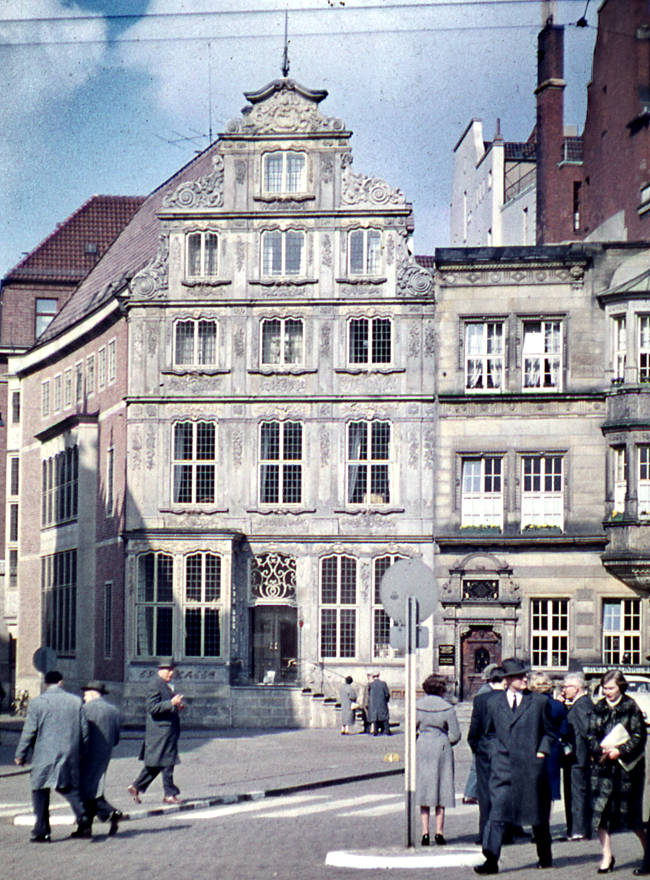
In 1959, there were no discussions about a car-free inner city in Bremen. The merchant houses also weren’t as well-maintained as they are today, as comparison photos show (e.g., the building to the right of the former savings bank)
In October, the small Freimarkt fair takes place on the market square, parallel to the large Freimarkt on Bürgerweide between the train station and exhibition halls. Two months later, during the pre-Christmas period, the Christmas market is held here, filling the air with enticing aromas and colorful lights illuminating the ensemble in the evening.
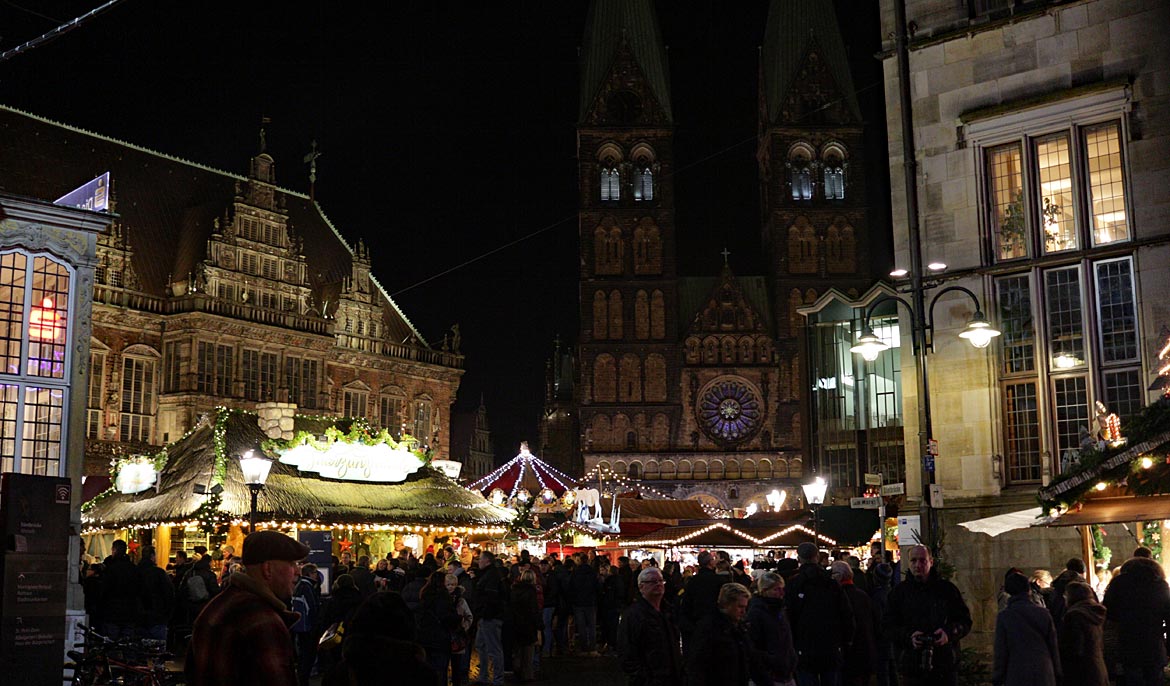
Christmas market on the market square
By comparison, the so-called Bremer Loch (Bremen hole) near the steps of the Bürgerschaft is relatively new. This 90-centimeter-deep public donation box is set into the ground and covered by a 50-centimeter-wide bronze lid that could easily be mistaken for a manhole cover as you pass by. The initiative comes from Wilhelm Kaisen Bürgerhilfe, a charitable organization in the Hanseatic city. Since 2007, the inscription "Kreih nich, jaul nich, knurr nich, segg i aa - doh wat rin in't Bremer Loch" ("Don’t caw, don’t howl, don’t growl, just say yes, put something in the Bremer Loch") encourages passersby to drop a coin or two into the slot. After insertion, the donor is rewarded with one of four animal sounds triggered digitally by a chip via a photo cell.
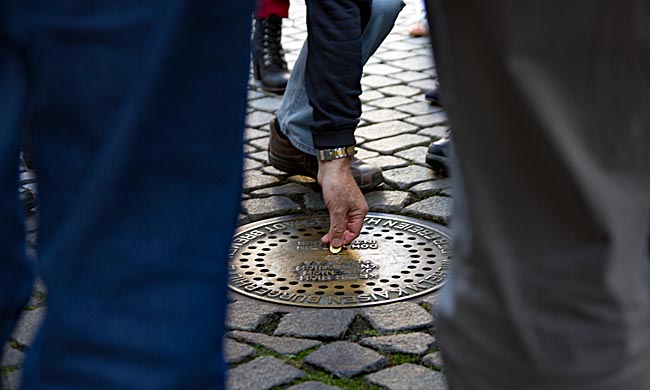
Coin Insertion into the Bremer Loch
Money was also at stake in the cotton trade - and in large quantities - for merchants and the Hanseatic city alike. In 1872, Bremen’s cotton trading companies joined forces, establishing binding regulations for the trade. The regional association quickly became overregional after its renaming to the "Bremer Cotton Exchange" in 1877, soon including Austrian and Swiss spinning associations and the cotton industry. And Bremen’s standards applied.

Cotton in the Botanical Garden in Kiel
The Bremer Cotton Exchange was already a member of the "International Cotton Convention" when construction of a new administrative building was decided upon. Not far from the centers of economic (Schütting) and political (town hall) power in Bremen, the building was occupied in 1902 at the corner of Marktstraße/Wachtstraße - the corner house to the right past the Bürgerschaft Garden.
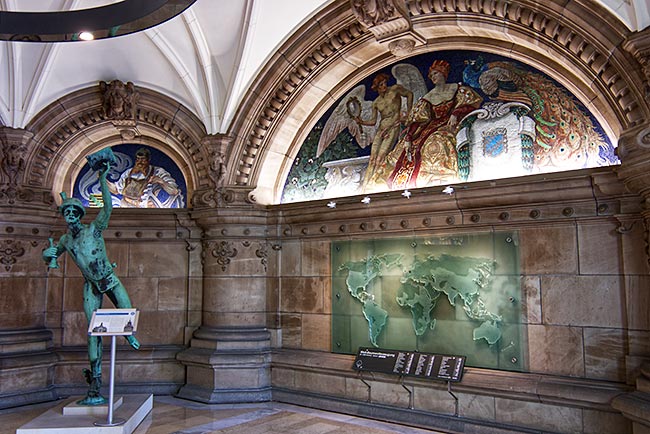
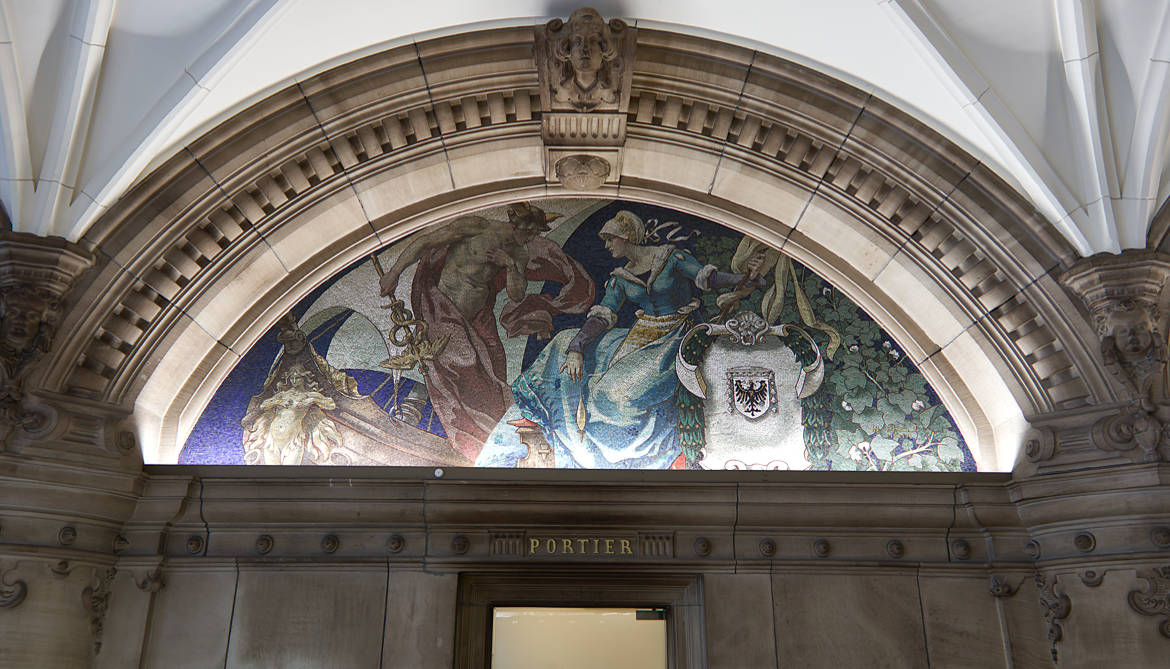
Lunette Mosaics in the entrance area of the Bremer Cotton Exchange with Hermes, the Messenger God, on the left
The building quickly lost its originally magnificent exterior appearance; the weathering facade material was replaced between 1922 and 1924 with Weser sandstone, and war damage further contributed to its deterioration. Nevertheless, the building is now under monument protection, largely due to its interior value. In addition to the staircase and one of the last paternoster elevators, the lunette mosaics in the entrance area are particularly worth seeing. They were produced in 1906 by Puhl & Wagner, a company that grew into Germany’s largest producer of glass mosaics and paintings with its own glassworks before being liquidated in 1969.
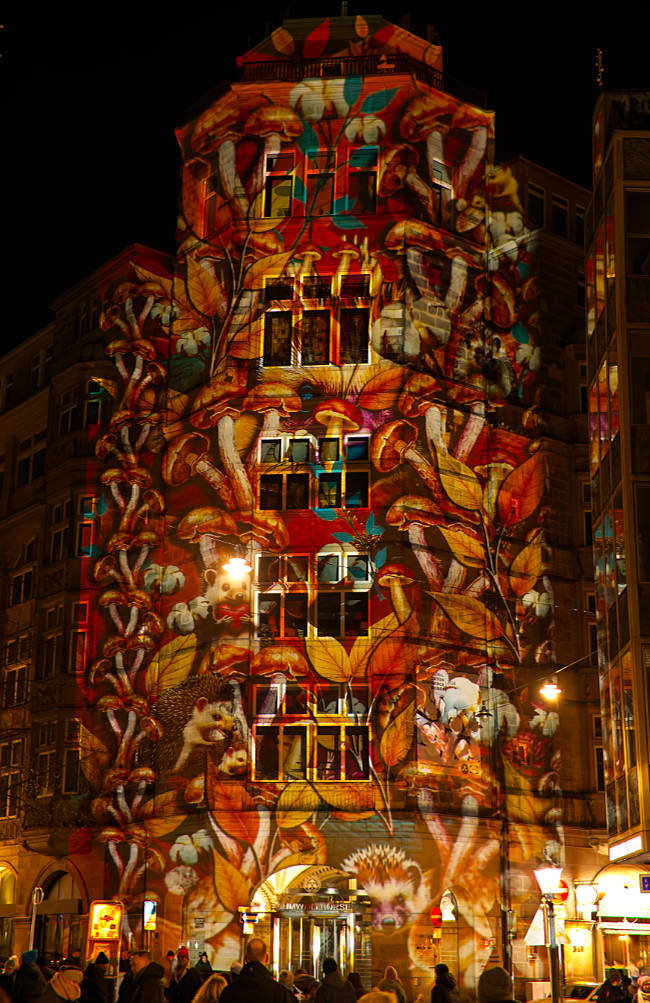
Part of the Cotton Exchange in an unusual guise for the "Lichter der City" event in 2025 under the motto "Four Seasons"
In past times, a central market square was a popular place for gatherings and it still is today with the market at the heart of Bremen. During the "Lichter der City" event in January, numerous historic buildings in the city center are brought to life for several days from 4:30 PM to 10:00 PM with artistic projections. The city-funded and free event also gives Bremen’s artists the opportunity to display their creations, literally throwing them onto the walls. In addition to changing still images, some facades, such as those of the cathedral or Schütting, become film sets of moving images and patterns, transforming into a colorful sea of colors with surprising effects set to musical accompaniment. Sometimes the program of artistic works changes over the course of the days. A highlight that further delights many people is the performance by the stilt walkers of Stelzen Art with their imaginative and beautiful costumes as part of "Lichter der City." Particularly impressive is their self-staging as light figures.
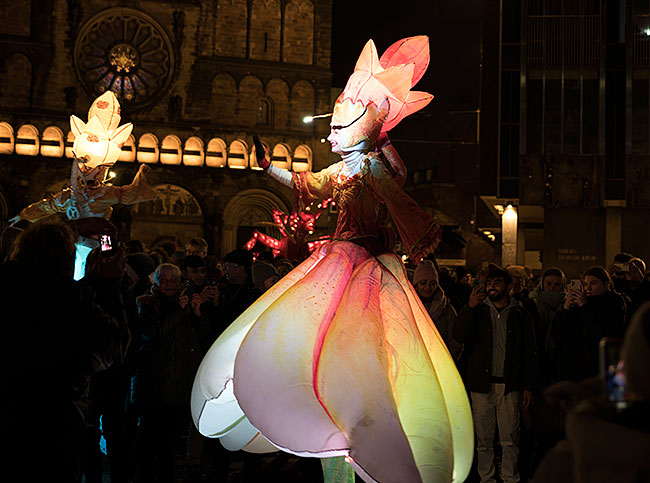
Stilt walkers from Stelzen Art on the market square
previous page
 next page
Map
Town Hall
The original Old Town Hall on the market square was built between 1405 and 1412. Little remains today of this rather plain late Gothic brick building. The Renaissance façade that gives the UNESCO-protected structure its distinctive appearance was erected by Lüder von Bentheim between 1608 and 1614. Particularly above the arcades, it is lavishly adorned with various depictions from ancient mythology, which uniquely blend with Christian symbolism, Bremen city symbols, and other representations.
read more ...
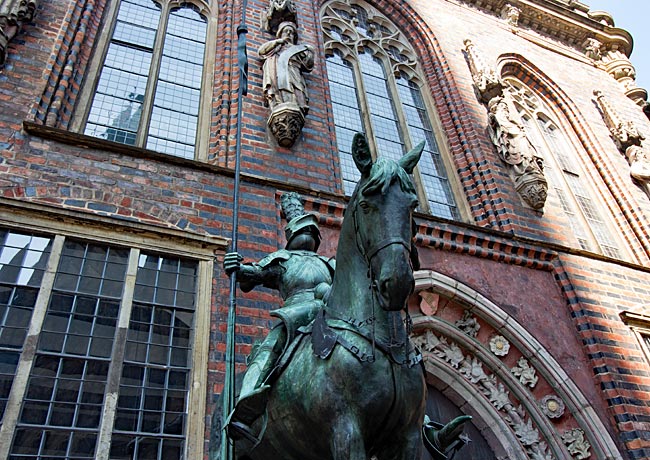
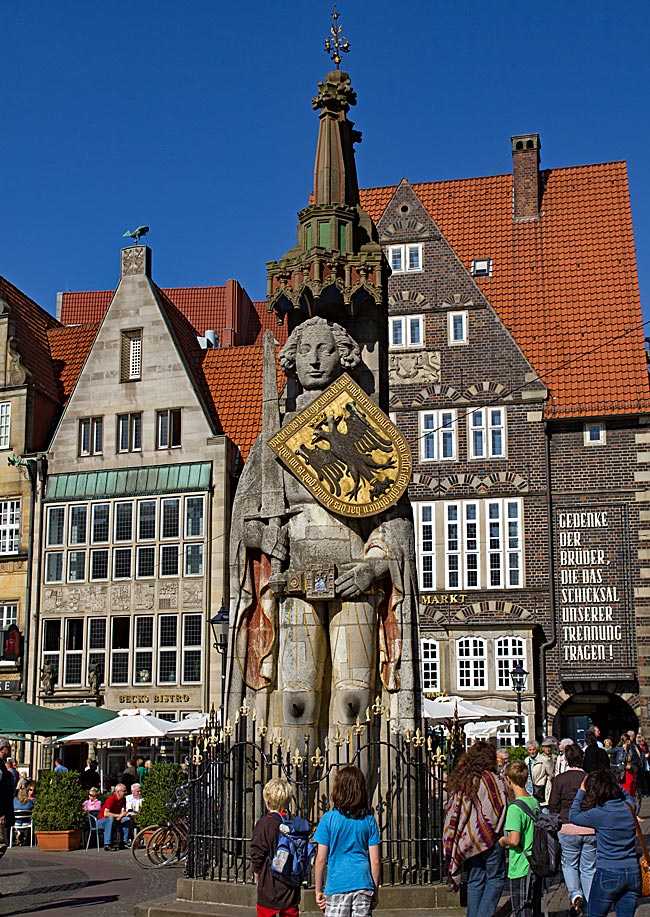
Roland statue
The Roland statue stands on the market square in front of the town hall and has been there since 1404. It is a 5.55-meter (10.21-meter total) tall sandstone figure of a knight with a drawn sword and shield in front of his chest. Like in many other European cities, the Roland in Bremen symbolizes the city's freedom, which historically stemmed from market rights and its own jurisdiction.
read more ...
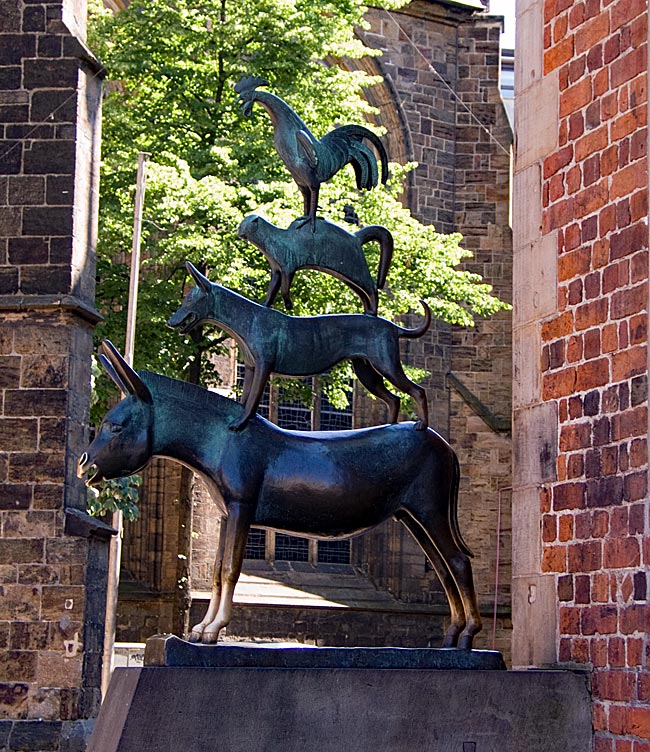
The Bremen Town Musicians
On the left broad side of the Old Town Hall, next to the entrance to the lower town hall hall, stand four bronze-cast heroes of a world-famous fairy tale - the Bremen Town Musicians. However, it remains a contentious point whether these mismatched four - donkey, dog, cat, and rooster - actually made it all the way to Bremen, as the fairy tale does not provide a clear answer on this matter. But perhaps that is not so important, for what truly matters is the message conveyed in the fairy tale.
read more ...
The Schütting
The Schütting, the house of the merchant guild, formerly the guild and banquet hall. Built between 1537 and 1538 by an Antwerp architect in the style of Flemish Renaissance, this structure is already the second Schütting at this location. The east gable, created in 1565 by a Bremen stonemason, has remained almost entirely original to this day. A redesign of the market-facing facade in 1595 introduced stylistic changes toward Weser Renaissance.
read more ...
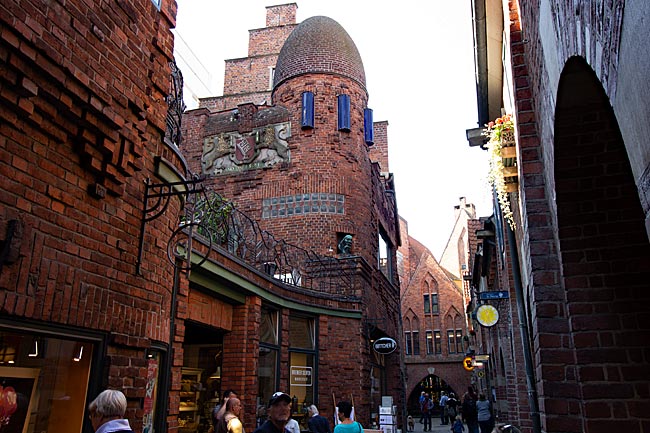
Böttcherstraße
Since at least 1931, the name Böttcherstraße is no longer primarily associated with the scent of wood and the sound of coopers' hammers, but rather with a very special, almost enclosed ensemble of buildings. Over a length of just over one hundred meters, museums, open artist workshops, specialty retailers offering upscale goods, dining establishments, and a hotel create a unique atmosphere between brick and sandstone structures that is unparalleled in Bremen.
read more ...
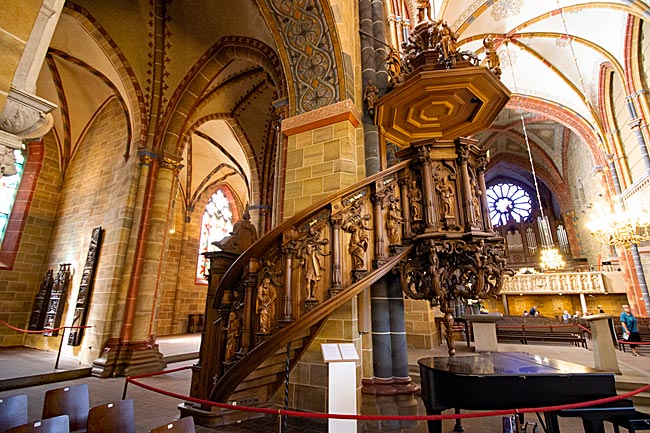
St. Peter's Cathedral
The history of the cathedral, Bremen's oldest church, begins with the Christianization of the region - originally settled by the Saxons - by Charlemagne in the 8th century. While it is uncertain exactly when the first cathedral was built on the highest point of the so-called Bremer Düne (Bremen Sandhill), it was likely destroyed by invading Vikings from Denmark in 858. The subsequent Romanesque structure, begun in 1041 and completed with its two towers in the 13th century, was later remodeled in the Gothic style during the 16th century.
read more
...
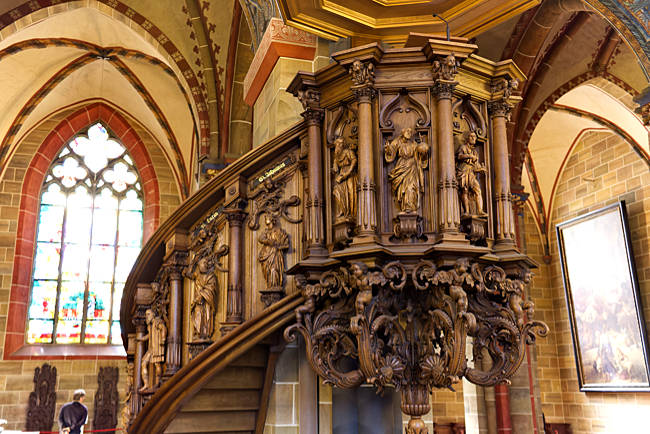
Domshof
In the shadow of the cathedral (Dom) lies the Domshof. Until 1803, the cathedral precinct - and thus the large square - belonged to the respective bishops, then Sweden, and later the Electorate of Hanover, which ruled Bremen at times. The buildings, including merchant houses, along with the planting of numerous trees, made the Domshof one of the most beautiful squares in the Hanseatic city during the 18th and 19th centuries.
read more ...
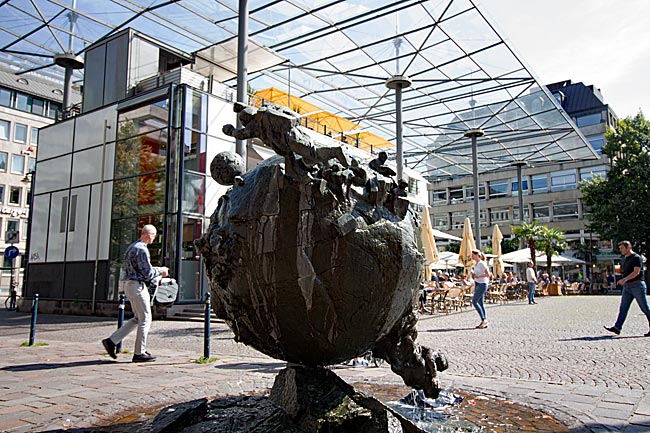
Schlachte
Between the Wilhelm-Kaisen Bridge and the Stephani Bridge, a promenade with a boulevard, ship docks, and numerous dining establishments offering something for every palate was created between 1993 (start of construction) and its grand opening on May 27, 2000. The project cost over €20 million, primarily funded by the EU, and features 60 trees and ample granite paving.
read more ...
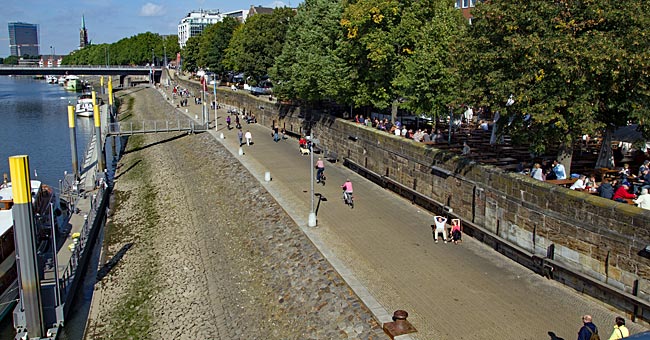
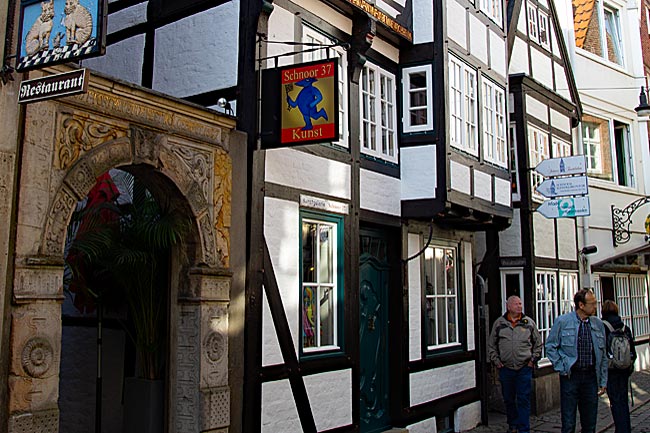
Schnoor
Bremen's oldest preserved neighborhood is the Schnoor. In earlier times, this area was primarily inhabited by fishermen and sailors, as it was here that the Balge - a tributary of the Weser - ran, and one of Bremen's first harbors was located. Many of the small houses date back to the 17th century or have been reconstructed based on historical models. The house at No. 15 in Schnoor Lane, built in 1402 on medieval foundations, is one of the oldest structures in the Schnoor, alongside the Packhaus (1401).
read more ...
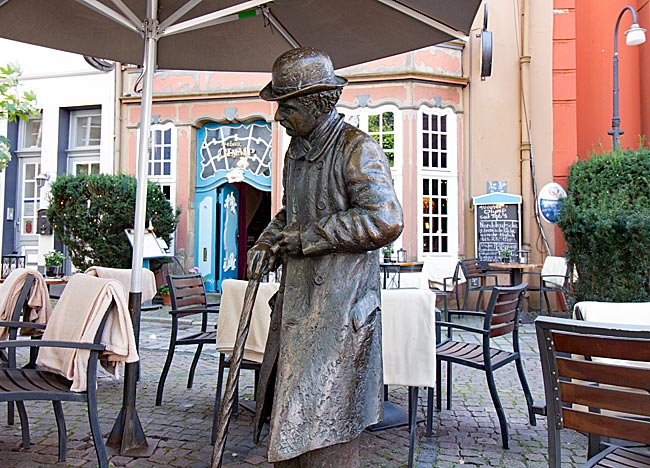
A stroll through the Neustadt
The Old Neustadt was only properly established as part of the district in the 17th century. One reason for this planned expansion of the city was the increasing threat posed by advancements in weaponry. Remnants of the defensive walls built at that time still exist today as parks, but there is much more to discover, such as the Little Roland.
read more ...
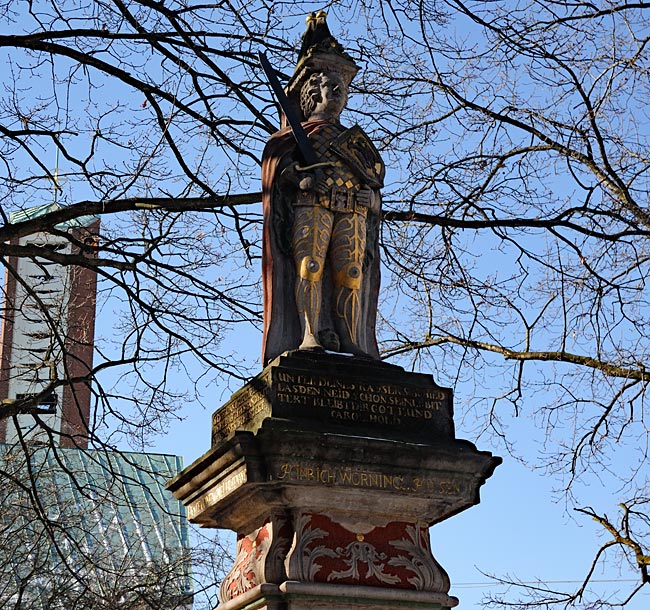
Liebfrauenkirche & Liebfrauenkirchhof
Around 1020, the first parish church outside the enclosed cathedral precinct was built of wood on the site of today's Liebfrauenkirche. The church was dedicated to St. Vitus, venerated as a saint in the Roman Catholic Church. About 80 years later, the building received its current south tower, which is now the oldest preserved part of the structure. Parts of this church, the second-oldest after St. Petri Cathedral, were reused when, around 1160, a three-aisled basilica with three apses was constructed on the same site - the city's oldest market square.
read more ...
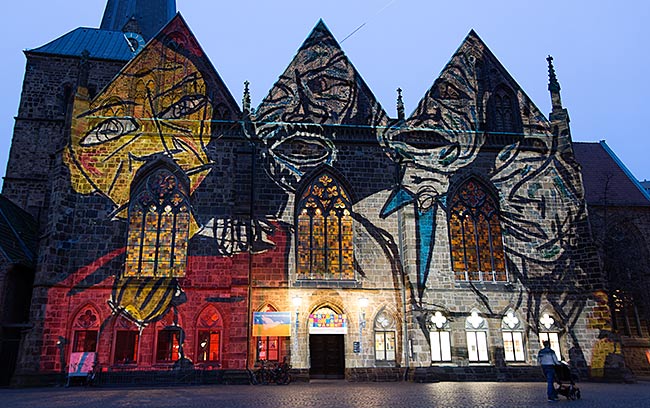
The Seven Lazy Ones (Sieben Faule)
The Seven Lazy Ones. Besides the Bremen Town Musicians, there is another, albeit far less known fairy tale whose setting is the Hanseatic city of Bremen: "The Seven Lazy Ones" by the Bremen writer Friedrich Wagenfeld (1810-1846). Just like the Bremen Town Musicians, the heroes of this story also have a monument dedicated to them in the city. In Böttcherstraße, you can encounter the supposedly lazy brothers at two different locations.
read more ...
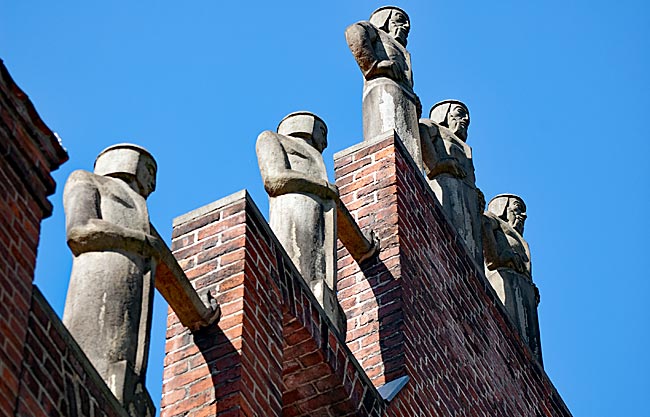
City weigh house
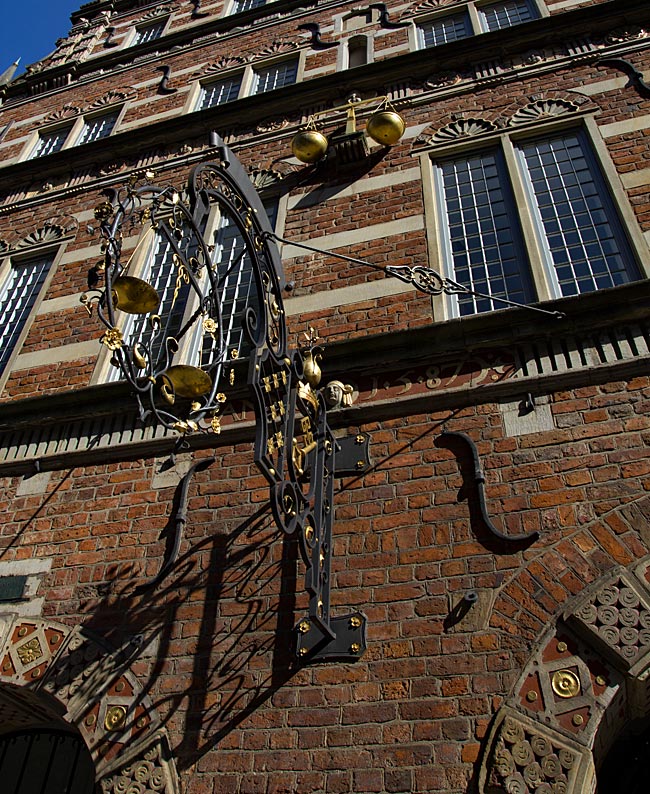
Directly adjacent to the market square and near the Schütting, the house of the merchant guild, stands the city weigh house on Langenstraße. In the Middle Ages, Langenstraße was one of Bremen's main thoroughfares and is considered the city's oldest merchants' street. The existence of a weigh house in this street dates back to the year 1440. However, even before that, documented since 1330, there was a city weigh house in Bremen, as at every major trading center in the Middle Ages.
read more ...