
 exploring Bremen & its surrounding areas
 You are here: worth seeing in Schwachhausen district
 Bürgerpark (1/2)
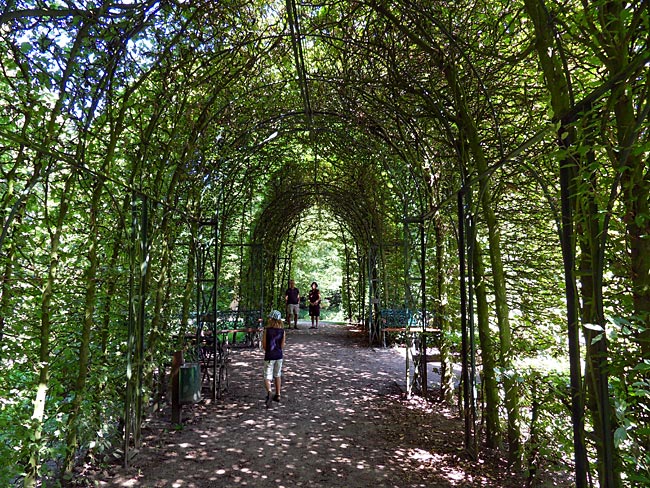
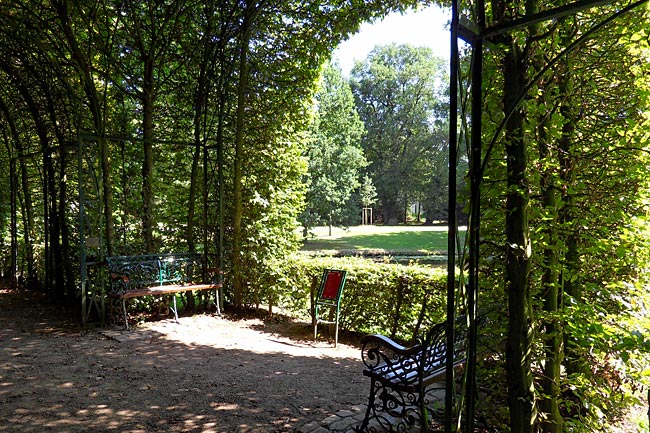
Avenue of hornbeams in the Bürgerpark, established in 1886
A green oasis near the city center and a widely used recreational area is the Citizen's Park. The extensive grounds, which adjoin today’s Citizen’s Meadow behind the train station, are not - unlike many other parks - a former private park of rulers that was eventually opened to the public. Instead, it is a park initiated by citizens themselves. At the beginning of the 19th century, the old defensive structures of the city had already been dismantled and transformed into a park landscape. However, as the city rapidly grew throughout the century, calls for more green spaces became louder. The largest undeveloped municipal property in Bremen, the old Citizen’s Meadow, presented an ideal solution.
Originally covering around 450 hectares and nearly treeless, this communal meadow had been used by Bremen’s residents for centuries to graze their livestock. By 1864, however, it was no longer in use. This led to a citizens' initiative that resulted in the founding of the "Committee for the Afforestation of Citizen's Meadow" in 1865.
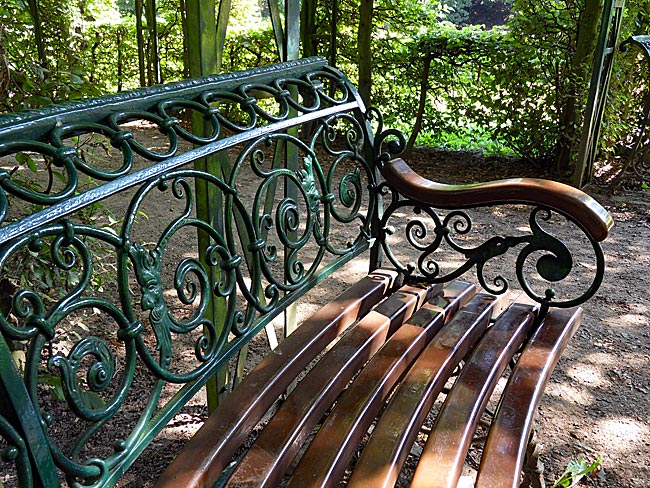
Large Kulenkampff bench in the arbor, crafted by artist-blacksmith Justus Leidenberg in 1897
After a year of planning, construction of the "People’s Garden" began in 1866 with the first shovel strike and the excavation of Emmasee, following designs by Wilhelm Benque. Benque also planned Knoops Park in Lesum and contributed to the garden design of Riensberger Cemetery. In his honor, the so-called Benque Stone was erected in the Citizen’s Park in 1938.
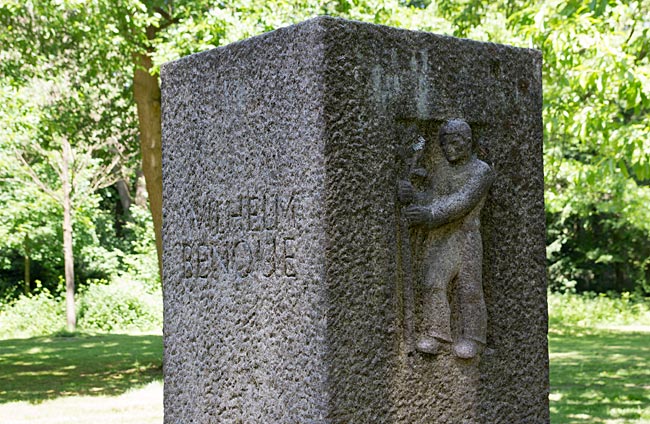
Benque Stone in memory of Wilhelm Benque
Initially, the Committee had been allocated 76 hectares for the park by the city, but just seven years later, an additional 60 hectares were added. By 1886, the layout of the Citizen's Park, including the paving of the bypass roads, was largely completed. In 1876, the Citizen’s Park Association emerged from the Committee and has since been responsible for the park’s operation and maintenance. The association is primarily funded through donations, which have financed all structures, park benches, and many trees, gifts from citizens and friends of the Citizen's Park. Since 1990, the Citizen’s Park has been protected as a garden monument.
"Bremen’s Citizens' Park
was begun on (date unfortunately illegible)
by
the citizens of Bremen
For master and household,
man, woman, and child
To use and joy,
For all time."
This is what is written on the 1868 Emmabank at Lake Emma.
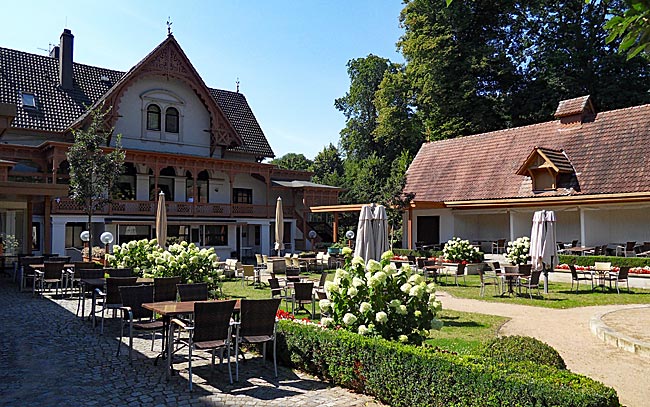
Courtyard of the Dairy
Numerous historic buildings still stand on the grounds of the Citizen’s Park. For example, in the center of the park is the dairy, completed in 1881. Milk, butter, layered cheese, whipped cream, and especially yogurt, produced from the milk of up to 36 cows housed in the stables, were sold in the establishment located on the upper floor. However, by the turn of the century, the dairy operation had to be discontinued. The restaurant, however, has remained in business under various management to this day.
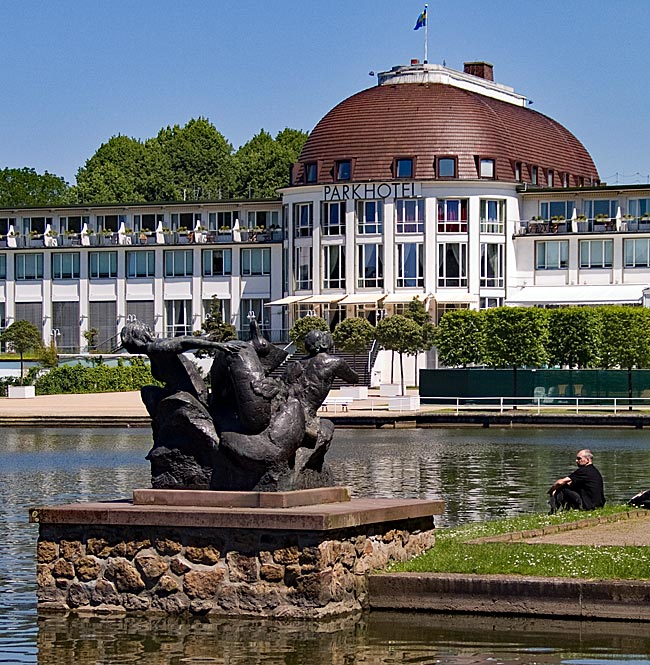
One of the best places to stay: Park Hotel at the artificially created Hollersee. In the foreground is the sculpture "Summer" from Bernd Altenstein’s four-part bronze ensemble "Four Seasons," created in 1991
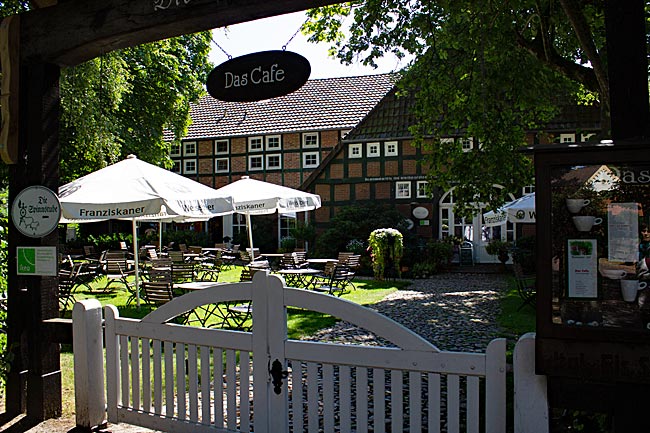
A remnant of the "North German Trade and Industry Exhibition" of 1890 is today’s Waldbühne, used as a beer garden and outdoor café. Originally, the wooden structure had been built as an exhibition pavilion for Bremen’s cigar company Leopold Engelhardt & Biermann behind the parking lot (now Park Hotel). After the exhibition, they donated the pavilion to the Citizen’s Park and funded its relocation to its current location. As early as 1891, it opened as a café under the name Waldschlösschen and retained that name until an interior renovation in 1975.
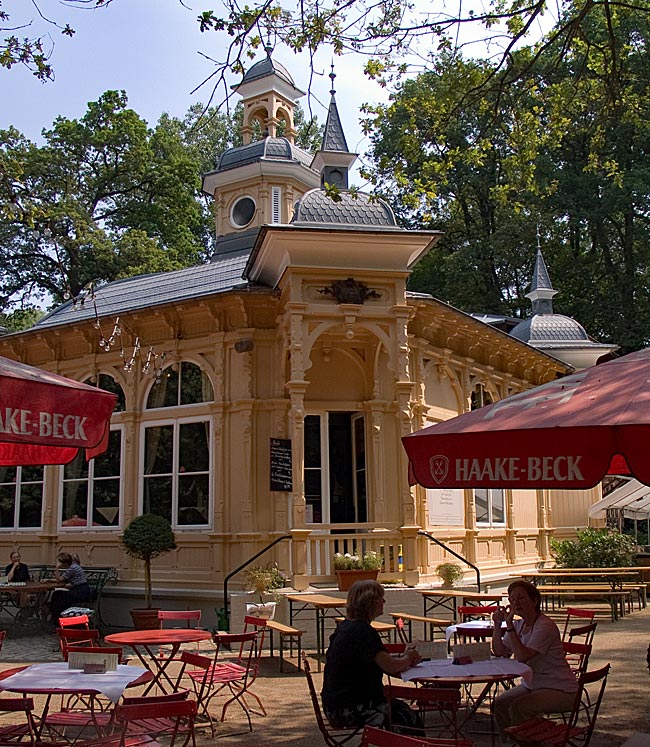
Waldbühne
With the help of the State Office for Monument Preservation, the building was thoroughly renovated in 1991 and restored to its original condition with slate roofing. In summer, visitors can enjoy refreshments outdoors here, and live music is often performed on weekends.
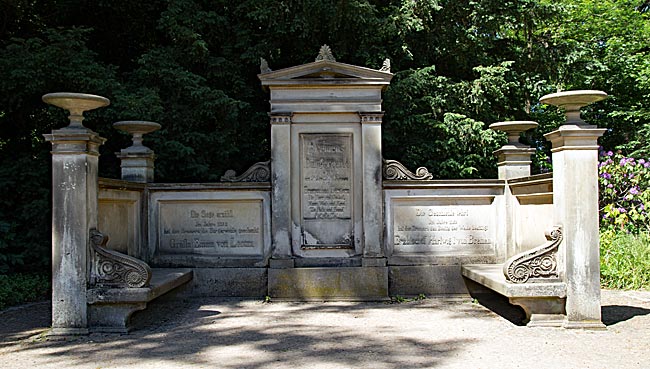
Visitors can also sit by Emmasee (lake) at the Emmabank (bench), a structure completed in 1868 by architect Heinrich Müller and dedicated to the wealthy Countess of Lesum
previous page
 next page
Map
Stadtwald & Stadtwaldsee (urban forest & lake)
Stadtwald & Stadtwaldsee. The design of the Bürgerpark is attributed to Wilhelm Benque, who served as its director from 1866–1870 and again from 1877–1884. Carl Orth succeeded him in this role, and under his plans, construction of the Stadtwald began in 1907. The 66.5-hectare site north of the railway tracks had been donated to the Bürgerpark Association by the Bremen merchant Franz E. Schütte one year earlier.
read more ...
Findorff district
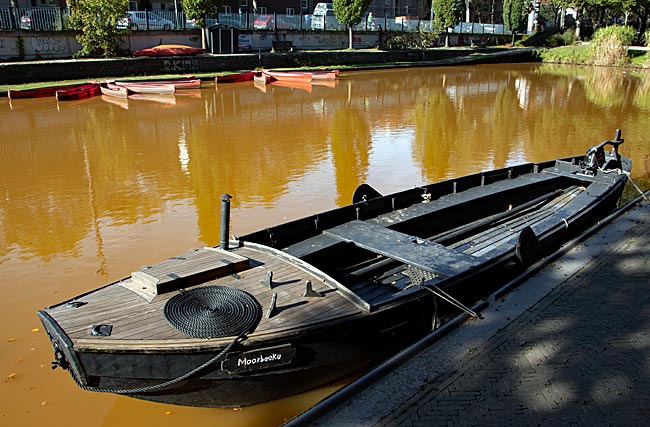
The history of the Findorff district is closely tied to the moors of Lower Saxony's surrounding countryside. In 1819, the so-called "Torfkanal" (Peat Canal) was dug to transport peat as fuel, particularly from Teufelsmoor, by waterway to Bremen. Even today, the second peat harbor, built in 1873, exists in a smaller form within the district, with traditional peat barges still moored there. However, peat transportation no longer plays any role.
read more ...
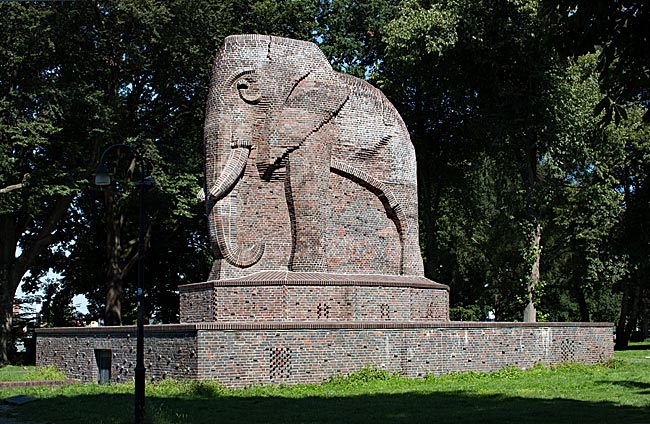
Anti-Colonial Monument "Elephant"
The brick monument was commissioned by the German Colonial Society and inaugurated on July 6, 1932. However, even in this traditionally cosmopolitan Hanseatic city, the monument was controversial, it commemorated not only those who died in Germany's former colonies during World War I but also stood as a symbol of the oppression and exploitation of indigenous populations there. After restoration work and its redesignation in 1989, the Elephant now serves as an anti-colonial monument representing equality and justice, as well as a warning against racism, oppression, and exploitation.
read more ...
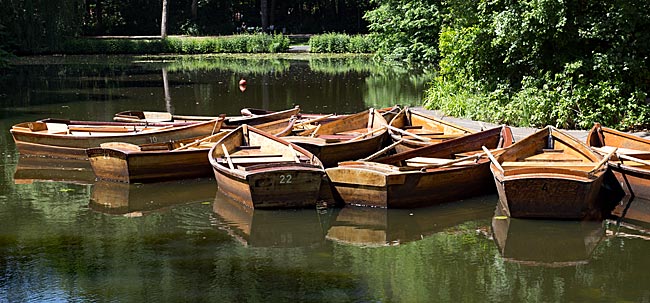
Water-based activities in Bremen
Given that Bremen is a city situated along a major river and surrounded by numerous lakes, it's only natural to extend sporting activities - or whatever one personally considers as such - from land to water. The most family-friendly activity on the water is undoubtedly taking a rowboat ride along the canals of the Citizens' Park (Bürgerpark).
read more ...
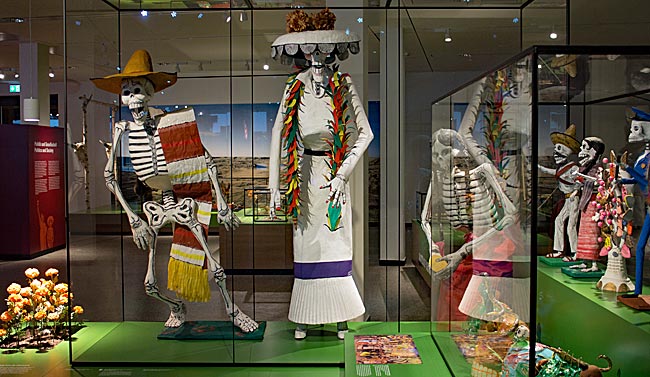
Übersee-Museum (Overseas Museum)
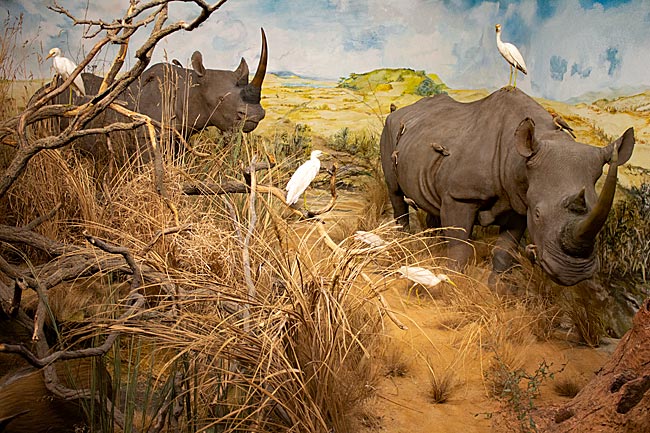
In 1896, what is now known as the Overseas Museum first opened its doors under the name "Municipal Museum for Natural History, Ethnology, and Trade." The exhibits initially came from the "Municipal Collections of Natural History and Ethnography," which were partly displayed as a "Trade and Colonial Exhibition" at the "Northwest German Trade and Industry Exhibition" in 1890 with great success. Since its founding, the museum's concept has changed several times, evolving toward a stronger focus on museum education that continues to this day.
read more ...
Freimarkt
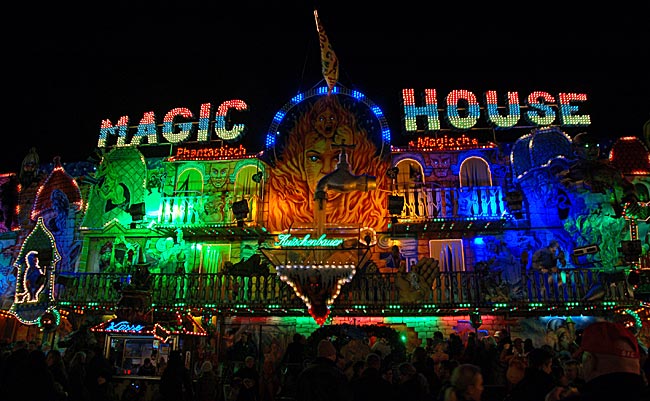
What some might simply call a fair or a large amusement park is, for others, an event of equal importance to Christmas. However, the fact remains that for most residents of Bremen, the Freimarkt is considered the "fifth season" and an unshakable Bremen tradition. This isn't surprising, as Bremers can look back on nearly a thousand years of history for their festival - and with that, the Freimarkt is Germany's oldest folk festival.
read more ...