
 exploring Bremen & its surrounding areas
 You are here: worth seeing in the surroundings
 Brake & the river island Harriersand (1/2)
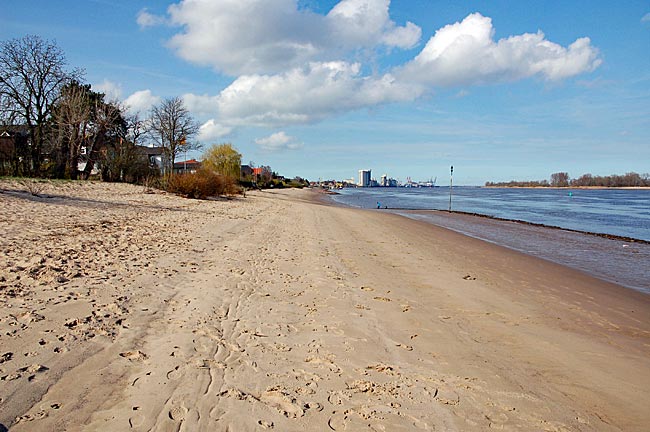
Beach in Brake
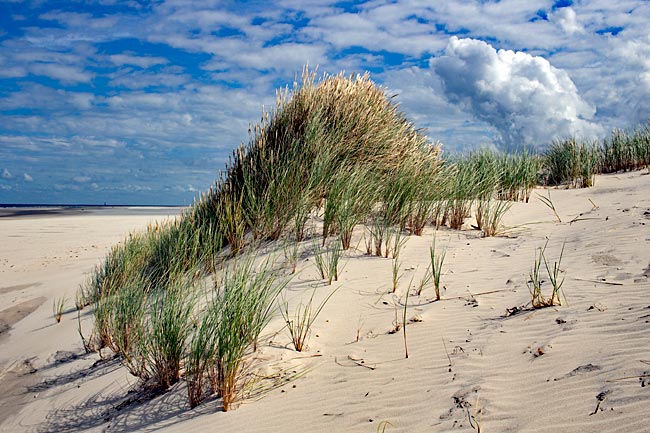
As soon as spring arrives and temperatures reach around 20 degrees, many Northern Germans are drawn to the North Sea coast. Whether to Dangast on the Jadebusen or to the well-known seaside resorts of Cuxhaven, the main thing is having a beach to lie in the sun and sand for digging and building castles for the children. Similarly, many people from Bremen head north on warm weekends, equipped with bags packed and picnic baskets ready for a day at the beach. But why travel far when the nearest beach is just around the corner, as a visit to Brake shows.
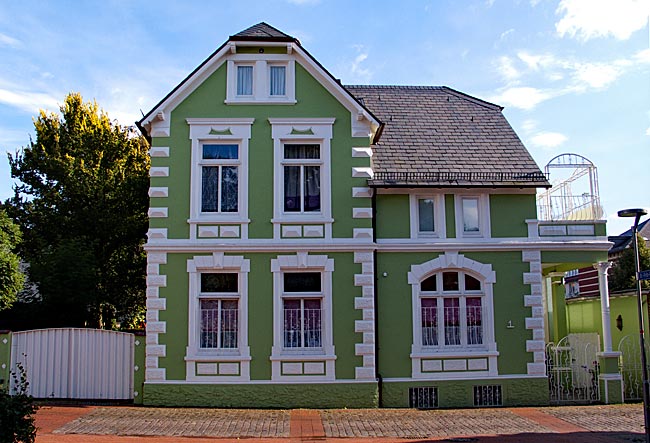
Charming house in Brake
The documented mentions of the city located about 45 kilometers downstream from Bremen on the left bank of the Weser date back to the 14th century. In a deed dated May 25 or 30, 1385, the settlement area is referred to as *Brake to Harghen (Harrien)*, in connection with an uncontrollable dike breach near the settlement of Harrien, which today is one of the city's 10 districts. Four times during the Middle Ages, storm surges devastated the region, causing dikes to break, drowning thousands of people and their livestock, and creating new permanent waterways. Between 1512 and 1531, the area was finally almost completely diked, and the first settlements of Braksiel, the predecessor of today's Brake, emerged on three now-protected islands.
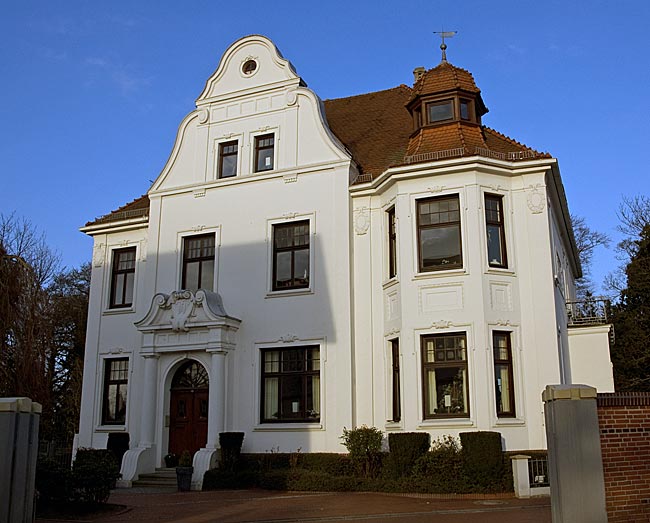
Former residence of a timber merchant, the Plassmann Villa near the city quay
Brake is a port city. Its growing importance up to the 19th century was due to its favorable location on the Weser River. While Bremen's ports struggled with increasing silting of this economically important waterway - meaning that ever-larger seagoing ships could no longer, or only with great difficulty, call at the Hanseatic city - the port of Brake was located at a deep spot in the Weser. Here, goods were transferred from large ships to smaller ones, which then continued upstream to Bremen's urban ports. In the 19th century, Brake was temporarily, among other things, a transshipment point for livestock exports to England, a home port for the Imperial Fleet, and a telegraph station. However, this boom ended when the people of Bremen established Bremerhaven in 1827 on an additional piece of land at the mouth of the Weser as a new location for Bremen's seaports. Nevertheless, Brake's outer harbor remains economically significant to this day. Primarily grain and animal feed are handled here as part of the largest European port, along with timber, among other goods. Ships with a draft of over 11 meters can dock at the quay.
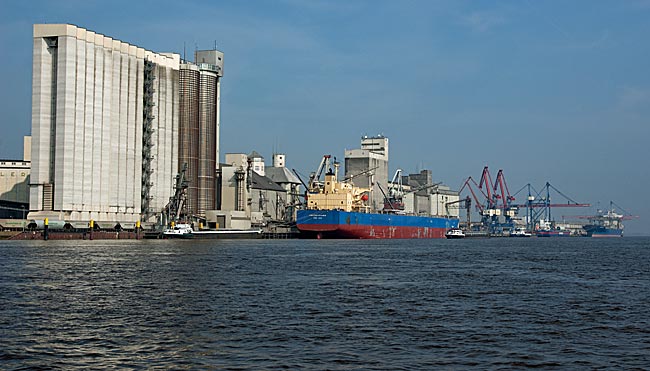
View from the water onto the southern part of the seaport
Unfortunately, the seaport has not been freely accessible since 2004, so interested visitors to the city must make do with the inland harbor located behind it, which is separated from the Lower Weser by a 90-meter-long lock built in 1980. Since the lock lies outside the restricted area, you can also watch as ships enter the inland harbor.
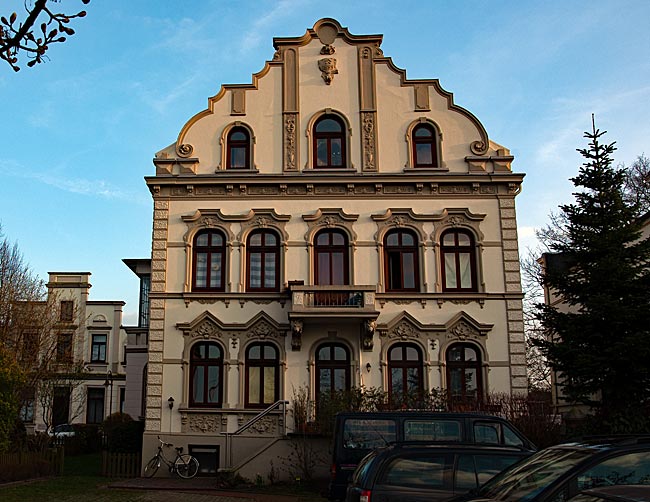
House near the inland harbor
Even though the seaport cannot be entered without permission, you can still see quite a bit of it. A good view of the southern part of the seaport is available from the brick-paved city quay, perhaps Brake's most touristy highlight, which almost seamlessly connects to the car-free pedestrian street with cafés, chain stores, and independent retailers in the city center. Here, in a side area of the quay, there is also a place for mooring the comparatively small ships of recreational skippers that call at the location. Sitting on the benches right by the waterfront, you are in the front row to see large and small ships and catch a whiff of sea air and distant lands.
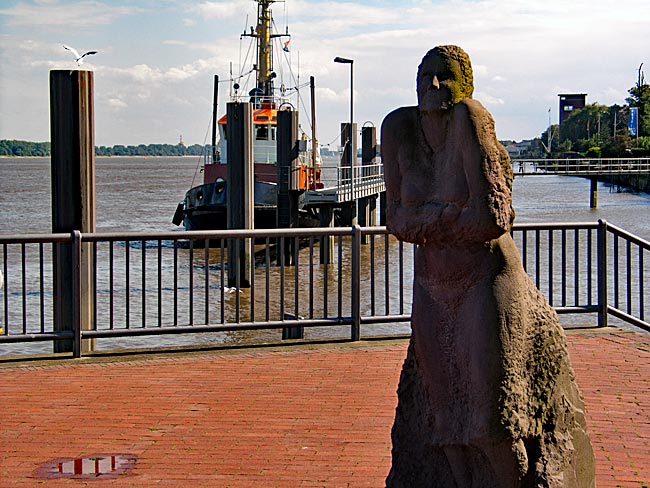
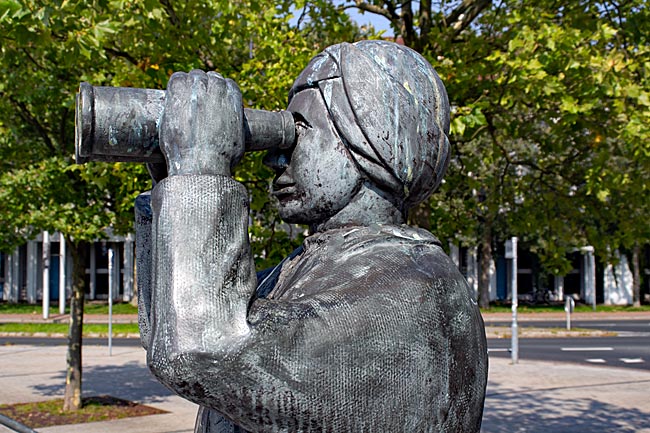
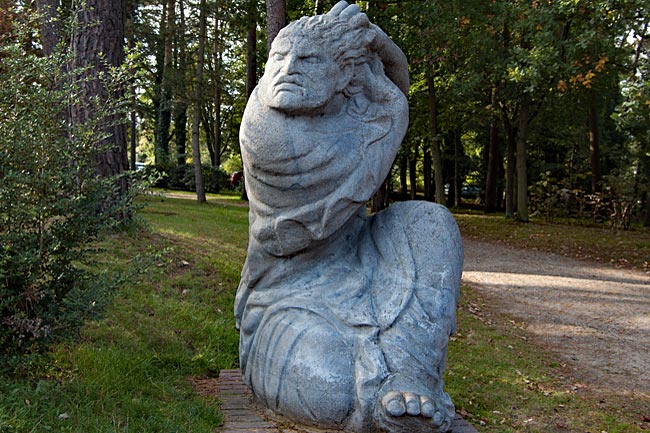
Sculpture "The Waiting One" (1990) by Norbert Marten at the city quay
At the height of the quay, which slopes down toward the water, a modern pavilion houses, among other things, the tourist information center. The informational materials available there about Brake and its surroundings emphasize the city's maritime focus—both regionally and beyond. Like the Hanseatic city of Bremen, Brake is a stop on the Weser Cycle Path, which runs for 455 kilometers from Hann. Münden along the western bank of the Weser to Eckwarderhörne and continues another 20 kilometers eastward to Cuxhaven.
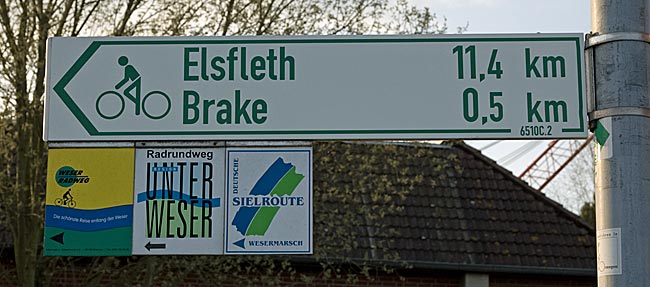
Excellent signage for cyclists
Accordingly, you frequently encounter cyclists with packed bikes in the city who follow the signs of the Weser Cycle Path. This route, like the German Siel Route, passes through the Brake district of Käseburg behind the Weser dike. At the height of the campsite located between the dike and the Weser, there is a restored historical drainage structure that was built between 1858 and 1859. Today, no water flows through this former drainage passage in the dike anymore, but a small water arm still runs behind the adjacent covered rest area for cycle tourists. The apparently different dike heights between the mid-19th century and today are noticeable.
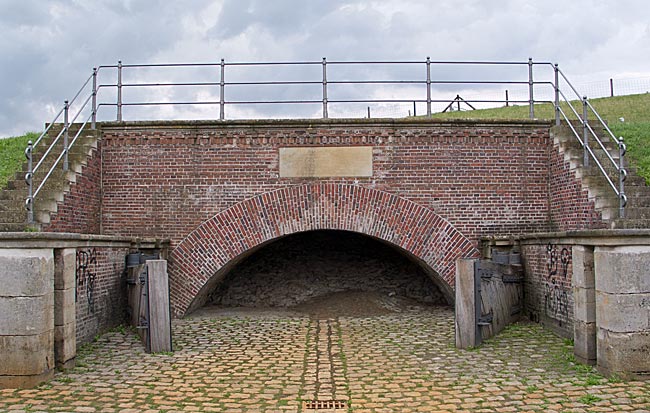
Historical drainage structure, built between 1858 and 1859
But the Weser Cycle Path is not the only route that combines cycling with water. Under the motto "Cycling Between the Weser and Jadebusen – From Melkhus to Melkhus," for example, the German Siel Route offers an 181-kilometer round-trip cycle path past numerous drainage structures serving the flat coastal region, while also providing insights into the culture of the region - including culinary experiences with local dairy products. Cyclists are usually guests for only one or two nights. Private owners of holiday accommodations in Brake have adjusted to this, so bookings for a single night are generally no problem, unlike in many places where rentals are typically only available by the week.
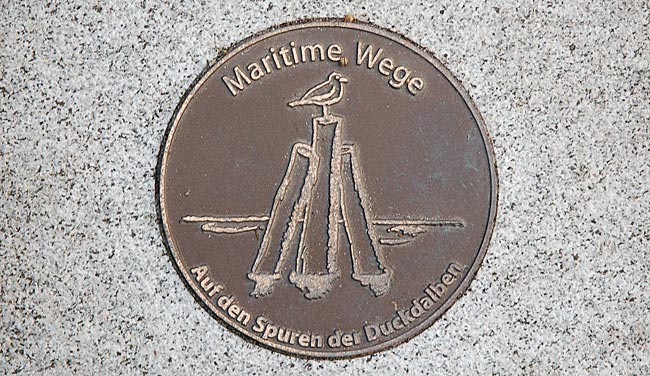
Directional sign embedded in the pavement: Maritime Routes – On the Trail of Duckdalben
Those who prefer to explore on foot rather than by bike will repeatedly come across directional signs embedded in the pavement in the streets around the city quay. The round signs featuring images of duckdalben - thick wooden planks that were driven vertically into the Weser bed in the 18th century as ship landing stages - belong to a walking tour that guides interested visitors on a discovery tour of maritime sights, such as the oldest house in the city, a fisherman's house from the year 1731.
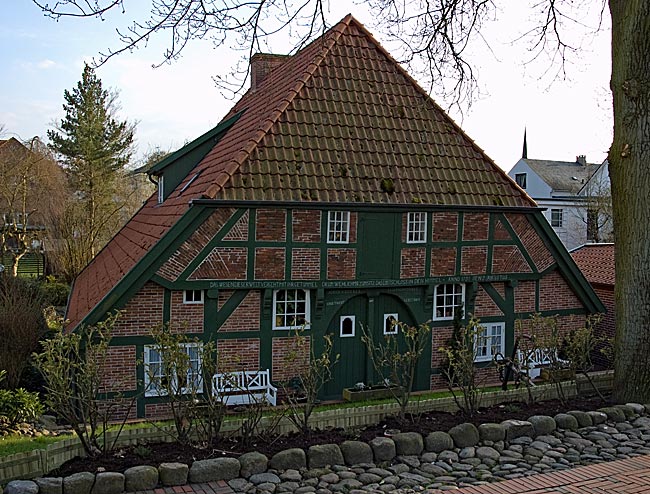
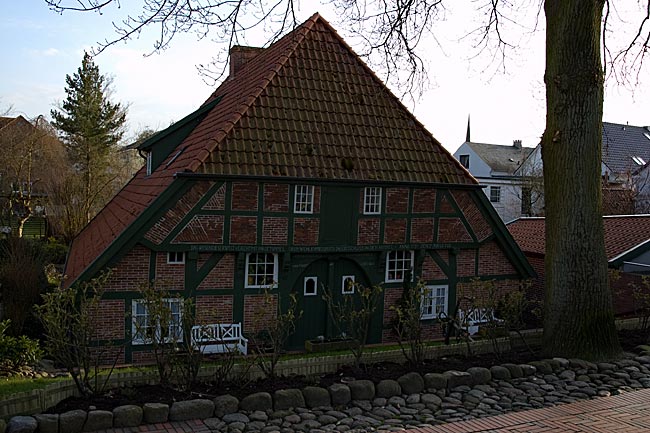
The oldest house in Brake: a fisherman's house from the year 1731
previous page
 next page
Map
Further information
Brake – The Best Piece of Weser e.V.
Information pavilion at the jetty
26919 Brake
Phone: +49 4401 / 19433
Fax: +49 4401 / 936005
Email: info@brake-touristinfo.de
www.brake-touristinfo.de
Harriersand campsite
Phone: +49 4296 / 1393
Email: info@zeltplatz-harriersand.de
www.zeltplatz-harriersand.de
Ferry schedule: www.brake.de
Bike routes:
www.weser-radweg.de
www.deutsche-sielroute.de
www.region-unterweser.de
Cuxhaven - a day trip
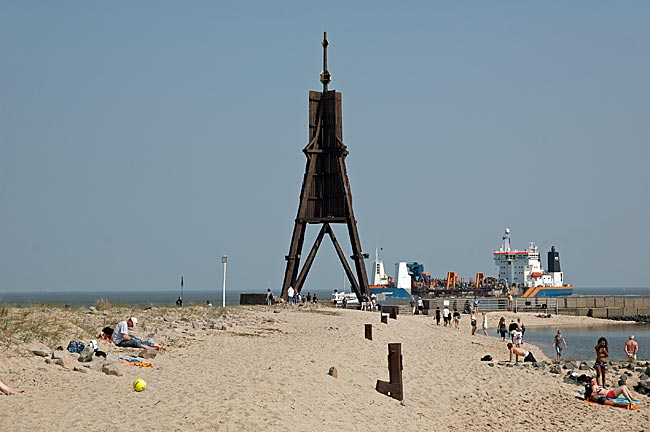
Many people from Bremen consider the seaside resorts of Cuxhaven to be "their home beach." The coastal city at the mouth of the Elbe is easily accessible from Bremen by car via the A27, which passes by Bremen and Bremerhaven before ending in Cuxhaven. By train, the journey takes a bit longer with a transfer in Bremerhaven. However, even in the off-season, Cuxhaven with its seaside resorts is a great destination for an outing - for example, by bicycle.
read more ...
Bremerhaven in general
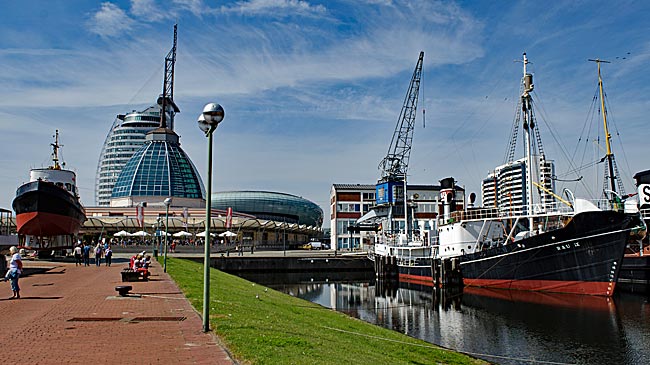
Bremerhaven was only founded in 1827. To secure its status as a port city amid the threat of the Weser - Bremen's lifeline - silting up, Bremen purchased 342 acres of land at the mouth of the Weser from the Kingdom of Hanover for 74,000 talers under then-mayor Johann Smidt. About 60 kilometers downstream from Bremen, this became the site of the first urgently needed seaport built by Bremen, known as the Alter Hafen (Old Harbor), completed by 1830.
read more ...
Bremerhaven - Zoo am Meer (Zoo by the Sea)
In addition to the 19th-century harbor facilities, the Zoo am Meer is the oldest attraction on the site between the Weser River and the pedestrian zone. It opened in 1928 under the name "Tiergrotten." The enclosures house polar bears, seals, penguins, various bird species such as gannets and keas, reptiles like turtles, raccoons, Arctic foxes, pumas, monkeys, and others - almost 50 animal species in total.
read more ...
Bremerhaven - Deutsches Auswandererhaus® (German Emigration Center)
Opened in 2005, the German Emigration Center vividly and engagingly presents the history of emigration to America across five eras spanning from 1830 to 1974. In total, 7.2 million people departed from Bremerhaven to seek a new home and build a new life beyond the Atlantic. The emotionally compelling exhibition, backed by historically accurate research, earned the museum the European Museum Award in 2007.
read more ...

Heligoland - a day trip
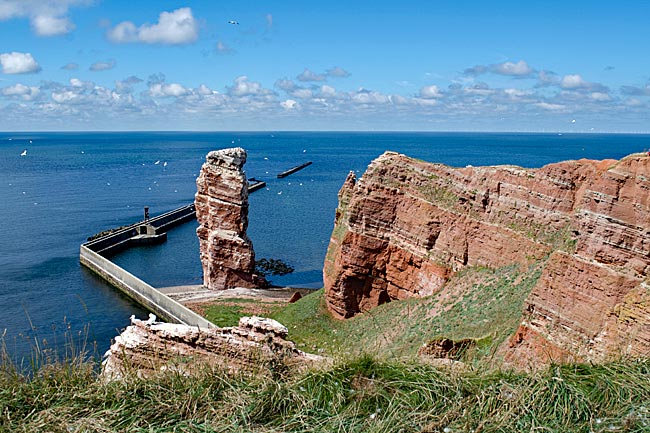
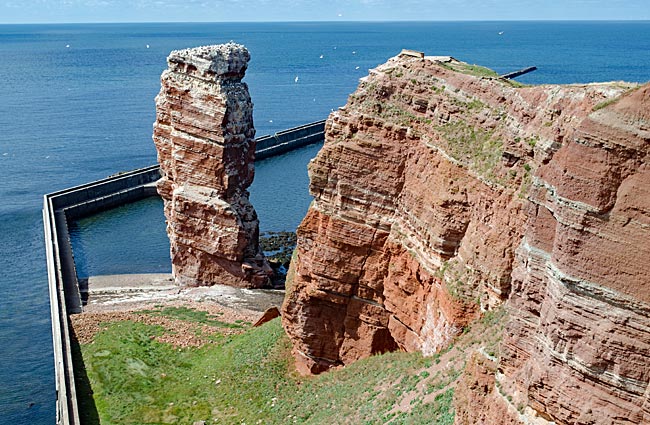
Germany's only supposed high-seas island is visited each year by thousands of tourists, most of them day-trippers in the warmer months. And yes, admittedly, Heligoland isn't located right in the vicinity of Bremen. However, it can be reached as a day trip from Bremerhaven and Cuxhaven - which is why we decided to visit.
read more ...
Cycling in Bremen & Surroundings
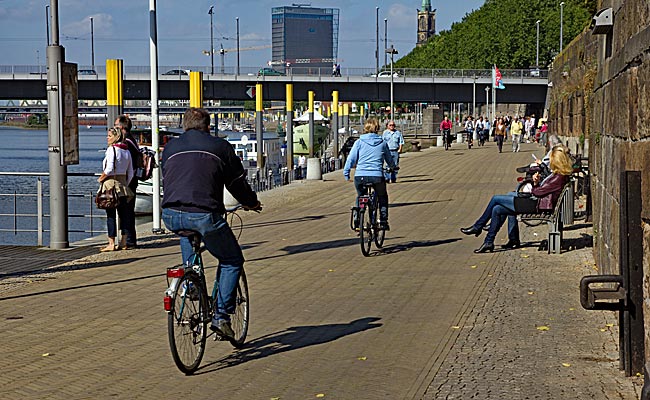
Bremen is one of the most bicycle-friendly cities in Europe. This is due, on the one hand, to the generally pleasant cycling conditions in the North German Plain, which has no significant inclines or slopes, and on the other hand, to the promotion of cycling by municipal policies, partly to reduce inner-city car traffic and the associated cross-border air pollution from fine dust and nitrogen oxides.
read more ...
Weser cruise from Bremen to Bremerhaven
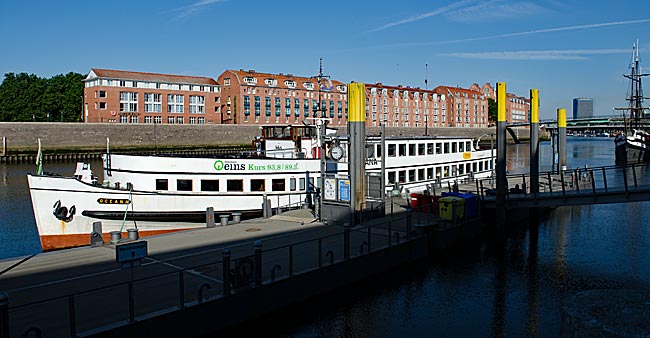
Of course, you can take a car for a visit to Bremerhaven from Bremen or board the regional train at the main station. However, with suitable weather and enough time, it is more interesting to cover the route on the Weser by ship. The shipping company "Hal över" operates the connection from May to September. The ship departs from the Martinianleger near the city center along the Schlachte. Those who wish can even take their bicycle with them; additionally, you can pre-book a breakfast onboard.
read more ...
Water-based activities in Bremen
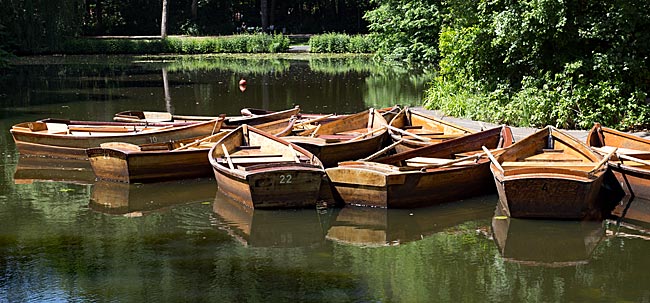
Given that Bremen is a city on a major river with numerous lakes, it makes sense to extend sports or other personal water-related activities from land to water. The most family-friendly activity on the wet element is certainly taking a rowboat ride along the canals of Bürgerpark.
read more ...
DGzRS - The Maritime Rescuers
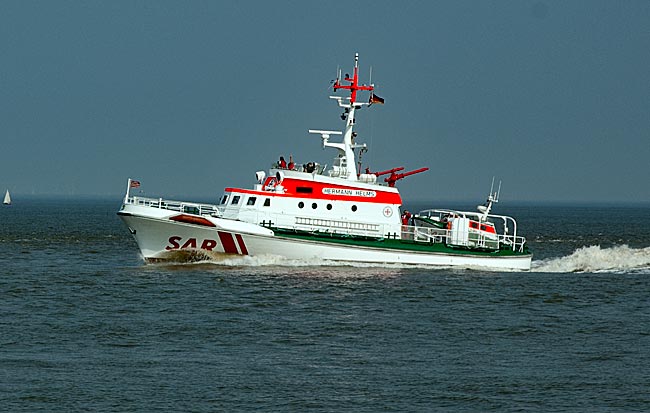
Anyone in distress at sea today has far better chances of receiving help, even out on the open water, thanks to modern technology and professionals who take care of it. Along Germany’s North and Baltic Sea coasts, these are primarily the approximately 1,000 full-time and volunteer men and women of the DGzRS (German Maritime Search and Rescue Service), also known as "The Maritime Rescuers." In 2020 alone, they conducted 1,720 operations and rescued 357 people. Since its founding, the organization has helped 86,000 individuals.
read more ...