
 exploring Bremen & its surrounding areas
 You are here: worth seeing in northern Bremen
 Vegesack in northern Bremen (2/2)
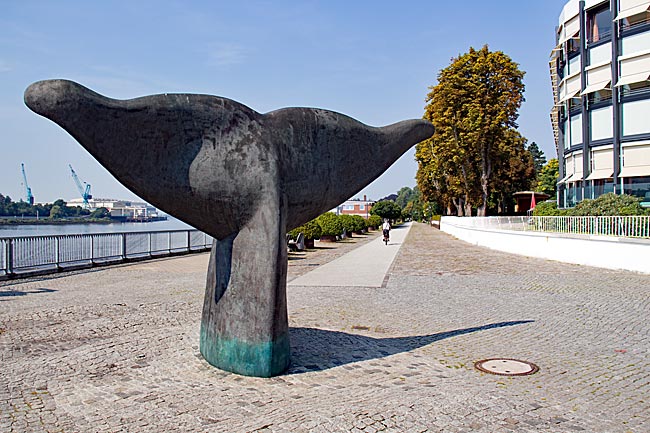
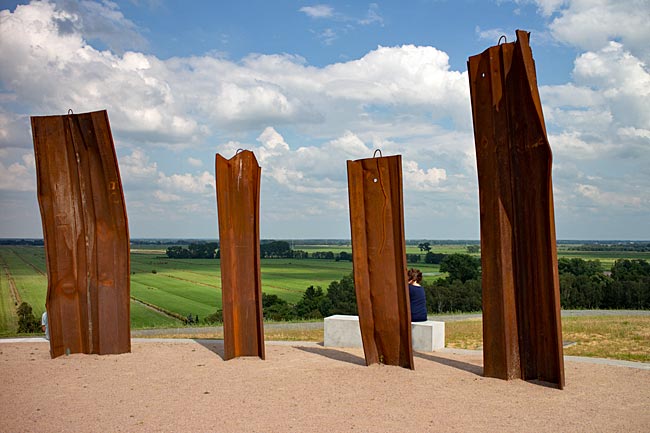
Whale Fluke by Uwe Hässler near the ferry terminal
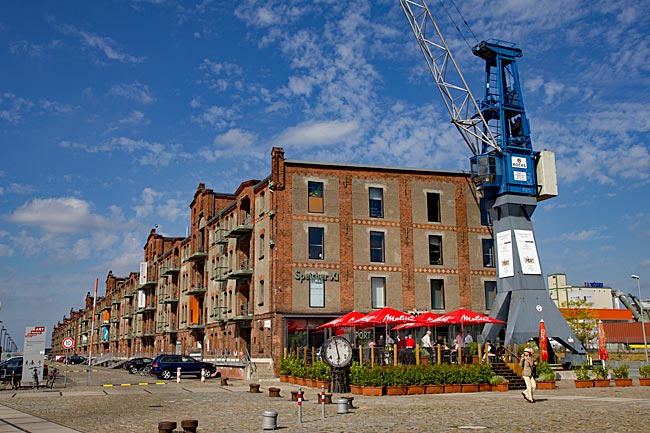
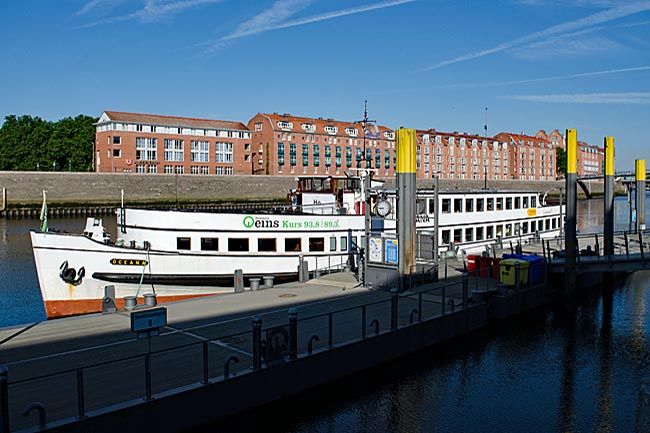
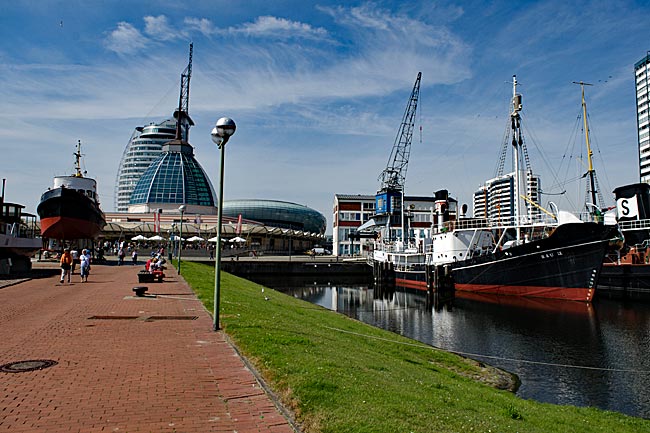
Speicher (warehouse), museum harbor with ships, Utkiek (viewing point) with whale vertebrae, and more are part of Vegesack's Maritime Mile, which stretches over slightly more than one nautical mile - about 1.8 kilometers - to the former site of the "Bremer Vulkan" shipyard, which went bankrupt in 1996. The city garden is also included, extending almost from the ferry terminal to the former "Vulkan."
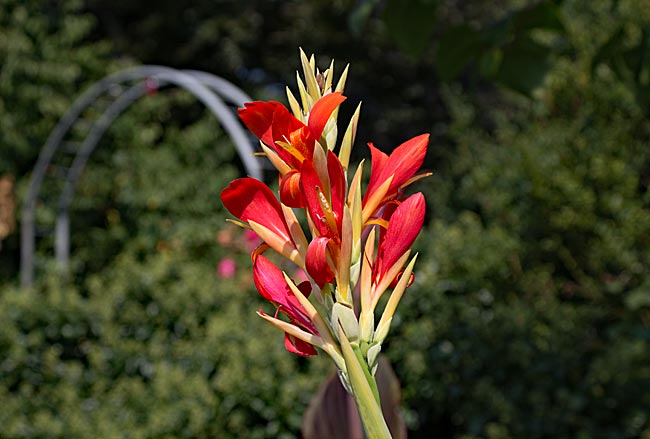
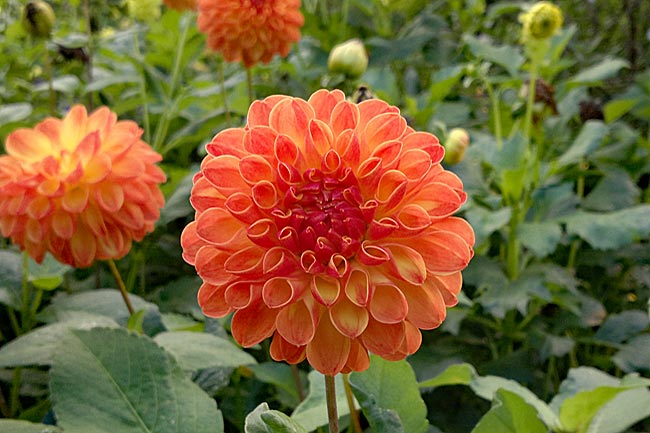
In many places in the city garden, flowers are blooming
The history of this green strip dates back to 1790 when Vegesack botanist and physician Albrecht Wilhelm Roth established a small botanical garden with over 600 species. From the Weser River to the area where the first houses stand today, there is a rather steep slope, and in this hilly area, he planted plants from all over the world, especially perennials and shrubs. A stele has commemorated him since 2007 below the former Villa Fritze, built in 1876. The area of today's city garden was once private gardens that were purchased by the then-city of Vegesack starting in the 1920s and converted into a public city garden. The last property passed into municipal ownership in 2000 as a foundation on the occasion of the 125th anniversary of the Lürssen shipyard. With the deepening and widening of the Weser for shipping traffic in the early 1970s, the riverbank had to be reinforced due to changed flow conditions. This also led to the disappearance of the sandy beach, which was replaced in 1974 by a promenade with two rows of maple trees and numerous benches. Incidentally, cycling on the promenade is allowed as long as cyclists show consideration for pedestrians.
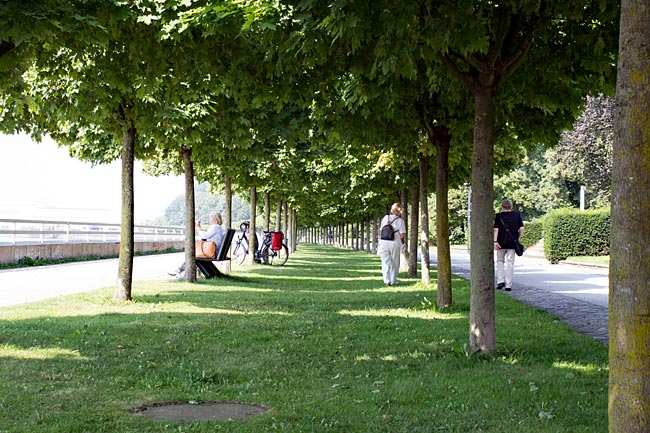
On the promenade along the water
In 1995, a rose garden called the Rosarium was inaugurated, which was expanded in 2012 with baroque sandstone sculptures "Heracles" and "Zeus" from Villa Fritze. Furthermore, there are numerous play and sports facilities on the grounds.
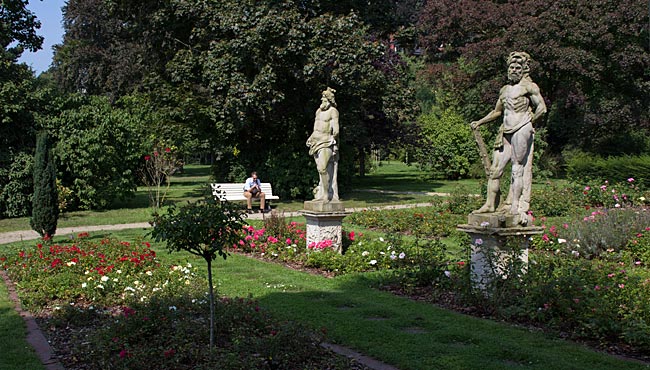
The Rosarium in the city garden with the sculptures "Heracles" and "Zeus"
At the end of the city garden lies one of the ships built by the "Vulkan" during its more than 100-year existence - the shipyard tugboat "Regina." The ship was put into service in 1966 by the Vulkan for its own purposes, such as launching and maneuvering the floating crane. Twenty-one years later, after a major engine damage, it was decommissioned and donated to the Maritime Tradition Vegesack Nautilus association as a technical monument. A plaque provides information about the tugboat's technical details and its journey here.
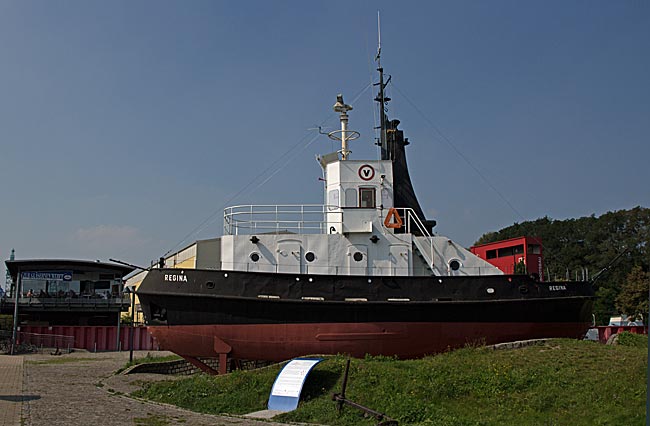
The shipyard tugboat "Regina" can be visited by appointment
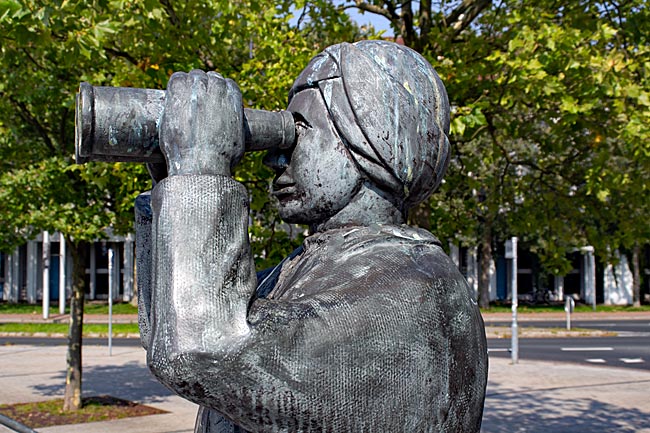
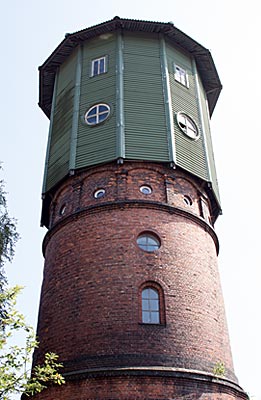 If you leave the Weser shore and head into the pedestrian zone, you will encounter the theme of "whale" again in Gerhard-Rohlfs-Straße, Vegesack's main shopping street - this time in the form of a not-insignificant bronze sculpture by the Worpswede sculptor Uwe Hässler from 1980, who also created the whale fluke in the city garden 15 years later. Incidentally, the namesake of the street traveled to extensive parts of Africa in the 19th century and thus gained a certain fame - for example, as one of the first Europeans to cross the entire Sahara. His house stood on this street.
The houses are overshadowed by a roughly 32-meter-high protected cultural monument in the adjacent transverse Bermpohlstraße - the old water tower. Until 1965, the water tank with its 220 cubic meter capacity in the polygonal, wooden-clad upper part of the tower supplied the drinking water network. Today, the red brick building erected in 1892 is inhabited.
If you follow Gerhard-Rohlfs-Straße to the end and continue along Hauptstraße, you will reach the adjacent district of Blumenthal. Worth seeing there is Bremen's only castle, Burg Blomendal. The history of the castle complex dates back to 1354; its builders were robber barons. Since 1436, the former moated castle has belonged to the city of Bremen. However, the "Verein Burg Blomendal e.V." takes care of its preservation and operation. As there is no fixed budget from the city's side, the association relies on donations and other income, such as from the Bürgerpark Tombola (citizen's park tombola) or guided tours.
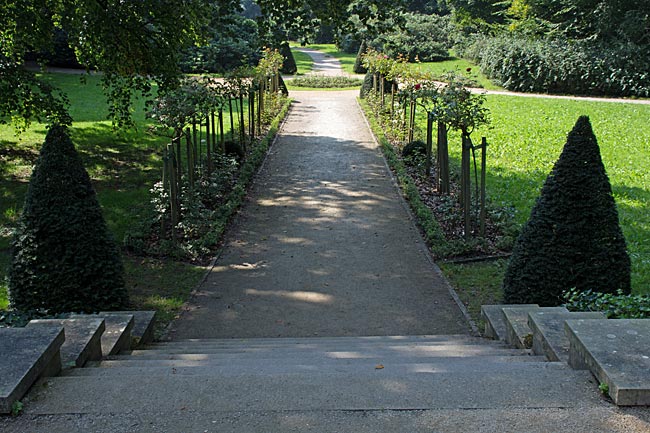
Part of the Roselius Garden in Wätjens Park
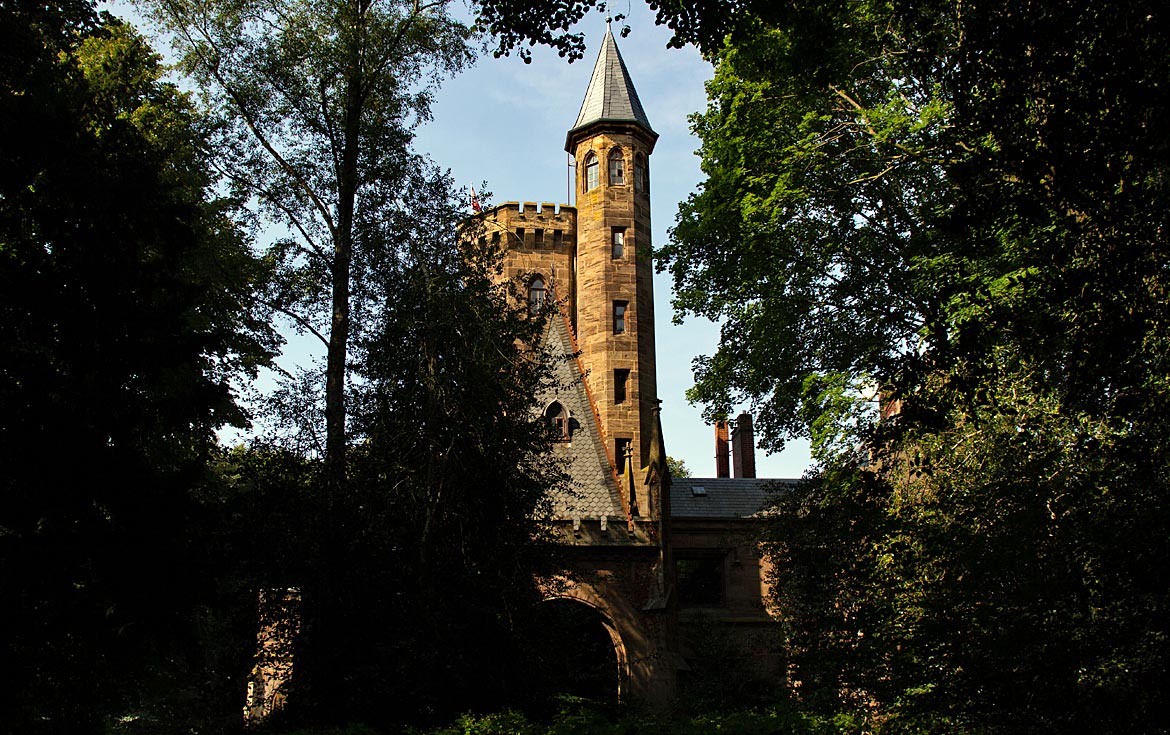
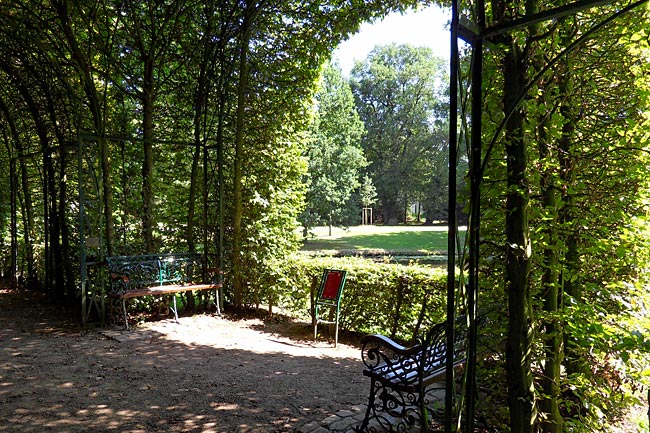
Between Vegesack's inner city and Burg Blomendal lies the approximately 35-hectare Wätjens Park or Wätjens Garden. The estate dates back to the initiative of Bremen merchant and shipowner Dietrich Heinrich Wätjen, who purchased several agriculturally used plots in 1830 to create a summer residence outside the city gates. He had Issak Altmann design the park as an English landscape garden. Altmann had previously successfully transformed the Wallanlagen into a park landscape. Today privately owned, the Tudor-style Wätjens Schloss, which has been a protected monument since 1973, was built by Wätjen's son in 1864. The Bremen architect Heinrich Müller, who was commissioned with this task, among other things, created the dairy, Melchers Bridge, and hornbeam arbor in Bürgerpark during the 1880s. The entire now size-altered estate has been under monument protection since 2007 along with the remaining buildings on it, such as the memorial temple and Wätjens Fountain. This also includes the two entrances with their sandstone pillars and cast-iron gates. Without a doubt, the Roselius Garden, designed by landscape architect Christian Roselius in 1917, is nicely laid out.
previous page
 next page
Further information
https://www.vegesack.de
https://vegesacker-geschichtenhaus.de
https://stadtgarten-vegesack.de
Overbeck-Museum
Verein der Freunde des Overbeck-Museums e.V.
(Friends of the Overbeck Museum Association (e.V.)
Altes Packhaus Vegesack
Alte Hafenstraße 30
28757 Bremen
Phone: +49 (0)421 663 665
Email: info@overbeck-museum.de
www.overbeck-museum.de
Verein Burg Blomendal (Blomendal Castle Association)
Auestraße 9A
28779 Bremen
Phone: +49 (0)421 608358
www.burgblomendal.de
By bike from central station to Vegesack
Starting at central station, the route takes you past Bürgerweide, with its distinctive Stadthalle (City Hall), Congress Center, and exhibition halls, before continuing through Findorff along the Torfkanal. This canal, which runs along the edge of Bürgerpark and Stadtwald, was constructed between 1817 and 1826 to transport peat from Teufelsmoor near Worpswede to Bremen using peat barges.
read more ...
Brake & the River Island of Harriersand
As soon as spring arrives and the temperatures reach around 20 degrees, many Northern Germans are drawn to the North Sea coast. The main attraction? A beach to lie in the sun and sand for children to dig and build castles. This also draws many people from Bremen to the highways heading north on warm weekends, equipped with bags packed and picnic baskets ready for a day of seaside relaxation. But why travel far when the nearest beach is just around the corner? A visit to Brake and Harriersand proves that.
read more ...
Cycling in Bremen and surroundings
The Free Hanseatic city of Bremen is connected to numerous neighboring towns via the Weser Bike Trail and the Unterweser Circular Route. On both sides of the Weser River, cycling routes lead, for example, to Brake with its Harriersand island or Bremerhaven and onward to Cuxhaven. In 2017, the Weser Bike Trail was named an ADFC-Quality Bicycle Route (4 stars) by the German Cyclists' Association (ADFC) at ITB. According to a travel analysis, it is the second most popular long-distance cycling route in Germany.
read more ...
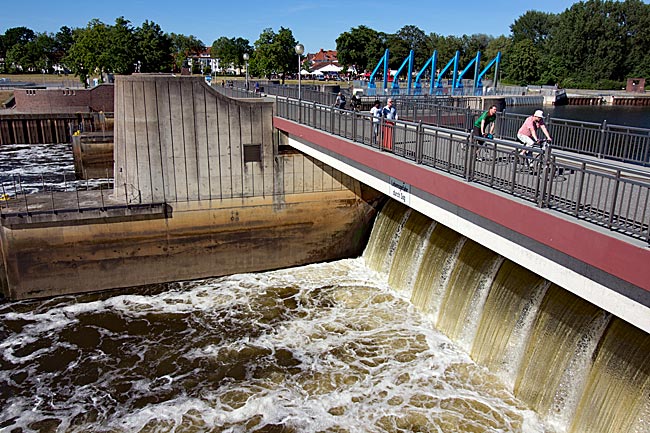
Round trip: from the city center to the Weser weir & back
Starting from Tiefer or Altenwall, the section of the Weser riverbank in front of Schnoor and diagonally opposite the DGzRS (German Maritime Search and Rescue Service), the Planetarium, and the Observatory on the other side of the river, a beautiful path for pedestrians and cyclists runs directly along the water upstream towards the Weser weir. After crossing the Weser weir, the return route takes you back via Stadtwerder.
read more ...
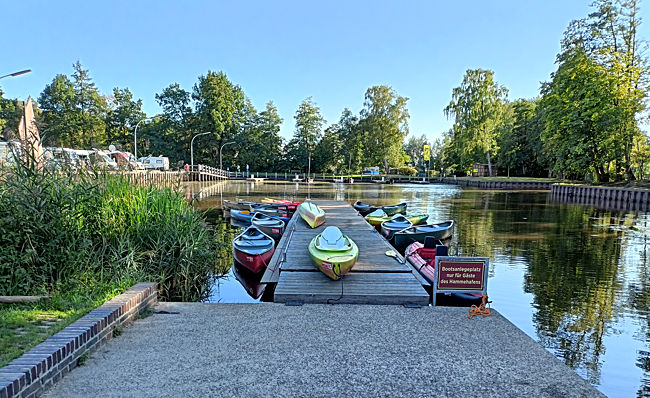
Neu-Helgoland (New Heligoland) / Hamme Harbor Worpswede
From April to October, the Hamme Harbor in Worpswede attracts many day visitors, weekend trippers, cyclists, and campers. The campsite operators run not only a bistro & beer garden with waterside seating but also rent out kayaks and canoes. Those who don’t want to paddle on the Hamme themselves can instead book an excursion trip aboard one of the Adolphsdorf Peat Boats. Food and drinks are also available just a few meters from the harbor at "Hamme Hütte Neu Helgoland." Tip: A great bike trip destination from Bremen!
read more ...
Bürgerpark
The Bürgerpark is both a green oasis close to the city center and a widely used local recreation area. This expansive park, located adjacent to today's Bürgerweide behind the train station, was initiated by the citizens themselves. In the early 19th century, the old defensive structures of the city had already been dismantled, and the ramparts were transformed into a landscaped park. However, as the city rapidly grew throughout the century, demands for more green spaces became increasingly louder.
read more ...