
 exploring Bremen & its surrounding areas
 You are here: Bremen culinary
 Bremer Kluten
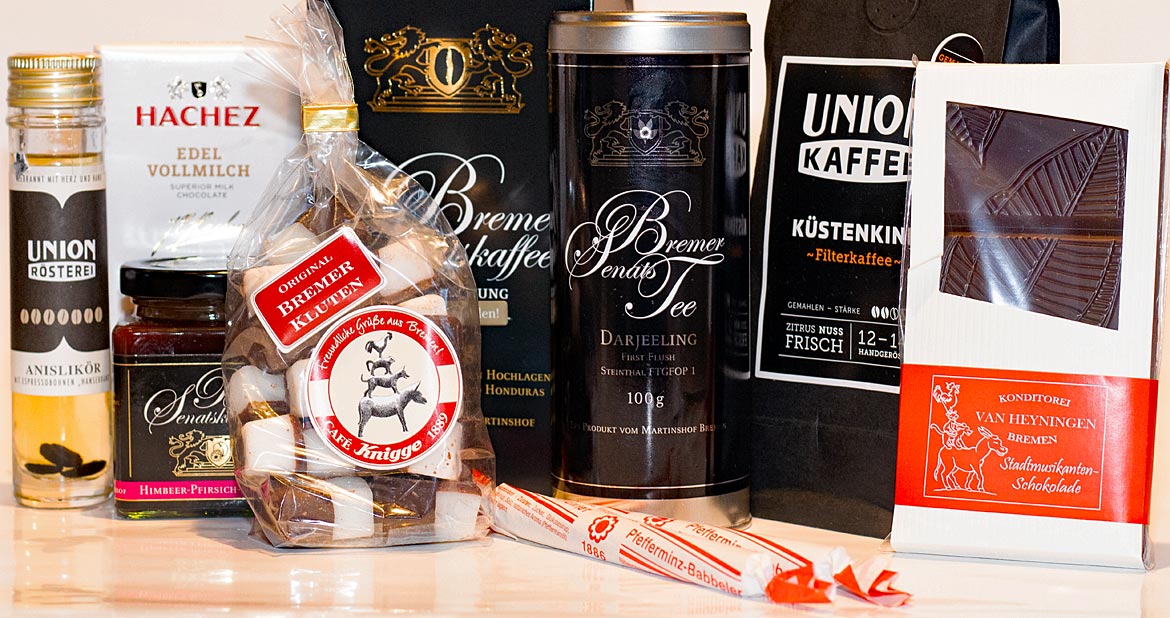
Like the Bremen Peppermint Babbeler, the "Bremer Kluten" is an original specialty of the Hanseatic city. The photo above shows further culinary products "Made in Bremen," with a special mention for those from the workshops of Martinshof. However, this isn't about quality - each connoisseur can judge that based on their own taste - but rather in social terms. In the manufacturing facilities of this registered municipal enterprise of the city of Bremen, people with disabilities are employed who have little to no chances in the job market.
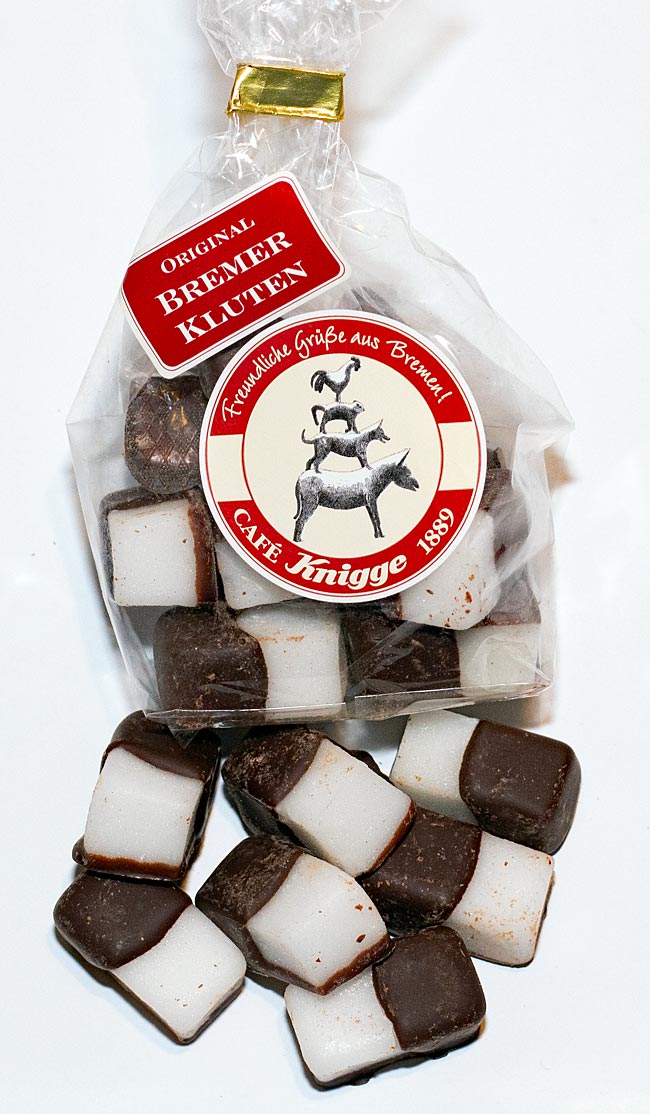
Original Bremer Kluten, made by one of the oldest and most traditional cafés in the Hanseatic city
But back to the Bremer Kluten, whose flavor profile is also dominated by peppermint oil - perhaps influenced by the goods from around the world that have been traded in the ports of this maritime city for centuries, including spices and cocoa. Sugar, glucose syrup, invert sugar syrup, and of course cocoa mass and butter, along with an emulsifier, are further ingredients of the fondant. The dark chocolate pairs particularly well with the fresh taste of this roughly 3-centimeter-long, rectangular confection, which is dipped halfway into the rich, fatty treat.
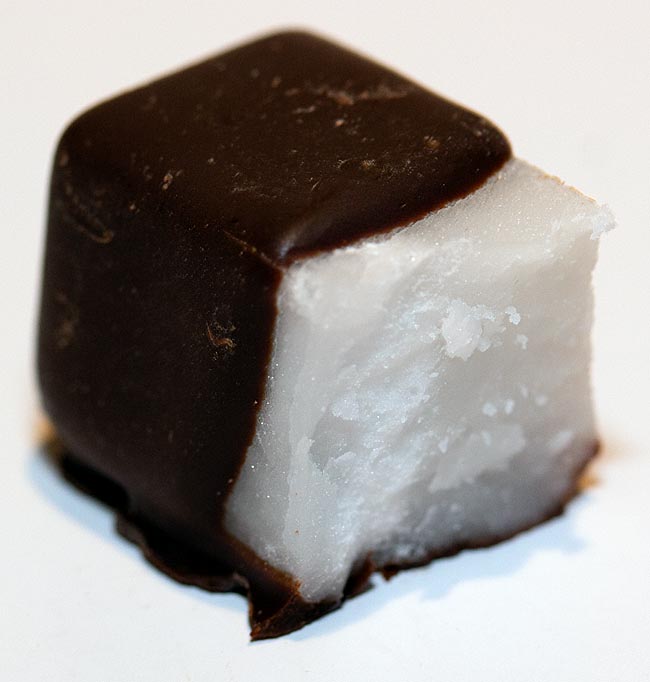
The best comes last: the chocolate-coated part
The consistency of the Bremer Kluten - whether made in pastry shops or available for purchase (of course also in the areas of the city center frequently visited by tourists or even at the Freimarkt fair) - is relatively firm when bitten into, without being too hard. So no need to worry about artificial dental parts! While it may not initially flatter the palate as elegantly as many chocolate-covered mint coins or the well-known square tablets in chocolate coating, it can be transported, stored, or given as a souvenir more easily. With the Bremer Kluten, you have something convenient to hold - even on the go.
previous page
 next page
Freimarkt
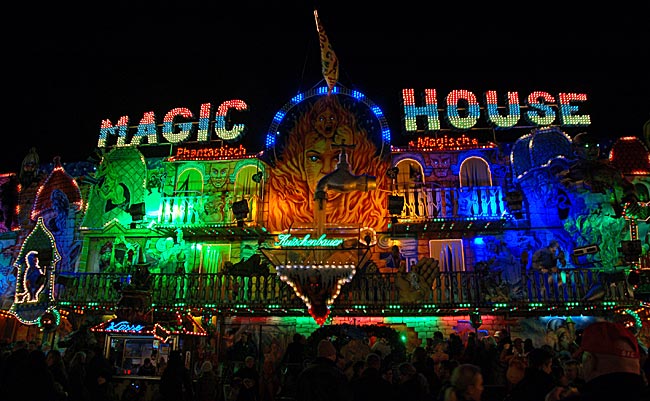
What some people see as just a fair or large amusement park is, for others, an event that holds equal importance to Christmas. However, the fact remains that the Freimarkt is considered by most citizens of Bremen as the "fifth season" and an unshakable Bremer tradition. This isn't without reason, as the people of Bremen can look back on nearly a thousand years of history for their folk festival - and with that, the Freimarkt is Germany's oldest folk festival.
read more ...
Bremen Peppermint Babbeler
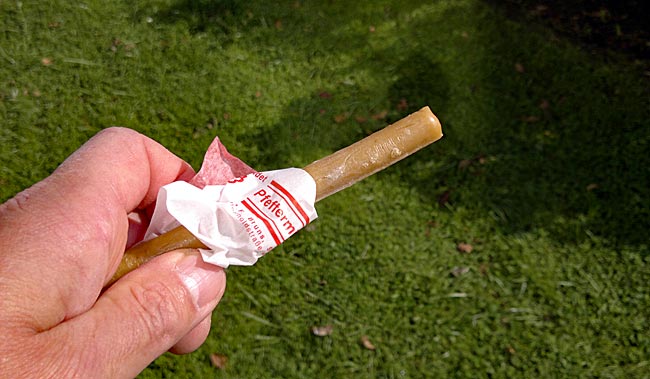
Babbelers are peppermint lollipops made from peppermint oil, sugar, glucose syrup, and water. In Low German (Plattdeutsch), "babbel" means "mouth," and when enjoying these lollipops, you certainly keep your mouth busy. The confectioner master and candy maker Adolf Friedrich Bruns first produced this sweet treat and possibly the world's first cough drop in 1886, selling them in his confectionery shop in Bremen-West.
read more ...
Bremer Klaben
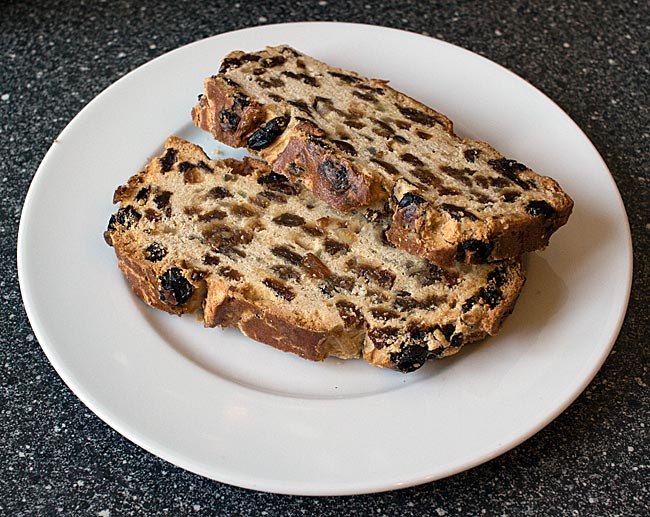
Bremer Klaben is a rich fruitcake with a dense texture, made from a yeast dough consisting of wheat flour, butter, sugar, yeast, and salt. What sets it apart is the generous amount of "colorful ingredients" (raisins, candied lemon peel, and orange peel, though unlike Dresden Stollen, it contains no almonds). The precise ratio of these ingredients is crucial to ensuring that the Klaben remains moist and fruity even after months of storage rather than drying out.
read more ...
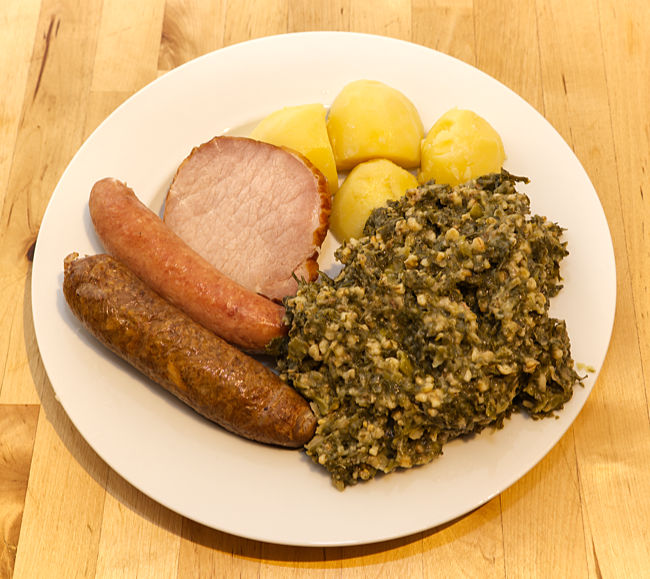
Kale & Pinkel
Every year between October and February, it's that time again: Kale (Grünkohl) season. Usually by late October/early November, the mostly green, palm-like plants - up to 180 cm tall depending on the variety and rich in vitamins and minerals - are ready for harvest. These plants are commonly found in Bremen, even in the beds of allotment gardens. Since the curly leaves of this cruciferous vegetable, once stripped of stems and stalks, can appear slightly brown or green - or turn a bit brownish with a lot of imagination when cooked - many people from Bremen also call Grünkohl "Braunkohl" (brown cabbage).
read more ...