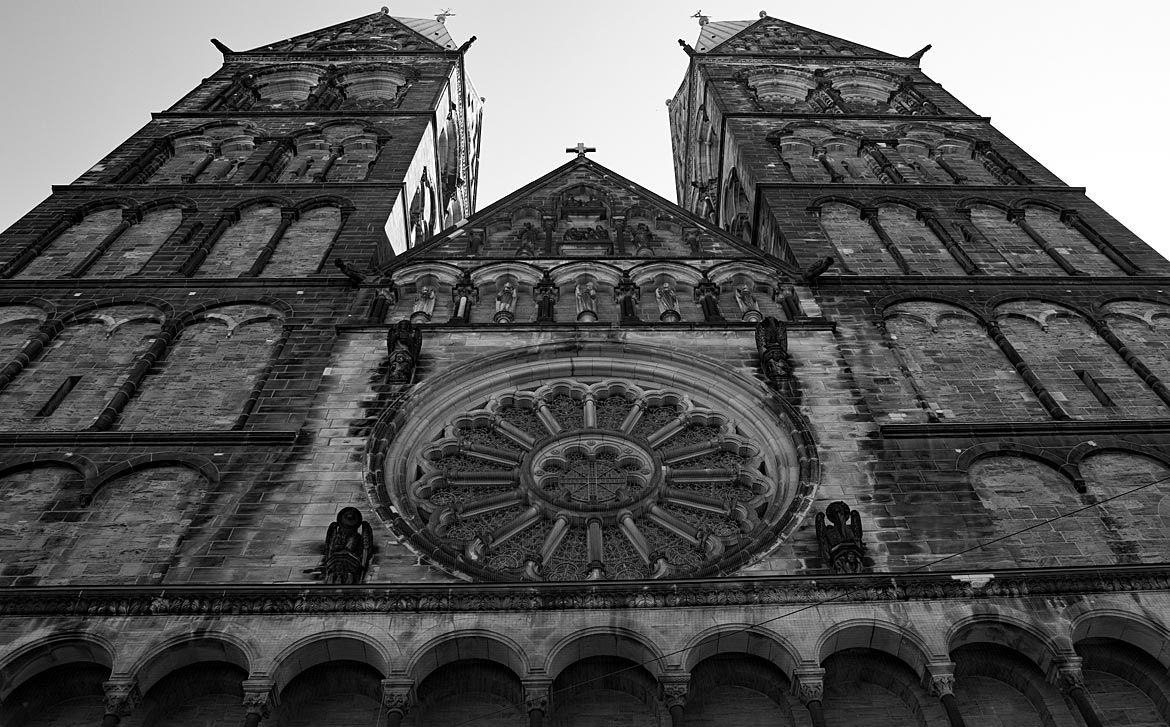

 exploring Bremen & its surrounding areas
 You are here: attractions in the city center
 St. Peter's Cathedral (St. Petri Dom) 2/2
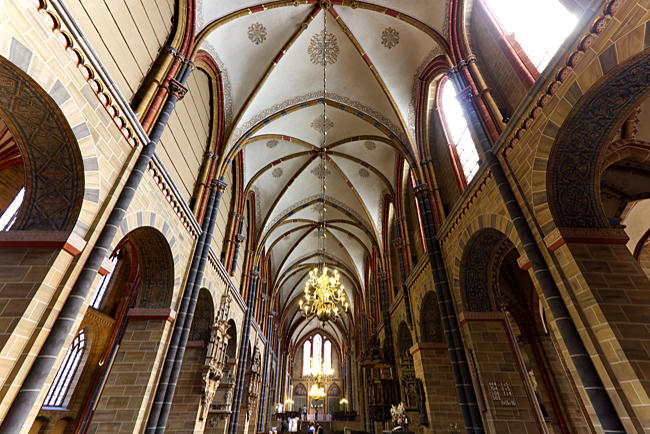
In the Nave of the Cathedral
Even if you feel alone as a visitor inside the cathedral, there is already one present, the cathedral mouse. At one of the two round portals from the second half of the 11th century in the east choir, you will find the sandstone mouse standing upright, as if it wanted to climb up the archway. Speculations that the mouse was a personal symbol of craftsmen involved in the construction at the time have been disproven and belong to the realm of fantasy. Originally, these portals served as entrances from the marketplace on the west front of the cathedral but were later moved inside the building during further construction around the year 1220. The mouse, a medieval symbol for impurity and evil, was meant to prevent such forces from entering the sacred structure. Whether witches or even the devil actually stayed outside is not recorded.
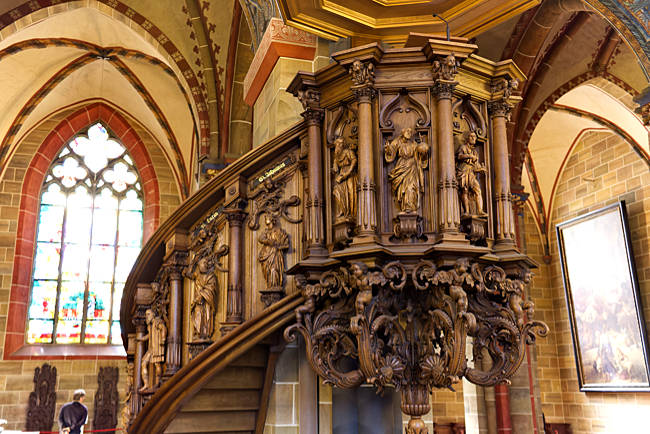
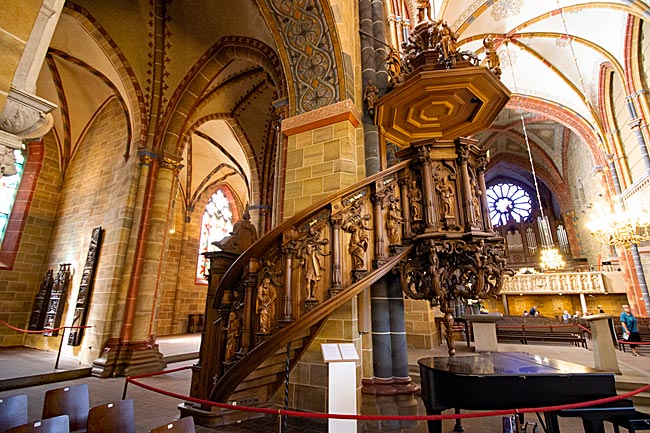
Beautiful wood carving: the baroque pulpit
Only remnants remain of the old choir stalls modeled after Magdeburg’s design from the 14th century. Today, nine restored out of the original thirty-eight oak-carved panels (side pieces) still depict scenes from both the Old and New Testaments, positioned opposite each other. Another remarkable wood carving is the baroque pulpit in the center of the cathedral, a symbol of Lutheran confession crafted by Danish court sculptor Jürgen Kriebel. Previously, the cathedral had been closed for nearly seventy years after construction work halted with the onset of the Reformation and during the Thirty Years' War, leading to its gradual decay. For example, the south tower collapsed in 1638 along with eight bells inside. The sculptor has vividly carved biblical scenes and figures from the Old Testament, including prophets and patriarchs like Abraham, Moses, and Solomon, from organic material. Compared to the pulpit, the bronze baptismal font from the 13th century appears rather plain.
The numerous stone memorial plaques found primarily on pillars and walls inside the cathedral are quite ornate. These so-called epitaphs from the 16th and 17th centuries often intricately commemorate dignitaries and symbolize the Protestant Church of that era. The depictions typically focus on themes such as death, the Last Judgment, and resurrection. One of the most notable epitaphs honors Domkanoniker Segebade von Hude, who died in 1578. Among other things, it shows him worshipping the crucified Jesus. Incidentally, these memorial plaques should not be confused with gravestones or tombstones; they were placed here regardless of the individual’s burial location.
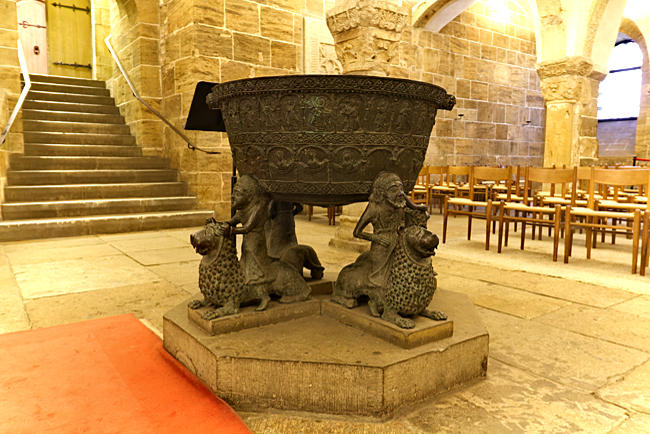
Bronze baptismal font in the west crypt
Almost a thousand years of church history are still visible within the cathedral today. While none of the old stained-glass windows survived World War II and other interior elements date from more recent times, the Romanesque west crypt is the oldest preserved room in the Hanseatic city. Archbishop Adalbert consecrated the crypt in 1066, six years before his death. The man was an influential figure during Emperor Henry IV’s reign. In the west crypt, a gravestone created in 1939 by sculptor Ernst Gorsemann commemorates him; he also served as Archbishop of Hamburg. The unevenly worked masonry and column capitals adorned with both figurative and abstract motifs already hint at the crypt’s advanced age. A stone relief from the 11th/12th century, mounted above a simple altar on the back wall, depicts a seated Christ holding a key and book. Far more imposing is the bronze baptismal font resting on four lion supports, crafted in the 13th century. Numerous figures are depicted on the exterior of the round basin. The space is now used by the cathedral congregation for baptismal services.
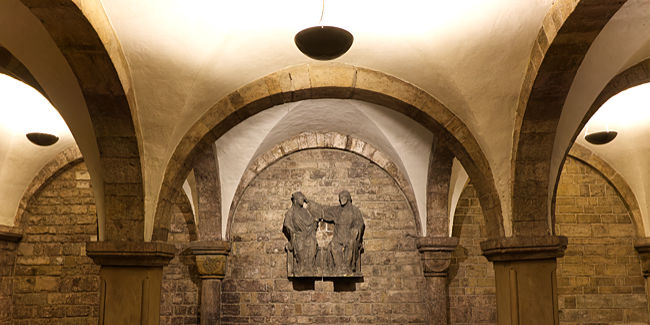
Part of the East Crypt
Although construction of the east crypt likely began around 1042 under Archbishop Bezelin, it was only completed decades later by one of his successors after the consecration of the west crypt. The room remains unchanged in its original form and is uniformly early Salian, an art style from the 11th to 12th century associated with the Romanesque period and named after the reign of the Salian dynasty, which partially incorporated traditional elements from the preceding Ottonian art era under the Saxon emperors, the Ottonians. Some column capitals of the Romanesque pillars still display pagan or Germanic animal symbols as well as floral motifs. In 1984, an altar was reinstalled beneath four columns supporting the central span; it now stands beneath the high altar in the cathedral, as it did in times past.
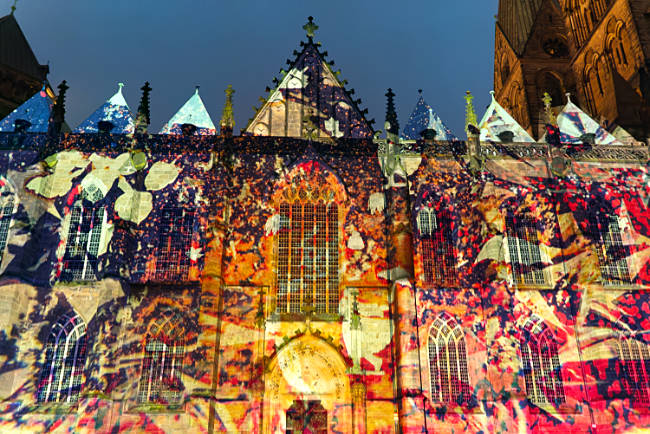
The Cathedral Can Be Joyful and Colorful: Light Display to Vivaldi’s "Four Seasons" at "Lichter der City" 2025
By the way, if you see a young man sweeping the cathedral steps while cheered on by onlookers, you are witnessing the so-called "cathedral step-sweeping." This tradition, which originated in the Hanseatic city in 1890, leads many unmarried thirty-year-olds - after arranging it with the cathedral - to perform this act. To give him something to sweep, friends often bring bags of bottle caps. However, the action is not always voluntary; some men are surprised after being lured there under a pretense by their friends. He is supposed to keep sweeping until an unmarried woman kisses him.
previous page
 next page
Map
Further information
Domshof
In the shadow of the cathedral stretches the Domshof. Until 1803, the cathedral district - and thus the large square - belonged to the respective bishops, Sweden, and later the Electorate of Hanover, who ruled Bremen at times. The buildings, including townhouses, and the planting of numerous trees made the Domshof one of the most beautiful squares in the Hanseatic city during the 18th and 19th centuries.
read more ...
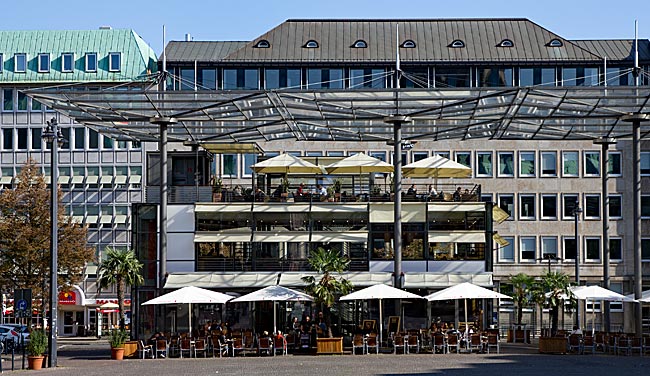
Domsheide
As the name suggests (in german), Domsheide is not far from the cathedral, just a stone's throw away. Passing by the protected Börsenhof A, a commercial and office building constructed between 1861 and 1864 opposite the cathedral and renovated at the turn of the millennium, you quickly arrive at one of the most important public transportation hubs in the city center. Here, trams primarily run in almost all directions, including to the airport, the district, the central station, the university, and the Überseestadt.
read more ...
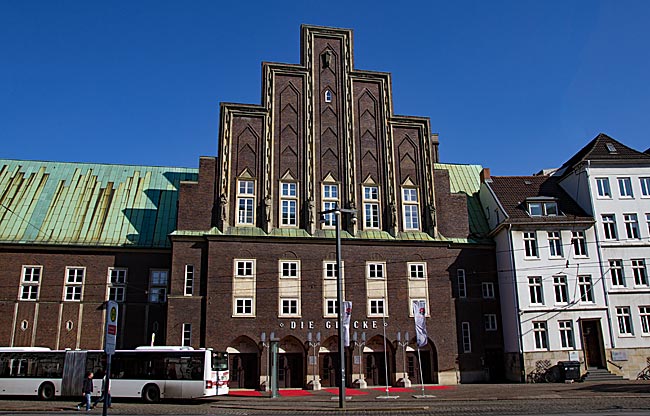
Böttcherstraße
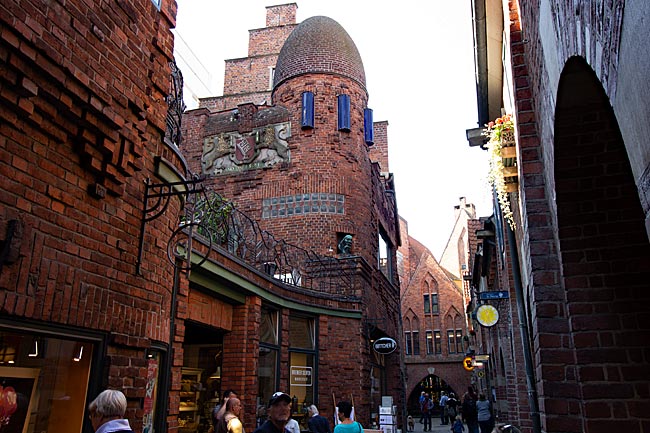
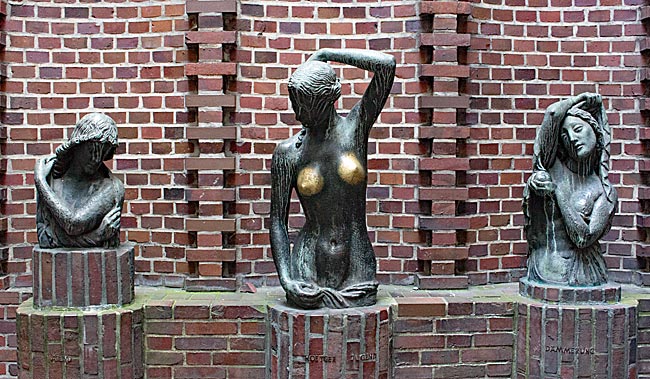
Since at least 1931, the name Böttcherstraße is no longer primarily associated with the scent of wood and the sound of coopers' hammers, but rather with a very special, almost enclosed ensemble of buildings. Over a length of just over one hundred meters, museums, open artist workshops, specialty retailers offering upscale goods, dining establishments, and a hotel create a unique atmosphere between brick and sandstone structures that is unparalleled in Bremen.
read more ...
Schnoor
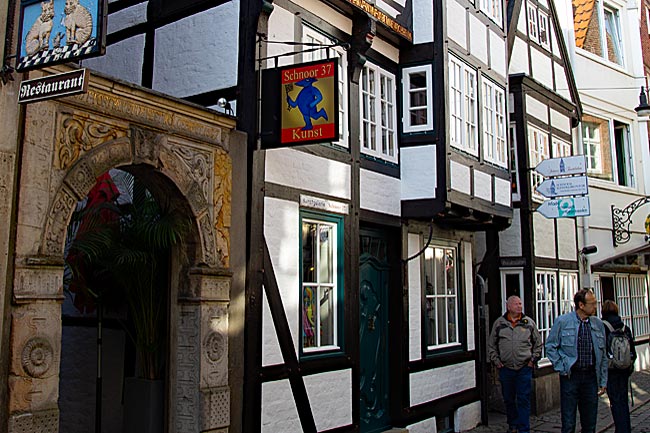
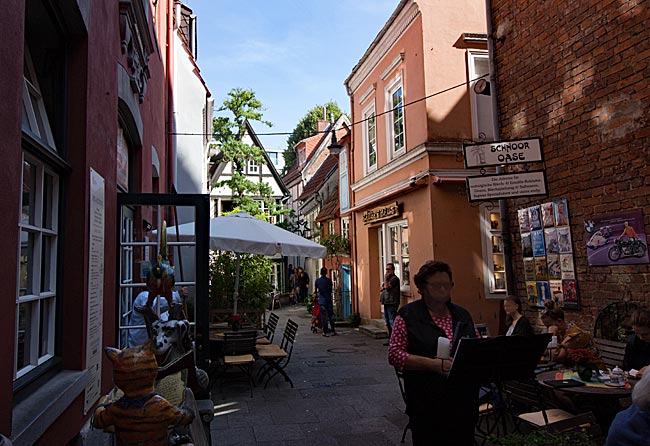
Bremen's oldest preserved neighborhood is the Schnoor. In earlier times, this area was primarily inhabited by fishermen and sailors, as it was here that the Balge - a tributary of the Weser - ran, and one of Bremen's first harbors was located. Many of the small houses date back to the 17th century or have been reconstructed based on historical models. The house at No. 15 in Schnoor Lane, built in 1402 on medieval foundations, is one of the oldest structures in the Schnoor, alongside the Packhaus (1401).
read more ...
Wallanlagen
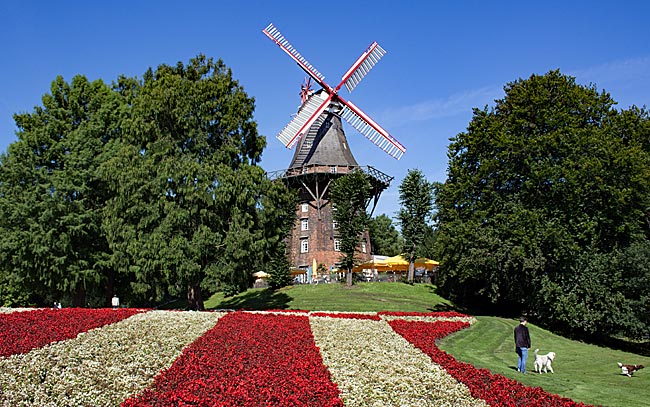
Almost entirely surrounding the Old Town, a zigzagging park landscape with a moat stretches out. These are the last visible remnants of the fortifications that once encircled the Old Town and parts of the New Town until the early 19th century. The transformation into a garden landscape began in 1802 with the first section between the Weser River and Herdentor Gate.
read more ...
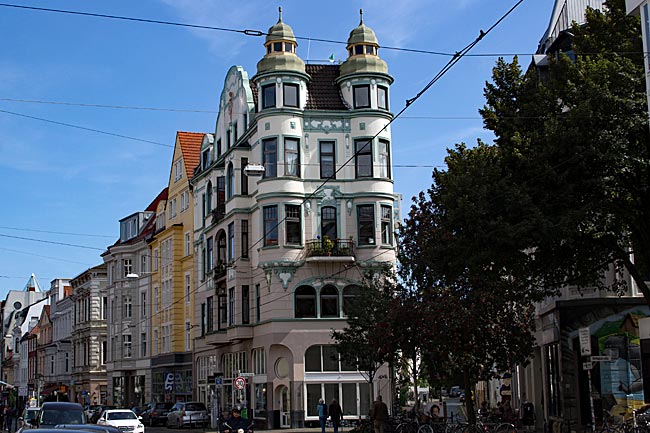
A stroll through the Neustadt
The Alte Neustadt, as part of today's neighborhood, was only established in the 17th century. The planned expansion of the city was also prompted by the increasing threat posed by the development of offensive weapons. Remnants of the fortifications built at that time are still present today as parks, but there is much more to discover, such as the "Kleine Roland".
read more ...