
 exploring Bremen & its surrounding areas
 You are here: attractions in the city center
 Domshof
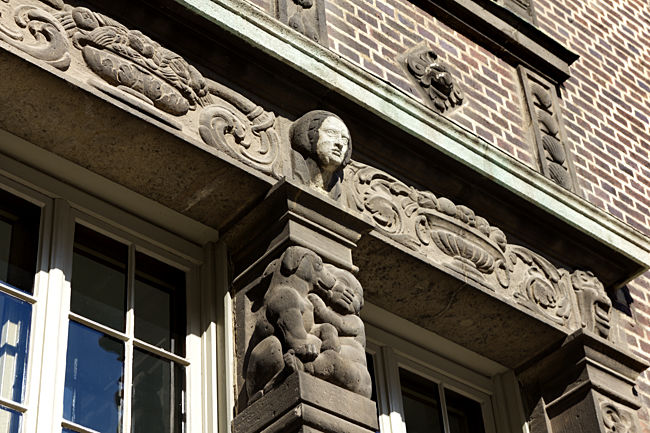
Details of sandstone at the windows of the New Town Hall (1909-1913) on the Domshof
In the shadow of the cathedral, the Domshof stretches out. Until 1803, the cathedral district, and thus the large square, belonged to the respective bishops or Sweden and later the Electorate of Hanover, who ruled Bremen at times. The buildings, including townhouses, and the planting of numerous trees made the Domshof one of the most beautiful squares in the Hanseatic city during the 18th and 19th centuries.
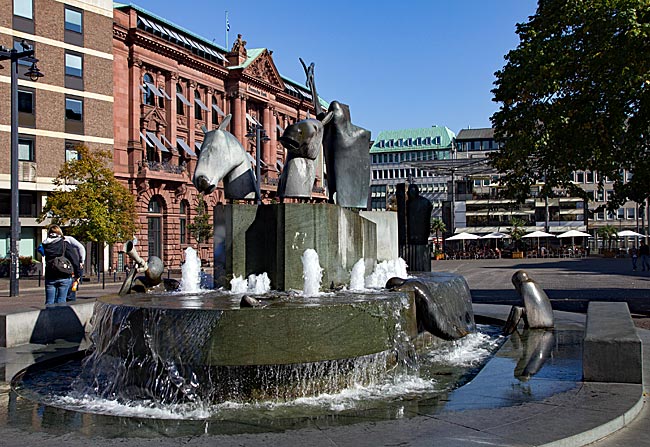
Maritime: The Neptune Fountain, with the Deutsche Bank building (red) in the background
Military parades like those of the past no longer take place here, but the square is still used for demonstrations, assemblies, outdoor events, and as a weekly market. Until 1831, public executions also took place here. The last condemned person was Gesche Gottfried, a 15-time poisoner, who died by the sword in front of 35,000 spectators. A so-called "spitting stone," a dark stone with an engraved cross in the granite pavement between the cathedral and Neptune Fountain, still reminds us of this event today.
Fountains have a long tradition on the Domshof. Like the Gustav Adolf Monument (1856), nothing remains of the Teichmann Fountain (1899) or the Wilhadi Fountain (1880), as they were all melted down during World War II for the armaments industry. Since 1991, the Neptune Fountain by sculptor Waldemar Otto has adorned a triangle with the cathedral and town hall in the southern part of the square. With the slightly older Globe Fountain, another smaller water feature can be found in front of the Deutsche Bank building. An extensive shopping tour through the city center with Sögestraße and Obernstraße can begin right across the street at the Domshof Passage.
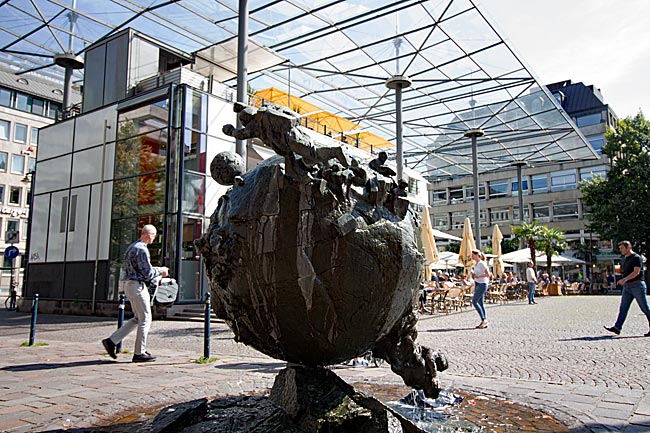
Small water feature: the Globe Fountain
Between the Neptune Fountain and the cathedral, on a pedestal high on horseback, stands the "Iron Chancellor," Otto von Bismarck, the first chancellor of the German Empire. Bismarck had already been named an honorary citizen of Bremen in 1871, and even before his death, the Senate had named a street after him. Nevertheless, the unveiling of the pompous monument in 1910 was not uncontroversial, just as the chancellor himself had been. During World War II, the only existing equestrian statue of Bismarck was walled into the exterior of the cathedral and, after long controversies, was not reinstalled until 1953. However, at the beginning of 2018, the bronze statue stands on a crumbling foundation. The unusually high pedestal, like those of two statues of significant military leaders from the city-states of Venice and Padua in 15th-century Italy, is dilapidated. And once again, the question is being asked by many whether this politician, whom many deny having a role model character, necessarily needs to be honored with a monument or now preserved at considerable financial expense. A discussion that was also held in Hamburg in 2017 on the occasion of a renovation need of €6.5 million, where since 1906 stands the world's largest Bismarck monument (34.3 m).
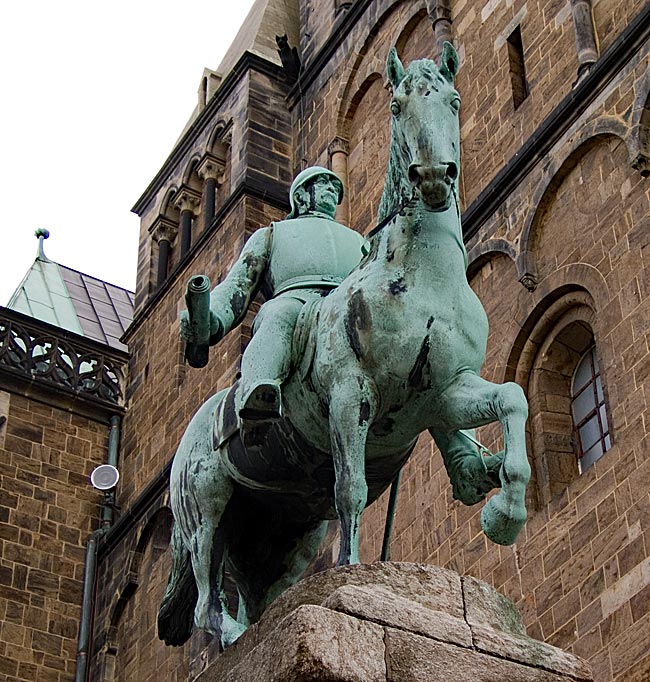
The "Iron Chancellor" on horseback: Otto von Bismarck*
In 1941, the largest air-raid shelter in Bremen, with a length of over 100 meters, was built under the square, causing many trees to disappear from the place. The underground structure was intended to protect 2,500 people for 14 days. Until 1999, the area was used as an underground parking garage before the entrance was filled in and the Domshof Forum was built on top.
The buildings that once surrounded the square and shaped its architectural overall appearance were finally destroyed in the war or had to make way over time for newer structures, whose architectural radiance sometimes gives way to a certain practicality. The five-story new building of the former Bremer Landesbank, inaugurated in 2016 between the Deutsche Bank building from 1891 and the New Town Hall (1913), is an example of this. By the way, the concentration of financial institutions directly adjacent to political power in the Bürgerschaft and town hall as well as the house of the Bremen merchants (Schütting) at the market square was probably not coincidental.
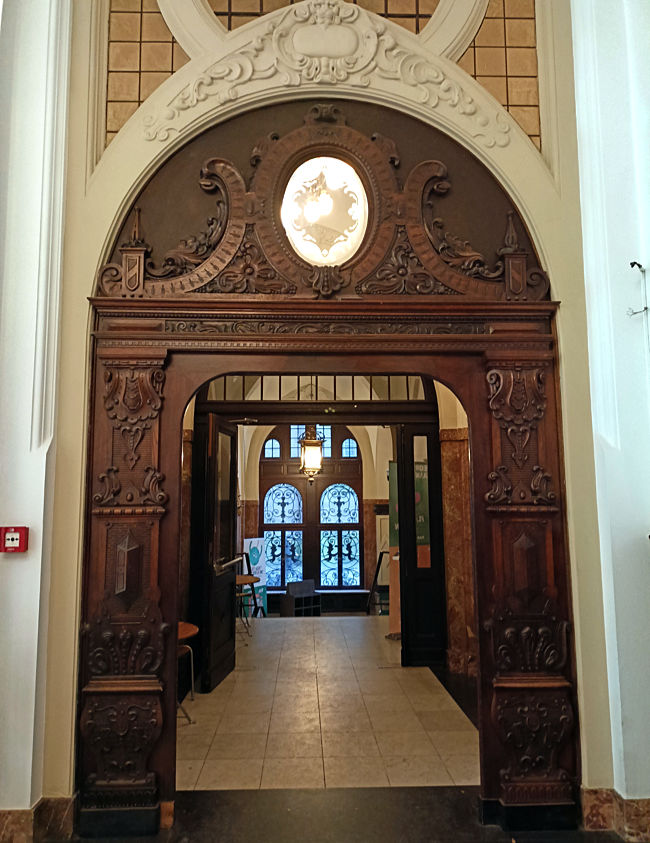
Passage in the former building of Bremer Bank on Domshof
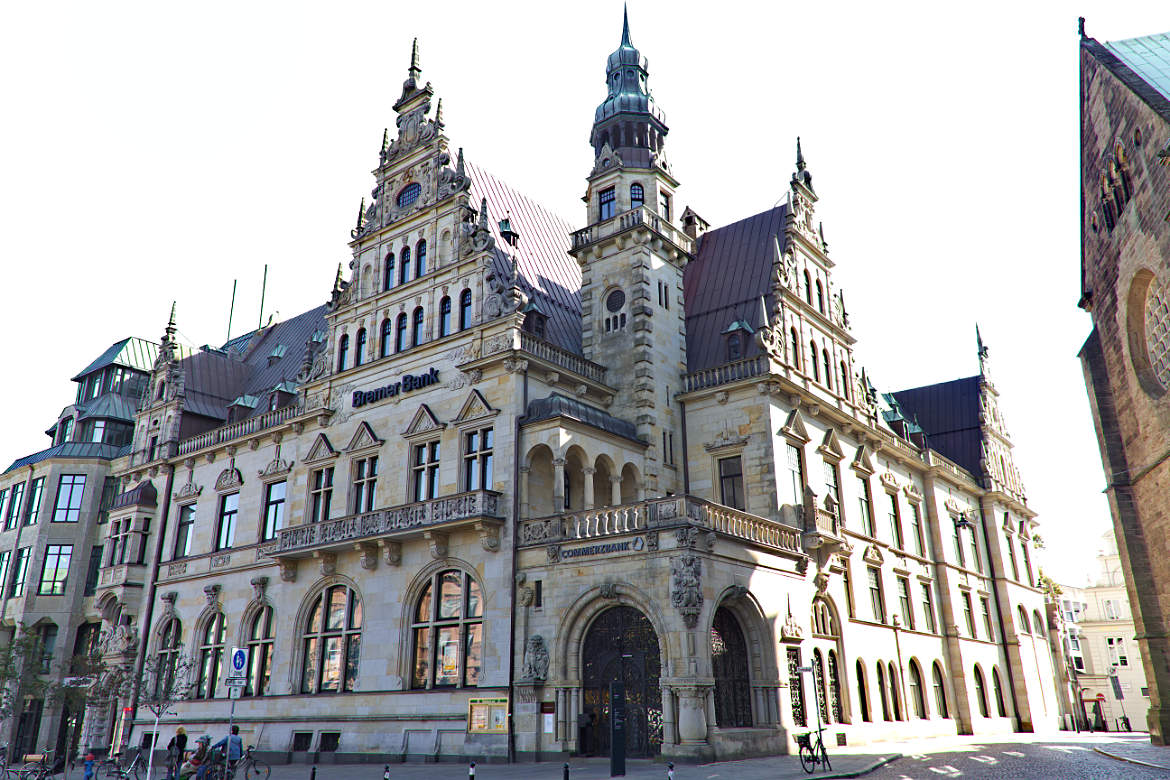
Among the bank buildings, the former building of Bremer Bank at the corner of Sandstraße next to the cathedral stands out. The building was designed by the Bremen architect Albert Dunkel and Dietrich Tölken in the Neo-Renaissance style (photo at the top). It was built between 1902 and 1904 on the site of St. Petri Orphanage. Since 1994, after being used as a stock exchange from '80-'90, the building has been under monument protection. Directly adjacent, in 1979, a new building was constructed into which the classical façade of a house located there from the 19th century was incorporated.
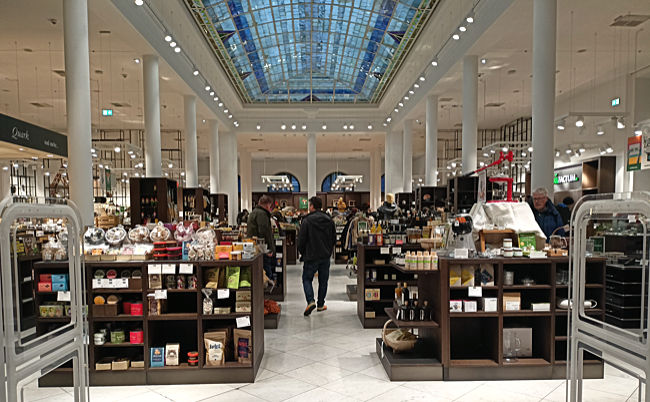
View into the Manufactum Department Store
Since September 2016, the old building has housed a Manufactum department store covering 1,000 square meters, as well as a brot&butter shop and a bistro. In the new building next door, the Markthalle Acht opened in November, offering food and non-food products from Bremen and the region. A visit to this complex is definitely worthwhile.
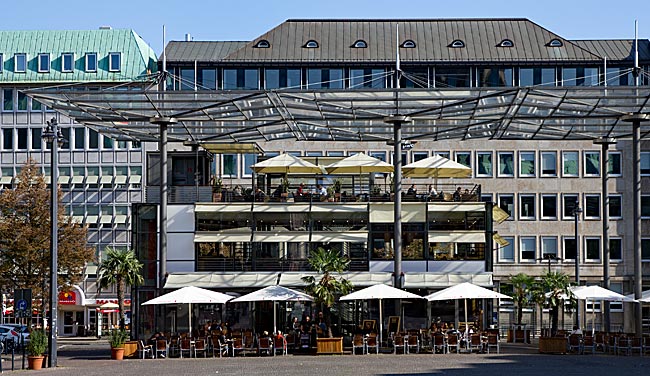
Domshof-Forum
After the redesign of the Domshof beginning in 1990, the space was cleared for the Domshof Forum, which has since 1999 closed off the square to the north. The forum rests on eight 16-meter-high steel columns supporting a 1,000-square-meter rectangular glass roof secured by a steel cable construction. Beneath it stands a three-story building with a rooftop terrace, also predominantly made of steel and glass, occupying one-third of the area under the roof. Depending on the weather, you can find here an open-air café with overhead protection or a bistro in an enclosed space.
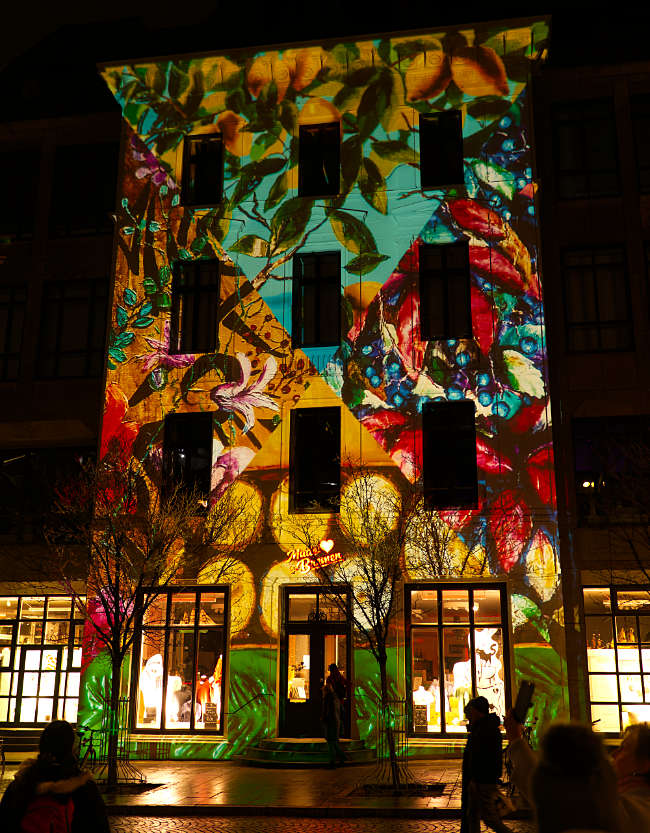
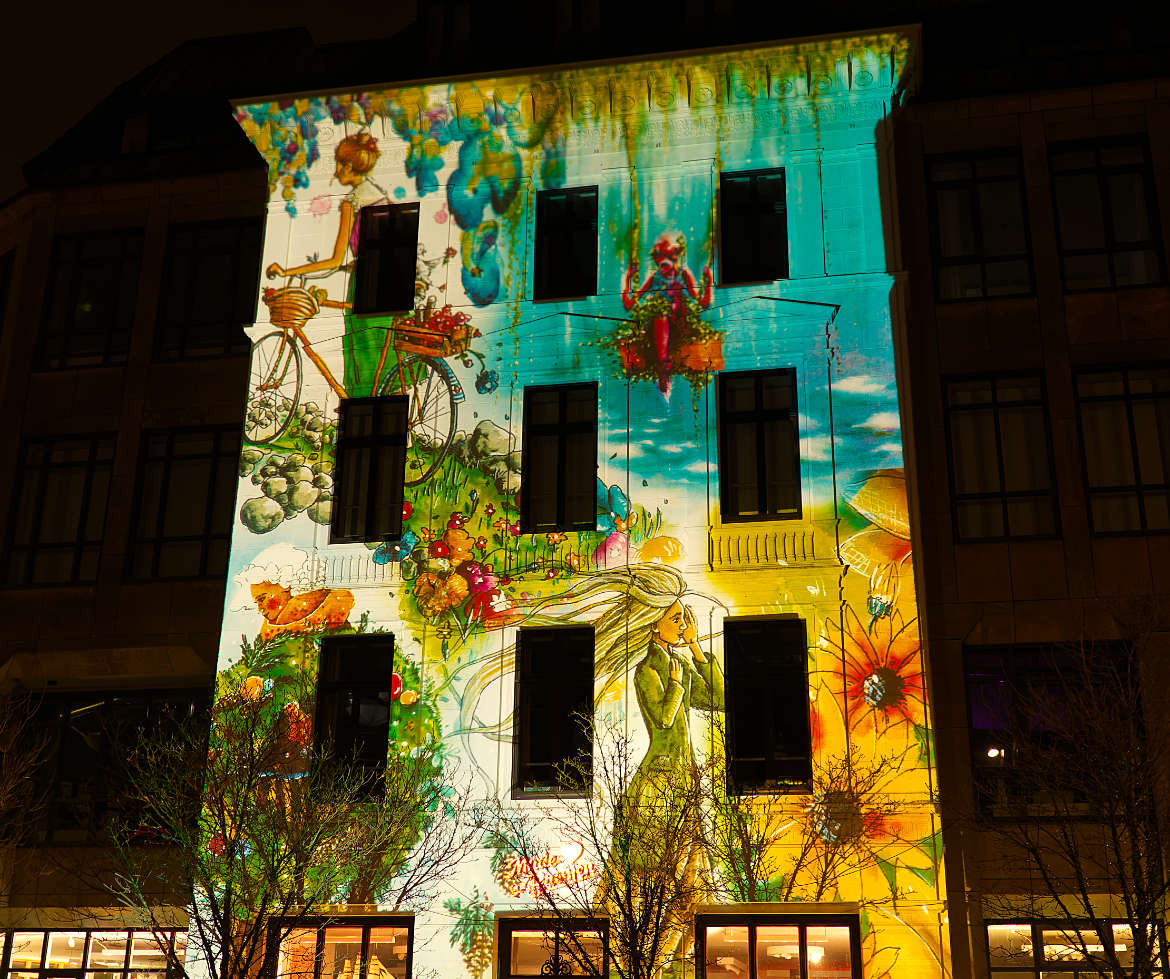
"Lights of the City" 2025 - "Made in Bremen" in the double sense at Domshof: the many products in the store on the one hand and the artistic light installation by Bremen artists under the motto "Four Seasons" on the façade. Despite the information board, we could not assign this work to any artist. Different is the work further below: Elisabeth Wächter

The store "Made in Bremen" is a great idea - both for locals and visitors. On its often beautifully arranged sales floor, you can find many appealing products, as shown by our selection on part of the in-house product magazine (background).
A little to the right past the bank building into Sandstraße, you come across today's House of Science. Until 1973, the Verein Vorwärts, founded in 1846 by Bremen cigar makers as a workers' education association, was located here. To this day, the name is displayed in golden letters on the house wall, next to quotes from Schiller and others such as "Restlessly forward you must strive, never tired to stand still, if you want to see completion." A few more meters down Sandstraße toward Wall, you encounter the orange-tinted "Haus Heineken," the former Domkurie, which dates back to the Middle Ages. The house, which appears rather unassuming after exterior work in 1744, was named after the Bremen mayor Abraham Heineken (1752-1818), in whose possession it was for a time. Inside the building, however, is Bremen's oldest preserved painted wooden ceiling, which was created in 1580 after extensive renovation and expansion work the previous year.
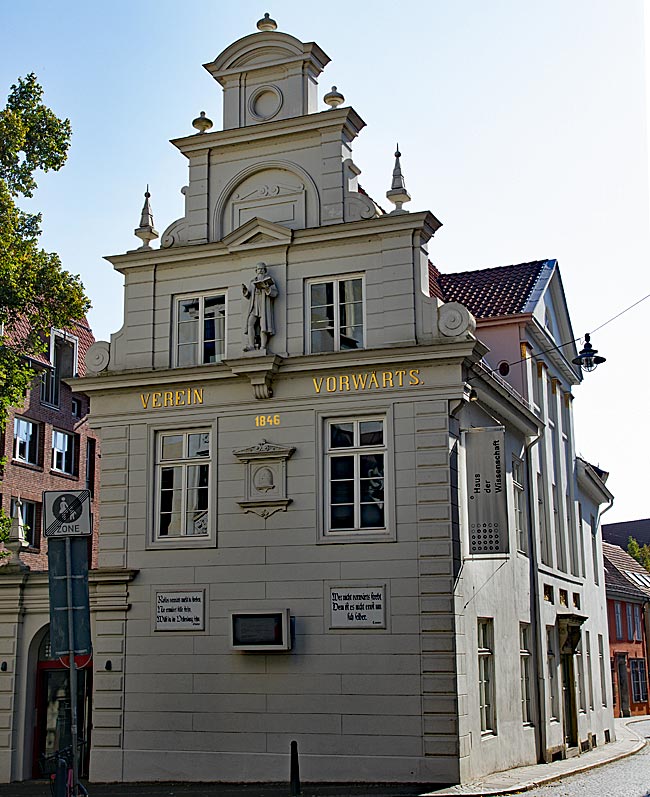
Former House of Verein Vorwärts, with "Haus Heineken" in the background to the right
From Domshof, the path leads through Sandstreet into the Viertel, past Domshof Forum toward Wall and into Wallanlagen, past the new building of Bremer Landesbank onto Liebfrauenkirchhof and into Sögestraße, as well as between cathedral and town hall onto the market square with the Roland statue.
previous page
 next page
Map
Gesche Gottfried, the Bremen Poisoner
At the center of this 19th-century criminal case was Gesche Margarethe Timm, born in rather modest circumstances and later known as Gesche Gottfried. After her crimes were discovered, she was arrested on March 6, 1828 - her 43rd birthday - and transferred a few days later from a cell in the town hall to the newly completed detention house at Ostertor. She spent three years in her cell there until her execution by sword on Domshof.
read more ...
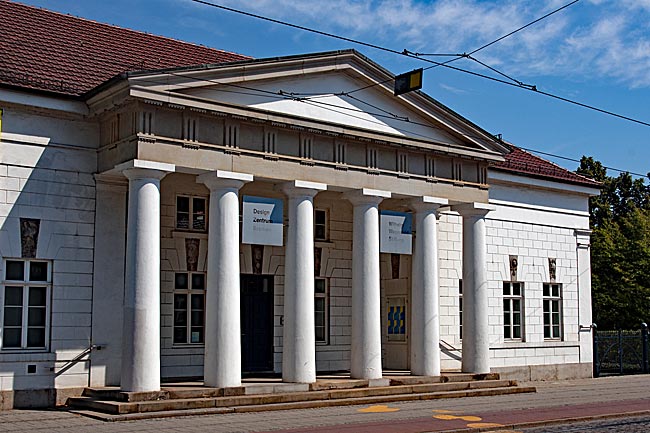
St. Peter's Cathedral
The history of the cathedral, Bremen's oldest church, begins with the Christianization of the region - originally settled by the Saxons - by Charlemagne in the 8th century. While it is uncertain exactly when the first cathedral was built on the highest point of the so-called Bremer Düne (Bremen Sandhill), it was likely destroyed by invading Vikings from Denmark in 858. The subsequent Romanesque structure, begun in 1041 and completed with its two towers in the 13th century, was later remodeled in the Gothic style during the 16th century.
read more
...
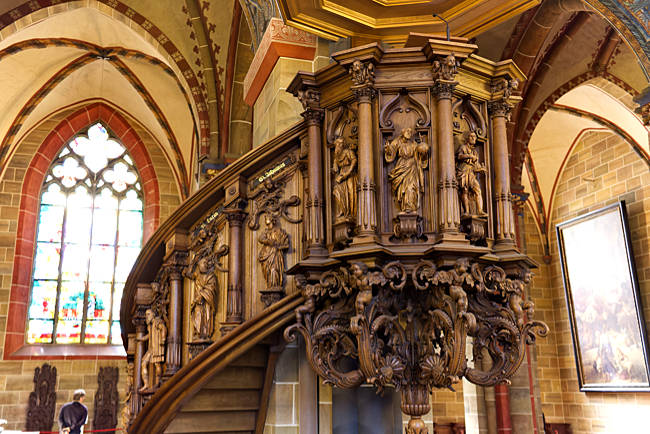
City Center: the main shopping streets
Another traditional café can be found at Sögestraße 42/44. The Knigge confectionery was established in 1889 and offers a variety of baked goods, chocolates, and ice cream, making it well-known throughout the city. Diagonally across from the café, branching off from the row of shops, is the glass-covered Katharinen-Passage, which - with an interruption - leads into the Domshof-Passage, ending at the Domshof. On this site, which now houses retail stores and a parking garage, once stood the namesake St. Katharine's Monastery.
read more ...
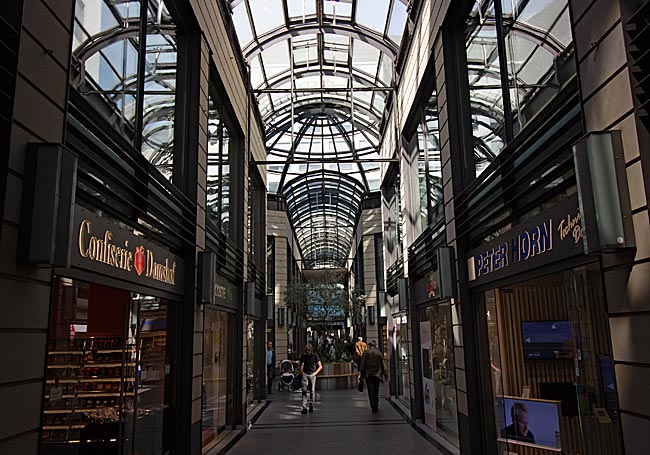
Das Viertel (The Quarter)
Although the area around the two main streets and their many small side streets partially belongs to the Mitte district and partially to the Östliche Vorstadt, Bremen residents simply refer to it as "Viertel." It is loved, hated, feared, and much more. Perhaps in no other neighborhood of the Hanseatic city have contrasts been so openly and sometimes violently expressed over decades as they have been in the Quarter.
read more ...
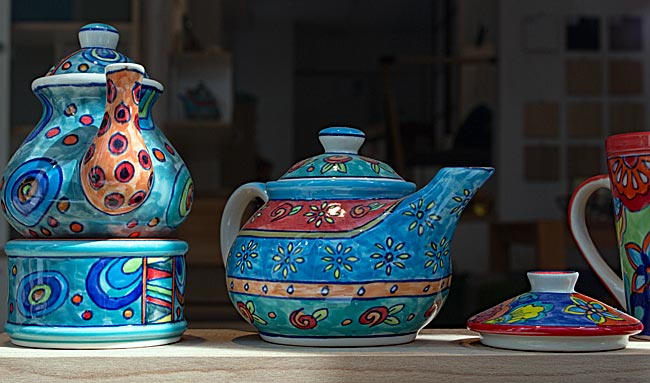
Our Lady's Church & Our Lady's Churchyard (Liebfrauenkirche & Liebfrauenkirchhof)
Around 1020, a first parish church made of wood was built on the site of today's Liebfrauenkirche, outside the enclosed cathedral precinct. The church was dedicated to St. Vitus, who is venerated as a saint in the Roman Catholic Church. About 80 years later, the building received its current southern tower, which is now the oldest preserved part of the structure. Parts of this church, which is the second oldest in Bremen after St. Peter's Cathedral, were reused when, around 1160, a three-aisled basilica with three apses was constructed on the same site, the city's oldest market.
read more ...
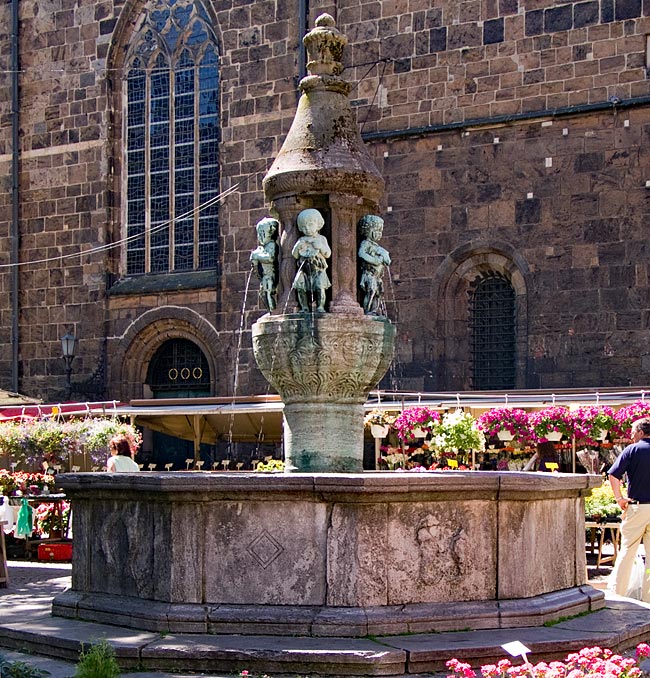
Market Square
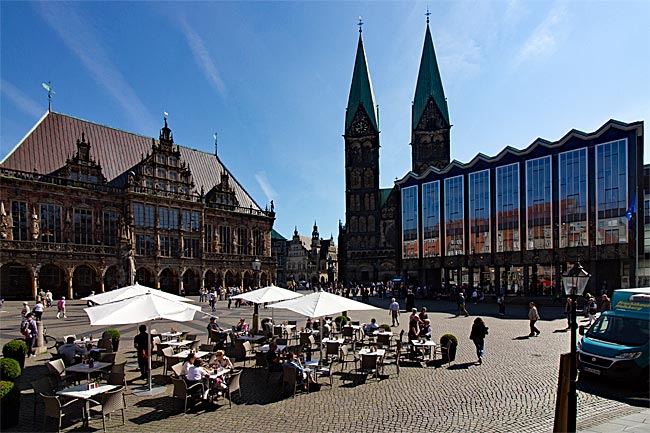
As it was in the past and as it is today, market square is the political center of Bremen and also a major attraction for thousands of tourists, undoubtedly due to its unique architectural atmosphere. Almost unobtrusively and modestly, the Bürgerschaft (Bremen's parliament) stands next to the magnificent Old Town Hall.
read more ...
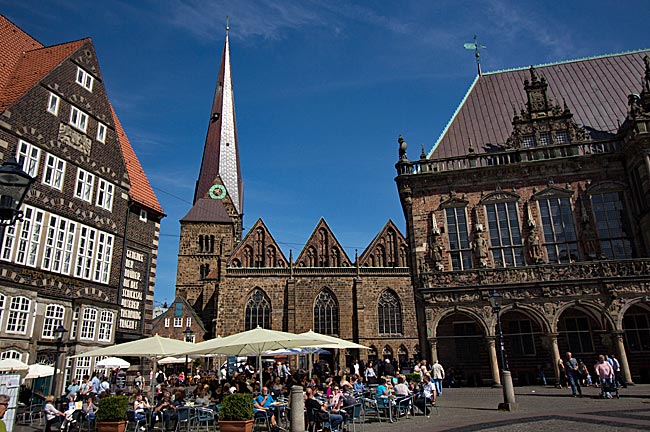
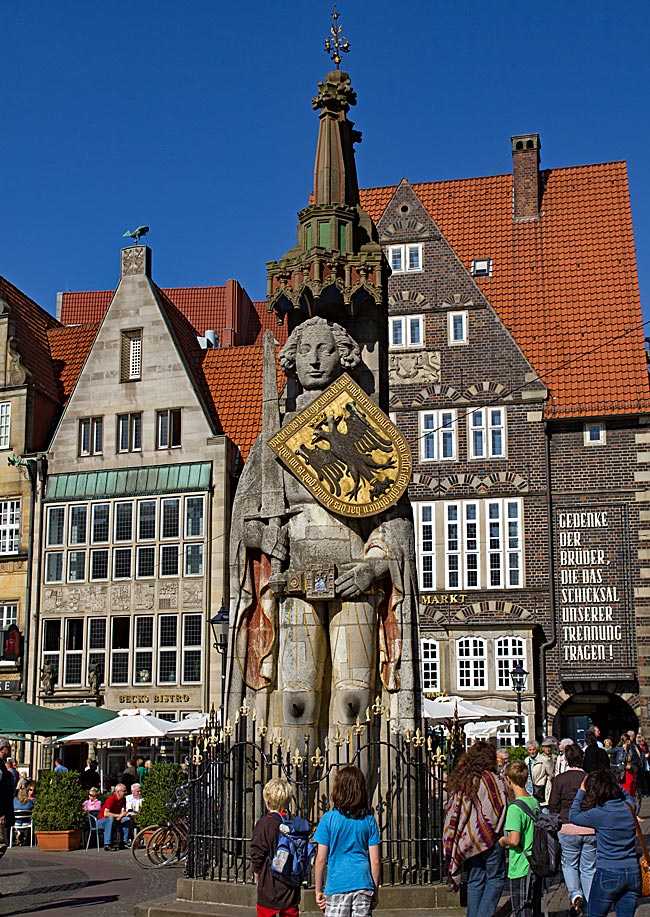
Roland statue
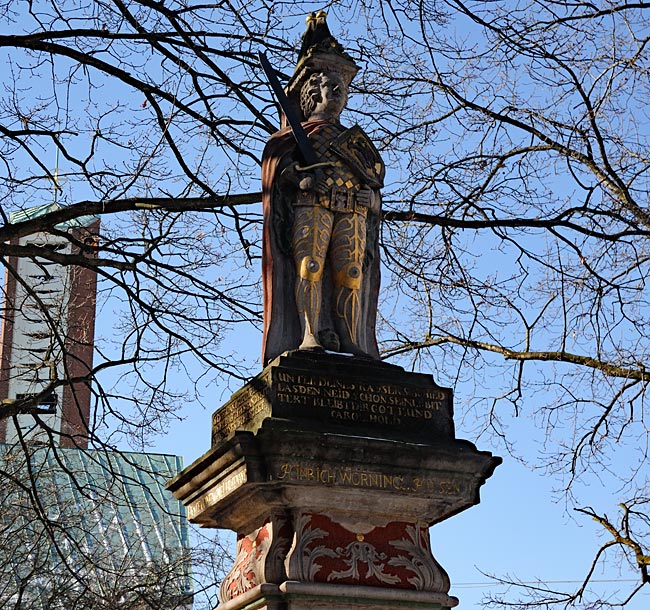
The Roland statue stands on the market square in front of the town hall and has been there since 1404. It is a 5.55-meter (10.21-meter total) tall sandstone figure of a knight with a drawn sword and shield in front of his chest. Like in many other European cities, the Roland in Bremen symbolizes the city's freedom, which historically stemmed from market rights and its own jurisdiction.
read more ...
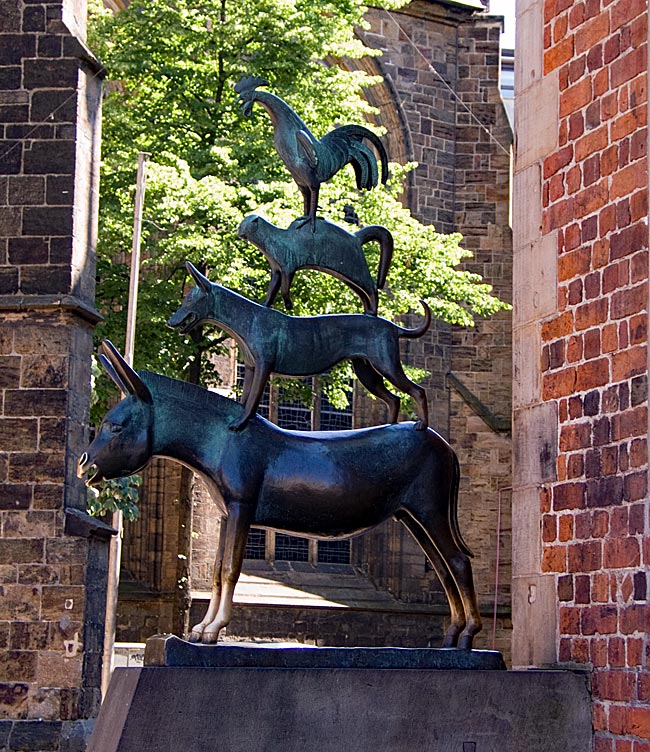
The Bremen Town Musicians
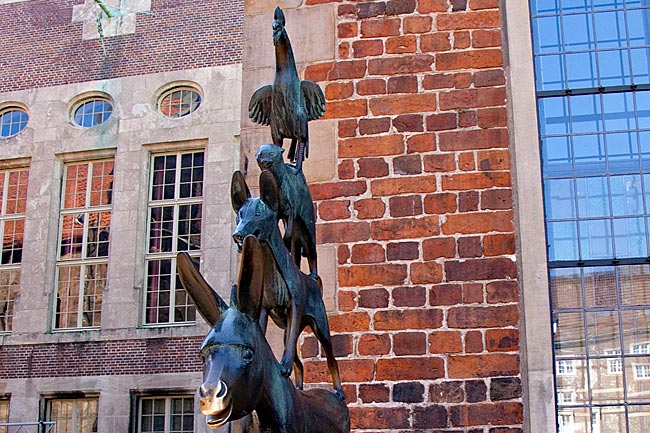
On the left broad side of the Old Town Hall, next to the entrance to the lower town hall hall, stand four bronze-cast heroes of a world-famous fairy tale - the Bremen Town Musicians. However, it remains a contentious point whether these mismatched four - donkey, dog, cat, and rooster - actually made it all the way to Bremen, as the fairy tale does not provide a clear answer on this matter. But perhaps that is not so important, for what truly matters is the message conveyed in the fairy tale.
read more ...
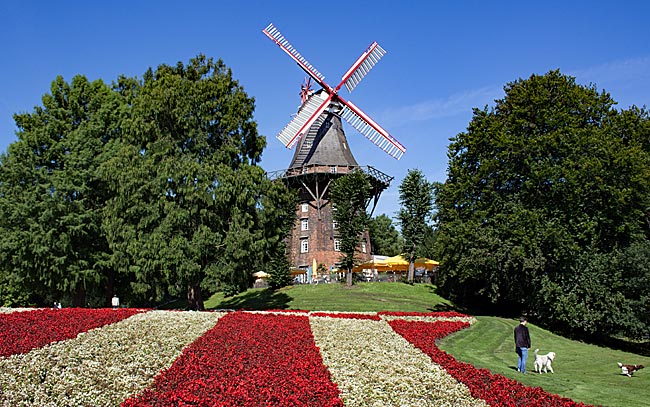
Wallanlagen
Almost entirely surrounding the Old Town, a zigzagging park landscape with a moat stretches out. These are the last visible remnants of the fortifications that once encircled the Old Town and parts of the New Town until the early 19th century. The transformation into a garden landscape began in 1802 with the first section between the Weser River and Herdentor Gate.
read more ...
A stroll through the Neustadt
The Alte Neustadt, as part of today's neighborhood, was only established in the 17th century. The planned expansion of the city was also prompted by the increasing threat posed by the development of offensive weapons. Remnants of the fortifications built at that time are still present today as parks, but there is much more to discover, such as the "Kleine Roland".
read more ...