
 exploring Bremen & its surrounding areas
 You are here: worth seeing in the surroundings
 Dangast (2/2)
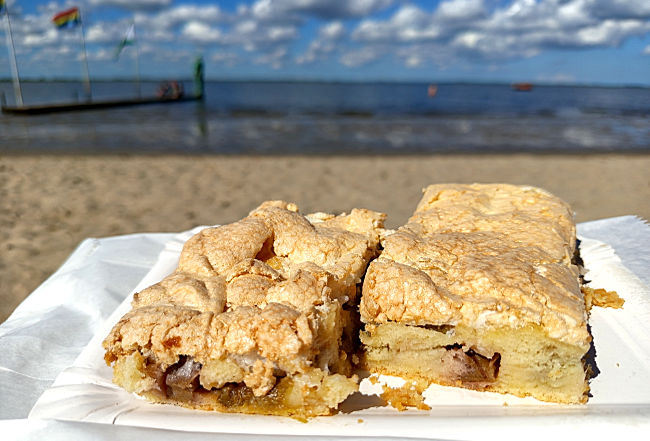
Picnic on the beach with rhubarb cake from the "Kurhaus"
The cake is also available to take away. Perhaps for a short walk to the small harbor mentioned earlier. Here, leisure boats are moored in a small marina that occupies about a third of the basin. Departure is only possible at high tide because at low tide, the boats lie on the mud without an inch of water under their keels.
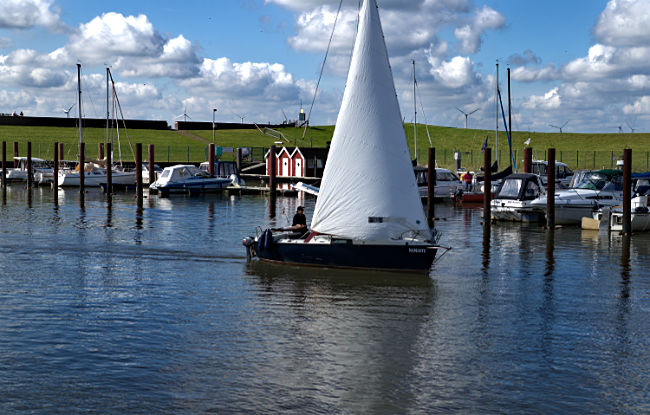
Enough water under the keel for departure
This also applies to the last remaining cutter in Dangast. As everywhere along the German coast, the number of comparatively small fishing vessels has dramatically decreased. In 2025, we could still buy fresh crabs directly from the mooring spot, but the future of coastal fishing and especially crab fishing is uncertain.
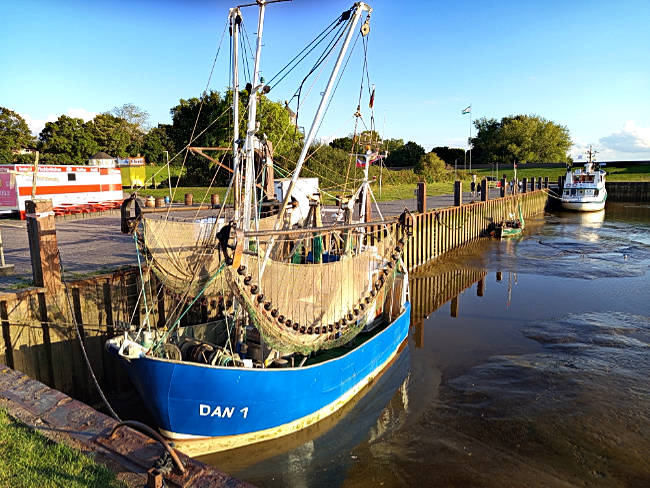
Uncertain future: coastal fishing
Stricter legal environmental and animal protection regulations, declining catches, rising maintenance costs, and personnel problems are the main reasons for the decline of this hard profession, which once secured the livelihoods of entire generations of families along the coast and shaped the regions.
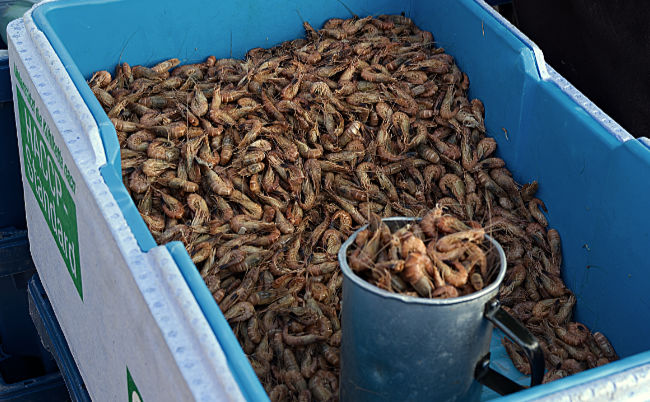
Crabs for sale from the cutter, here in Büsum
The excursion ship "Jantje von Dangast" also has to wait until enough water has flowed into the marked fairway through the mudflats for all watercraft. The rhythm of nature determines parts of daily life here in this way, and it works.
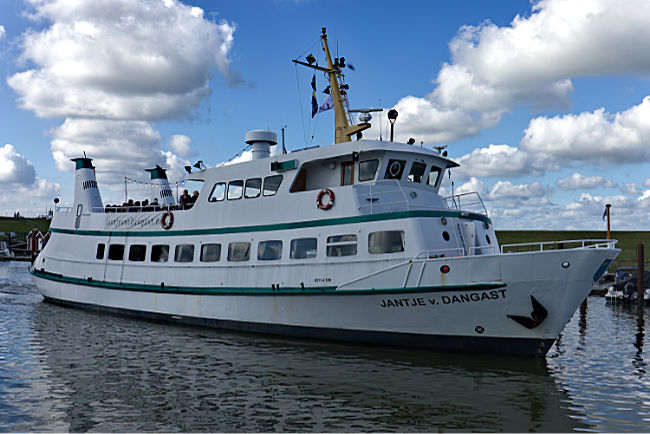
The excursion ship "Jantje von Dangast"
The old Wilhelmshaven lighthouse, a stone's throw from the passenger ship's mooring on a small elevation, no longer functions - nor does it need to - and is likely noticed by very few guests. The 1975 commissioned leading light served shipping traffic until 2005, but not here - instead, in Wilhelmshaven, visible across the bay on the opposite shore. After its sale, the new owner dismantled the 12-meter-high decommissioned steel lantern and rebuilt it in Dangast.
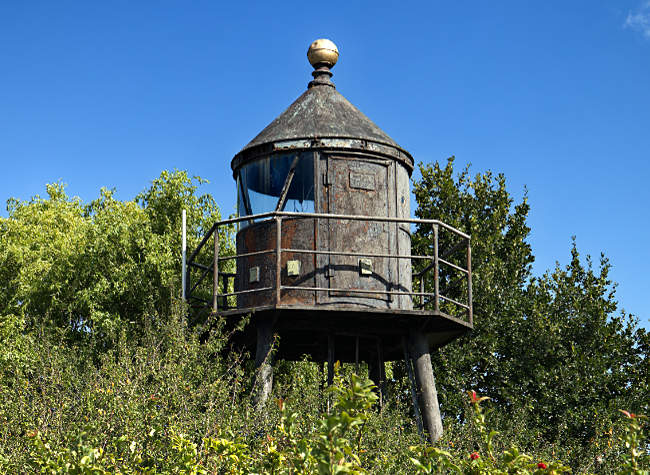
No longer a beacon, and time is taking its toll
Dangast is also an excellent starting point for cycling tours. One destination, for example, is the harbor in Varel. Behind the dike past the municipal campsite in Dangast, the car-free route leads to the Wilhelm-Kammann Lock, which separates the bay near the Jade's mouth from the Vareler Tief. Cycling along this waterway takes you to the harbor.
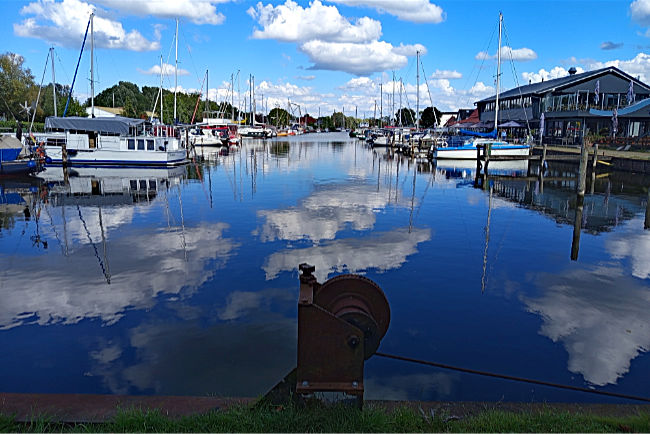
Head of the harbor in Varel
Schloss Gödens in the municipality of Sande is another destination. You also cycle car-free behind the dike to Cäciliengroden before turning toward Sande.
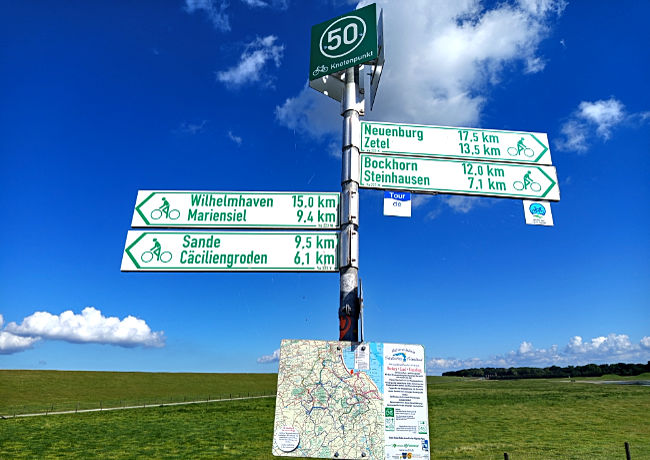
Signpost: exemplary signage
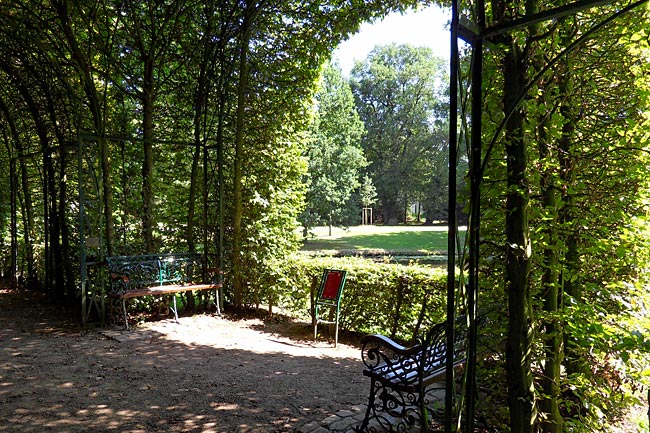
The historic moated castle from the late 17th century, with its orangery and other outbuildings, is only partially accessible on special occasions. Therefore, you can only glimpse the ensemble from the publicly accessible castle park (open Monday through Friday). Tip: To avoid a reprimand, leave your bike completely at the parking lot, even pushed bicycles are not allowed on the paths, even if the park is otherwise deserted.
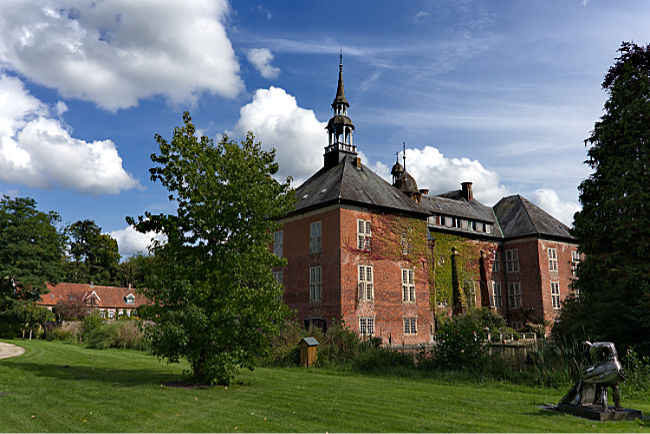
Schloss Gödens
For more water-based fun, you can cycle along the edge of Sande on the Ems-Jade Canal to Wilhelmshaven. The 72.3-kilometer-long canal has stretched from Wilhelmshaven's harbor to Emden's harbor since its completion in 1888 after an eight-year construction period.
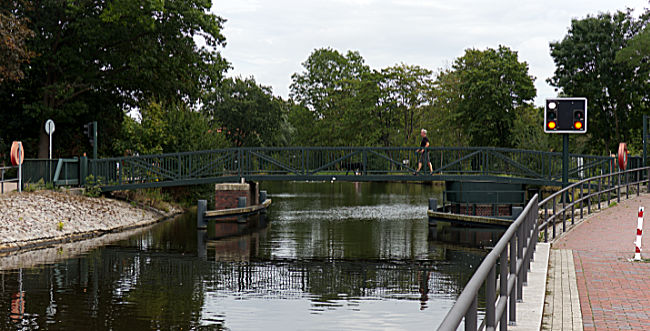
Bridge over the Ems-Jade Canal in Emden
previous page
 next page
Map
Further information
Tourism Service Nordseebad Dangast
Edo-Wiemken-Str. 61
26316 Varel-Dangast
Phone: +49 (0) 4451 9114 0
Email: info@dangast.de
www.dangast.de/tourist-information.html
Jantje von Dangast
Hafen Dangast
26316 Varel
www.jantjevondangast.de
Kurhaus Dangast: www.kurhausdangast.de
Camping: www.dangast.de/strandcampingplatz-nordsee-dangast.html, www.rennweide.de
Wilhelmshaven – Seaside City on the Jadebusen
It's hard to imagine Wilhelmshaven without its naval presence, as the city only developed after a naval base was built in the 19th century. Even today, the German Armed Forces (Bundeswehr) maintain a large base here with several squadrons. Yet, there is much more to discover in this port city beyond its military significance.
read more ...
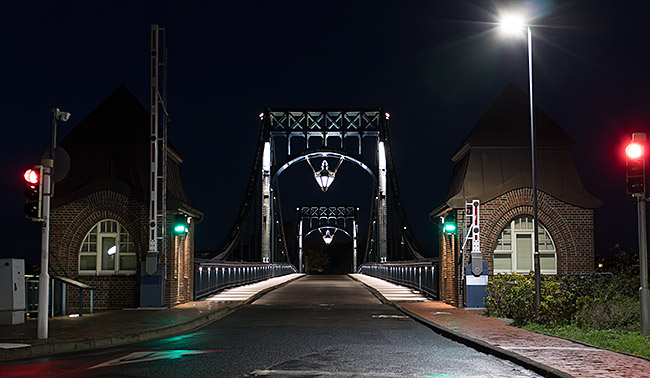
Oldenburg
The third-largest city in Lower Saxony today was once the seat and capital of ruling counts, dukes, and grand dukes, later a Free State and state capital. Remnants of the time when nobles ruled the city include the palace and numerous primarily neoclassical buildings in the city center. But even beyond that, there is much to discover in the expansive, largely car-free inner city. And again and again, one comes across water during a stroll, such as the Old City Harbor.
read more ...
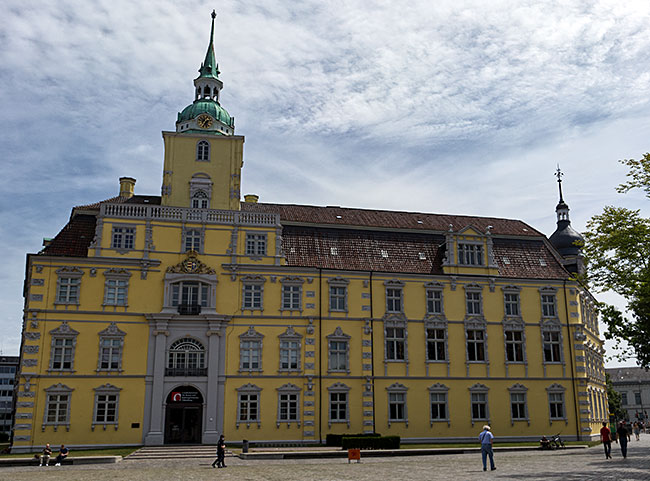
The East Frisian Island Wangerooge
Among the inhabited East Frisian Islands, Wangerooge is the second smallest (7.94 km²) after Baltrum and car-free, making a stroll through town much more pleasant compared to other islands, especially since distances can easily be covered on foot. From the small train station, you're just a few steps away from the heart of the village, quickly finding yourself in front of the unmistakable Old Lighthouse, which now houses the island museum. From 1856 to 1969, this lighthouse served as a maritime navigation aid, guiding ships safely along their routes. Just how far its light could be seen becomes clear when you climb the 149 steps to the lantern room—from there, you can step out onto the surrounding gallery and enjoy a sweeping view of the island and the North Sea.
read more ...
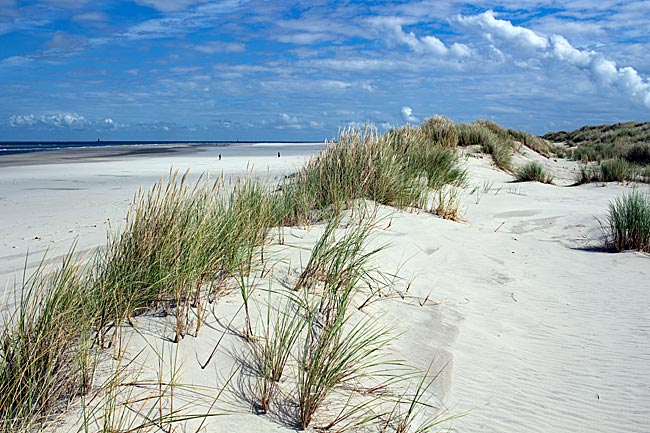
Stade - on the banks of the Schwinge River
Do you know Stade? No? What a shame! Then feel free to read on if you'd like to learn about this smaller Hanseatic city on the Elbe, neighboring the much larger Elbe metropolis of Hamburg. As is often the case, the tourist's gaze doesn't fall on the entire city but rather focuses here on the historic city center and a bit of its surroundings. In our opinion, Stade is a beautiful and worthwhile destination for a short visit or even a few extra days.
read more ...
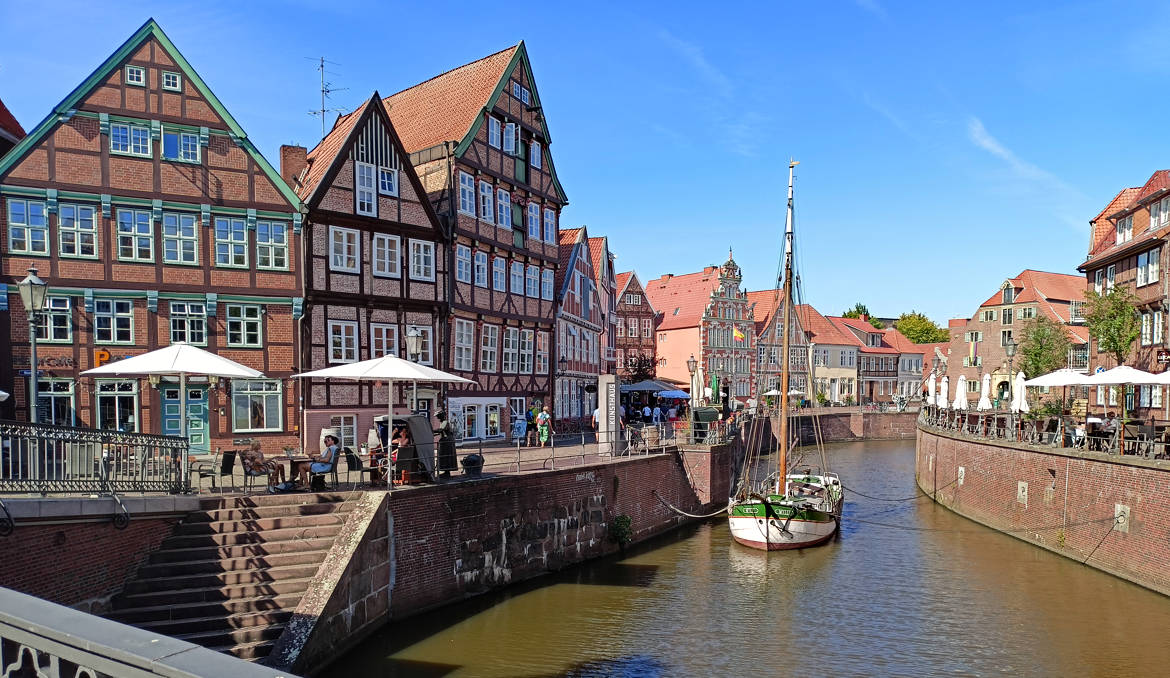
Cuxhaven - a day trip
Many people from Bremen consider the seaside resorts of Cuxhaven to be "their home beach." The coastal city at the mouth of the Elbe is easily accessible from Bremen by car via the A27, which passes by Bremen and Bremerhaven before ending in Cuxhaven. By train, the journey takes a bit longer with a transfer in Bremerhaven. However, even in the off-season, Cuxhaven with its seaside resorts is a great destination for an outing - for example, by bicycle.
read more ...
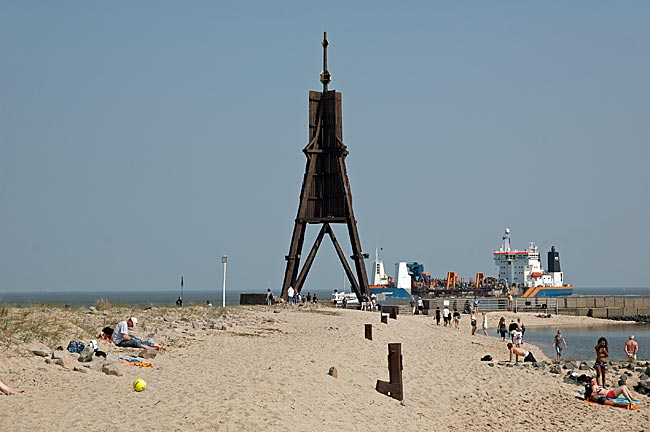
Walsrode World Bird Park
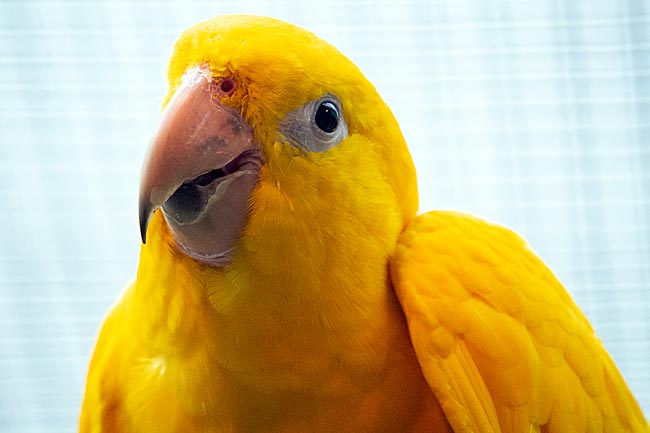
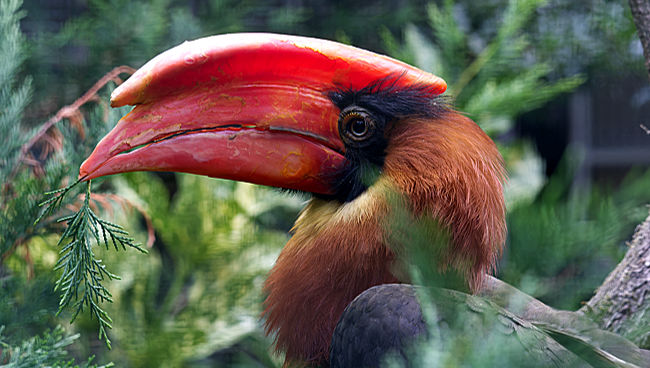
The name "Weltvogelpark" (World Bird Park) sounds ambitious, but in fact, the park in the Lüneburg Heath is the largest of its kind worldwide and has only carried the addition "Welt" ("World") since 2010. Over 4,000 birds, including many rare species, live on the 24-hectare site, representing around 650 different bird species from all continents. The bird park was founded in 1962 as a private breeding station and later expanded into a full-fledged park. It is highly recommended as a family-friendly day trip.
read more
...
Bremerhaven Havenwelten
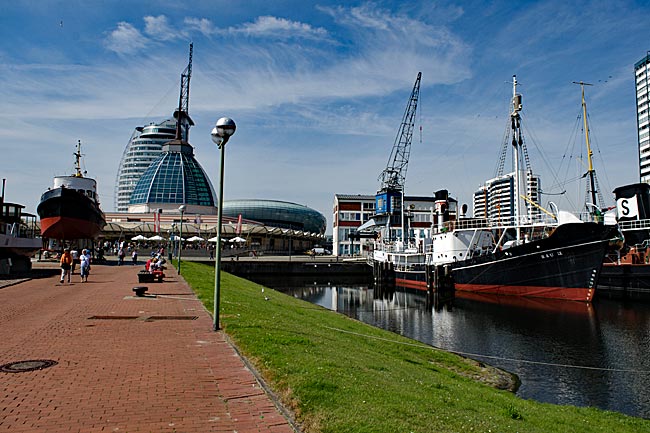
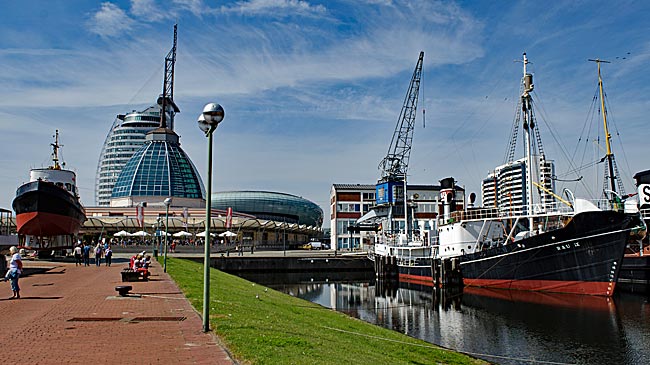
Since early 2008, Bremerhaven has not only had a new tallest building but also a new landmark in its Weser-side skyline with the ATLANTIC Hotel SAIL City, which rises 147 meters directly behind the Weserdeich. Architecturally, the structure perfectly embodies a maritime city - it stands like a powerful, rounded ship's superstructure. On the 20th floor, at a height of 77 meters, there is an observation deck (SAIL City) that is also accessible to non-guests.
read more ...
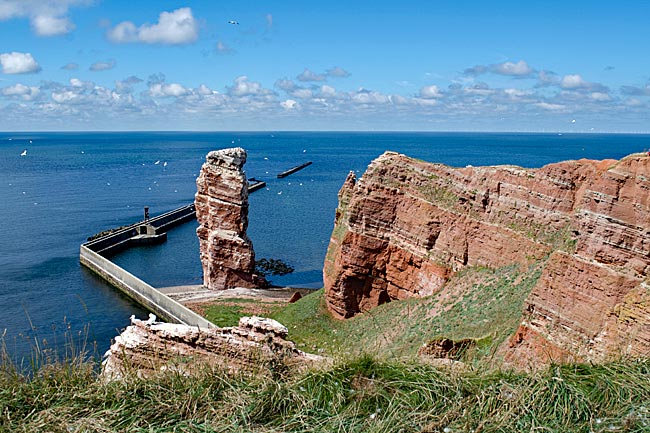
Neu-Helgoland (New Heligoland) / Hamme Harbor Worpswede
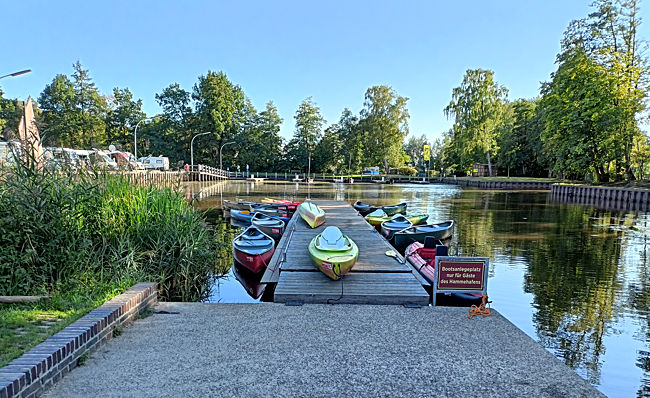
From April to October, the Hamme Harbor in Worpswede attracts many day visitors, weekend trippers, cyclists, and campers. The campsite operators run not only a bistro & beer garden with waterside seating but also rent out kayaks and canoes. Those who don’t want to paddle on the Hamme themselves can instead book an excursion trip aboard one of the Adolphsdorf Peat Boats. Food and drinks are also available just a few meters from the harbor at "Hamme Hütte Neu Helgoland." Tip: A great bike trip destination from Bremen!
read more ...