
 exploring Bremen & its surrounding areas
 You are here: worth seeing in the surroundings
 The East Frisian Island Wangerooge (2/2)
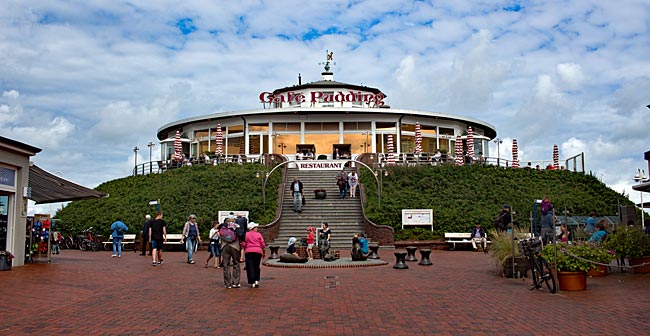
At the end of the pedestrian zone, Café Pudding stands on the promenade
It’s better than before when it was called self-service due to staff shortages at the long-established Café Pudding at the end of the pedestrian zone and the numerous other dining establishments. Once you’ve circled the characteristic round building of said café, you’re standing on the promenade, behind which stretches the wide sandy beach along the island’s northern coast. Beach-loving visitors are in the right place here. By contrast, the coastline at Westkap is much more fortified to better withstand the rough North Sea’s hardships. In fact, the islands’ geographical location has changed repeatedly over the centuries - landmass was eroded by waves and wind only to be deposited elsewhere or swept into new dunes, all thanks to the prevailing northwest winds blowing from west to east.
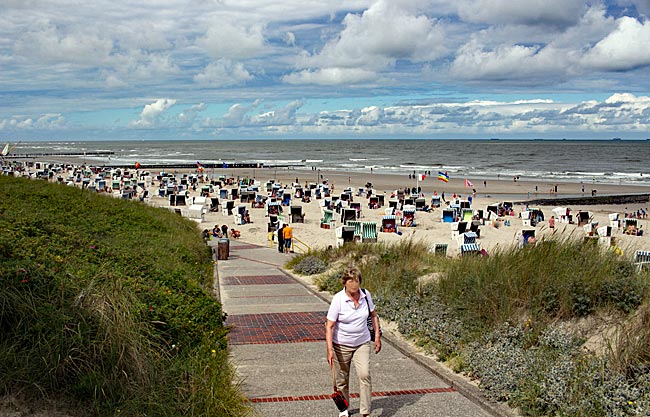
Behind the promenade in town lies the main beach with countless beach huts
Visible even from afar, the New Lighthouse and the square West Tower rise high above the island’s western end - the Gutenbergheim, a red-brick building with a pointed copper roof. Next to the Gutenbergheim, a school hostel, the Wangerooge Youth Hostel is also located in the island’s west.
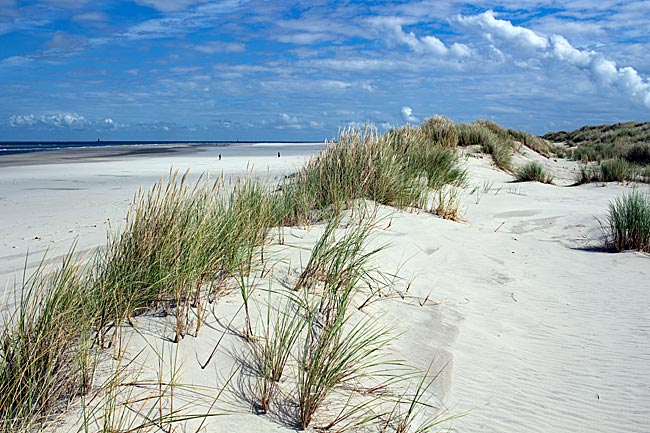
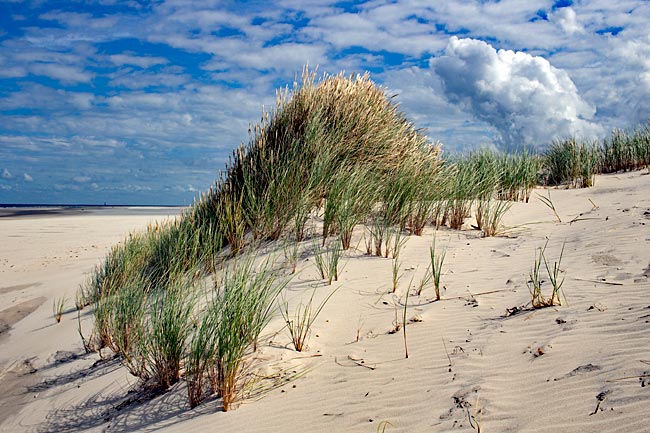
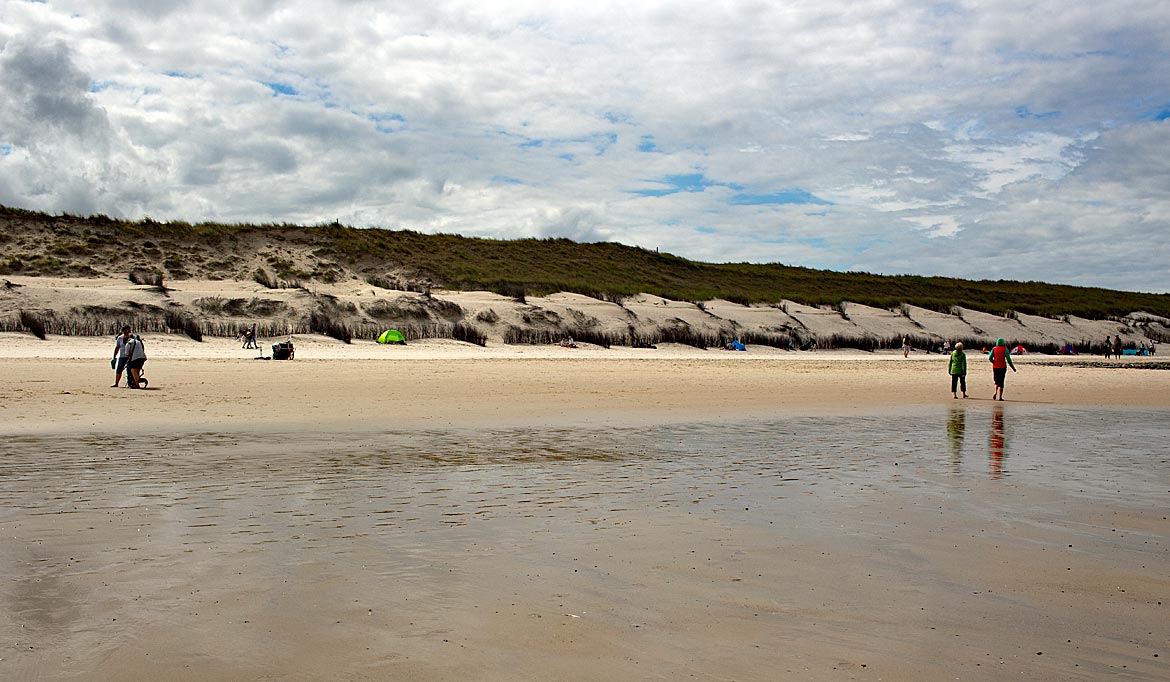
Beach and dune landscape on the way to the eastern tip of the island
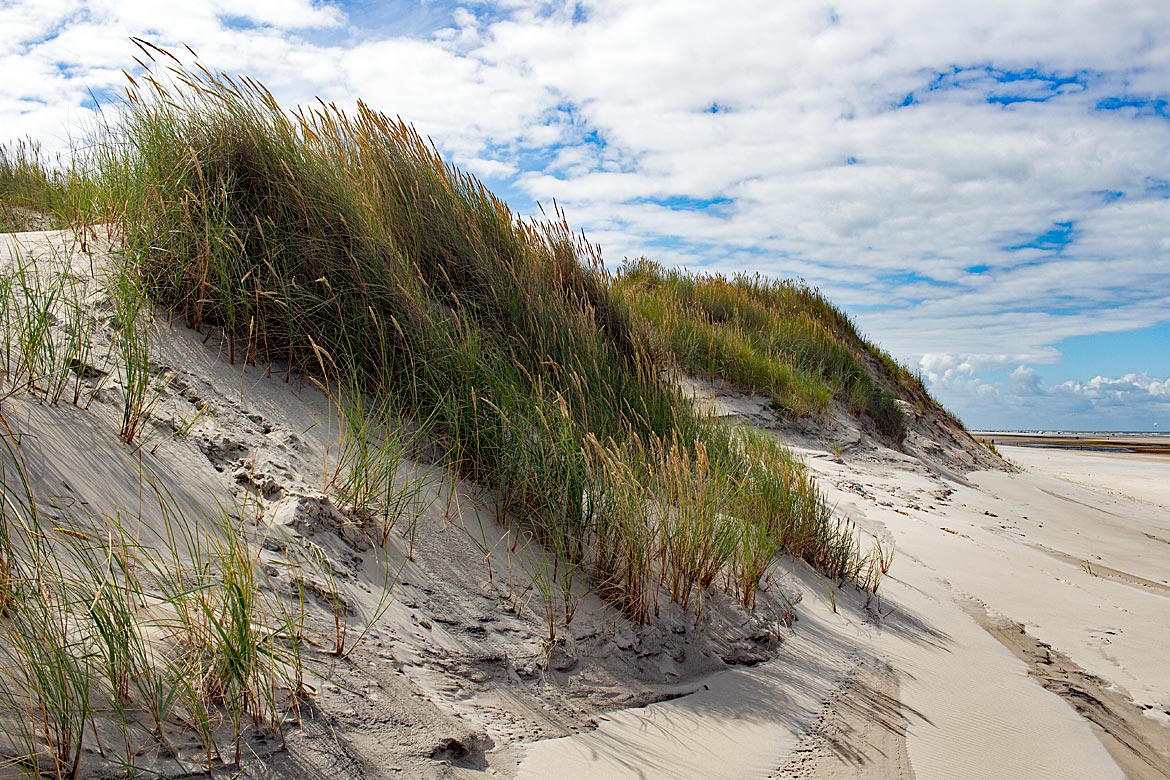
All in all, the island offers its residents and guests two and a half square kilometers of sandy beach. Incidentally, you can easily misjudge actual distances on such a vast sandy expanse during a beach stroll along the long dune chain toward the east. As a result of winds and ocean currents, the beach is especially wide at the eastern tip, and fewer people are out and about the closer you get to it. Nature and environmentalists can only approve, as this part of the island is under the highest possible protection as a rest zone (Zone 1 of the „Niedersächsisches Wattenmeer“ National Park). This includes the Ostaussengroden, the largest contiguous salt marsh area on the island, where up to 2000 animal species can live. Entry into the rest zone is permitted only along a designated circular path.
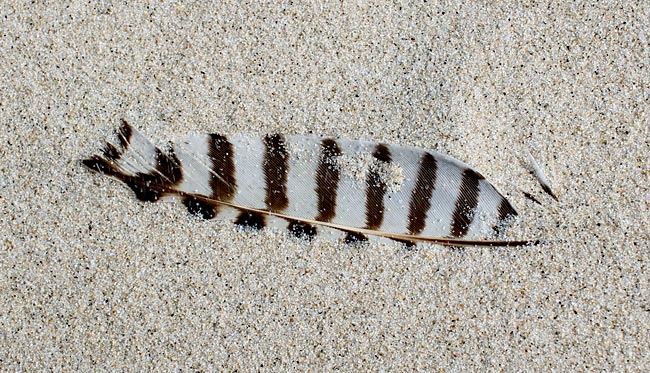
Bird feather in the sand
Around 70 bird species nest on the island, but far more pass through when flying to their breeding grounds. Depending on the season, you can observe thousands of water and wading birds such as common snipe, knots, dunlin, oystercatchers, little terns, sanderlings, and red-breasted mergansers, hen harriers, or brant geese. One of the most important breeding grounds for seabirds along the North Sea coast is the 3.7 km² uninhabited island of Minsener Oog, created by humans and visible from the eastern tip; it belongs to the municipality of Wangerooge.
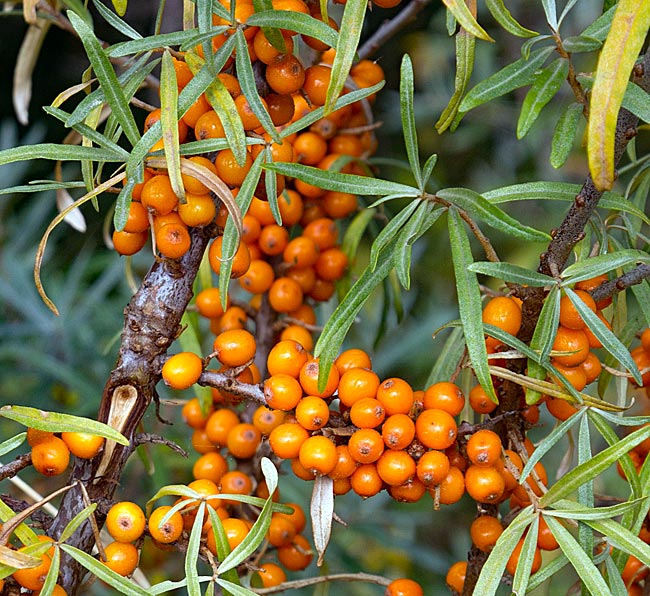
You’ll also come across sea buckthorn on Wangerooge
With plants like adder’s tongue, fat henbanes, various orchids, broad-leaved thistle, swamp cypress, samphire, sea lavender, and melde, many rare species grow here as well. Additionally, the heath area with bell heather is the largest contiguous heathland on the East Frisian Islands. If you’re interested, a pair of binoculars is a useful tool, and the Jever Platform offers a great vantage point for sweeping views over the island’s diverse landscape.
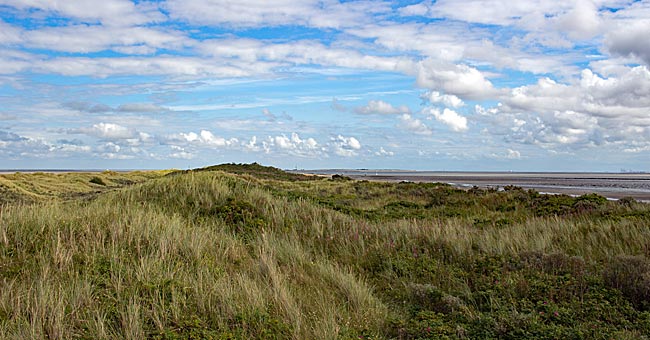
View from the Jever Platform over the eastern part of the island
Things were far less idyllic on the island at certain times in the last century. Just around 30 kilometers south of Wangerooge lies Wilhelmshaven, which was a German (imperial) naval port from 1869 until the end of World War II and remains a major naval site today. The militarily strategic location of the island’s eastern tip next to the fairway to Jadebusen on its northwest coast proved rather unfavorable for the island’s residents. Even before World War II, Wangerooge had been fortified in case of defense, and artillery batteries with large and medium-caliber guns against enemy ships and flak positions against air raids had been set up, as well as the airfield from the 1920s expanded into a military airport.
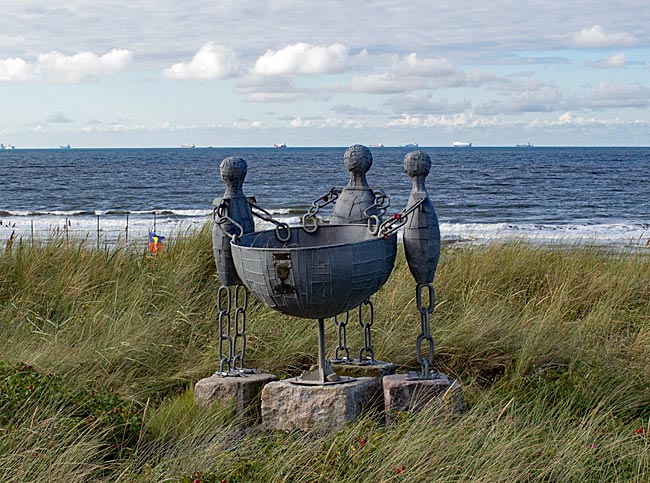
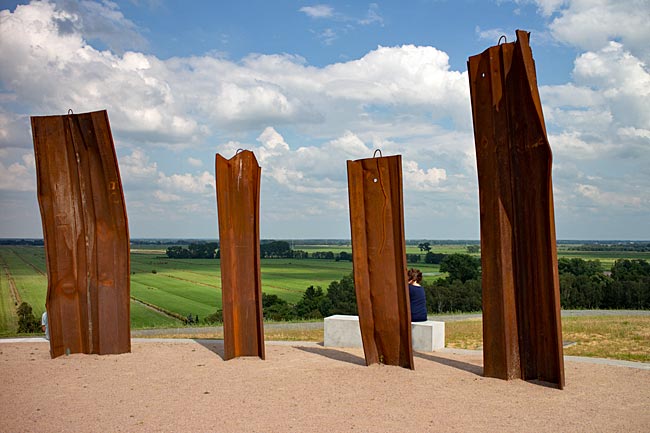
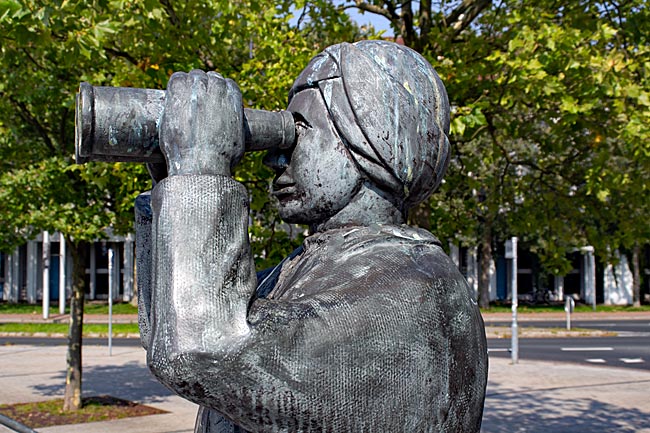
It looks a bit like processed munition remnants: the sculpture „Denk-mal-nach“ (think about it) by Wilhelmshaven artist Rudolf Leibl on the promenade. The work was created in collaboration with trainees of the Wilhelmshaven Water and Shipping Office.
At times, during the war years, almost 5000 men from the German navy and air force were stationed on the small island, protected by numerous bunkers against attacks by Allied forces coming from England across the English Channel. And the attacks came. Today, around 1.6 million tons of munitions, grenades,and bombs are estimated to be scattered in the North and Baltic Seas from the war years, especially due to post-war disposal at sea. During strong autumn and winter storms, parts of these wartime relics keep washing up on the beaches of the East Frisian Islands. In case of a find, the rule is: look but don’t touch and call in the specialists.
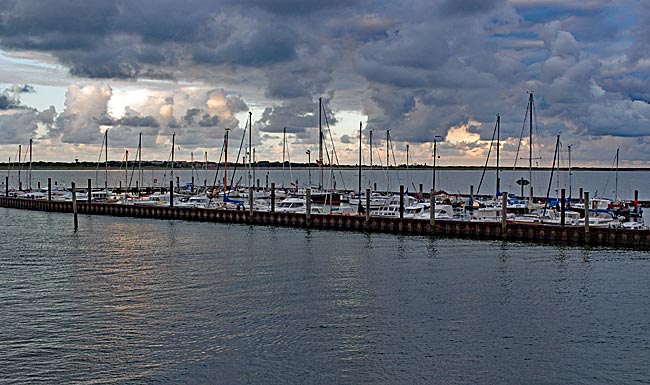
It’s already getting dusk at the western dock just before the return trip to Harlesiel and leisure boats gently rock in the calm waters of the North Sea marina
previous page
 next page
Map
Further information
Kurverwaltung Nordseeheilbad Wangerooge
Obere Strandpromenade 3
26486 Wangerooge
Phone: +49 (0)4469 990
Email: kurverwaltung@wangerooge.de
www.wangerooge.de
Verkehrsverein Nordseeheilbad Wangerooge e.V.
Zedeliusstraße 34
26486 Wangerooge
Phone: +49 (0)4469 94880
Email: info@westturm.de
Inselmuseum “alter Leuchtturm”
(Island Museum Old Lighthouse)
Zedeliusstr. 3
26486 Wangerooge
Phone: +49 (0)4469 8324
Email: inselmuseum@wangerooge.de
www.leuchtturm-wangerooge.de
Nationalpark House Wangerooge
Friedrich-August-Straße 18
26486 Wangerooge
Phone: +49 (0)4469 8397
Email: nationalparkhaus@wangerooge.de
www.facebook.com/Nationalpark-Haus-Wangerooge-394825757699685/
www.nationalparkhaus-wattenmeer.de/nationalpark-haus-wangerooge
Cuxhaven - a day trip
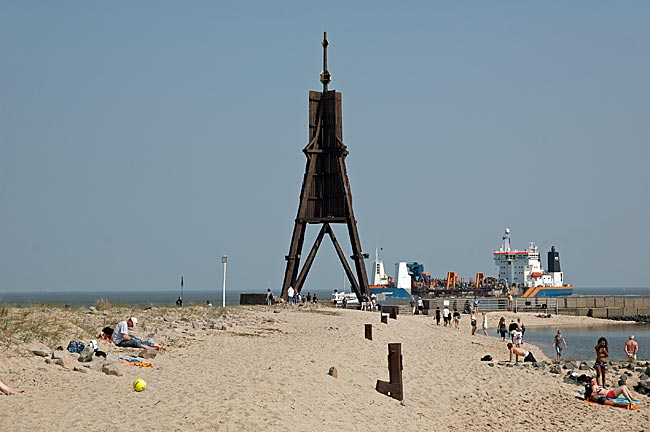
Many people from Bremen consider the seaside resorts of Cuxhaven to be "their home beach." The coastal city at the mouth of the Elbe is easily accessible from Bremen by car via the A27, which passes by Bremen and Bremerhaven before ending in Cuxhaven. By train, the journey takes a bit longer with a transfer in Bremerhaven. However, even in the off-season, Cuxhaven with its seaside resorts is a great destination for an outing - for example, by bicycle.
read more ...
Heligoland - a day trip
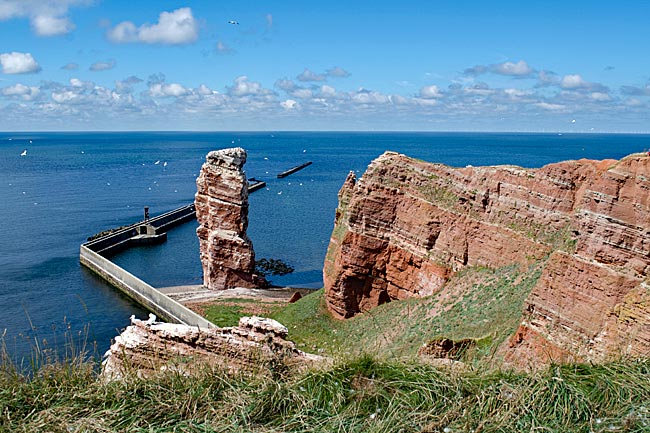
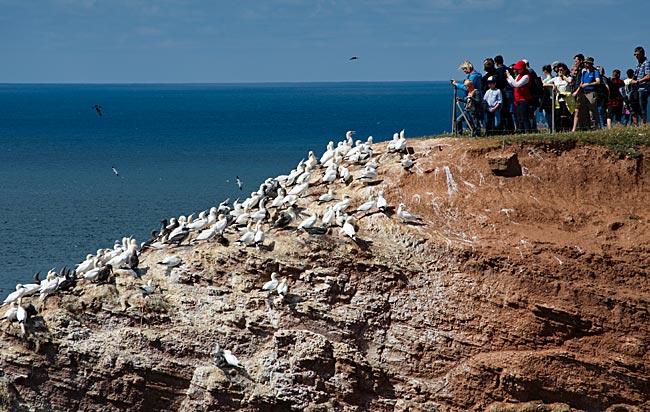
Germany's only supposed high-seas island is a destination for thousands of visitors each year, most of whom are day-trippers during the warmer months. And yes, admittedly, Heligoland isn't immediately in Bremen's surrounding area. However, it can be reached as a day trip from Bremerhaven and Cuxhaven - which is why we decided to visit.
read more ...
Wilhelmshaven – Seaside City on the Jadebusen
It's hard to imagine Wilhelmshaven without its naval presence, as the city only developed after a naval base was built in the 19th century. Even today, the German Armed Forces (Bundeswehr) maintain a large base here with several squadrons. Yet, there is much more to discover in this port city beyond its military significance.
read more ...