

DISTANT PLACES
Travel tips by Bremen sehenswert far from the Hanseatic City of Bremen
Kos - The Greek Dodecanese Island
A Travel Guide
Agios Stefanos and Kamari
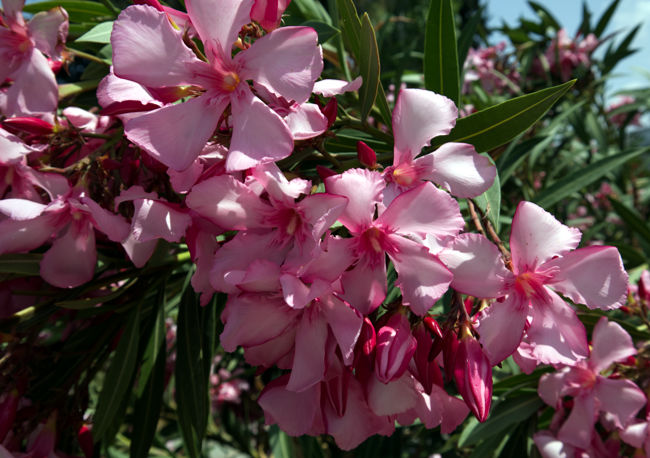
Another beautiful sight and a different shade against the blue of the sea: blooming oleander in May
Once you have passed the allegedly most beautiful beaches on the island, arranged like a string of pearls on the south coast, the main road descends back down to sea level into the village of Agios Stefanos. On a small hill next to the beach, as the only sight, is an early Christian basilica built in 496 and 554 AD. Of the three-aisled church, however, not much more than the footprint and foundation can be seen today. Although Italian archaeologists attempted in the past to slightly spark the imagination regarding the original appearance of the building by patching and re-erecting some columns, little of that remains standing. Instead, beachgoers now gather among the ancient stones.
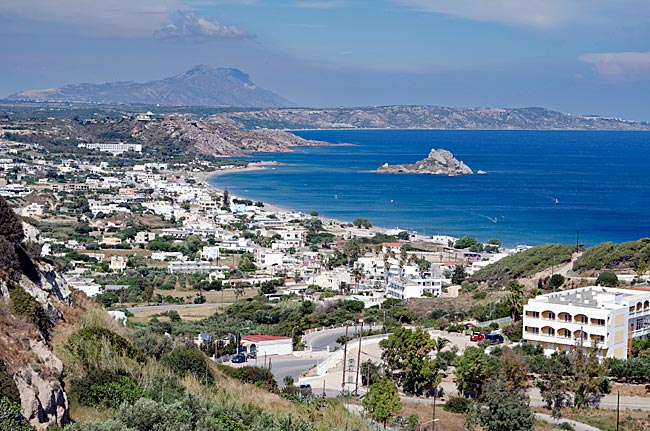
View from Kefalos of Agios Stefanos with the rocky island Kastri and Kamari
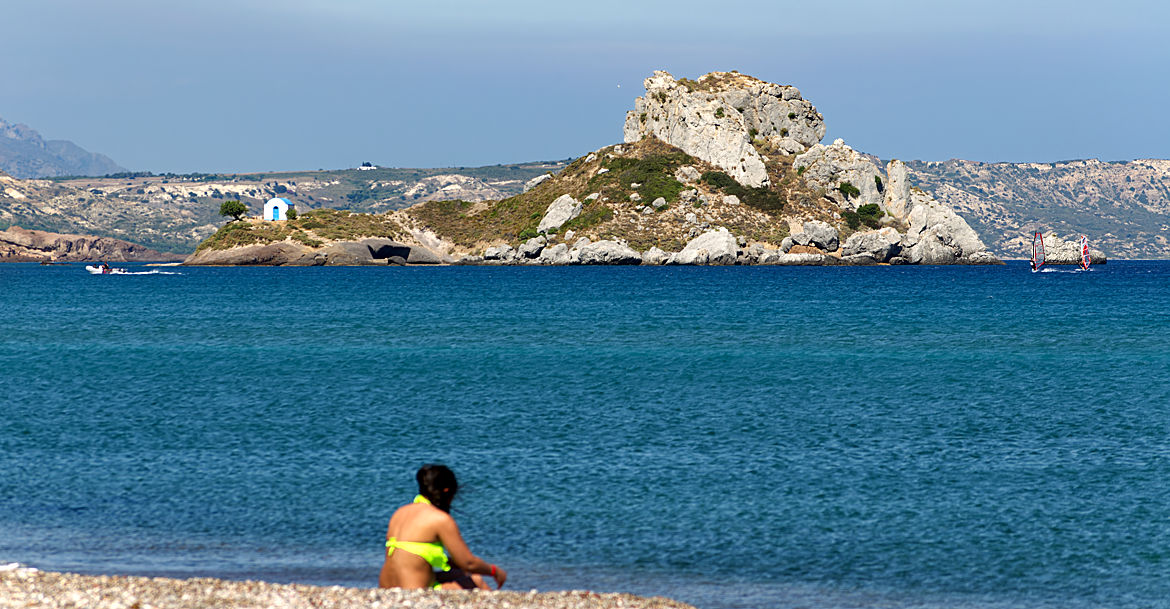
Directly opposite the ruins lies the small rock island Kastri, which can be reached from the beach by an experienced swimmer; however, since nothing but a constantly closed chapel is located on the barren rock in the water, one could view the attempt more as a sporting challenge.
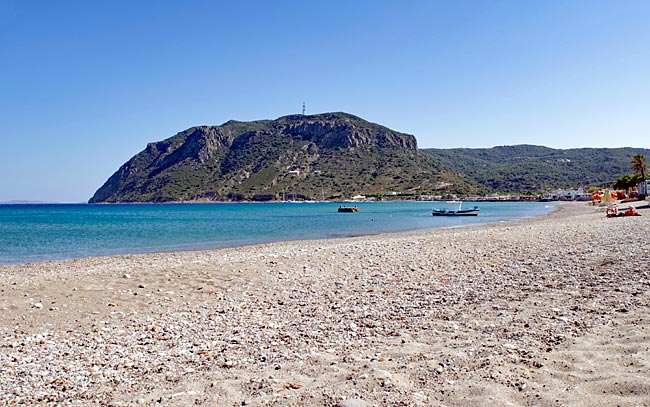
On the beach of Agios Stefanos
The slightly stony beach is bordered toward the land side by a promenade lined with lanterns, where various culinary offerings follow one another. The village now merges almost seamlessly into the neighboring village of Kamari, at the end of which lies a small harbor.
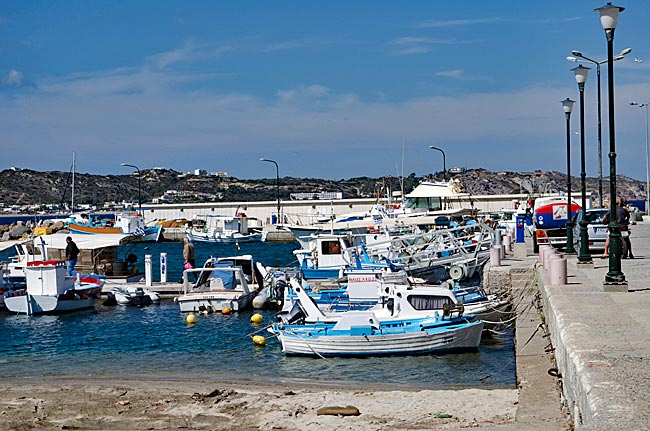
The small harbor of Kamari
Due to the mostly onshore and reliably blowing wind, the semi-circular bay has developed into a popular spot for surfers, who can often be seen sailing close to the wind further out on the water. Those who cannot do it yet have the opportunity here to learn under professional instruction.
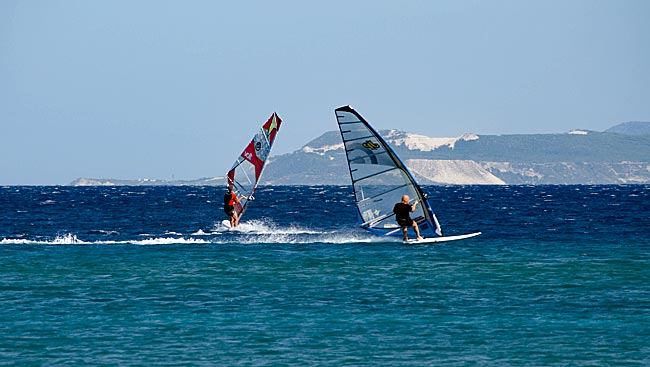
They’ve got it down — surfers further out in the bay
previous page
 next page
Read more about Kos: The table of contents
Map
UNESCO World Heritage Site on Rhodes
A journey through the historic Old Town of Rhodes
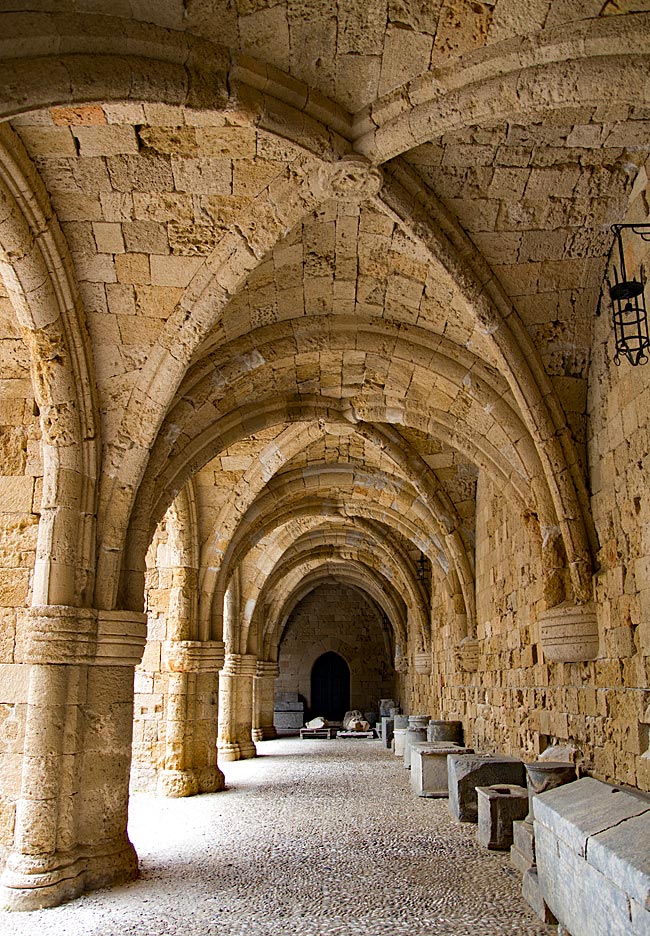
Relics from various eras - ranging from antiquity to the period of Italian occupation - can be found almost everywhere on the island. Many have left their mark; in some places, they must be sought out, while in others, they appear in clustered, fascinating density and variety. Yet, nowhere else on the island are these traces as prominent as they are in the city of Rhodes. It is not for nothing that the historic Old Town was declared a UNESCO World Heritage site in 1988.
read more about Rhodes Old Town ...
The "Green" Island of Corfu
From the sights of the capital, Kerkyra, to the Corfu Trail
The Greeks call not only the city but the island itself Kerkyra. According to legend, it was named after the nymph Gorgyra (also known as Kerkyra), who was brought to the island by the sea god Poseidon. A legend, indeed. In fact, the name appears in a modified form, "Korkyra," on written records as early as 1200 BC. The current name, Corfu, dates back to the Byzantine era. Once an independent island and later the first Roman province of modern Greece, it became part of the Eastern Roman (Byzantine) Empire after the fall of the Western Roman Empire in 395 AD. On a rocky promontory jutting into the sea, the Byzantines built a fortress in the early 6th century and named the city emerging from this core "Koryfo."
read more about Kerkyra ...
Zakynthos
An island defined by the Caretta caretta
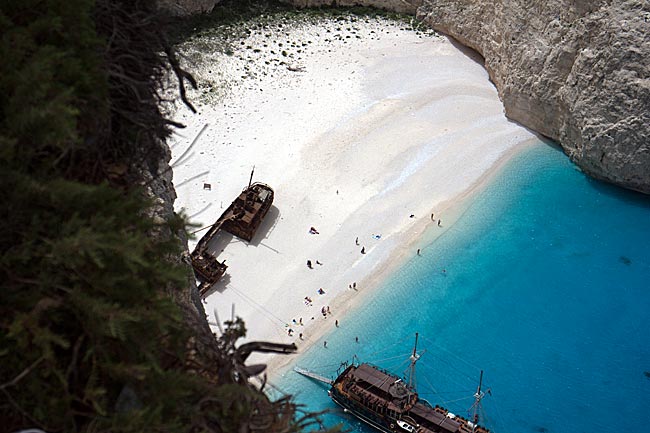
When searching for images of the 406 km² island online, one primarily encounters a very common recurring motif that has been captured from a similar angle by various photographers over the years: Navagio Bay on the northwestern coast. It's all junk, right? Well, that is a matter of perspective, and there are plenty of those during the season, whether they have a camera or not. The fact remains, however, that the rusting wreck of the motor vessel "Panagiotis" has become a landmark for Zakynthos.
read more about Zakynthos ...