

DISTANT PLACES
Travel tips by Bremen sehenswert far from the Hanseatic City of Bremen
Kos - The Greek Dodecanese Island
A Travel Guide
A tour of the villages: Evangelistria, Asomati, Asfendiou, Lagoudi, Amaniou, Zia
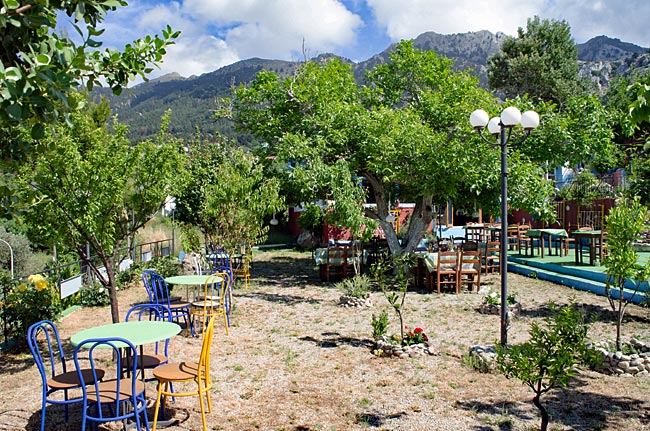
Keep it simple, entertain yourself: Tavern in Lagoudi
If you are looking for sights in the "classic" sense on a tour through the villages of Evangelistria, Asomati, Asfendiou, Lagoudi, Amaniou, or Zia - located about 15 kilometers from the capital of the island - you might be looking in the wrong place.
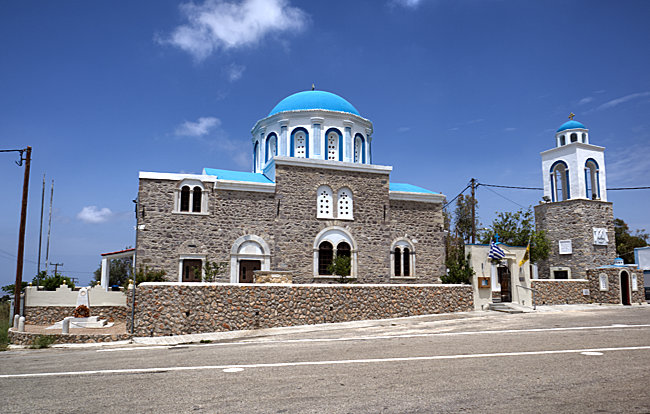
Church in Asfendiou at the turn-off to Zia
Nevertheless, a tour of these areas is highly recommended. You can start near Zipari, where the main road passes directly through. From there, the route follows an almost semi-circle along winding roads along the slopes of the Dikeos mountains toward Pyli before returning to the main road.
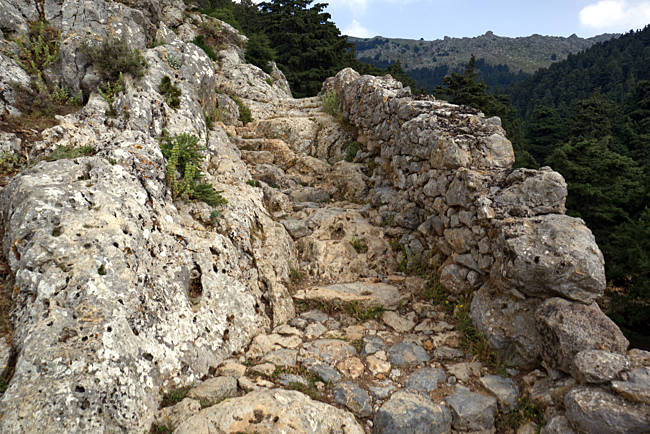
A rocky path to Paleo Pyli and the ruins of the Hospitaller fortress - just one option; there is also a much more comfortable way
If you plan enough time, a detour to the medieval village of Paleo Pyli, which has been abandoned since 1830, is worthwhile. Alternatively, you can start your tour without any issues from Marmari or Tigaki, or from Pyli itself; bicycles and motorized vehicles can be rented almost everywhere under fair conditions.
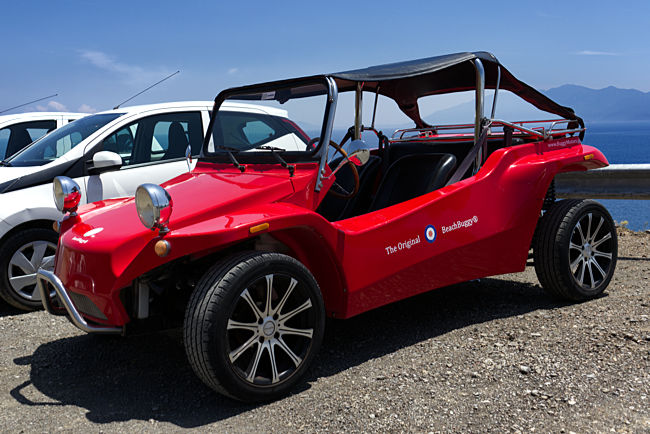
Some rental cars are quite different
While a rental car is certainly convenient for covering longer distances, this tour can also be done very well on a bicycle - provided you have an appropriately equipped bike and the physical fitness to handle it, as the climbs and descents can be demanding, especially for those used to flatter terrain. An e-bike with a derailleur / chain system is recommended.
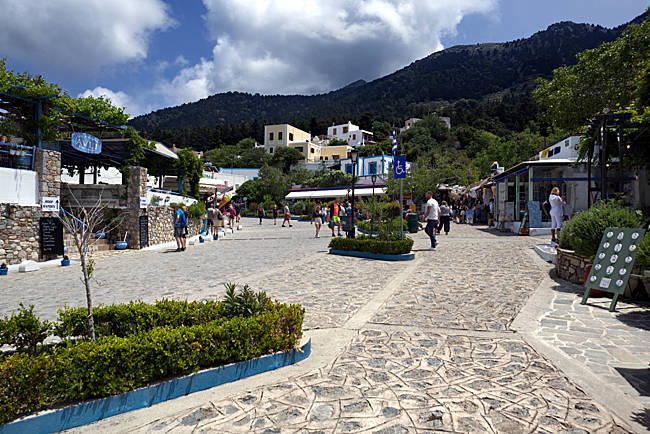
In Zia
Mass tourism, like that found in Marmari or Tigaki, definitely does not happen in these villages, some of which have no more than 100 residents. One exception is the well-kept village of Zia with its numerous shops selling herbs, textiles, and souvenirs, as well as restaurants that are often visited in the evening by organized tour groups. During dinner - sometimes accompanied by a folk performance featuring music and dance - you can enjoy the sunset with a beautiful view of the island's north coast.
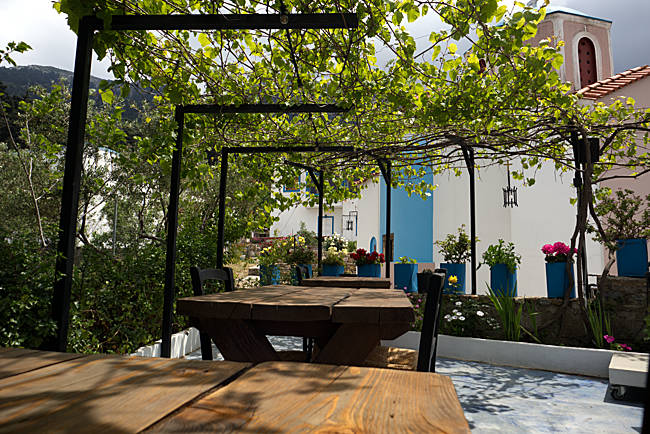
Behind the highest tavern in Zia stands a small chapel; in the photo, the sun is still waiting for its sunset
Because this mountain village sits at an altitude of 350 meters, it is also an excellent starting point for climbing Oros Dikeos (846 meters), the highest peak on Kos. If you plan to do so, ensure you have proper hiking boots and sufficient water. One notable site in Zia is one of the last remaining old water mills at a spring, of which many once dotted the island.
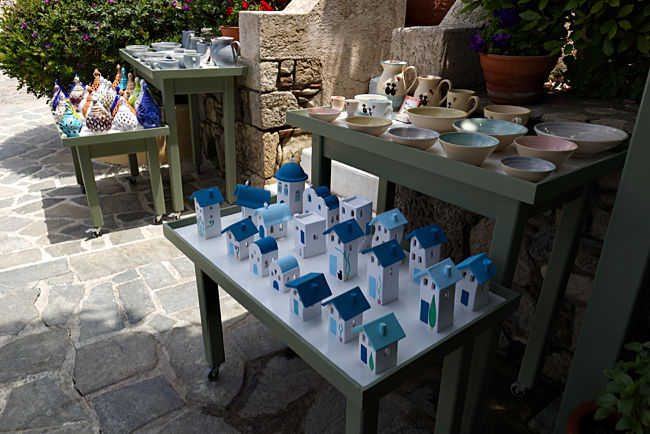
Zia also offers high-quality products from local artisan production
Unlike the accommodations frequented by paying tourists, the people living in these villages are mostly locals who try to earn their living beyond tourism through agriculture, such as growing olives, grapes, and vegetables. The fact that this is becoming more difficult is evidenced by the trend of rural flight - a problem also seen in other parts of Europe: young people see no prospects for their future here and move to larger cities or leave the country entirely, leaving primarily older generations behind. Consequently, life here moves at a much slower pace, which can feel very calming outside of the hectic tourist centers, provided you allow yourself to experience it. And that is perhaps best experienced during a (cycling) hike.
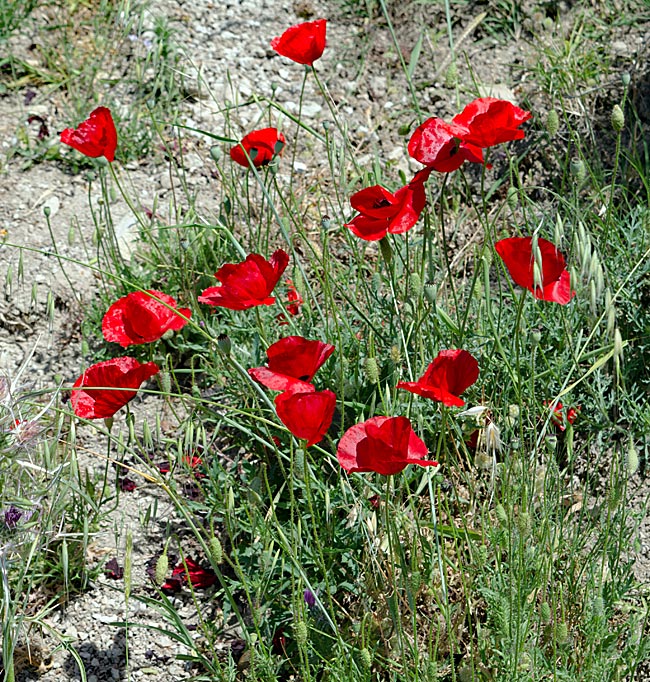
Poppies by the roadside
In such an environment, your eyes are more likely drawn to the blooming poppies swaying in the wind along the roadside; you might stop for a moment in the woods near Lagoudi or visit one of many churches that - despite the small size of these villages - are often quite striking, such as the Assomati Taxiarhes Church built in 1913 in Lagoudi. Just outside the village, you can find the ruins of the ancient Basilica of Agios Pavlos from the early 11th century.
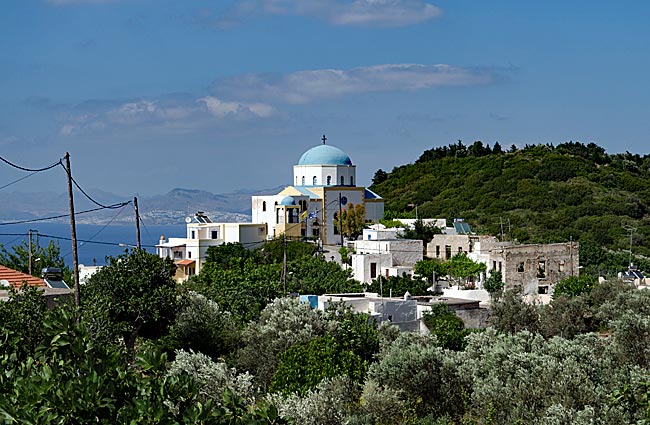
Assomati Taxiarhes Church in Lagoudi
The church is clearly visible from a distance and, due to its prominent location, serves as a landmark even from Zia. The main road passes directly by Lagoudi, leaving the village situated more or less along the roadside. If you are not under time pressure, it is worth taking a short detour to catch a glimpse of the Orthodox church if it happens to be open.
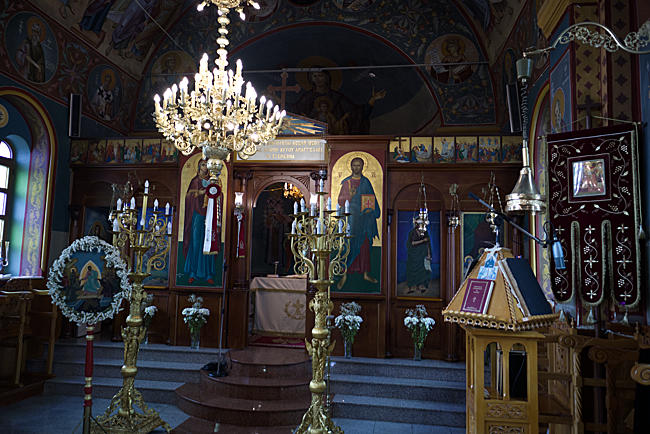
Altar area of the church
Much in an Orthodox church is different from what we know from Protestantism or Catholicism, which is also reflected in the interior decoration of these houses of worship. You certainly do not need to be religious to feel something upon entering the sanctuary. Perhaps it brings you a little closer to the Greek soul.
And for those who do not take the direct route back to the main road, they can wander through the winding, narrow lanes of the old village and witness the contrast: Greek reality versus the tourist parallel world.
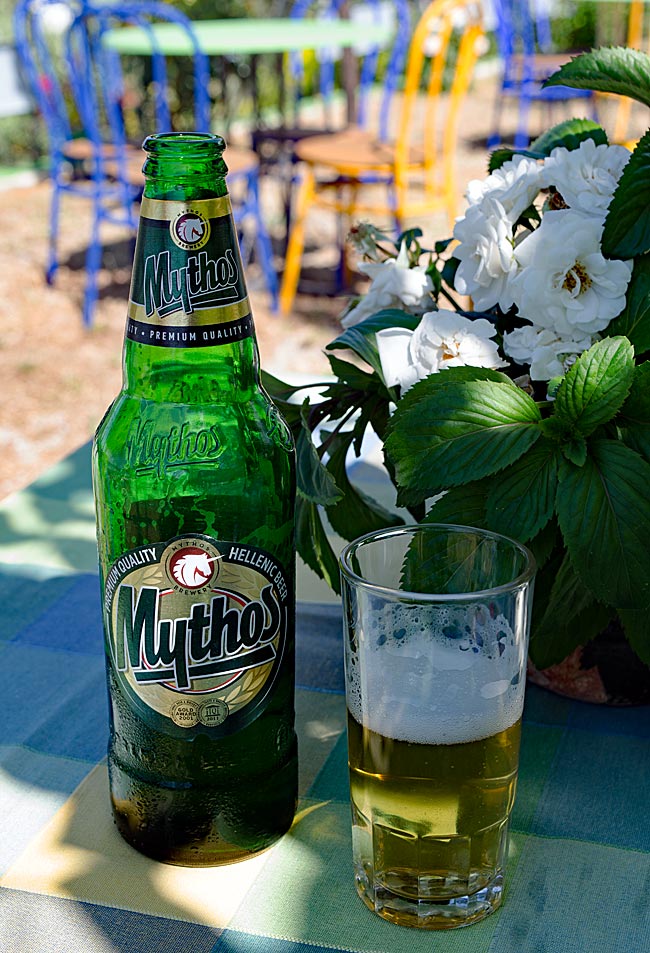
Greek beer, simply delicious
One could say that the myth lives on.
previous page
 next page
Read more about Kos: The table of contents
Map
UNESCO World Heritage Site on Rhodes
A journey through the historic Old Town of Rhodes
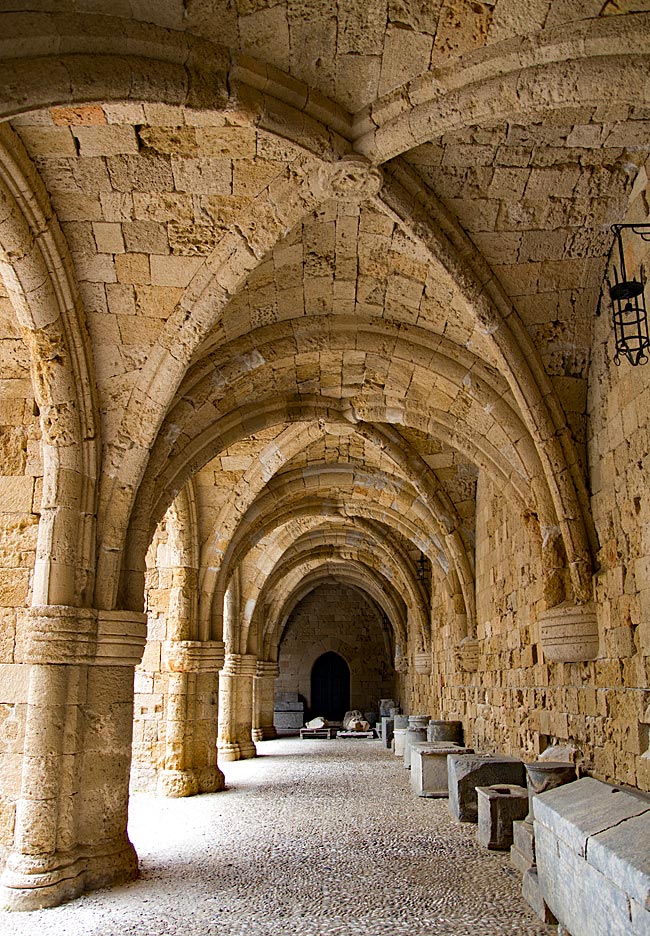
Relics from various eras - ranging from antiquity to the period of Italian occupation - can be found almost everywhere on the island. Many have left their mark; in some places, they must be sought out, while in others, they appear in clustered, fascinating density and variety. Yet, nowhere else on the island are these traces as prominent as they are in the city of Rhodes. It is not for nothing that the historic Old Town was declared a UNESCO World Heritage site in 1988.
read more about Rhodes Old Town ...
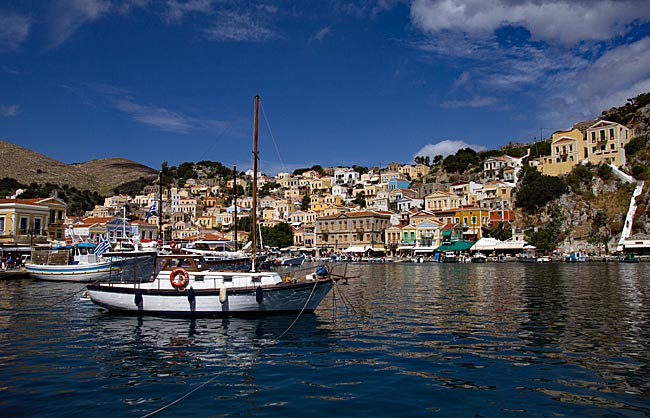
Symi
An excursion to the Greek Dodecanese island off the Turkish coast
A visit to this sparsely populated rocky island of about 60 square kilometers, with its namesake picturesque harbor town, is part of the standard tour itinerary offered in many locations on the Greek island of Rhodes. From the main island, it takes ships approximately two hours to reach the port of the small island located 23 kilometers north of Rhodes off the Turkish coast, which has belonged to Greece since 1947. As more of the Greek coast recedes into the distance to the port side, the ship draws closer to the Turkish shore; this part of the southern Aegean essentially connects Europe and Western Asia.
read more about Symi ...
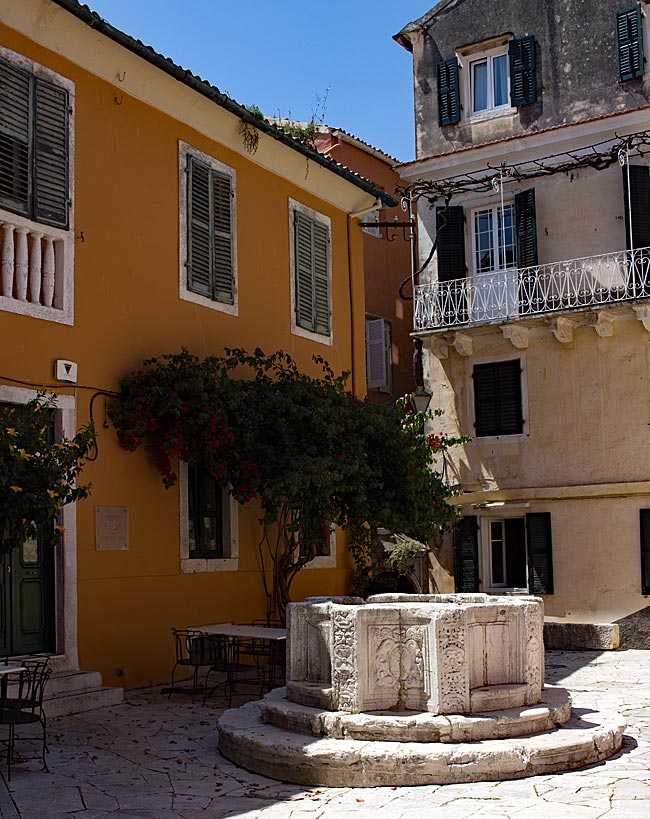
The "Green" Island of Corfu
From the sights of the capital, Kerkyra, to the Corfu Trail
The Greeks call not only the city but the island itself Kerkyra. According to legend, it was named after the nymph Gorgyra (also known as Kerkyra), who was brought to the island by the sea god Poseidon. A legend, indeed. In fact, the name appears in a modified form, "Korkyra," on written records as early as 1200 BC. The current name, Corfu, dates back to the Byzantine era. Once an independent island and later the first Roman province of modern Greece, it became part of the Eastern Roman (Byzantine) Empire after the fall of the Western Roman Empire in 395 AD. On a rocky promontory jutting into the sea, the Byzantines built a fortress in the early 6th century and named the city emerging from this core "Koryfo."
read more about Kerkyra ...
Zakynthos
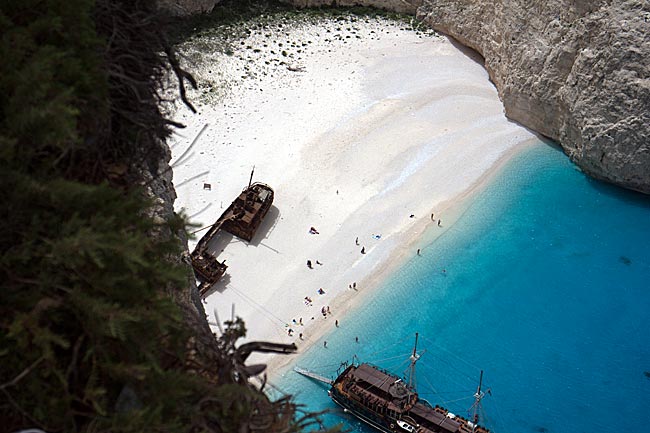
An island defined by the Caretta caretta
When searching for images of the 406 km² island online, one primarily encounters a very common recurring motif that has been captured from a similar angle by various photographers over the years: Navagio Bay on the northwestern coast. It's all junk, right? Well, that is a matter of perspective, and there are plenty of those during the season, whether they have a camera or not. The fact remains, however, that the rusting wreck of the motor vessel "Panagiotis" has become a landmark for Zakynthos.
read more about Zakynthos ...
More photos