

DISTANT PLACES
Travel tips by Bremen sehenswert far from the Hanseatic City of Bremen
Kos - The Greek Dodecanese Island
A Travel Guide
Kos Town
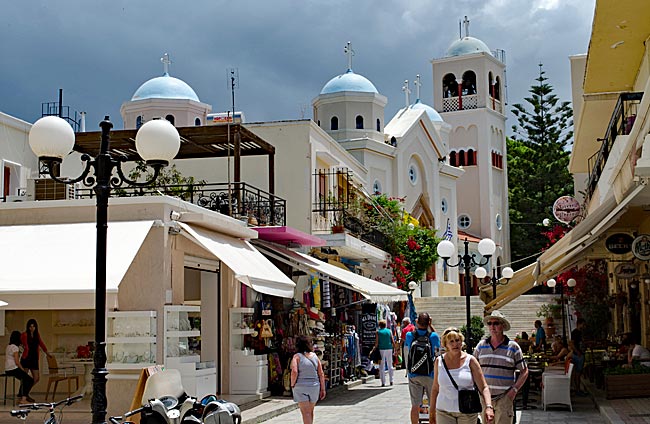
In the pedestrian zone
Nowhere on the third-largest Dodecanese island do the relics of a changing history show themselves so concentrated as in the capital, Kos. In the bustling city live not only more than 19,000 residents of the total population of not even 35,000, but it was also the target of many powers in the past. After Greek antiquity, the island became part of the Roman Empire, then went to Byzantium and in 1204 to the Venetians until the Hospitallers bought it in 1315.
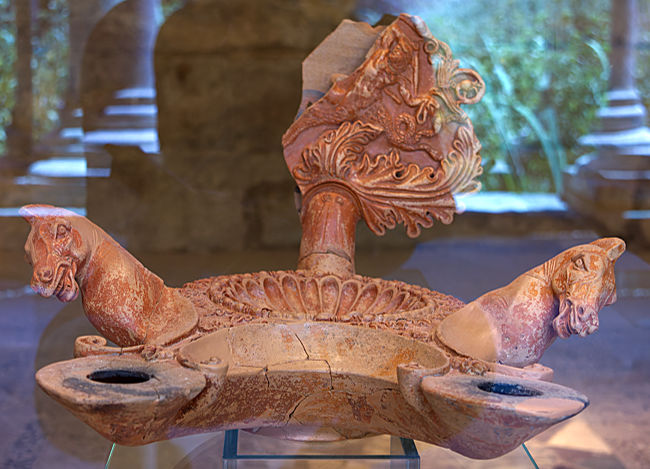
Find in the exhibition of the Casa Romana from Roman times
They were in turn expelled by the Ottomans in the 16th century, in whose empire the island remained for 400 years, until the Italians took over in 1912. During the Second World War, the Germans arrived in 1943. The succeeding British finally handed it over to Greece in 1947. Many left their traces on Kos that are visible to this day. Yes, the layers of history here can be quite something!
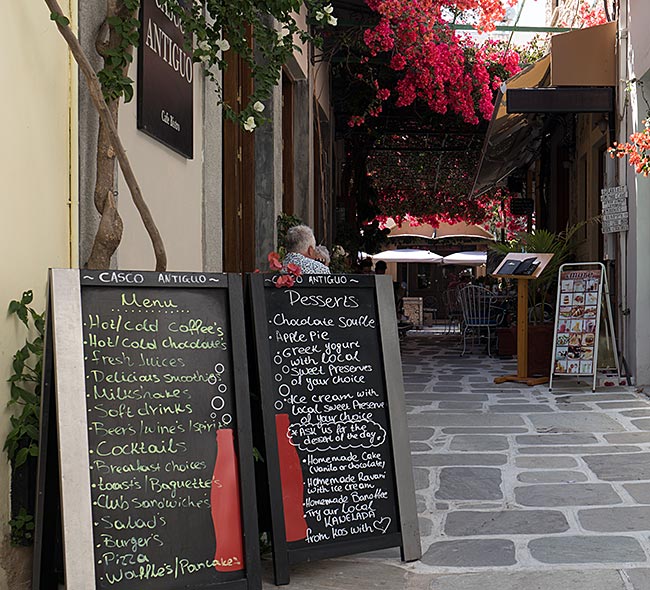
One of the restaurants
Even if it initially seems more tempting to take a rental car than to have to fight for a place on the bus when the crowd of passengers is large, driving in the town is not really fun due to the conditions, let alone the search for a parking space. In addition, the final stop of the buses is only a stone's throw from the city center with Liberty Square (Platía Eleftherías). And that is a good starting point for exploring the city, which can be done well on foot and for which one can also plan an entire day.
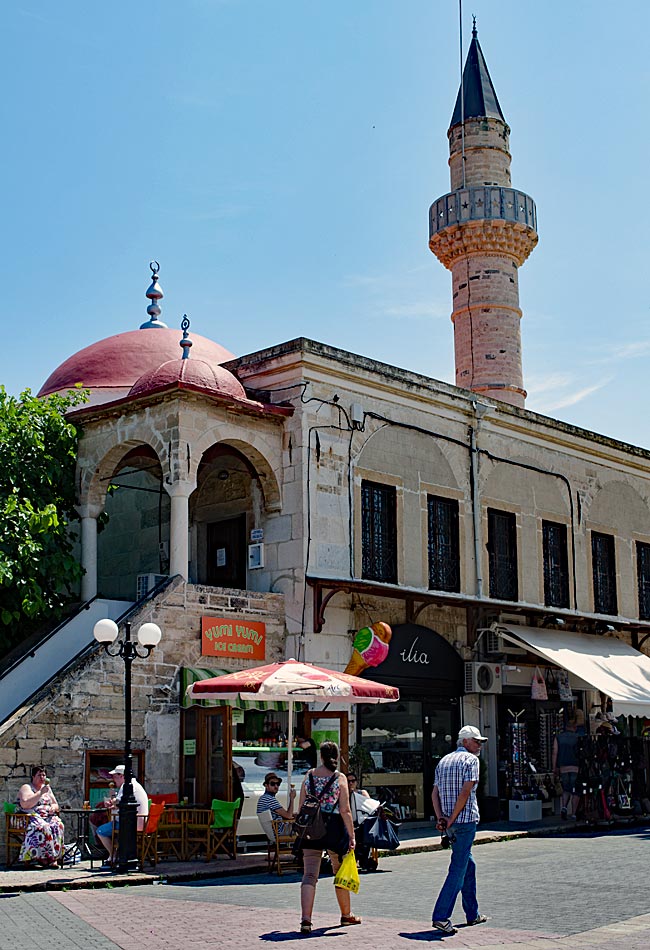
The Defterdar Mosque at Liberty Square
On the following pages, we present sights in the island's capital to you.
The town of Kos — it's worth seeing
Introduction
Freedom Square with Market Hall, Defterdar Mosque & Archaeological Museum
Agora and Gate of Taxes
Hadji-Hassan Mosque, Plane Tree of Hippocrates & Palace of Justice
Knights of Rhodes Fortress Neratzia
Dionysus Sanctuary, Casa Romana, Odeon
Western Excavation Site
Asclepieion (slightly outside town)
previous page
 next page
Read more about Kos: The table of contents
Map
UNESCO World Heritage Site on Rhodes
A journey through the historic Old Town of Rhodes
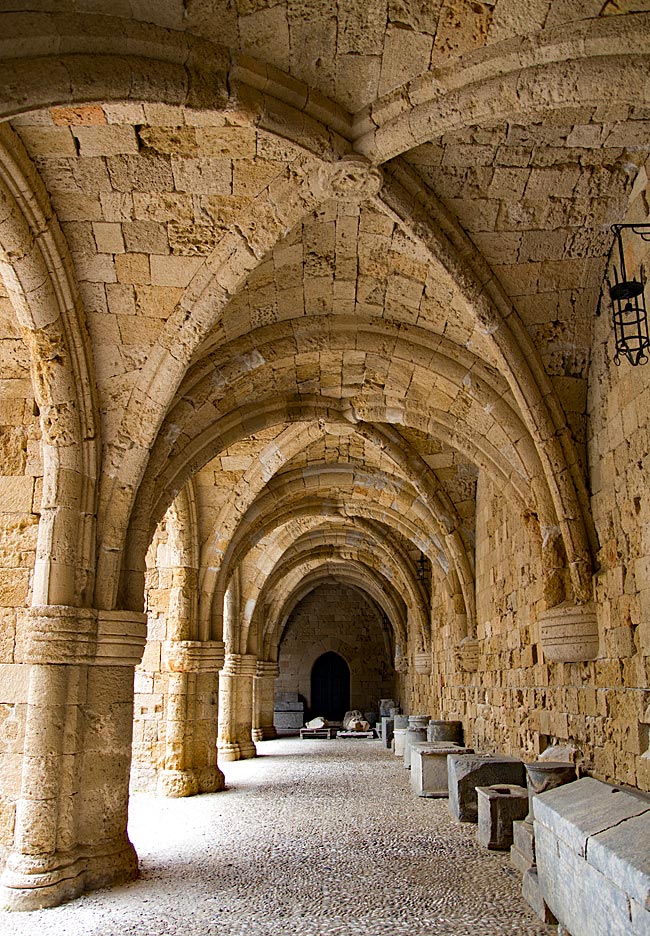
Relics from various eras - ranging from antiquity to the period of Italian occupation - can be found almost everywhere on the island. Many have left their mark; in some places, they must be sought out, while in others, they appear in clustered, fascinating density and variety. Yet, nowhere else on the island are these traces as prominent as they are in the city of Rhodes. It is not for nothing that the historic Old Town was declared a UNESCO World Heritage site in 1988.
read more about Rhodes Old Town ...
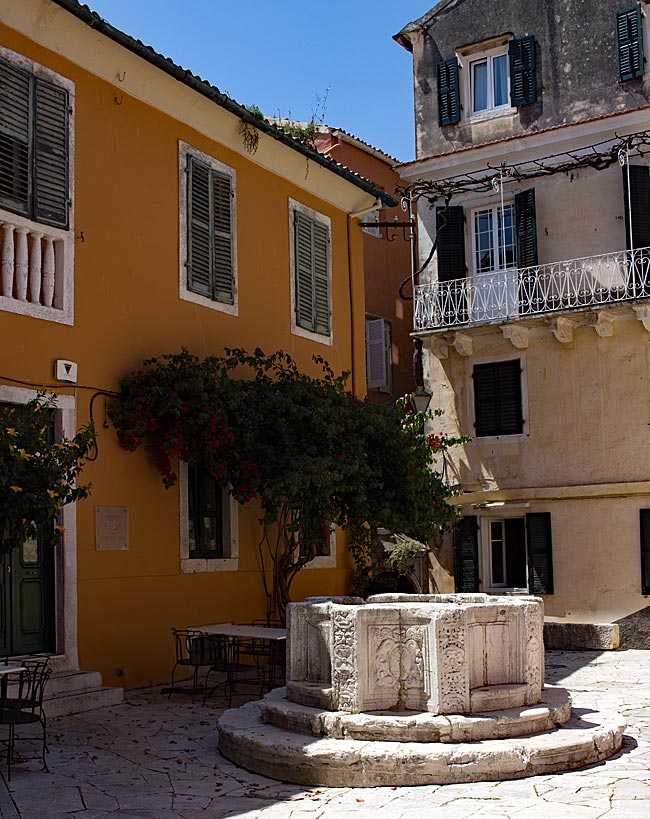
The "Green" Island of Corfu
From the sights of the capital, Kerkyra, to the Corfu Trail
The Greeks call not only the city but the island itself Kerkyra. According to legend, it was named after the nymph Gorgyra (also known as Kerkyra), who was brought to the island by the sea god Poseidon. A legend, indeed. In fact, the name appears in a modified form, "Korkyra," on written records as early as 1200 BC. The current name, Corfu, dates back to the Byzantine era. Once an independent island and later the first Roman province of modern Greece, it became part of the Eastern Roman (Byzantine) Empire after the fall of the Western Roman Empire in 395 AD. On a rocky promontory jutting into the sea, the Byzantines built a fortress in the early 6th century and named the city emerging from this core "Koryfo."
read more about Kerkyra ...
Zakynthos
An island defined by the Caretta caretta
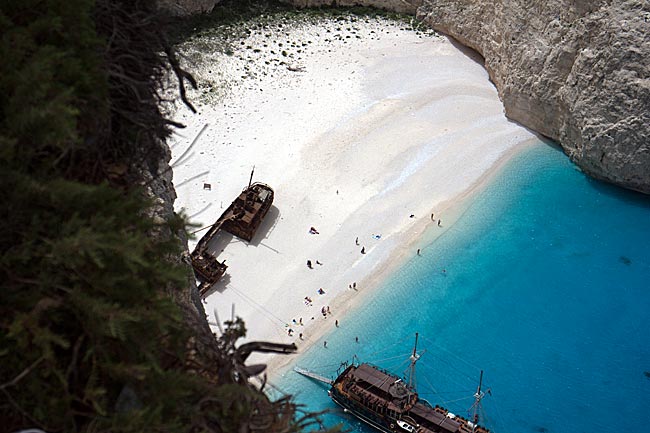
When searching for images of the 406 km² island online, one primarily encounters a very common recurring motif that has been captured from a similar angle by various photographers over the years: Navagio Bay on the northwestern coast. It's all junk, right? Well, that is a matter of perspective, and there are plenty of those during the season, whether they have a camera or not. The fact remains, however, that the rusting wreck of the motor vessel "Panagiotis" has become a landmark for Zakynthos.
read more about Zakynthos ...
More photos