
 exploring Bremen & its surrounding areas
 You are here: backgroundstories
 Borgward, Daimler & cars from around the world
After the decline of much of the city's ports in Bremen until the filling-in of the Overseas Port and the redevelopment of the wasteland and warehouses as well as new construction according to a new development concept (Überseestadt), the ports of Bremerhaven, which belongs to the federal state of Bremen, have developed into one of the most significant European transshipment hubs in maritime traffic. In addition to container handling at one of the longest container quays in Europe, the handling of cars in the seaside city nicknamed "Fishtown" by the people of Bremen due to its fishing industry has reached dimensions that surpass all other auto terminals in Europe.
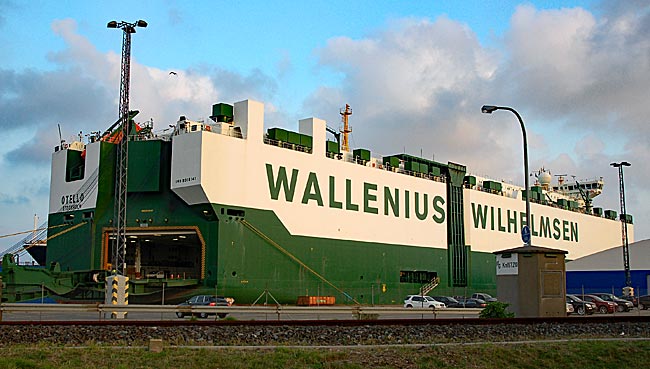
Car Loading in Bremerhaven
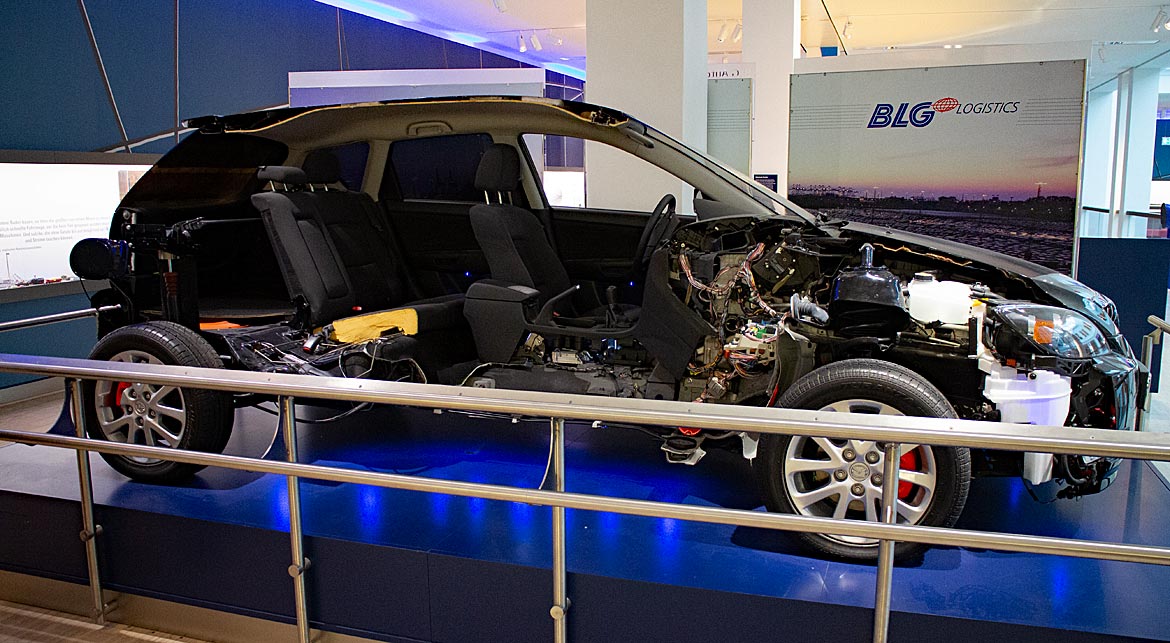
Among the vehicles that are shipped or imported on the large auto transport ships across the world's oceans are also many that have rolled off the assembly line at Daimler's production site in Bremen, in the district of Sebaldsbrück. The tradition of car manufacturing in the Hemelingen district continues, dating back to the early years of the 20th century. However, today's automotive production is an international affair regarding its components, as shown by the photo at the top from the exhibition rooms in the Übersee-Museum (Overseas Museum).
In 1914, the Hansa-Automobilgesellschaft, founded in Varel (Oldenburg) in 1905, and the Namag, founded in Bremen in 1908, merged to form the Hansa-Lloyd-Werke AG. The brand name "Lloyd" was brought into the company by Namag, but by the end of the 1920s, it was on the verge of bankruptcy. Finally, in 1928, the Goliath-Werke Borgward & Co. GmbH, founded by Carl F.W. Borgward, took over the majority of Hansa-Lloyd-Werke's shares, which were completely merged with the Goliath plant in 1931. Until the end of World War II, Borgward was particularly successful in the field of commercial vehicles, such as the three-wheeled Goliath Blitzkarren, and from 1938 onwards with the production of armored vehicles and tractors in a newly founded plant in Bremen-Sebaldsbrück, now under the company name Carl F.W. Borgward Automobil- und Motoren-Werke GmbH.
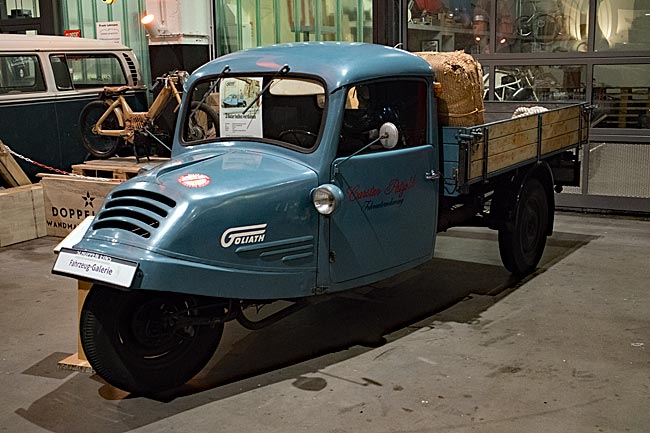
Goliath at the 'Center for Automotive Culture and Mobility' in Schuppen Eins in the Überseestadt
This plant was three-quarters destroyed in a heavy air raid in 1944. Borgward himself, who was a member of the NSDAP and appointed Minister of War Economy in 1938, was interned until 1948 after the end of the war. When he returned, commercial vehicle production had already resumed since 1945, and he had plans for a new modern passenger car model in his pocket. Just one year later, the first "Hansa 1500" was completed. This was followed shortly afterward by the developments 1800 and 2400. However, the most successful and popular model from the production of what was then Germany's fourth-largest car manufacturer was the Isabella - also as a coupé, which was built 20,000 times from 1954 to 1961. A well-preserved model can be viewed today in the Focke-Museum.
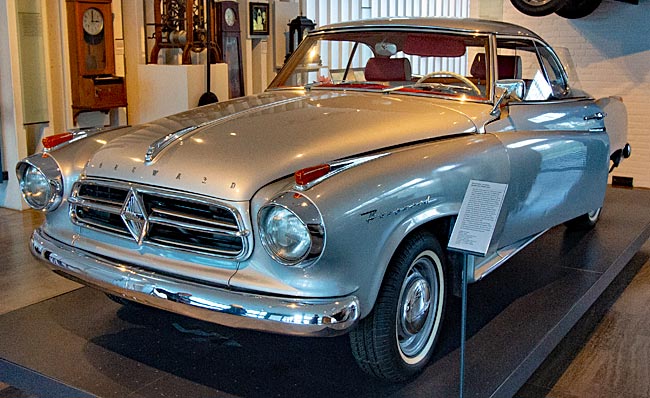
A well-preserved Borgward Isabella at the Focke Museum
The end of the company group, which included Borgward-Werke alongside the Goliath-Werk GmbH (founded by Borgward in 1949 for greater allocation of raw materials as an independent company) and Lloyd-Maschinenfabrik GmbH (later Lloyd-Motoren-Werke GmbH), came in 1960/61. Borgward had always wanted to keep everything under his control, but he was more of a designer than a businessman, so profitability suffered and financial needs grew. When already promised loans from the Senate were withdrawn, the financial difficulties became so great that Borgward handed over his plants to the Senate without compensation, which converted them into a joint-stock company owned 100% by the state of Bremen. The final collapse then came in 1961. More than 12,000 auto workers lost their jobs at the time.
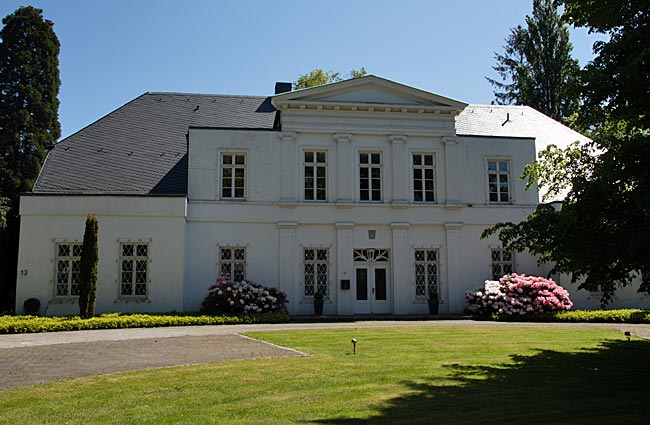
Borgward Villa in Horn next to one of the entrances to the Rhododendron Park. He acquired the former manor house in 1952"
Shortly afterward, Hanomag-Henschel-Fahrzeugwerke GmbH, founded by Rheinstahl in April 1969, resumed commercial vehicle production in the old Borgward plant in Bremen-Sebaldsbrück. After an initial 51% stake, Daimler-Benz fully acquired the company in 1971. In the following years, Hanomag-Henschel was integrated into the parent company and finally disappeared from the market entirely in 1974.
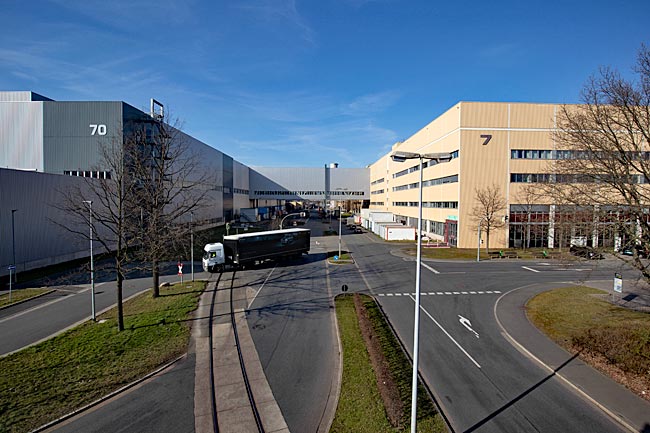
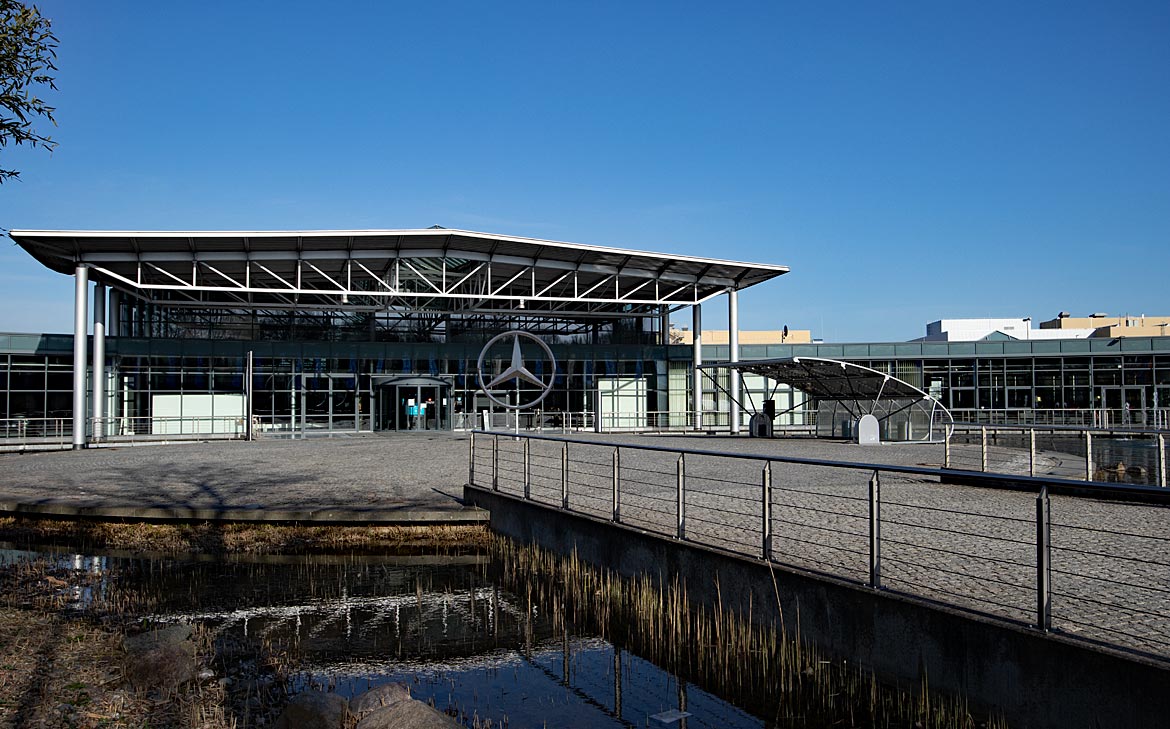
A central main traffic axis crosses (with a bridge) the production site of Daimler in Bremen. Just-in-time delivery, direct rail connection, etc., are standard in industrial manufacturing. The small city within a city almost never rests.
Since 1978, only passenger cars have been built on the approximately 1 million square meter factory site of Daimler in Sebaldsbrück. In November 2017, 8 million units had rolled off the assembly line in the then 39-year history of the plant. In 2021, production of the C-Class began at the Bremen plant, with the successful model set to secure the five-digit number of employees in the long term.
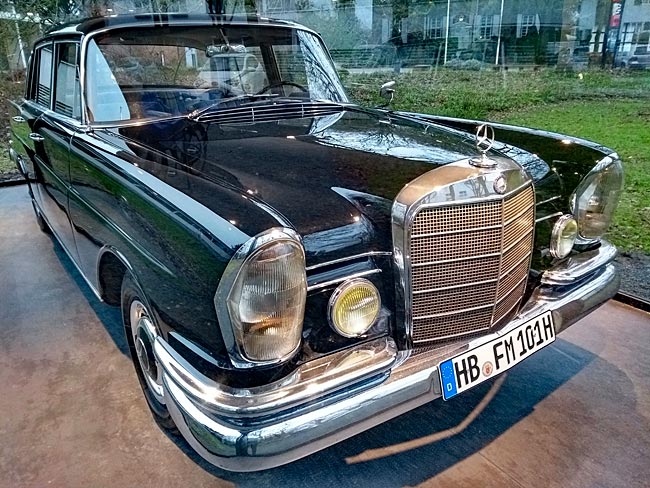
A real museum piece: Mercedes-Benz vintage car
In 2016, Borgward's grandson announced that he wanted to build - or rather assemble - Borgward-branded cars again in the state of Bremen. The partner was a Chinese company. However, the partner sold the company, and the new owner abandoned the plans, giving Bremerhaven a rejection in mid-2019.
previous page
 next page
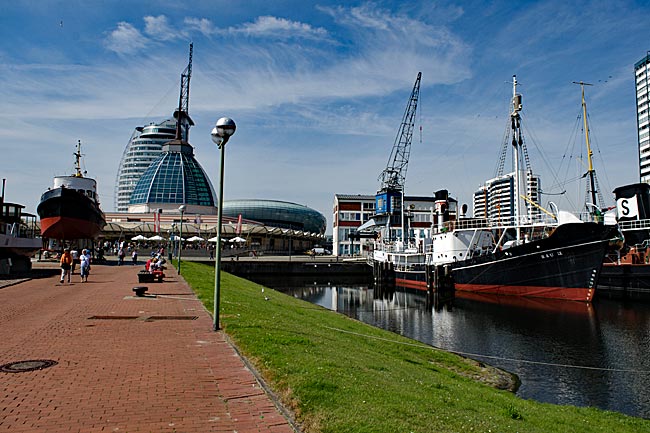
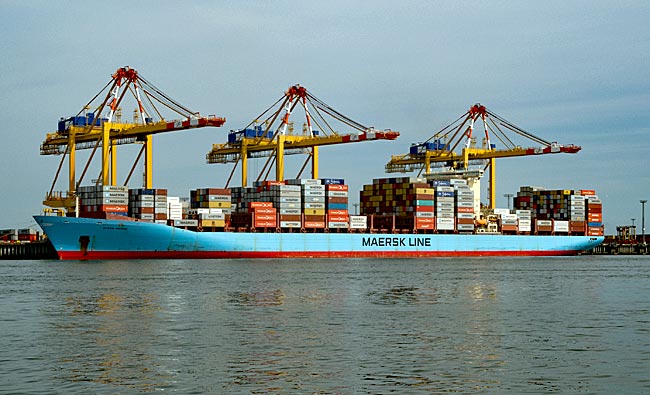
Bremerhaven - Überseehafen (Overseas Port)
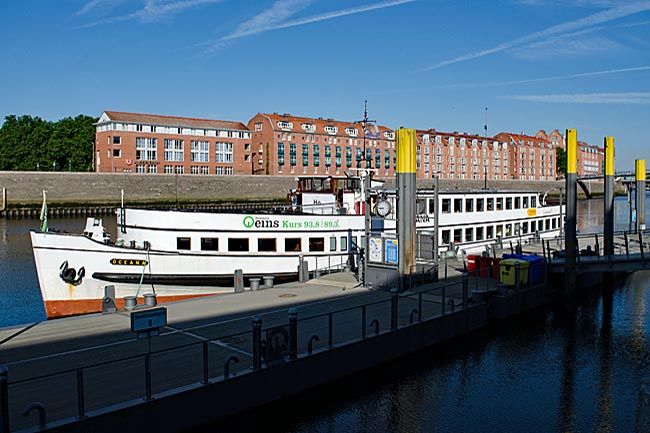
In addition to the Old Harbor (now the Museum Harbor), which was the first to be built, other ports were later added. Adjacent to the New Harbor lies Kaiserhafen I, the first in a series of additional harbor basins. Even a glance into this initial section of the expansive port area reveals a different world of maritime activity - one of large ships. And we will see even larger ones along the five-kilometer-long quay on the Weser.
read more ...
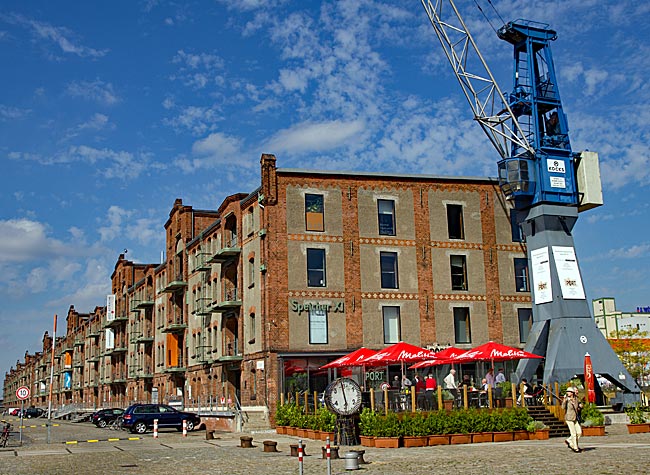
Überseestadt (Overseas City)
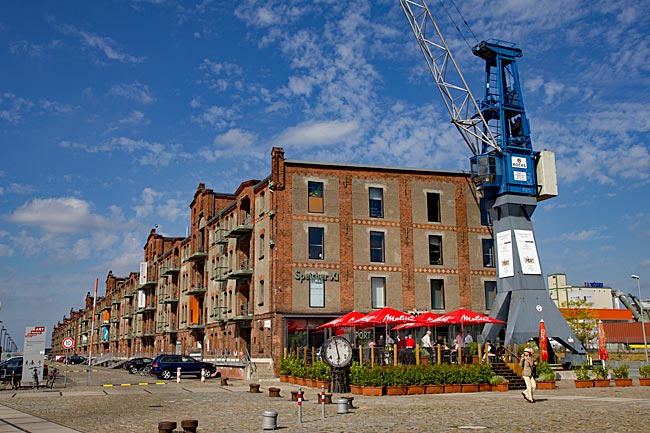
When the Overseas Port needed renovation, the Hanseatic city decided in 1991 to simply close the basin. In 1998, the Overseas Port was finally filled with sand from dredging operations in the Outer Weser. Along with the also decommissioned but still existing Europa Harbor basin, this formed the foundation for the conceptual development and creation of today's Überseestadt (Overseas City).
read more ...
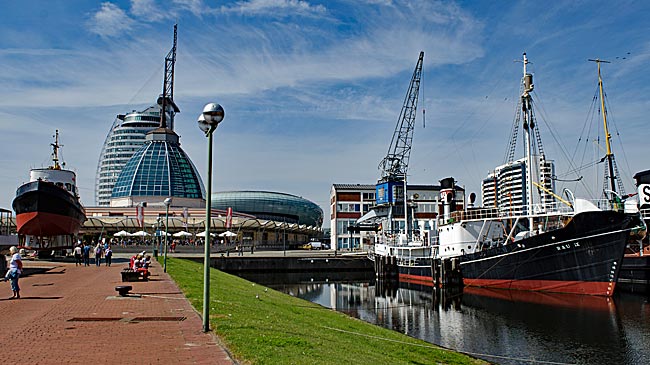
Bremerhaven in general
It was not until 1827 that Bremerhaven was founded. To secure its status as a port city in the face of the impending silting up of the Weser - the lifeline of Bremen - Bremen acquired 342 acres of land from the Kingdom of Hanover for 74,000 talers under then-mayor Johann Smidt. Approximately 60 kilometers downstream from Bremen, this became the site of the first urgently needed seaport built by Bremen, known as the Old Harbor, completed by 1830.
read more ...
Übersee-Museum (Overseas Museum)
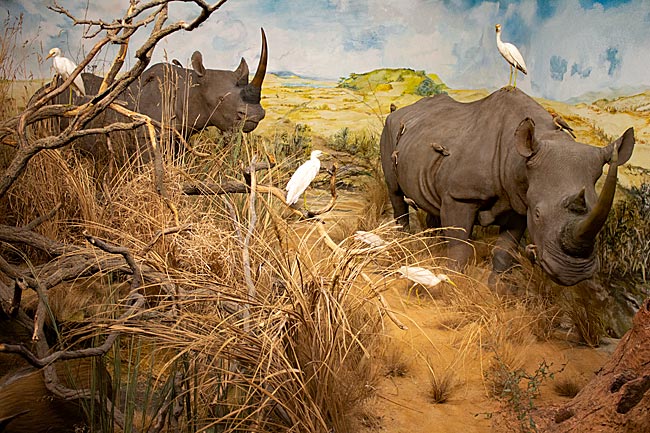
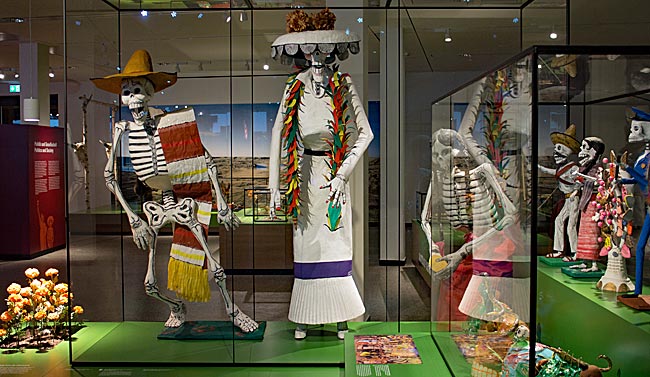
Overseas Museum. In 1896, the current Overseas Museum first opened its doors under the name "Municipal Museum of Natural History, Ethnology, and Commerce." The exhibits initially came from the "Municipal Collections of Natural History and Ethnography," which were partly displayed as a "Trade and Colonial Exhibition" at the "Northwest German Trade and Industry Exhibition" in 1890 with great success. Since its founding, the museum's concepts have evolved several times, culminating in a stronger focus on museum education that continues to this day.
read more ...
Focke-Museum
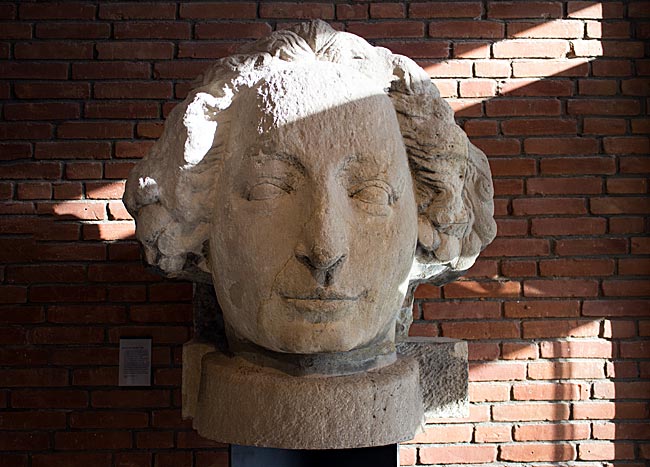
Every city has its history, and in many cities, there is a museum that tells this story. In the Hanseatic city of Bremen, it is the Focke Museum in the Riensberg district where the city's history is presented most vividly. The "Bremen State Museum for Art and Cultural History" was established in 1924 by merging two collections: the Gewerbemuseum (founded in 1884) and the Historisches Museum für bremische Altertümer (Historical Museum of Bremen Antiquities, founded six years later). The museum's founder, who passed away in 1922, also gave it his name.
read more ...
Horn-Lehe district
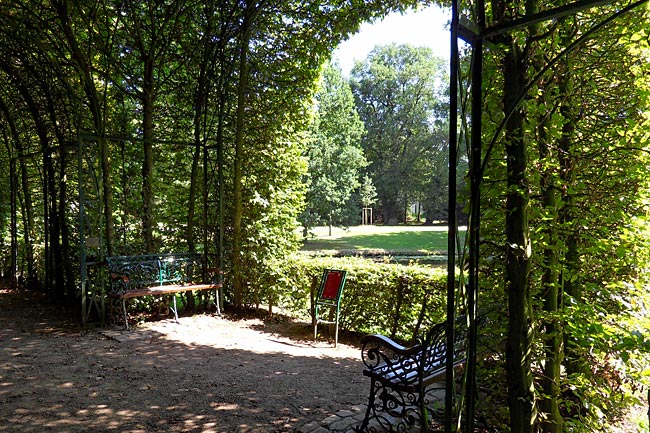
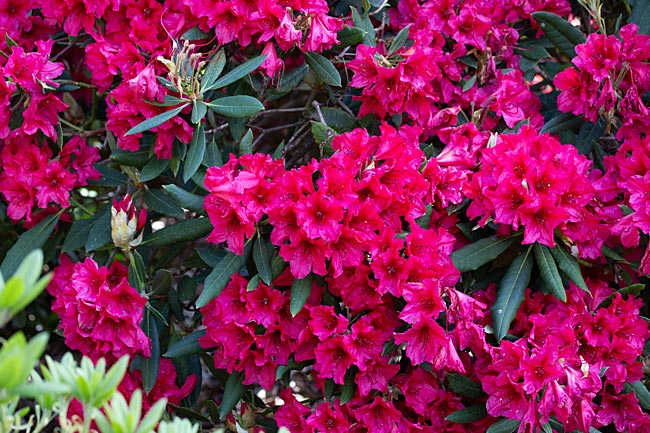
During our exploration of the Bremen neighborhood of Horn-Lehe, greenery plays a significant role - sometimes even in a figurative sense. The highlight among the attractions is the Rhododendron Park, where vibrant blooms can be seen for many weeks. Relatively early in the year, the namesake heath plants display their floral splendor.
read more ...
Observatory & Planetarium
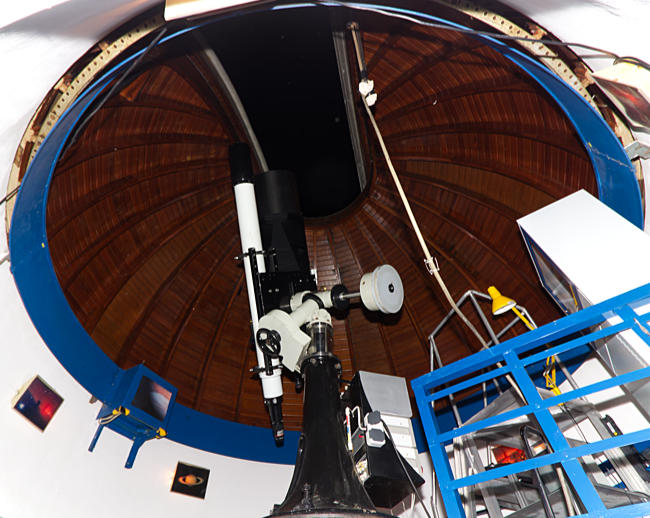
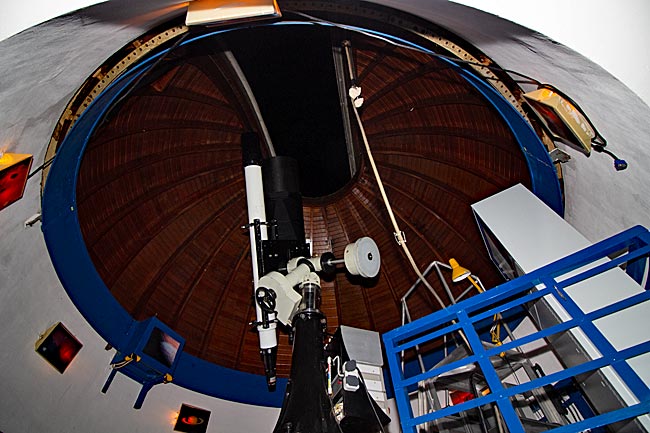
On selected days, visitors can also look through the large stationary and smaller mobile telescopes of the Walter-Stein Observatory, which are set up on the terrace. In the Olbers-Planetarium in the same building, members of the society give lectures on varying topics. The Olbers-Planetarium, opened in 1952, features a dome with a diameter of 6 meters and belongs to the category of small planetariums. It offers 35 seats (including accessible options) for visitors.
read more ...