
 exploring Bremen & its surrounding areas
 You are here: worth seeing in Bremerhaven
 Bremerhaven in general
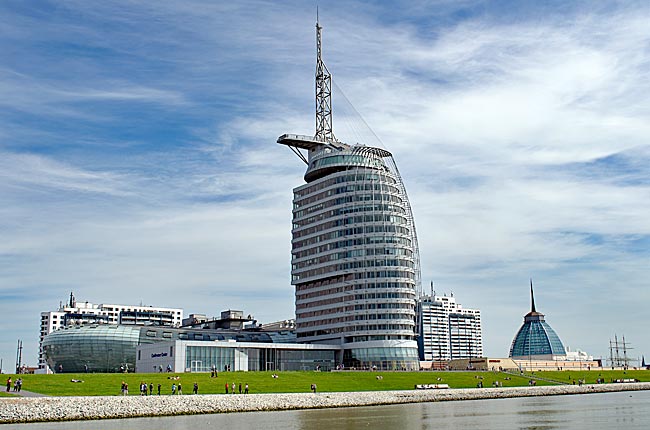
Skyline of Bremerhaven from the water
Bremerhaven was founded as late as 1827. To secure its status as a port city amid the threat of silting in the Weser, Bremen's lifeline, Bremen acquired 342 morgen (about 850 acres) of land at the mouth of the Weser from the Kingdom of Hanover for 74,000 talers under then-mayor Johann Smidt. About 60 km downstream from Bremen, the first urgently needed seaport for Bremen, known as the Old Harbor, was established there by 1830. As early as 1827, modern seagoing ships could no longer dock at the city's harbors because they required increasingly deeper drafts, which the Weser could not provide until dredging began in 1887.
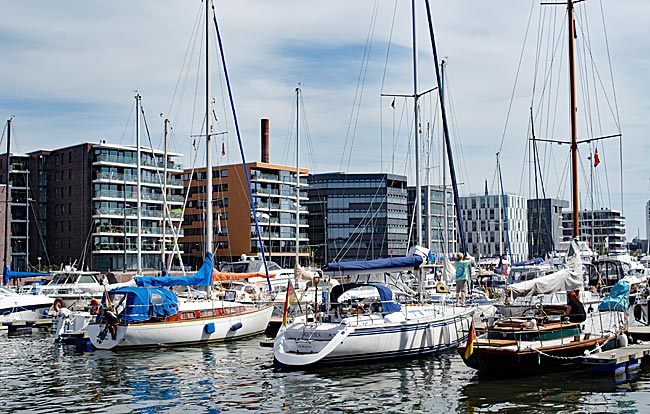
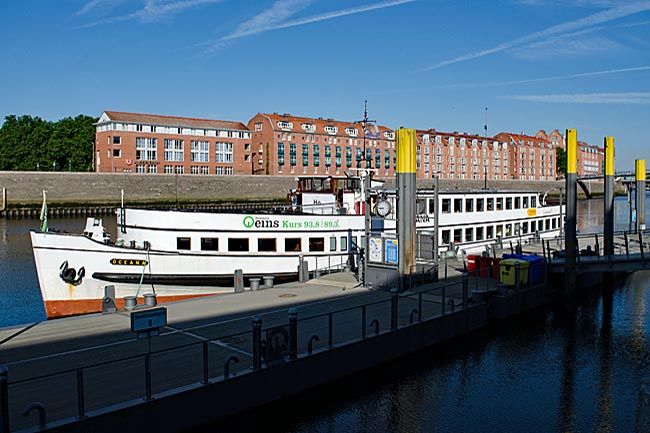
Marina in the New Harbor
The settlement located at the mouth of the Geeste into the Weser did not receive town rights until 1851 and was later annexed to the city of Wesermünde in 1939. After World War II, Wesermünde was merged with Bremen in 1947 and renamed to its current name - Bremerhaven.
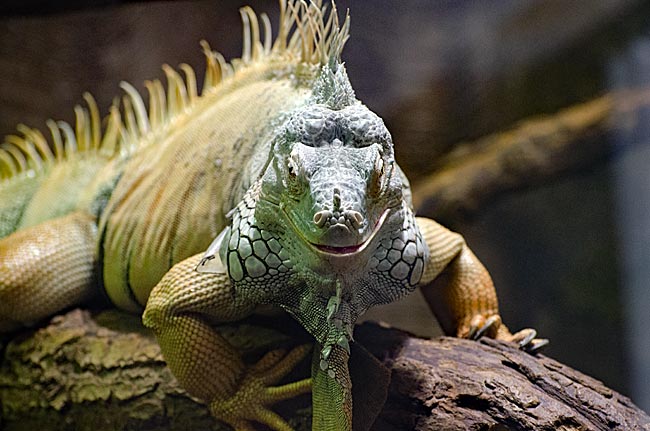
Green iguana at the Zoo by the Sea
In earlier times, Bremerhaven was a thriving fishing port with a large fleet and the largest emigration departure harbor on the European mainland for those heading to new homes overseas, primarily the USA, alongside Australia, Canada, and South America. As early as 1847, there were regular ship connections from Europe to the USA departing from Bremerhaven. Steamships, such as those of the "Norddeutscher Lloyd," transported emigrants from the Columbuskaje across the Atlantic and carried bulk goods, often tobacco, back from North America. After the end of the emigration waves, the famous Columbuskaje became a stopover for international cruise ships.
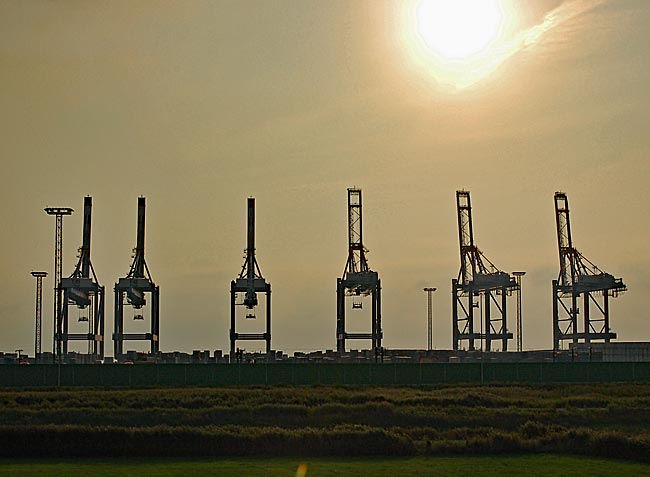
Evening light: the container port is a fenced security area
As in almost the entire German coastal region, Bremerhaven also experienced an economic decline in traditional maritime industries, fishing and shipbuilding, in the last decades of the 20th century, leading to structural change. Today, Bremerhaven is economically Europe's hub for the international import and export of automobiles and one of the largest container transshipment points in Europe with one of the longest quays in the world.
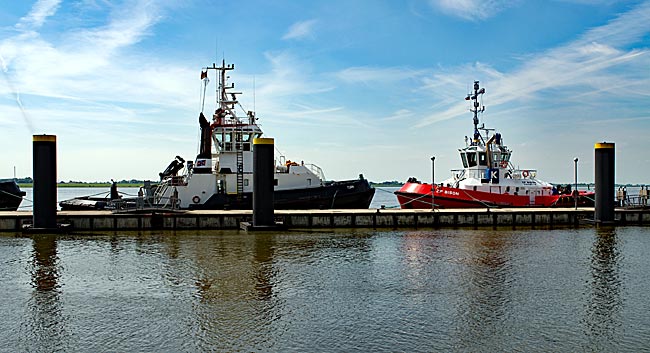
Tugboats at the tugboat pier: they are used when large ships arrive
So, is everything good in "Fishtown," as the city is colloquially called? Not quite. Bremerhaven has a good ice hockey team, the "Fishtown Pinguins," and the Alfred Wegener Institute has an international reputation in marine research. Cargo handling through the ports is running smoothly, successful companies like "FRoSTA" are based in the city, and the Havenwelten have created a truly attractive tourist area with regional impact behind the Weser dike. However, beyond that, one repeatedly encounters areas in Bremerhaven that reveal the city's poverty.
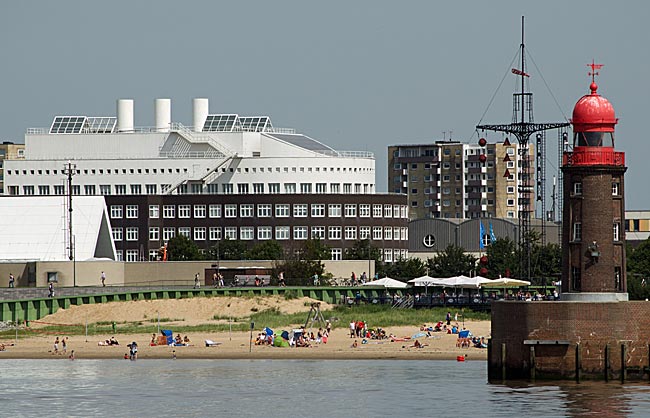
The small beach near the Geeste mouth
Slightly off the Havenwelten at the Geeste, the history and development of the seaport and its surroundings are presented in an engaging way. The history of the Historical Museum Bremerhaven dates back to the early 20th century when a local history museum was opened. In 1985, the museum was conceptually redesigned under its current name. The permanent exhibition in the building completed in 1991 is divided into seven sections: Bremerhaven and its surroundings (1827-1927), deep-sea fishing and fish industry, overseas ports and harbor work, shipyards and shipbuilding, Bremerhaven and its surroundings (1920-1960), and finally treasures from the Elbe-Weser Triangle.
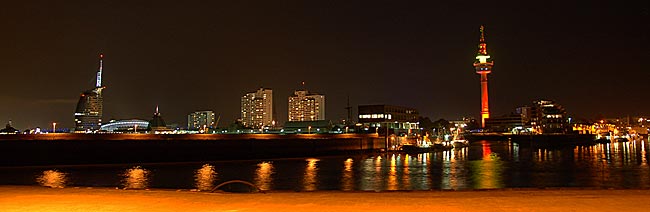
When night falls at the Geeste mouth
As in the German Emigration Center, mass emigration to the USA in past days is also a topic in the Historical Museum. The museum houses the German Emigrant Database with approximately 5 million recorded individuals. Additionally, the museum maintains the ship database of the Tecklenborg Shipyard. At the shipyard founded in 1845, among other things, the "Schulschiff Deutschland" was built, once located at the Lesum estuary in Vegesack and now in Bremerhaven’s New Harbor). In 1928, one year after the construction of the sailing vessel, the shipyard went bankrupt. The museum is also active in the Fishery Harbor Showcase, where it has operated the museum ship "GERA," a side trawler built in Wolgast (GDR) in 1959/60, since 1993.
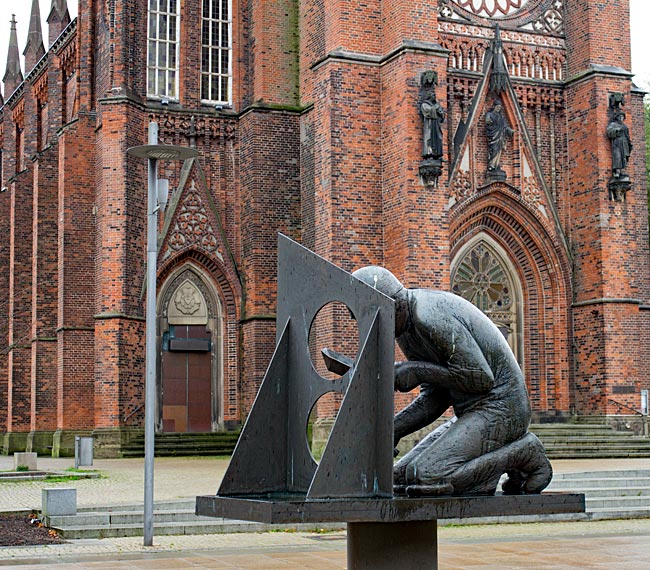
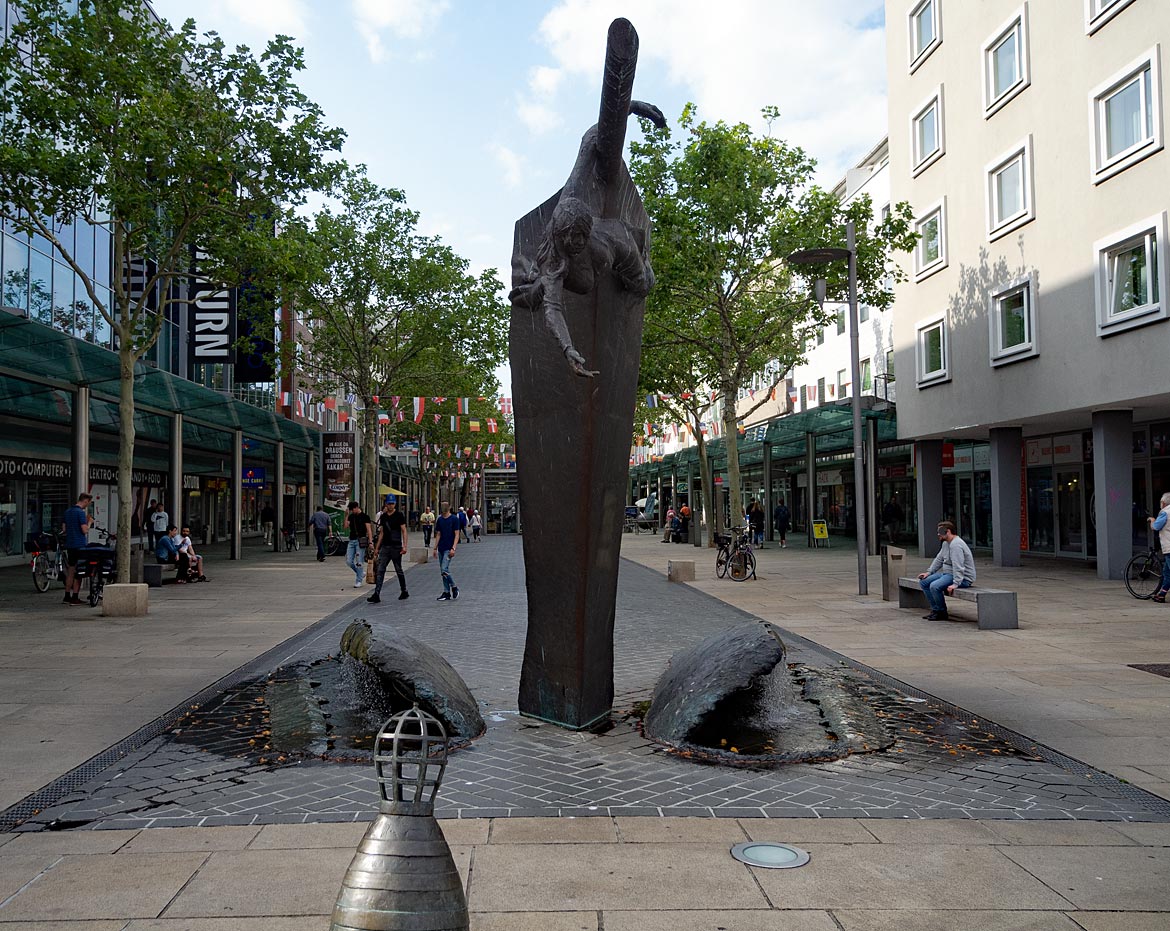
Part of the shipyard fountain by Waldemar Otto (2002) in front of the Great Church. The water feature is one of several on the shopping promenade
Those who take a detour into the shopping zone behind the Columbus Center with its three high-rise blocks will encounter a pedestrian street that city visitors can see but don't necessarily have to, a circumstance that the seaport unfortunately shares with many other city centers in Germany. The so-called Bürgermeister-Smidt-Gedächtniskirche, located on Bürgermeister-Smidt-Straße since 1927, stands here as a former landmark of the city. The sailors' church, also known colloquially as the "Great Church," was a widely visible orientation point with its 80-meter-high tower for a long time after its consecration in 1855.
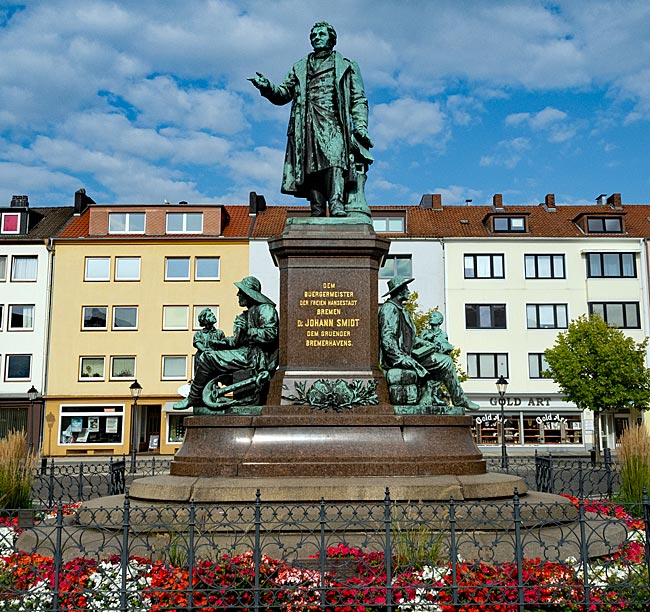
The Schmidt Monument on Theodor-Heuss-Platz
However, even the consecration by the namesake himself in his capacity as a pastor did not protect the three-aisled neo-Gothic sacred building from air bombs in September 1944. After heavy hits, only the tower and sandstone figures remained standing. The rebuilt church has been under monument protection since 1978.
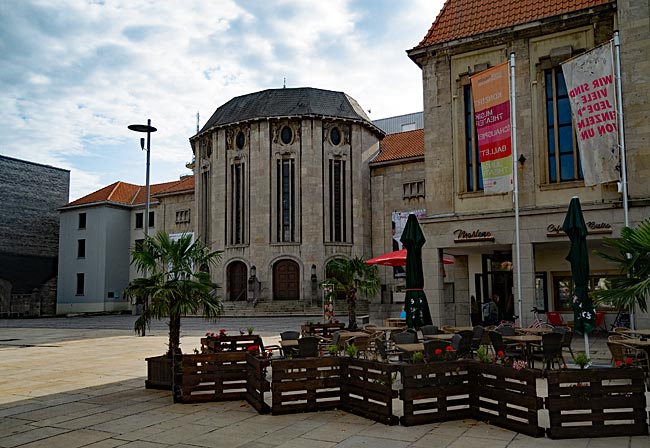
The city theater is a four-discipline house with its own ensemble; the building was erected in 1952. On the left in the image, the art museum adjoins the theater, and on the other side of the street is the Kunsthalle
previous page
 next page
Map
Further information
Historical Museum Bremerhaven
An der Geeste
27570 Bremerhaven
Open: Tuesday - Sunday 10 AM - 5 PM, closed on all holidays, Christmas Eve, and New Year's Eve
Phone: +49 (0)471 308160
Email: info@historisches-museum-bremerhaven.de
www.historisches-museum-bremerhaven.de
www.tecklenborg-werft.de
Museum Ship FMS „GERA“
Fischereihafen I („Schaufenster Fischereihafen“)
Fischkai
27572 Bremerhaven
www.museumsschiff-gera.de
Art Museum
Karlsburg 1
27568 Bremerhaven
Phone: +49 (0)471 46838
Open: Tuesday - Friday 11 AM - 6 PM, Saturday and Sunday 11 AM - 5 PM
Email: info@kunstverein-bremerhaven.de
www.kunstverein-bremerhaven.de
Art Hall
Karlsburg 4
27568 Bremerhaven
Phone: +49 (0)471 9586106
Open: Tuesday - Friday 11 AM - 6 PM, Saturday and Sunday 11 AM - 5 PM
Email: kunstverein@nord-com.net
www.kunstverein-bremerhaven.de
www.stadttheaterbremerhaven.de
Bremerhaven - Zoo am Meer (Zoo by the Sea)
In addition to the 19th-century harbor facilities, the Zoo am Meer is the oldest attraction on the site between the Weser River and the pedestrian zone. It opened in 1928 under the name "Tiergrotten." The enclosures house polar bears, seals, penguins, various bird species such as gannets and keas, reptiles like turtles, raccoons, Arctic foxes, pumas, monkeys, and others - almost 50 animal species in total.
read more ...
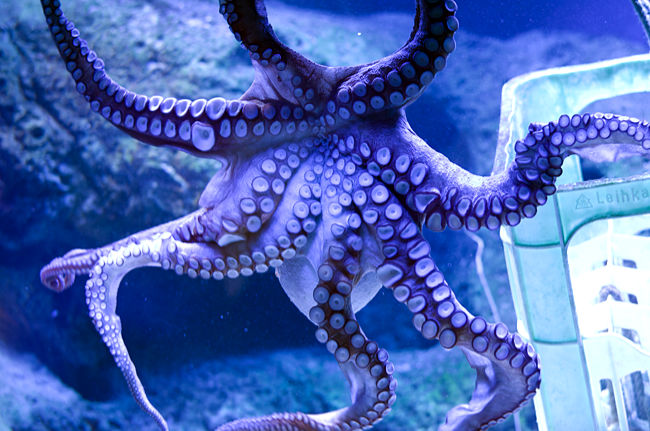
Bremerhaven - Deutsches Auswandererhaus® (German Emigration Center)
Opened in 2005, the German Emigration Center vividly and engagingly presents the history of emigration to America across five eras spanning from 1830 to 1974. In total, 7.2 million people departed from Bremerhaven to seek a new home and build a new life beyond the Atlantic. The emotionally compelling exhibition, backed by historically accurate research, earned the museum the European Museum Award in 2007.
read more ...
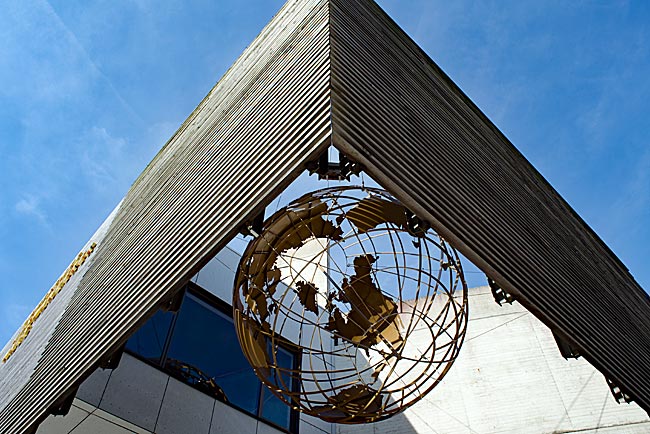
Bremerhaven Havenwelten
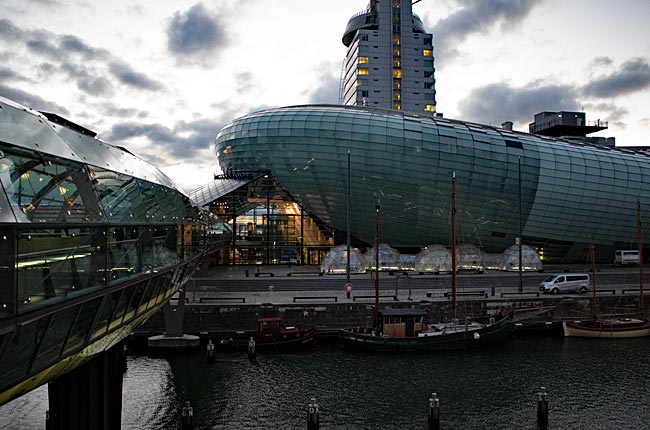
Since early 2008, Bremerhaven has not only had a new tallest building but also a new landmark in its Weser-side skyline with the ATLANTIC Hotel SAIL City, which rises 147 meters directly behind the Weserdeich. Architecturally, the structure perfectly embodies a maritime city - it stands like a powerful, rounded ship's superstructure. On the 20th floor, at a height of 77 meters, there is an observation deck (SAIL City) that is also accessible to non-guests.
read more ...
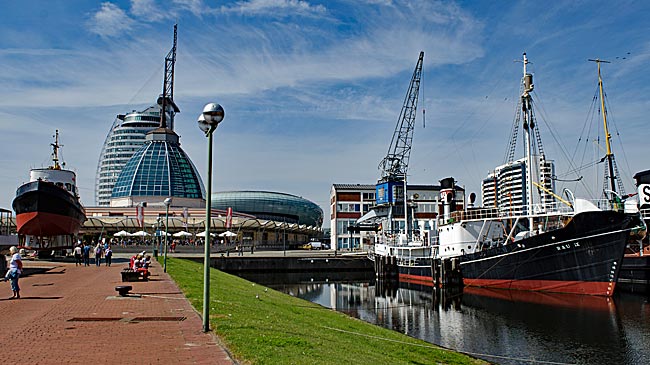
Bremerhaven - Schaufenster Fischereihafen (Fishery Harbor Showcase)
Away from the Havenwelten and older than both the Emigration Center and Klimahaus is the "Fishery Harbor Showcase." In fact, the Fishery Harbor was originally Geestemünde's deep-sea fishing harbor, built between 1891 and 1896. After a period of decline and decay - including partial demolitions - the idea emerged to transform the area into a maritime experience world. In 1990, efforts began to restore Fish Packing Hall IV, the oldest surviving hall, which had been slated for demolition just shortly before.
read more ...
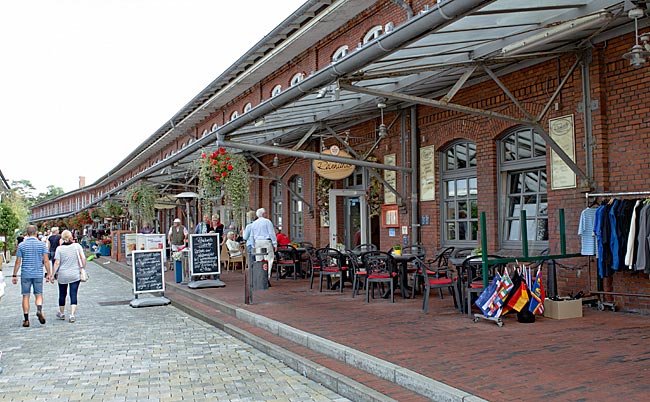
Klimahaus® Bremerhaven 8° Ost
In this futuristic building, visitors embark on a journey along the 8th meridian east, traveling around the globe through all climate zones. Across multiple levels, there is plenty to read, see, hear, and experience sensorially and tactilely about climate and its impact on local nature and human life. Visitors are not limited to being passive observers but are invited to actively engage with numerous exhibits.
read more ...
Bremerhaven - Überseehafen (Overseas Port)
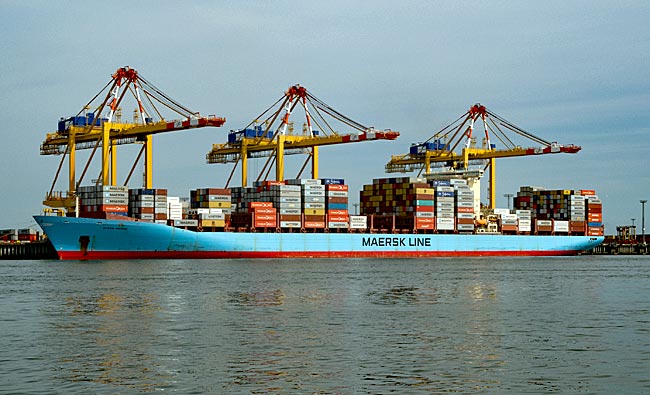
In addition to the Old Harbor (now the Museum Harbor), which was the first to be built, other ports were later added. Adjacent to the New Harbor lies Kaiserhafen I, the first in a series of additional harbor basins. Even a glance into this initial section of the expansive port area reveals a different world of maritime activity - one of large ships. And we will see even larger ones along the five-kilometer-long quay on the Weser.
read more ...
SAiL Bremerhaven
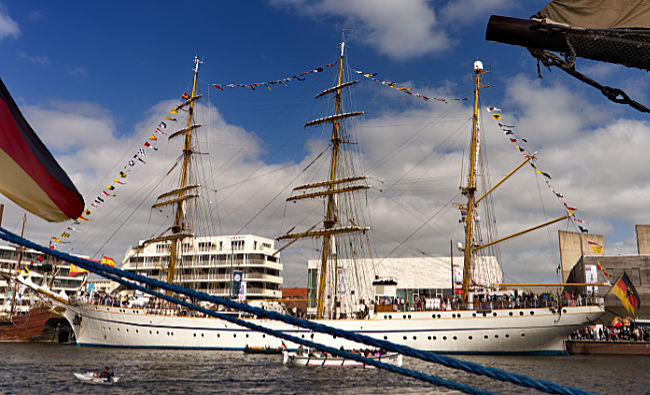
When SAiL Bremerhaven takes place, the port city becomes an even more international stage than it already is, both in terms of participants and visitors, who exceed ten million over the five days of the event. Unlike the usual focus on cargo ships at the container terminal and cruise ships at the cruise terminal, this time - true to its name - the spotlight shifts primarily to sailing ships. In total, 250 vessels were attracted or involved in the SAiL, which returned for the first time in ten years in 2025.
read more ...
DGzRS - The Maritime Rescuers
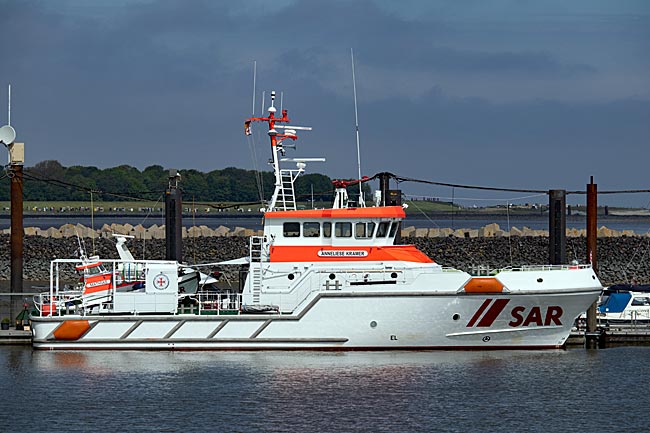
Anyone in distress at sea today has far better chances of receiving help, even out on the open water, thanks to modern technology and professionals who take care of it. Along Germany’s North and Baltic Sea coasts, these are primarily the approximately 1,000 full-time and volunteer men and women of the DGzRS (German Maritime Search and Rescue Service), also known as "The Maritime Rescuers." In 2020 alone, they conducted 1,720 operations and rescued 357 people. Since its founding, the organization has helped 86,000 individuals.
read more ...