
 exploring Bremen & its surrounding areas
 You are here: worth seeing in Schwachhausen district
 Focke-Museum (1/2)
Current: The main building and the exhibition magazine have been closed since November 20, 2023, due to an expansion of the exhibition space and renovation work for a new collection presentation until 2026.
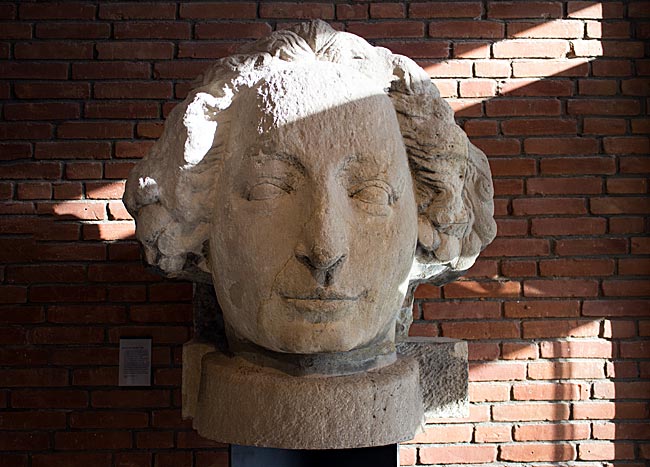
The original head of Roland
Every city has its history, and many cities have a museum where this is told. In the Hanseatic city, it is the Focke-Museum in the Riensberg district, which presents urban history in the most vivid way. The "Bremen State Museum for Art and Cultural History" was established in 1924 by merging two collections: the Gewerbemuseum founded in 1884 and the "Historical Museum of Bremen Antiquities," founded six years later. The museum's namesake, Dr. Johann Focke, who died in 1922, was a senator and father of aviation pioneer Wilhelm Focke and aircraft manufacturer Henrich Focke, co-founder of Focke-Wulf-Flugzeugbau AG, which after merging with another company in 1963 became part of EADS and Airbus.
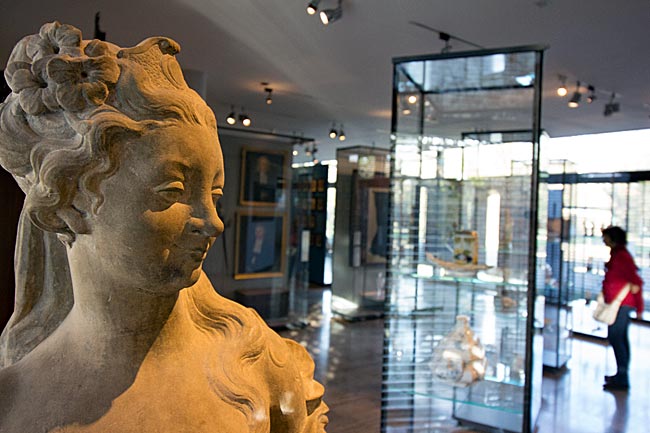
Flora, created in the mid-18th century by Theophil Wilhelm Frese from Obernkirchen sandstone, gazes into the bright exhibition rooms filled with natural light
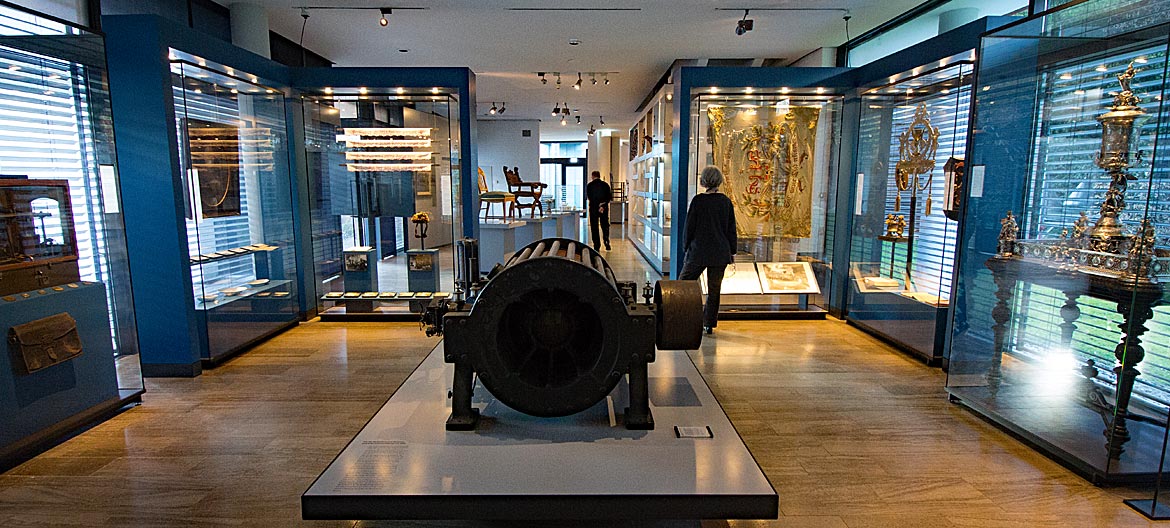
Until World War II, the Focke-Museum was housed in a building in the Stephaniviertel near the city center, which was destroyed by bombing. In 1964, a modern glass structure was completed at its new location on the former Riensberg estate, which the museum has used since 1953. Since an extensive renovation in 1998, the permanent exhibition has showcased 1200 years of Bremen’s history in sunlit rooms.
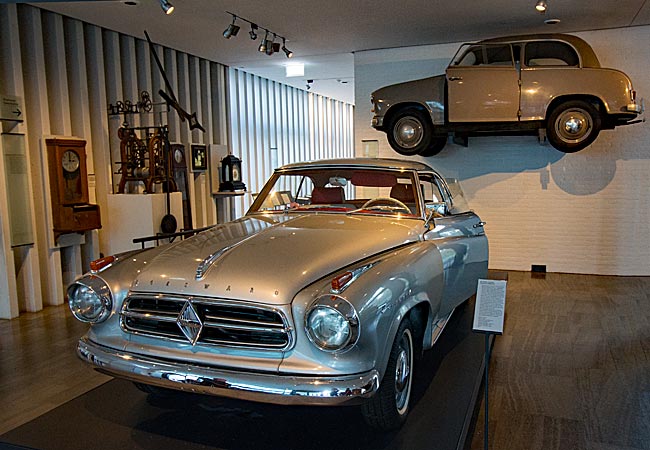
Automobile manufacturing has a long tradition in Bremen, as demonstrated by this Borgward gem, the Isabella
Upon entering the museum, visitors are greeted by the head of the Roland statue - well, not personally, and strictly speaking, it is only his head, but it is the original (see photo above). The full-sized armored knight can be seen on the market square in front of the historic town hall. In fact, the first section of the exhibition features heads - wise minds of the city, such as Dr. Focke. He may well have eaten soup with a silver spoon from the Wilkens Silver Manufactory, which are displayed in a vitrine in a collection overview, since the company has been based in the Hemelingen district since 1810. At the time of his birth in 1848, drinking water was likely still drawn from the Weser using a wooden scoop wheel, as shown by a model in the museum. However, he never sat in a Borgward car, as these Bremen-made automobiles were only produced from 1939 onward.
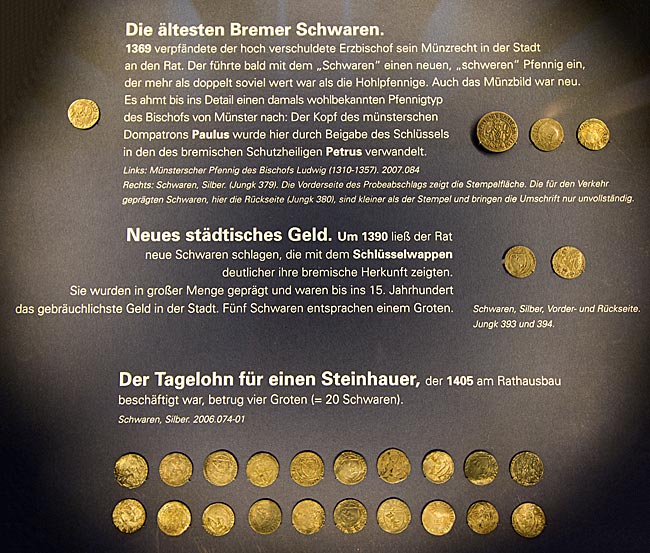
Bremer Schwaren: urban coins from the 14th century
Just behind the sleek "Isabella" (built in 1960), the flagship model of Carl F. W. Borgward GmbH produced between 1954 and 1961, begins a chronological tour through the Focke-Museum. The journey through Bremen’s history passes by grave goods from the 13th century discovered during excavations at the cathedral, urban coins from the second half of the 14th century, and bourgeois interiors, such as Bremen chests with carved oak parts. This craft held high status in Bremen at the time.
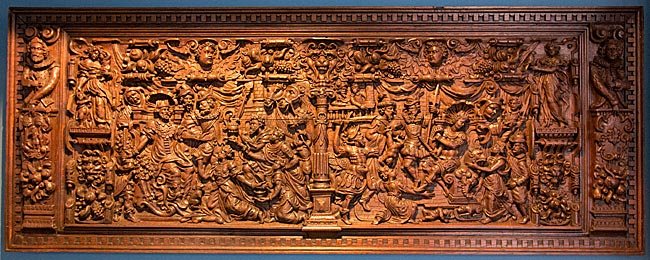
An impressive piece: an oak-carved front panel of a Bremen chest from around 1600
Visitors learn that the "Bremer Stein," the gray sandstone used for carvings on the Renaissance façade of the town hall (built between 1608 and 1614), was actually quarried in Obernkirchen near Minden before being transported downstream by water to reach sculptors and architects in the city.
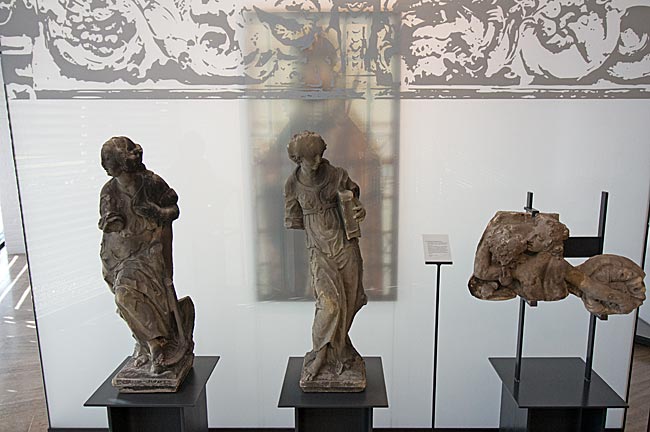
The sculptures "Faith and Hope," created in the 16th century from "Bremer Stein," were likely decorative elements of a bourgeois house
previous page
 next page
Map
Further information
Focke-Museum
Bremen State Museum for Art and Cultural History
Public Foundation
Schwachhauser Heerstr. 240
28213 Bremen
Phone: +49 (0)421 699 600 - 0
Open: Tuesday 10 AM – 9 PM, Wednesday to Saturday 10 AM – 5 PM, Sunday 10 AM – 6 PM
Email: post@focke-museum.de
www.focke-museum.de
Friends of the Focke Museum Association (e.V.)
Schwachhauser Heerstraße 240
28213 Bremen
Phone: +49 (0)421 699 600 91
Email: ffm@focke-museum.de
Riensberg Cemetary
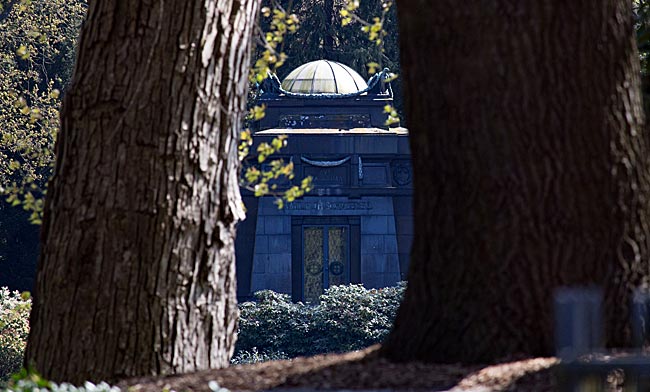
The Riensberg Cemetary, located within view of the Focke Museum, was established between 1872 and 1875 simultaneously with the Waller Cemetery as a replacement for two abandoned cemeteries elsewhere. The park cemetery, which today covers an area of about 28 hectares, is situated on the lands of the former Riensberg estate. The landscape gardener and garden architect Wilhelm Benque was commissioned to design the landscaping; he had previously been responsible for the garden art layout of Bürgerpark and, among others, Knoops Park in Lesum.
read more
...
botanika
In the heart of Rhododendron Park, adjacent to the café, stands the botanika. Originally planned as a contribution to Expo 2000, various factors led to changes, and the largely glass structure was finally opened in 2003.
read more ...

Parks & Mill in Oberneuland district
Its history and former village structure are evident when you drive or walk down Oberneulander Landstraße. In summer, the greenery of old trees provides ample shade. Along the street near the state border, several gaps appear in the residential buildings because three parks are located here, inviting visitors to explore them.
read more
...
Schwachhausen district
The Lloyd Railway Station, built in 1913 near Bremen's central station, served as a waiting area for emigrants who departed Europe from Bremerhaven aboard ships of the North German Lloyd. From here, their journey initially continued by train. The shipping company merged with HAPAG (Hamburg-America Line) to form HAPAG-Lloyd, headquartered in Hamburg. Directly across the street stands the anti-colonial monument "Elephant."
read more ...