
 exploring Bremen & its surrounding areas
 You are here: worth seeing in Findorff district
 Findorff district (1/2)
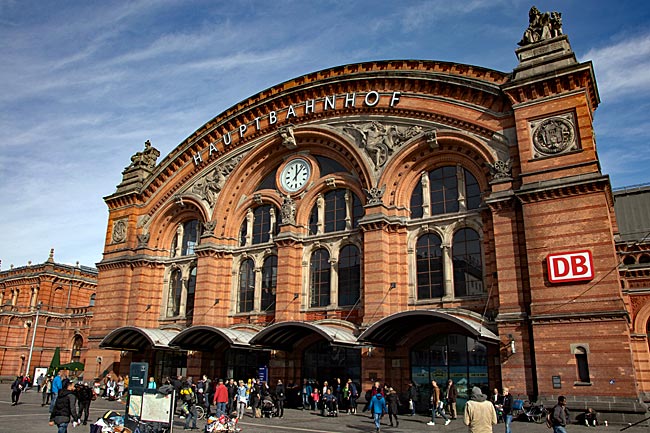
Far more impressive than the modern north exit is the historic facade of the station building
If you leave the central station, built in 1886/89 according to the plans of architect Hubert Stier from Hanover, through the much later added modern north exit with its large glass front, you find yourself on Theodor-Heuss-Allee in the Findorff district. Perhaps just disembarked from the train, a completely different scene presented itself in the protected front part of the building visible from Gustav-Deetjen-Allee on the right side of the station square (Willy-Brandt-Platz).
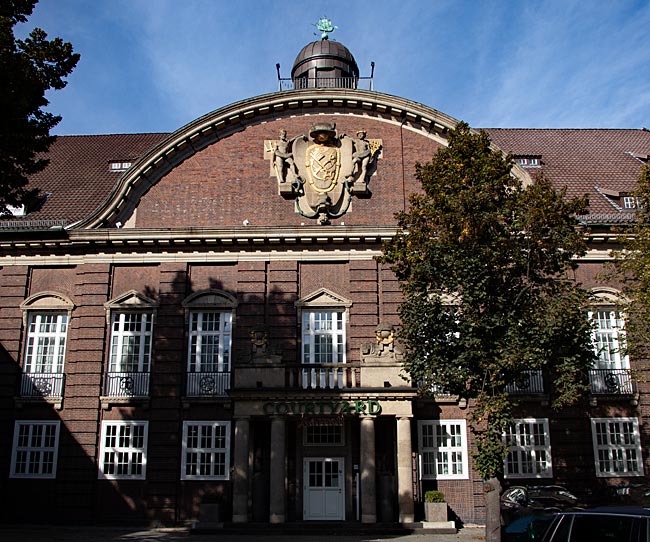
Front view of the former Lloyd Station with a copper-roofed tower and weather vane in the shape of a sailing ship, below it the logo of the North German Lloyd
Here, over 100 years ago, people waited with their belongings for their onward journey by train to Bremerhaven, from where they embarked on passenger steamers of the North German Lloyd (NDL) in several waves of emigration. Millions left the European continent and had already lost much before finding a new home and existence beyond the Atlantic. The Lloyd Station, designed by Rudolf Jacobs and built in 1913, now houses the Courtyard Hotel, and farewells still take place here almost daily.
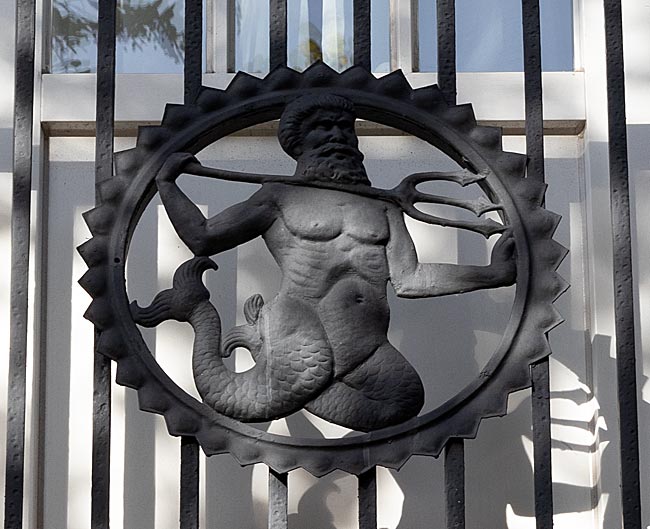
Maritime symbols adorn the balcony railings of the former Lloyd Station
The "Elbe," built in Scottish Glasgow in 1881, was one of NDL's fast steamers. The nearly 128-meter-long four-masted ship with a four-cylinder compound steam engine and a maximum speed of 16 knots (nearly 30 km/h) began its regular scheduled voyage from Bremerhaven via Southampton to New York on the afternoon of January 29, 1895 - a fateful journey for the crew and around 200 emigrants. Despite a storm that arose in the early morning hours, the bridge crew noticed the position lights of the coal steamer "Crathie" on the port side. The British ship, which was on a collision course, made no attempt to change its course. They only noticed the fast steamer too late and crashed at full speed into the broadside of the passenger steamer at 5:40 AM.
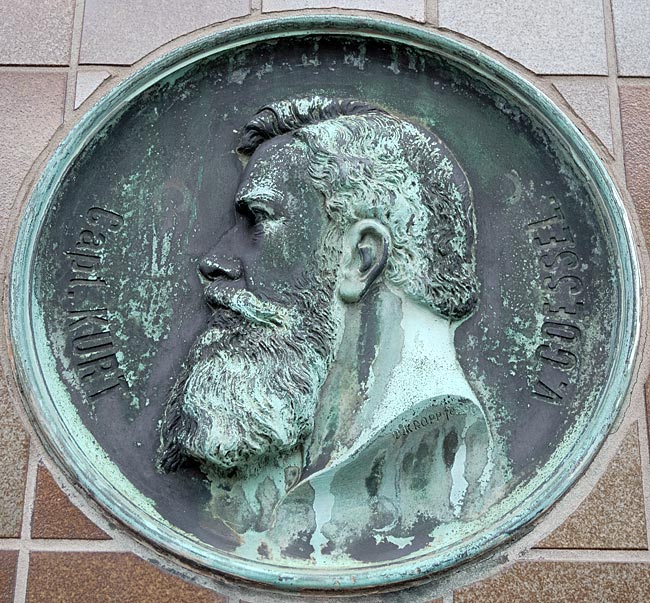
Honored for his bravery: Captain Kurt von Goessel in Goesselstraße. The relief is Station 8 of a historical walking trail through the district
Almost all hastily attempted rescue efforts on board failed because the launching devices of the lifeboats were frozen, and finally only one could be lowered into the water. Within 20 minutes, the large ship sank in the icy North Sea between the Netherlands and England, taking 332 people with it. Only 20 people could be rescued thanks to a passing ship. Captain of the "Elbe" was Kurt von Goessel. Today, a relief in the street named after him near the station commemorates him. By the way, the captain of the "Crathie" turned around toward Rotterdam after causing the accident without caring for the shipwrecked.
Water also played a role on the other side of the aforementioned alley. After the completion of the Congress Centrum (CCB) at the edge of Bürgerweide in 1993, they wanted to guide the hopefully numerous future conference guests along a specially paved path from the north exit of the station to the glass building's steps. The artistic competition announced for this purpose was won by Berlin-based Rolf Julius. His "Sound Arch" was inaugurated in 1995. A significant portion of the construction costs amounting to 13 million DM came from EU funds, yet many people in Bremen had little understanding for this "overpriced artistic nonsense" - and they were partly right.
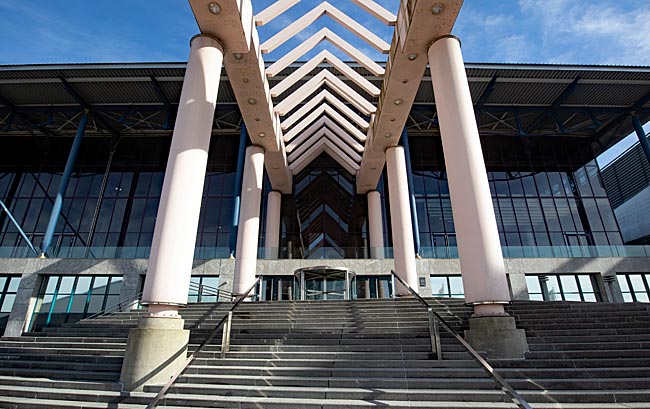
Congress Centrum (CCB) entrance
Why? Well, there was little one could object to about the 17-meter-wide path curved in an arc, except that the responsible parties wanted the surface of the laid granite slabs to be smoothly polished and initially even had them laid that way. That would have certainly looked elegant but was an unfortunate choice because a paved mirror-smooth mile quickly becomes a "Boulevard of Broken Bones" (a play on a song title) in wet weather. After this realization, the pavement was removed again and relaid with the inconspicuous, matte underside as the walking surface. That's how the arc ended up.
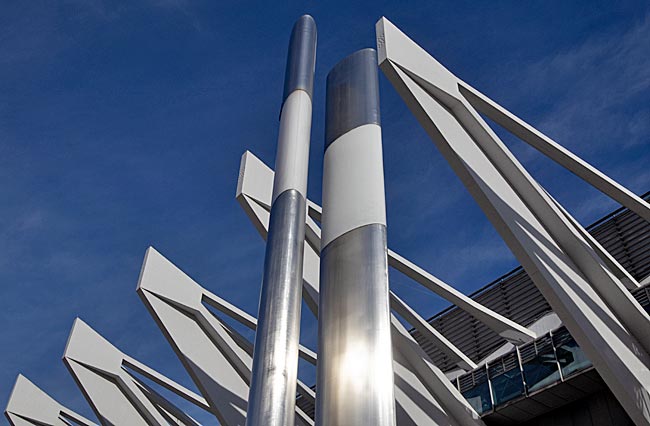
At night, the light fixtures in the steles provide illumination along the path
For the sound, sophisticated technology with playback devices and speakers was intended to be housed under a series of grates in the floor and in the steel steles lining the path with lighting. Birdsong and the babbling of a Japanese mountain stream could also be heard, but neither did the installation manage to impose the illusion of a civilization-free natural landscape onto the dreary square surrounded by concrete and traffic, nor was it able to function reliably and durably according to the costs. Thus, the "toilet flush," as mockers sometimes called the sparse sound backdrop, was rarely heard and has since fallen silent.
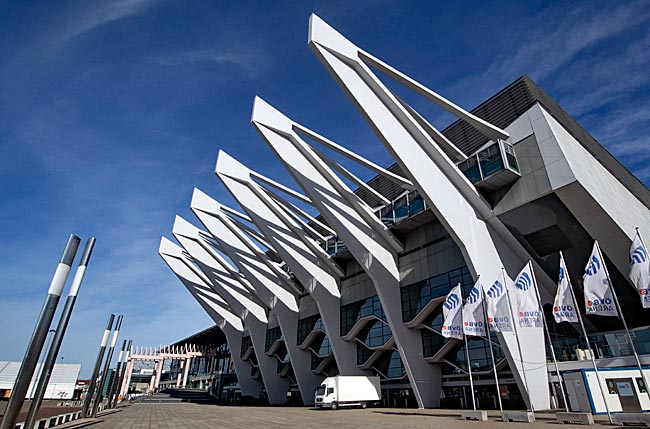
Three times is Bremen law, but twice is better: the six supports of the ÖVB Arena reach for the sky
The actual artwork here on the square, however, rises behind this public art installation - or so at least believes the author of these lines - and refers to the Stadthalle or ÖVB Arena next to the CCB. One can certainly debate architecture in many ways, but it is not as insignificant in its external appearance as, for example, the so-called City Gate Bremen designed by architect Max Dudler and inaugurated in 2019 on the other side of the main station - on a "prime piece of real estate," as local politics put it, and only mentioned here for that reason -directly behind the public transport hub.
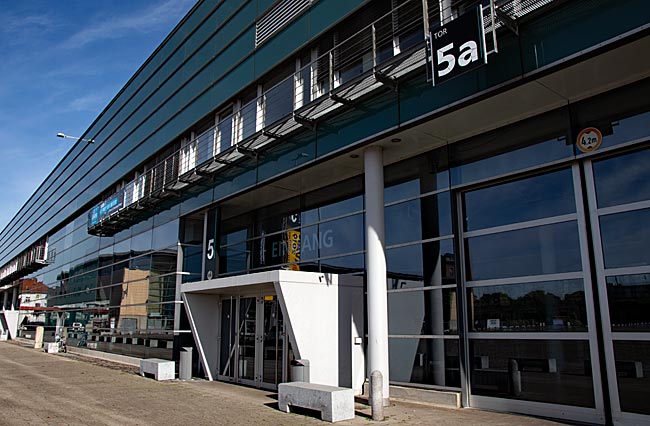
Mess
The architecture competition for the construction held in 1955/56 was won by Max Säume and Günther Hafemann, who had been friends since their student days in Berlin and had also settled professionally in Bremen in 1948, as well as the Viennese architect Roland Rainer. The first two had previously been professionally involved, among other things, in the reconstruction of the grain traffic facility at Holz- und Fabrikenhafen, the construction of Speicher I at Europahafen in today's Überseestadt, or the reconstruction of the Paula-Becker-Modersohn House and the Atlantis House on Böttcherstraße in the Hanseatic city. The originally budgeted construction costing 16 million DM began in 1962 and was inaugurated after a miraculous cost overrun on October 31, two years later. While Hafemann had already died before construction began, Säume just experienced the first Six-Day Race (track cycling and today called Sixdays), which was held for the first time in the hall in 1965 and remains a fixed date in the first month of the year to this day. Streets in the district of Blockdiek were posthumously named after both architects.
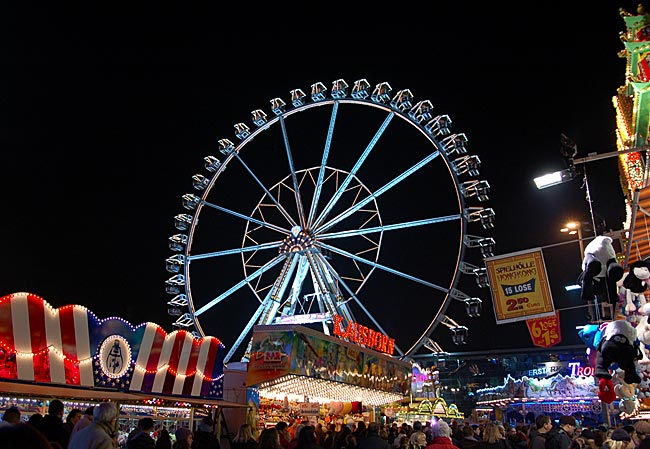
Freimarkt
With the multipurpose hall seating 14,000 visitors, the adjacent CCB, and the adjoining exhibition halls, Bürgerweide is the center for diverse large-scale events in Bremen. Especially since part of the fairground carousel and other market vendors gather here after the Oktoberfest in Munich. The two-week-long Freimarkt (free market) is so to speak Bremen's fifth season, and the folk festival with its almost thousand-year history is the oldest of its kind in Germany. As almost everywhere, unfortunately, there have also been a few troublemakers on the Freimarkt in the past, so the rules for visiting have become stricter to reduce escalations. For example, no more bottles may be brought in. Good. Otherwise, there are few limits to enjoyment if the wallet allows it - culinary delights are just as much on offer as seemingly daring carousels and stalls where you can test your luck with a view to the main prize.
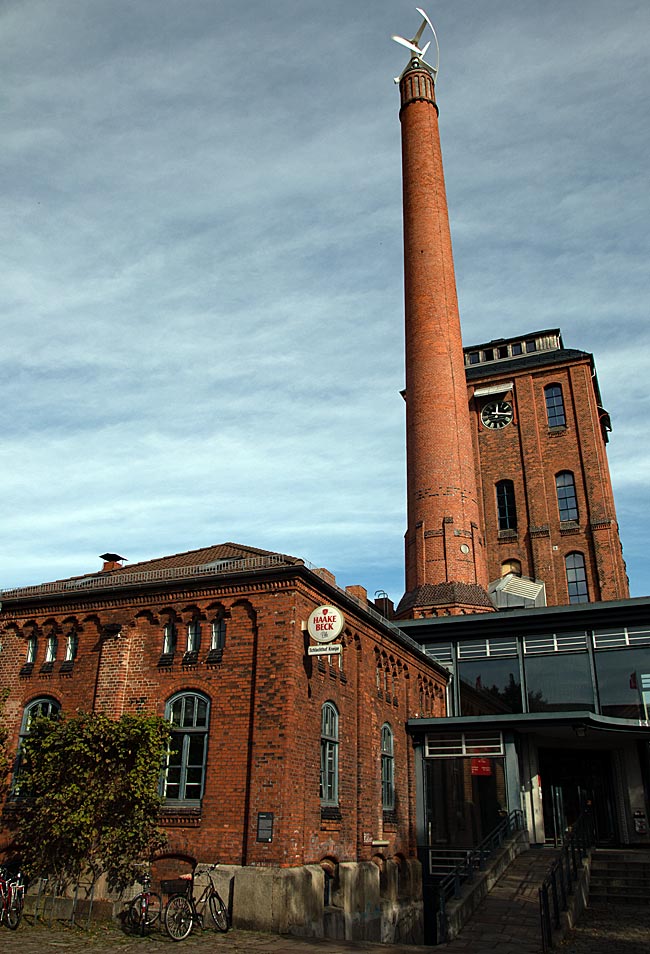
Kulturzentrum (cultural center) Schlachthof
The Kulturzentrum Schlachthof at the end of Theodor-Heuss-Allee is another event venue on the edge of the square. From quiet small-scale art to loud heavy metal concerts, there is a colorful program with international artists, and young people perform acrobatic feats on their skateboards outside in the skate park. The Schlachthof was once an actual slaughterhouse where around 65,000 animals were slaughtered and butchered annually. It was built between 1879 and 1882 and comprised far more buildings than still stand today, including the distinctive water tower where ice for cooling the meat was also produced. After the slaughter operation was relocated to the Oslebshausen district in 1977, the site lay fallow. Following a decision by the Bürgerschaft, Bremen's city parliament, the market and boiler hall of the old slaughterhouse were used as a cultural center just one year later. In 1980, further planning was implemented, and the demolition excavators rolled in. Only the water tower, boiler hall, a chimney, and an adjacent administrative building were spared. Subsequently, the entire reduced complex became a cultural center, and the Schlachthofkneipe moved into one floor of the water tower. The pub with a clear menu and good cuisine is simply furnished but cozy with a remaining charm from its earlier use and remains very popular to this day. In the summer months, you can also sit outside at beer garden sets.
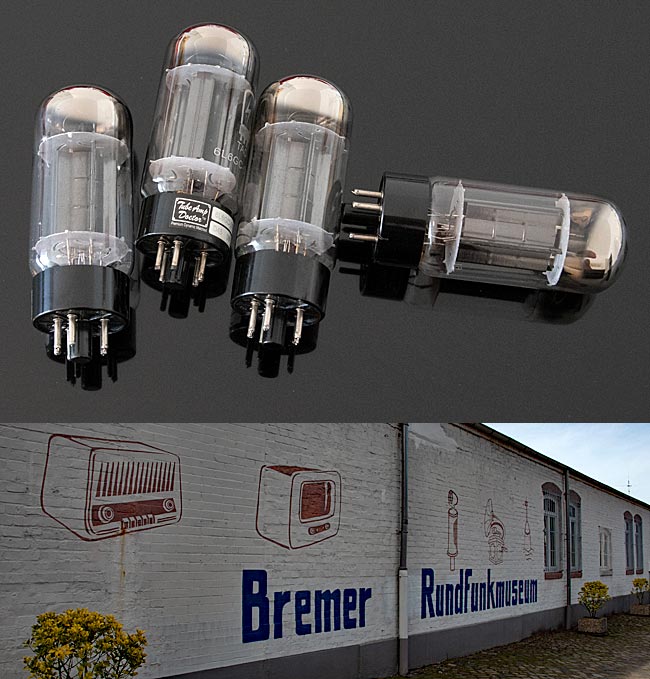
Until the invention of transistors and the first transistor radio presented in 1953, radios since the mid-1920s and other devices operated with tubes. Tubes are still used today in many guitar amplifiers (image above)
Until the turn of the millennium, the Bremer Rundfunkmuseum, founded in 1978 by radio enthusiasts and collectors, was located a few meters from the Schlachthof in a flat square building. However, the premises had to make way for the construction of the exhibition halls, and thus the well-preserved tube radios from long past times, radio and tape recorders, and whatever else the collectors had rescued from destruction and oblivion, moved diagonally opposite the cultural center into the Plantage industrial area, where technology enthusiasts can still get shining eyes and perk up their ears today.
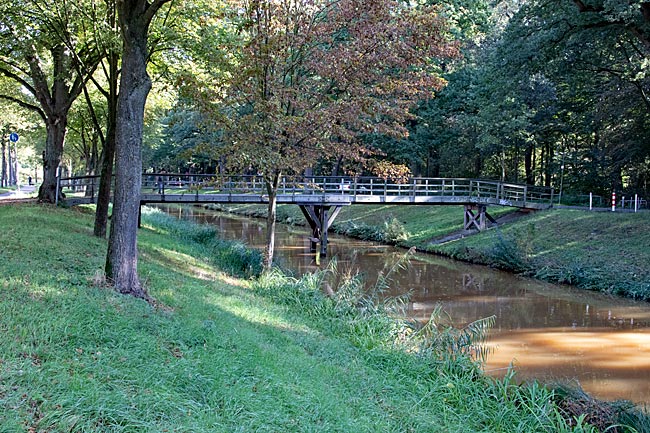
The Torfkanal ends at the present-day harbor and was already dug out in 1819 to transport peat
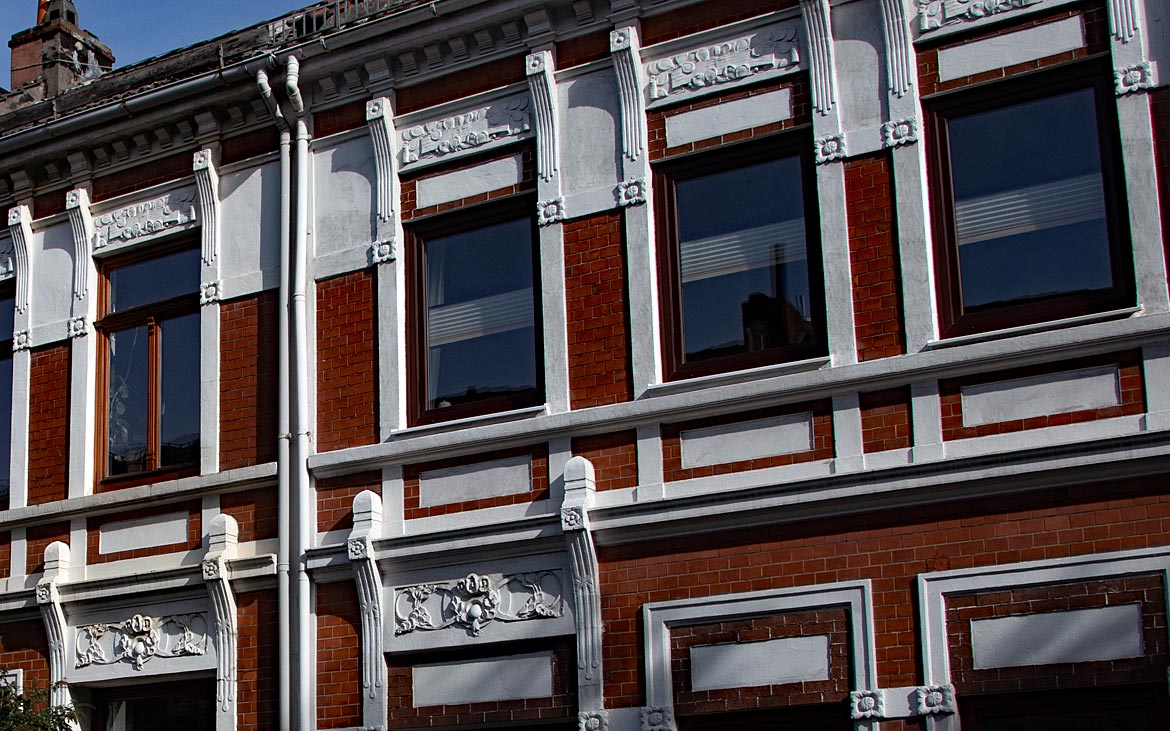
If you head along Findorffstraße from the Schlachthof toward the exhibition halls, passing some nice residential streets with old, noteworthy buildings on the left, you will come across not only Bürgerpark but also Torfhafen (or Torfbassin) behind the buildings. It was created in 1873 and replaced an older, smaller one with a crane that was later filled in along with part of the Torfkanal leading to it, and then covered over by the slaughterhouse, Findorffstraße, and residential houses. The shortened Torfkanal ends at the present-day harbor and was already dug out in 1819 to transport peat (in german Torf) from moorland areas such as Teufelsmoor (devil's moor) in the Lower Saxony countryside to Bremen via waterways.
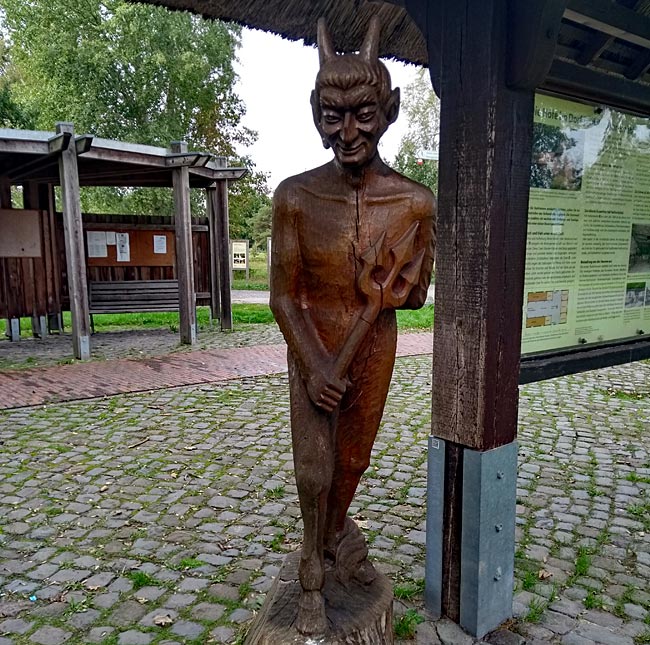
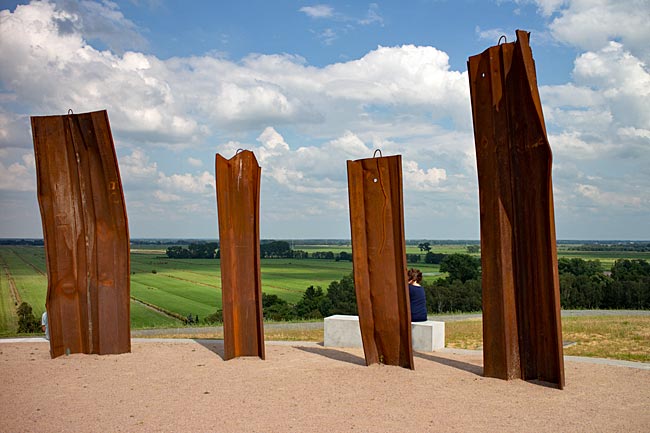
You can still see today where the peat was cut in the moorland areas. However, some paths are closed from autumn to spring
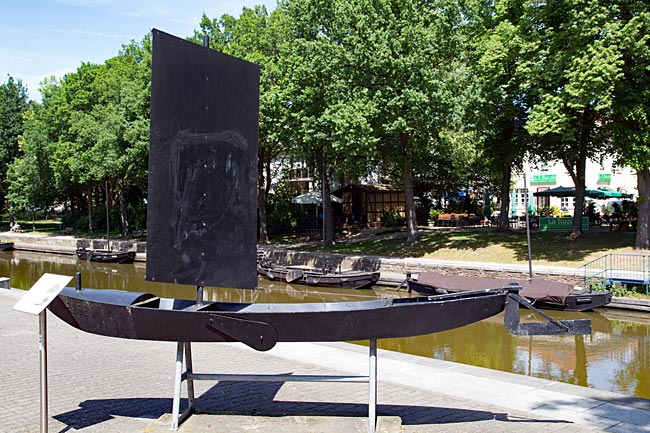
The route of the so-called Torfkähne initially followed rivers like the Wümme to the city limits of the Hanseatic city, and then continued via canals into the city itself. With thousands of trips, especially in the second half of the 19th century, these relatively small, dark wooden boats with shallow drafts brought the natural material created by the decomposition of plants - subsequently burned as fuel - to Findorff. Even today, Torfkähne remain in the small basin since the harbor's reactivation, though they now serve only recreational trips for excursionists.
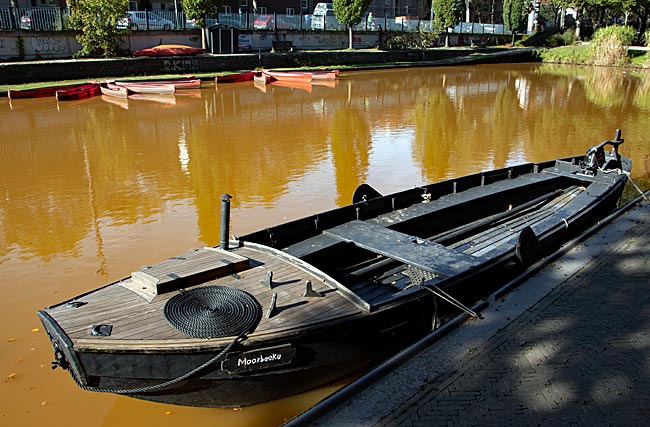
The Torfkahn "Moorbeeke" with rental canoes in Torfhafen. The boats were optionally sailed, pushed with approximately four-meter-long poles, and towed
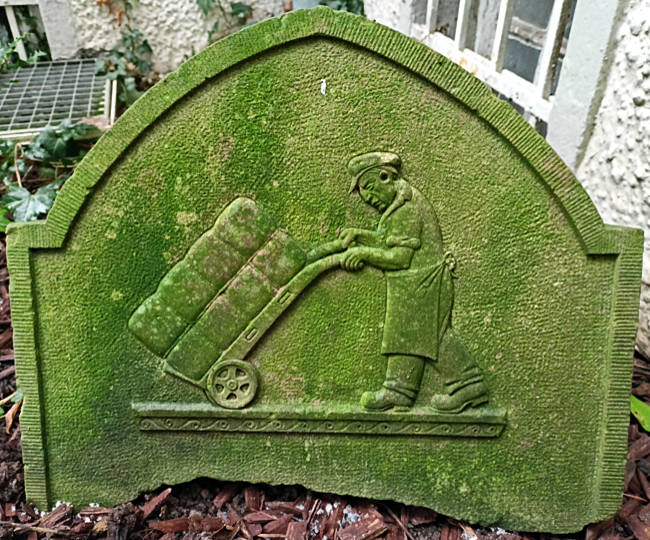
Part of a memorial/gravestone? Dried peat is transported with a hand truck
previous page
 next page
Map
Further information
Kulturzentrum Schlachthof
(cultural center)
Findorffstraße 51
28215 Bremen
Phone: +49 (0)421 377750
Email: info@schlachthof-bremen.de
www.schlachthof-bremen.de
'
Schlachthofkneipe
(Restaurant / Pub)
Findorffstraße 51
28215 Bremen
Phone: +49 (0)421 371661
Fax: +49 (0)421 3777511
Email: info@schlachthofkneipe.de
https://schlachthofkneipe.de
Open: Monday - Sunday from 5 PM
Bremer Rundfunkmuseum e.V.
(Bremen Broadcasting Museum)
Findorffstraße 22 – 24
28215 Bremen
Phone: +49 (0)421 357406
Email: info@Bremer-rundfunkmuseum.de
www.Bremer-rundfunkmuseum.de
Open: Tuesday to Thursday and Sunday 10 AM - 3 PM, closed on public holidays
www.torfkaehne-bremen.de
Information and bookings at the Bremer Geschichtenhaus in Schnoor
Wüstestätte 10
28195 Bremen
Phone: +49 (0)421 33626–51
Fax: +49 (0)421 33626–52
Monday - Friday 9:30 AM - 4:30 PM
Email: buchung@torfkaehne-bremen.de
Please book at least 14 days in advance
Papageienschutz-Centrum Bremen e. V.
Aviary for injured parrots
Salzburgerstr. 2a
28219 Bremen-Findorff
Phone: +49 (0)421 1630723
Fax: +49 (0)421 3468851
Email: info@papageienschutz.de
https://papageienschutz.de
Altes Pumpwerk e.V.
(Old Pumping Station)
Salzburger Straße 12
28219 Bremen
Phone: +49 (0)421 988-1111
Email: kontakt@altespumpwerk.de
www.altespumpwerk.de
Bremerhaven in general
Bremerhaven was founded only in 1827. To secure its importance as a port city amid the threat of silting up of the Weser River - the lifeline of Bremen - Bremen acquired 342 morgen (approximately 850 acres) of land at the mouth of the Weser from the Kingdom of Hanover for 74,000 talers in 1827 under then-mayor Johann Smidt. About 60 km downstream from Bremen, the first urgently needed seaport for Bremen, known as the Alte Hafen (Old Harbor), was established there by 1830.
read more ...
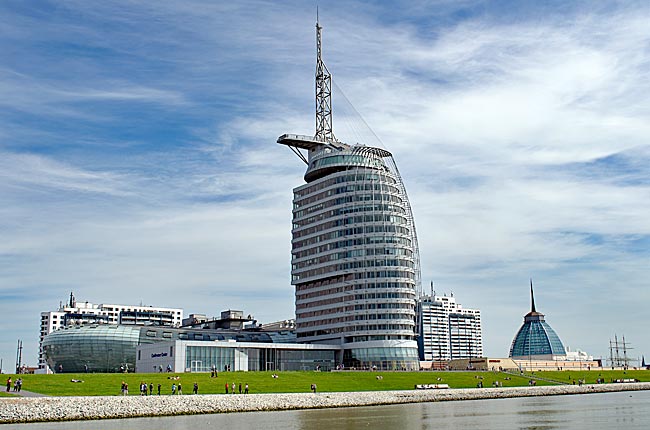
Bremerhaven - Deutsches Auswandererhaus® (German Emigration Center)
Opened in 2005, the German Emigration Center vividly and engagingly presents the history of emigration to America across five eras spanning from 1830 to 1974. In total, 7.2 million people departed from Bremerhaven to seek a new home and build a new life beyond the Atlantic. The emotionally compelling exhibition, backed by historically accurate research, earned the museum the European Museum Award in 2007.
read more ...
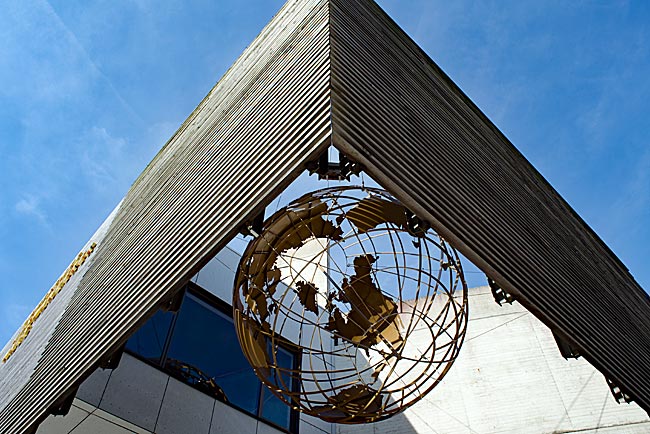
Überseestadt (Overseas City)
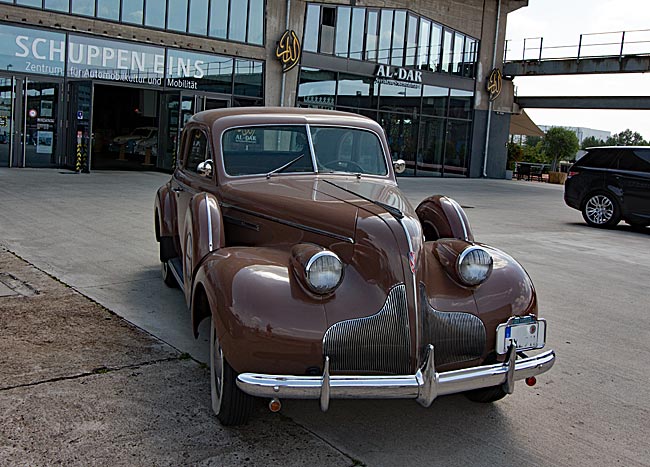
When the Overseas Port required renovation, the decision was made in 1991 to simply close off the basin instead. In 1998, the Overseas Port was finally filled with sand obtained from dredging operations in the Outer Weser. Alongside the also decommissioned but still existing Europa Harbor basin, this formed the foundation for the conceptual development and creation of today's Überseestadt (Overseas City).
read more ...
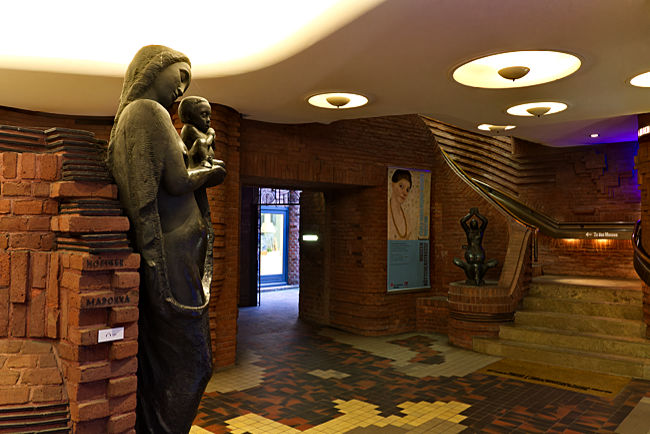
Böttcherstraße
Since at least 1931, the name Böttcherstraße is no longer primarily associated with the scent of wood and the sound of coopers' hammers, but rather with a very special, almost enclosed ensemble of buildings. Over a length of just over one hundred meters, museums, open artist workshops, specialty retailers offering upscale goods, dining establishments, and a hotel create a unique atmosphere between brick and sandstone structures that is unparalleled in Bremen.
read more ...
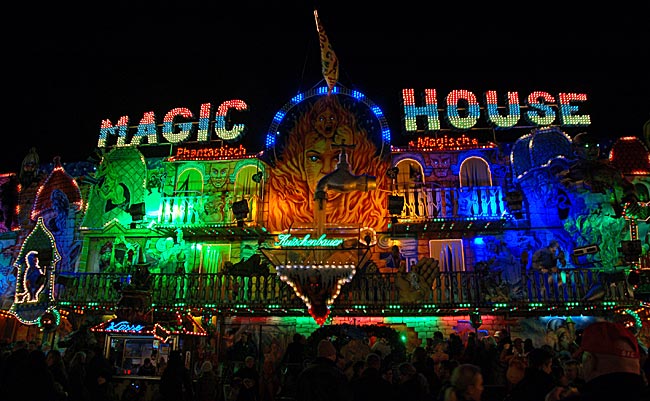
Freimarkt
What some might simply call a fair or a large amusement park is, for others, an event of equal importance to Christmas. However, the fact remains that for most residents of Bremen, the Freimarkt is considered the "fifth season" and an unshakable Bremen tradition. This isn't surprising, as Bremers can look back on nearly a thousand years of history for their festival - and with that, the Freimarkt is Germany's oldest folk festival.
read more ...
Bürgerpark (Citizen's Park)
A green oasis near the city center and a widely used recreational area, the Bürgerpark is an expansive site adjacent to today's Bürgerweide behind the train station. This park was initiated by the citizens themselves. In the early 19th century, the old defensive structures of the city had already been dismantled, transforming the ramparts into a landscaped park. However, as the city rapidly grew throughout the century, demands for more green spaces became increasingly louder.
read more ...
Cycling to Vegesack
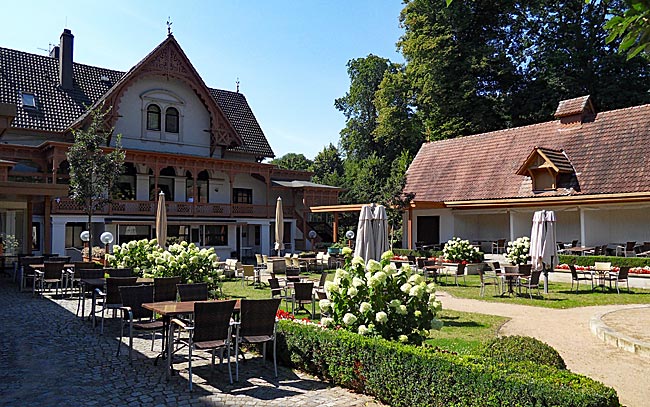
The journey begins at Bremen's central station, passing through Bürgerweide near the distinctive Stadthalle (City Hall), Congress Center, and exhibition halls, then continuing through Findorff along the Torfkanal (Peat Canal). This canal, which runs along the edge of the Bürgerpark (Citizens' Park) and Stadtwald (city forest), was constructed between 1817 and 1826 to transport peat from the Teufelsmoor (Devil's Moor) near Worpswede to Bremen using peat barges. Today, you can book excursion trips on the characteristic black wooden boats.
read more ...
Water-based activities in Bremen
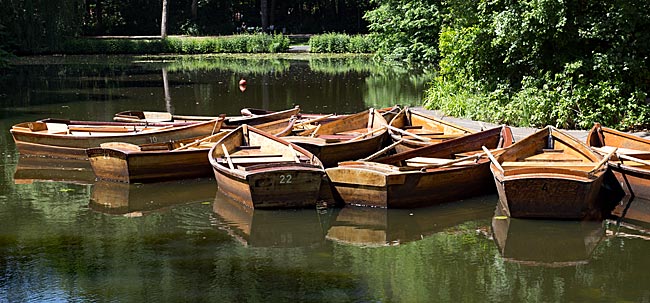
Given that Bremen is a city situated along a major river and surrounded by numerous lakes, it's only natural to extend sporting activities - or whatever one personally considers as such - from land to water. The most family-friendly activity on the water is undoubtedly taking a rowboat ride along the canals of the Citizens' Park (Bürgerpark).
read more ...
Worpswede
In 1889, the painters Fritz Mackensen, Otto Modersohn, and Hans am Ende laid the foundation for this art center by deciding to work and live in the small, previously unknown village. They were quickly joined by other artists such as the painter Paula Becker, the poet Rainer Maria Rilke, Clara Rilke-Westhoff, Fritz Overbeck, Heinrich Vogeler, and later the sculptor, painter, and craftsman Bernhard Hoetger, after whose designs, among others, the Paula-Becker-Modersohn-House in Bremen's Böttcherstraße was built.
read more ...
Cycling to Lilienthal
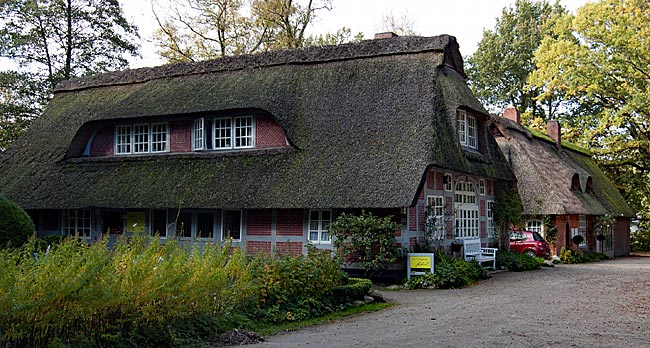
It's about 11 kilometers from Bremen's city center to Lilienthal in Lower Saxony, just beyond the city limits. While tram line 4 connects both places, a bike tour is much more fun. Along the Jan-Reiners-Weg, you can cycle through a green landscape without car traffic, and even within Lilienthal itself, the route follows small paths along the Wörpe River with light traffic, leading to the historic city center.
read more ...
Schwachhausen district
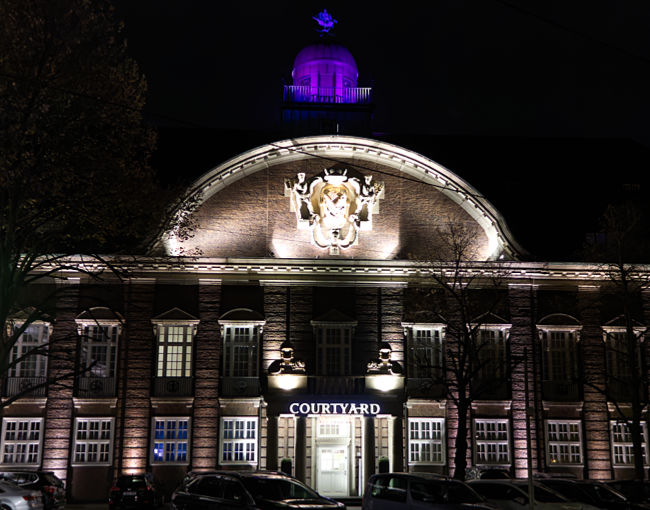
The Lloyd Railway Station, built in 1913 near Bremen's central station, served as a waiting area for emigrants who departed Europe from Bremerhaven aboard ships of the North German Lloyd. From here, their journey initially continued by train. The shipping company merged with HAPAG (Hamburg-America Line) to form HAPAG-Lloyd, headquartered in Hamburg. Directly across the street stands the anti-colonial monument "Elephant."
read more ...
Anti-Colonial Monument "Elephant"
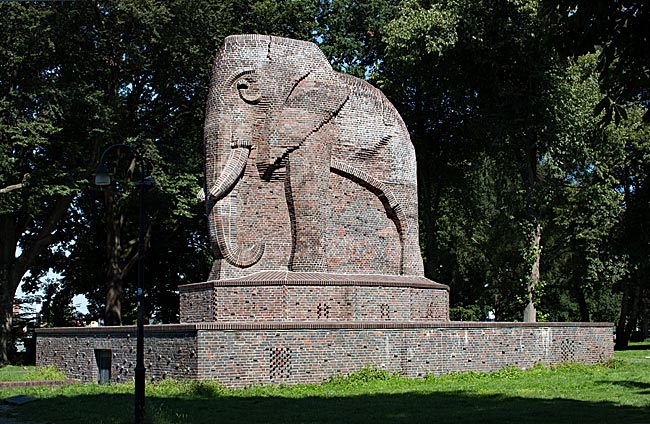
The brick monument was commissioned by the German Colonial Society and inaugurated on July 6, 1932. However, even in this traditionally cosmopolitan Hanseatic city, the monument was controversial, it commemorated not only those who died in Germany's former colonies during World War I but also stood as a symbol of the oppression and exploitation of indigenous populations there. After restoration work and its redesignation in 1989, the Elephant now serves as an anti-colonial monument representing equality and justice, as well as a warning against racism, oppression, and exploitation.
read more ...
Übersee-Museum (Overseas Museum)
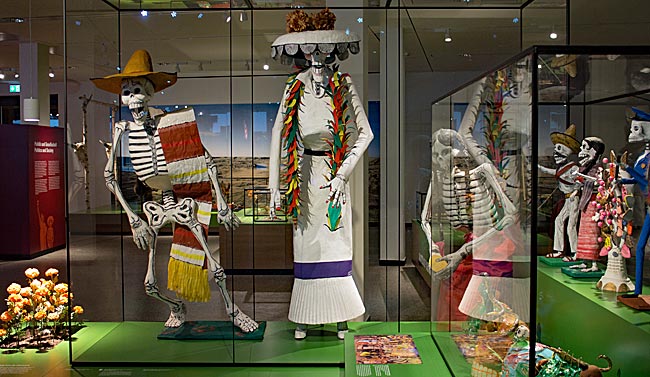
In 1896, the current Overseas Museum first opened its doors under the name "Municipal Museum of Natural History, Ethnology, and Commerce." The exhibits initially came from the "Municipal Collections of Natural History and Ethnography," which were partly displayed as a "Trade and Colonial Exhibition" at the "Northwest German Trade and Industry Exhibition" in 1890 with great success. Since its founding, the museum's concept has evolved several times, culminating in a stronger focus on museum education that remains to this day.
read more ...
City Center: The Main Shopping Streets
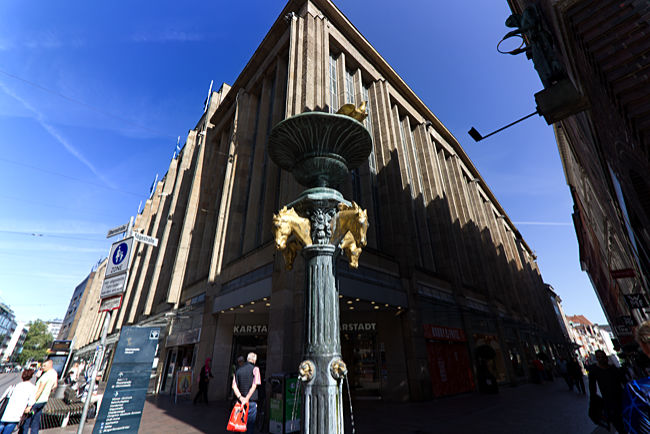
The Lloyd Passage runs parallel to Obernstraße, where Sögestraße also ends. Here stands the "Horse Fountain," another popular meeting spot where people often gather while waiting for someone. The attractive bronze and brass fountain was donated by the jeweler Brinkmann & Lange on the occasion of the company's 100th anniversary and has stood in this location since 1974. Although the design is not by Gerhard Lange, the fountain closely resembles the three other horse fountains he designed in different parts of the city.
read more ...