
 exploring Bremen & its surrounding areas
 You are here: worth seeing in Schwachhausen district
 Riensberg Cemetary

In past times there was more craftsmanship in art on cemeteries
You don't necessarily need to have morbid thoughts or be expecting a "visit from relatives" to find your way to the Riensberger Cemetery. Located within sight of the Focke Museum, this burial ground was established between 1872 and 1875 simultaneously with the Walle Cemetery as a replacement for two abandoned cemeteries elsewhere. The tender for the design of both sites was won by the landscape gardener Carl Jancke from Aachen.
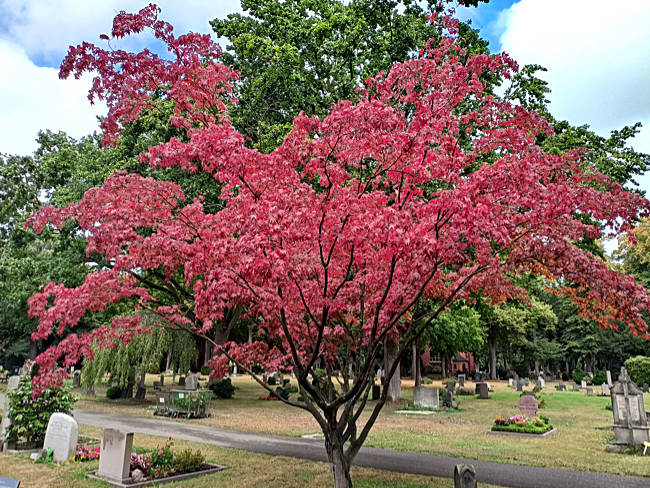
Also lovely when late summer turns to autumn
The park cemetery, which opened on May 1, 1875 and now covers about 28 hectares, extends across the lands of the former Riensberg estate, some buildings of which are still preserved on the museum grounds. In the early 1880s, Wilhelm Benque, a landscape gardener and garden architect born in Ludwigslust, took over the artistic direction of the gardens. Several years earlier, he had been responsible for the design of the Bürgerpark and, among others, Knoops Park in Lesum. Shortly before and after his death in 1895, a street and a square in the Schwachhausen district of the Hanseatic city were named after him in honor of his work. Since 1938, the Benque stone has commemorated him in the Bürgerpark.
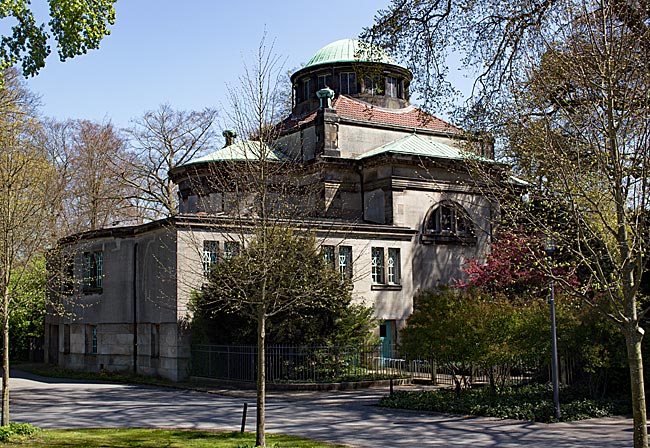
View of the columbarium from the adjacent Jewish cemetery
In the past, the cemetery was crisscrossed and partly surrounded by numerous water ditches, many of which have since silted up, so that the bridges now only span green areas or remaining trickles. However, a large lake has remained, on whose shore, next to one of four cemetery entrances, the columbarium has stood since 1907. The neoclassical building, designed by Bremen architect Heinrich Wilhelm Behrens and listed as a historic monument since the year 2000, was originally the first crematorium in Northern Germany and remained in operation until 1988. Since 2002, urns have been interred in the distinctive domed building.
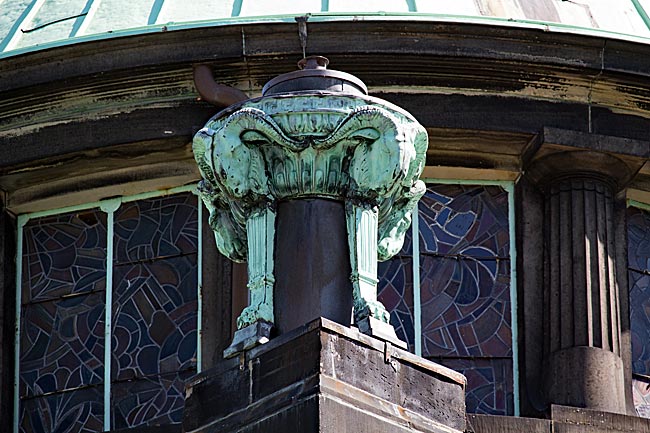
The dome of the columbarium in detail
Just a stone's throw from the columbarium is one of several mausoleums on the site, accessible via its own path: the Rutenberg Mausoleum (1877). The Bremen master builder and architect Lüder Rutenberg, after whose plans the original building of the Kunsthalle was erected, had the classical building with its now patinated copper roof constructed in honor of his son, who was murdered in Madagascar. Standing on a column with an uplifted guiding arm is a statue from the workshop of Bremen sculptor Diedrich Samuel Kropp, which is intended to depict the deceased.
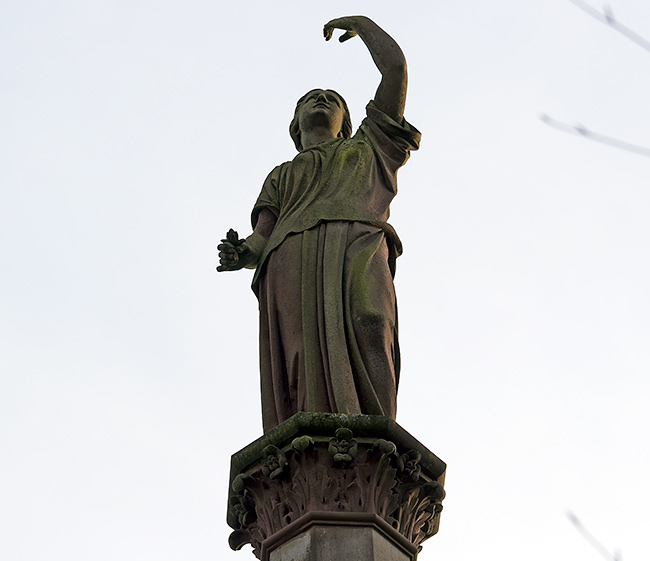
Statue on the dome of the Rutenberg Mausoleum
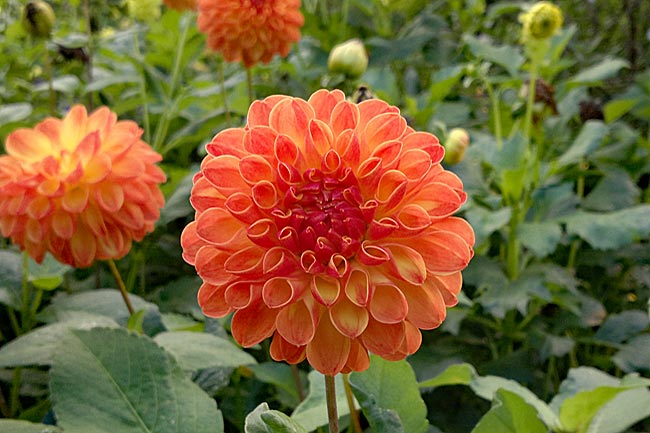
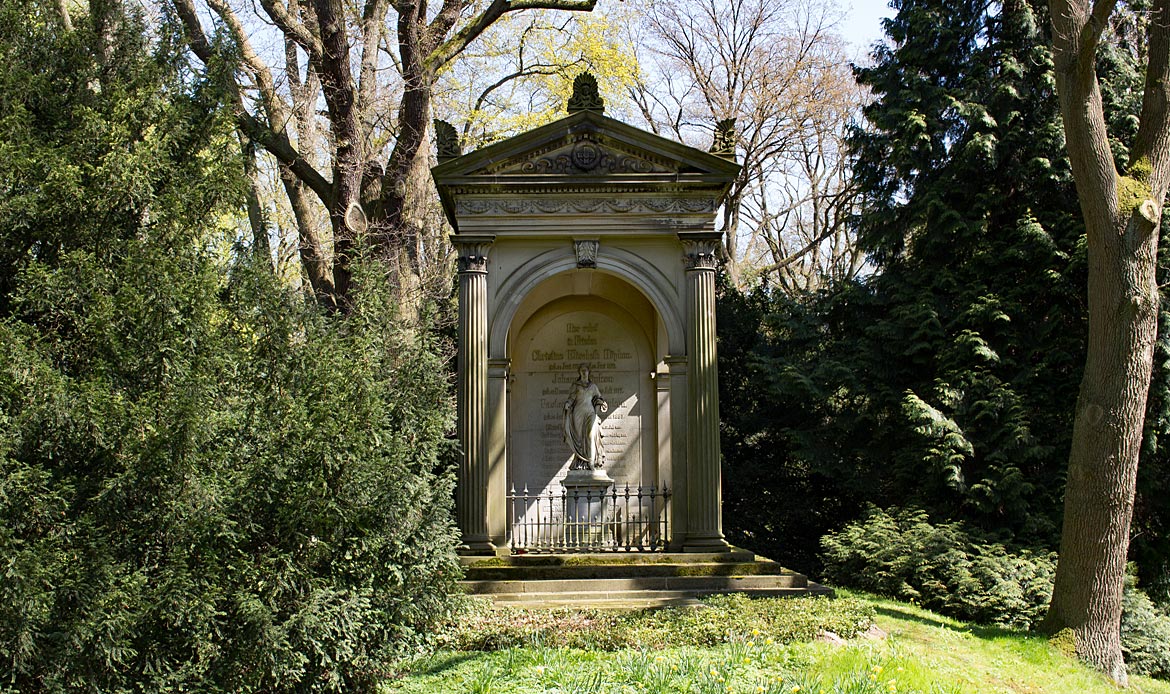
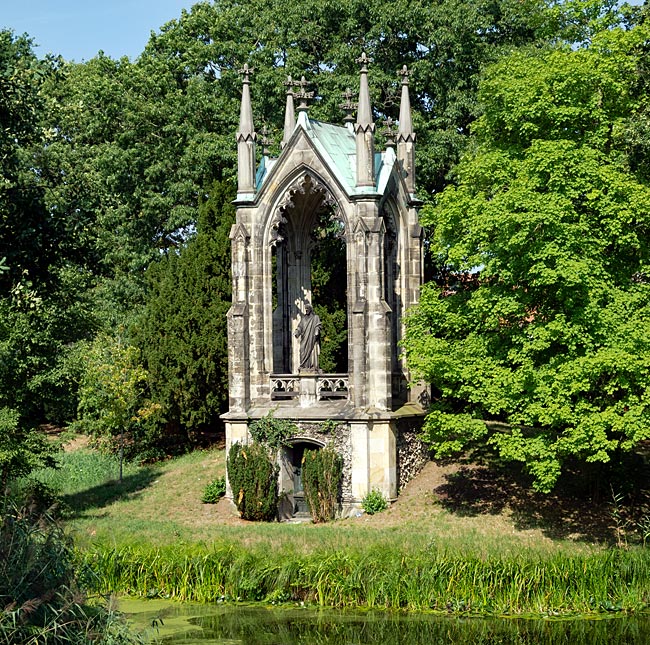
Another mausoleum commemorates the merchant and Bürgerschaft member Johann Hökpen (photo at the top), after whom the Höpkensruh landscape park was also named. He and one of his brothers had acquired the estate in the Oberneuland district in 1859 and expanded it into a landscape park. Compared to this "open" mausoleum, the former mausoleum of the Bremen merchant family Schmiedell, erected on the lake shore opposite the columbarium, appears almost threatening and eerie. The reason for this may lie in the fact that the Art Nouveau building is made entirely of polished black granite on the outside. Black also as an expression of mourning for Hans Theodor, their son who died at the age of 18 in Rome from an electric shock in 1923 and was to find his final resting place here in the crypt in the basement.
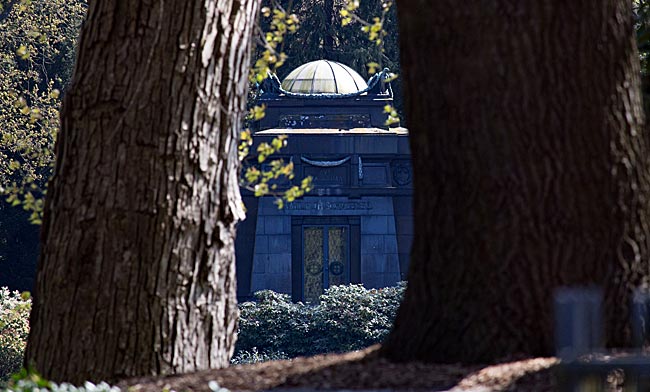
Mausoleum in Art Nouveau style
Bronze eagles on the four corners of the roof symbolize Christ's Ascension. The interior of the neoclassical hall, lined with white marble, is lit by a glass roof. "In memory of our beloved son," reads the inscription on the side of the tomb facing the path. The loss of loved ones is always painful, but perhaps a little comforting for the bereaved that there is a place for their grief.
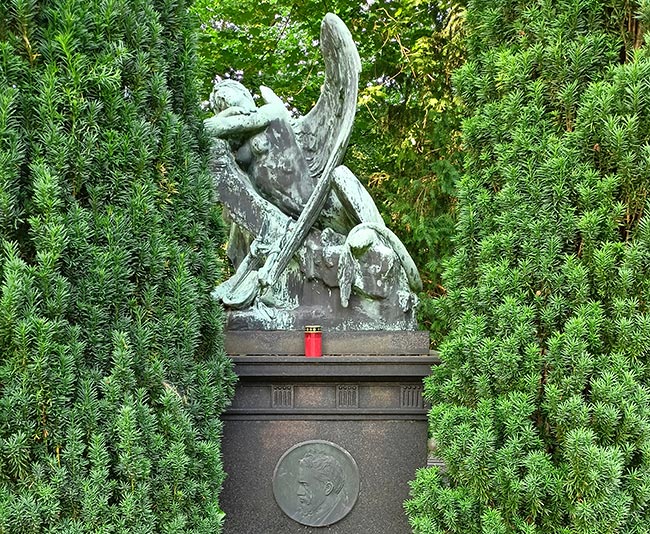
Grave of Arthur Fitger with Sphinx, who died with just 49 years old
Of course, a mausoleum is not necessarily required for this purpose, as shown by the many other gravesites, some of which are almost as old as the cemetery itself. More than 60 notable personalities are still buried in the cemetery today. Among them are artists such as the painter and poet Arthur Fitger, politicians such as Bremen's mayor Wilhelm Kaisen and former federal president Karl Carstens, scientists such as the physician and astronomer Dr. Heinrich Wilhelm Olbers, whose colleagues from the Walter-Stein Observatory still look up to the sky from Bremen today, or merchants such as the patron Franz Schütte and the chocolate manufacturer Josef Johannes Arnold Hachez.
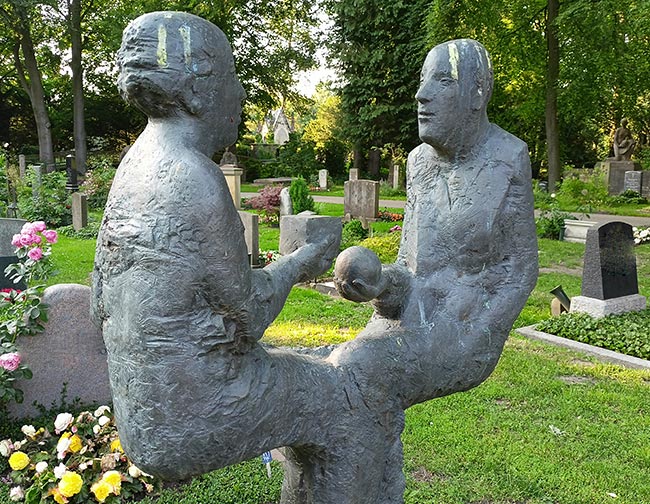
A place of encounter with people from this world and the next
Numerous graves are listed by the Bremen State Office for Monument Preservation as cultural monuments of the city, just as since 2011 the entire cemetery has been protected as a historic monument. The buildings include the cemetery chapel, the caretaker's house, and the mortuary, all built in 1875 from red brick.
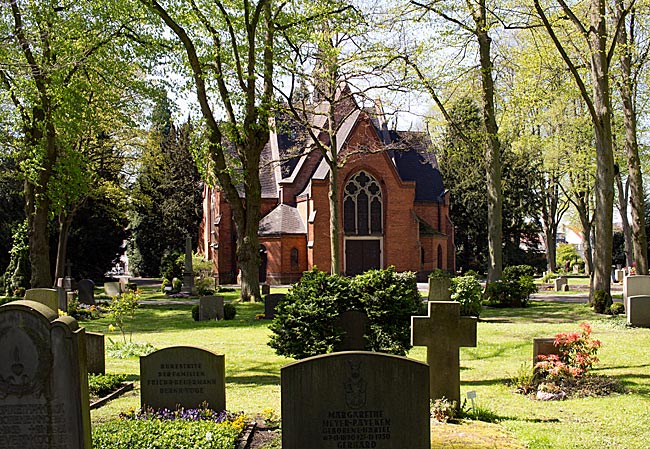
The cemetery chapel designed by architect and building director Johannes Rippe is also listed as a historic monument
Secret meetings at night and under fog on the cemetery at gravestones with strange symbolism? Definitely no. Circles and angles are well-known symbols of Freemasonry and relate to the work of stonemasons, both in a literal sense as builders of structures and metaphorically, as builders of all life (creation). In both cases, geometry plays an important role. In Freemason lodges that emerged from the beginning of the 18th century, there was no subversive thinking from mysterious secret societies, but on the contrary, through self-improvement of one's own being, they tried to eventually develop society positively. For this, the basic ideals of Freemasonry - freedom, equality, brotherhood, tolerance, and humanity - speak. That this initially happens behind closed doors is no unique feature of Freemasonry today.
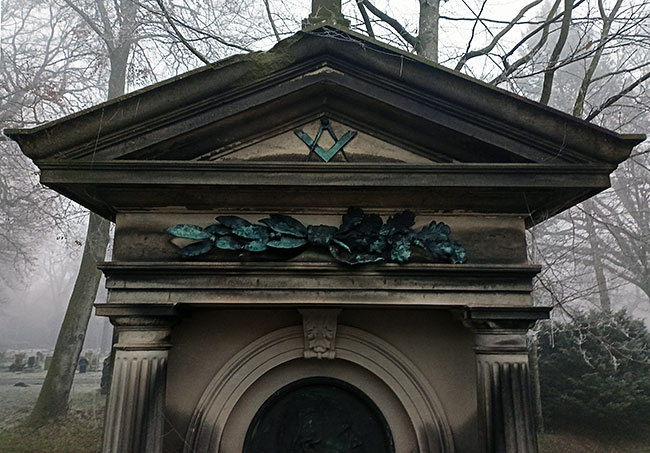
Circle and angle, well-known symbols of Freemasonry
People from all social classes and various denominations have belonged to and still belong to Freemasons. Among them are famous personalities from science, such as Roald Amundsen and Alexander von Humboldt, artists like Goethe, Marc Chagall or Peter Sellers, high-ranking politicians like the former US President Theodore Roosevelt and the independence fighter and president Simón Bolívar.
On the Riensberg cemetery, Freemasons also found their final resting place. This is not surprising because there are still numerous lodges in the open-minded Hanseatic city today.
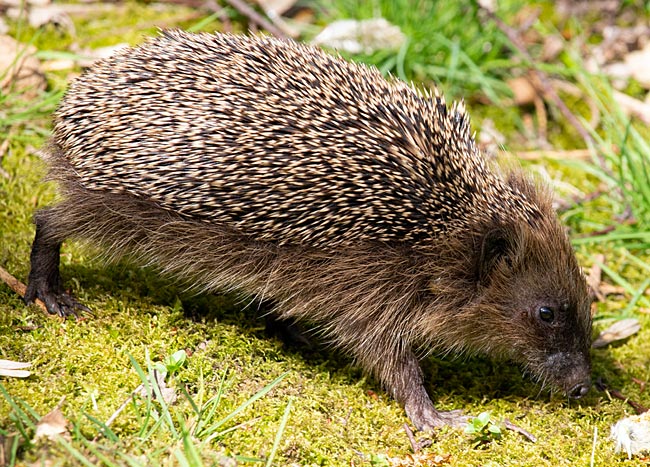
But life also thrives in the cemetery - hare and hedgehog are indeed to be taken literally: here is the hedgehog
On February 10, 2022, a resident of Riensberger Cemetery was honored in a special way. This was not one of the hares that can often be observed in Schwachhausen and thus also on the park-like grounds, but a giant sequoia (Sequoiadendron giganteum). This giant mammoth tree from the cypress family was named a National Heritage Tree® by a curatorium. The action was initiated in October 2019 by the German Dendrological Society e.V., which wants to declare 100 trees according to expert criteria (e.g., over 400 cm trunk circumference) as the most significant in Germany and as natural monuments (https://nationalerbe-baeume.de). Only long-lived tree species whose specimens can reach an age of over 400 years - and much more, depending on the species - are selected. The small information board by the path in the cemetery states a possible age of over 1000 years for the tree giant in Bremen, while a small internet search reveals the "Grizzly Giant." This giant sequoia in Yosemite National Park is said to be about 3000 years old; even older ages have been scientifically proven in felled trees.
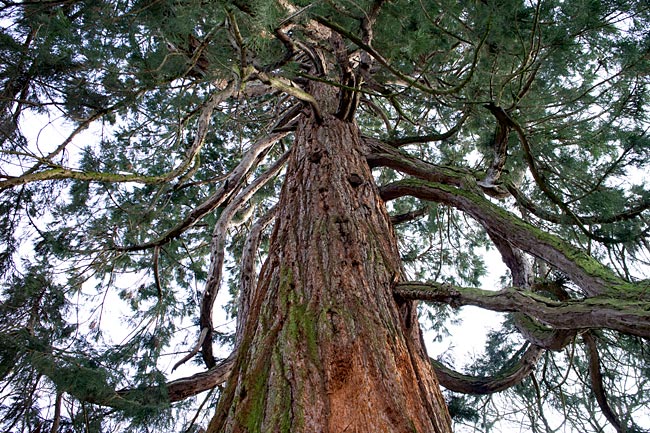
View into the branches of the giant sequoia
The action by DDG is currently (as of 2022) supported by the Eva Mayr-Stihl Foundation Waiblingen, which provides funds for a period of initially five years to be used for expert care of the trees. However, DDG advocates more for not interfering in the lives of these trees unless it is necessary for their preservation.
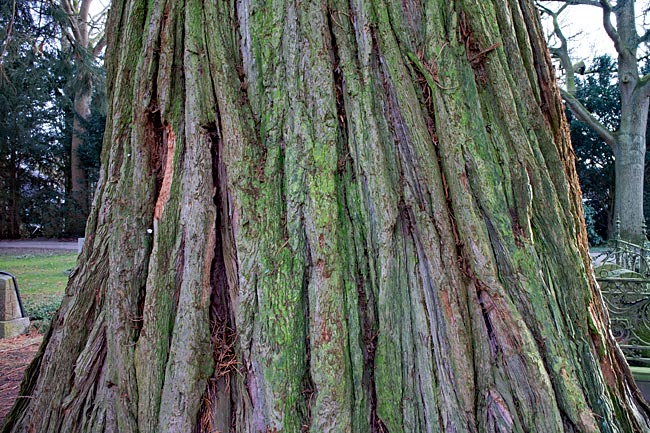
The powerful trunk of the tree resists even a regular fire with its thick bark
Because apparently, the trees can protect themselves quite well. As they age, they form an increasingly thick, fibrous bark that can reach up to 75 cm in thickness and protects them from a normal forest fire. With a maximum growth height of 95 meters, a lightning strike can also occur without killing a tree. And if the stormy wind gets caught in the narrow, cone-shaped crown with - unlike many cypresses - a rather round tip? Then the evergreen giant sequoia is broadly positioned with its root system.
It was already interesting to see that this very beautiful action and the reporting in local media have aroused the interest of numerous people and drawn them to the location near the entrance from Riensberger Straße.
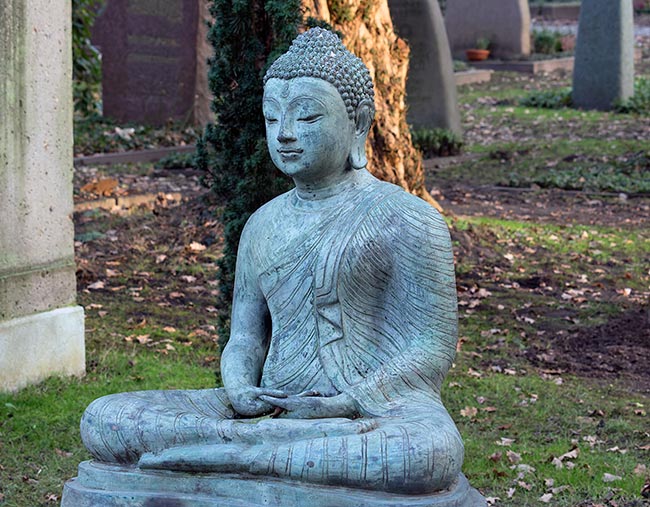
Unexpected encounter
Tip: Those who would like to explore the beautiful park-like area with its trees and bushes should be aware of the closing times, which vary between 5 p.m. and 8 p.m. depending on the season.
previous page
 next page
Map
Further information
Riensberg Cemetery
Friedhofstr. 51
28213 Bremen
Phone: +49 (0)421 361-3022
Cemetery entrances: Friedhofstraße, Riensberger Straße, H.H.-Meier-Allee, Heymelstraße
Focke-Museum
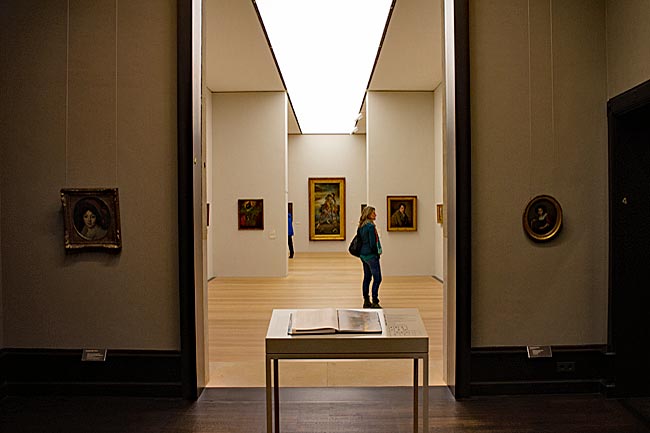
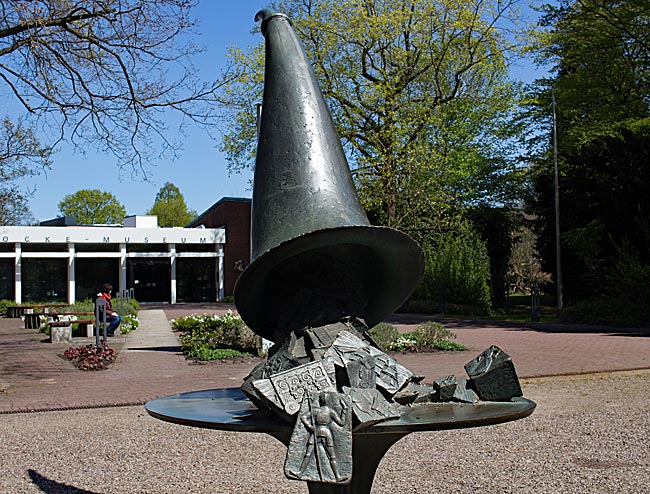
Every city has its history, and in many cities, there is a museum that tells this story. In the Hanseatic city, it is the Focke Museum in the Riensberg district, where urban history is presented most vividly. The "Bremer State Museum of Art and Cultural History" was established in 1924 by merging two collections: the Gewerbemuseum, founded in 1884, and the Historisches Museum für bremische Altertümer (Historical Museum for Bremen Antiquities), founded six years later. The museum's founder, who passed away in 1922, also gave it his name.
read more ...
Bürgerpark
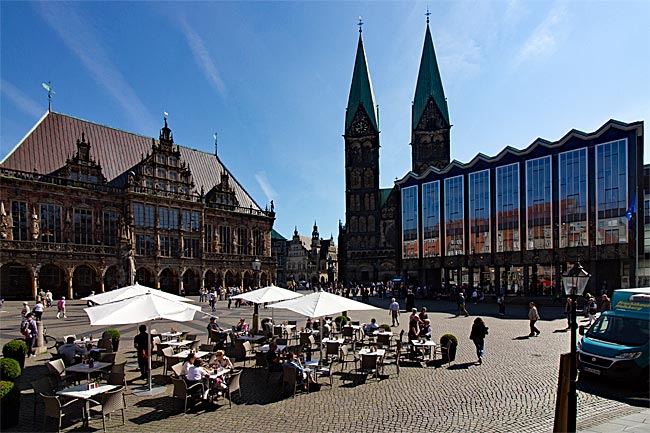
The Bürgerpark is both a green oasis close to the city center and a widely used local recreation area. This expansive park, located adjacent to today's Bürgerweide behind the train station, was initiated by the citizens themselves. In the early 19th century, the old defensive structures of the city had already been dismantled, and the ramparts were transformed into a landscaped park. However, as the city rapidly grew throughout the century, demands for more green spaces became increasingly louder.
read more ...
Parks & Windmill in Oberneuland district
You can still sense the history and former village-like structure of this neighborhood when you drive or walk down Oberneulander Landstraße. In summer, the shade of old trees provides ample relief, while tree roots sometimes make the pedestrian side strips uneven and so narrow that you almost end up walking on the road itself. Along the side of the street near the state border, several gaps appear in the residential buildings - this is where three parks are located, inviting visitors and serving as the very reason this article about Oberneuland was written.
read more ...
Observatory & Planetarium
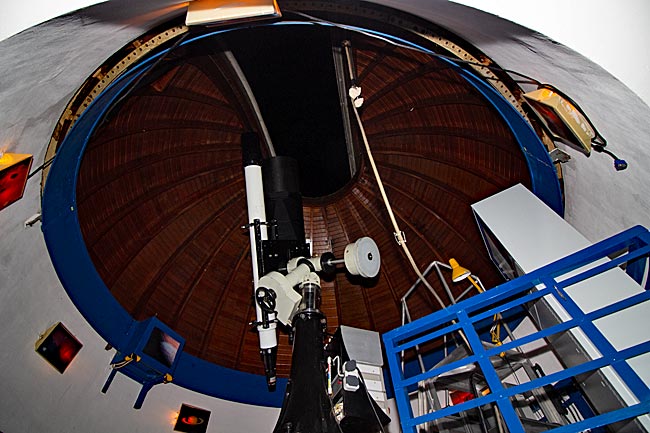
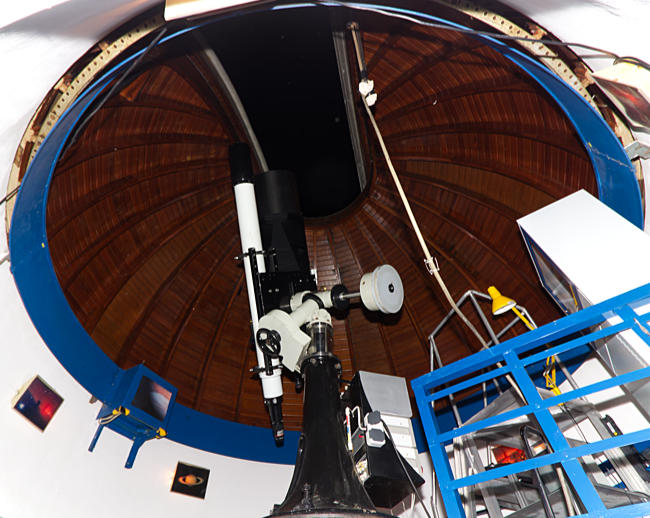
On selected days, visitors can also look through the large stationary and smaller mobile telescopes of Walter-Stein Observatory, which are set up on the terrace for the occasion. In the Olbers-Planetarium in the same building, members of the society give lectures on varying topics. Opened in 1952, the Olbers-Planetarium features a dome with a diameter of 6 meters, making it one of the smaller planetariums. It offers 35 seats (including wheelchair-accessible options) for visitors.
read more ...
Rhododendron Park
Also located in the Horn district is the 46-hectare Bremen Rhododendron Park. The origins of this park actually lie in two separate parks. Around 1890, beech, ash, spruce, and especially oak trees were planted on the site. In 1936, the area - originally designed as a wildlife park - was expanded with an extensive collection of rhododendrons. To this day, the numerous deciduous trees on the park grounds provide important protection for the rhododendrons against sun and wind.
read more ...
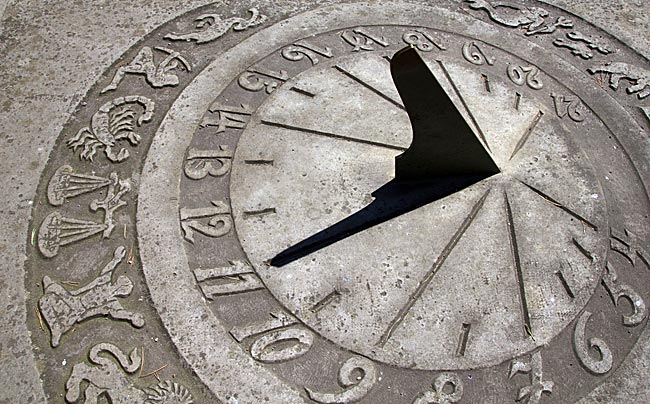
Rhododendron Park photo tour during blooming season
We are exploring the Rhododendron Park with our cameras during the blooming season and showcasing the most fascinating creations of nature.
read more ...
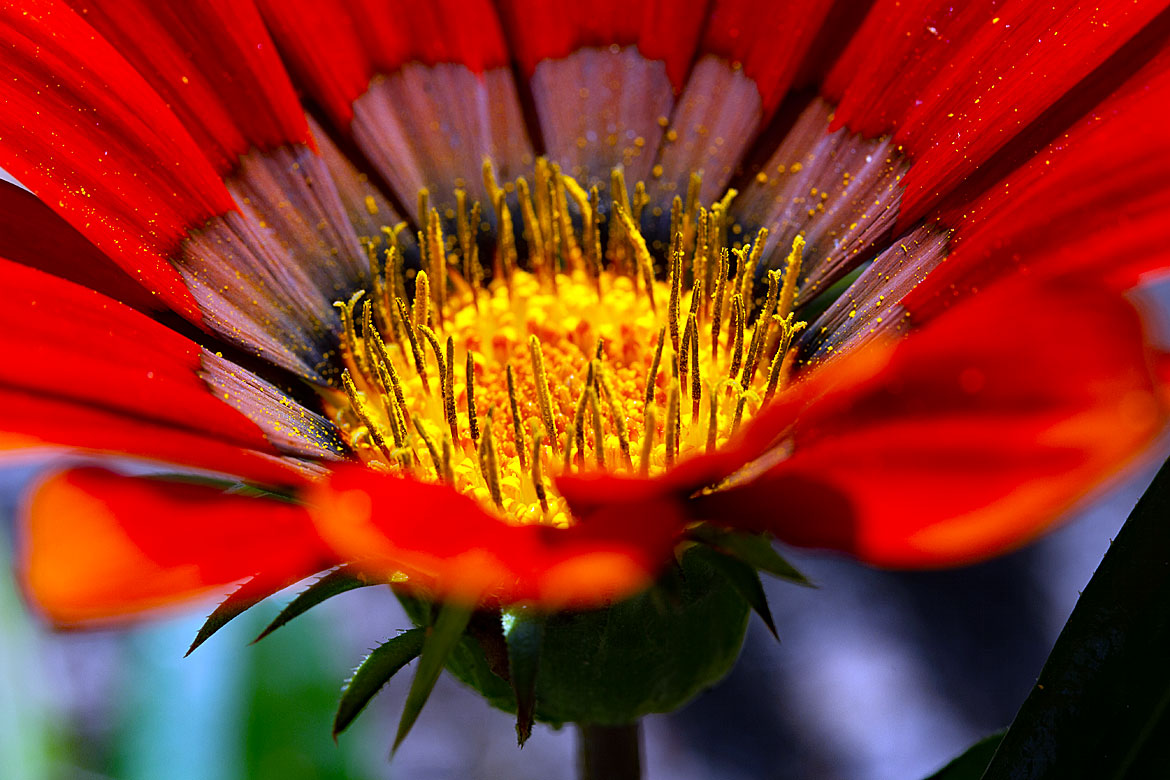
botanika
In the heart of Rhododendron Park, next to the café, is the botanika. Originally planned as a contribution to Expo 2000, various factors led to changes, and the largely glass structure was finally opened in 2003.
read more ...
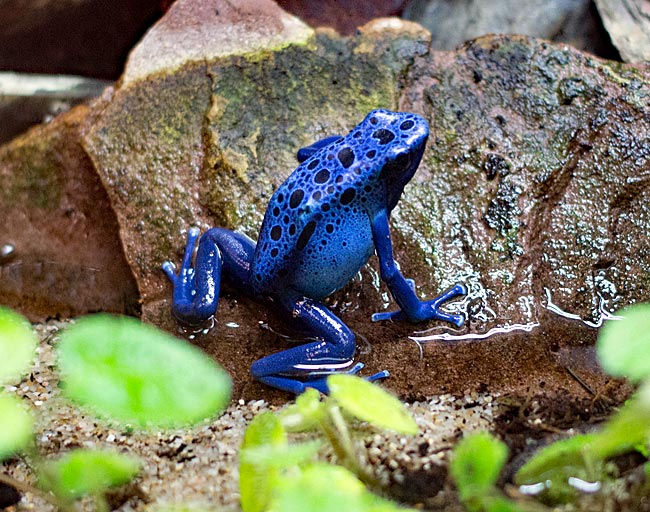
Schwachhausen district
The Lloyd Railway Station, built in 1913 near Bremen's central station, served as a waiting area for emigrants who departed Europe from Bremerhaven aboard ships of the North German Lloyd. From here, their journey initially continued by train. The shipping company merged with HAPAG (Hamburg-America Line) to form HAPAG-Lloyd, headquartered in Hamburg. Directly across the street stands the anti-colonial monument "Elephant."
read more ...
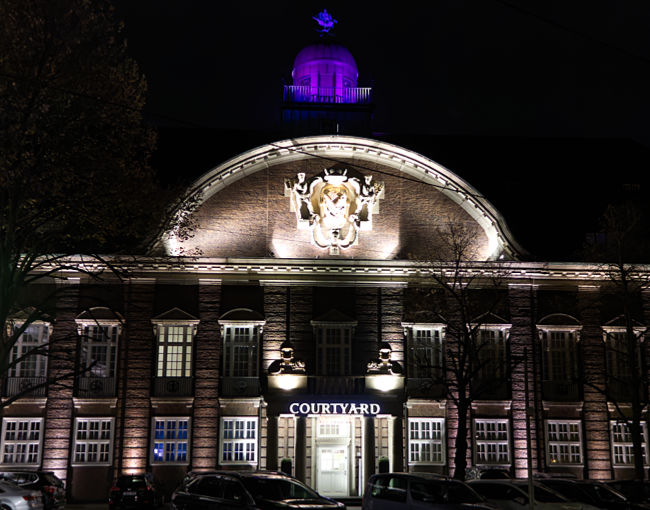
Exploring Horn-Lehe district
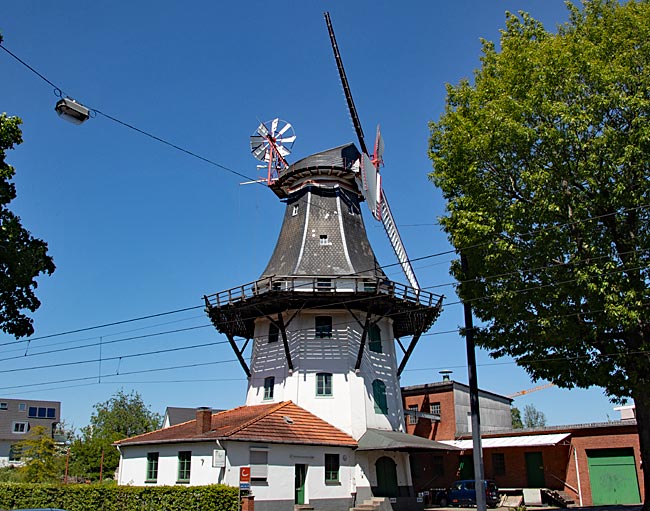
Some mills grind slowly, while others no longer operate at all - like the Horner Mill. Built in 1848 as a Dutch-style windmill, its preservation for passersby to enjoy today required significant effort and funding. It stands as the district's emblem.
read more ...
Findorff district
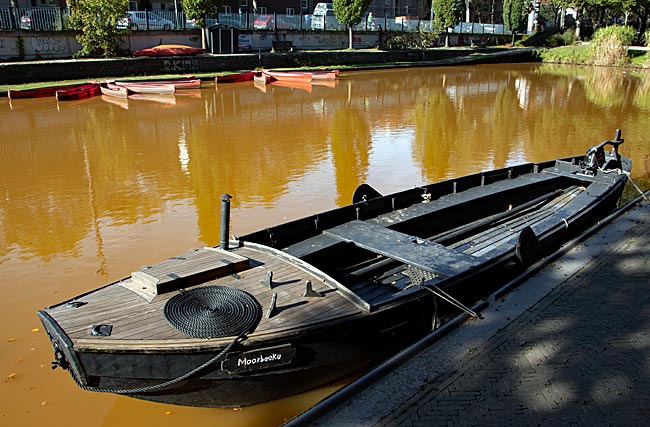
The history of the Findorff district is closely tied to the moors of Lower Saxony's surrounding countryside. In 1819, the so-called "Torfkanal" (Peat Canal) was dug to transport peat as fuel, particularly from Teufelsmoor, by waterway to Bremen. Even today, the second peat harbor, built in 1873, exists in a smaller form within the district, with traditional peat barges still moored there. However, peat transportation no longer plays any role.
read more ...
Metalhenge
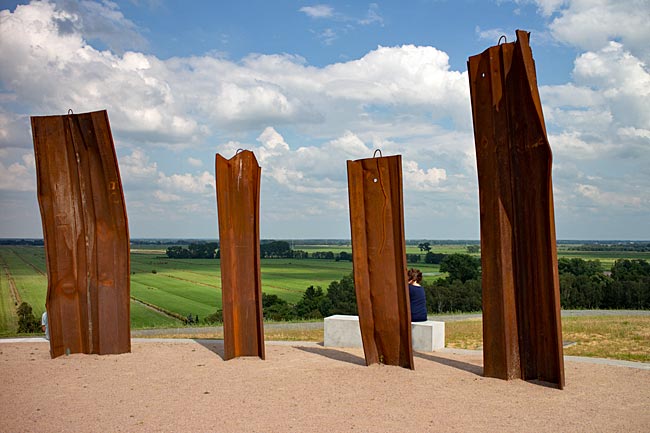
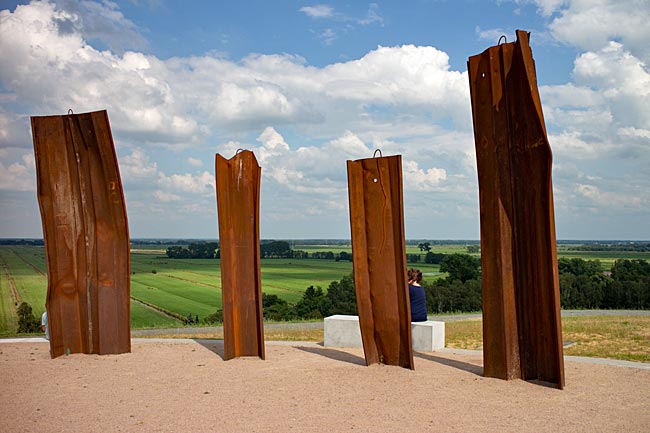
In 2021, an observation platform was opened on the first decommissioned and surface-renovated section of the landfill in Blockland. At a height of 40 meters, the barrier-free Planet Path leads visitors along. Planets? Yes, the Metalhenge structure, inspired by the famous Stonehenge, is positioned on the circular observation platform according to selected astronomical aspects. Information about this can be accessed via QR code on your smartphone. Even for those not particularly interested, the view stretches approximately 23 km across Bremen on one side and Blockland on the other.
read more ...
Through Walle district to the industrial ports
The history of Walle began, like that of many other districts in Bremen, long ago as an independent village, more precisely, it started only as the seat of the Ministerial family von Walle. The first mention of the old village dates back to the year 1139. From this family came both farmers and citizens. Thus, with the settlement of more people, the family estate grew into a village around the manor. Walle was incorporated into the Hanseatic city in several steps, first between 1885 and 1902.
read more ...
Neu-Helgoland (New Heligoland) / Hamme Harbor Worpswede
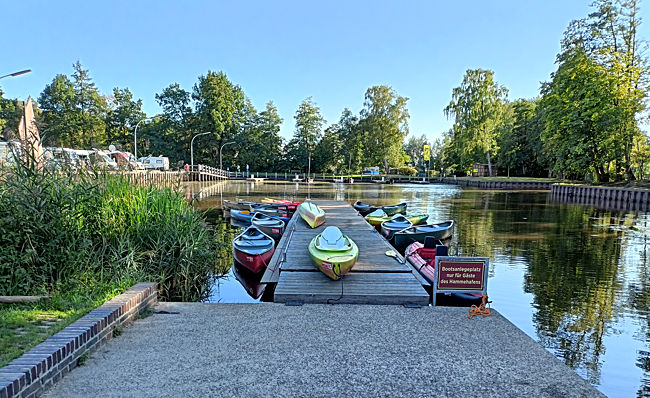
From April to October, the Hamme Harbor in Worpswede attracts many day visitors, weekend trippers, cyclists, and campers. The campsite operators run not only a bistro & beer garden with waterside seating but also rent out kayaks and canoes. Those who don’t want to paddle on the Hamme themselves can instead book an excursion trip aboard one of the Adolphsdorf Peat Boats. Food and drinks are also available just a few meters from the harbor at "Hamme Hütte Neu Helgoland." Tip: A great bike trip destination from Bremen!
read more ...