
 exploring Bremen & its surrounding areas
 You are here: worth seeing in the surroundings
 Stade - on the banks of the Schwinge (3/6)
Through the historic old town of Stade
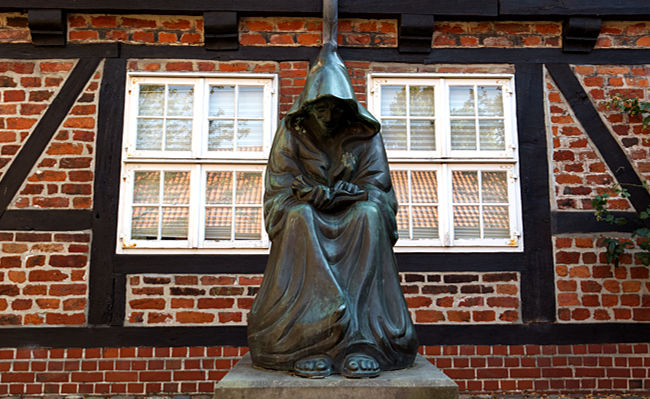
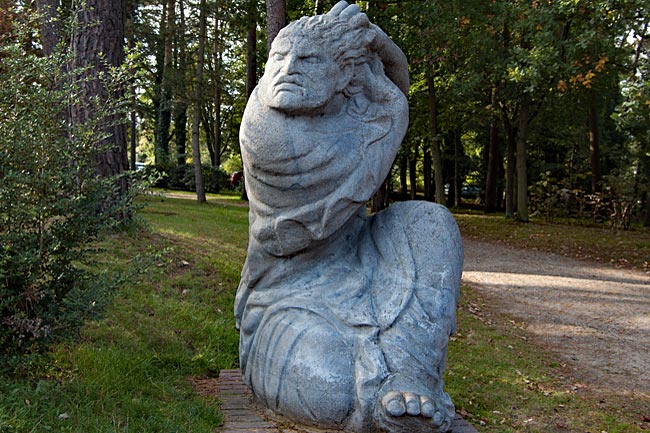
"My friend, I was already sitting here reading when you passed by this place an hour ago." Sculpture by Carsten Eggers (1986) in the courtyard of St. Johannis monastery
Anyone who strolls through Stade’s historic old town without a clear destination will eventually realize they are going in circles - like thinking, Haven’t I been here before? Correct! Medieval cities developed gradually and were not laid out on a drawing board with a grid-like road network. Many of the paths and streets in Stade’s old town still follow their original 13th-century medieval routes. The roughly circular shape of such settlements - once crucial for defense - unconsciously mirrors nature’s perfect form: the sphere.
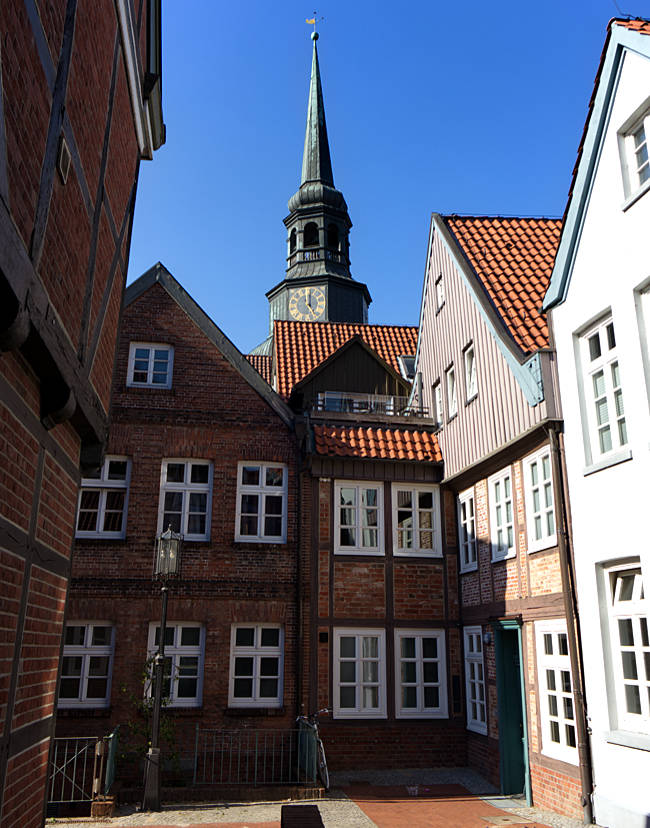
Narrow alleyway near the historic town hall, with the bell tower of St. Cosmae et Damiani in the background
While cars are allowed in some parts of the old town today, they cannot pass through others. Extremely narrow alleys and connecting paths, known as Twieten, link main roads and lead through old residential quarters between houses and properties - a charming feature for those with an eye for such details.
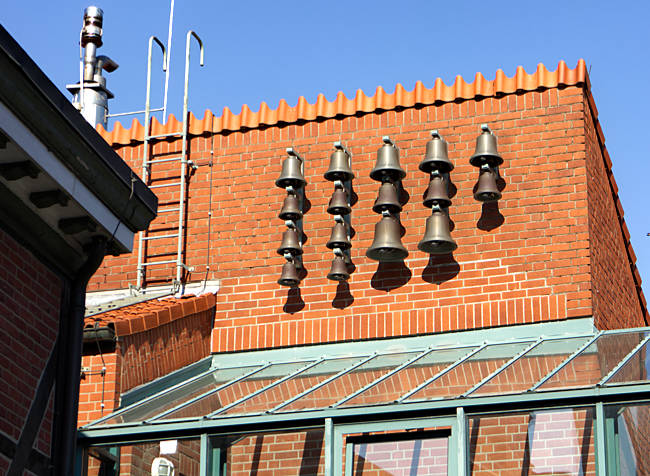
Not historic: The carillon at the new town hall in Stade on Hökerstraße
No matter how randomly you wander, you’ll almost inevitably stumble upon the oldest medieval merchants’ street, Hökerstraße. Even at the time of the city’s founding, traders had settled along parts of this now-long road. In the 21st century, it is a car-free shopping street with many shops and some architecturally notable remnants of the past. One such landmark is the Hökerhus, a merchant house originally built in timber framing during the 14th/15th centuries. Beautifully restored, its facade features woodcarvings from 1650, and its interior passage is truly striking.
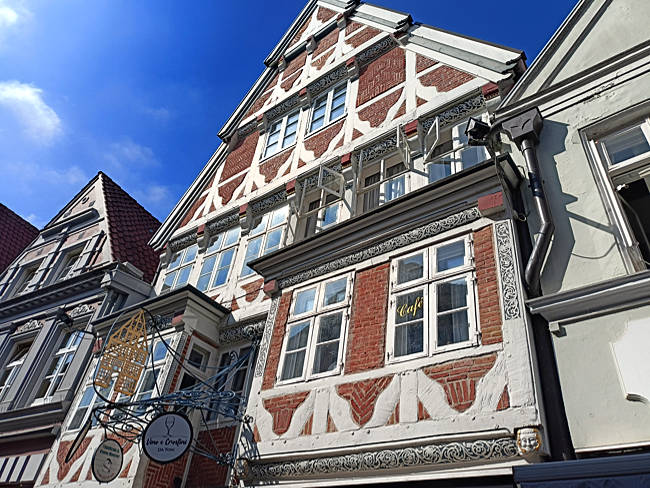
Beautifully restored: the Hökerhus
One of the few buildings to survive the Great Fire of 1659 relatively unscathed, the Hökerhus withstood the flames that destroyed two-thirds of the city - around 500 houses, several churches, and the town hall, which housed the municipal archives (mostly lost). The fire began on May 26 in the village of Campe just outside Stade; its cause remains unknown. However, a strong southeast wind carried burning debris into the city, igniting the first building. The inferno claimed 36 lives and remains the worst disaster in Stade’s history. Remarkably, charred archive documents were found days later 17 kilometers away on the opposite Elbe bank in Holstein - proof of how fiercely the wind spread the flames, even melting church bells.
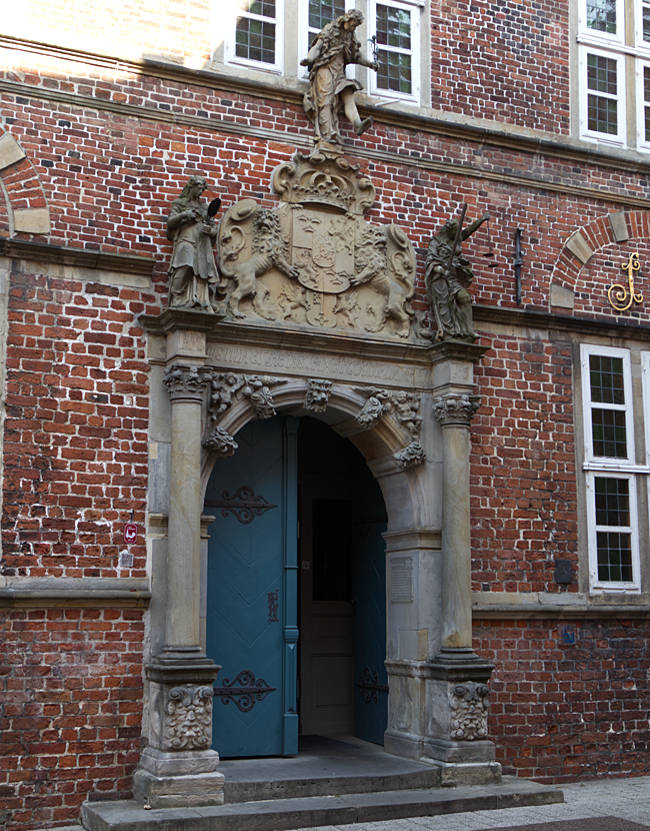
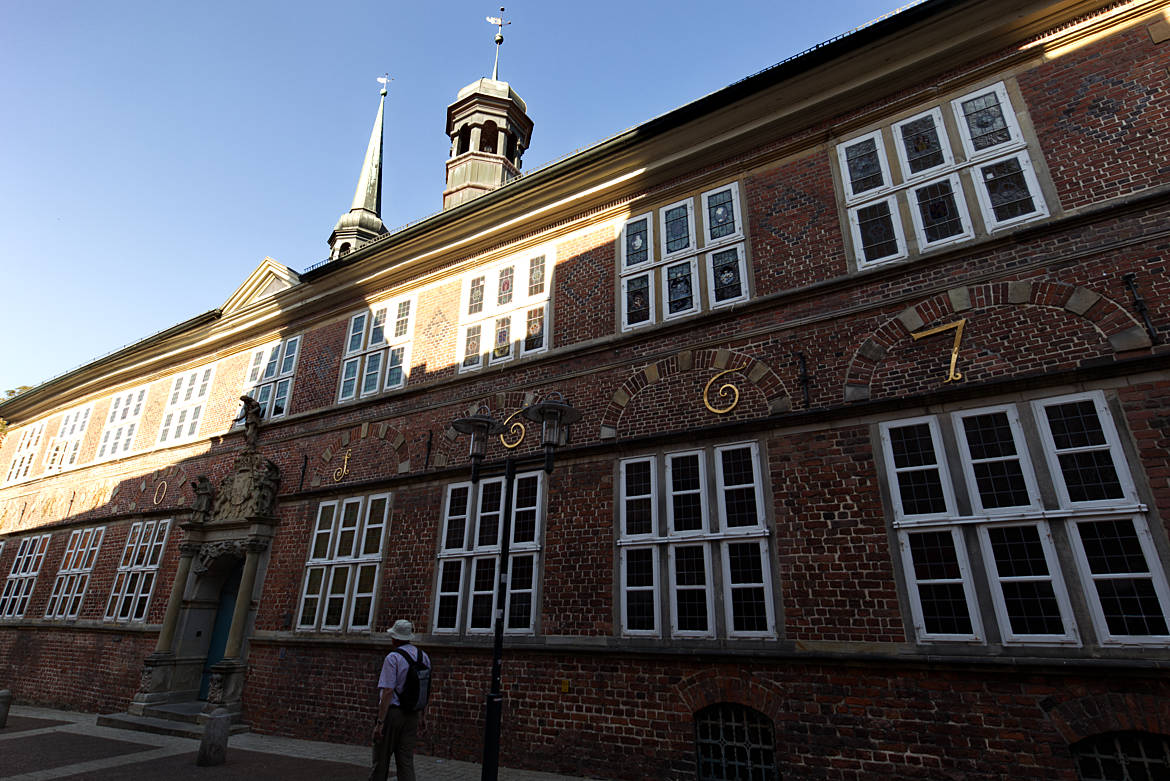
The sandstone entrance portal is the only adornment of the simple town hall
Like a phoenix rising from the ashes ... After the fire, authorities acted pragmatically. Gothic-era buildings were not reconstructed but instead redesigned in the then-dominant Baroque style, such as the preserved 1667 Old Town Hall - a brick building with an intricately carved sandstone portal.
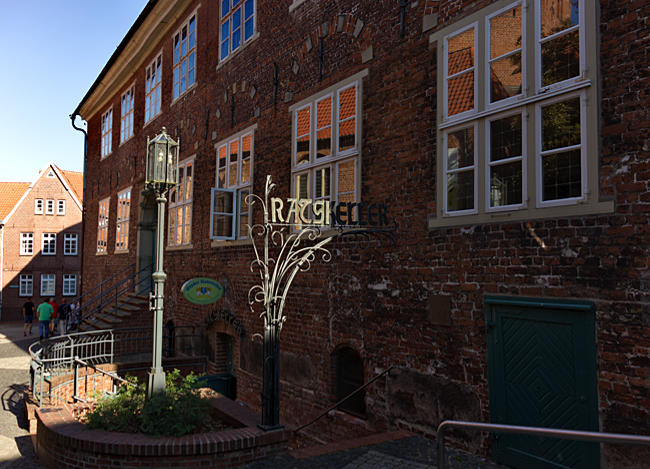
A path runs between the town hall and St. Cosmae et Damiani, where the Ratskeller (town hall cellar) with dining facilities is located in the basement (rear of the building).
The remaining churches, St. Cosmae et Damiani and St. Wilhadi, received new interiors, including the impressive Arp-Schnitger organ (1668–1673) or the high altar by Christian Precht (1674–1677) in the former, with its distinctive octagonal Baroque tower spire. Both buildings are also located on Hökerstraße or just a short detour away.
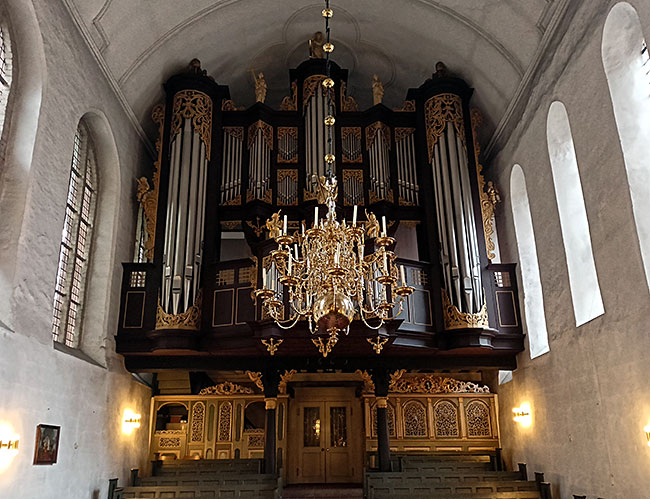
Imposing and grand: the 17th-century Arp-Schnitger organ in St. Cosmae et Damiani
Shortly after Hökerstraße seamlessly transitions into Poststraße, the narrow Flutstraße offers a view of the imposing St. Wilhadi Church - or rather, its tower. This three-aisled Gothic hall church made of red brick dates back to the 14th century and is relatively plain, though impressive in height. The massive west tower is older, originating from the 13th century. Locally nicknamed the Leaning Tower of Stade, it has tilted over time despite its granite foundation and three-meter-thick walls - though without cause for concern. Additionally, the tower widens toward the spire.
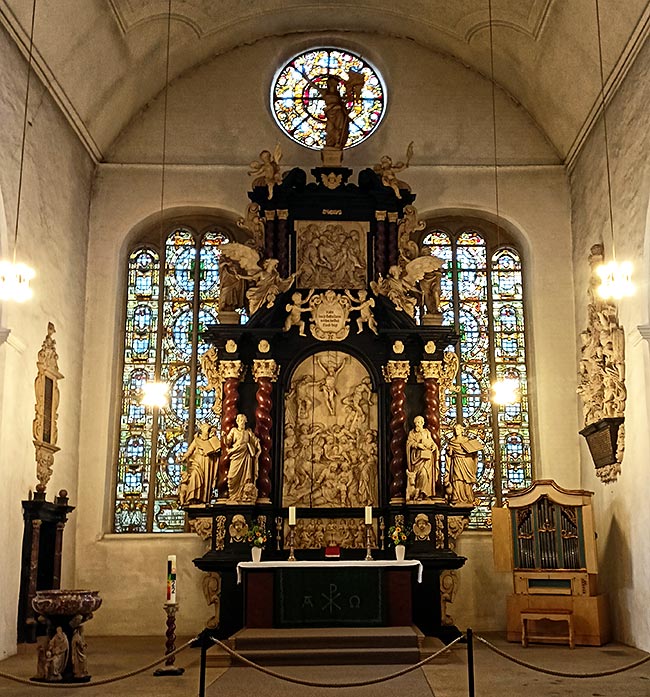
You don’t have to be religious to appreciate 17th-century woodcarvings, such as those on the altar in St. Cosmae et Damiani
Externally Gothic, internally Baroque - the church still retains some of its post-fire furnishings that replaced the original interior lost in the blaze. Surviving elements include epitaphs, a baptismal angel, the pulpit, and a two-tiered altar. The organ by Erasmus Bielfeldt, restored from the ground up, is younger - after Arp Schnitger’s previous instrument was destroyed by lightning - but has been in place since 1731–1736, adding to its historical charm.


Map
Further information
STADE Marketing and Tourism GmbH
Hansestraße 16
D-21682 Stade
Email: info@stade-tourismus.de
Website: www.stade-tourismus.de
Phone: +049 (0) 4141 77698-0
Tourist Information at the Harbor
Opening Hours: April to October: Mon–Fri 10 AM – 6 PM; Sat, Sun & Holidays 10 AM – 3 PM, November to March: Mon–Fri 10 AM – 5 PM, Sat 10 AM – 3 PM, Sun & Holidays closed
Schwedenspeicher
Wasser West 39
D-21682 Stade
Phone: +49 (0) 4141 79 773 0
Email: info@museen-stade.de
Website: www.museen-stade.de
Opening Hours: Tue–Fri 10 AM – 5 PM, Sat & Sun 10 AM – 6 PM
Kunsthaus
Wasser West 7
D-21682 Stade
Phone: +49 (0) 4141 79 773 20
Email: info@museen-stade.de
Website: www.museen-stade.de
Opening Hours: Tue, Thu, Fri 10 AM – 5 PM, Wed 10 AM – 7 PM, Sat & Sun 10 AM – 6 PM, closed during exhibition changes!
Verein Alter Hafen Stade e.V.
Phone: Gerd Becker +49 (0) 4141 4123255 or +49 (0)151 10974508
Email: becker1959@gmail.com
Website: www.greundiek.de
Kunstverein Stade e. V.
Website: www.kunstvereinstade.de
Heimatmuseum
Inselstraße 12
D-21682 Stade
Phone: +49 (0) 4141 79 773 40
Email:
info@museen-stade.de
Website:
www.museen-stade.de/heimatmuseum
Opening Hours: closed for renovation
SUP CLUB Stade: Rentals, courses, canoe, kayak, pedal boat, BBQ
Salztorswall 8
D-21682 Stade
Phone: +49 (0)1514 2898283
Arrival
The advantages of traveling by car from Bremen are limited. While there are several parking garages to park your vehicle near the city center, the train station is also just a five-minute walk from the city center. At the station, you need to change trains in Hamburg. The regional trains run more frequently, so you don't have to rely on specific connections. With a Niedersachsenticket (valid from 9 AM until 3 AM the next day), you can freely choose your connections for an entire day (round trip excluded IC and ICE). Buses and trams operated by Bremer Straßenbahn AG (BSAG) are also freely usable with the Niedersachsenticket.
Bremerhaven in general
Bremerhaven was only founded in 1827. To secure its status as a port city amid the threat of the Weser - Bremen's lifeline - silting up, Bremen purchased 342 acres of land at the mouth of the Weser from the Kingdom of Hanover for 74,000 talers under then-mayor Johann Smidt. About 60 kilometers downstream from Bremen, this became the site of the first urgently needed seaport built by Bremen, known as the Alter Hafen (Old Harbor), completed by 1830.
read more ...
Bremerhaven - Zoo am Meer (Zoo by the Sea)
In addition to the 19th-century harbor facilities, the Zoo am Meer is the oldest attraction on the site between the Weser River and the pedestrian zone. It opened in 1928 under the name "Tiergrotten." The enclosures house polar bears, seals, penguins, various bird species such as gannets and keas, reptiles like turtles, raccoons, Arctic foxes, pumas, monkeys, and others - almost 50 animal species in total.
read more ...
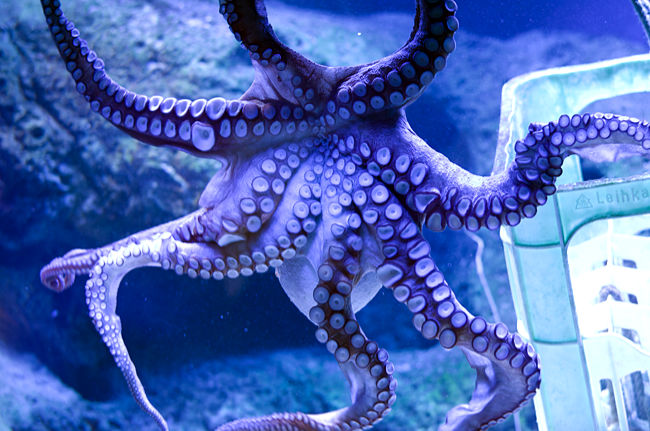
Bremerhaven Havenwelten
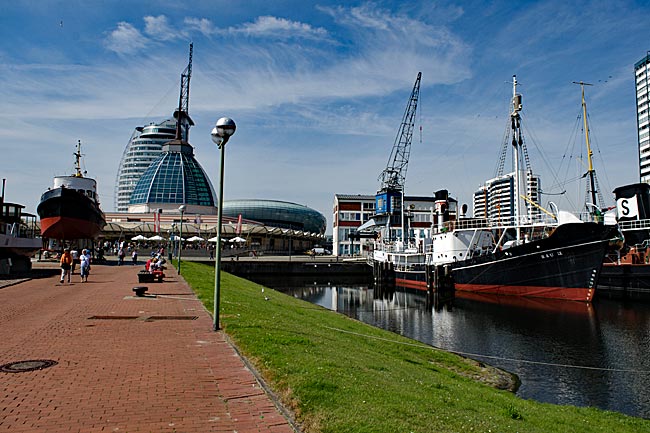
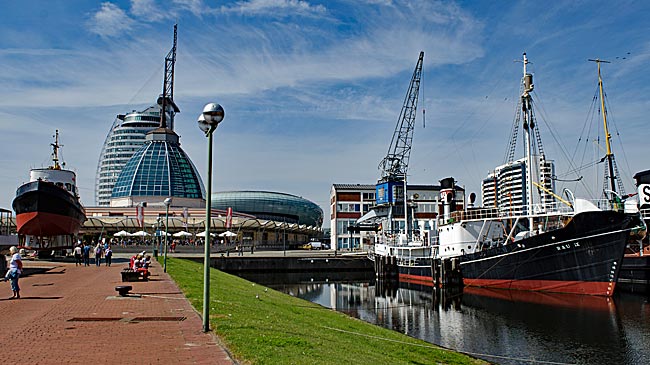
Since early 2008, Bremerhaven has not only had a new tallest building but also a new landmark in its Weser-side skyline with the ATLANTIC Hotel SAIL City, which rises 147 meters directly behind the Weserdeich. Architecturally, the structure perfectly embodies a maritime city - it stands like a powerful, rounded ship's superstructure. On the 20th floor, at a height of 77 meters, there is an observation deck (SAIL City) that is also accessible to non-guests.
read more ...
Bremerhaven - Überseehafen (Overseas Port)
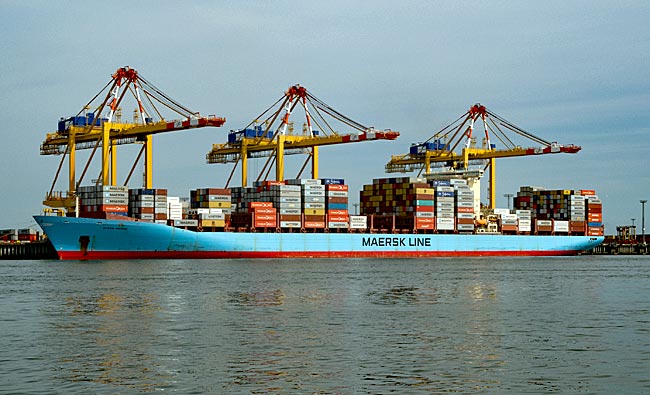
In addition to the Old Harbor (now the Museum Harbor), which was the first to be built, other ports were later added. Adjacent to the New Harbor lies Kaiserhafen I, the first in a series of additional harbor basins. Even a glance into this initial section of the expansive port area reveals a different world of maritime activity - one of large ships. And we will see even larger ones along the five-kilometer-long quay on the Weser.
read more ...
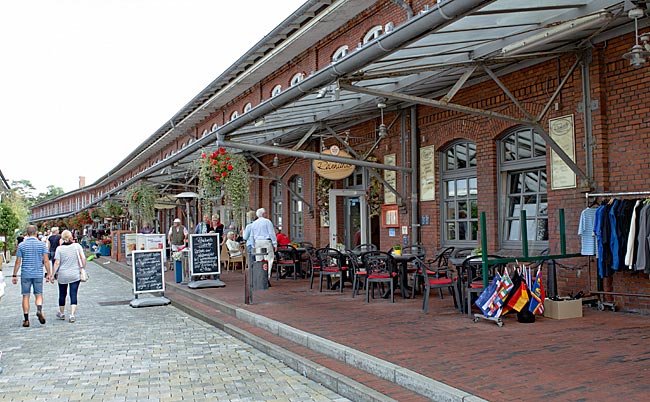
Bremerhaven - Schaufenster Fischereihafen (Fishery Harbor Showcase)
Away from the Havenwelten and older than both the Emigration Center and Klimahaus is the "Fishery Harbor Showcase." In fact, the Fishery Harbor was originally Geestemünde's deep-sea fishing harbor, built between 1891 and 1896. After a period of decline and decay - including partial demolitions - the idea emerged to transform the area into a maritime experience world. In 1990, efforts began to restore Fish Packing Hall IV, the oldest surviving hall, which had been slated for demolition just shortly before.
read more ...
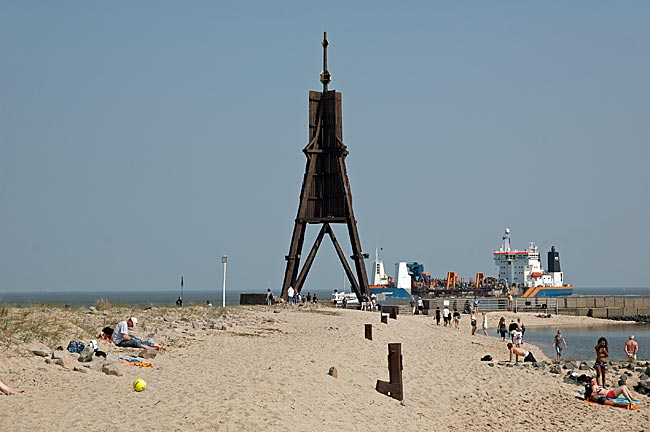
Cuxhaven - a day trip
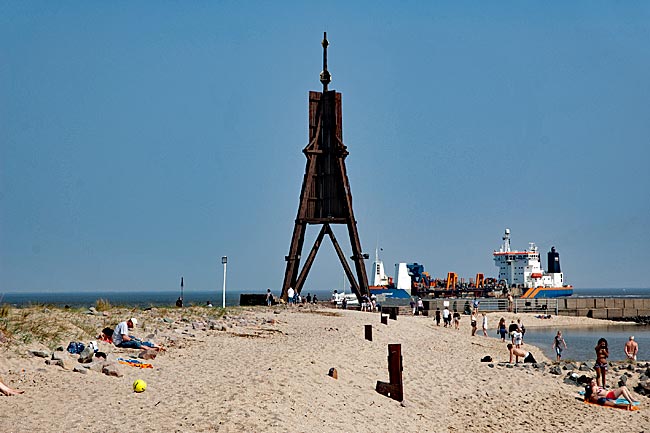
Many people from Bremen consider the seaside resorts of Cuxhaven to be "their home beach." The coastal city at the mouth of the Elbe is easily accessible from Bremen by car via the A27, which passes by Bremen and Bremerhaven before ending in Cuxhaven. By train, the journey takes a bit longer with a transfer in Bremerhaven. However, even in the off-season, Cuxhaven with its seaside resorts is a great destination for an outing - for example, by bicycle.
read more ...
Brake & the River Island of Harriersand
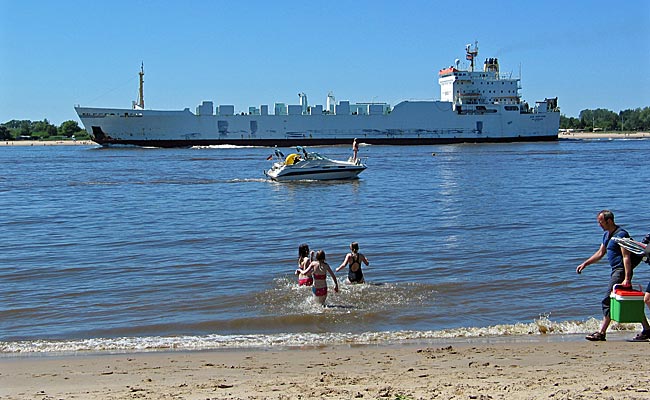
As soon as spring arrives and the temperatures reach around 20 degrees, many Northern Germans are drawn to the North Sea coast. The main attraction? A beach to lie in the sun and sand for children to dig and build castles. This also draws many people from Bremen to the highways heading north on warm weekends, equipped with bags packed and picnic baskets ready for a day of seaside relaxation. But why travel far when the nearest beach is just around the corner? A visit to Brake and Harriersand proves that.
read more ...
Walsrode World Bird Park
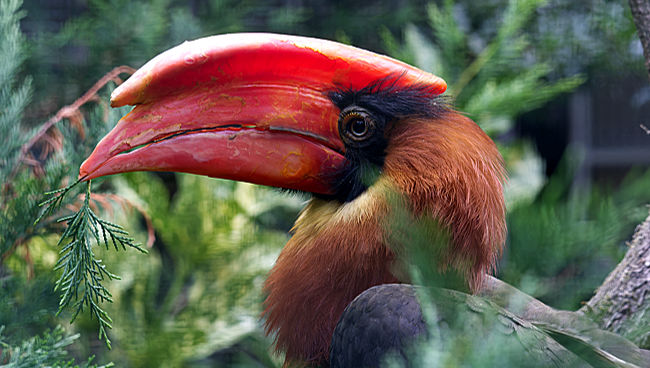
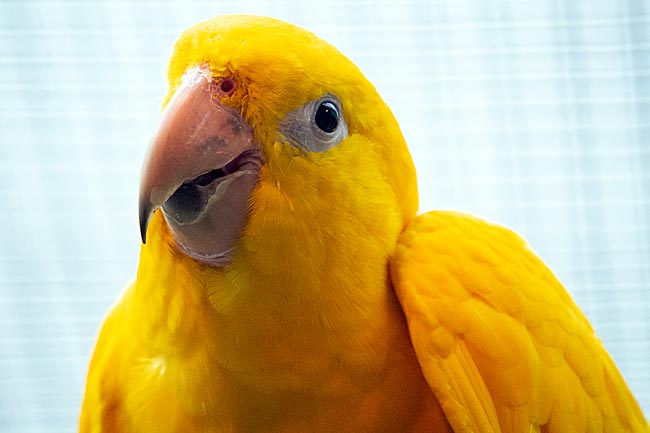
The name "Weltvogelpark" (World Bird Park) sounds ambitious, but in fact, the park in the Lüneburg Heath is the largest of its kind worldwide and has only carried the addition "Welt" ("World") since 2010. Over 4,000 birds, including many rare species, live on the 24-hectare site, representing around 650 different bird species from all continents. The bird park was founded in 1962 as a private breeding station and later expanded into a full-fledged park. It is highly recommended as a family-friendly day trip.
read more
...