

DISTANT PLACES
Travel tips by Bremen sehenswert far from the Hanseatic City of Bremen
Kos - The Greek Dodecanese Island
A Travel Guide
On hot ground
A visit to the volcanic island of Nisyros
(2/2)
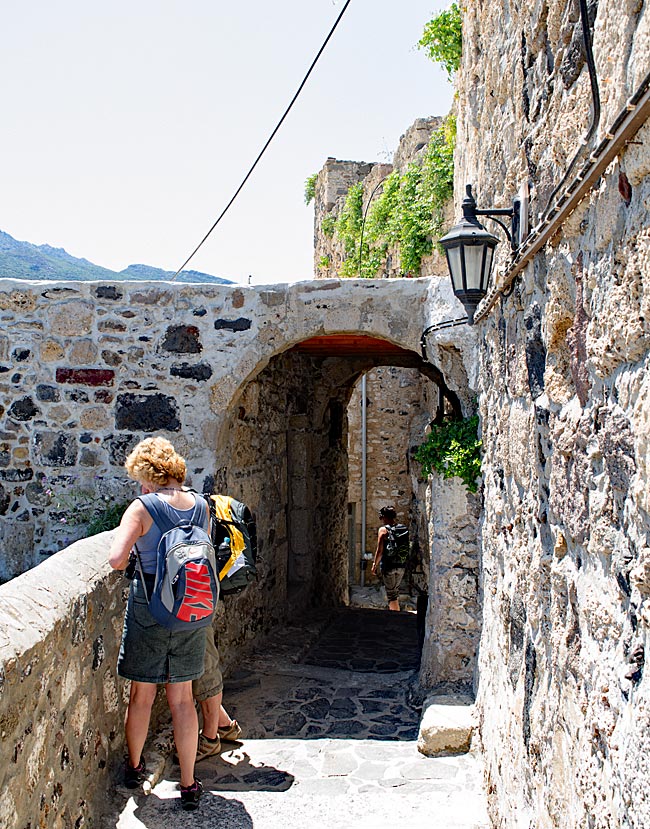
The path to the monastery
Although much of the monastery grounds is off-limits, climbing the stairs is a reward in itself; from up there, you are treated to a truly beautiful panorama of the village and the coast. It also offers an inspiration for a "modern-day refrigerator" without electricity: a shaded niche set into the massive fortress wall, exposed to steady winds from two opposing sides - a design that evidently kept food sufficiently cool in the past and proved its worth to those who used it.
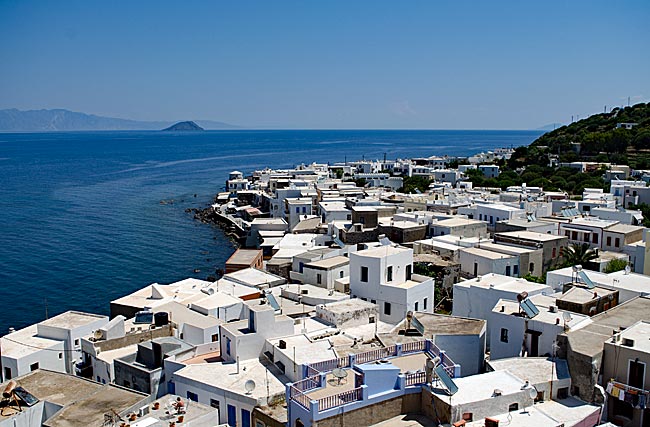
View of Mandraki
The village boasts numerous restaurants, many of them charmingly situated with tables in the cool shade of trees or planted pergolas. A planned stop at one of the taverns is part of the itinerary for most guided tours. On this occasion, a milky-looking drink is served as a sample: a local specialty known as Soumada.
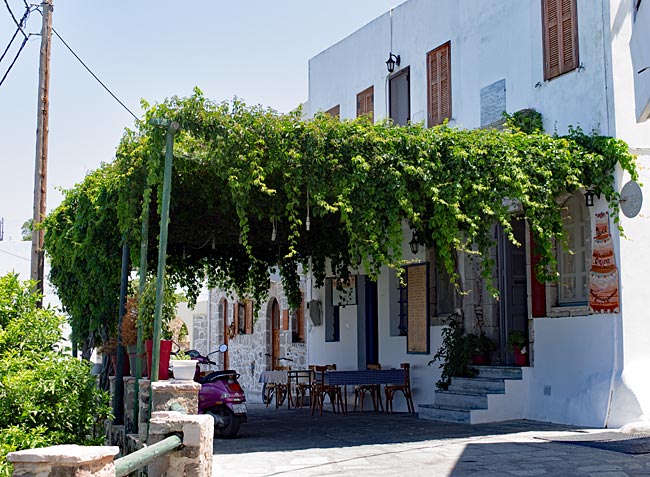
Greek tavern
It just so happens to taste a bit like marzipan because it is an almond syrup mixed with water. Similar drinks, sometimes with other ingredients added, can be found in many regions across the Mediterranean - specifically where almonds are grown and harvested.
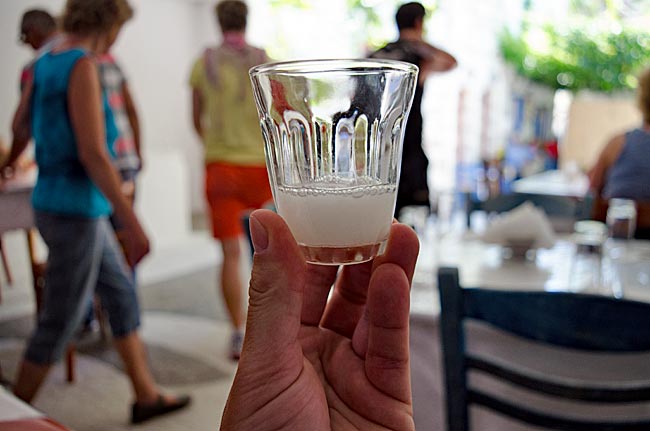
A sip of Soumada for tasting
At the harbor, buses stand ready for the visit to the Stefanos Crater. The island’s volcanic rock rises out of the sea up to 698 meters. Especially from the seats on the passenger side, the landscape unfolds as a striking panorama during the drive. On slopes terraced with fieldstones since Roman times, trees grow heavy with olives, citrus fruits, figs, and almonds; beyond them, the view stretches far across the sea toward the island of Kos, located 16.5 kilometers away. Shortly after the road branches off toward the center of the island, the caldera finally comes into view. The Stefanos Crater measures a substantial 300 meters in width and features a flat floor that is largely walkable.
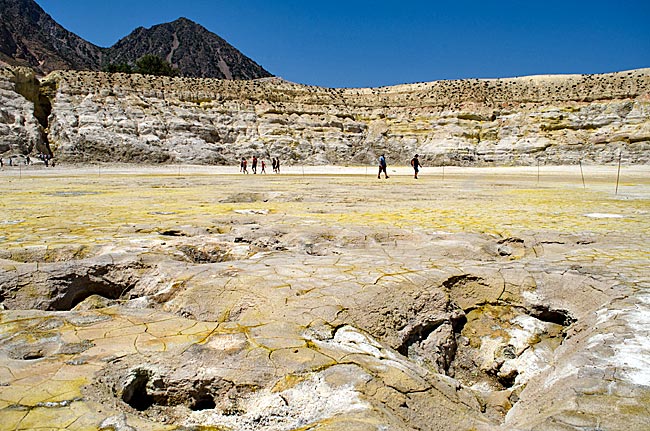
In the Stefanos Crater
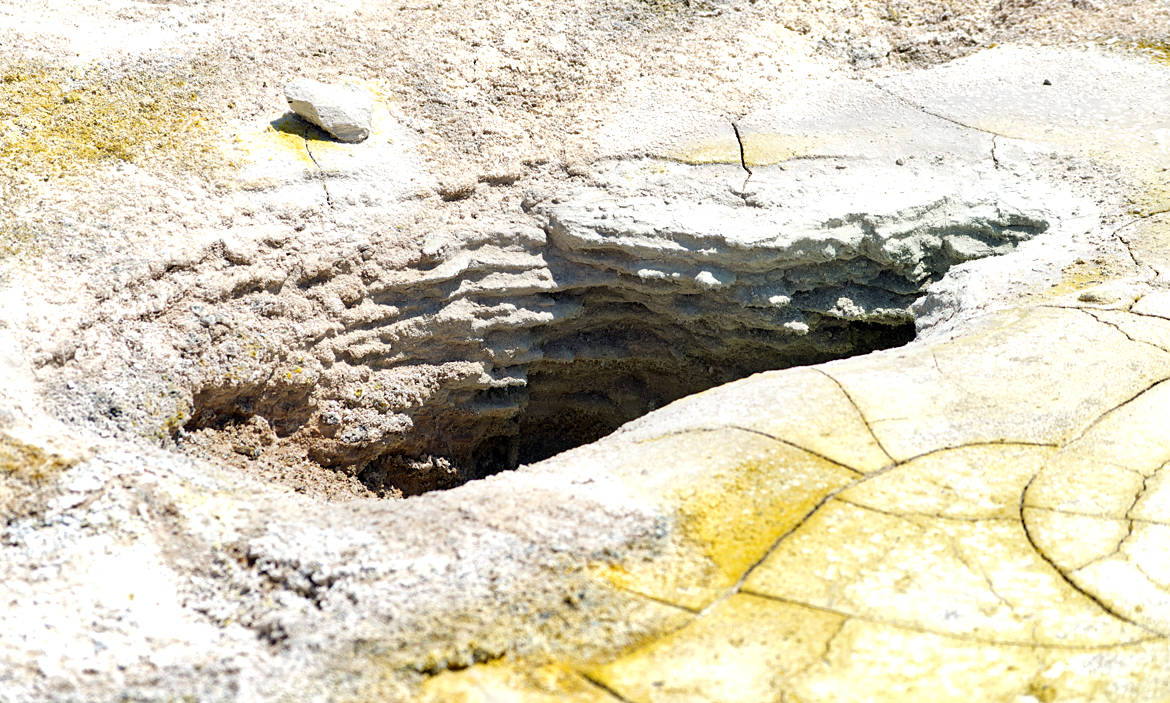
Before you even notice the bright yellow sulfur crystals scattered throughout the landscape, their scent reveals their presence; it smells pungently of rotten eggs. In the 19th and through the 20th century, sulfur was mined on the island on a large scale as a primary chemical for producing sulfuric acid. Today, while the crater at the southern end of the caldera is primarily a tourist attraction, it is not exclusively so; the volcano remains active and has been geophysically monitored since the year 2000.
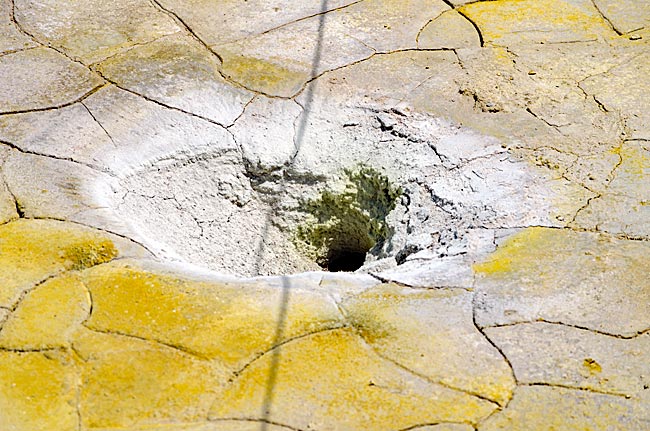
Sulfur-rich steam still emerges
True volcanic activity lies in the distant past, and current activity is limited to the release of hot, sulfurous vapors - a nonetheless impressive spectacle for those who have never seen such a thing. However, scientists do consider another eruption of the volcano to be possible. In the nearby village of Nikia, visitors can learn more about both local geology and volcanoes in general at the Volcanology Museum, which opened in 2008.
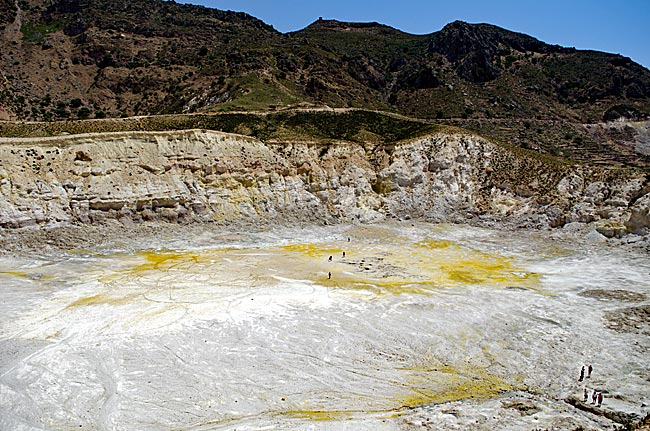
View from the Crater Rim
Until an eruption occurs that could cause the entire island to disappear into the sea, the residents graze their cows in the caldera.
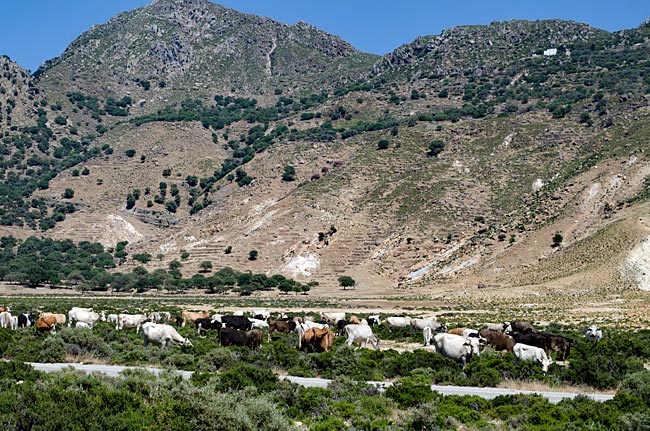
Cows in the Caldera
previous page
 next page
Read more about Kos: The table of contents
Map
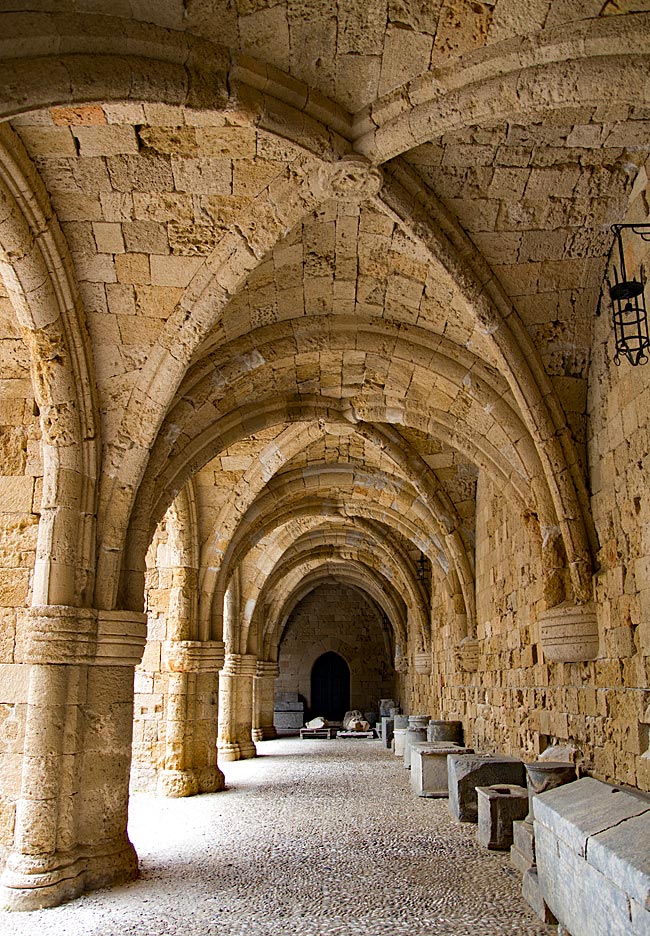
UNESCO World Heritage Site on Rhodes
A journey through the historic Old Town of Rhodes
Relics from various eras - ranging from antiquity to the period of Italian occupation - can be found almost everywhere on the island. Many have left their mark; in some places, they must be sought out, while in others, they appear in clustered, fascinating density and variety. Yet, nowhere else on the island are these traces as prominent as they are in the city of Rhodes. It is not for nothing that the historic Old Town was declared a UNESCO World Heritage site in 1988.
read more about Rhodes Old Town ...
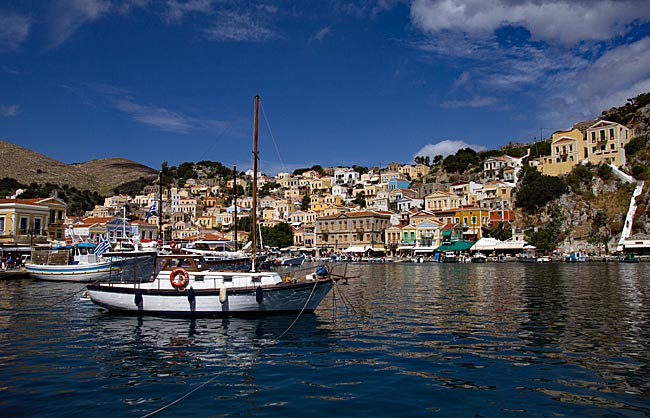
Symi
An excursion to the Greek Dodecanese island off the Turkish coast
A visit to this sparsely populated rocky island of about 60 square kilometers, with its namesake picturesque harbor town, is part of the standard tour itinerary offered in many locations on the Greek island of Rhodes. From the main island, it takes ships approximately two hours to reach the port of the small island located 23 kilometers north of Rhodes off the Turkish coast, which has belonged to Greece since 1947. As more of the Greek coast recedes into the distance to the port side, the ship draws closer to the Turkish shore; this part of the southern Aegean essentially connects Europe and Western Asia.
read more about Symi ...
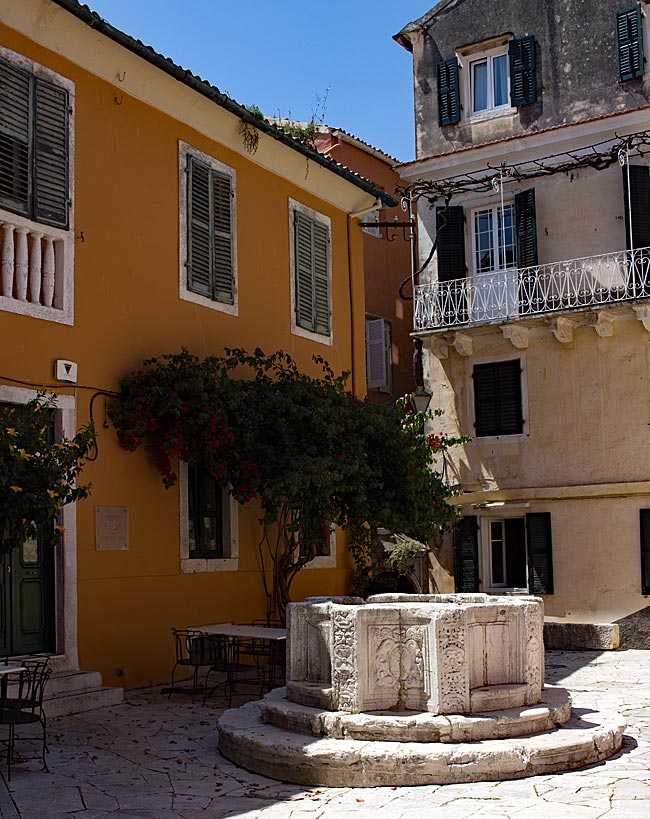
The "Green" Island of Corfu
From the sights of the capital, Kerkyra, to the Corfu Trail
The Greeks call not only the city but the island itself Kerkyra. According to legend, it was named after the nymph Gorgyra (also known as Kerkyra), who was brought to the island by the sea god Poseidon. A legend, indeed. In fact, the name appears in a modified form, "Korkyra," on written records as early as 1200 BC. The current name, Corfu, dates back to the Byzantine era. Once an independent island and later the first Roman province of modern Greece, it became part of the Eastern Roman (Byzantine) Empire after the fall of the Western Roman Empire in 395 AD. On a rocky promontory jutting into the sea, the Byzantines built a fortress in the early 6th century and named the city emerging from this core "Koryfo."
read more about Kerkyra ...
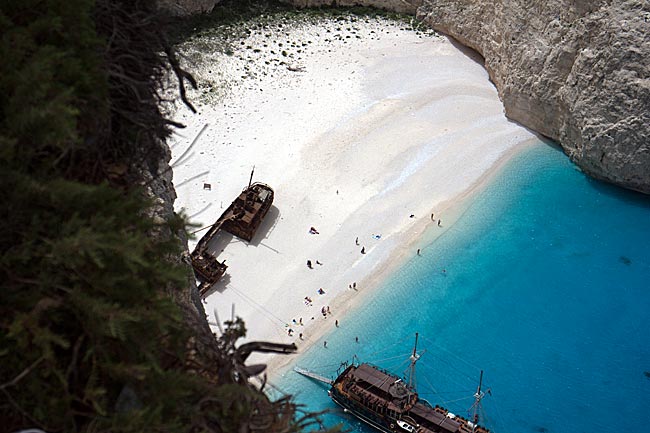
Zakynthos
An island defined by the Caretta caretta
When searching for images of the 406 km² island online, one primarily encounters a very common recurring motif that has been captured from a similar angle by various photographers over the years: Navagio Bay on the northwestern coast. It's all junk, right? Well, that is a matter of perspective, and there are plenty of those during the season, whether they have a camera or not. The fact remains, however, that the rusting wreck of the motor vessel "Panagiotis" has become a landmark for Zakynthos.
read more about Zakynthos ...
More photos