
 exploring Bremen & its surrounding areas
 You are here: worth seeing in the surroundings
 Cuxhaven - a day trip (2/3)
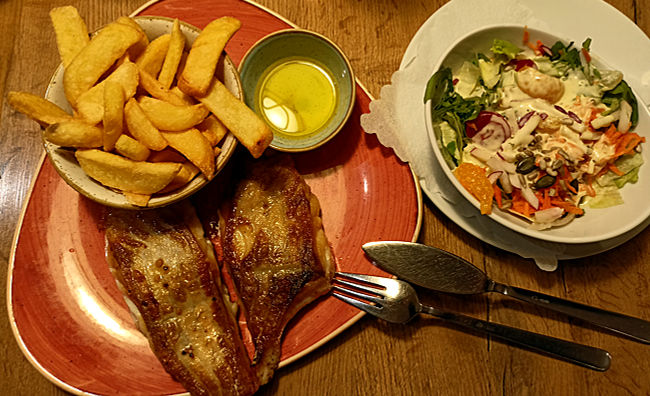
Admittedly, this pollock wasn't caught off Cuxhaven, but the dish was delicious beyond the fish itself. The same goes for the plaice, which turned out to be regional after all
The topic is fascinating and has little of cruise romance with all its glitz and glamour, but offers material for exciting stories on, in, and around the water. However, life in the water is over for the animals that end up a few meters from the museum at the new fishing harbor in the restaurant "Die kleine Fischkiste" on the guests' plates. But lovers of culinary delights from the sea also get their money's worth elsewhere on the harbor area. Cuxhaven, alongside Bremerhaven, is after all the most significant fishing location on the German coast.
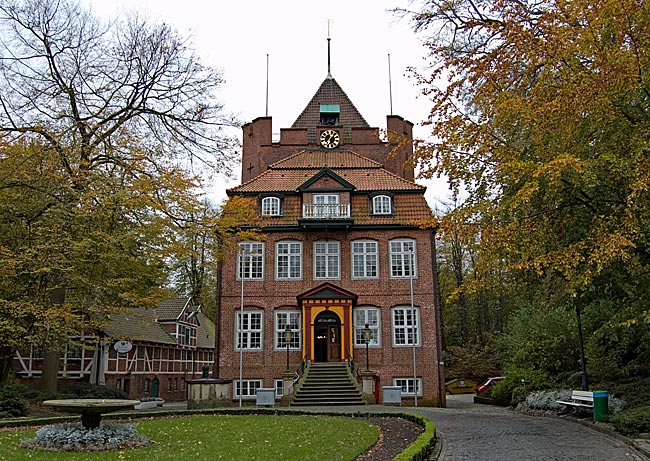
Germ cell of the city foundation: Schloss Ritzebüttel
After we have already seen the inner city with its 47-meter-high water tower from 1887 – an "unofficial landmark" of Cuxhaven – Schloss Ritzebüttel, whose history dates back to the 14th century and was the actual germ cell of the city's foundation, as well as the Ringelnatz Museum located opposite the castle, dedicated to the poet of the same name (1883-1934), we set off for Cuxhaven's seaside resorts via a detour through the Lotsenviertel after crossing the dike.
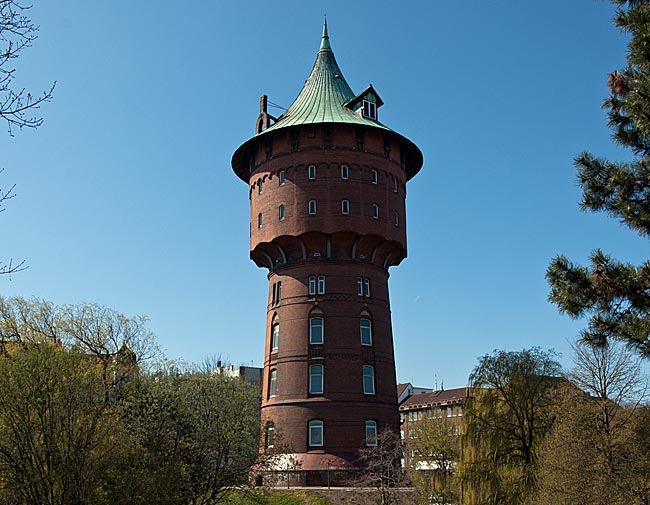
"Unofficial landmark": the water tower
In this historic district with the central Schillerstraße, the pilots used to live – those people who were needed to ensure that larger ships could safely enter the harbors. They knew every shallow spot and the flow conditions in the Elbe estuary precisely, which was particularly important during low tide. They were on call in shifts at any time of day or night and were not allowed to live more than 1 kilometer away from the pilot transfer station ("Alte Liebe"). Large ships still sail with pilots when they are traveling in coastal waters in the German Bight or entering river estuaries such as the Elbe and Weser, but the pilotage system is now organized differently. You can read more about this here if you're interested. Today, traditional buildings mix with newer ones in the Lotsenviertel, and numerous shops and restaurants invite you to stroll and linger.
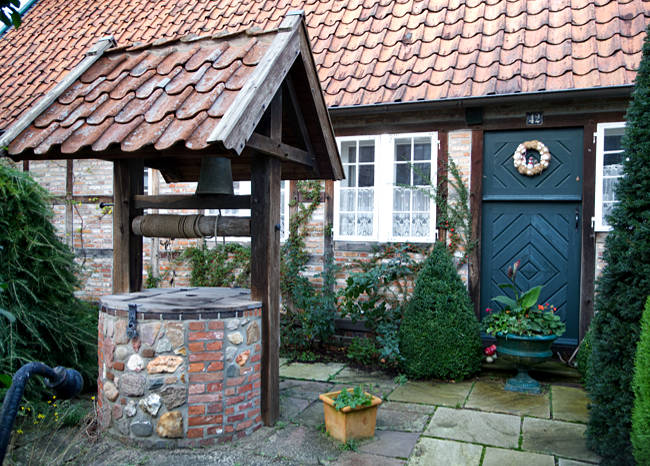
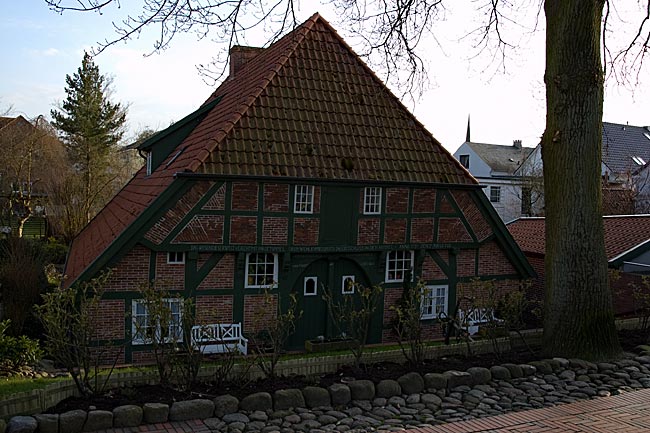
Historical: the Old Deichhaus in Schillerstraße in the Lotsenviertel
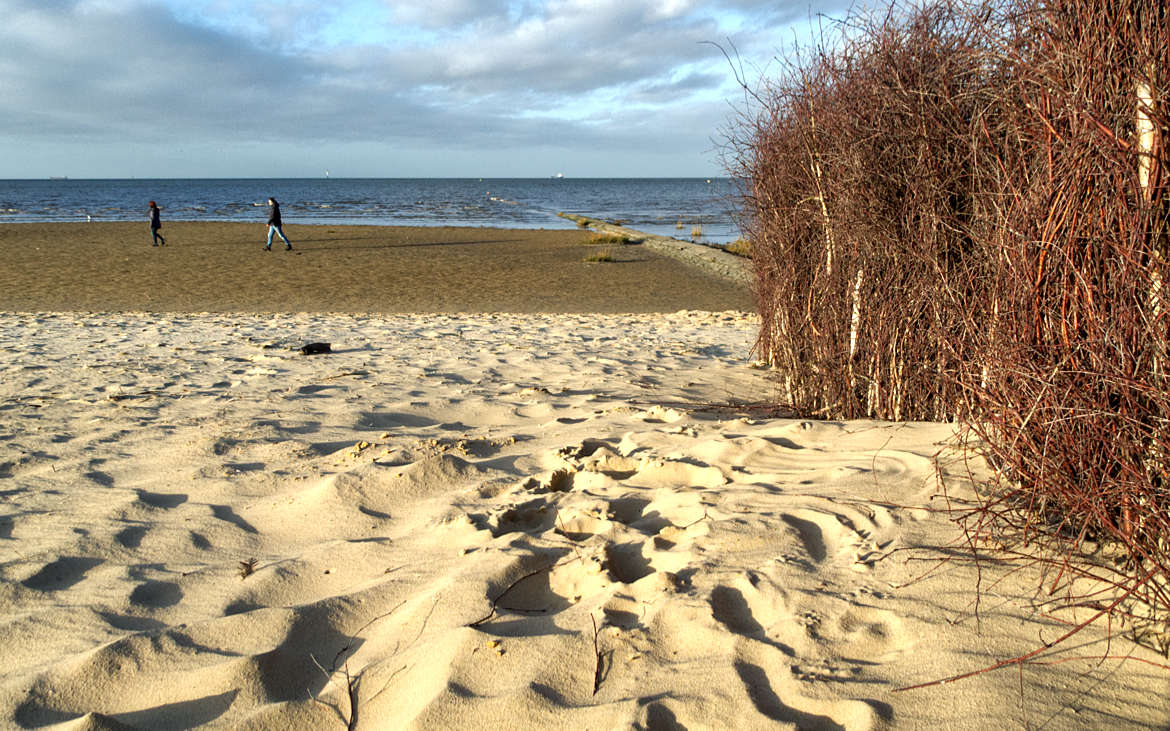
Unfortunately, the German North Sea coast – excluding the East and North Frisian Islands – has not been as generously blessed by nature with sandy beaches as neighboring countries like the Netherlands and especially Denmark. Of course, there are many beautiful spots beyond the sandy beaches, and sand alone is not everything on vacation, but for many people, a sandy beach does have great significance. That's why during the summer months, especially on weekends, the party is in full swing at the seaside resorts of Döse, Duhnen, and Sahlenburg.
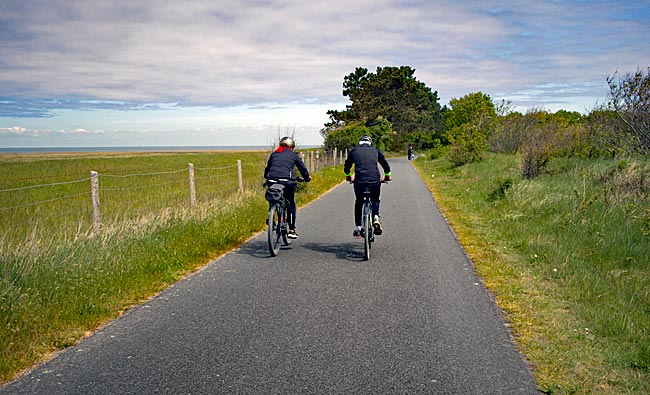
Can cycling be more comfortable than on asphalt?
Now, in the off-season, it's much quieter, and given an air temperature of just 10 degrees, the thought of a dip in the North Sea doesn't inspire even the slightest enthusiasm in us. A good time, then, to go exploring or cycling.
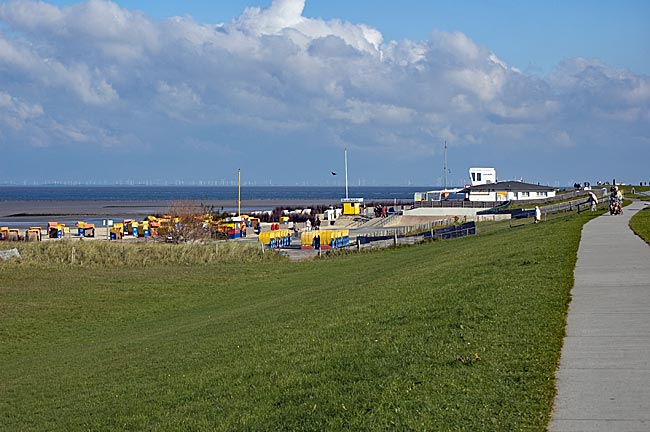
To the seaside resorts via the dike
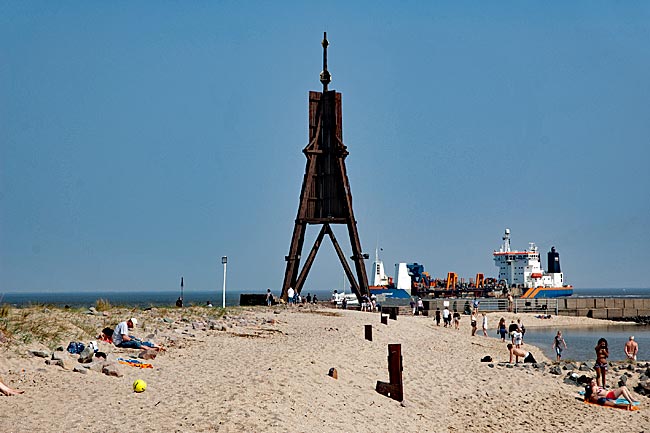
From Cuxhaven harbor, the dike stretches almost in a semicircle to the Döse district. From afar, you can see a widely known landmark that is also featured on postcards, souvenirs, and throughout the town itself and even adorns the city's coat of arms: the Kugelbake.
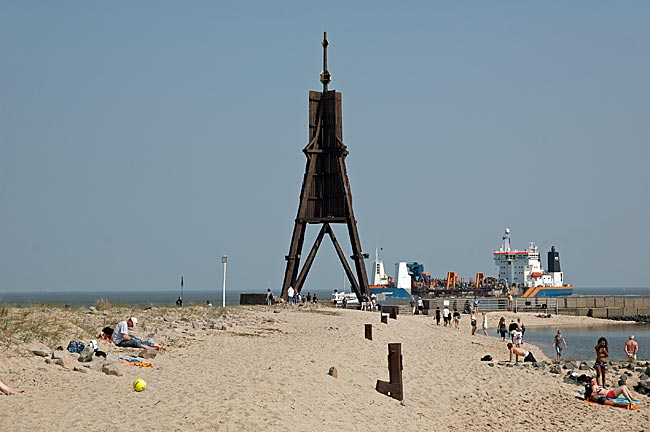
Adorns the city coat of arms: the Kugelbake
The almost 30-meter-high navigational aid, which was erected in its current wooden construction in 1924, marks the geographical end of the Elbe. From the mid-15th century onward, Hamburg marked the Elbe's fairway with so-called beacons to ensure that merchant ships could safely enter the Hamburg harbors; after all, Hamburg was the greatest beneficiary of maritime trade.
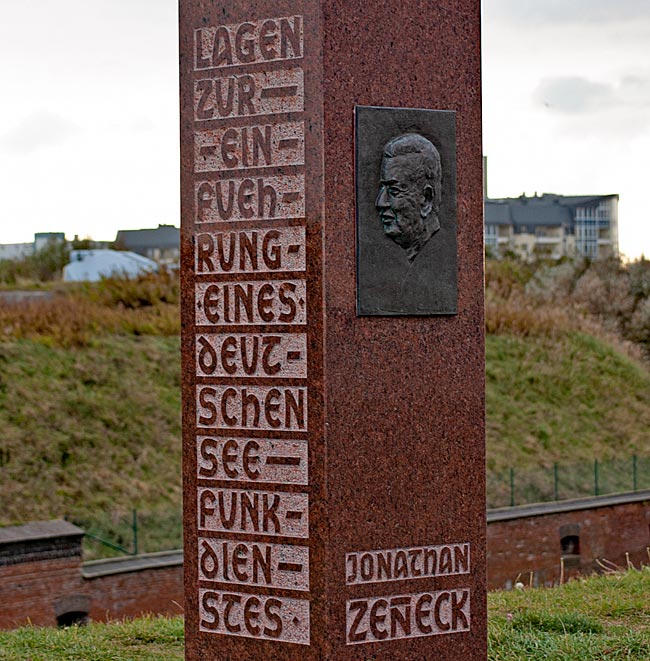
Memorial stone for Jonathan Zenneck near the Kugelbake on the dike
After 1653, there was also a "Kugelbakenlicht" (beacon light) for sailors to orient themselves in the dark without risking shipwreck. Several predecessors of today's Kugelbake were washed away by storm surges, and its location varied. Today, however, the Kugelbake is insignificant for maritime traffic; in fact, it no longer lives up to its name at all, as the characteristic sphere is missing from the top. Atop the dike stands a memorial stone honoring Professor Dr. Zenneck, the radio pioneer who conducted the first experiments around the turn of the 20th century to establish wireless communication between the mainland and ships at sea.
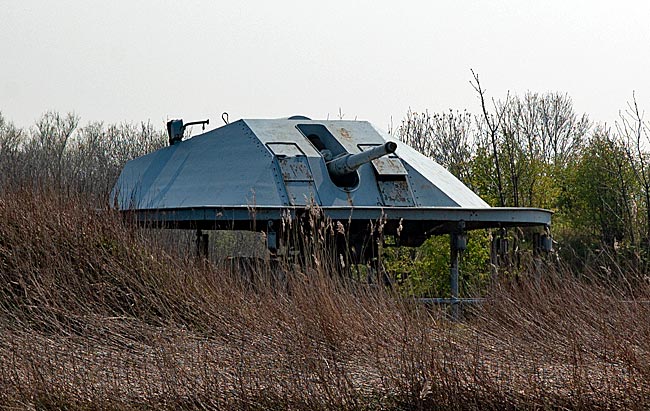
Relic from bygone days - cannon in Fort Kugelbake
Behind the dike, just barely visible, lies the only remaining marine fortress in Germany. Fort Kugelbake was built at Prussia's behest between 1869 and 1879. The pentagonal structure, which is 5 hectares in size including its moat, served to protect the important shipping lane that runs right past it and was thus strategically ideally located. The fortress was still used during World War I, among other things, housing the largest searchlight of the time. In addition to the buildings, there are numerous cannons to see in the fort today, including a ship's cannon from 1900. However, access is only possible by prior arrangement and in groups. Those interested in a tour can register at a small house in the Kurpark, just behind the dike.
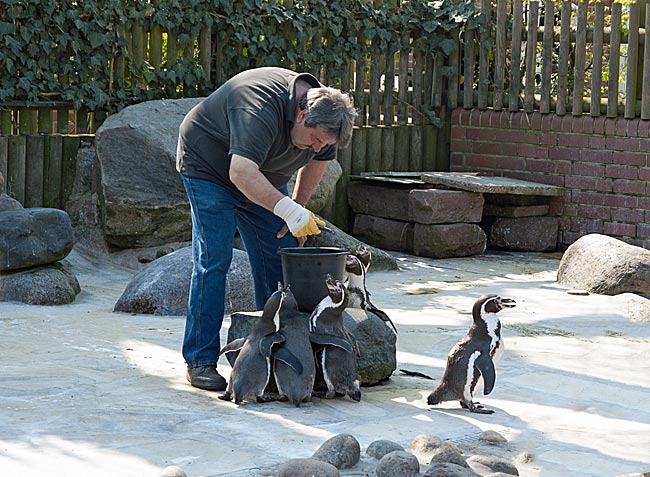
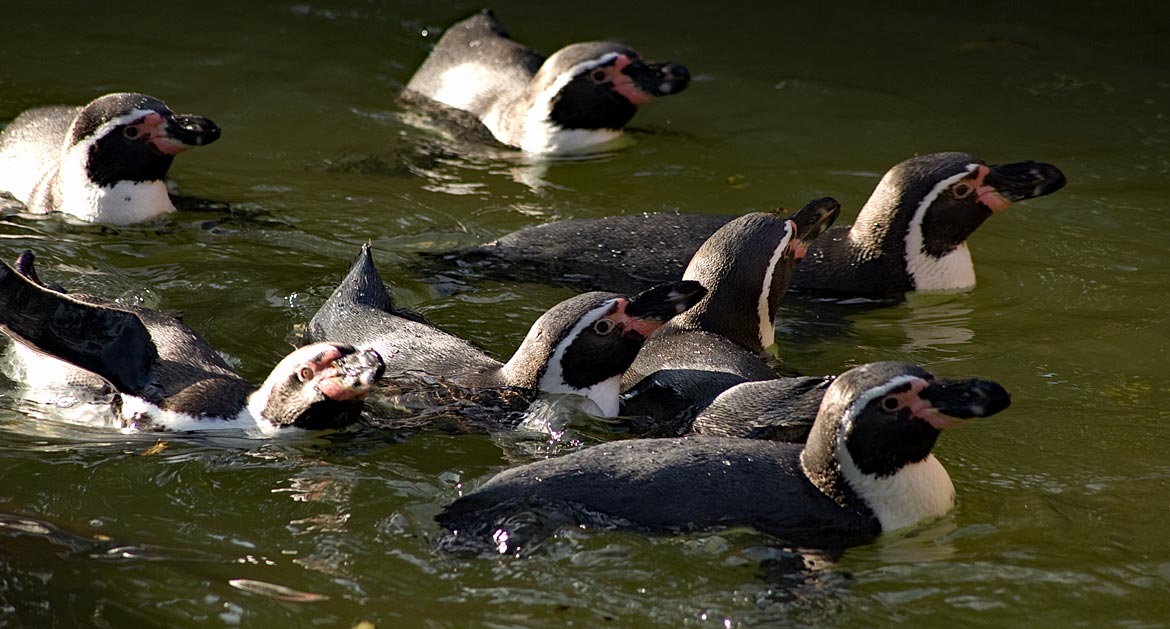
Penguins in Döse Kurpark
In the adjacent Kurpark, the daily public feeding of penguins at the mini-zoo provides entertainment and variety, especially for children. In addition to the tuxedo wearers, other birds such as eider ducks and avocets also live in the zoo. Moreover, during a stroll through the park, you will come across several bronze sculptures, such as the "Krabbenfischer" (crab fisherman) by Franz Rotter (1980).
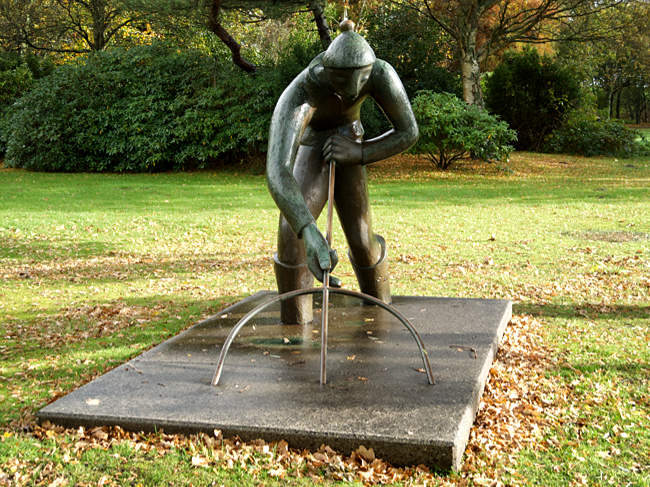
The "Krabbenfischer" by Franz Rotter (1980) in Döse Kurpark
Back on the dike, we continue our journey by bicycle. Following Döse is the district of Duhnen. This North Sea spa town is one of the most important tourist destinations on the Lower Saxon coast, as evidenced by numerous hotels behind the beach promenade. In the city center located behind them, several boutiques offering clothing for "Schietwetter" (bad weather) as well as scorching desert heat, souvenir shops, and opportunities to satisfy both big and small hunger ensure that guests do not return home with too much money in their pockets.
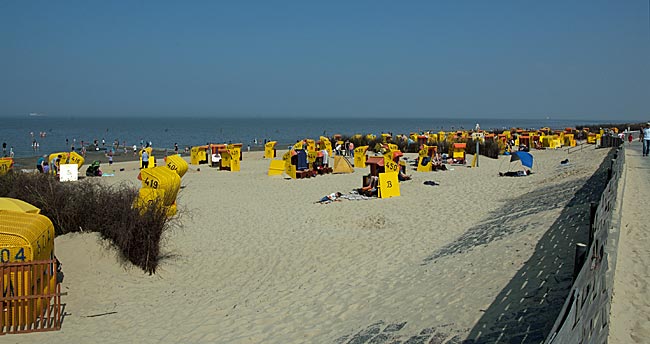
Beach chairs on Duhnen beach
Then, somewhat unusual sounds mingle with the usual noise: rhythmic clattering of horse hooves. And already a rather high-perched carriage with numerous people on board turns the corner. When the vehicle pulled by powerful draft horses briefly rolls over a special exit onto the beach and then into the dry-fallen mudflats, it becomes clear why one likes to sit a bit higher. Saltwater and the sometimes slippery seabed are splashed up through the tires. The destination of the excursion through the mudflats is the small island of Neuwerk, which can be reached by horse-drawn carriage or even on foot during low tide. On a nice day, the hike is a beautiful day trip.


Map
Further information
Joachim-Ringelnatz-Museum
Südersteinstraße 44
27472 Cuxhaven
Phone: +49 4721 394411
Email: ringelnatz@ewetel.net
www.ringelnatzstiftung.de
Windstärke 10 (Wind Force 10)
Wreck and Fishery Museum Cuxhaven
Ohlroggestraße 1
27472 Cuxhaven
Phone: +49 4721 700-70850
Email: windstaerke10@cuxhaven.de
www.windstaerke10.net
www.cuxhaven.de
https://feuerschiff-elbe1.de
https://hapaghalle-cuxhaven.de
www.dickeberta.de
Trips to Helgoland and Neuwerk
A catamaran to Helgoland departs from Hamborn, with stops in Wedel and Cuxhaven. www.helgoline.de
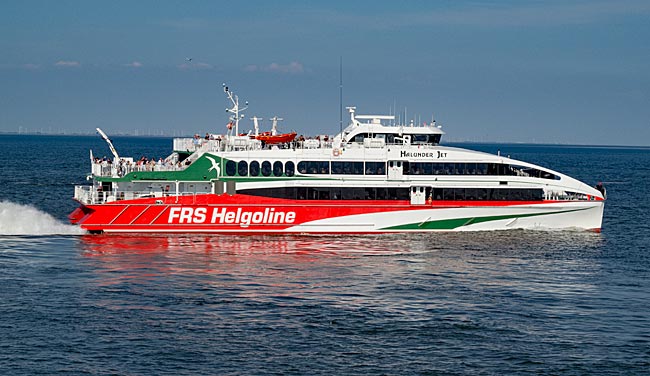
easide resort ships from Cuxhaven to Helgoland and Neuwerk:: https://www.cassen-eils.de
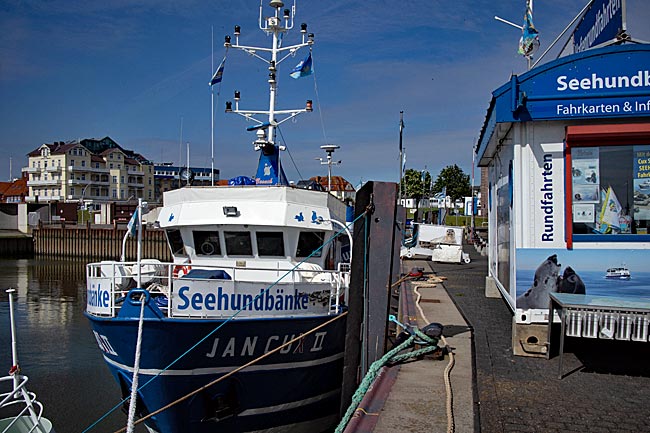
Trips to the Seal Banks
www.cuxhaven-schifffahrt.com
https://reederei-narg.de
Bremerhaven in general
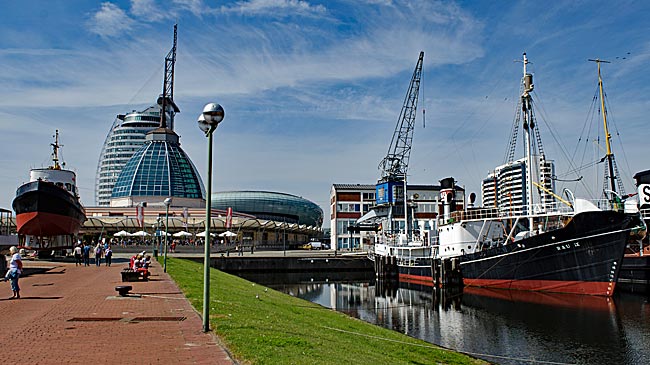
Bremerhaven was only founded in 1827. To secure Bremen's status as a port city amid the threat of the Weser - Bremens lifeline - silting up, Bremen acquired 342 acres (morgen) of land from the Kingdom of Hanover for 74,000 talers under then-mayor Johann Smidt. About 60 km downstream from Bremen, this land became home to the first urgently needed seaport built by Bremen: the so-called Old Harbor, completed by 1830.
read more ...
Bremerhaven - Zoo am Meer (Zoo by the Sea)
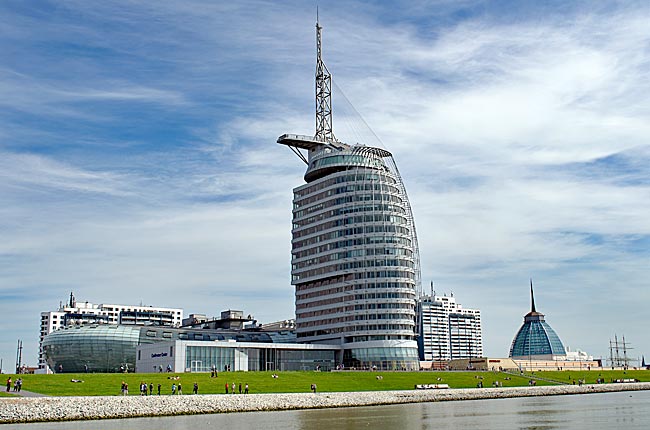
In addition to the 19th-century harbor facilities, the Zoo am Meer is the oldest attraction on the site between the Weser River and the pedestrian zone. It opened in 1928 under the name "Tiergrotten." The enclosures house polar bears, seals, penguins, various bird species such as gannets and keas, reptiles like turtles, raccoons, Arctic foxes, pumas, monkeys, and others - almost 50 animal species in total.
read more ...
Bremerhaven Havenwelten
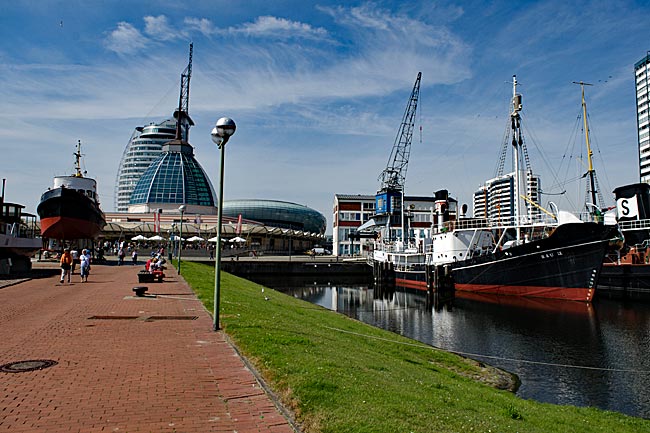
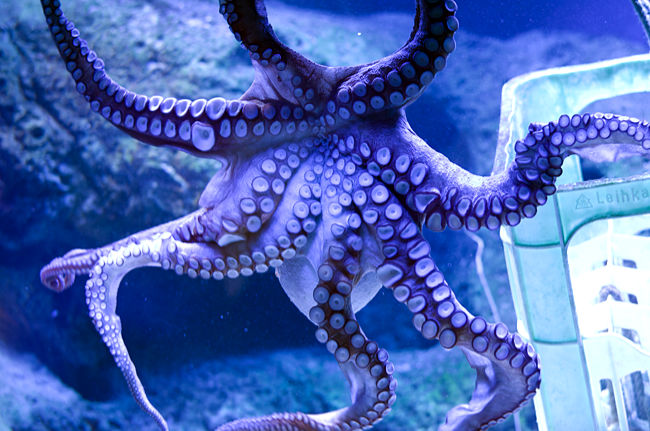
Since early 2008, Bremerhaven has not only had a new tallest building but also a new landmark in its Weser-side skyline with the ATLANTIC Hotel SAIL City, which rises 147 meters directly behind the Weserdeich. Architecturally, the structure perfectly embodies a maritime city - it stands like a powerful, rounded ship's superstructure. On the 20th floor, at a height of 77 meters, there is an observation deck (SAIL City) that is also accessible to non-guests.
read more ...
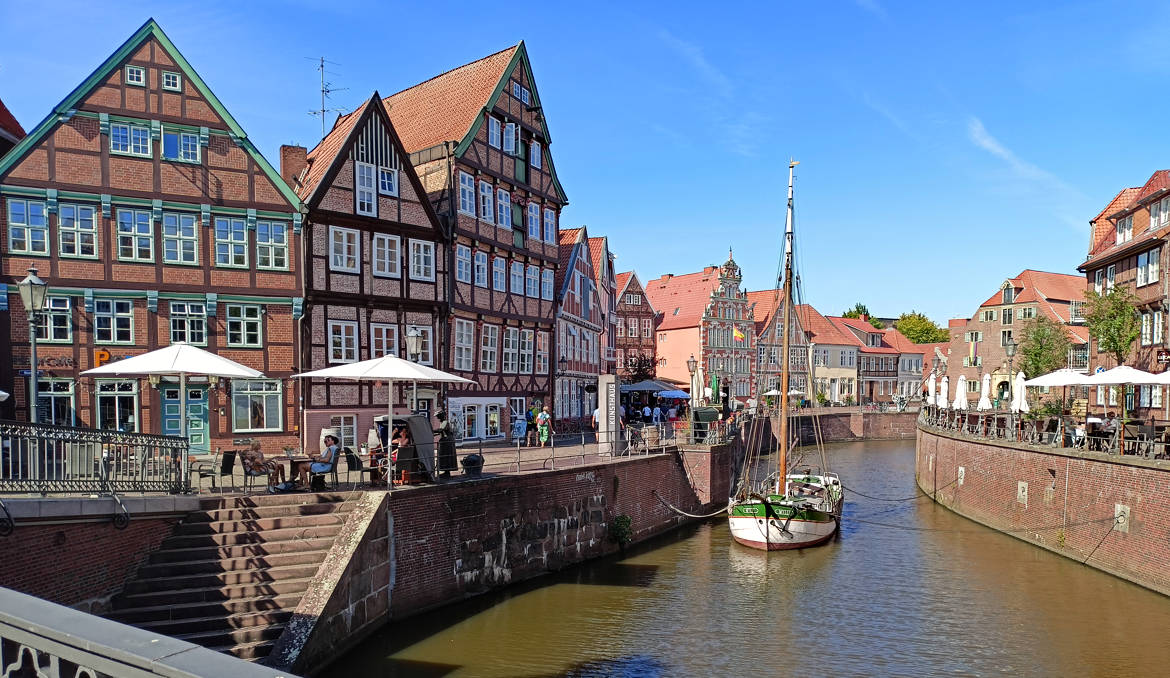
Stade - on the banks of the Schwinge River
Do you know Stade? No? What a shame! Then feel free to read on if you'd like to learn about this smaller Hanseatic city on the Elbe, neighboring the much larger Elbe metropolis of Hamburg. As is often the case, the tourist's gaze doesn't fall on the entire city but rather focuses here on the historic city center and a bit of its surroundings. In our opinion, Stade is a beautiful and worthwhile destination for a short visit or even a few extra days.
read more ...
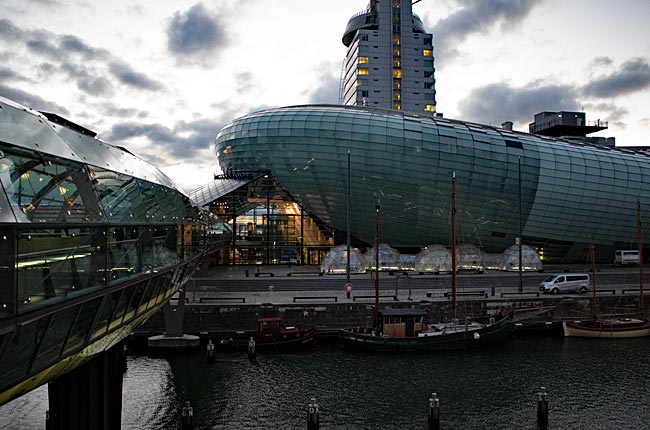
Klimahaus® Bremerhaven 8° Ost
In this futuristic building, visitors embark on a journey along the 8th meridian east, traveling around the globe through all climate zones. Across multiple levels, there is plenty to read, see, hear, and experience sensorially and tactilely about climate and its impact on local nature and human life. Visitors are not limited to being passive observers but are invited to actively engage with numerous exhibits.
read more ...
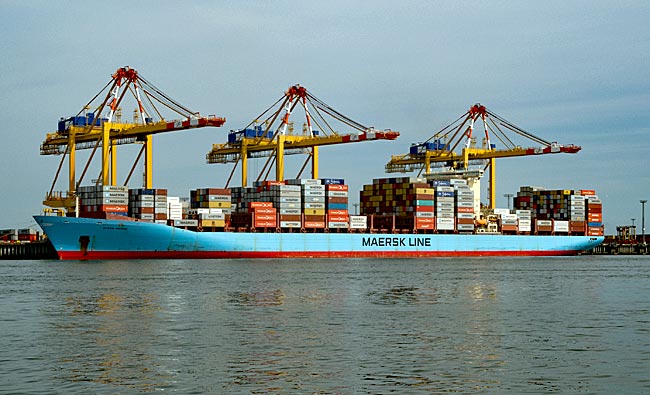
Bremerhaven - Überseehafen (Overseas Port)
In addition to the Old Harbor (now the Museum Harbor), which was the first to be built, other ports were later added. Adjacent to the New Harbor lies Kaiserhafen I, the first in a series of additional harbor basins. Even a glance into this initial section of the expansive port area reveals a different world of maritime activity - one of large ships. And we will see even larger ones along the five-kilometer-long quay on the Weser.
read more ...
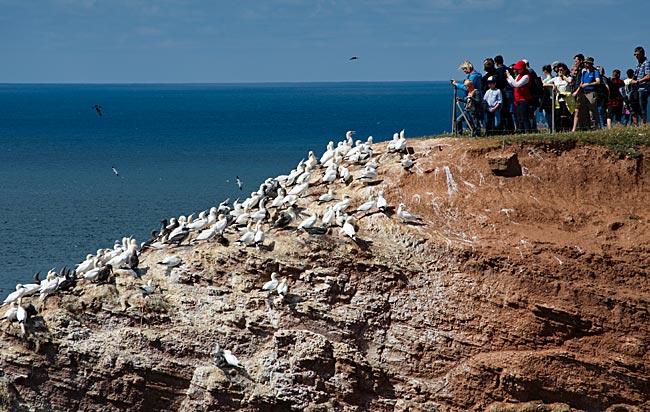
Heligoland - a day trip
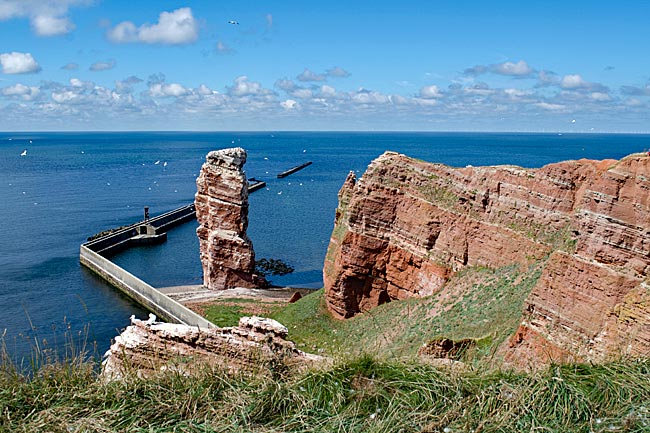
Germany's only supposed high-seas island is a destination for thousands of visitors each year, most of whom are day-trippers during the warmer months. And yes, admittedly, Heligoland isn't immediately in Bremen's surrounding area. However, it can be reached as a day trip from Bremerhaven and Cuxhaven - which is why we decided to visit.
read more ...
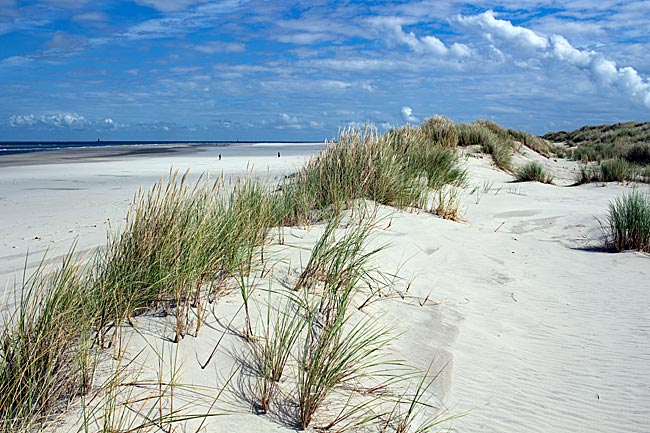
The East Frisian Island Wangerooge
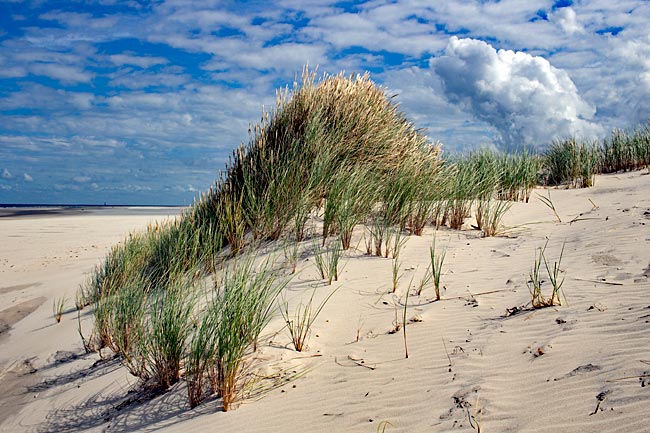
Among the inhabited East Frisian Islands, Wangerooge is the second smallest (7.94 km²) after Baltrum and car-free, making a stroll through town much more pleasant compared to other islands, especially since distances can easily be covered on foot. From the small train station, you're just a few steps away from the heart of the village, quickly finding yourself in front of the unmistakable Old Lighthouse, which now houses the island museum. From 1856 to 1969, this lighthouse served as a maritime navigation aid, guiding ships safely along their routes. Just how far its light could be seen becomes clear when you climb the 149 steps to the lantern room—from there, you can step out onto the surrounding gallery and enjoy a sweeping view of the island and the North Sea.
read more ...
Wilhelmshaven – Seaside City on the Jadebusen
It's hard to imagine Wilhelmshaven without its naval presence, as the city only developed after a naval base was built in the 19th century. Even today, the German Armed Forces (Bundeswehr) maintain a large base here with several squadrons. Yet, there is much more to discover in this port city beyond its military significance.
read more ...