
 exploring Bremen & its surrounding areas
 You are here: worth seeing in Findorff district
 Bremen Freimarkt (2/2)
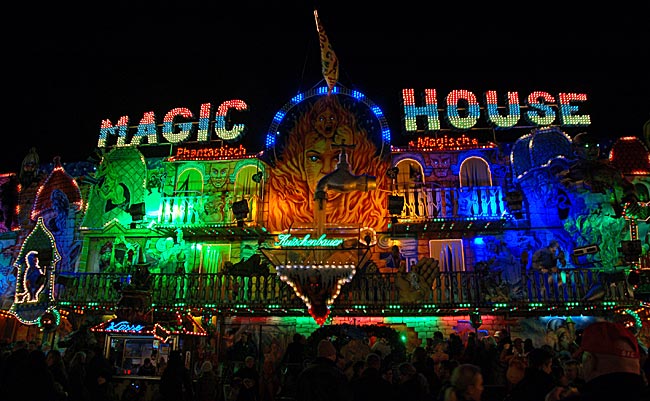
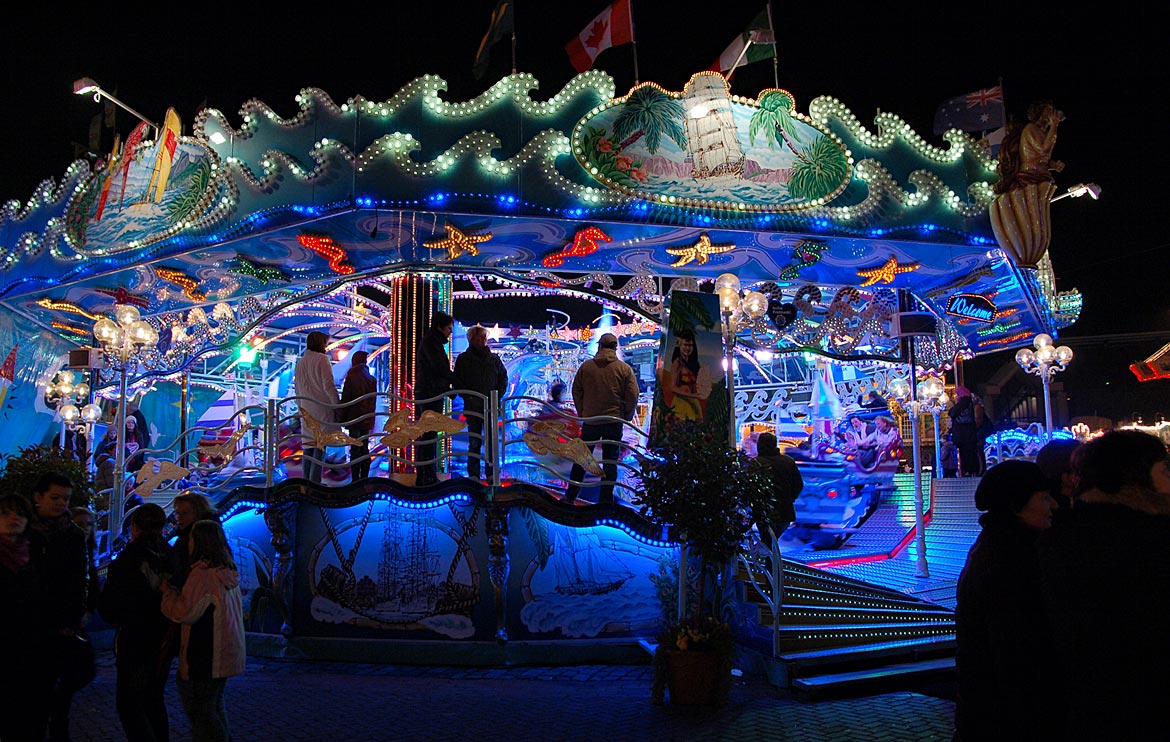
The magic of the colorful lights truly comes to life only after sunset.
Sometimes, just watching can make your stomach rumble dangerously with the food you previously enjoyed with gusto. But for the willing hardy souls, playing with gravity is pure pleasure. However, the prices of the rides sometimes literally bring tears to one's eyes. But "Ischa Freimaak" – it is Freimarkt, as the people of Bremen say.
What today presents itself as a noisy public amusement has a different origin. On October 16, 1035, Emperor Conrad II granted the fair rights to the cathedral city (mentioned for the first time in historical records in either 860 or 782 AD, depending on the source). This privilege allowed the city to hold a fair twice a year – seven days before Pentecost and seven days before the feast of St. Willehad on November 8. Although such fairs also entertained the public with jugglers, jesters, and musicians, trade in various goods was the main focus. The autumn market quickly gained particular importance because after the harvest, farmers came to the city to stock up on goods from urban and traveling merchants and traders, as well as handcrafted products from the city's guilds for the winter. During the fair days, the regulations that generally governed trade and prices in the diocese were suspended, and the sale of goods was free from any restrictions. Hence the name "Freimarkt," meaning a free market.
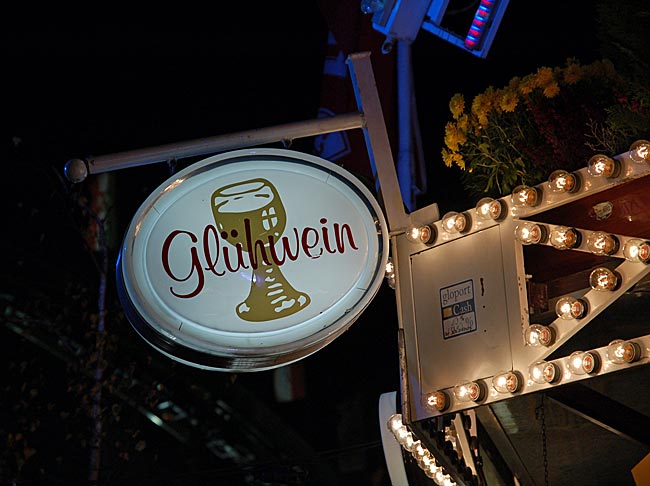
A sip against the cold might have been available even back then
The transition from a sales market to an amusement fair did not occur until 1809, as can be gathered from city historical documents. At that time, the first carousel appeared at the Freimarkt. During the Napoleonic era – in 1810 Napoleon I annexed not only large parts of northern Germany but also Bremen – and especially after the Wars of Liberation (1813-1815), their numbers increased rapidly year by year. Incidentally, this period also saw the birth of Oktoberfest, which came into being in 1810 on the Isar River. The development from human- or horse-powered to "self-driving" carousels began in the mid-1890s when a steam-powered carousel – a roller coaster – invited visitors to ride at the Freimarkt. And since then ... well, you know: higher, faster, further.
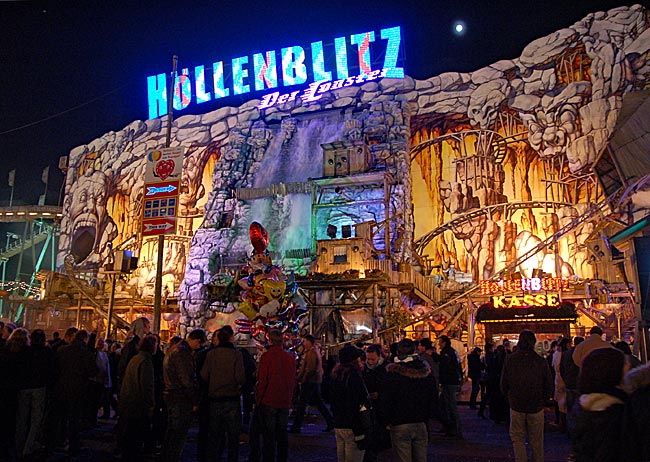
Well, that would have to go against the devil ...
Over the centuries, the duration and location of the event changed frequently, not least because the third-largest folk festival in Germany grew increasingly popular and steadily expanded in size. In 1936, the Freimarkt finally found its home on the so-called Bürgerweide, where it is still held today.
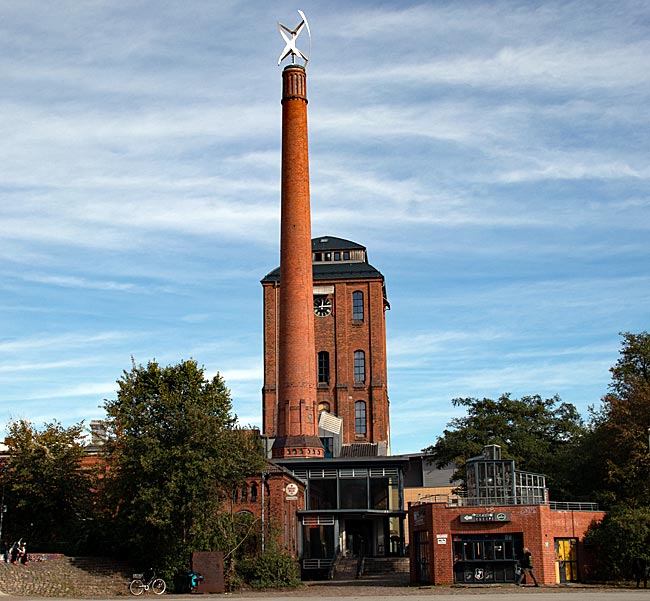
The Schlachthofkneipe at the Schlachthof cultural center on Bürgerweide is also well attended during the Freimarkt season
Although the Hanseatic city sometimes struggled with food shortages in past times, desperate, starving citizens did not graze here; instead, it was the beloved livestock of the latter. History tells us that in 1032, citizens of Bremen asked the widowed and wealthy Countess Emma of Lesum – Lesum is now a district in northern Bremen – for grazing land for their livestock. The area should be as large as one of the men present could circle in an hour, according to the countess's offer.
Her accidentally present brother-in-law saw his future inheritance dwindling, asked the countess to lead the action, and chose a beggar only capable of crawling. However, he unexpectedly made good progress, so the pasture finally turned out larger than the citizens had hoped. Well, as they say, "he who digs a pit for others..." The Bremers were pleased, the livestock even more so, and today's Freimarkt visitors are all the more so, as they can "graze" the place until their feet can't take it anymore.
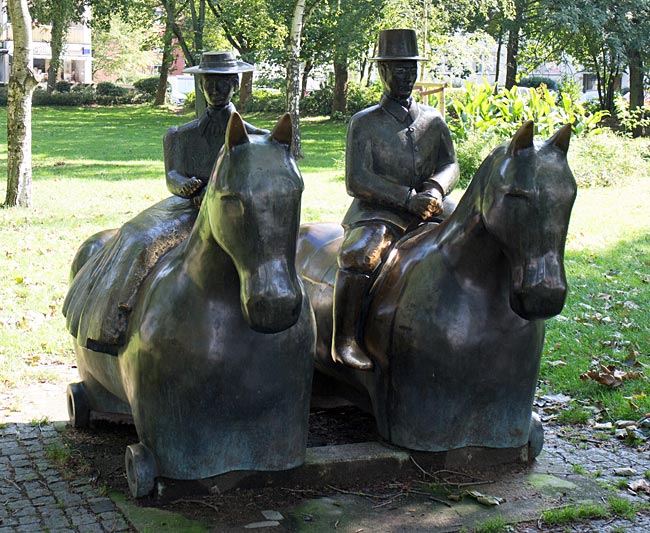
Sculpture by Bremen artist Thomas Recker: Countess Emma and Duke Benno on horseback
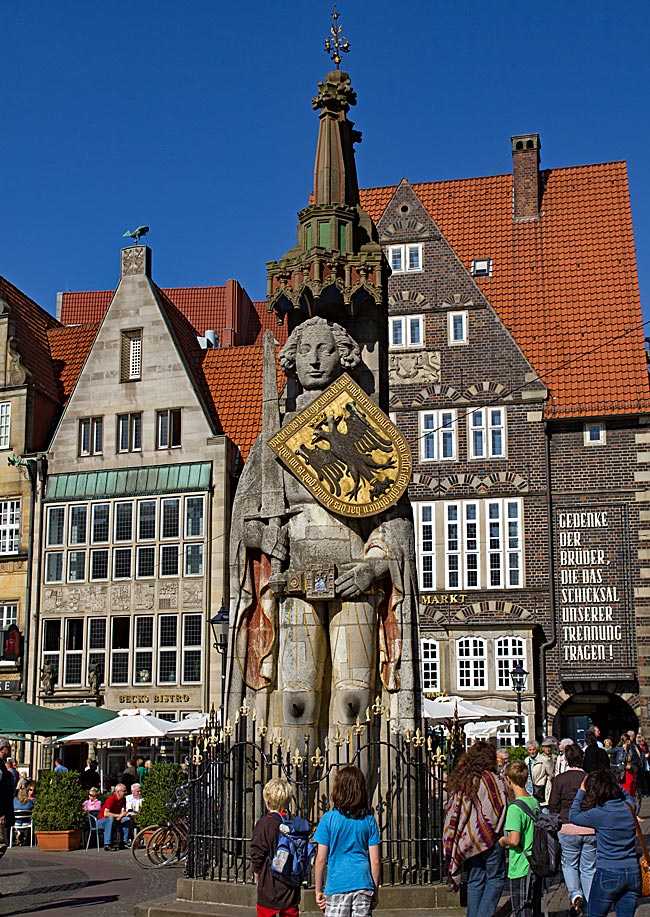
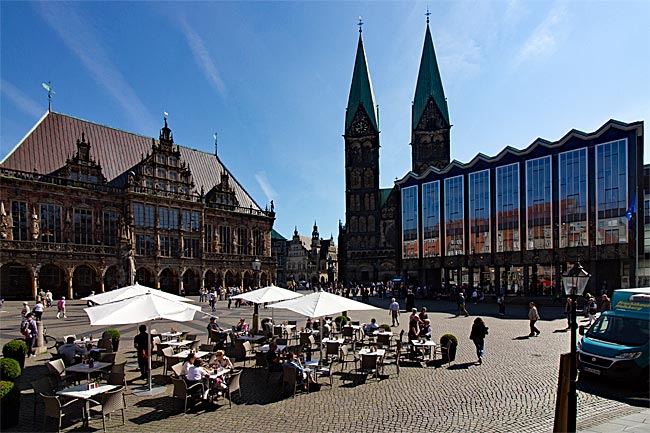
In general, the inhabitants of Bremen were a freedom-loving people who made their demands clear to their ruler, the archbishop, and sometimes showed little respect. This is perhaps most evident on the market square in the city center. Not only does a miniature version of the large Freimarkt take place there at the same time, but since 1404, the sandstone Roland statue erected by citizens has stood proudly and upright.
His challenging gaze seems to be directed at the former bishop's seat, the cathedral, although this would be a misinterpretation. The then ruler in Bremen had his seat with the bishop and refused to yield to the citizens' demands for justice and freedom. An apparently forged document purportedly from the emperor finally helped the people of Bremen nonetheless. "Freedom I reveal to you, Karl" – meaning Charlemagne (8th century) – "and many a prince indeed has given this city. It is my advice to give thanks to God," reads the inscription on his shield with the imperial eagle, the coat of arms of the emperor that Roland bears.
For centuries, the people of Bremen considered their Roland a kind of protective saint: before setting out on a journey, citizens of the Weser city would stroke the left knee of the Roland in the hope of good luck and a safe return home.
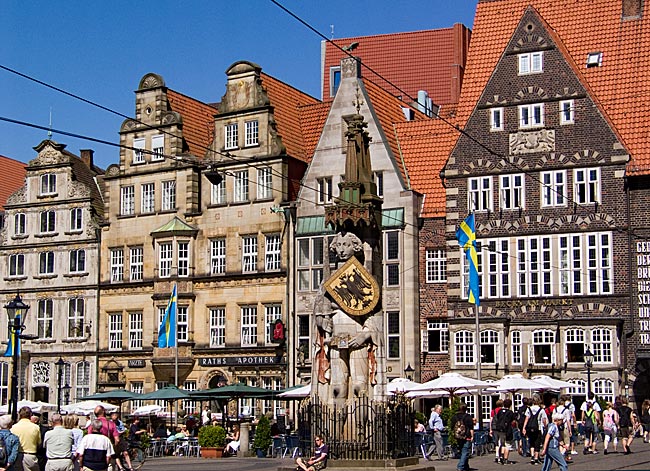
Even if he is sometimes besieged, the Roland statue should no longer be touched today, as the soft sandstone has suffered greatly in the past
The spectacle of Freimarkt always opens on a Friday, and already on the first evening, they really let it rip, for then a fireworks display takes place. If Freimarkt on Bürgerweide and Little Freimarkt on the inner-city market square are not enough, one can watch the Freimarkt parade in the morning of the second Saturday of the festival. At this event, which has long been a tradition since the post-war period, over 100 colorful decorated wagons, dance and music groups, and others now march through Neustadt to the city center with loud fanfare. "Ischa Freimaak," anyone who hasn't realized it by then certainly knows it by then.
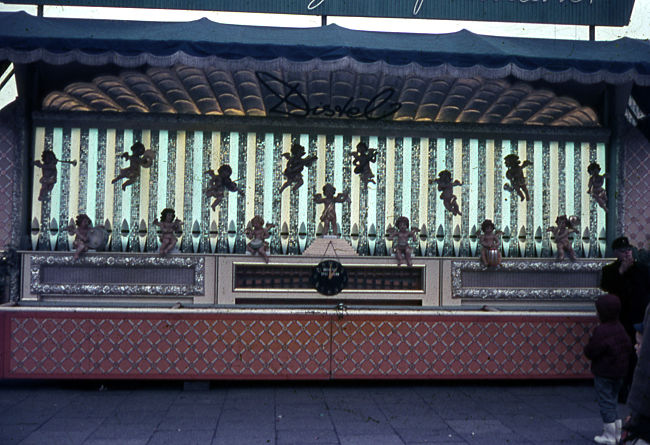
Also a long-standing tradition: an organ greeted visitors to the Freimarkt in front of the train station, as seen here in 1965. Archive image
But even before this form of parade became a fixed part of the festival season, there was a traditional procession: the Klosterochsenzug. For 200 years until the founding of the German Empire in 1871, colorful decorated oxen were led through the city during Freimarkt time and then auctioned off for the benefit of the Franciscan monastery St. Johannes in the Schnoor district. The so-called Steinhäuser Vase in the Wallanlagen depicts this history.
previous page
 next page
Bürgerpark (Citizens' Park)
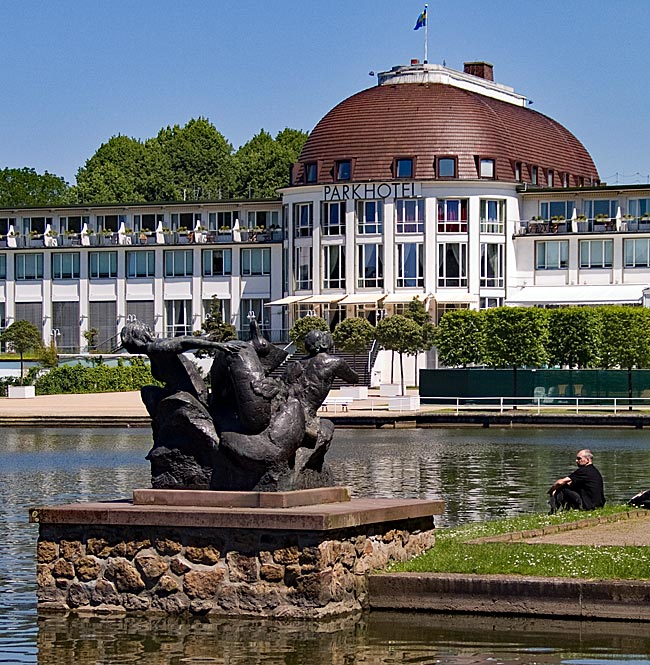
A green oasis near the city center and a widely used recreational area is the Bürgerpark. The extensive park, which adjoins today's Bürgerweide behind the train station, was initiated by the citizens themselves. At the beginning of the 19th century, the old defensive structures of the city had already been dismantled, and the ramparts were transformed into a park landscape. However, as the city rapidly grew throughout the century, the demand for more green spaces became increasingly louder.
read more ...
Übersee-Museum (Overseas Museum)
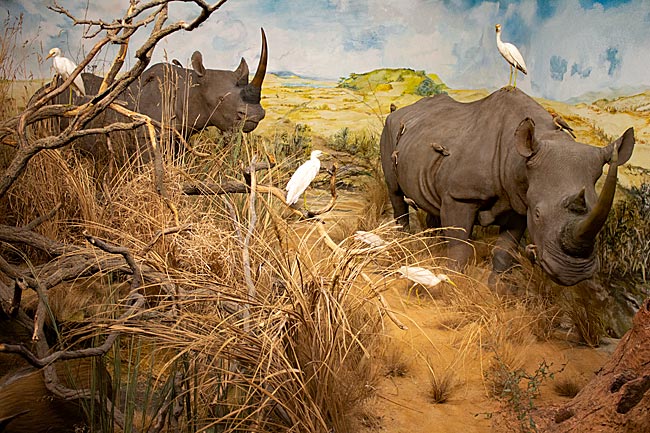
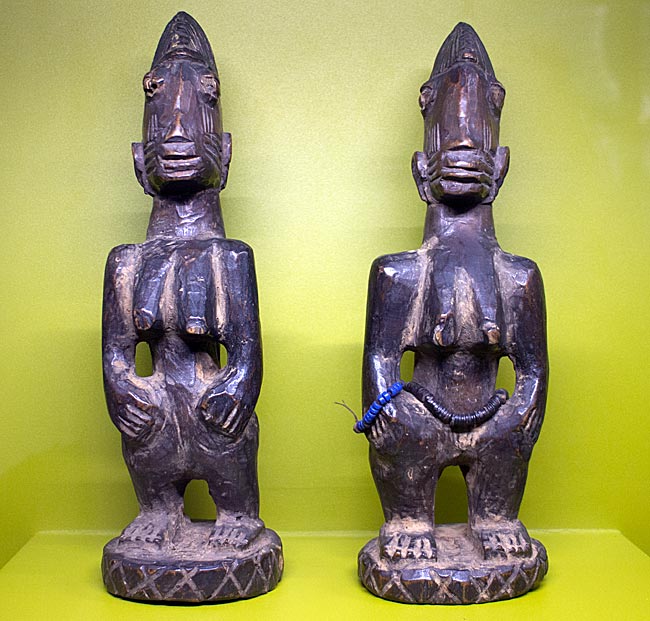
In 1896, what is now known as the Übersee-Museum first opened its doors under the name 'Municipal Museum for Natural History, Ethnology, and Commerce.' The exhibits initially came from the 'Municipal Collections of Natural History and Ethnography,' which were partly displayed as a 'Trade and Colonial Exhibition' at the 'Northwest German Trade and Industry Exhibition' in 1890 with great success. Since its founding, the museum's concepts have changed several times, evolving toward a stronger focus on museum education that continues to this day.
read more ...
By bike from central station to Vegesack
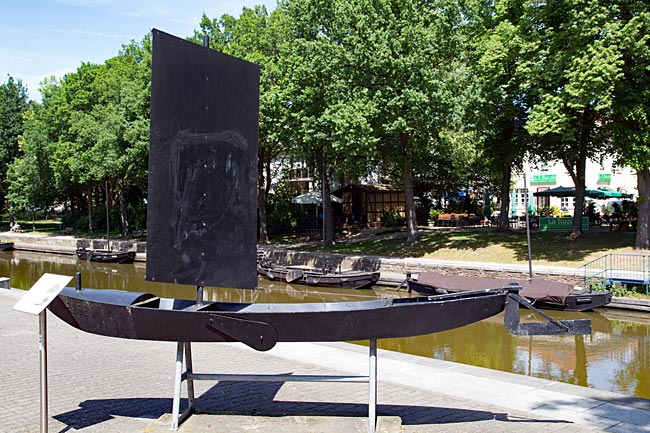
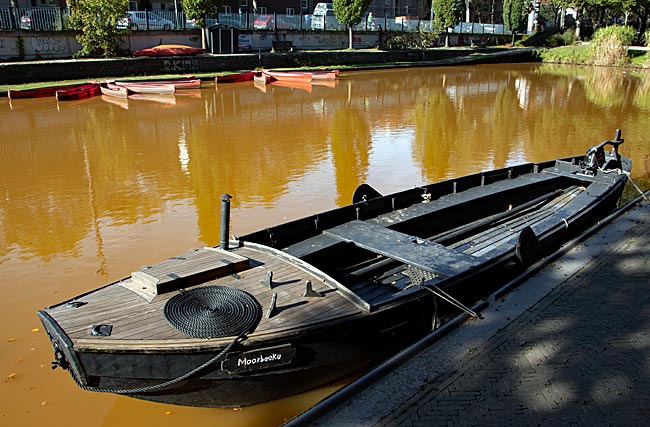
The journey starts at central station, passing through Bürgerweide by the distinctive Stadthalle, Congress Center, and trade fair halls, then continues through Findorff district along the Torfkanal. This canal, which runs along the edge of Bürgerpark and Stadtwald, was constructed between 1817 and 1826 to transport peat from the Teufelsmoor in Lower Saxony near Worpswede to Bremen using peat barges.
read more ...
Kale & Pinkel
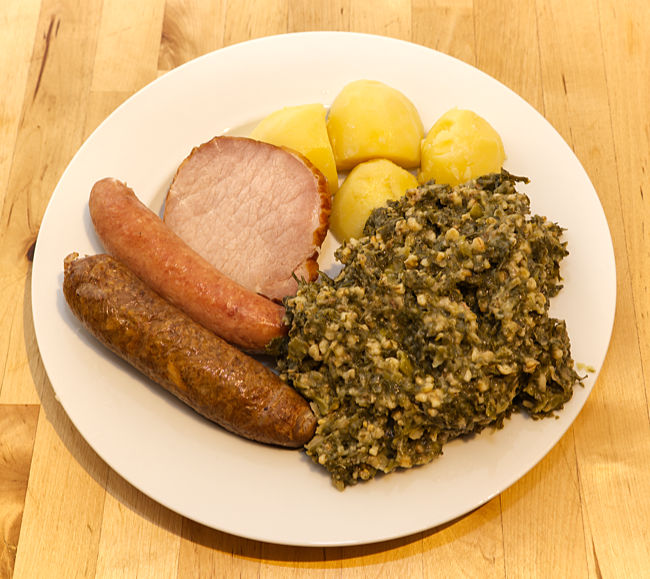
Every year between October and February, it's that time again: Kale (Grünkohl) season. Usually by late October/early November, the mostly green, palm-like plants - up to 180 cm tall depending on the variety and rich in vitamins and minerals - are ready for harvest. These plants are commonly found in Bremen, even in the beds of allotment gardens. Since the curly leaves of this cruciferous vegetable, once stripped of stems and stalks, can appear slightly brown or green - or turn a bit brownish with a lot of imagination when cooked - many people from Bremen also call Grünkohl "Braunkohl" (brown cabbage).
read more ...
Schnoor
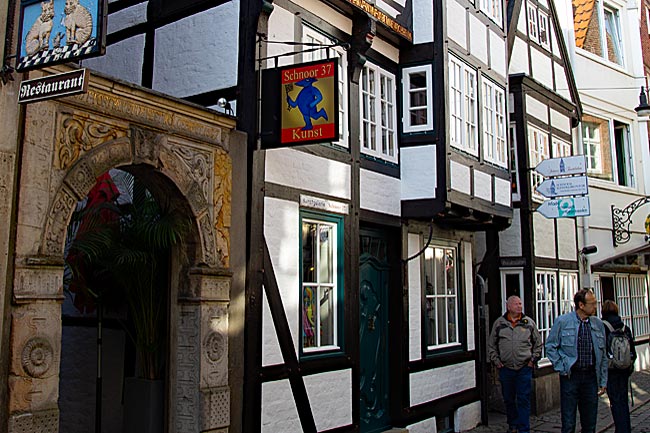
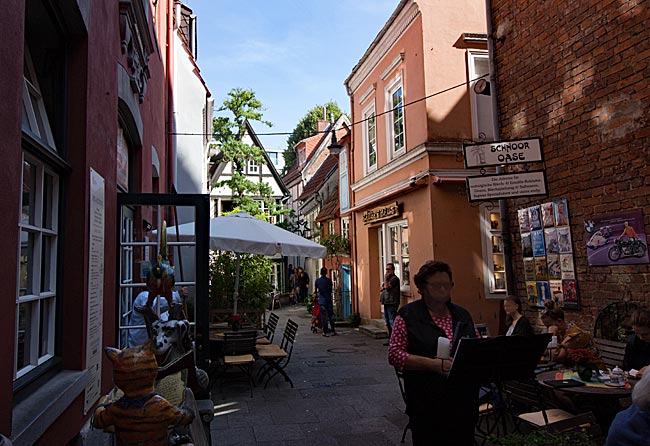
Bremen's oldest preserved neighborhood is the Schnoor. In earlier times, this area was primarily inhabited by fishermen and sailors, as it was here that the Balge - a tributary of the Weser - ran, and one of Bremen's first harbors was located. Many of the small houses date back to the 17th century or have been reconstructed based on historical models. The house at No. 15 in Schnoor Lane, built in 1402 on medieval foundations, is one of the oldest structures in the Schnoor, alongside the Packhaus (1401).
read more ...
Findorff district
The history of the Findorff district is closely tied to the moors of Lower Saxony's surrounding countryside. In 1819, the so-called "Torfkanal" (Peat Canal) was dug to transport peat as fuel, particularly from Teufelsmoor, by waterway to Bremen. Even today, the second peat harbor, built in 1873, exists in a smaller form within the district, with traditional peat barges still moored there. However, peat transportation no longer plays any role.
read more ...
Roland statue
Since 1404, the Roland statue, a 5.55-meter-tall (10.21 meters total) sandstone knight with a drawn sword and shield on his chest, stands on the market square in front of the town hall. Like in numerous other European cities, Bremen's Roland also serves as a symbol of the city's freedom, which in earlier times stemmed from its market rights and independent jurisdiction.
read more ...