
 exploring Bremen & its surrounding areas
 You are here: worth seeing in
Horn-Lehe district
You are here: worth seeing in
Horn-Lehe district
 Exploring Horn-Lehe district (2/3)
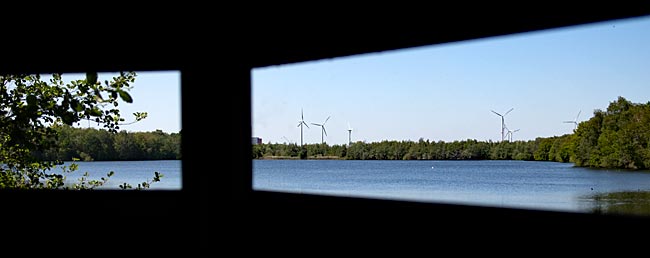
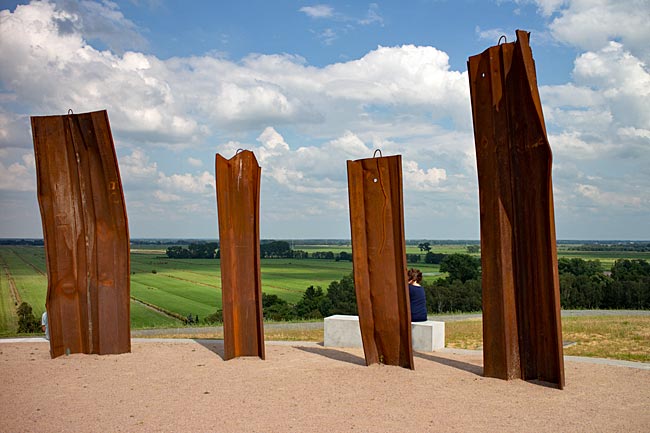
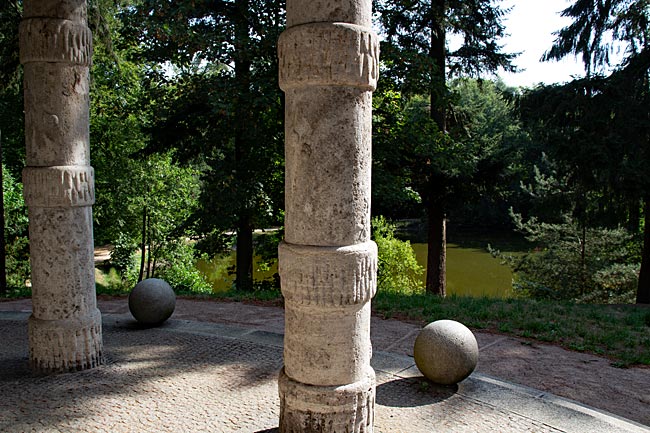
No water sports are allowed at Kuhgrabensee near Kuhgrabenweg, as it is a nature reserve and part of the Walle district. The lake, created in the 1970s due to sand extraction for highway construction and now fed by groundwater, spans 21 hectares, making it one of the largest in the Hanseatic city. Due to a nearby salt dome, the water is actually saline. The photo was taken from an observation hut, which allows birdwatching but not viewing the reportedly stunning underwater world of this up-to-16-meter-deep lake.
Not only watersports enthusiasts appreciate the path; parallel to it runs a well-paved road leading to a self-service lock, where it meets another well-paved road on the dike. Along the dike, there are numerous working farms, some with farm shops or vending machines offering fresh locally produced goods such as meat, dairy products, fruit and vegetables, juices, or ice cream - mostly organic.
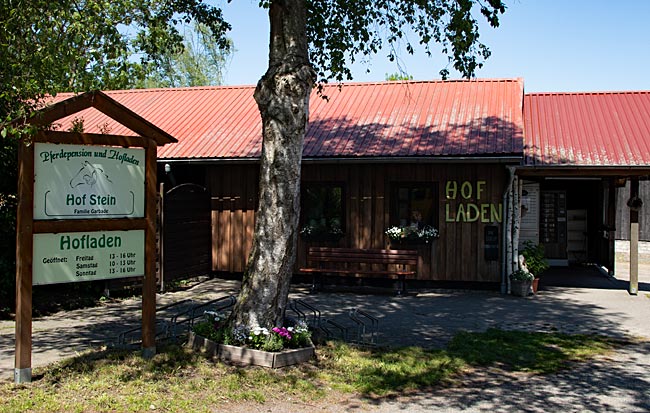
Directly from the producers, so consumers know where it comes from. It’s great, but not a supermarket, so opening hours are limited
Many cyclists use the long, well-maintained path on the dike in both directions to finally let loose. However, “Rubber the road, man” doesn’t go over well with all passersby. There is car traffic (only with permits) and especially large agricultural machinery, but on weekends with good weather, many leisure cyclists, walkers, skaters, etc., including children, populate the route. A little consideration goes a long way ...
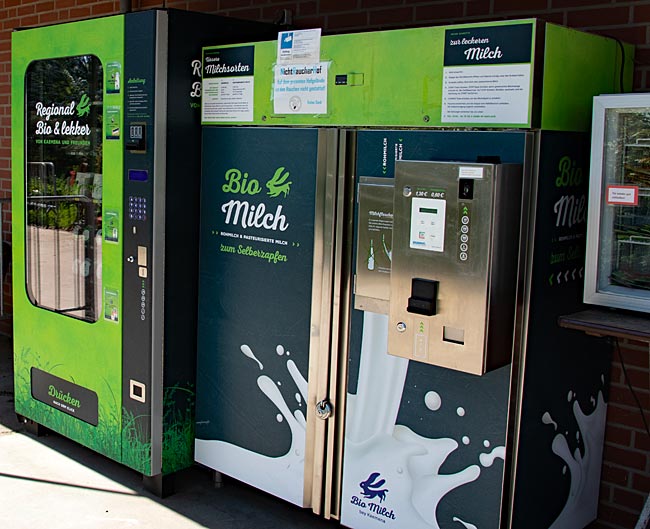
Vending machines at Bio-Hof Kaemena offer milk, canned sausage, cheese, and ice cream from their own production and like-minded partners
The name Kuhgraben actually comes from cattle, as the ditch prevented them from leaving their pasture. Today, the waterway only extends into the Stadtwald - good for the canoe rental at Torfhafen in the Findorff district near Bürgerpark, where those who rent a boat can travel via Torfkanal into Kuhgraben and beyond if they wish. The southern part of Kuhgraben was previously filled in and built over.
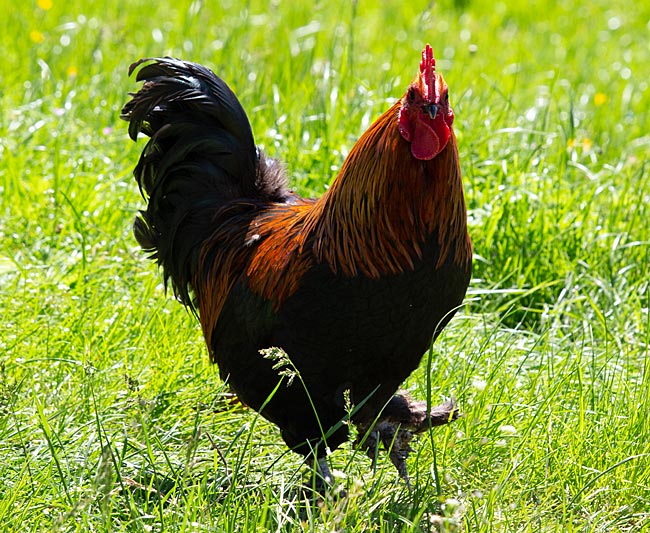
Not only cows are found along Wümme-Deich and Kuhgrabenweg but also poultry, like this proud rooster on Gartelmann’s farm
The aforementioned Stadtwald directly borders - separated only by the railway line - the older Bürgerpark. Established in the first decade of the 20th century, it expanded the park area to around 200 hectares. A diverse park landscape of this size, featuring a mini-zoo, free-roaming deer, playgrounds, other recreational offerings, and dining options near the central station on the edge of the historic city center, is a true highlight in the Hanseatic city. It not only significantly enhances the quality of life for residents in adjacent districts but also attracts people from many parts of Bremen.
The 1913-completed observation tower on an artificial mound is a popular destination in Stadtwald; at its base lies the Kleine Stadtwaldsee
The ensemble is enriched by Stadtwaldsee, locally called Uni-See because it was an excavation lake for constructing Autobahn 27 and especially the university, making it not a natural body of water. That doesn’t deter its use - swimming, sunbathing, surfing, diving, or just chilling are all possible, even in frosty temperatures; you’re rarely alone here.
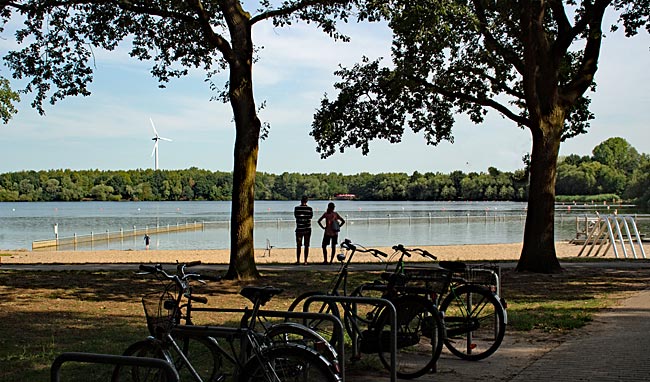
Stadtwaldsee (or Uni-See) sees a summer rush of water rats and watersports enthusiasts, with plenty happening year-round
Just a few meters from the lake and easily accessible via Hochschulring is HanseCamping, the city’s campsite. Many of Bremen’s attractions can be reached quickly by bike, public transport, or even on foot from this 5-star site.
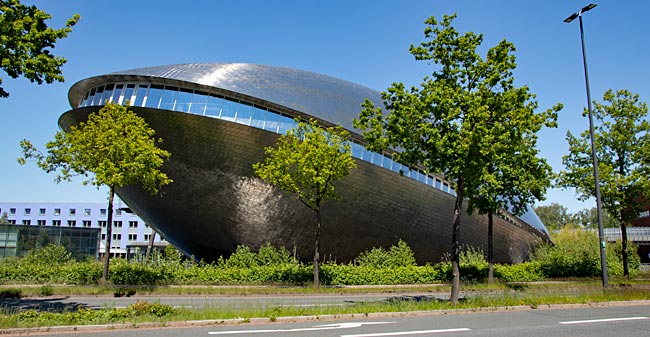
Almost like a whale, the Universum® Science Center Bremen seems to emerge from a flat lake. A glass walkway connects the original building with the later-added SchauBox and the outdoor area, EntdeckerPark.
This includes the Universum® Science Center Bremen at the campus edge; at least the original early-2000s structure is worth seeing, resembling a whale. The inner value of this scientifically oriented facility - expanded significantly in subsequent years - especially encourages younger visitors to actively participate. Each visitor can judge its merits after an extended visit.
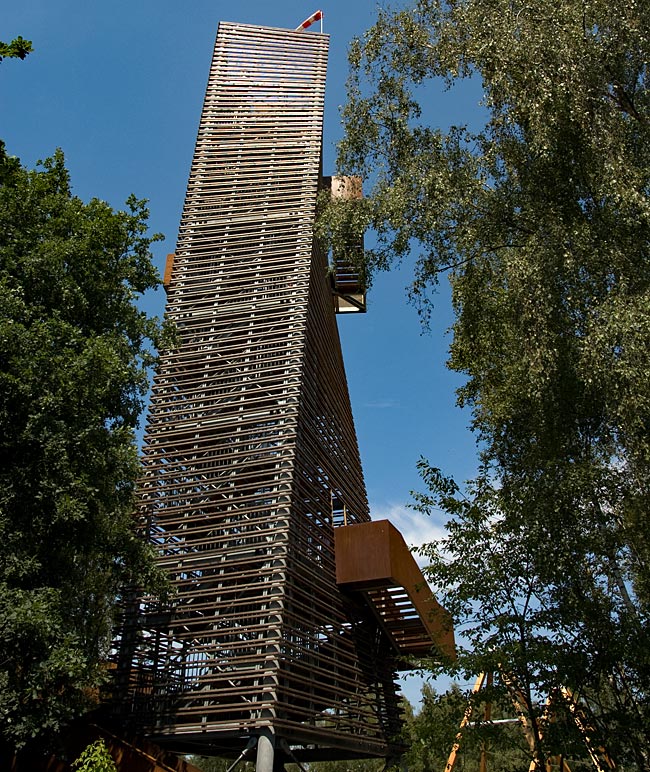
Whoever reaches the top first ...


Map
Further information
www.rhododendronpark-bremen.de
botanika GmbH
Deliusweg 40
28359 Bremen
Phone: +49 421 427066-65
Email: info@botanika-bremen.de
www.botanika-bremen.de
Landesverband der Gartenfreunde Bremen e. V. (Bremen Association of Garden Lovers)
Johann-Friedrich-Walte-Str. 2
28357 Bremen
Phone: +49 421 3365510
Email: bremen@gartenfreunde.de
https://gartenfreundebremen.de/floratrium/
Office hours:
Monday – Friday: 9 AM to 1 PM
Monday – Thursday: 2 PM to 4 PM
Appointments by arrangement
Educational and Experience Garden hours:
Monday – Wednesday: 8 AM to 4 PM
Thursday: 8 AM to 5:30 PM
Friday: 8 AM to 12:30 PM
Additional appointments by arrangement
Through Walle district to the industrial ports
The history of Walle began, like that of many other districts in Bremen, long ago as an independent village, more precisely, it started only as the seat of the Ministerial family von Walle. The first mention of the old village dates back to the year 1139. From this family came both farmers and citizens. Thus, with the settlement of more people, the family estate grew into a village around the manor. Walle was incorporated into the Hanseatic city in several steps, first between 1885 and 1902.
read more ...
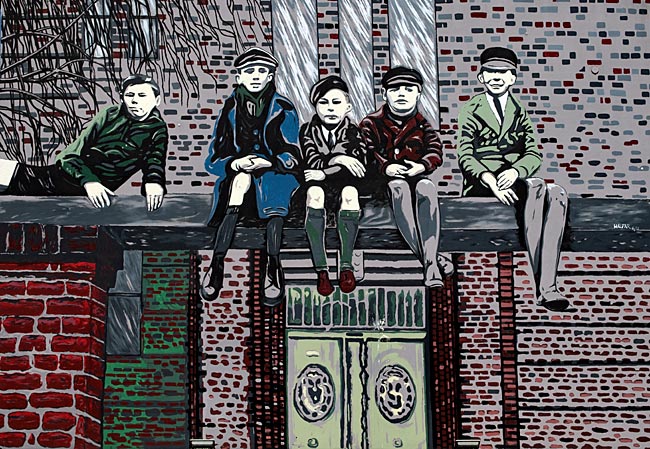
Rhododendron Park photo tour during blooming season
We are exploring the Rhododendron Park with our cameras during the blooming season and showcasing the most fascinating creations of nature.
read more ...
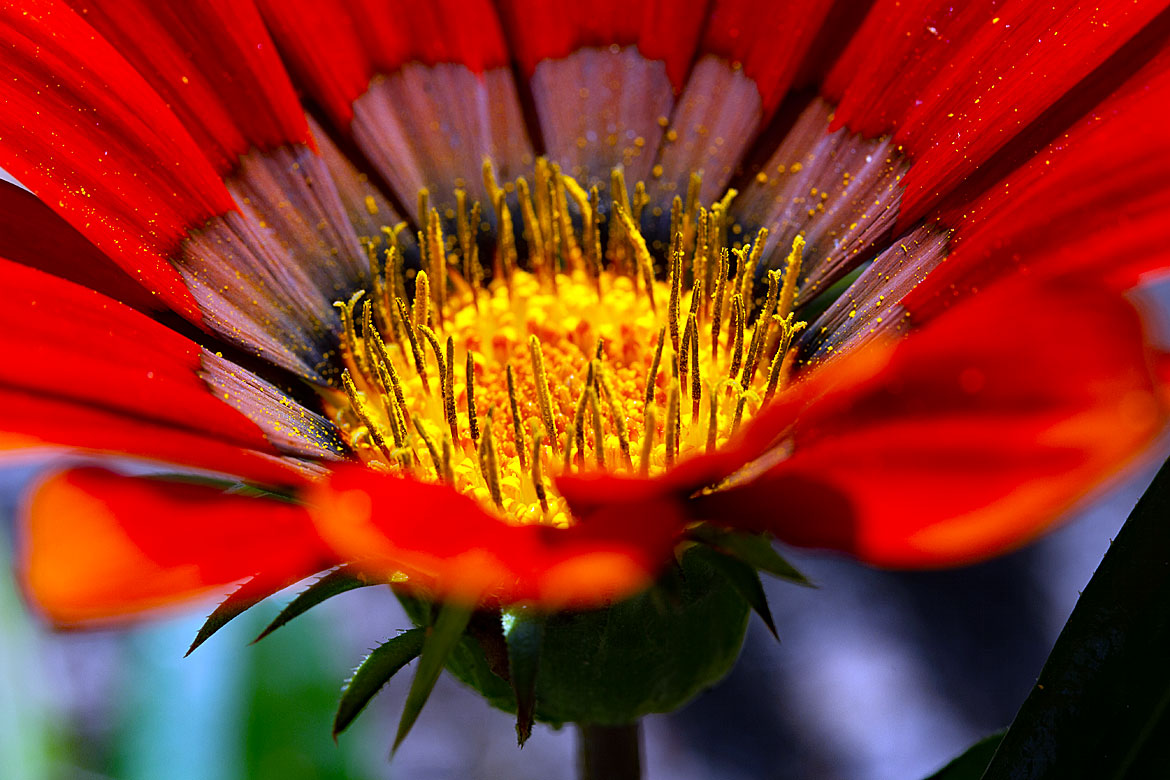
botanika
In the heart of Rhododendron Park, next to the café, is the botanika. Originally planned as a contribution to Expo 2000, various factors led to changes, and the largely glass structure was finally opened in 2003.
read more ...
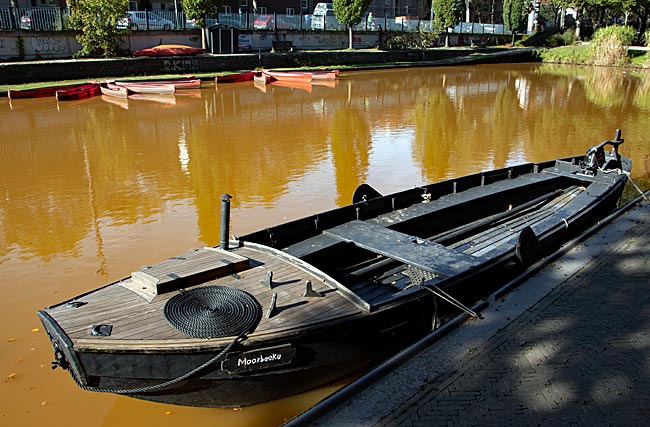
Findorff district
The history of the Findorff district is closely tied to the moors of Lower Saxony's surrounding countryside. In 1819, the so-called "Torfkanal" (Peat Canal) was dug to transport peat as fuel, particularly from Teufelsmoor, by waterway to Bremen. Even today, the second peat harbor, built in 1873, exists in a smaller form within the district, with traditional peat barges still moored there. However, peat transportation no longer plays any role.
read more ...
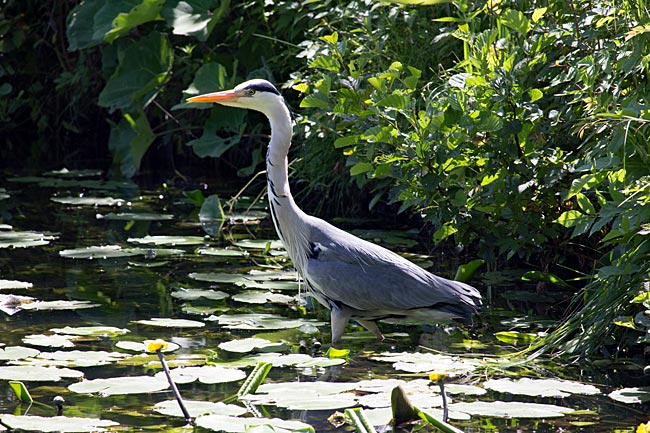
Bürgerpark
A green oasis near the city center and a heavily used recreational area is the Bürgerpark. The extensive park, which adjoins today's Bürgerweide behind the train station, was initiated by the citizens themselves. At the beginning of the 19th century, the old defensive structures of the city had already been dismantled, and the ramparts were transformed into a park landscape. However, as the city rapidly grew throughout the century, the demand for more green spaces became increasingly louder.
read more ...
Stadtwald & Stadtwaldsee (urban forest & lake)
Stadtwald & Stadtwaldsee. The design of the Bürgerpark is attributed to Wilhelm Benque, who served as its director from 1866–1870 and again from 1877–1884. Carl Orth succeeded him in this role, and under his plans, construction of the Stadtwald began in 1907. The 66.5-hectare site north of the railway tracks had been donated to the Bürgerpark Association by the Bremen merchant Franz E. Schütte one year earlier.
read more ...
Water-based activities in Bremen
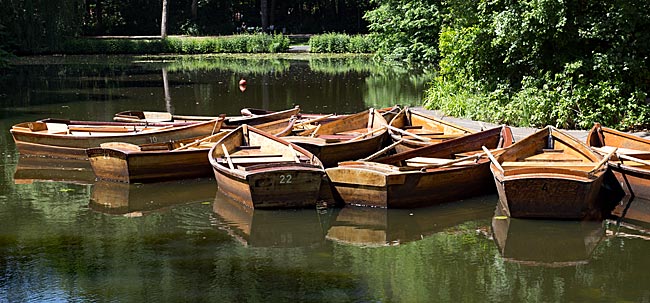
Given that Bremen is a city on a major river with numerous lakes, it makes sense to extend sports or other personal water-related activities from land to water. The most family-friendly activity on the wet element is certainly taking a rowboat ride along the canals of Bürgerpark.
read more ...