
 exploring Bremen & its surrounding areas
 You are here: worth seeing in
Horn-Lehe district
You are here: worth seeing in
Horn-Lehe district
 Exploring Horn-Lehe district (3/3)
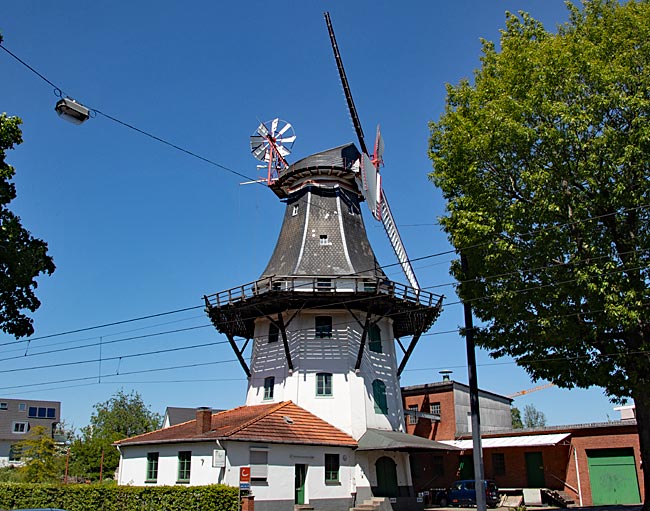
The landmark of the district initially operated with wind power, later with a steam engine, and finally from 1926 with a diesel motor
Change of Location: If you take the route (by car) from Universum® to the highway feeder road University / Horn-Lehe district without actually driving onto the highway but rather crossing over it, you will come across the Lilienthaler Heerstraße. To the left, the main road with the tram line leads to Borgfeld and - beyond to the state border - to Lilienthal in Lower Saxony, but to reach our destination, we turn right and follow the road - unspectacularly.
Some mills grind slowly; others no longer work at all, like the Horner Mühle, which you pass shortly after a right turn. The Dutch-style windmill was built in 1848, and that passersby can still enjoy its sight today is due to much dedication and money spent.
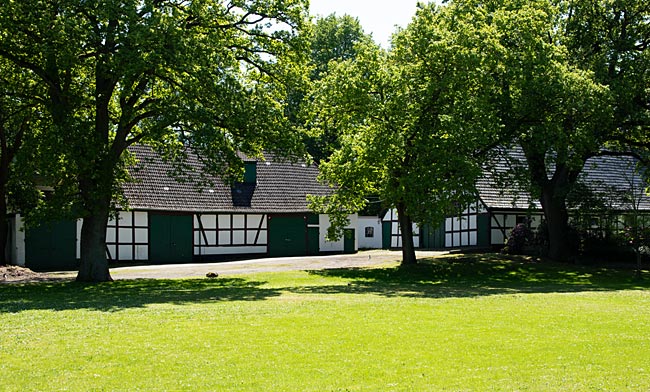
The last remnants of the district's agricultural past can still be found here
The "analog wind power plant" threatened to decay; even the monument protection, which has safeguarded the historic building since 1967, did not initially change that - wood is simply a perishable material. Initial restoration measures in the 1970s preserved the structure, and after further comprehensive renovation and several years, the district's landmark finally received four new wings in 2017 - each 22 meters long and weighing 500 kilograms. And that’s a good thing because the mill gave its name to the residential quarter behind it, developed in the second decade of the new millennium: Mühlenviertel.
Unlike two other beautifully restored windmills in the city, the Horner Mühle does not serve any further function. If interested, you can find one of these mills with a gastronomic operation in the Wallanlagen; the other is located in Oberneuland and serves as an outpost of the Focke Museum, Bremen’s state museum for art and cultural history in the neighboring district of Schwachhausen, subdistrict Riensberg.
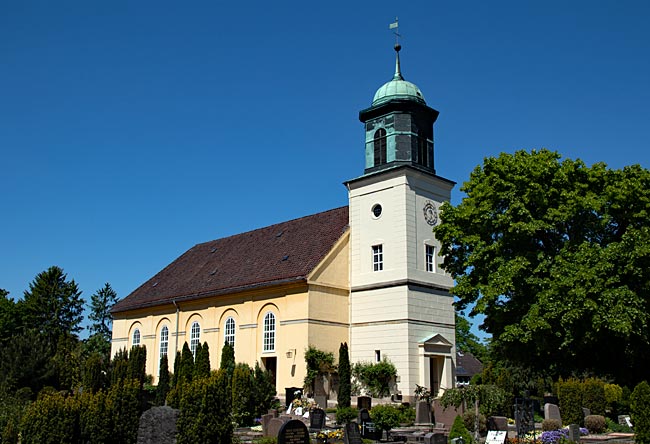
The Horner Church presents itself quite plainly with its copper-clad tower roof
If you follow the road, you will soon pass under the Bremen-Hamburg railway line and immediately after a large intersection, you will encounter the Horner Church or the Evangelical Church of the Holy Cross. The foundation stone for this classical-style sacred building on an enclosed cemetery was laid in 1823. Externally, the church, which has been under monument protection since 1973, appears quite plain, and even the interior seems orderly, unadorned, and rather modern - this is a consequence of war damage.
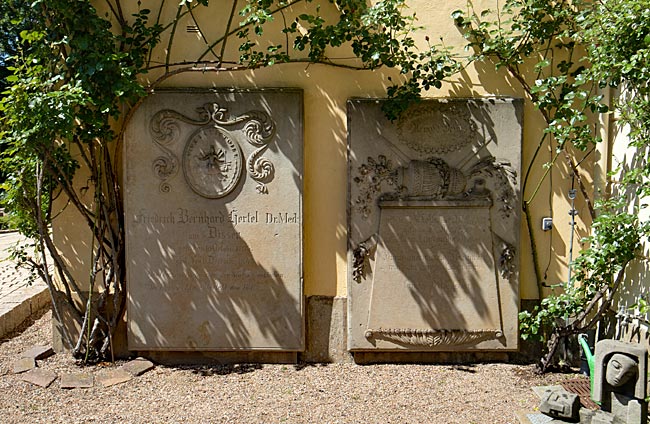
Two gravestones in the church’s outer area commemorate citizens who died in 1819 and 1845
During the renovation, the altar, baptismal font, and the base of the pulpit were newly crafted from "Bremer Stein" (Bremen stone). The magnificent Renaissance facade of the Old Town Hall at the market square in the city center was also skillfully carved by stonemasons from the same sandstone, though as early as the beginning of the 17th century. However, it does not originate from here but from Obernkirchen near Minden. Due to its widespread use as an easily workable building material in the Hanseatic city, quickly transportable by ship downstream along the Weser River, the stone is often locally referred to as such. For art enthusiasts, perhaps the bronze sculpture behind the altar is of interest. It was created by the late Bremen sculptor Claus Homfeld (d. 2019), whose works can also be found in the city’s oldest quarter, Schnoor (Ottjen-Alldag sculpture and Heini Holtenbeen).
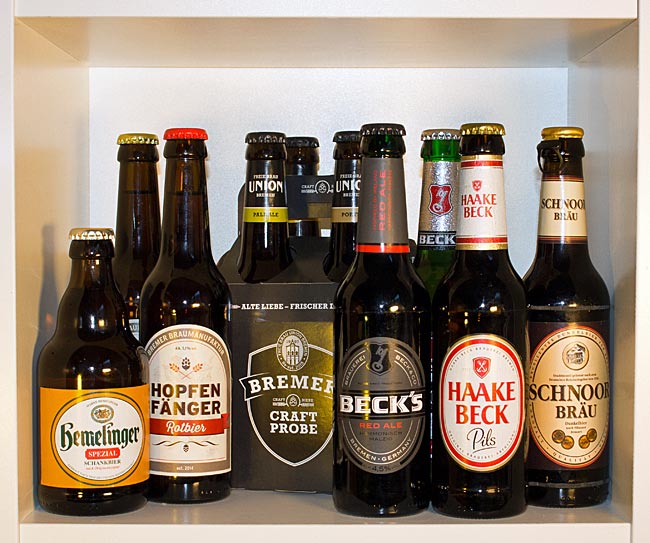
Also available: beverages in a separate beverage market, such as these Bremen beers
Until the end of June 2025, an unusual sight could be seen across from the church: a single-story department store! Plain and unassuming in a secular building with medical practices and a pharmacy behind parked cars. Wow! No, I’m not pulling your leg. On the site of a former tram depot, the doors of the Lestra department store opened for the first time on October 22, 1970 - a company founded by Heinz Strangemann the year before (Leffers and Strangemann = Lestra). While non-food items originally represented the assortment, groceries made up most of the approximately 90,000 items on a sales floor of nearly 3,000 square meters until the very end. The phenomenon: A retailer successfully holding its own against department store chains and market-dominating supermarket giants for 55 years came to an end in mid-2025, not due to insolvency but through prudent and responsible entrepreneurial action. Bravo! Perhaps a small nod to Asterix? It was less about resistance and more about successfully occupying and maintaining a niche with a good, sustainably customer-oriented concept. The founder’s subsequent generation also achieved this over a long period. But by no means is it gone yet; Lestra has become an Edeka - with a touch of Lestra. Whether the institution in the neighborhood and far beyond will survive and become an institution in its new guise remains to be seen.
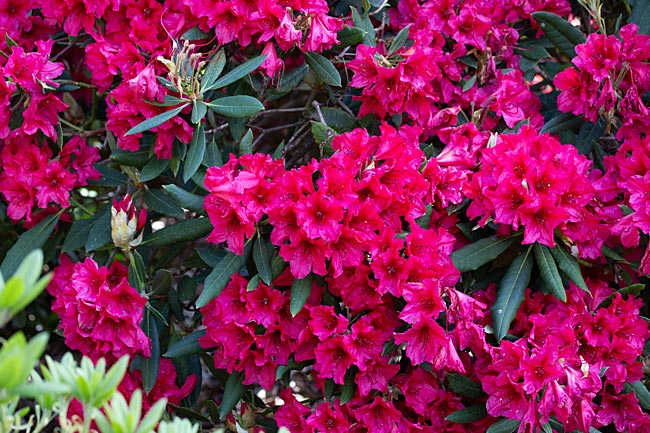
A riot of blooms in the Rhododendron Park: timed blooming over a long period in many colors and forms. Admission is free for you, though the park is not cost-free; during the season, stands offer the opportunity to quickly donate an amount of your choice - even the insects in the park will thank you.
And the latter can definitely be found at what is arguably the most spectacular site in the district: the Rhododendron Park. Contrary to what its name suggests, it features not only the namesake heather plants but much more. Azalea gardens, a rose garden, themed gardens, a fragrant garden, a garden with medicinal, herb, and useful plants, and other plantings showcase nature’s incredible diversity within the 48-hectare park landscape. If interested, feel free to read more about it on our page.
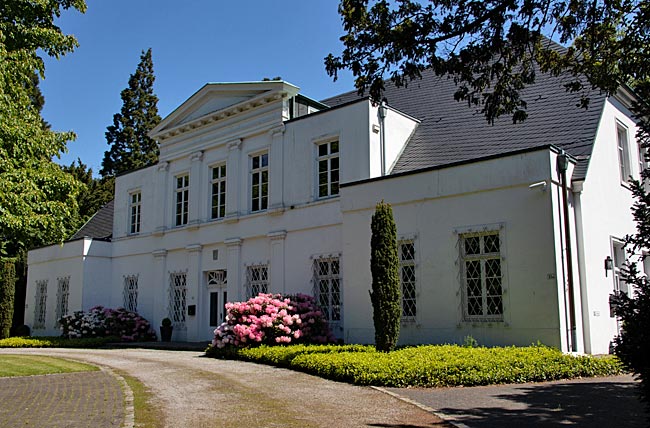
The view over the fence is unlikely to tear the viewer from their seat, but in the context of urban history, the building takes on significance
The park has several entrances, including one directly from the main road - now called Horner Heerstraße. To the right next to it, you can take a look at another building under monument protection since 1973. Its history dates back to 1750 when an estate with this or another villa was established here. A large portion of the land, named Allmers Park after a later owner of the estate, became Bremen’s property in 1936 and, like Rickmers Park, was used for the creation of the Rhododendron Park. Over time, the villa had many owners who carried out extensive renovations; however, it is also possible that it was demolished and rebuilt between 1819 and 1820. Be that as it may, today’s building with house number 11 is called Borgward Villa and refers to a part of Bremen’s economic history that continues to this day: automobile manufacturing. Carl F. W. Borgward began producing cars in 1928; through acquisitions and mergers, his repeatedly renamed company became very successful. He purchased the villa in 1952, and it remained in the family’s possession until the millennium. In 1961, he had to witness how his life’s work was driven against the wall in a very harsh and final manner - tragically, largely due to his own mismanagement. Two years later, he died. But not automobile manufacturing in the Hanseatic city, as you can read here in our brief background story from Borgward to Daimler.
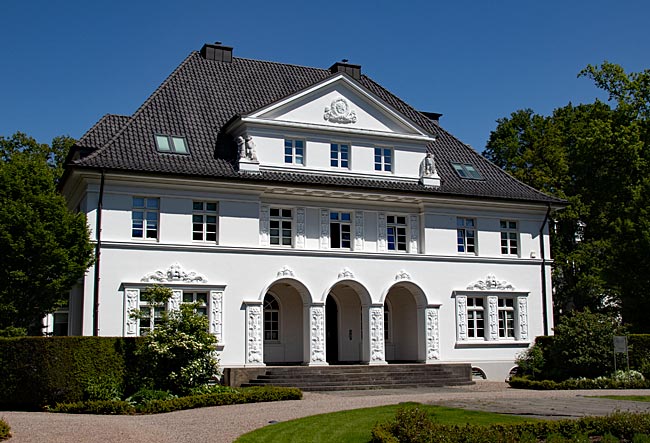
View of the listed Villa Koenenkamp (Haus Mark), built 1914/15
Another entrance to the park is located on Marcus-Allee. The street was laid out on the estate of shipowner and rice merchant Willy Rickmers, which the city purchased in large parts from his family after his death in 1911. Until its demolition in 1912, a castle built in 1873/75 for a merchant and previous owner of the estate stood here - Schloss Kreyenhorst. The alley, named after the mayor Victor Marcus who died in 1911, was renamed in 1922 and is one of the most scenic in the Hanseatic city. Along the connecting road to the neighborhood of Oberneuland, you can see large villas on expansive properties with plenty of greenery; some are architecturally quite interesting.
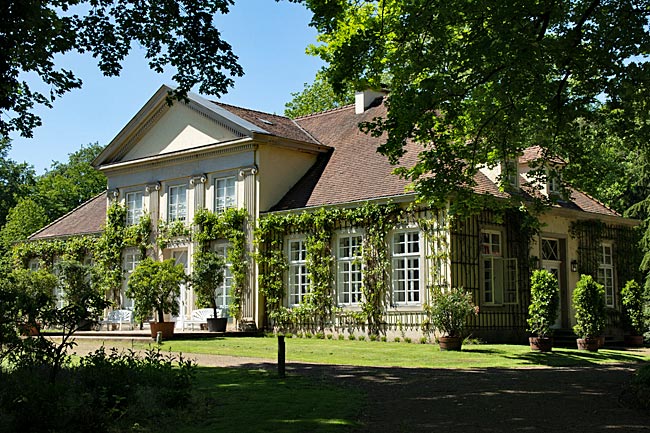
View of the classicist manor house
After visiting the Rhododendron Park, those craving more green spaces can take a detour to Gut Landruhe / Menke-Park at the end of Leher Heerstraße / Am Rüten on the border with Oberneuland. The history of the estate dates back to the 13th century. The classicist manor house was built around 1795 by merchant and consul Carl Philipp Cassel; it is under monument protection, as is the adjacent Hofmeierhaus (circa 1800). The estate eventually passed from the Menke family into the ownership of Deutsche Bank. However, those expecting a large, well-designed park will be disappointed. You can essentially walk around once and have seen everything. Still interesting are the old oaks lining the path. A small tree educational trail explains the natural cycle on information boards.
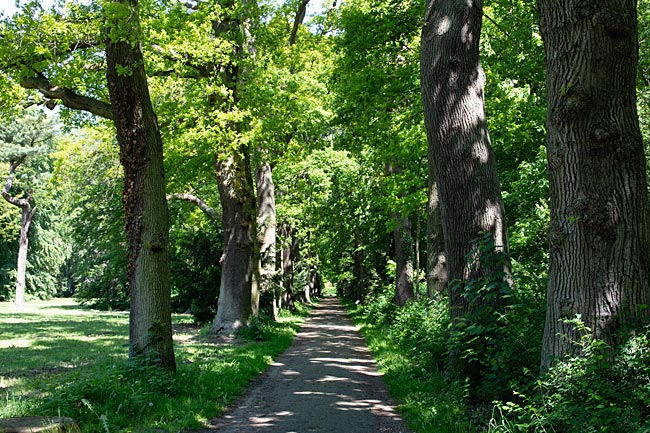
"Left a tree, right a female tree..." as german comedian Heinz Erhardt once said
The FlorAtrium of the Bremen Gardeners' Association (Landesverband der Gartenfreunde Bremen e.V.) in the next side street behind the park (Johann-Friedrich-Walte-Straße) focuses on conveying how nature works, particularly in relation to allotment gardening. Visitors can explore the educational and experience garden here. Adjacent to it lies a large allotment area with Langenkamssee.
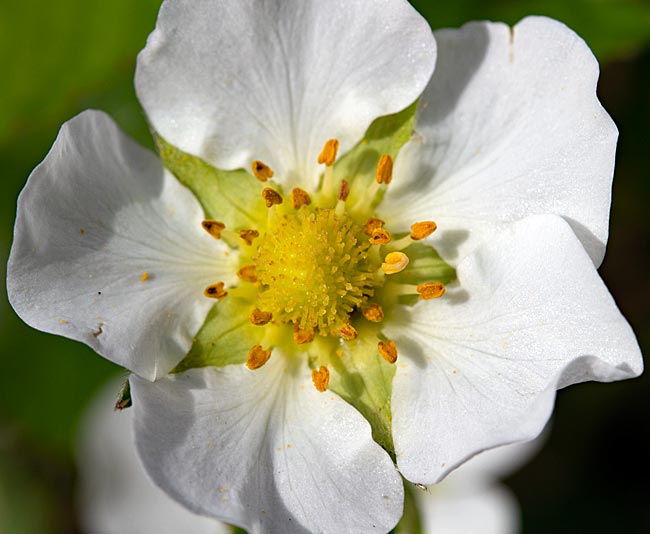
I want to become a strawberry one day
previous page
 next page
Map
Further information
www.rhododendronpark-bremen.de
botanika GmbH
Deliusweg 40
28359 Bremen
Phone: +49 421 427066-65
Email: info@botanika-bremen.de
www.botanika-bremen.de
Landesverband der Gartenfreunde Bremen e. V. (Bremen Association of Garden Lovers)
Johann-Friedrich-Walte-Str. 2
28357 Bremen
Phone: +49 421 3365510
Email: bremen@gartenfreunde.de
https://gartenfreundebremen.de/floratrium/
Office hours:
Monday – Friday: 9 AM to 1 PM
Monday – Thursday: 2 PM to 4 PM
Appointments by arrangement
Educational and Experience Garden hours:
Monday – Wednesday: 8 AM to 4 PM
Thursday: 8 AM to 5:30 PM
Friday: 8 AM to 12:30 PM
Additional appointments by arrangement
Cycling to Lilienthal
It's about 11 kilometers from Bremen's city center to Lilienthal in Lower Saxony, just beyond the city limits. While tram line 4 connects both places, a bike tour is more fun. On the Jan-Reiners-Weg, you cycle through a green landscape without car traffic, and even within Lilienthal itself, the path follows the Wörpe River along small roads with light traffic into the historic city center.
read more ...
Wallanlagen
Almost entirely surrounding the old town is a zigzagging park landscape with a moat. These are the last visible remnants of the fortifications that enclosed the old town and parts of the new town until the early 19th century. The transformation into a garden landscape began in 1802 with the first section between the Weser River and Herdentor Gate.
read more ...
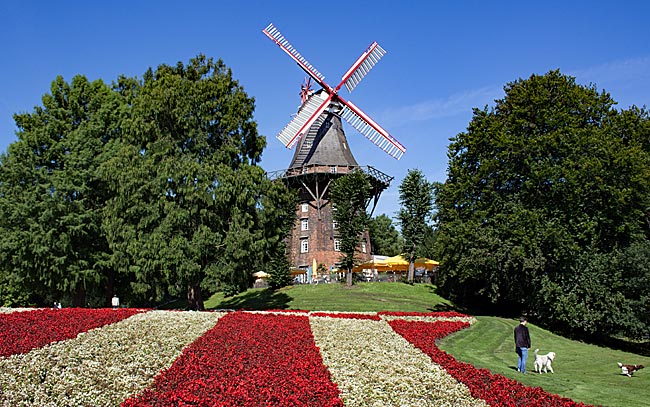
Parks & Mill in Oberneuland district
You can still sense its history and former village structure when you drive or walk down Oberneulander Landstraße. In summer, the shade of old trees provides ample coolness. Along the side of the road near the state border, several gaps appear in the residential buildings, as this is where three parks are located, inviting visitors to explore.
read more ...
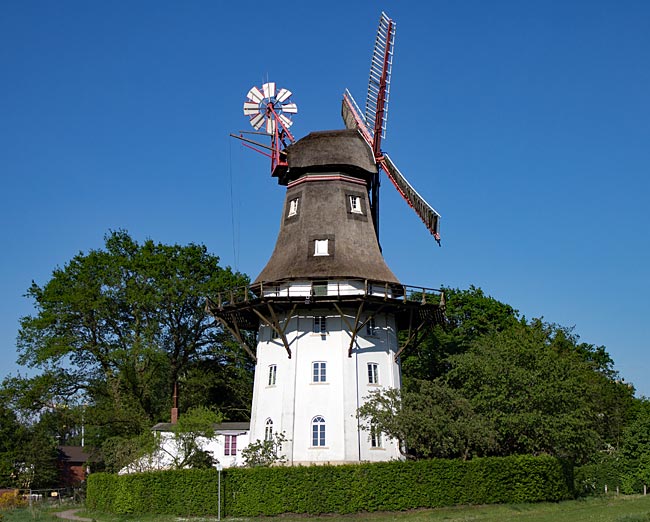
Focke-Museum
Every city has its history, and in many cities there is a museum that tells this story. In the Hanseatic city, it is the Focke Museum in the Riensberg district, where the city's history is presented most vividly. The 'Bremen State Museum for Art and Cultural History' was created in 1924 by merging two collections: the Gewerbemuseum founded in 1884 and the 'Historical Museum for Bremen Antiquities' founded six years later, whose founder, who died in 1922, also gave his name to today's museum.
read more ...
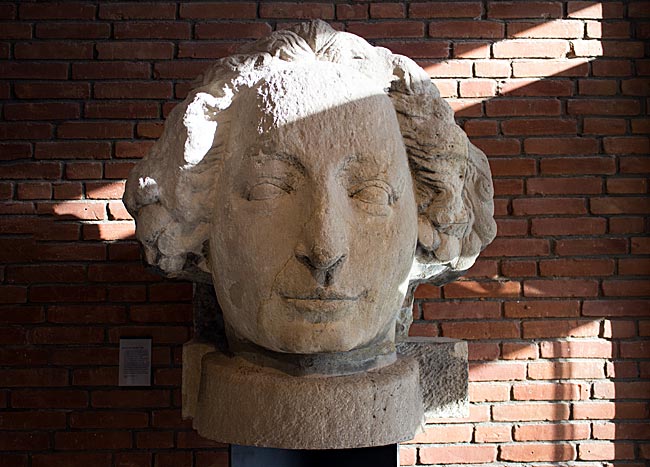
Town Hall
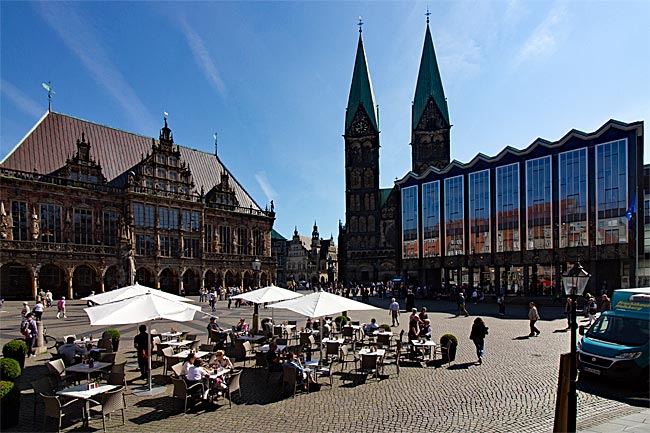
The original Old Town Hall on the market square was built between 1405 and 1412. Little remains today of this rather plain late Gothic brick building. The Renaissance façade that gives the UNESCO-protected structure its distinctive appearance was erected by Lüder von Bentheim between 1608 and 1614. Particularly above the arcades, it is lavishly adorned with various depictions from ancient mythology, which uniquely blend with Christian symbolism, Bremen city symbols, and other representations.
read more ...
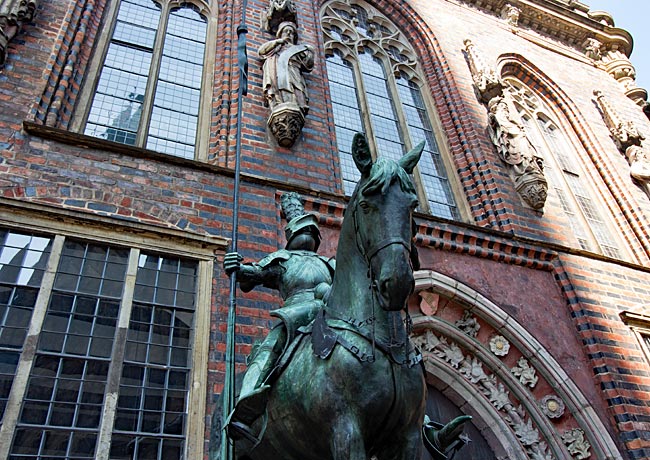
Market Square
As it was in the past and as it is today, market square is the political center of Bremen and also a major attraction for thousands of tourists, undoubtedly due to its unique architectural atmosphere. Almost unobtrusively and modestly, the Bürgerschaft (Bremen's parliament) stands next to the magnificent Old Town Hall.
read more ...
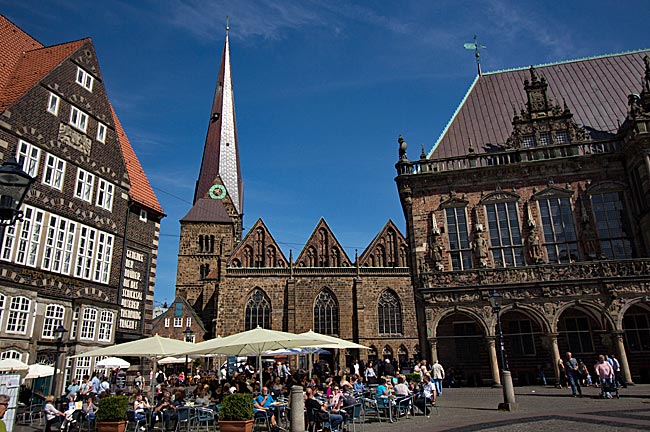
Schnoor
Bremen's oldest preserved neighborhood is the Schnoor. In earlier times, this area was primarily inhabited by fishermen and sailors, as it was here that the Balge - a tributary of the Weser - ran, and one of Bremen's first harbors was located. Many of the small houses date back to the 17th century or have been reconstructed based on historical models. The house at No. 15 in Schnoor Lane, built in 1402 on medieval foundations, is one of the oldest structures in the Schnoor, alongside the Packhaus (1401).
read more ...
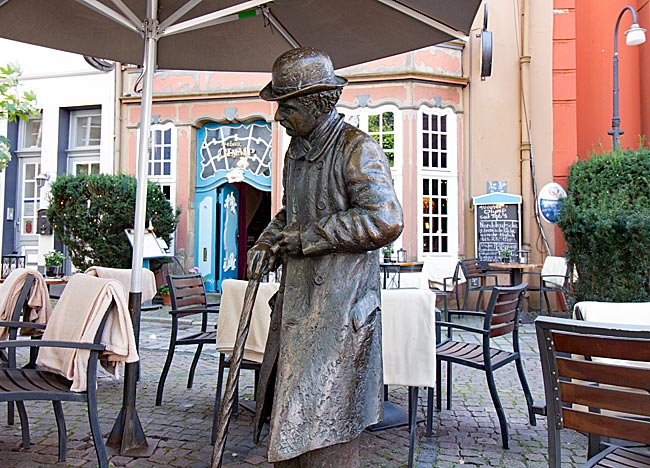
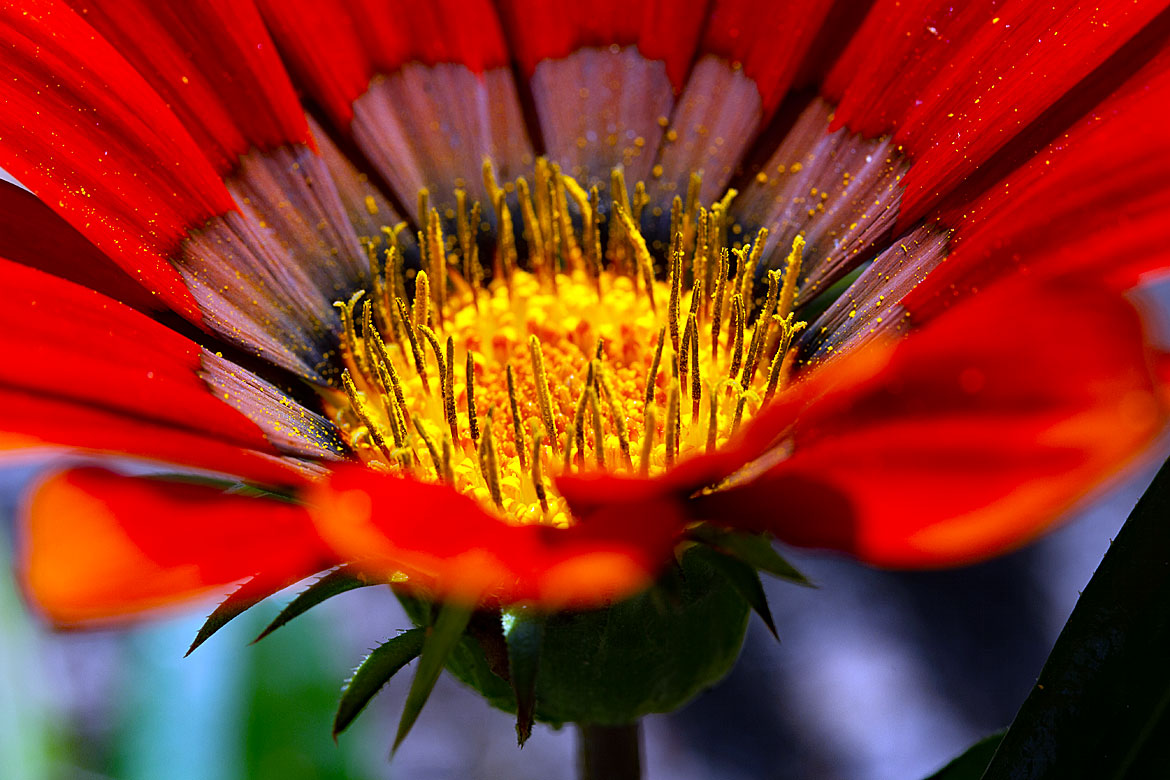
Rhododendron Park photo tour during blooming season
We are exploring the Rhododendron Park with our cameras during the blooming season and showcasing the most fascinating creations of nature.
read more ...
botanika
In the heart of Rhododendron Park, next to the café, is the botanika. Originally planned as a contribution to Expo 2000, various factors led to changes, and the largely glass structure was finally opened in 2003.
read more ...

Bürgerpark
A green oasis near the city center and a heavily used recreational area is the Bürgerpark. The extensive park, which adjoins today's Bürgerweide behind the train station, was initiated by the citizens themselves. At the beginning of the 19th century, the old defensive structures of the city had already been dismantled, and the ramparts were transformed into a park landscape. However, as the city rapidly grew throughout the century, the demand for more green spaces became increasingly louder.
read more ...
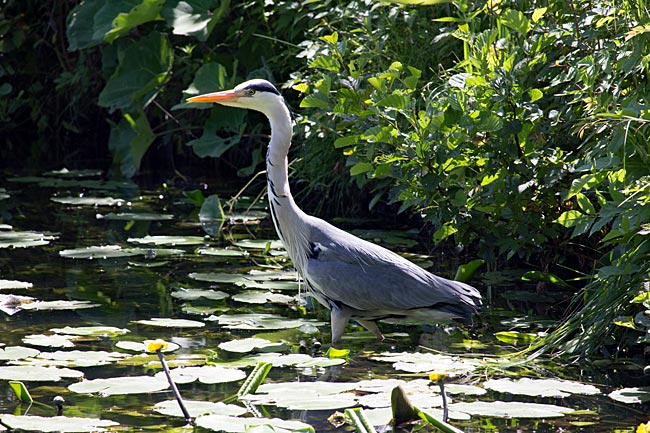
Stadtwald & Stadtwaldsee (urban forest & lake)
Stadtwald & Stadtwaldsee. The design of the Bürgerpark is attributed to Wilhelm Benque, who served as its director from 1866–1870 and again from 1877–1884. Carl Orth succeeded him in this role, and under his plans, construction of the Stadtwald began in 1907. The 66.5-hectare site north of the railway tracks had been donated to the Bürgerpark Association by the Bremen merchant Franz E. Schütte one year earlier.
read more ...