
 exploring Bremen & its surrounding areas
 your are here: worth seeing in Walle district
 Through Walle district to the industrial harbors (1/2)
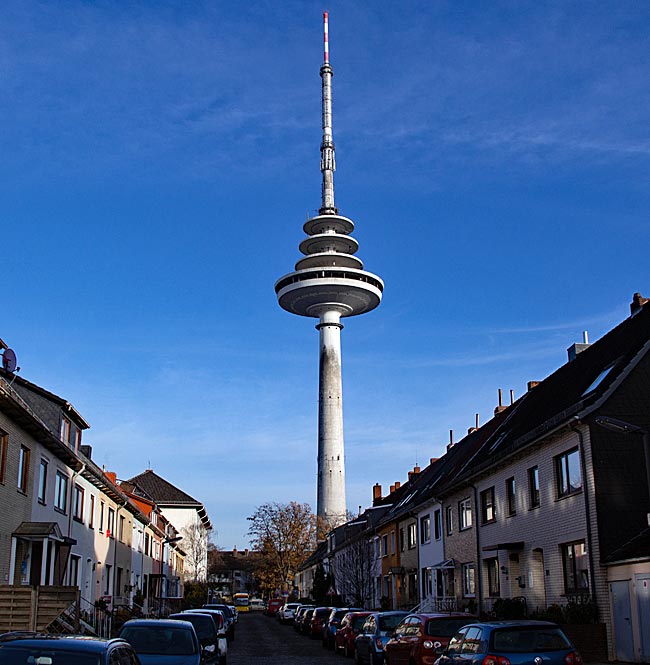
Since 1985, with a height of 239 meters, the tallest structure in Walle's district Utbremen has been the broadcasting tower
The history of Walle began, like that of many other districts in Bremen - such as Oberneuland or Vegesack - a long time ago and as an independent village. In fact, it started only as the seat of the Ministerial family von Walle. The first mention of the old village dates back to 1139. From this family emerged both farmers and citizens, and thus the settlement grew into a village around the estate with the arrival of more people from outside the family. Walle was gradually incorporated into the Hanseatic city in several steps between 1885 and 1902.
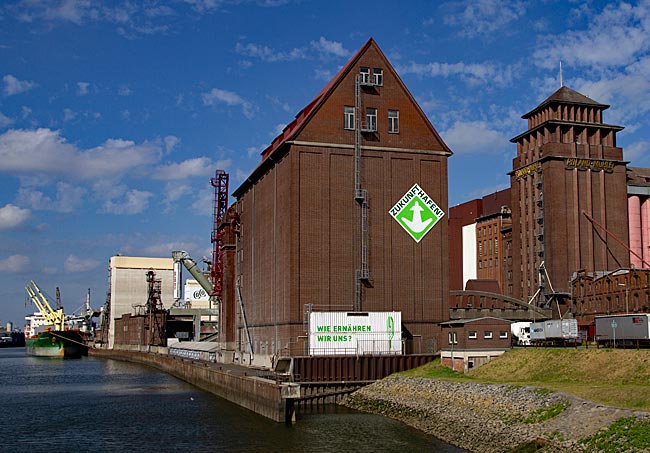
The historic and protected Roland Mill at the Timber and Factories Harbor in Überseestadt has a long history reaching far back
Industrialization in the 19th century accelerated the development of the district. After a steam-powered cement mill, an 1841 sawmill for wooden planks (used to make cigar boxes for cigar makers in Neustadt district) opened, followed by an iron foundry in 1843, a machine factory, a chemical plant, a repair workshop for Norddeutscher Lloyd, and the Janssensche shipyard. In 1862, a rice mill was added, and in 1888, a jute spinning and weaving mill opened on Nordstraße, employing around 2,300 people by 1938. Many people worked here, leading to the growth of residential areas, particularly workers' settlements with simpler, smaller houses.
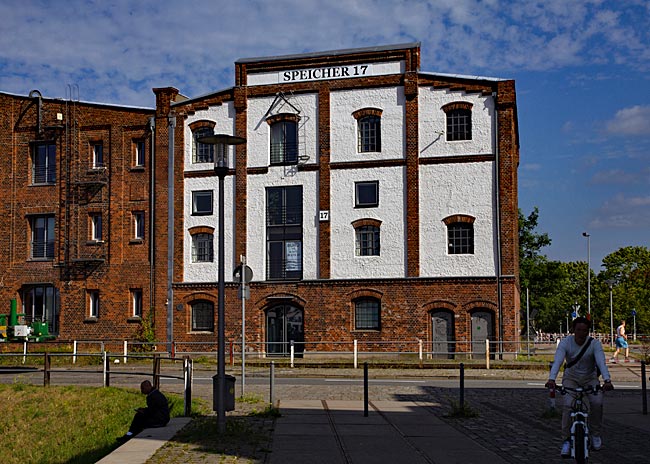
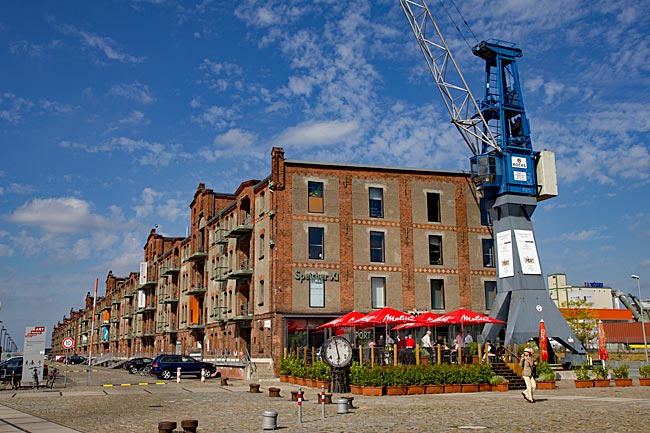
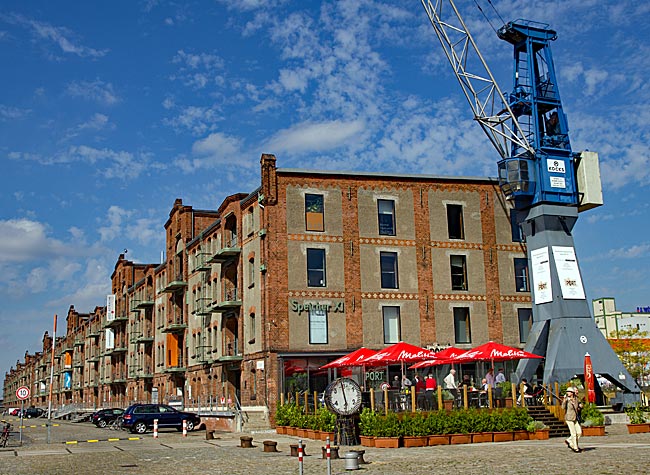
The old warehouse Speicher 17 in Überseestadt was restored and renovated between 1997 and 1998
It was the former communal pasture of Stephani district, the old Steffensstadt, that was developed. However, the largest part by area of Stephanikirchweide was claimed by the construction of Europahafen (Europe Harbor), which began in 1885 and was completed in 1888, functioning as a free port after being declared an extraterritorial zone. Although the people of Bremen had already purchased land at the Weser estuary in 1827, founding Bremerhaven and building a seaport by 1830 (as Bremen could no longer be reached by increasingly larger overseas ships due to the silting up of the Weser), extensive work on the Lower Weser began in 1887 under Chief Construction Director Ludwig Franzius. This made the river navigable for Bremen again and later led, in 1911, to the opening of the Weser weir. In 1902, construction began on a third harbor, the Überseehafen (Overseas Harbor), alongside Europahafen and Timber and Factories Harbor (which had been excavated between 1890 and 1891).
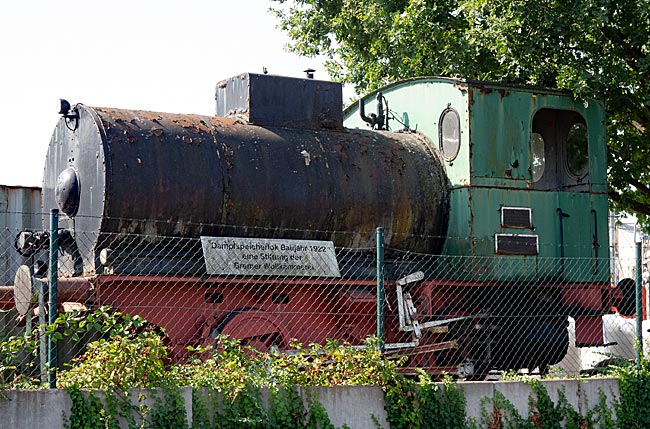
Retired, stored, and forgotten: a steam-powered storage locomotive built in 1922. These locomotives derived their driving energy from steam rather than coal combustion.
Life returned to the city's harbors, with goods from around the world being unloaded and transshipped, including coffee, cocoa, and tobacco processed in Bremen. Thanks to the many sailors and dockworkers, Nordstraße developed into an entertainment district. However, the aerial bombings of 1944 changed much: they not only destroyed the legendary 3,000-cubic-meter water tower built in 1905 (located on today's Karl-Peters-Straße, as seen in Franz Radziwill’s painting "Der Wasserturm in Bremen" from 1932), which at 61 meters was the largest in Europe, but also demolished factories and sank ships in Walle's harbors.
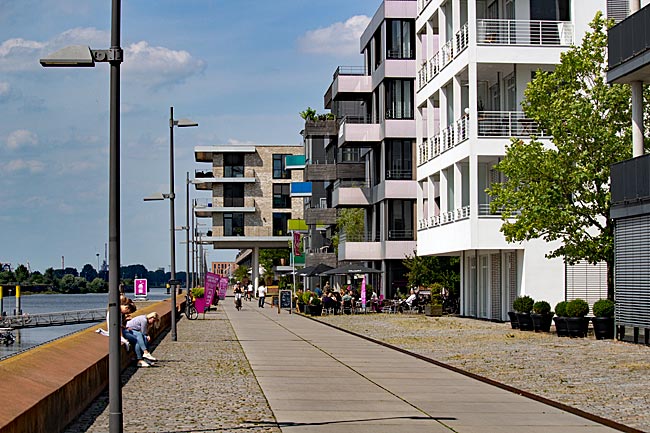
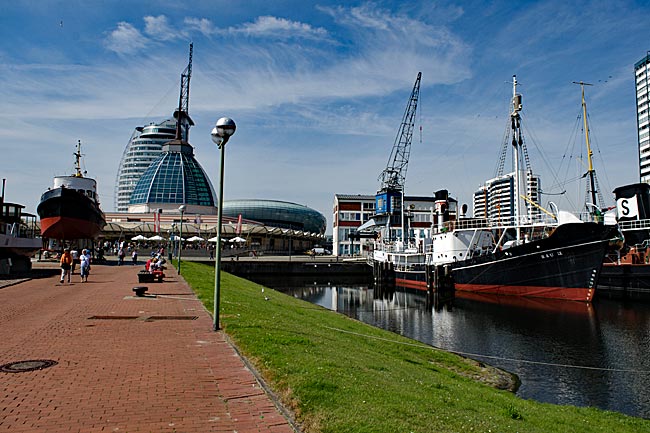
A promenade along Europhafen (Europe Harbor) in Überseestadt features modern business and residential buildings, shops, restaurants, cafés, as well as old warehouses and sheds
Although the harbors were put back into operation after the war following the salvage of wrecks, their decline came within a few decades. In 1998, the city took drastic action: instead of renovating Überseehafen (the youngest of Walle's three harbors), they simply filled in the basin and developed the area. Critics considered this decision wrong, yet since then, the harbor district has transformed into what is perhaps the most interesting part of Walle on around 300 hectares: Überseestadt, which we introduce here.
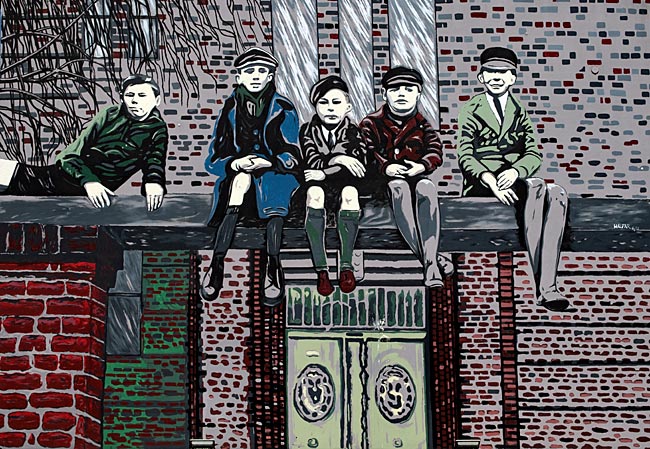
The 8 x 6 meter mural "Waller Jungs" (Boys of Walle) by Klaus Halfar has adorned a wall of the DRK (German Red Cross) meeting center Haferkamp in Utbremen since 2012 and has an interesting history: the painter's interpretation of a 1926 black-and-white photograph disappeared behind thermal insulation at the same location in 2009.
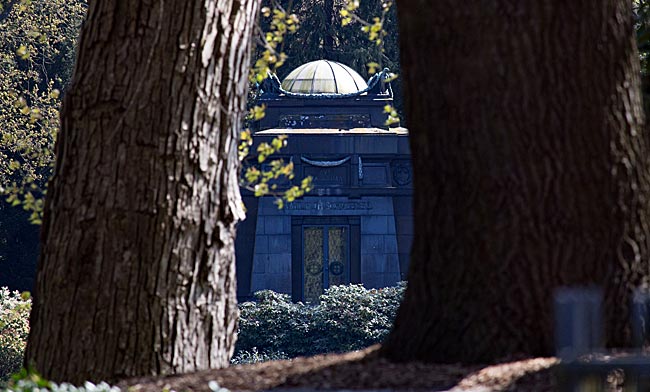
Along Überseestadt runs Nordstraße, which transitions into Bremerhavener Street around the historic Roland Mill (one of Germany’s largest mills) at Timber and Factories Harbor. Here lies Waller Cemetary, established simultaneously with Riensberg Cemetary between 1872 and 1875. Both designs were by landscape gardener Carl Jancke from Aachen, who had won the tender. Notable on the cemetery is the protected mausoleum (1878/79) designed by architect Gustav Runge for the Bremen merchant family Knoop, as well as that of Bremen merchant Friedrich Carl Ferdinand Nielson, whose company once included Roland Mill as a starch factory.
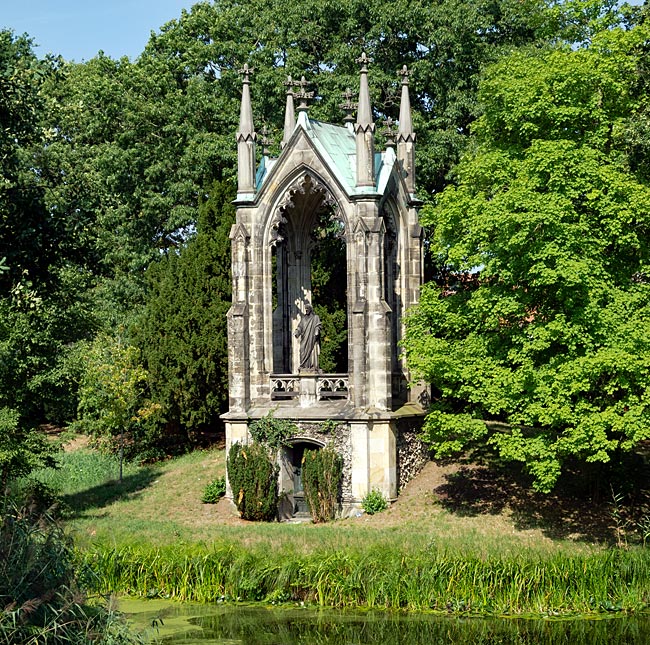
The Knoop Mausoleum at Waller Cemetary
During a stroll, you encounter graves of other prominent Bremens like Wilhelm Benque, responsible for designing Bürgerpark and involved in expanding Waller Cemetary. You’ll also find the resting places of Johann Focke (founder of Focke-Museum) and painter Fritz Overbeck, who worked temporarily in the artists' colony Worpswede. The cemetery also honors the fallen soldiers of Division Gerstenberg, defenders of the Soviet Republic after World War I, and remembers victims of World War II bombings at a mass grave.
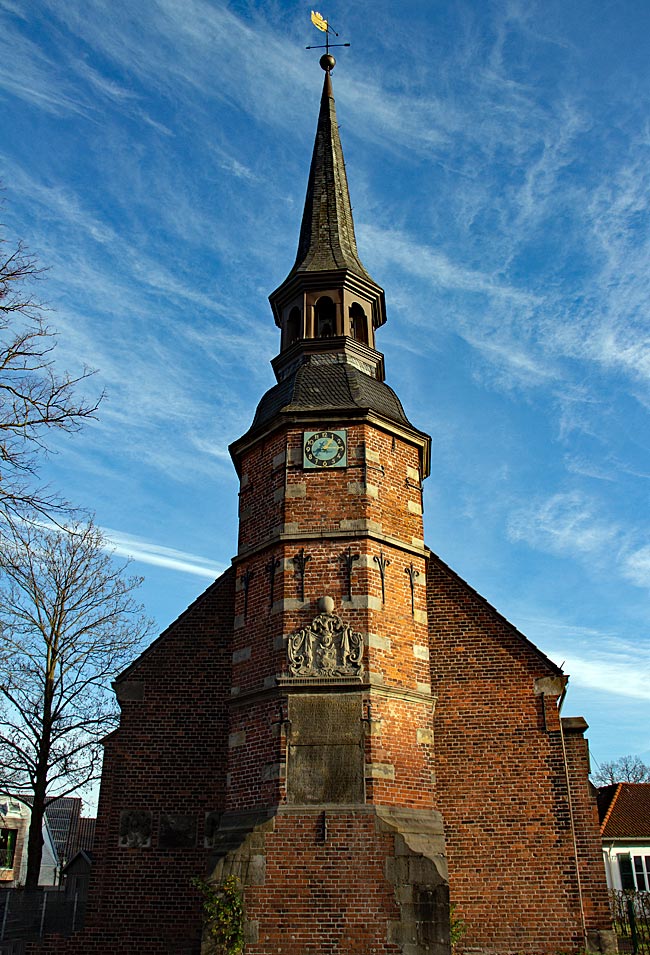
The small Waller Church on Lange Reihe Street. Those skilled in Latin can decipher the inscription on the embedded gravestone
The original Waller Church, built between 1535 and 1545 on Lange Reihe near Waller Park, was also a victim of the bombs. The church's patron was Christoph Ludwig Raschen (1584-1645), a knight from Magdeburg who served as an officer and diplomat in Swedish service. Ten years before his death, the lord of Sagnitz, Valck, and Sebuy leased the nearby Walle estate from then-Bremen mayor Havemann to live there, though this was only partially successful as he was captured by imperial troops in 1641 and returned only in 1644. Years after his death, a small church tower was erected in 1658, allegedly over his burial vault. During later reconstruction work, however, the grave was found beside the tower, and his remains were reinterred. The current church was consecrated in 1952 and has been under monument protection since 1973. A stone gravestone embedded in the front of the tower commemorates the knight. Today, Ritter-Raschen Street and Ritter-Raschen Place in Walle are named after him. The latter features a relocated war memorial honoring soldiers from the community who died in the Franco-Prussian War (1870/71).
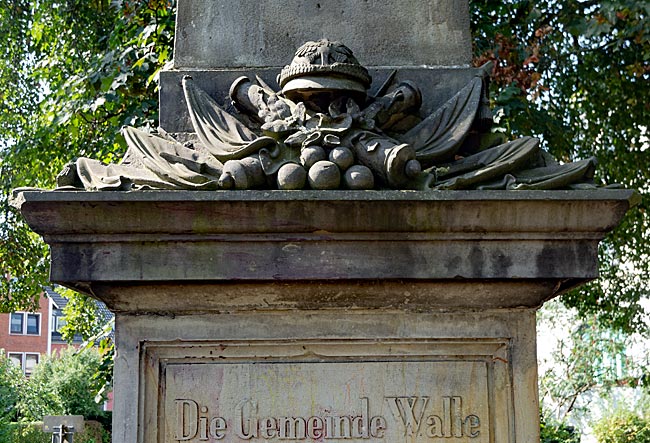
Part of the war memorial
Together with the aforementioned Waller Park (featuring a small lake), the cemetery is part of a larger green space that continues on the other side of the intersecting Waller Heerstraße. This area also serves as the starting or ending point of "Grünzug West" a narrow green strip stretching 4.5 kilometers parallel to Heerstraße across three districts from Walle through Gröpelingen to Oslebshausen. Additionally, the district showcases its green side with Waller Feldmark’s many allotment gardens between railway tracks and Highway 27, as well as Waller Feldmarksee (a lake) created during construction.
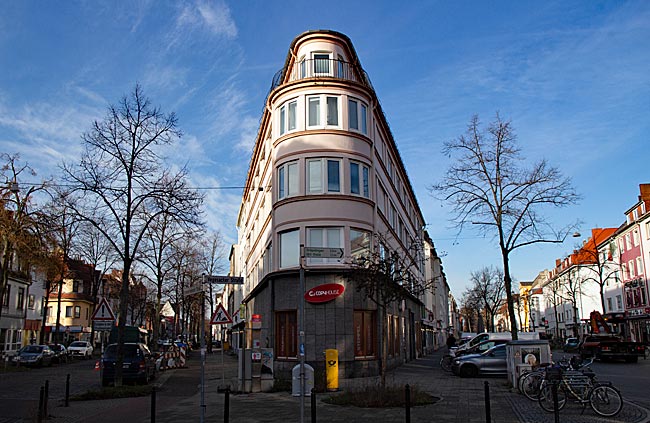
The former "Kaufhaus des Westens" (department store of the west) at the corner of Vegesacker Street / Bremerhavener Street
Beyond this, significant traffic flows through the district where rents remain relatively affordable. Nonetheless, charming spots exist, such as around Vegesacker Street, home to the former “Kaufhaus des Westens” (department store of the west). The corner building belonged to Bruno and Betty David, who were forcibly expropriated by the Nazis in 1938 due to their Jewish faith. A plaque commemorates their fate and that of others affected by German racism and nationalism.
previous page
 next page
Map
Further information
Union Brauerei Bremen GmbH (Brewery)
Theodorstraße 13
28219 Bremen
Phone: +49 (0)421 8982160
Fax: +49 (0)421 89821628
Email: info@brauerei-bremen.de
https://brauerei-bremen.de
Open: Monday - Friday from 4 PM, Saturday, Sunday from 12 PM, special opening hours on holidays
Bremer kriminal theater
Theodorstraße 13a
28219 Bremen
Phone: +49 (0)421 16691758
Fax: +49 (0)421 16691759
Email: mail@Bremer-kriminal-theater.de
www.Bremer-kriminal-theater.de
Kulturhaus Walle Brodelpott e.V.
Schleswiger Str. 4
28219 Bremen
Phone: +49 (0)421 3962101
Email: info@kulturhauswalle.de
https://hafenarchiv.de
Open: Monday - Friday 10 AM - 6 PM and by appointment
Hal över
Büro Schlachte 2
28195 Bremen
Phone: +49 (0)421 338989
Email: info@hal-oever.de
www.hal-oever.de
Open: Monday, Tuesday, Thursday, Friday 9 AM - 3 PM, Wednesday 9 AM - 5 PM
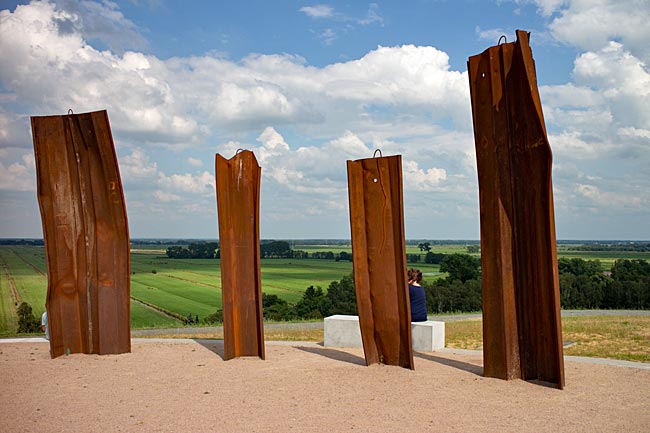
Metalhenge
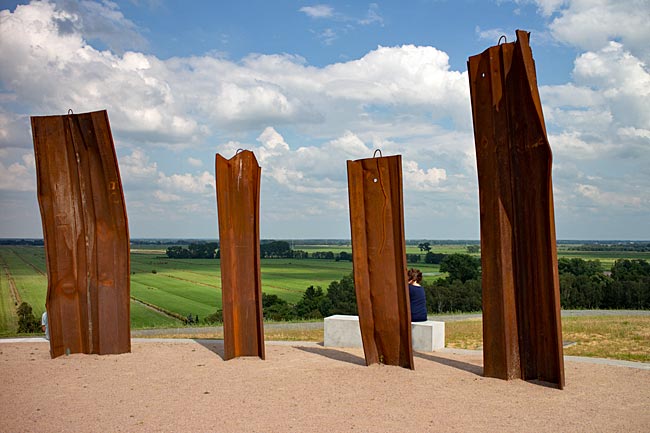
In 2021, an observation platform was opened on the first decommissioned and surface-renovated section of the landfill in Blockland. At a height of 40 meters, the barrier-free Planet Path leads visitors along. Planets? Yes, the Metalhenge structure, inspired by the famous Stonehenge, is positioned on the circular observation platform according to selected astronomical aspects. Information about this can be accessed via QR code on your smartphone. Even for those not particularly interested, the view stretches approximately 23 km across Bremen on one side and Blockland on the other.
read more ...
A stroll through the Neustadt
The Old Neustadt was only properly established as part of the district in the 17th century. One reason for this planned expansion of the city was the increasing threat posed by advancements in weaponry. Remnants of the defensive walls built at that time still exist today as parks, but there is much more to discover, such as the Little Roland.
read more ...
Schwachhausen district
The Lloyd Railway Station, built in 1913 near Bremen's central station, served as a waiting area for emigrants who departed Europe from Bremerhaven aboard ships of the North German Lloyd. From here, their journey initially continued by train. The shipping company merged with HAPAG (Hamburg-America Line) to form HAPAG-Lloyd, headquartered in Hamburg. Directly across the street stands the anti-colonial monument "Elephant."
read more ...
Stephani district
The Stephani district forms the western end of Bremen's Old Town and is considered the birthplace of the city, making it one of its oldest districts. As early as 1050, Archbishop Adalbert I founded a priory in honor of Saint Stephen. The priory, located on a dune, was called Steffensberg (mons sancti Stephani) in German translation. Adalbert's episcopal successors established a parish and built the first church in what was then also known as Steffensstadt (Stephen’s City).
read more ...
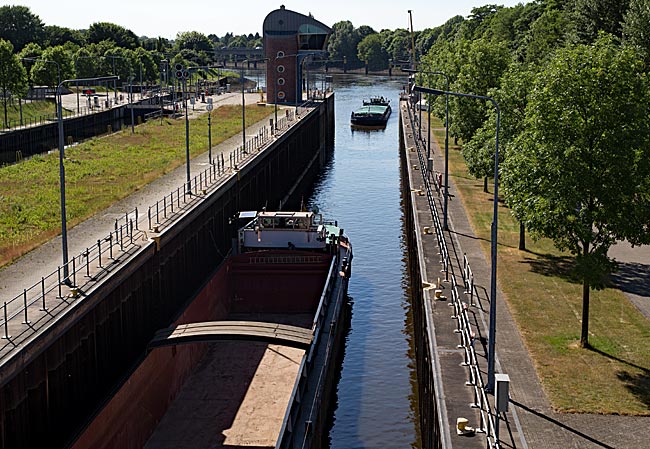
The Weser weir
After the old Weser weir from 1911, one of seven weirs on the Weser, had become dilapidated, a newly built Weser weir was put into operation in 1993. To make navigation possible at all, the weirs are equipped with locks. In the chambers up to 225 meters long, inland vessels with a maximum width of 11.45 meters are locked through. The difference in water levels ranges between approximately three and a half and six and a half meters. As in the past, electricity is still generated by hydropower today. The weir is accessible to pedestrians and cyclists. There is something to see here.
read more ...
Überseestadt
When the Overseas Port (Überseehafen) needed renovation, the decision was made in 1991 in the Hanseatic city to simply close the basin instead. In 1998, the Overseas Port was finally filled with sand that had been dredged from the Außenweser. Along with the also decommissioned but still existing Europa Harbor as a harbor basin, this formed the basis for the conceptual development and creation of today's Überseestadt.
read more ...
Riensberg Cemetary
The Riensberg Cemetary, located within view of the Focke Museum, was established between 1872 and 1875 simultaneously with the Waller Cemetery as a replacement for two abandoned cemeteries elsewhere. The park cemetery, which today covers an area of about 28 hectares, is situated on the lands of the former Riensberg estate. The landscape gardener and garden architect Wilhelm Benque was commissioned to design the landscaping; he had previously been responsible for the garden art layout of Bürgerpark and, among others, Knoops Park in Lesum.
read more
...
Bürgerpark (Citizen's Park)
A green oasis near the city center and a widely used recreational area, the Bürgerpark is an expansive site adjacent to today's Bürgerweide behind the train station. This park was initiated by the citizens themselves. In the early 19th century, the old defensive structures of the city had already been dismantled, transforming the ramparts into a landscaped park. However, as the city rapidly grew throughout the century, demands for more green spaces became increasingly louder.
read more ...
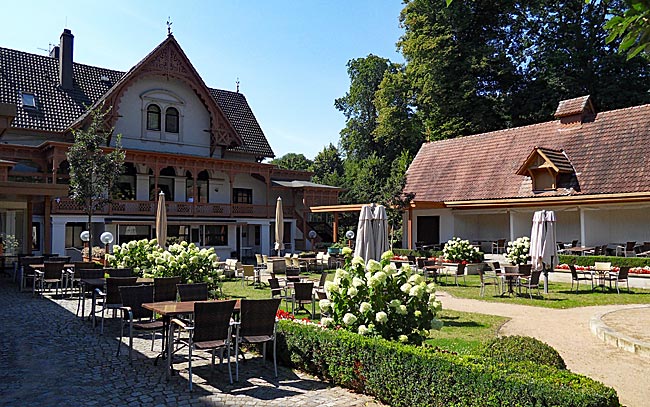
Focke-Museum
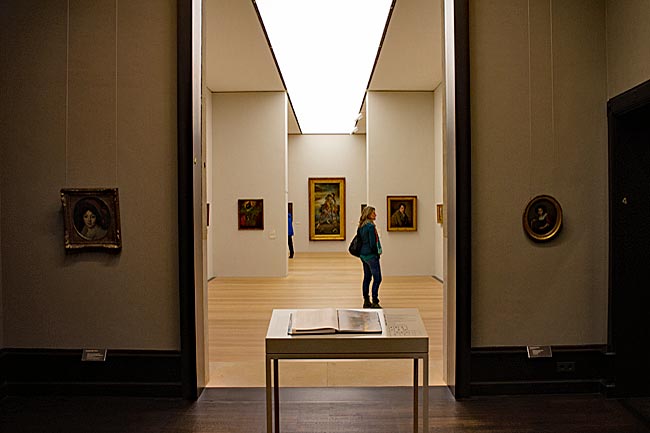
Every city has its history, and in many cities, there is a museum that tells this story. In the Hanseatic city, it is the Focke Museum in the Riensberg district, where urban history is presented most vividly. The "Bremer State Museum of Art and Cultural History" was established in 1924 by merging two collections: the Gewerbemuseum, founded in 1884, and the Historisches Museum für bremische Altertümer (Historical Museum for Bremen Antiquities), founded six years later. The museum's founder, who passed away in 1922, also gave it his name.
read more ...
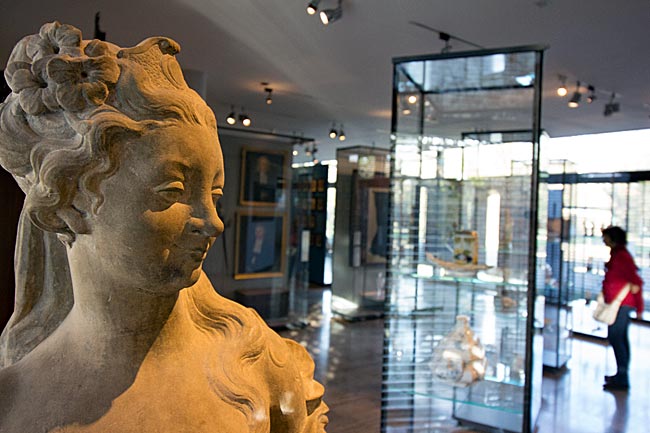
Worpswede
In 1889, the painters Fritz Mackensen, Otto Modersohn, and Hans am Ende laid the foundation for this art center with their decision to work and live in the small, previously unknown village. They were quickly followed by other artists such as the painter Paula Becker, the poet Rainer Maria Rilke, Clara Rilke-Westhoff, Fritz Overbeck, Heinrich Vogeler, and later the sculptor, painter, and craftsman Bernhard Hoetger, after whose designs, among others, the Paula-Becker-Modersohn-House in Bremen's Böttcherstraße was built.
read more ...