
 exploring Bremen & its surrounding areas
 You are here: worth seeing in Oberneuland district
 Parks in Oberneuland district (2/3)
Höpkensruh und Muhle’s Park
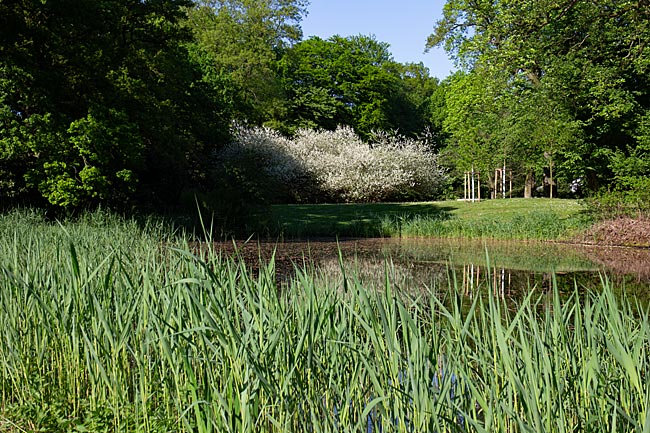
View of one of the park's waters
What sounds a bit like the final resting place of a man named Höpken turns out to be, not far from Heinekens Park, a landscape park. Johann Höpken, a merchant, shipowner, and citizen representative in the Hanseatic city during the 19th century, found his final rest at Riensberg Cemetary, where a mausoleum dedicated to him - now a protected monument - stands. The fact that this 7-hectare park in Oberneuland bears his name is explained by the history of the green space. Shortly before Christmas in 1859, he and one of his brothers acquired the estate and expanded it with additional plantings into a landscape park. In 1873, four years before his death, he bequeathed the area to his hometown of Bremen, which has owned it ever since and opened it to the public in 1893, as stipulated by the donor.
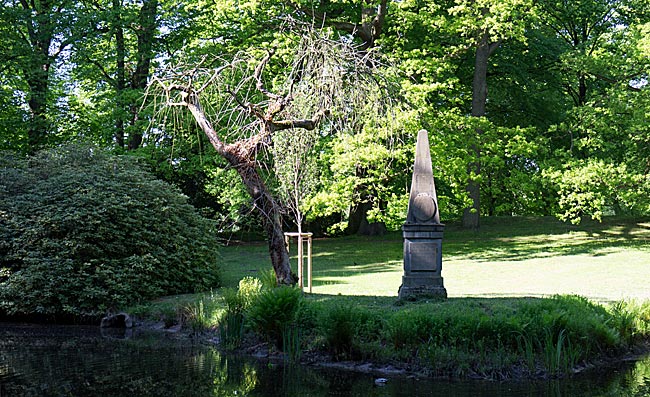
The Linnaeus Obelisk in the park landscape
The original park at Oberneulander Landstraße No. 69 was actually established in 1785. The jurist Jacob Friedrich Schulz converted the property into an estate and landscape garden in a classicist style. From around 1800 come features such as the stone grotto and the Linnaeus Obelisk, erected in memory of naturalists Carl von Linné, Albrecht Wilhelm Roth, Albrecht von Haller, and Nikolaus Joseph von Jacquin. However, Schulz’s original obelisk was severely damaged during World War II and restored by the Bremen sculptor Kurt Lettow in 1977.
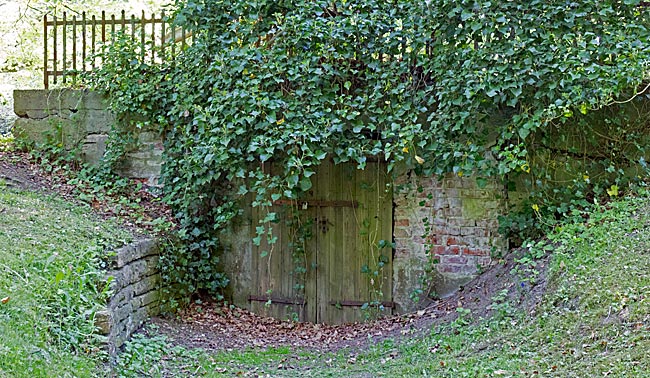
Entrance to the stone grotto built under a hill
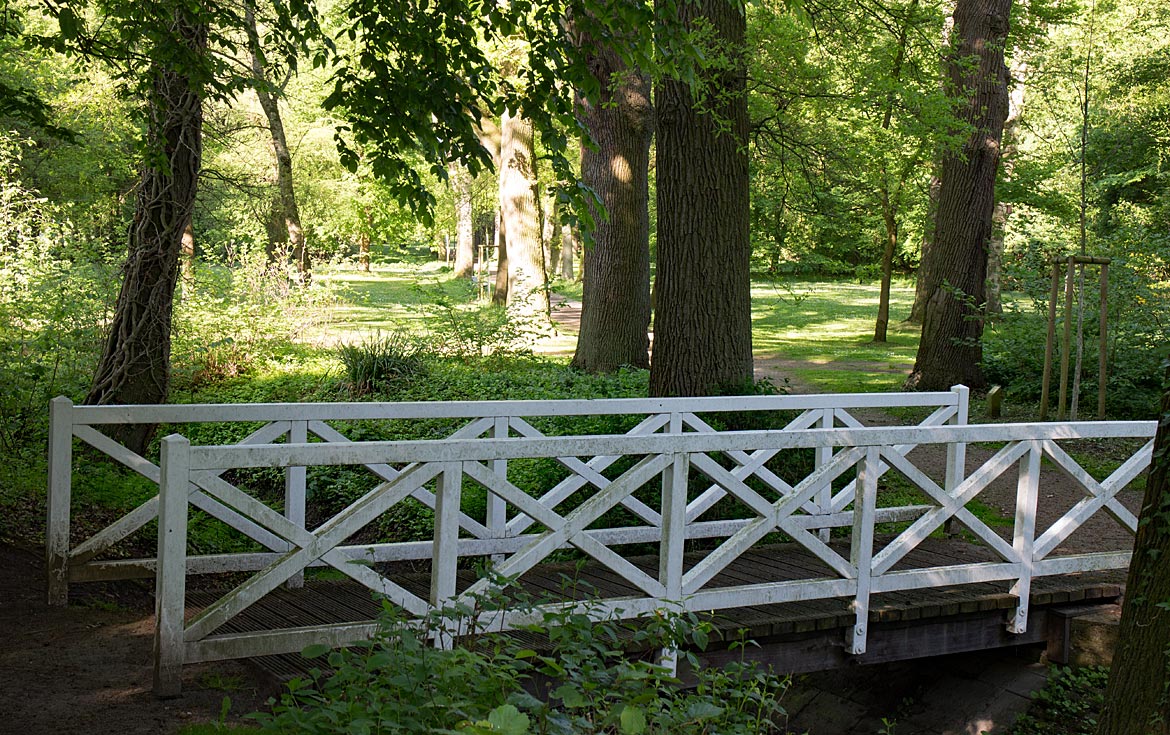
The park and estate with its waters and small bridges are not only popular destinations for walkers but also for restaurant guests. As early as 1893, the original manor house was used as an inn, though it fell victim to flames just four years later. The successor building was reduced to rubble by bombs in 1944. The current structure of the "Höpkensruh" restaurant was built in 1964.
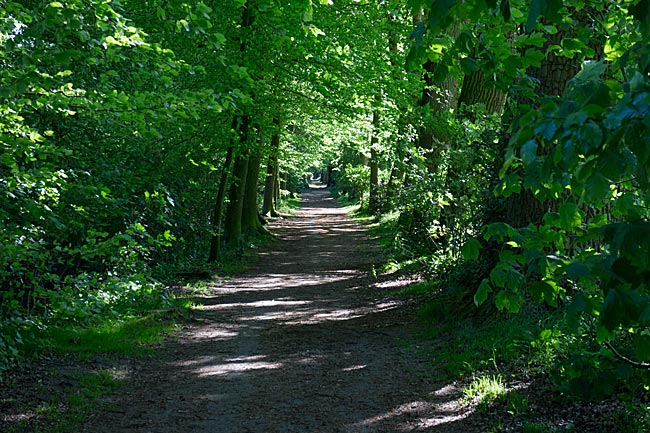
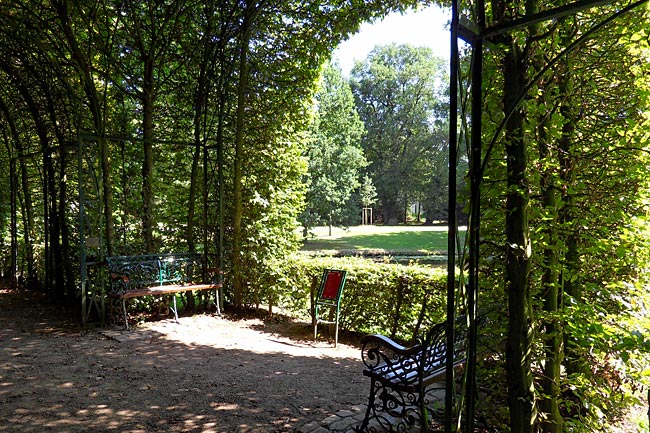
A path through the park
Almost appearing as one, they are actually two parks or estates located immediately next to each other. Around 1815, Johann Wilhelm Böving and his family took over the former farmstead and had the Böving country house built in a classicist style. The park behind it was developed as a landscape park starting in 1825, as explained by an information sign at the park entrance. In 1922, the estate passed into the ownership of the Muhle family, hence the name of the park. That same year, they extensively renovated the country house. The architect responsible was Walter Görig, born in Bremen, who also designed the bell at Domsheide according to his plans. Since 1975, the park has been open to the public after the villa and park were acquired by the city of Bremen shortly beforehand.
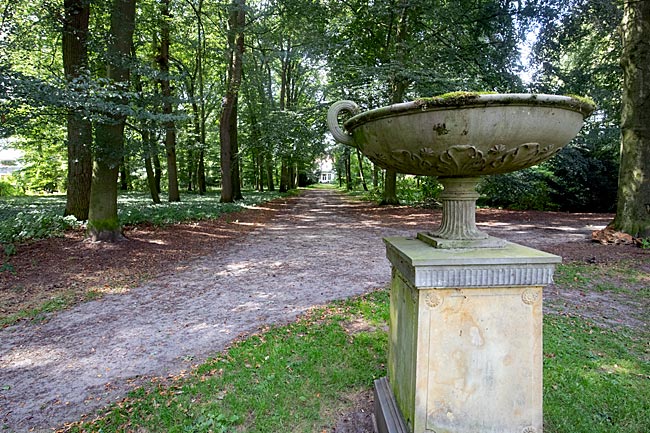
Stone vase with the country house in the background
Not only Höpkensruh - incidentally, the oldest preserved English-style landscape garden in Bremen - but also Muhle’s Park have been under monument protection since 1984. This includes the old manor house as well as the previously unmentioned Hofmeierhaus. On the expansive grounds, which also lead to the Wümmeniederung (wide riversides of the river Wümme) behind them and as far as Hexenberg or Fischerhude, there are, among other things, a pavilion built around 1925 directly on the main road and a stone vase from around 1926 resting on a 19th-century pedestal.
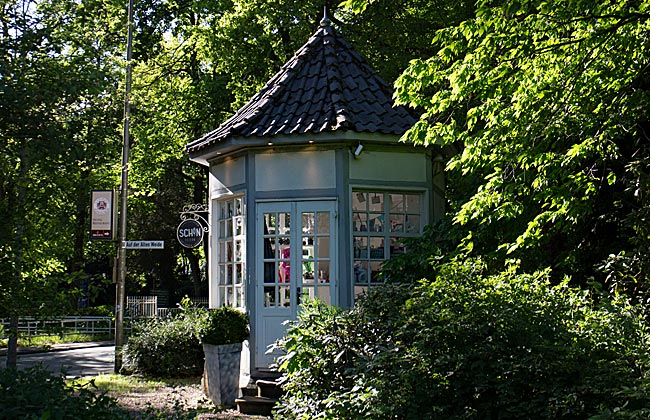
Pavilion near the manor house directly on the main road
Across from the two parks lies Ichons Park, which is significantly smaller at just 2 hectares. The merchant estate was in the possession of the Ichon family until the 1970s. It was a silk merchant named Post who built the first manor house on the estate in 1726; however, it was not until his grandson had the park laid out in 1768. The plans for the design came from Gottlieb Altmann, who was also involved in the creation of Heinekens Park. In 1843, the lawyer, archivist, and future senator Gerhard Caesar had the current classicist, protected manor house (Landhaus Caesar-Ichon) built.
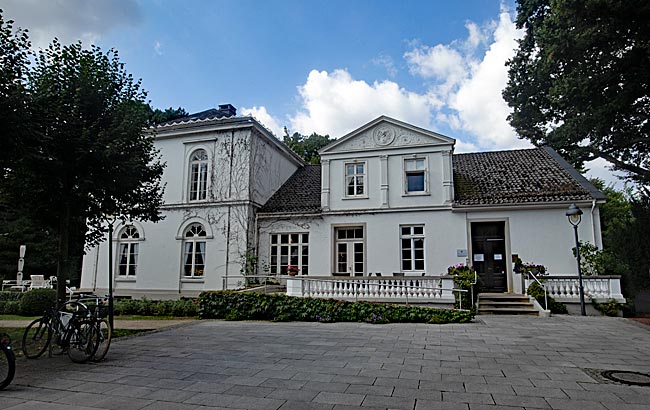
The manor house Caesar-Ichon with the north wing
The planning and execution were overseen by the Bremen architect and carpenter Anton Theodor Eggers, who in the following years 1846/47 also built the neogothic Moorlose Church in Mittelsbüren near the steelworks in the Bremen district of Burgleseum. The notary Theodor Ichon was the last private owner of the estate. After his death in 1967, a senior home was established on the estate according to his will. However, the front part of the park has been open to the public since 1977.


Map
1 million crocuses in Oberneuland district
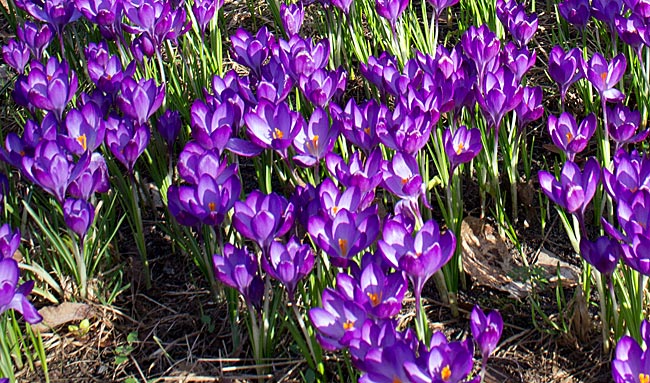
It is said that one million crocuses bloom every spring on a green strip along Franz-Schütte-Allee, delighting pedestrians, cyclists, and drivers alike with a sea of violet flowers. Although there are many varieties of crocuses that bloom in different colors, the robust variety 'Ruby Giant', which was bred in 1956, was chosen. Compared to other varieties, these plants are quite large, and their petals are slightly lighter on the inside than on the outside.
read more ...
Rhododendron Park
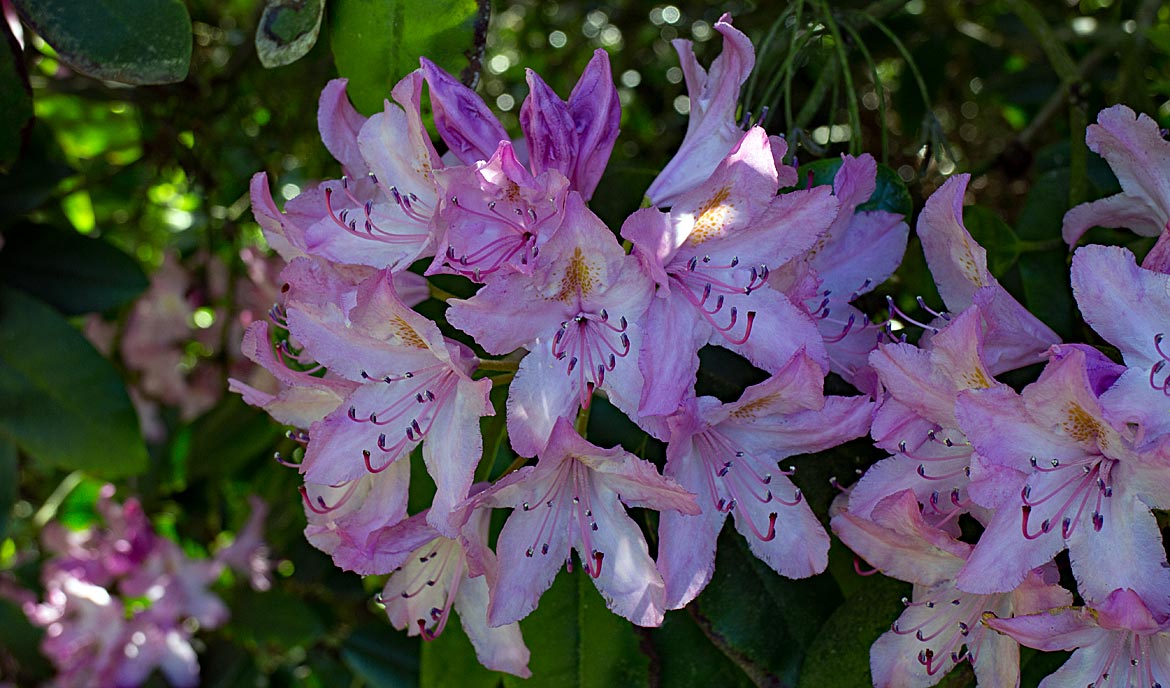
Also located in the Horn district is the 46-hectare Bremen Rhododendron Park. The core of the park actually consists of two parks. Around 1890, beech, ash, spruce, and especially oak trees were planted on the site. In 1936, the area, which was designed as a wildlife park, was supplemented with an extensive collection of rhododendrons. To this day, the numerous deciduous trees on the park grounds provide important protection for the rhododendrons from sun and wind.
read more ...
Fischerhude - artists' colony & peasant village
Signposts make it clear to every previously unaware visitor that this place differs significantly from many other traditionally agricultural villages. Fischerhude is hip. Numerous cafés and restaurants, ceramics studios, art galleries, a local history museum, the Modersohn Museum, and more vie for the favor of an audience that is sometimes more and sometimes less interested in art but regularly strolls through Fischerhude in large numbers.
read more ...
Cycling to Lilienthal
It's about 11 kilometers from Bremen's city center to Lilienthal in Lower Saxony, just beyond the city limits. While tram line 4 connects both places, a bike tour is much more fun. Along the Jan-Reiners-Weg, you can cycle through a green landscape without car traffic, and even within Lilienthal itself, the route follows small paths along the Wörpe River with light traffic, leading to the historic city center.
read more ...
Focke-Museum
Every City Has Its History. In many cities, there is a museum dedicated to telling that very story. In the Hanseatic city of Bremen, it is the Focke Museum in the Riensberg district where urban history is presented most vividly. The "Bremen State Museum for Art and Cultural History" was established in 1924 by merging two collections: the Gewerbemuseum (founded in 1884) and the Historisches Museum für bremische Altertümer ("Historical Museum of Bremen Antiquities," founded six years later). The museum's founder, who passed away in 1922, also lent his name to today’s institution.
read more ...
Bürgerpark
A green oasis near the city center and a heavily used recreational area is the Bürgerpark. The extensive park, which adjoins today's Bürgerweide behind the train station, was initiated by the citizens themselves. At the beginning of the 19th century, the old defensive structures of the city had already been dismantled, and the ramparts were transformed into a park landscape. However, as the city rapidly grew throughout the century, the demand for more green spaces became increasingly louder.
read more ...
Exploring Horn-Lehe district
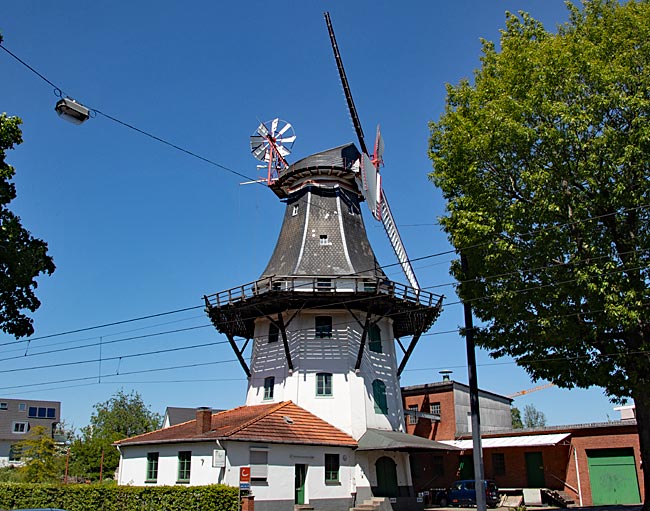
Some mills grind slowly, while others no longer operate at all - like the Horner Mill. Built in 1848 as a Dutch-style windmill, its preservation for passersby to enjoy today required significant effort and funding. It stands as the district's emblem.
read more ...