
 exploring Bremen & its surrounding areas
 You are here: worth seeing in Bremerhaven
 SAiL Bremerhaven
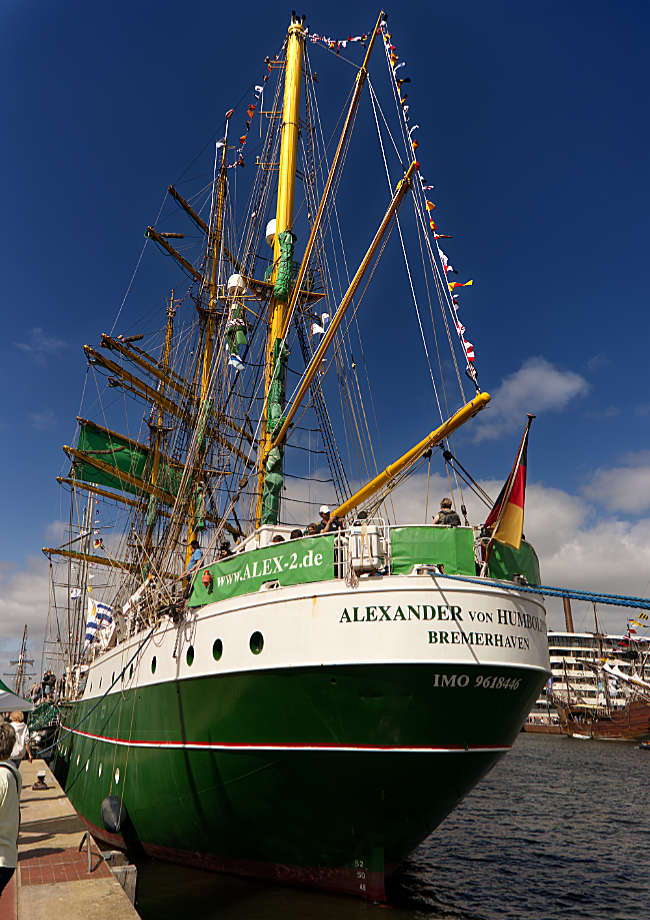
Typically green: the bark "Alexander von Humboldt 2" (2011)
When SAiL Bremerhaven takes place, the port city becomes an even more international stage than it already is - both in terms of participants and visitors, who exceed the million mark over the five days of the event. Unlike the usual freight giants at the container quay and cruise ships at the cruise terminal, the focus during this time is on sailing ships -the name says it all. A total of 250 were attracted or involved by the organizers for the SAiL, which took place again in 2025 after a ten-year hiatus. The "Schulschiff Deutschland," commissioned in 1927, has had its permanent berth in the New Harbor since moving from Vegesack (northern Bremen) to Bremerhaven.
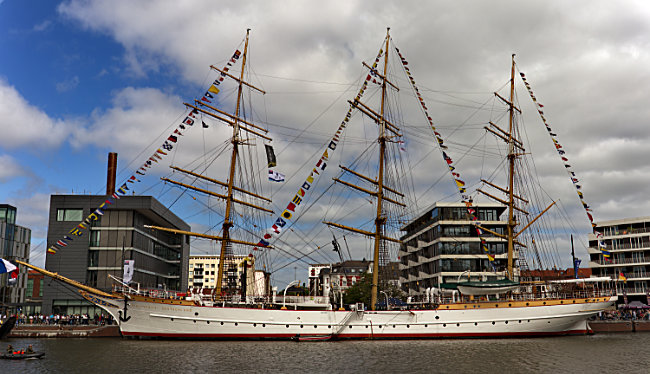
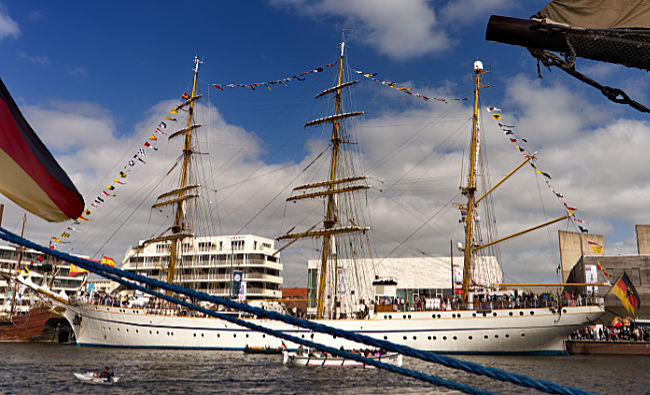
Festively decorated "Schulschiff Deutschland"
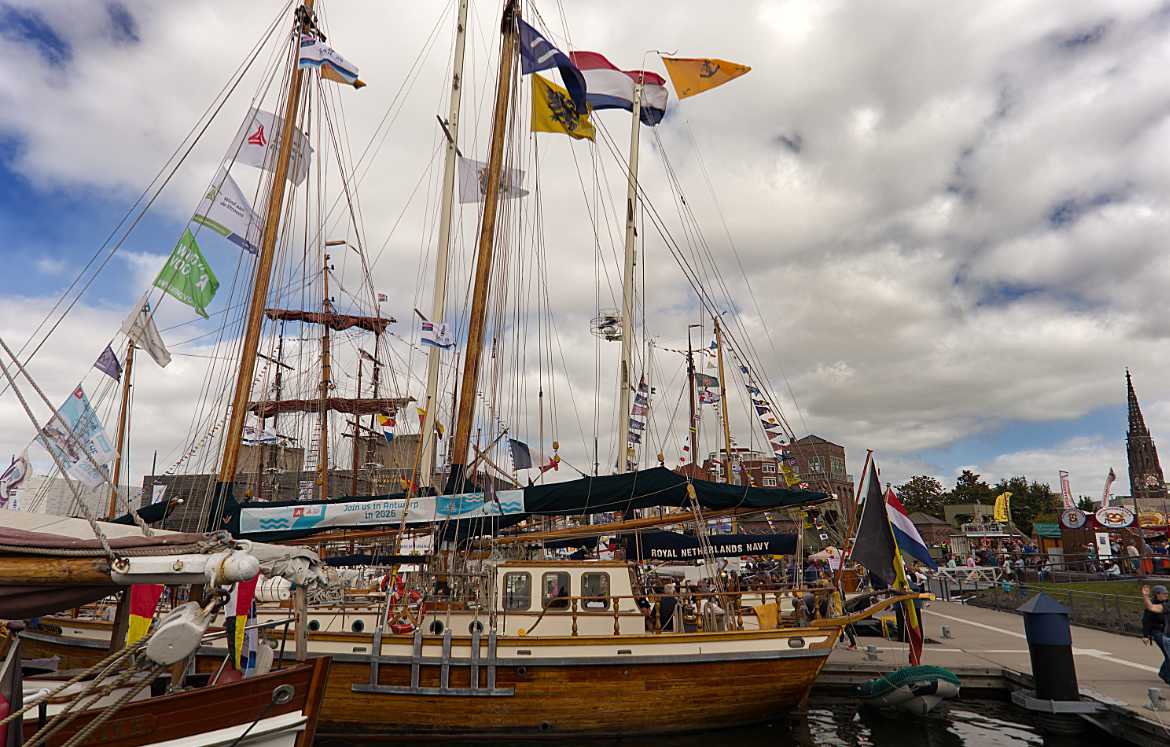
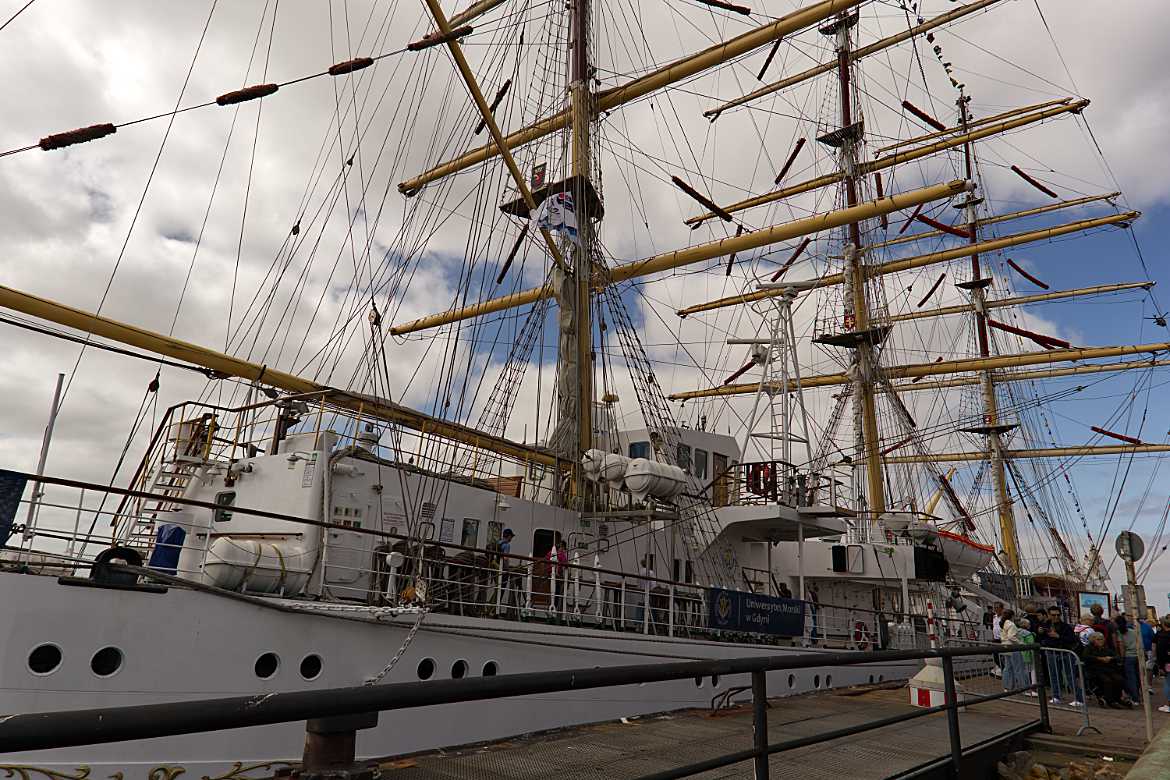
The New Harbor, located near the German Emigration Center, Climate House, and Zoo, is the main stage for the appearance of watercraft. The former naval training ship with its three masts is already a sight to behold even without sails set, but during the bustling days, it faces strong competition from all over the world. It is primarily these Tall Ships, the large sailing vessels, that draw visitors to the Weser estuary on the first day, as traditional arrival under sail and in a predetermined order takes place before docking.
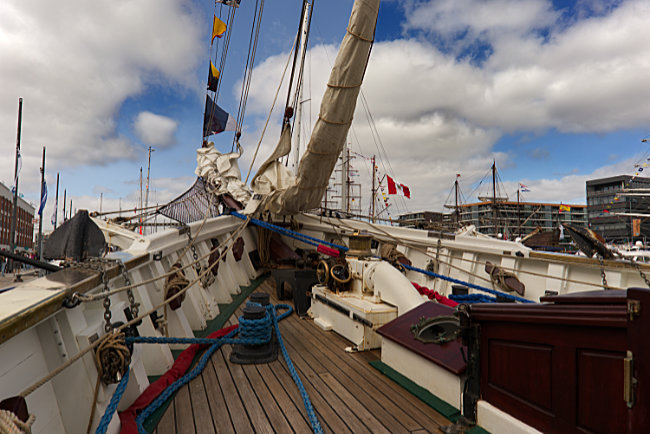
On board the French schooner "Belle Poule"
The parade of windjammers before entering through the lock - the Weser is tide-dependent at its mouth - is a highlight of the event. Another highlight is the tactile experience: not just looking, but also touching is encouraged - Open Ship with sometimes long queues. Although boundaries are set - for example, the tour is limited to a marked deck route while areas below deck such as the galley and crew quarters remain off-limits - visitors still get a sense of what a sea voyage on one of these ships, which essentially belong to a different era of seafaring, might be like.
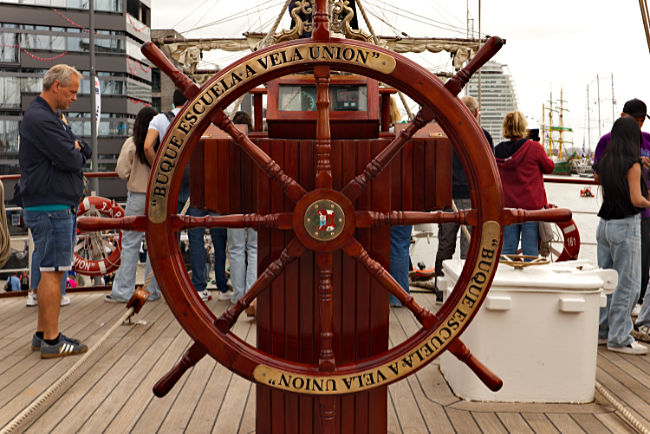
Popular photo motif on the „Unión“
Although large sailing vessels may belong to a different era, they are still being built today. A striking example is the 115-meter-long Peruvian "Unión," launched in South America in 2014 and commissioned two years later. The four-masted barque with a sail area of 4324 m² serves as a training ship for the Peruvian Navy, carrying a crew of 255 people, but also as a maritime representative of the country with a small permanent exhibition about culture, land, and people in an accessible interior space. Representatives are also present here, as on many other ships, including the captain and officers who answer visitors' questions politely in uniform and sometimes pose for group photos.
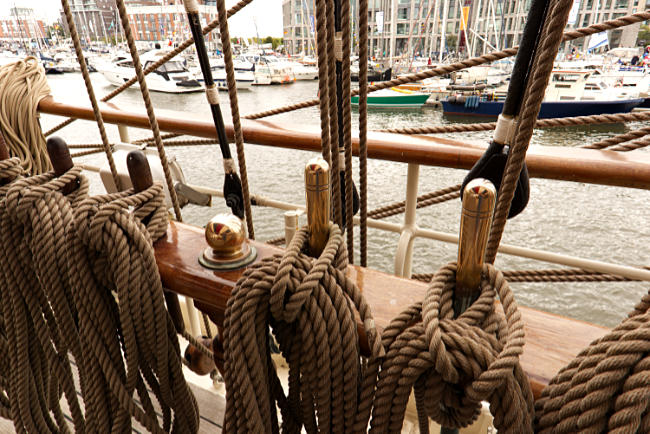
Not all that glitters is gold, even aboard a ship from a wealthy Gulf state - yet the large sailing vessel remains impressive
The same applies to the representatives of the "Shabab Oman II," built in Romania and commissioned in 2014. In 2025, this ship had completed a weeks-long journey via the Gulf, Suez Canal, Mediterranean, and Atlantic to be present in "small" Bremerhaven. Oman? A desert ship? No, they look different.
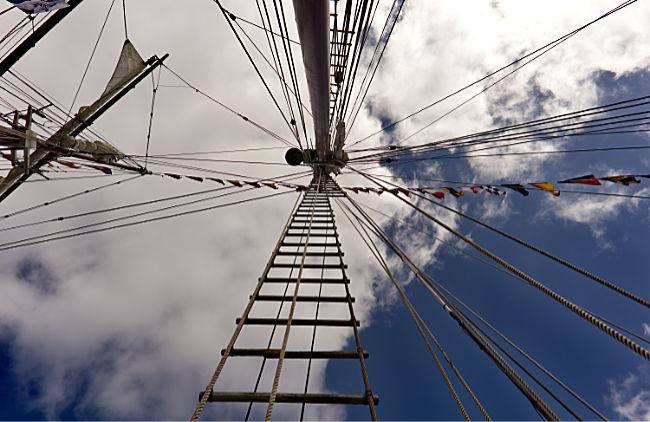
Rigging of a smaller sailboat, the French schooner "Belle Poule"
But why is it called a training ship (in german Schulschiff) if the world's navies do not sail either in peacetime or during conflicts? The fundamental learning of practical seafaring skills is certainly part of the answer. Another aspect involves team spirit and teamwork, as setting sails on these large sailing vessels requires climbing into the rigging - the rope arrangements that help hold up the mast. To unfurl the sails, coordinated work by many hands at dizzying heights following equally coordinated commands is necessary. Only then does such a ship move in a controlled manner without engine power.
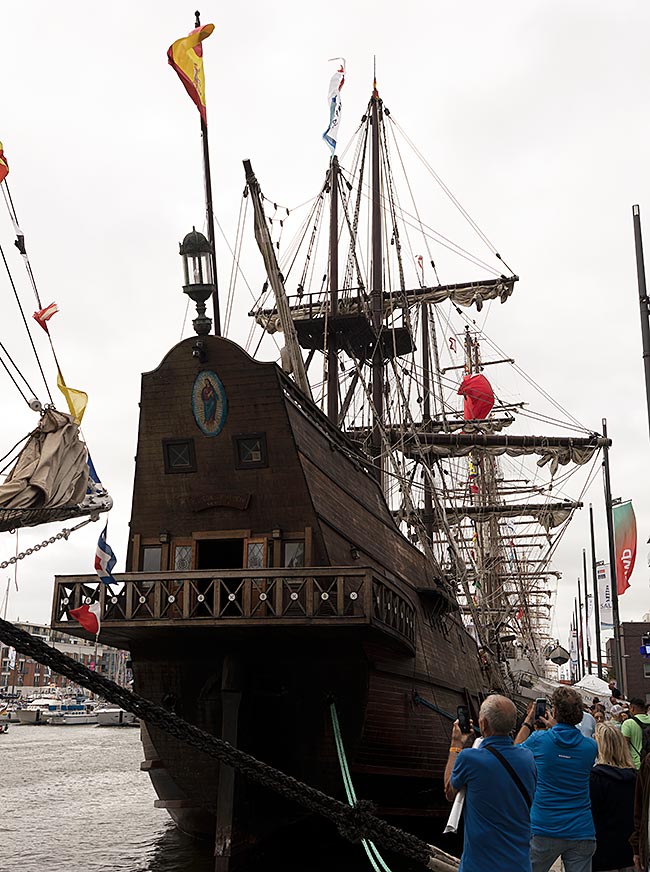
Towering stern of an original replica of a 17th-century galleon, the 500-ton "Galeón Andalucia" (2010)
There is no doubt that the large windjammers are visually impressive, which might not be said at first glance about replicas of historical ships such as caravels or carracks. Yet wherever these wooden ships appear - whether in Bremerhaven for SAiL or during Hamburg's Harbor Birthday, Kiel Week, or Hanse Sail Rostock - they impress once you know what you're looking at. In 2025, the "Nao Victoria" and the "Nao Santa Maria" (built in 2018, home port Huelva) lay side by side in the harbor basin, both associated with famous seafarers and voyages.
Current training ship of the German Navy in Kiel: the "Gorch Fock." The poet after whom it is named was not a seafarer but died as an unwilling sailor on a German warship during the Skagerrak Battle in 1916 off Jutland in World War I
The Spanish "Nao Victoria" (home port Cádiz) was built in 1992 and is an exact replica of one of the five ships with which the Portuguese explorer Ferdinand Magellan set sail on September 20, 1519. From the Spanish mission to find a western route to the Spice Islands (Molukken/Indonesia), an unintended first documented circumnavigation of the globe resulted. Only the three-masted "Victoria" completed the journey around the world and returned after three years, though without Magellan, who died in 1521 during military conflicts in the Philippines. In his honor, a strait at the southern tip of America bears his name today: the Strait of Magellan.
Christoph Columbus was also sailing under Spanish orders, and in 1492, the sailors of the three ships of his expedition under the command of the Italian explorer discovered America—also unintentionally and, by the way, 500 years before the "Nao Victoria" replica was launched. Replicas of Columbus's flagship, the "Santa Maria," can only approximate the original, as precise plans are lacking and the ship itself suffered a shipwreck on the island of Hispaniola (today Haiti and the Dominican Republic). The wood from the ship was used as building material for the first European settlement on the newly discovered continent.
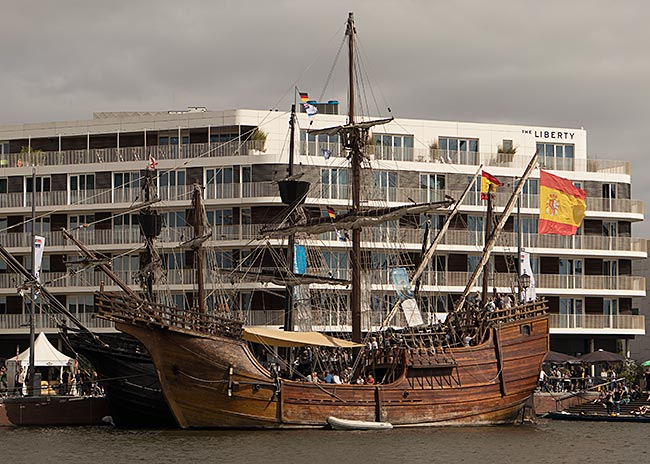
"Nao Victoria" and "Nao Santa Maria" (front)
Neither of the original ships was even 30 meters long and 8 meters wide, setting sail with 39 and 45 daring men (Victoria), respectively. Although seaworthy, today's perspective views these sailors as mere nutshells with a sail area of 290 m². Respect.
Little respect is deserved by the colonization history that followed the discoveries, in which European powers appeared as ruthless exploiters often enforcing their unjustified claims with murderous means. A history whose bloody traces extend into the present day.
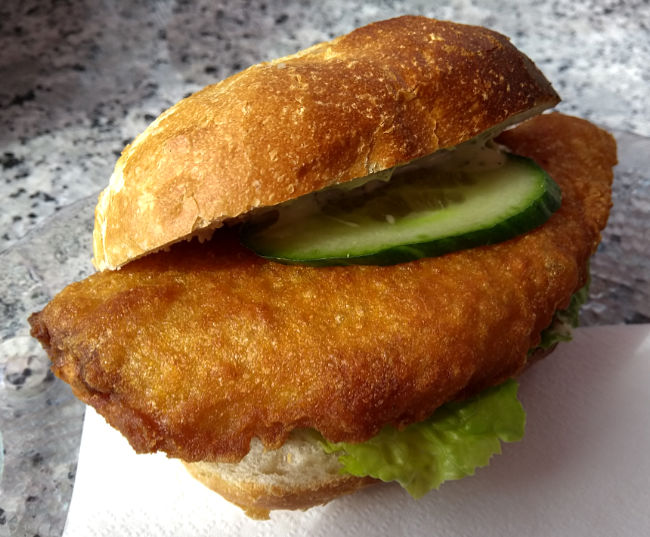
Classic by the water: the fish sandwich
Walking makes you hungry, and it's good that the food offerings at the event are not overlooked - in fact, they are quite diverse. While spices from the Spice Islands may be used, monoculture is excluded, so there are suitable offerings for every palate - from sweet to sour, mild to spicy, meat-heavy to vegan.

Alternative to finger food: iced coffee and cheesecake in a café
Peace also reigns in the Freebooter Village at the Old Harbor; piracy or privateering takes place elsewhere in the world today.
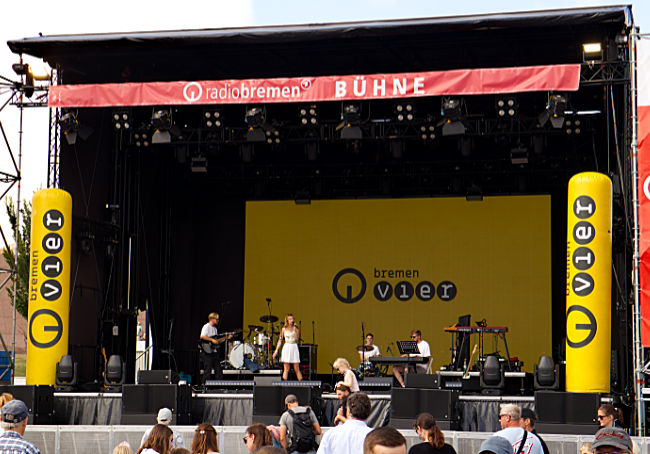
Numerous concerts are also part of the SAiL's supporting program
Those who have not had enough after a tour of the New Harbor and the adjacent Old Harbor can board one of the special buses and view the accompanying program for SAiL at the Fishery Harbor Showcase.
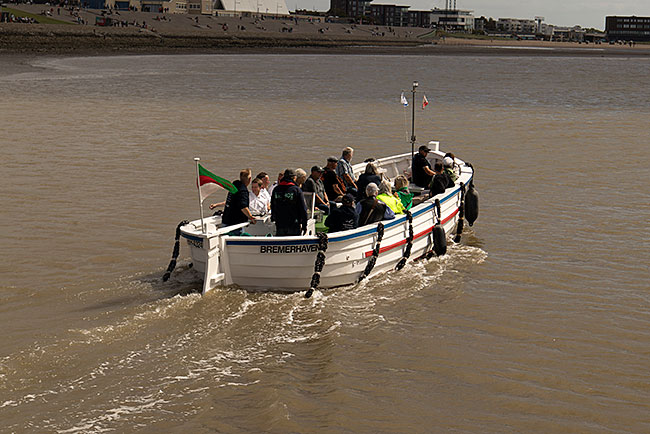
Shuttle by barge between Havenwelten and Fishery Harbor Showcase
previous page
 next page
Map
Further information
Historical Museum Bremerhaven
An der Geeste
27570 Bremerhaven
Open: Tuesday - Sunday 10 AM - 5 PM, closed on all holidays, Christmas Eve, and New Year's Eve
Phone: +49 (0)471 308160
Email: info@historisches-museum-bremerhaven.de
www.historisches-museum-bremerhaven.de
www.tecklenborg-werft.de
Museum Ship FMS „GERA“
Fischereihafen I („Schaufenster Fischereihafen“)
Fischkai
27572 Bremerhaven
www.museumsschiff-gera.de
Art Museum
Karlsburg 1
27568 Bremerhaven
Phone: +49 (0)471 46838
Open: Tuesday - Friday 11 AM - 6 PM, Saturday and Sunday 11 AM - 5 PM
Email: info@kunstverein-bremerhaven.de
www.kunstverein-bremerhaven.de
Art Hall
Karlsburg 4
27568 Bremerhaven
Phone: +49 (0)471 9586106
Open: Tuesday - Friday 11 AM - 6 PM, Saturday and Sunday 11 AM - 5 PM
Email: kunstverein@nord-com.net
www.kunstverein-bremerhaven.de
www.stadttheaterbremerhaven.de
Bremerhaven - Zoo am Meer (Zoo by the Sea)
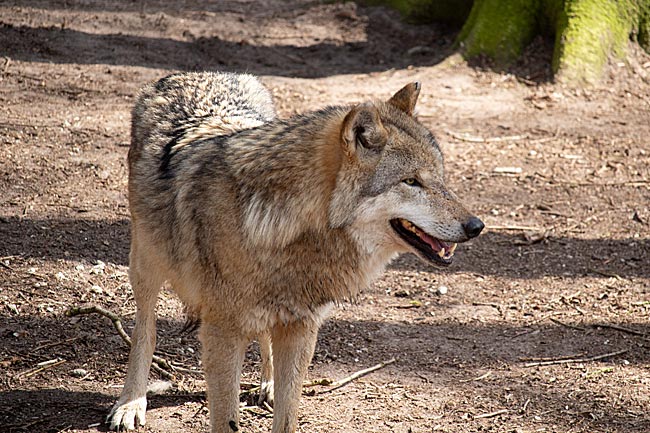
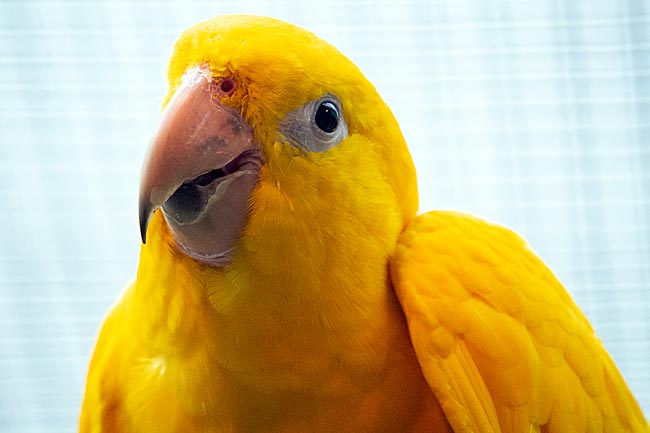
In addition to the 19th-century harbor facilities, the Zoo am Meer is the oldest attraction on the site between the Weser River and the pedestrian zone. It opened in 1928 under the name "Tiergrotten." The enclosures house polar bears, seals, penguins, various bird species such as gannets and keas, reptiles like turtles, raccoons, Arctic foxes, pumas, monkeys, and others - almost 50 animal species in total.
read more ...
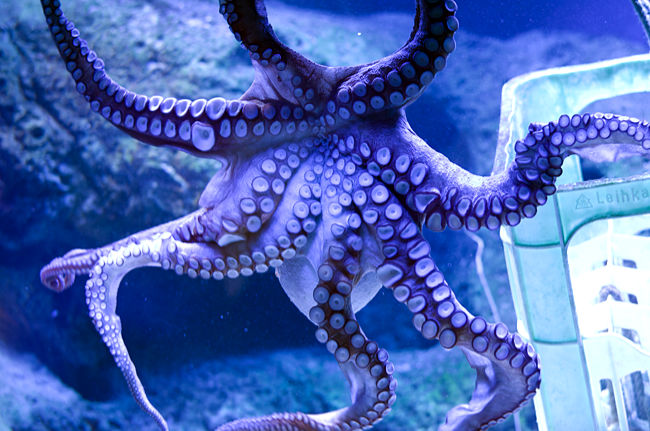
Bremerhaven - Deutsches Auswandererhaus® (German Emigration Center)
Opened in 2005, the German Emigration Center vividly and engagingly presents the history of emigration to America across five eras spanning from 1830 to 1974. In total, 7.2 million people departed from Bremerhaven to seek a new home and build a new life beyond the Atlantic. The emotionally compelling exhibition, backed by historically accurate research, earned the museum the European Museum Award in 2007.
read more ...

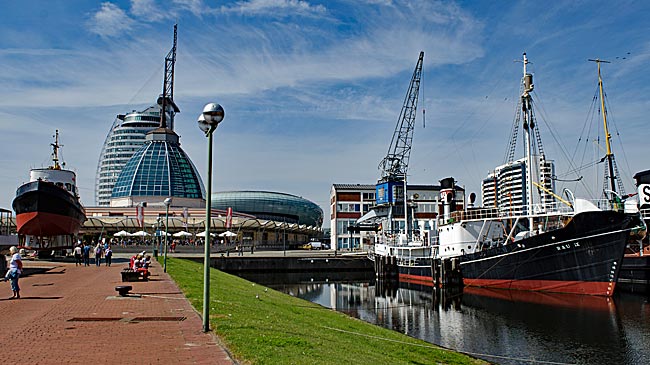
Bremerhaven Havenwelten
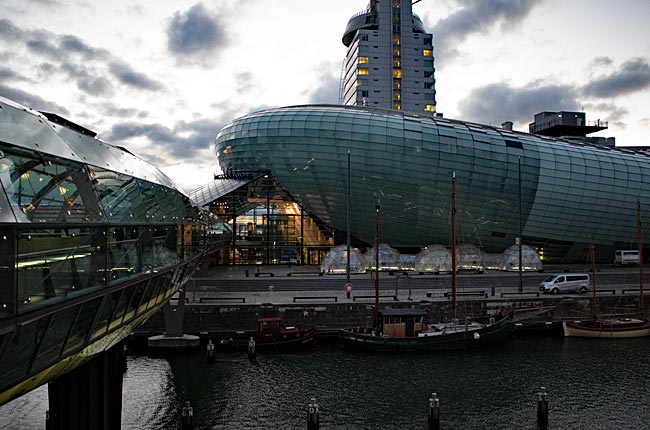
Since early 2008, Bremerhaven has not only had a new tallest building but also a new landmark in its Weser-side skyline with the ATLANTIC Hotel SAIL City, which rises 147 meters directly behind the Weserdeich. Architecturally, the structure perfectly embodies a maritime city - it stands like a powerful, rounded ship's superstructure. On the 20th floor, at a height of 77 meters, there is an observation deck (SAIL City) that is also accessible to non-guests.
read more ...
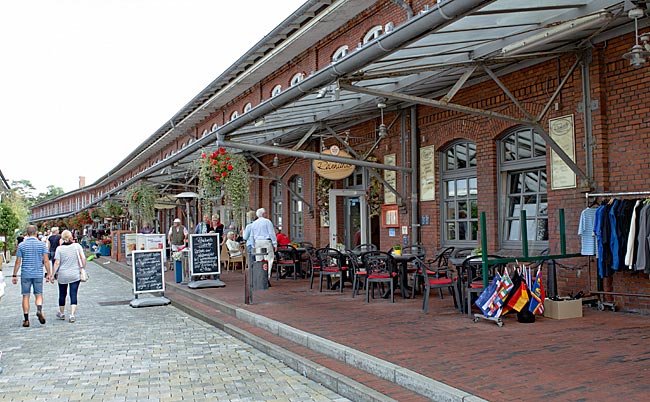
Bremerhaven - Schaufenster Fischereihafen (Fishery Harbor Showcase)
Away from the Havenwelten and older than both the Emigration Center and Klimahaus is the "Fishery Harbor Showcase." In fact, the Fishery Harbor was originally Geestemünde's deep-sea fishing harbor, built between 1891 and 1896. After a period of decline and decay - including partial demolitions - the idea emerged to transform the area into a maritime experience world. In 1990, efforts began to restore Fish Packing Hall IV, the oldest surviving hall, which had been slated for demolition just shortly before.
read more ...
Klimahaus® Bremerhaven 8° Ost
In this futuristic building, visitors embark on a journey along the 8th meridian east, traveling around the globe through all climate zones. Across multiple levels, there is plenty to read, see, hear, and experience sensorially and tactilely about climate and its impact on local nature and human life. Visitors are not limited to being passive observers but are invited to actively engage with numerous exhibits.
read more ...
Bremerhaven - Überseehafen (Overseas Port)
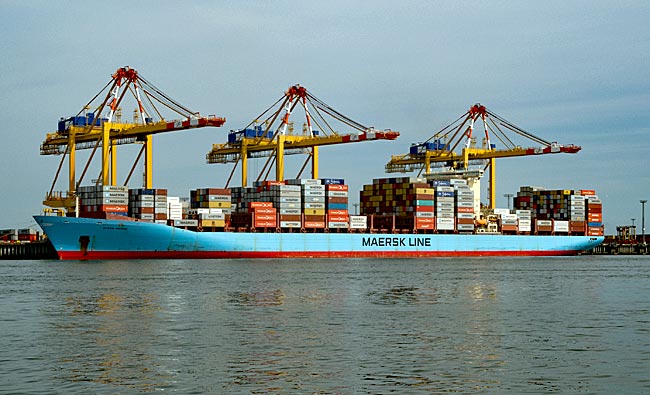
In addition to the Old Harbor (now the Museum Harbor), which was the first to be built, other ports were later added. Adjacent to the New Harbor lies Kaiserhafen I, the first in a series of additional harbor basins. Even a glance into this initial section of the expansive port area reveals a different world of maritime activity - one of large ships. And we will see even larger ones along the five-kilometer-long quay on the Weser.
read more ...
Neu-Helgoland (New Heligoland) / Hamme Harbor Worpswede
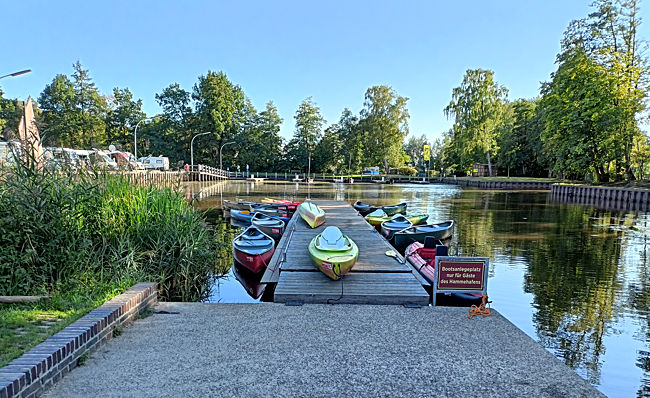
From April to October, the Hamme Harbor in Worpswede attracts many day visitors, weekend trippers, cyclists, and campers. The campsite operators run not only a bistro & beer garden with waterside seating but also rent out kayaks and canoes. Those who don’t want to paddle on the Hamme themselves can instead book an excursion trip aboard one of the Adolphsdorf Peat Boats. Food and drinks are also available just a few meters from the harbor at "Hamme Hütte Neu Helgoland." Tip: A great bike trip destination from Bremen!
read more ...
Vegesack in northern Bremen
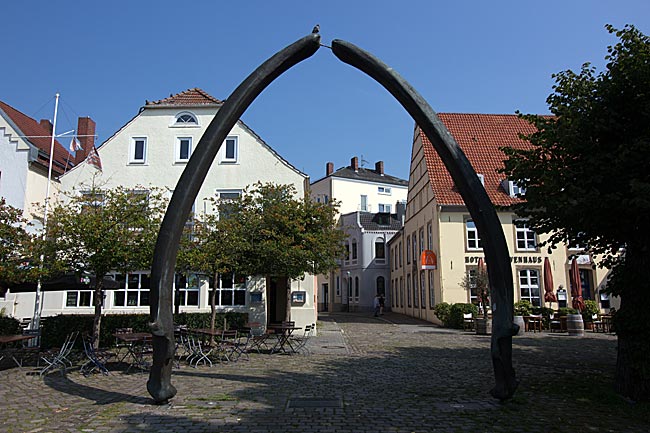
Old Warehouses, a museum harbor with ships, the "Utkiek" with the jaw of a blue whale, and more are part of Vegesack's Maritime Mile, which stretches for about one nautical mile (approximately 1.8 kilometers) to the former site of the "Bremer Vulkan" shipyard, which went bankrupt in 1996. This also includes the Stadtgarten (a park), which runs almost from the ferry terminal to the former "Vulkan" site.
read more ...
Stade - on the banks of the Schwinge River
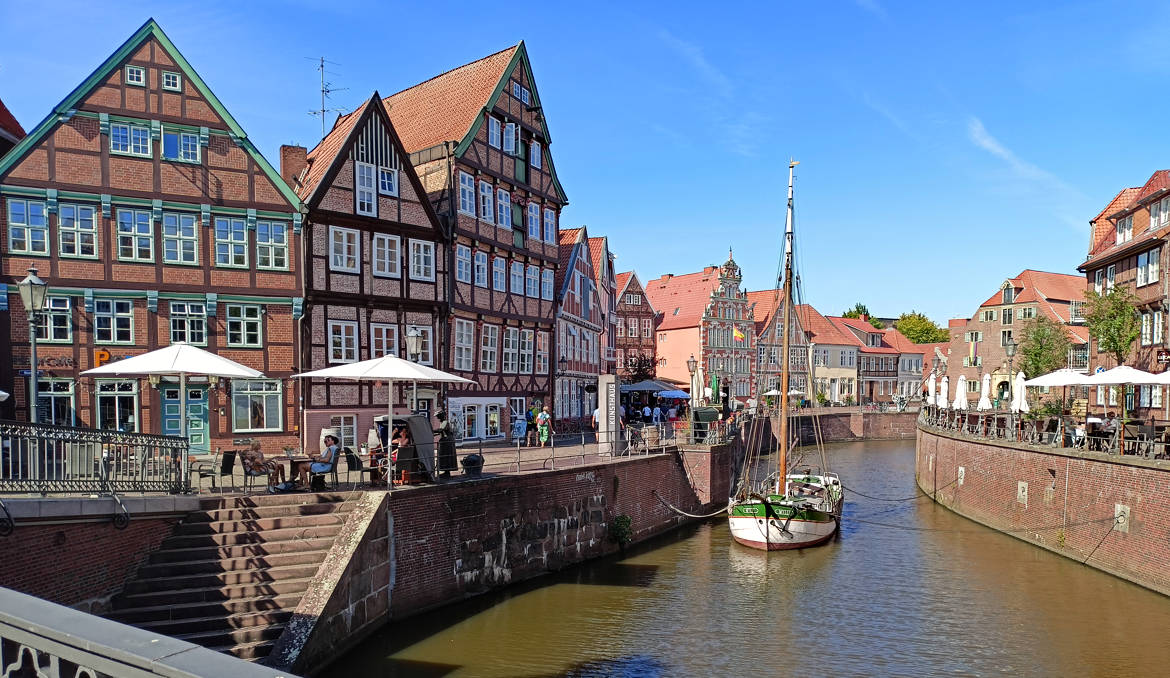
Do you know Stade? No? What a shame! Then feel free to read on if you'd like to learn about this smaller Hanseatic city on the Elbe, neighboring the much larger Elbe metropolis of Hamburg. As is often the case, the tourist's gaze doesn't fall on the entire city but rather focuses here on the historic city center and a bit of its surroundings. In our opinion, Stade is a beautiful and worthwhile destination for a short visit or even a few extra days.
read more ...
Heligoland - a day trip
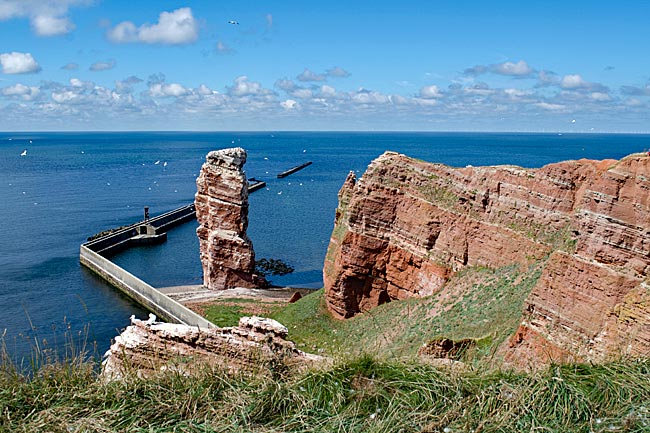
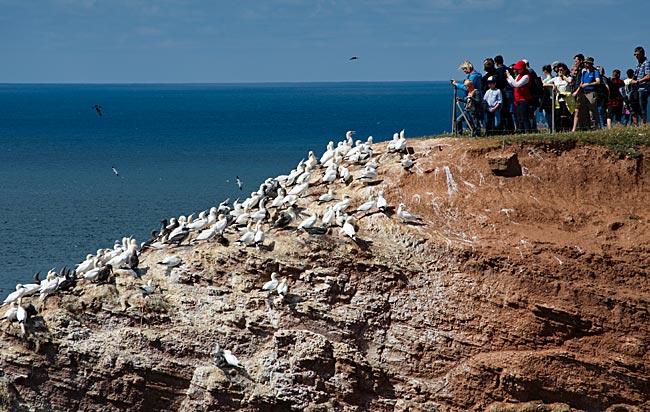
Germany's only supposed high-seas island is visited each year by thousands of tourists, most of them day-trippers in the warmer months. And yes, admittedly, Heligoland isn't located right in the vicinity of Bremen. However, it can be reached as a day trip from Bremerhaven and Cuxhaven - which is why we decided to visit.
read more ...
Wilhelmshaven – Seaside City on the Jadebusen
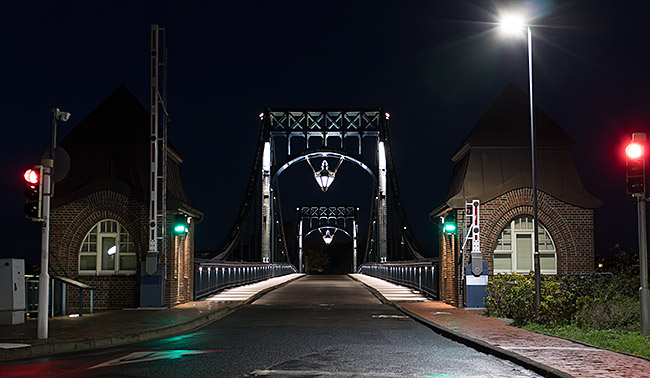
It's hard to imagine Wilhelmshaven without its naval presence, as the city only developed after a naval base was built in the 19th century. Even today, the German Armed Forces (Bundeswehr) maintain a large base here with several squadrons. Yet, there is much more to discover in this port city beyond its military significance.
read more ...
Cuxhaven - a day trip
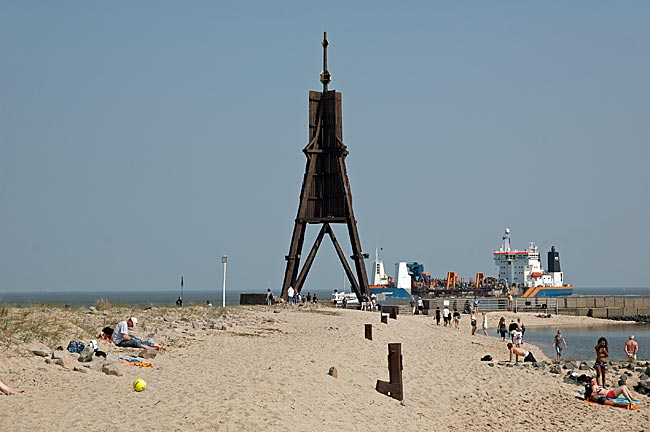
Many people from Bremen consider the seaside resorts of Cuxhaven to be "their home beach." The coastal city at the mouth of the Elbe is easily accessible from Bremen by car via the A27, which passes by Bremen and Bremerhaven before ending in Cuxhaven. By train, the journey takes a bit longer with a transfer in Bremerhaven. However, even in the off-season, Cuxhaven with its seaside resorts is a great destination for an outing - for example, by bicycle.
read more ...
DGzRS - The Maritime Rescuers
Anyone in distress at sea today has far better chances of receiving help, even out on the open water, thanks to modern technology and professionals who take care of it. Along Germany’s North and Baltic Sea coasts, these are primarily the approximately 1,000 full-time and volunteer men and women of the DGzRS (German Maritime Search and Rescue Service), also known as "The Maritime Rescuers." In 2020 alone, they conducted 1,720 operations and rescued 357 people. Since its founding, the organization has helped 86,000 individuals.
read more ...