
 exploring Bremen & its surrounding areas
 You are here: worth seeing in Findorff district
 Findorff district (2/2)
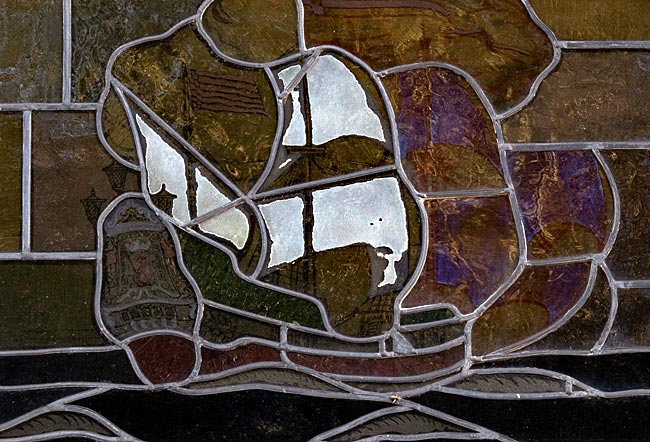
Ship motif with a Bremen Speck flag at the stern in a multi-pane window of a residential building
With the invention of the railway during industrialization, entirely new and more efficient transportation methods emerged. The narrow-gauge railway Bremen-Tarmstedt, which opened in 1900, largely replaced barges as a means of transport. Initiated by the "Agricultural Association" in Lilienthal, this 1,000 mm gauge railway operated until 1956 and ended roughly where the ÖVB-Arena on Bürgerweide stands today. Of the 15 stations originally built, only a few remain, one of which is located in Bremen's Horn-Lehe district and has housed the Italian restaurant Roma for many years.
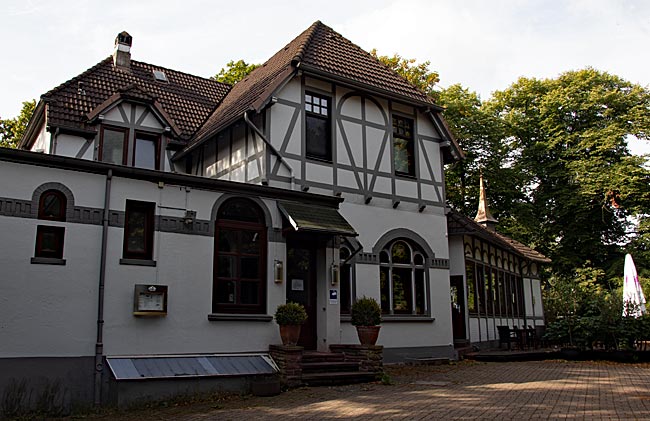
Former station of the Bremen-Tarmstedt narrow-gauge railway in the Horn-Lehe district
The railway is better known by the name Jan Reiners. "Jan" stands for Johann, and Johann Reiners was then the chairman of the aforementioned association and the driving force behind the rail project. In his honor, the first steam locomotive was named "Johann Reiners." Thanks to the efforts of the Findorff Citizens' Association, it narrowly escaped being scrapped and now stands as an elegantly restored monument on a pedestal at Hemmstraße / Corner Fürther Straße. Today, part of the former route, known as Jan-Reiners-Weg, allows for relaxed cycling through green spaces without car traffic from Bremen to Lilienthal.
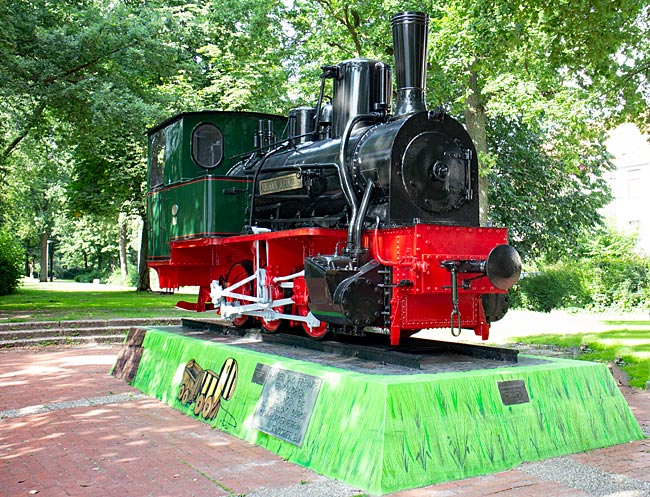
The first steam locomotive of the Bremen-Tarmstedt narrow-gauge railway "Johann Reiners"
The current harbor basin between Eickedorfer Straße and Kleine Neukirchstraße is only a fraction of its original size. The once approximately 500-meter-long structure has been reduced to just 100 meters. As early as 1913, part of it was filled in, with the remaining section used as a recreational harbor. After World War II, another portion was filled with earth. Unlike the streets between the harbor and the slaughterhouse, which were developed in the second half of the 19th century, the former harbor area remained relatively undeveloped.
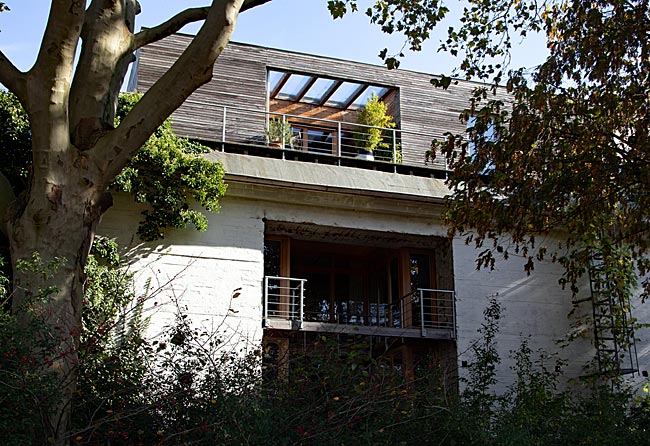
Removing old air-raid bunkers is uneconomical, but they can be converted into residential buildings or expanded upon in the attic area
After two air-raid bunkers were built during the war - one used by artists and the other (like several others in Bremen) converted into a residential building - a youth center was established here.
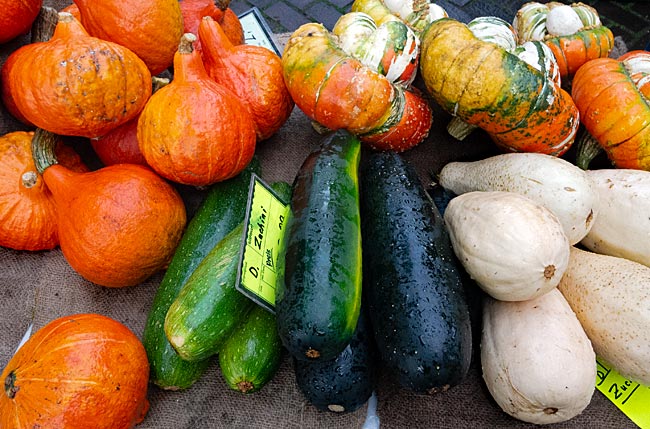
Autumn offerings with pumpkins and zucchini at the weekly market
An adjacent large square remained as a marketplace, where one of the largest weekly markets in the Hanseatic city takes place three times a week (Tue., Thu., Sat.) with a wide range of offerings. Additionally, a community center opened in 1954 and the Martin-Luther Church, completed in 1961 with its 36-meter-tall bell tower, mark the end of Hemmstraße.
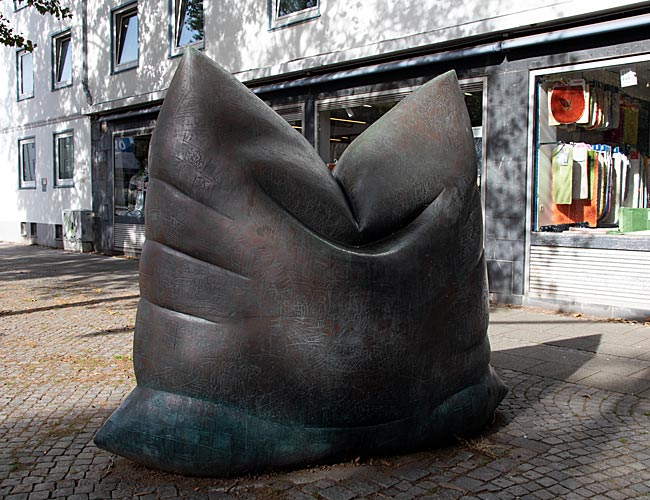
"The Cushion" with a fold or twist by Bremen artist Thomas Recker (1993). On this approximately 2m x 2.3m bronze sculpture, everyday experiences of Findorff's citizens are engraved
Hemmstraße, particularly the section to the right toward Blockland but especially downhill to the left, is the main shopping street and strolling promenade with numerous retail shops in a district that has only been officially recognized as an independent neighborhood since 1951. Cafés like "Lilie" or the ice cream parlor "Cercena" are popular meeting spots, where people sit outside along the sidewalk during warm months to watch the bustle. While car traffic hasn't been banned (the bus line 25 also runs here), at least it has been slowed down.
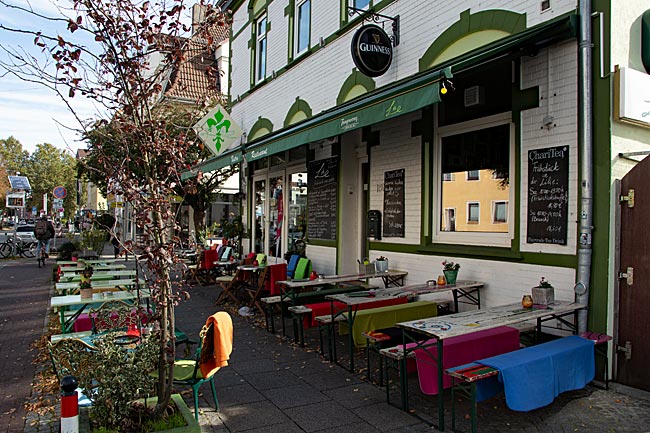
Still open seating in the outdoor area of "Lilie"
Continuing straight on Hemmstraße past the ice cream parlor leads to the Walle district with its prominent television tower and the Überseestadt neighborhood. Turning onto Admiralstraße, you pass by the former main building and one of the production buildings of the Bremen Stuhlrohr-Fabrik Menck, Schultze & Co., which were built around 1903 and have been protected as historical monuments since 2010. The factory was founded in 1876 as a merger of three individual companies. After moving to Findorff, it became the district's largest employer. The workforce grew from about 300 employees in 1890 to around 1,000 in later years.
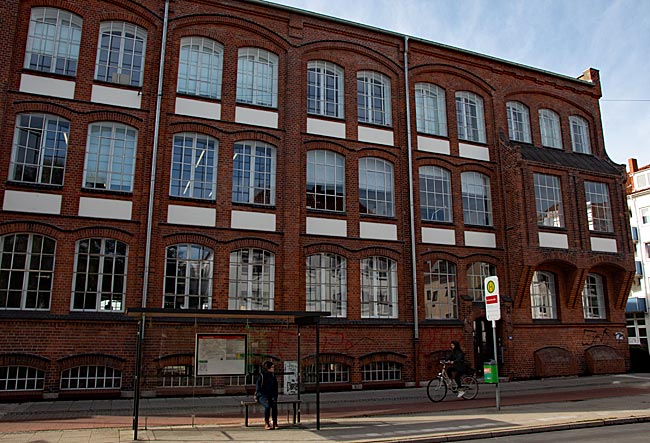
The protected main building of the former Bremen Stuhlrohr-Fabrik on Admiralstraße is now used for other purposes
In the production halls, rattan from Southeast Asia -such as Borneo, the world's third-largest island, or Indonesian Sumatra - was processed. The raw material was imported, processed, and then sold as split and dyed products. However, production finally ceased in 1956. On one hand, bomb damage had severely damaged the factory; on the other, trends shifted toward different materials in furniture construction. Today, the buildings are used for other purposes. At the end of Admiralstraße, you once again stand at a street intersection opposite the Kulturzentrum Schlachthof.
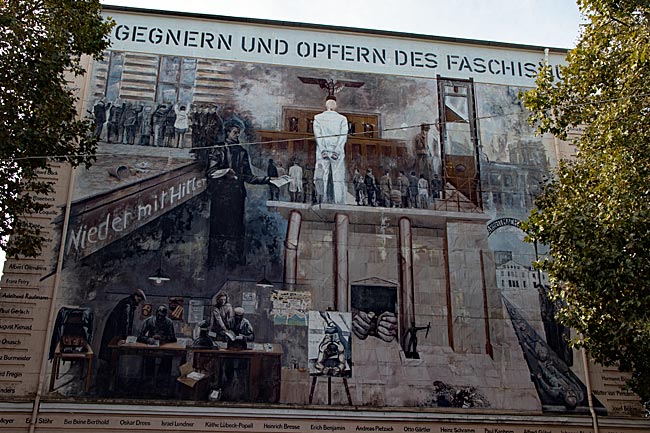
Another work by Thomas Recker is this painted bunker wall on Admiralstraße. It serves as a reminder that Bremen residents were also victims of the Nazi killing machine
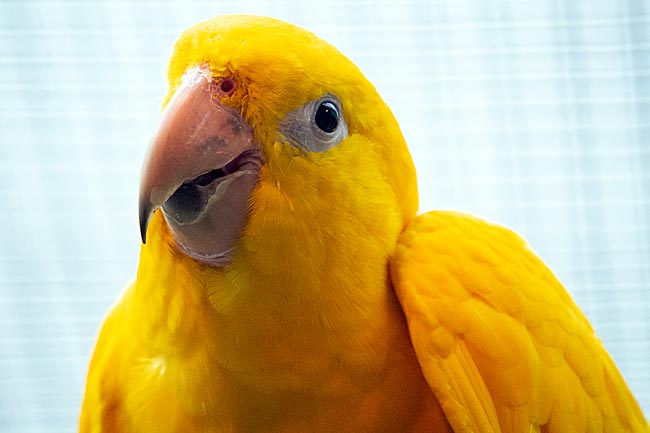
Those interested in learning more about parrots are well-suited to visit one of the public days at the Papageienschutz-Centrum (Parrot Protection Center) on Salzburger Straße in the allotment garden area of In den Hufen. The registered association operating the intake station relies on donations and combines expertly guided tours through part of the facility - formerly a nursery - with fundraising efforts through admission fees, sales of wall calendars, donations, and more. Interested parties can find dates on the association's website.
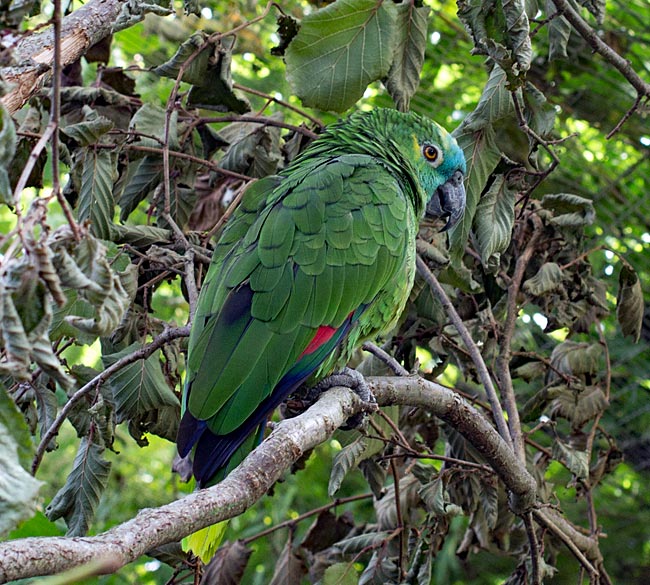
Amazon parrot at the Papageienschutz-Centrum
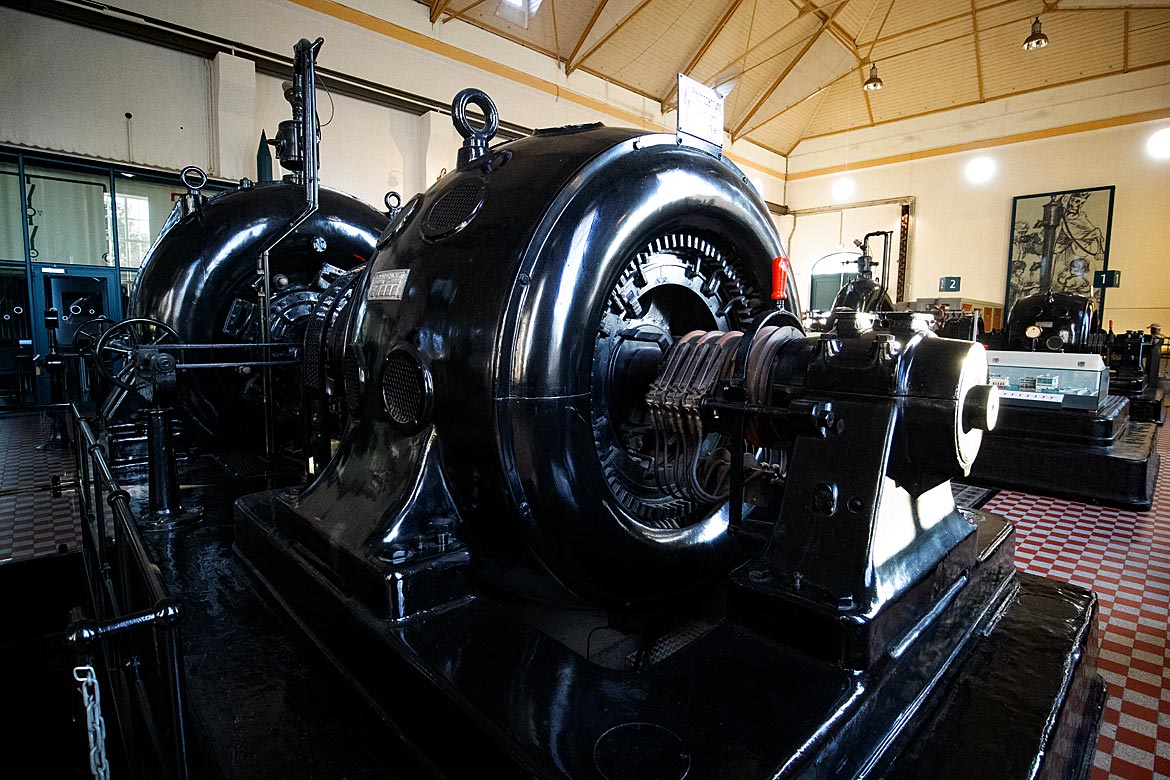
Just a stone's throw from the Papageienschutz-Centrum, on the opposite side of the street, stands the industrial monument "Altes Pumpwerk" (Old Pumping Station). The complex, which has been protected as a historical site since 1995, includes several buildings such as the 40-meter-long machine hall where large pump units are still visible today and a show canal.
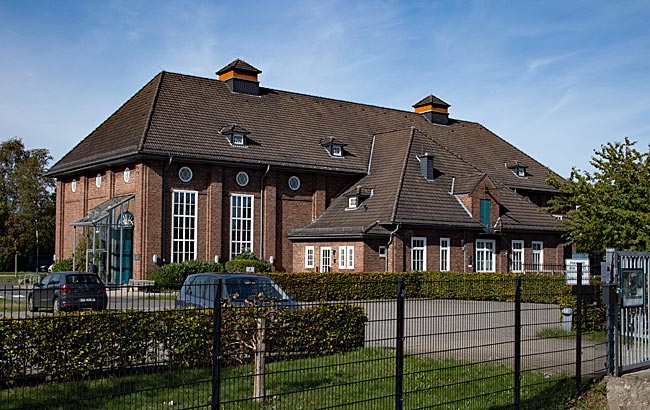
The machine hall of the Old Pumping Station
Constructed between 1913 and 1915, the facility served to transport wastewater from the Hanseatic city until its decommissioning in 1995. In 1997, former employees founded the non-profit association "Altes Pumpwerk e.V.," which - with financial support from the local utility provider Hanse-Wasser Bremen GmbH - developed the site into a museum and living cultural monument. The association received the 2010 Monument Conservation Award for its efforts. Rightfully so, as the machines and equipment are beautifully restored, and at each station along the numbered tour route, there is an information box with double-sided A5-sized leaflets containing well-made explanations.
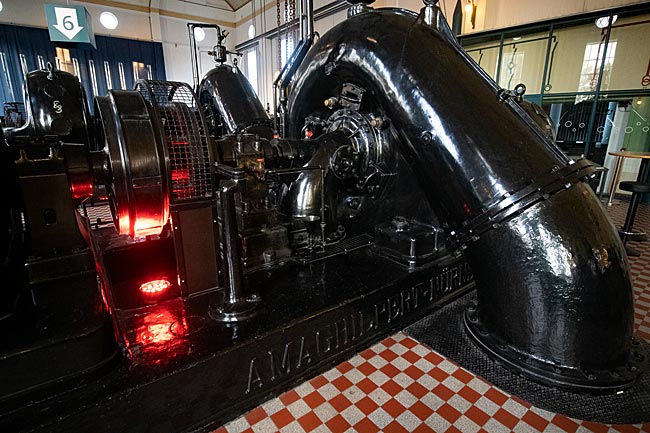
Pump system in the machine hall
Beyond this, there is a wealth of information in text and images that tell and illustrate the story of wastewater disposal from past to present. For example, it's astonishing to learn that people in earlier times simply dumped their waste onto the streets.
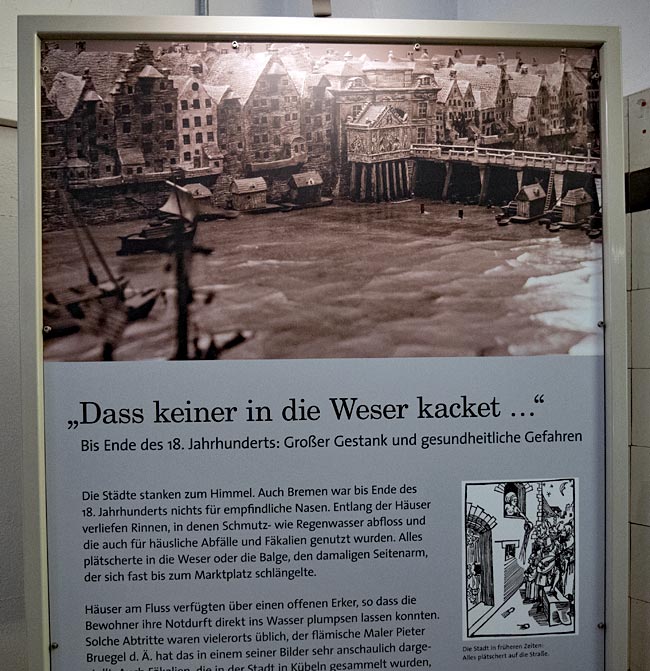
Well-designed illustrated information board
On opening days or by prior arrangement, informative tours on the topic of wastewater disposal - past and present - are also offered. Additionally, cultural events take place in the premises. Opening days, times, and dates can be found on the website.
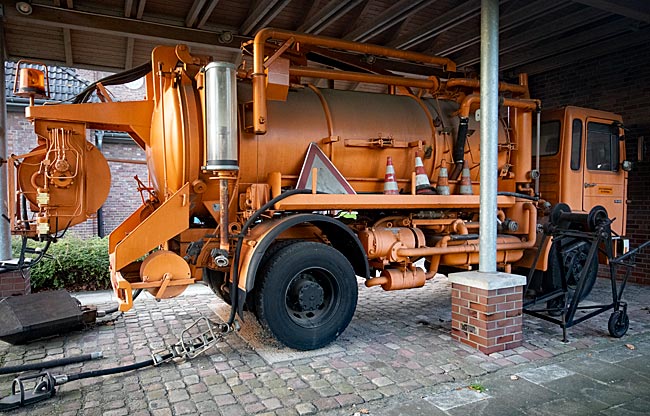
Former canal cleaning vehicle (1981 model)
The name Findorff does not derive from a village that may have once been located here but rather from Jürgen Christian Findorff, born in Lauenburg in 1720. Trained in water engineering and land surveying, he began draining and settling the moors between the Hamme and Wümme rivers as well as the Teufelsmoor (Devil's Moor) in Bremen's surrounding area and later around Bremervörde starting in 1751. The reclamation of land from swampy regions was carried out on behalf of the Elector of Hanover. Officially appointed as a moor commissioner by decree in 1771, Findorff founded a total of 42 villages. The settlement of the surrounding area also had a positive impact on Bremen's development.
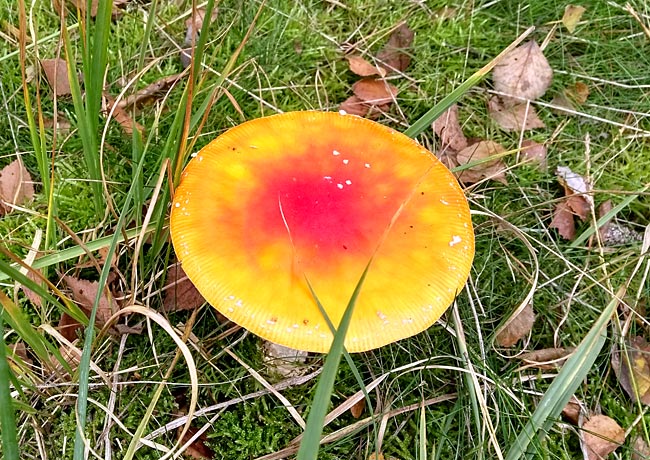
Not only many birch trees grow in the moor, as depicted in paintings by old artists from Worpswede, but also numerous mushrooms - some suitable for consumption only once
previous page
 next page
Map
Further information
Kulturzentrum Schlachthof
(cultural center)
Findorffstraße 51
28215 Bremen
Phone: +49 (0)421 377750
Email: info@schlachthof-bremen.de
www.schlachthof-bremen.de
'
Schlachthofkneipe
(Restaurant / Pub)
Findorffstraße 51
28215 Bremen
Phone: +49 (0)421 371661
Fax: +49 (0)421 3777511
Email: info@schlachthofkneipe.de
https://schlachthofkneipe.de
Open: Monday - Sunday from 5 PM
Bremer Rundfunkmuseum e.V.
(Bremen Broadcasting Museum)
Findorffstraße 22 – 24
28215 Bremen
Phone: +49 (0)421 357406
Email: info@Bremer-rundfunkmuseum.de
www.Bremer-rundfunkmuseum.de
Open: Tuesday to Thursday and Sunday 10 AM - 3 PM, closed on public holidays
www.torfkaehne-bremen.de
Information and bookings at the Bremer Geschichtenhaus in Schnoor
Wüstestätte 10
28195 Bremen
Phone: +49 (0)421 33626–51
Fax: +49 (0)421 33626–52
Monday - Friday 9:30 AM - 4:30 PM
Email: buchung@torfkaehne-bremen.de
Please book at least 14 days in advance
Papageienschutz-Centrum Bremen e. V.
Aviary for injured parrots
Salzburgerstr. 2a
28219 Bremen-Findorff
Phone: +49 (0)421 1630723
Fax: +49 (0)421 3468851
Email: info@papageienschutz.de
https://papageienschutz.de
Altes Pumpwerk e.V.
(Old Pumping Station)
Salzburger Straße 12
28219 Bremen
Phone: +49 (0)421 988-1111
Email: kontakt@altespumpwerk.de
www.altespumpwerk.de
Bremerhaven in general
Bremerhaven was founded only in 1827. To secure its importance as a port city amid the threat of silting up of the Weser River - the lifeline of Bremen - Bremen acquired 342 morgen (approximately 850 acres) of land at the mouth of the Weser from the Kingdom of Hanover for 74,000 talers in 1827 under then-mayor Johann Smidt. About 60 km downstream from Bremen, the first urgently needed seaport for Bremen, known as the Alte Hafen (Old Harbor), was established there by 1830.
read more ...
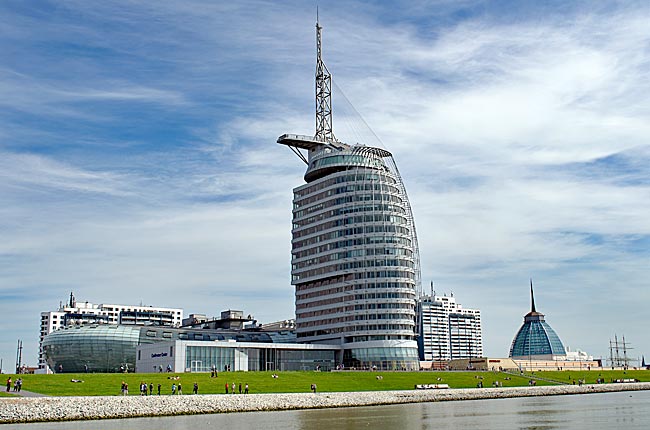
Bremerhaven - Deutsches Auswandererhaus® (German Emigration Center)
Opened in 2005, the German Emigration Center vividly and engagingly presents the history of emigration to America across five eras spanning from 1830 to 1974. In total, 7.2 million people departed from Bremerhaven to seek a new home and build a new life beyond the Atlantic. The emotionally compelling exhibition, backed by historically accurate research, earned the museum the European Museum Award in 2007.
read more ...
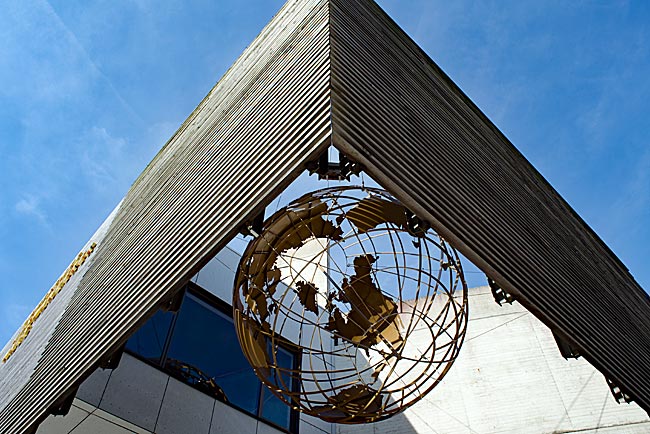
Überseestadt (Overseas City)
When the Overseas Port required renovation, the decision was made in 1991 to simply close off the basin instead. In 1998, the Overseas Port was finally filled with sand obtained from dredging operations in the Outer Weser. Alongside the also decommissioned but still existing Europa Harbor basin, this formed the foundation for the conceptual development and creation of today's Überseestadt (Overseas City).
read more ...
Freimarkt
What some might simply call a fair or a large amusement park is, for others, an event of equal importance to Christmas. However, the fact remains that for most residents of Bremen, the Freimarkt is considered the "fifth season" and an unshakable Bremen tradition. This isn't surprising, as Bremers can look back on nearly a thousand years of history for their festival - and with that, the Freimarkt is Germany's oldest folk festival.
read more ...
Bürgerpark (Citizen's Park)
A green oasis near the city center and a widely used recreational area, the Bürgerpark is an expansive site adjacent to today's Bürgerweide behind the train station. This park was initiated by the citizens themselves. In the early 19th century, the old defensive structures of the city had already been dismantled, transforming the ramparts into a landscaped park. However, as the city rapidly grew throughout the century, demands for more green spaces became increasingly louder.
read more ...
Cycling to Vegesack
The journey begins at Bremen's central station, passing through Bürgerweide near the distinctive Stadthalle (City Hall), Congress Center, and exhibition halls, then continuing through Findorff along the Torfkanal (Peat Canal). This canal, which runs along the edge of the Bürgerpark (Citizens' Park) and Stadtwald (city forest), was constructed between 1817 and 1826 to transport peat from the Teufelsmoor (Devil's Moor) near Worpswede to Bremen using peat barges. Today, you can book excursion trips on the characteristic black wooden boats.
read more ...
Water-based activities in Bremen
Given that Bremen is a city situated along a major river and surrounded by numerous lakes, it's only natural to extend sporting activities - or whatever one personally considers as such - from land to water. The most family-friendly activity on the water is undoubtedly taking a rowboat ride along the canals of the Citizens' Park (Bürgerpark).
read more ...
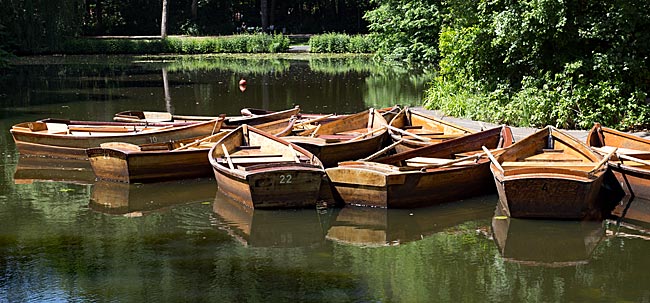
Through Walle district to the industrial ports
The history of Walle began, like that of many other districts in Bremen, long ago as an independent village, more precisely, it started only as the seat of the Ministerial family von Walle. The first mention of the old village dates back to the year 1139. From this family came both farmers and citizens. Thus, with the settlement of more people, the family estate grew into a village around the manor. Walle was incorporated into the Hanseatic city in several steps, first between 1885 and 1902.
read more ...
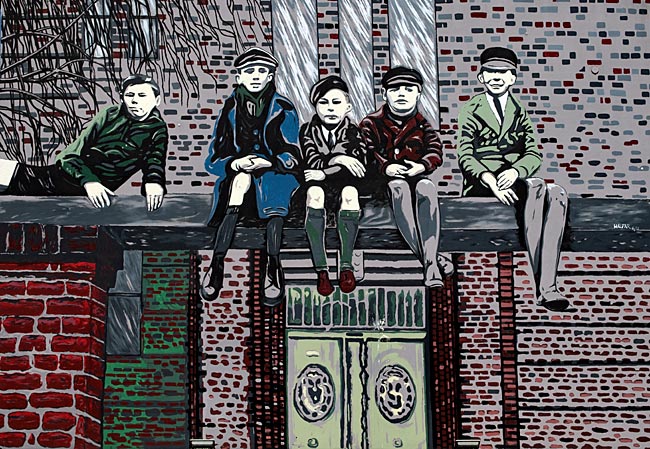
Worpswede
In 1889, the painters Fritz Mackensen, Otto Modersohn, and Hans am Ende laid the foundation for this art center by deciding to work and live in the small, previously unknown village. They were quickly joined by other artists such as the painter Paula Becker, the poet Rainer Maria Rilke, Clara Rilke-Westhoff, Fritz Overbeck, Heinrich Vogeler, and later the sculptor, painter, and craftsman Bernhard Hoetger, after whose designs, among others, the Paula-Becker-Modersohn-House in Bremen's Böttcherstraße was built.
read more ...
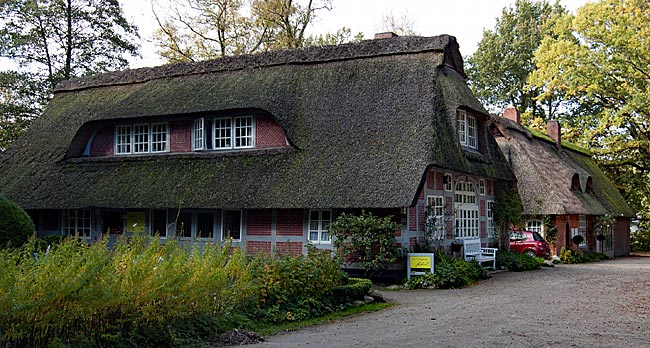
Schwachhausen district
The Lloyd Railway Station, built in 1913 near Bremen's central station, served as a waiting area for emigrants who departed Europe from Bremerhaven aboard ships of the North German Lloyd. From here, their journey initially continued by train. The shipping company merged with HAPAG (Hamburg-America Line) to form HAPAG-Lloyd, headquartered in Hamburg. Directly across the street stands the anti-colonial monument "Elephant."
read more ...
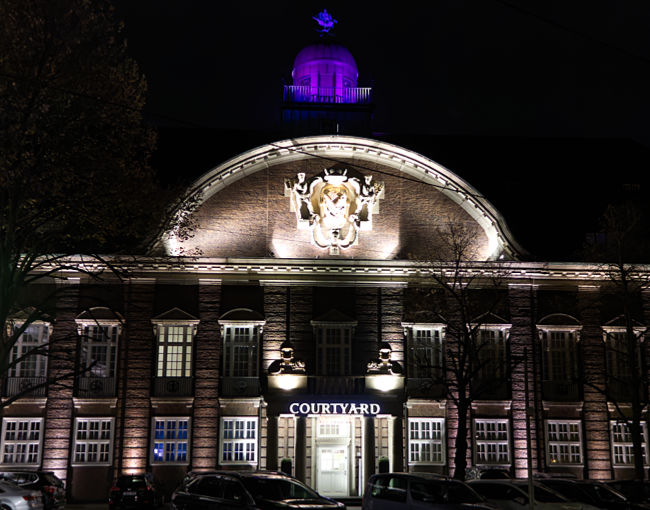
Übersee-Museum (Overseas Museum)
In 1896, what is now known as the Overseas Museum first opened its doors under the name "Municipal Museum for Natural History, Ethnology, and Trade." The exhibits initially came from the "Municipal Collections of Natural History and Ethnography," which were partly displayed as a "Trade and Colonial Exhibition" at the "Northwest German Trade and Industry Exhibition" in 1890 with great success. Since its founding, the museum's concept has changed several times, evolving toward a stronger focus on museum education that continues to this day.
read more ...
City Center: the main shopping streets
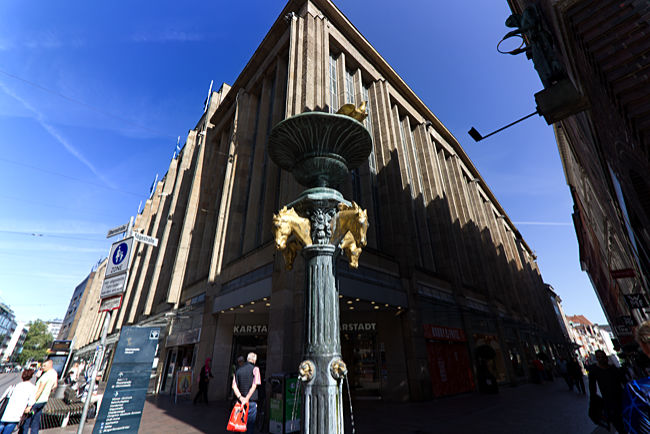
The Lloyd-Passage runs parallel to Obernstraße, where Sögestraße also ends. Here stands the "Horse Fountain," another popular meeting spot. Often, people gather here waiting for someone. The attractively designed bronze and brass fountain was donated by the jeweler Brinkmann & Lange on the occasion of their 100th company anniversary and has stood in this location on the pedestrian path since 1974. Although the design is not by Gerhard Lange, the fountain closely resembles the three other horse fountains he designed in different parts of the city.
read more ...
Metalhenge
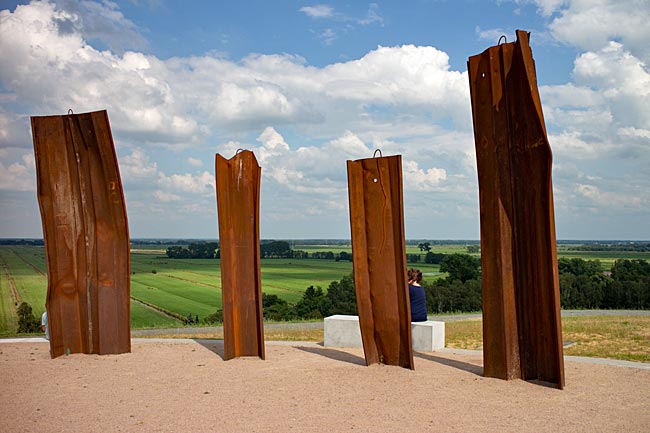
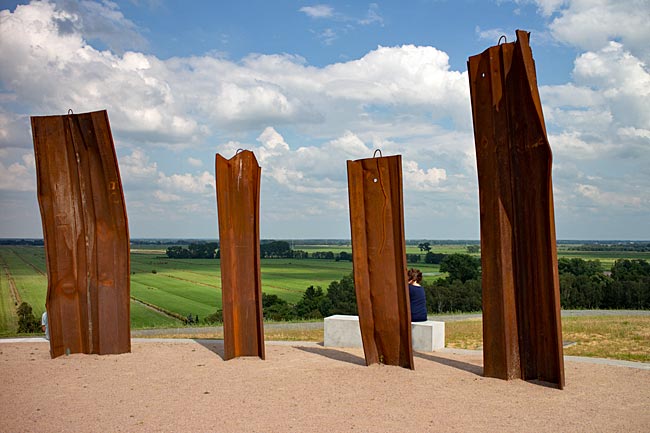
In 2021, an observation platform was opened on the first decommissioned and surface-renovated section of the landfill in Blockland. At a height of 40 meters, the barrier-free Planet Path leads visitors along. Planets? Yes, the Metalhenge structure, inspired by the famous Stonehenge, is positioned on the circular observation platform according to selected astronomical aspects. Information about this can be accessed via QR code on your smartphone. Even for those not particularly interested, the view stretches approximately 23 km across Bremen on one side and Blockland on the other.
read more ...