

DISTANT PLACES
Travel tips by Bremen sehenswert far from the Hanseatic City of Bremen
Kos - The Greek Dodecanese Island
A Travel Guide
Kos Town - Western Excavation Site
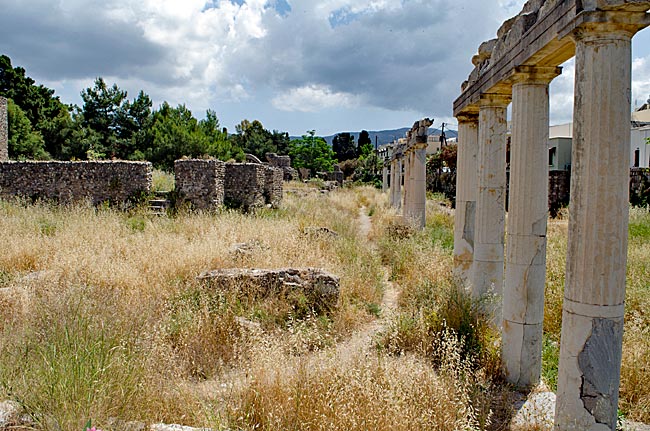
Reconstructed columns of a promenade hall
Located diagonally opposite the Odeon - accessible both from Odós Grigóriou E and from the other side of Tsaldári / A. Pávlou Road - a row of Doric columns rises into the air on an area several hundred meters wide and long, situated between houses in a modern residential neighborhood. Even from a distance, these columns clearly mark the "Western Excavation Site," which lies approximately 2 meters below street level.
These re-erected, partially reconstructed Doric columns are only part of the original 81 that supported the roof of a promenade hall. It was part of the gymnasium - a sports complex dating back to the Hellenistic period in the 2nd century BC - where the island's athletes used to train. As other finds from this era indicate, athletic competition in tournaments held high social significance. Even today, about 150 meters of the former running track can still be seen next to the promenade hall.
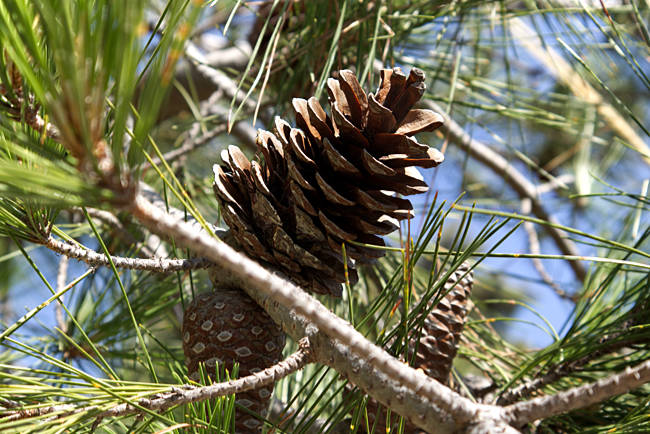
Nature reclaiming its territory, especially at the Western Excavation Site
On the opposite side of the excavation site stands a fully reconstructed building whose modest exterior gives no hint whatsoever of what lies inside. This Nymphaeum was initially assumed to be a sanctuary for nymphs, which were typically built over a well or spring. However, during both the Hellenistic and later Roman periods, the term was used generally for any structure featuring colonnade architecture and basins with a water supply. Therefore, this rectangular building from the 3rd century BC is likely a bathhouse and latrine. Unfortunately, the interior is not open to the public - a pity, as the interior furnishings were (or are) very worthy of viewing.
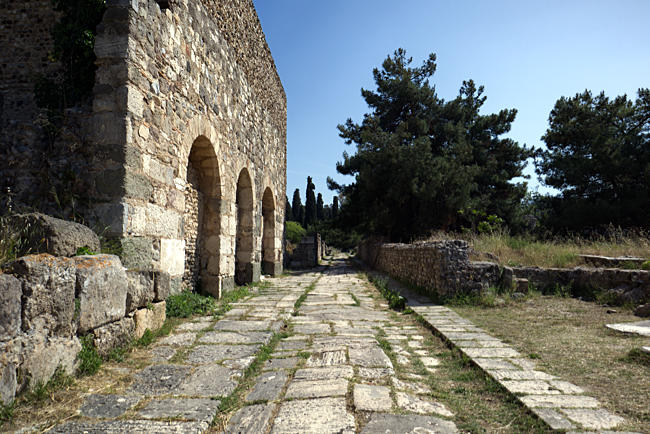
The ancient Roman road Via Cardo with the Nymphaeum (left)
In front of the Nymphaeum runs the Via Cardo, a road dating back to the Roman period, whose paving still shows wagon tracks, indicating centuries of use. Along this road are also the remains of the West Baths from the Roman era, which can be identified by a small remaining section of the former vaulted ceiling. Portions of a mosaic are still preserved on the interior side.
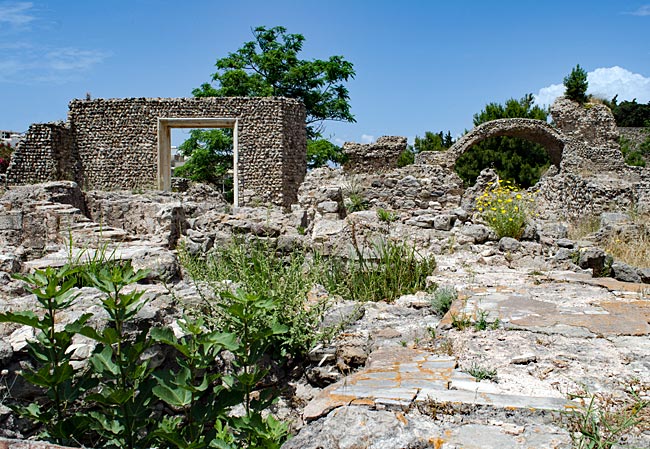
Ruins
The ruins in the immediate vicinity date from a later period, such as an Early Christian basilica from the 5th/6th century AD. In this area, several smaller floor mosaics can be seen; however, the most magnificent one is found at the northern edge of the excavation site, protected under a roof. This large-scale mosaic depicts "The Judgment of Paris," a scene from Greek mythology. The floor mosaic shows in great detail and with many figures the story of Paris, who was asked to settle a dispute - sparked by Eris, the goddess of discord, during the divine wedding of Peleus and Thetis - among the quarreling goddesses Aphrodite, Athena, and Hera as to who among them was the most beautiful. To win his favor, each offered him a promise: the first promised him the love of Helen, the most beautiful woman in the world, who was already married to King Menelaus of Sparta, thus marking the beginning of the fateful story of the Trojan War.
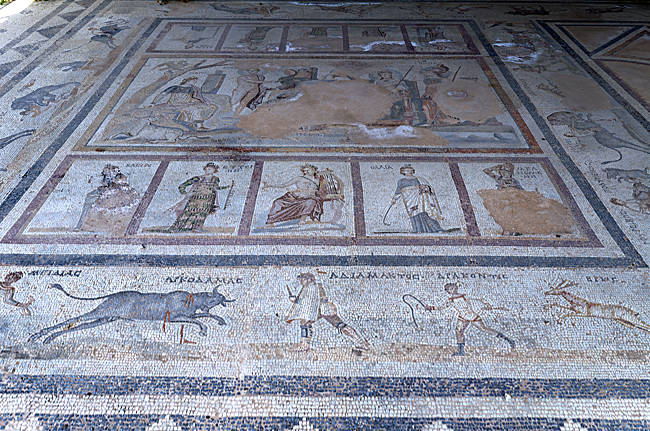
The largest mosaic on the Western Excavation site is covered by a roof
In the eastern part of the area, the Via Cardo meets the Via Decumana, which runs parallel to Odós Grigóriou E. If you follow the road to its end, you will encounter various mosaics, one of which gave the Roman villa its name: the House of Europa. The mosaic depicts the story from Greek mythology concerning the abduction of the Phoenician princess Europa by Zeus, who had fallen in love with her. With the help of his messenger, Hermes, Zeus - having transformed himself into a bull - took her onto his back and carried her away to Crete while floating on the sea.
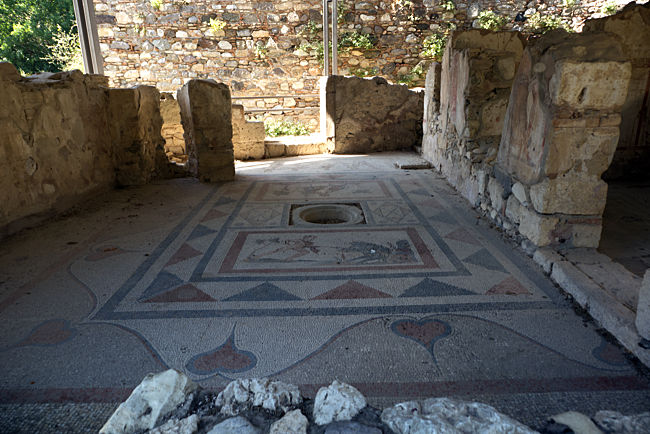
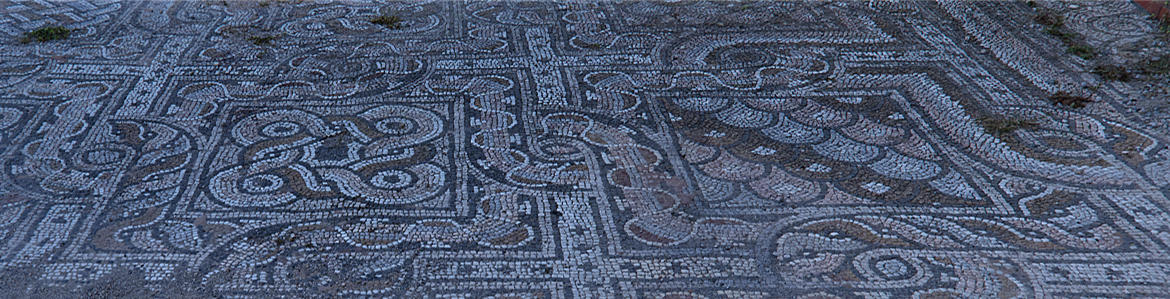
Mosaic on the Western Excavation site in the section along Odós Grigóriou E
Anyone leaving the Western Excavation site at Odós Grigóriou E will find the Odeon opposite it - a Roman theater from the 2nd century AD, which was restored and partially reconstructed under Italian supervision in 1929. In ancient times, approximately 750 spectators could fit into the 14 rows of seating. Perhaps some tourists will be present during your visit if you would like to showcase your acting talent on "the boards that are the world" - pardon, here it is unfortunately only hard stone.
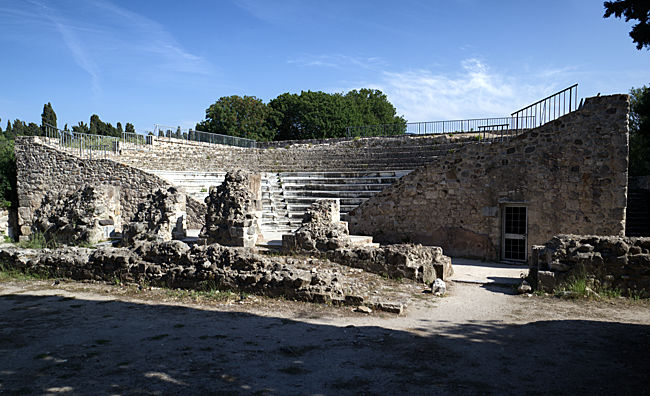
All just theater
The town of Kos — it's worth seeing
Introduction
Freedom Square with Market Hall, Defterdar Mosque & Archaeological Museum
Agora and Gate of Taxes
Hadji-Hassan Mosque, Plane Tree of Hippocrates & Palace of Justice
Knights of Rhodes Fortress Neratzia
Dionysus Sanctuary, Casa Romana, Odeon
Western Excavation Site
Asclepieion (slightly outside town)
previous page
 next page
Read more about Kos: The table of contents
Map
UNESCO World Heritage Site on Rhodes
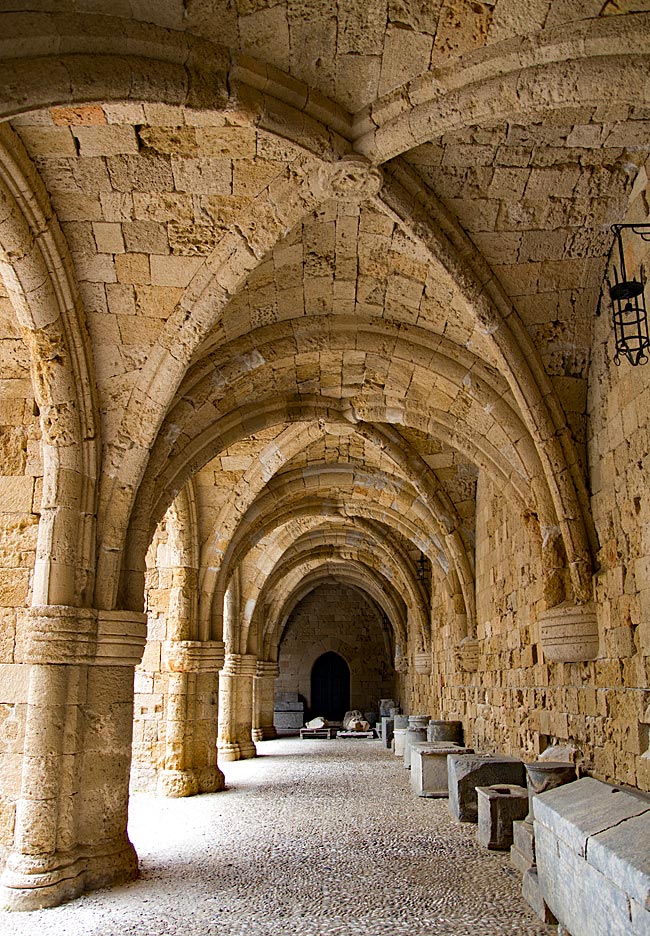
A journey through the historic Old Town of Rhodes
Relics from various eras - ranging from antiquity to the period of Italian occupation - can be found almost everywhere on the island. Many have left their mark; in some places, they must be sought out, while in others, they appear in clustered, fascinating density and variety. Yet, nowhere else on the island are these traces as prominent as they are in the city of Rhodes. It is not for nothing that the historic Old Town was declared a UNESCO World Heritage site in 1988.
read more about Rhodes Old Town ...
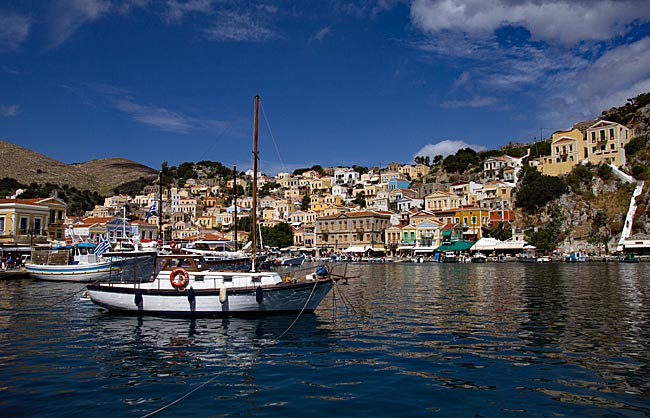
Symi
An excursion to the Greek Dodecanese island off the Turkish coast
A visit to this sparsely populated rocky island of about 60 square kilometers, with its namesake picturesque harbor town, is part of the standard tour itinerary offered in many locations on the Greek island of Rhodes. From the main island, it takes ships approximately two hours to reach the port of the small island located 23 kilometers north of Rhodes off the Turkish coast, which has belonged to Greece since 1947. As more of the Greek coast recedes into the distance to the port side, the ship draws closer to the Turkish shore; this part of the southern Aegean essentially connects Europe and Western Asia.
read more about Symi ...
The "Green" Island of Corfu
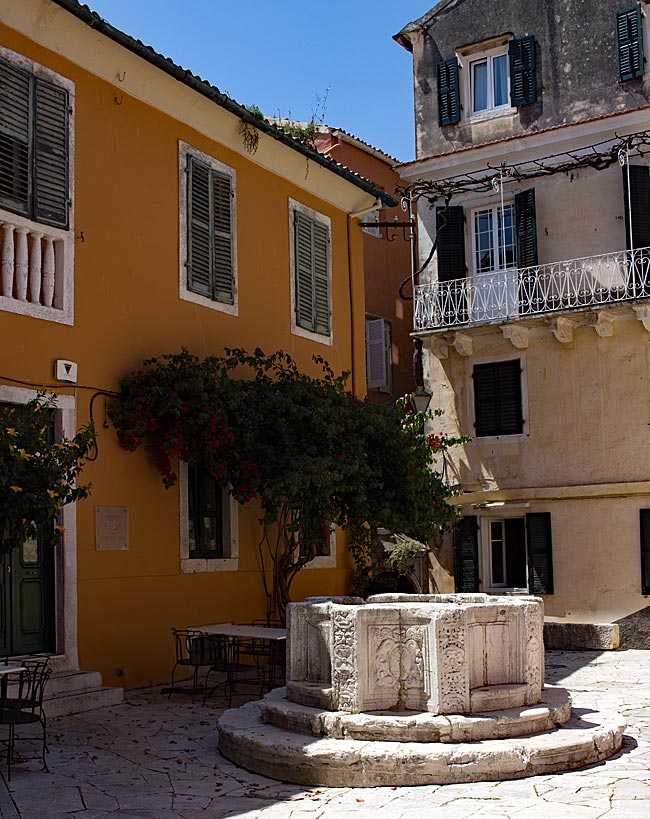
From the sights of the capital, Kerkyra, to the Corfu Trail
The Greeks call not only the city but the island itself Kerkyra. According to legend, it was named after the nymph Gorgyra (also known as Kerkyra), who was brought to the island by the sea god Poseidon. A legend, indeed. In fact, the name appears in a modified form, "Korkyra," on written records as early as 1200 BC. The current name, Corfu, dates back to the Byzantine era. Once an independent island and later the first Roman province of modern Greece, it became part of the Eastern Roman (Byzantine) Empire after the fall of the Western Roman Empire in 395 AD. On a rocky promontory jutting into the sea, the Byzantines built a fortress in the early 6th century and named the city emerging from this core "Koryfo."
read more about Kerkyra ...
Zakynthos
An island defined by the Caretta caretta
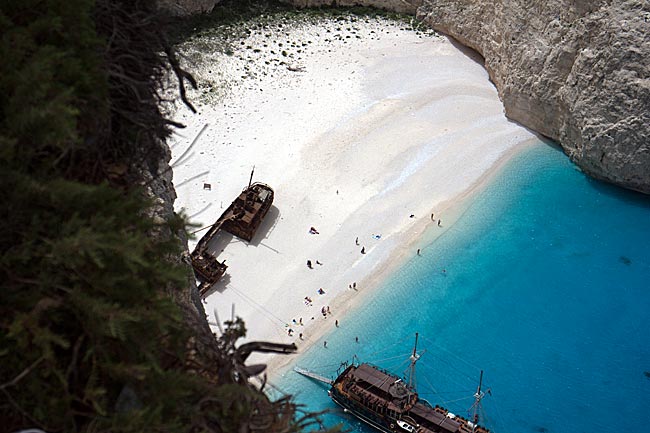
When searching for images of the 406 km² island online, one primarily encounters a very common recurring motif that has been captured from a similar angle by various photographers over the years: Navagio Bay on the northwestern coast. It's all junk, right? Well, that is a matter of perspective, and there are plenty of those during the season, whether they have a camera or not. The fact remains, however, that the rusting wreck of the motor vessel "Panagiotis" has become a landmark for Zakynthos.
read more about Zakynthos ...
More photos