

DISTANT PLACES
Travel tips by Bremen sehenswert far from the Hanseatic City of Bremen
Kos - The Greek Dodecanese Island
A Travel Guide
Kos Town – Neratzia Knights' Fortress
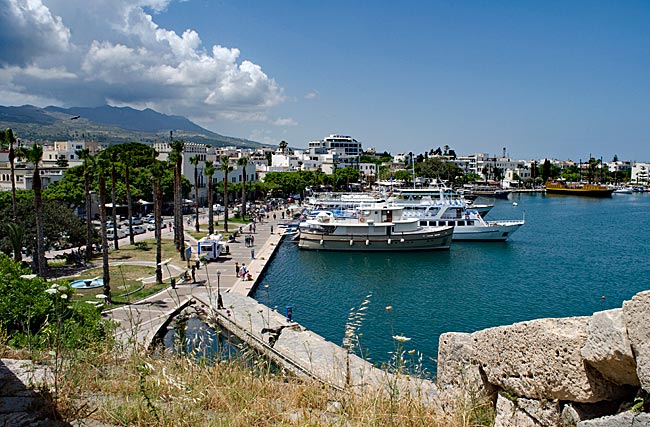
View of Kos Town Harbor
The path to the Neratzia Knights’ Fortress leads out from Platía Platanoú over a small bridge, which likely served as a drawbridge in the past. This bastion - built against Ottomans, pirates, and other enemies of the knights under the banner of the Christian cross - sits on a peninsula that simultaneously forms the eastern boundary of the city harbor.
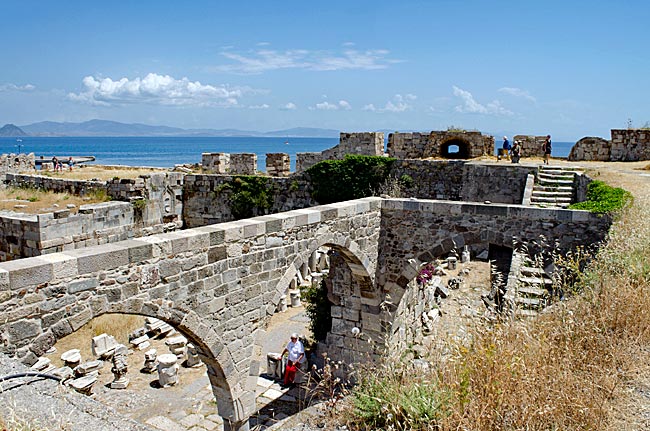
Inside the Neratzia Fortress
Passing by motorboats and sailboats bobbing in the harbor waters, as well as ferries and excursion ships bound for destinations like Bodrum (Turkey), Kalymnos, Pserimos, and Nisyros at the pier in front of the harbor, you can walk around the entire fortress. Even from the outside, one can get a sense of its massive proportions.
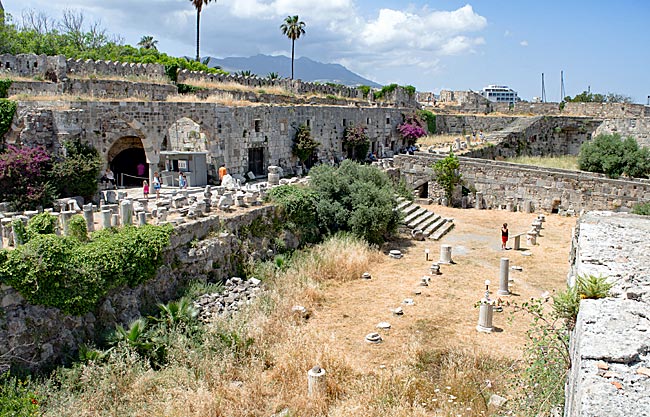
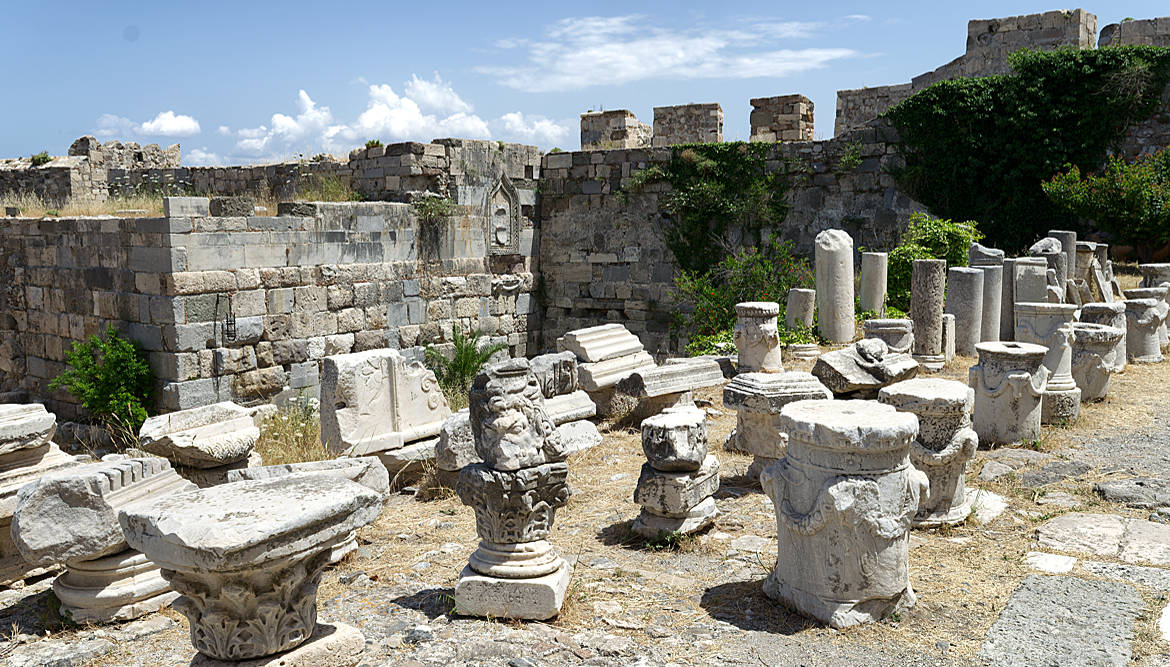
The fortress occupied an excellent strategic position; they built another fortress in Bodrum as well, allowing them to control shipping traffic effectively. Construction on the Knights' fortress began around 1377 under the 32nd Grand Master of the Order, Juan Fernández de Heredia. At that time, the fortress in Antimachia was already in use. The original structure was planned and built much smaller, and therefore covered a smaller portion of the peninsula. Following the destruction caused by the earthquake of 554, there was pre-processed building material available in the then-abandoned Asclepieion and its surroundings; the knights utilized this material, essentially weaving a piece of antiquity into the Middle Ages.
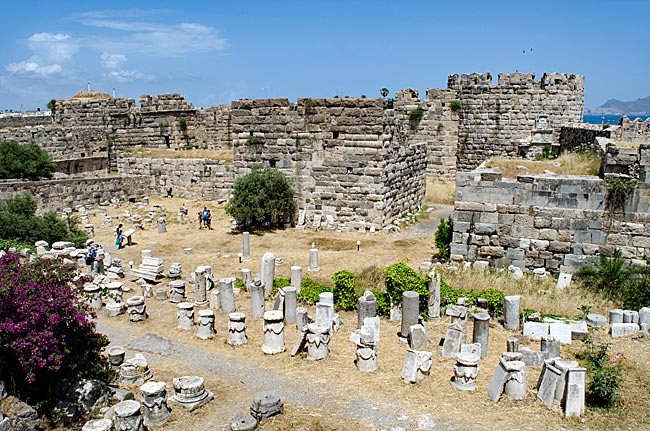
Due to increasing conflicts with the Mamluks from distant Egypt in the second half of the 15th century, the fortress was modified and reinforced once more. However, when the Ottomans appeared off the coast in 1457 with 156 ships and 16,000 soldiers swarming the island, they found the Knights’ castle deserted. The knights, as well as the entire population of 12,000 people who were outnumbered by the invaders, had fled to the much more inaccessible fortresses in Palio Pyli, Kefalos, and Antimachia.
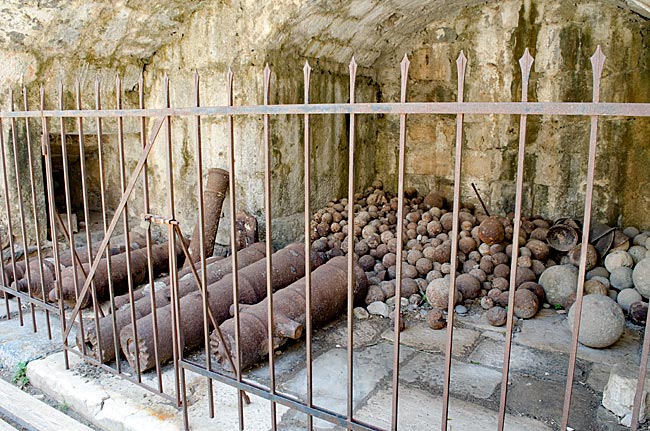
Following the withdrawal of the Islamic invaders, further threats to the Order on Rhodes, and the earthquake of 1493 - which caused damage both here and in Antimachia - Grand Master Pierre d’Aubusson took action. Unlike in Antimachia, where he only oversaw repairs, the knight began constructing a new fortress around the existing one here. This is clearly visible when exploring the interior of the fortress.
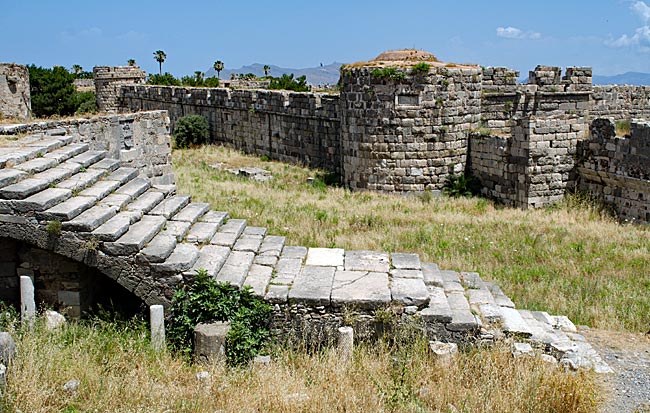
Compared to the other Knights' fortresses on the island (in Antimachia, Kefalos, or Paleo Pyli), a significantly higher number of buildings, stairs between levels, and ramparts are preserved here. From those heights, for example, one has a view not only of the harbor but also of another part of the city with a sandy beach right at your doorstep.
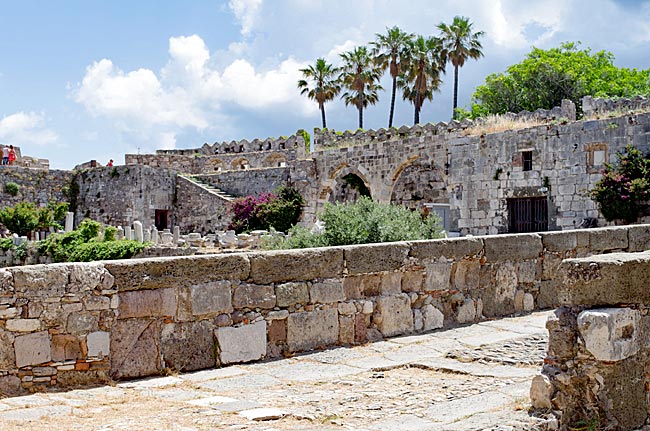
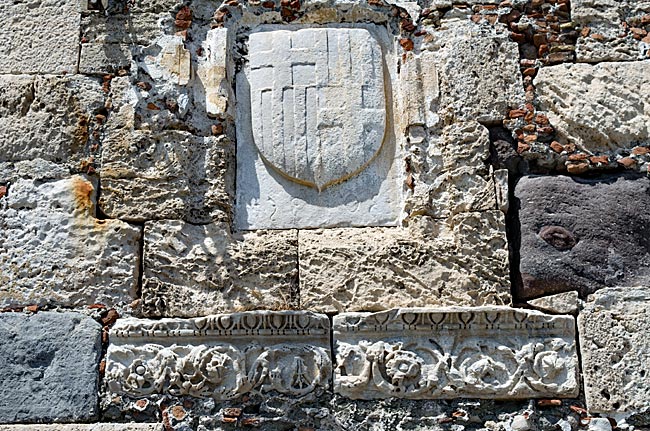
D’Aubusson did not live to see its completion; rather, it took several terms of Grand Masters until Fabrizio del Carretto completed the work in 1514; his inlaid coat of arms still adorns the outer wall today.
It did not serve them for long, however, as only eight years later, the Order surrendered to Ottoman superiority at its headquarters in Rhodes and sailed to Malta after being granted safe passage. This also marked the end of their rule on Kos.
The town of Kos — it's worth seeing
Introduction
Freedom Square with Market Hall, Defterdar Mosque & Archaeological Museum
Agora and Gate of Taxes
Hadji-Hassan Mosque, Plane Tree of Hippocrates & Palace of Justice
Knights of Rhodes Fortress Neratzia
Dionysus Sanctuary, Casa Romana, Odeon
Western Excavation Site
Asclepieion (slightly outside town)
previous page
 next page
Read more about Kos: The table of contents
Map
UNESCO World Heritage Site on Rhodes
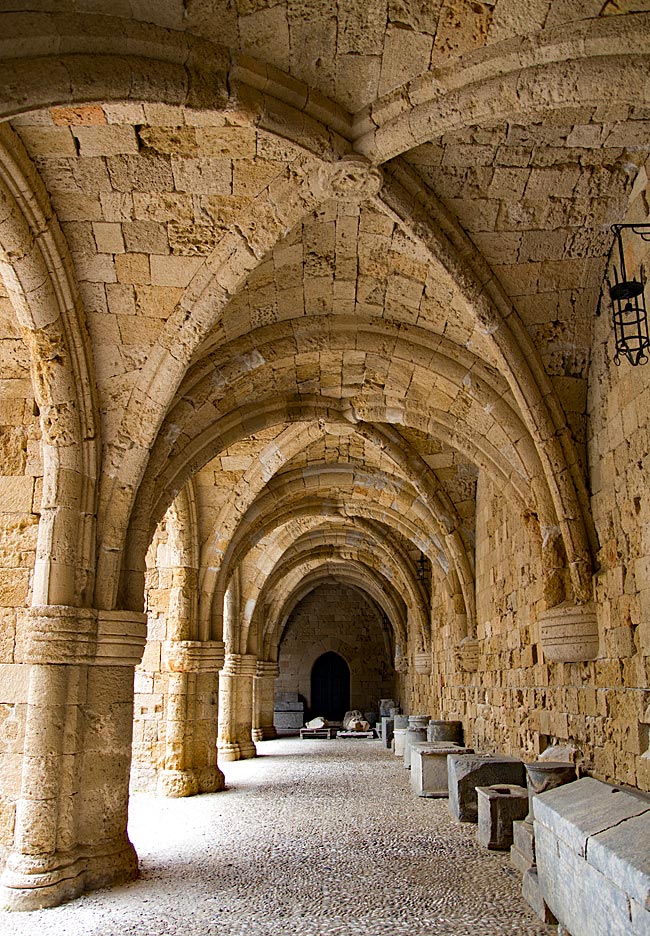
A journey through the historic Old Town of Rhodes
Relics from various eras - ranging from antiquity to the period of Italian occupation - can be found almost everywhere on the island. Many have left their mark; in some places, they must be sought out, while in others, they appear in clustered, fascinating density and variety. Yet, nowhere else on the island are these traces as prominent as they are in the city of Rhodes. It is not for nothing that the historic Old Town was declared a UNESCO World Heritage site in 1988.
read more about Rhodes Old Town ...
Symi
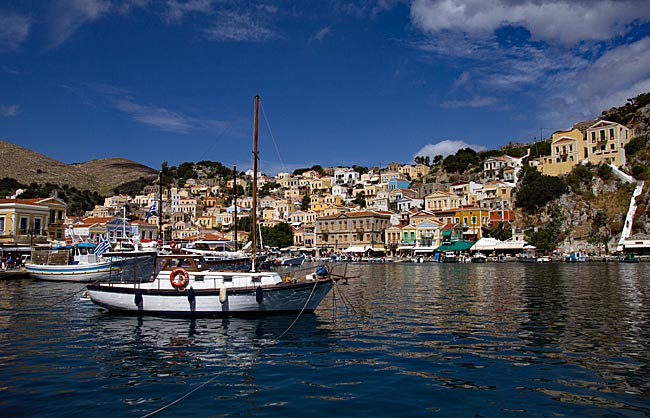
An excursion to the Greek Dodecanese island off the Turkish coast
A visit to this sparsely populated rocky island of about 60 square kilometers, with its namesake picturesque harbor town, is part of the standard tour itinerary offered in many locations on the Greek island of Rhodes. From the main island, it takes ships approximately two hours to reach the port of the small island located 23 kilometers north of Rhodes off the Turkish coast, which has belonged to Greece since 1947. As more of the Greek coast recedes into the distance to the port side, the ship draws closer to the Turkish shore; this part of the southern Aegean essentially connects Europe and Western Asia.
read more about Symi ...
The "Green" Island of Corfu
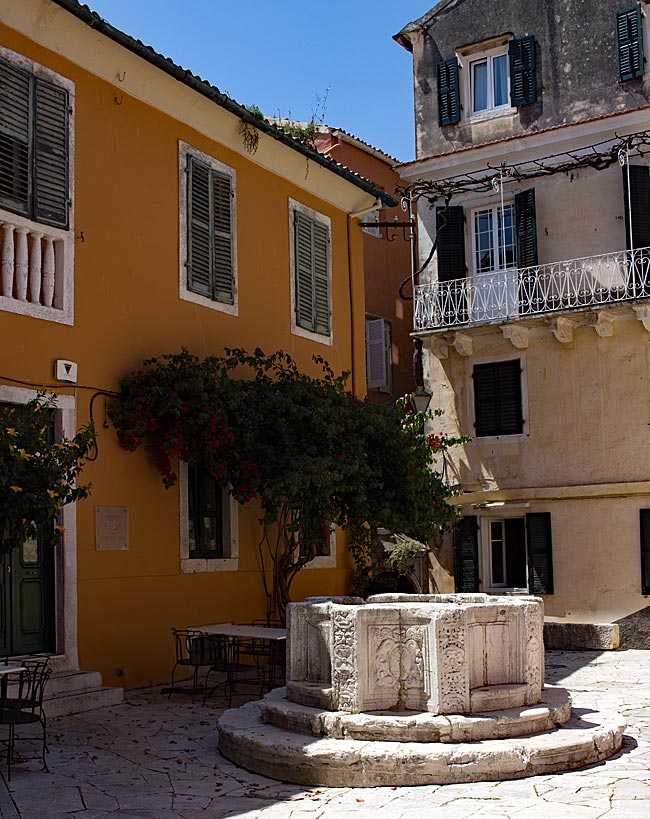
From the sights of the capital, Kerkyra, to the Corfu Trail
The Greeks call not only the city but the island itself Kerkyra. According to legend, it was named after the nymph Gorgyra (also known as Kerkyra), who was brought to the island by the sea god Poseidon. A legend, indeed. In fact, the name appears in a modified form, "Korkyra," on written records as early as 1200 BC. The current name, Corfu, dates back to the Byzantine era. Once an independent island and later the first Roman province of modern Greece, it became part of the Eastern Roman (Byzantine) Empire after the fall of the Western Roman Empire in 395 AD. On a rocky promontory jutting into the sea, the Byzantines built a fortress in the early 6th century and named the city emerging from this core "Koryfo."
read more about Kerkyra ...
Zakynthos
An island defined by the Caretta caretta
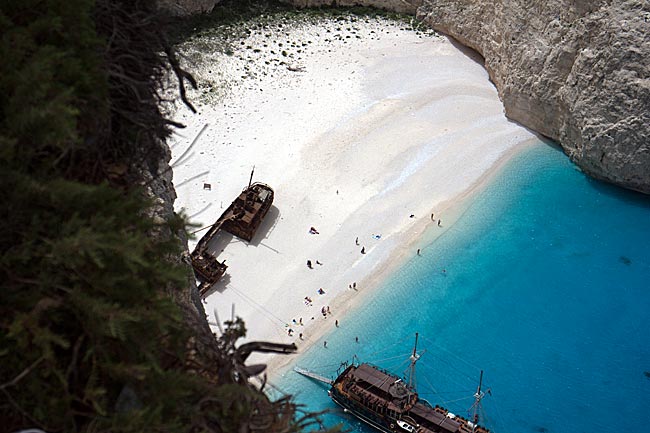
When searching for images of the 406 km² island online, one primarily encounters a very common recurring motif that has been captured from a similar angle by various photographers over the years: Navagio Bay on the northwestern coast. It's all junk, right? Well, that is a matter of perspective, and there are plenty of those during the season, whether they have a camera or not. The fact remains, however, that the rusting wreck of the motor vessel "Panagiotis" has become a landmark for Zakynthos.
read more about Zakynthos ...
More photos