

DISTANT PLACES
Travel tips by Bremen sehenswert far from the Hanseatic City of Bremen
Kos - The Greek Dodecanese Island
A Travel Guide
Kos Town - Liberty Square (Platía Eleftherías)
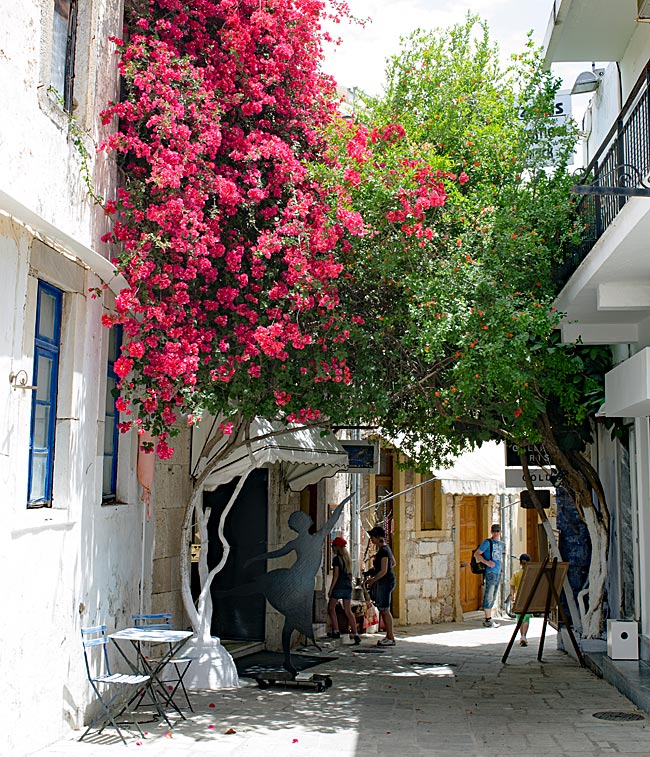
Blooming bougainvillea
The city bustles with activity both around and on the Liberty Square itself, located near the harbor. Countless cafés and restaurants have tables and chairs set out in the open under large sun umbrellas, vying for the patronage of tourists and locals alike. These visitors - perhaps after a stroll or shopping trip through the charming alleys at the edge of, or beyond, the great square - are often grateful for a shady spot where they can take another look at their new purchases.
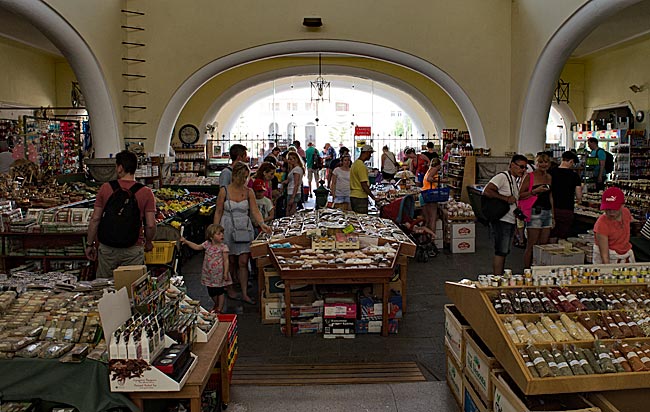
Sales area in the Market Hall
In addition to the mobile stalls filled with goods next to the storefronts in the lanes, bushes and small trees of blooming bougainvillea - sometimes stretching from wall to wall - provide vibrant splashes of color. The selection in the displays and on the shelves leaves little to be desired. These include items typical of Greece, such as leather goods, as well as herbs from the local flora, olives, and the oil pressed from them.
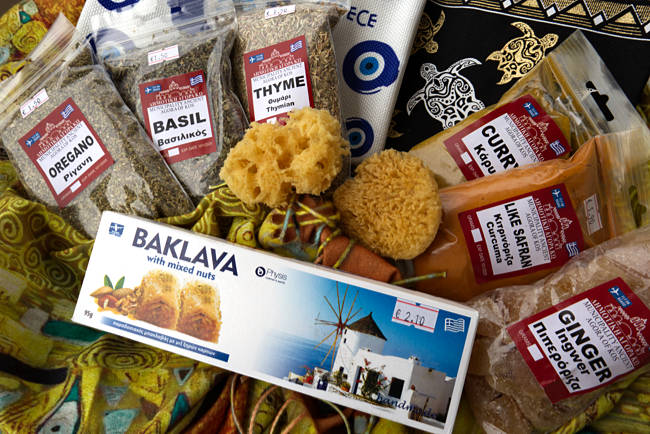
A small selection of products from the Market Hall
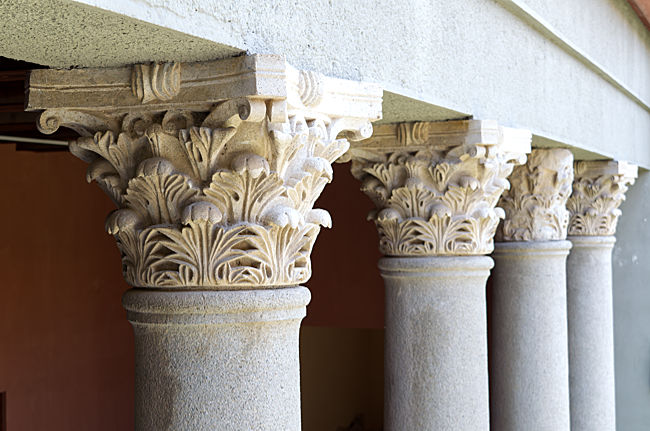
The Market Hall, which borders Liberty Square, also offers an array of herbs, oils, honey, and Greek sweets. However, its selection includes much more for quick snacking or as souvenirs; consequently, there is often a bustle of people in the central sales area. The Italians constructed this single-story square building with a surrounding covered arcade in 1934.
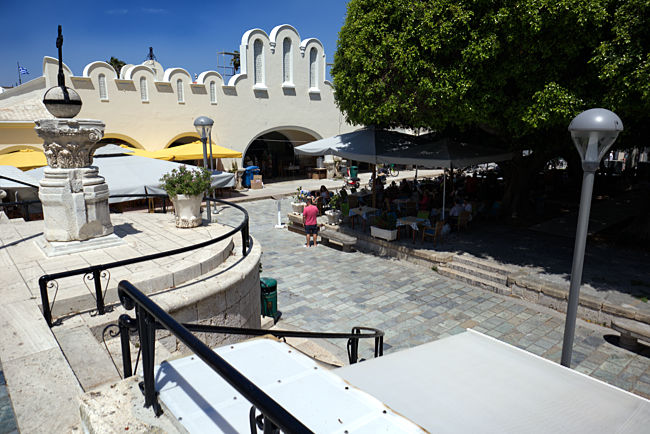
View of the Market Hall with outdoor restaurant tables
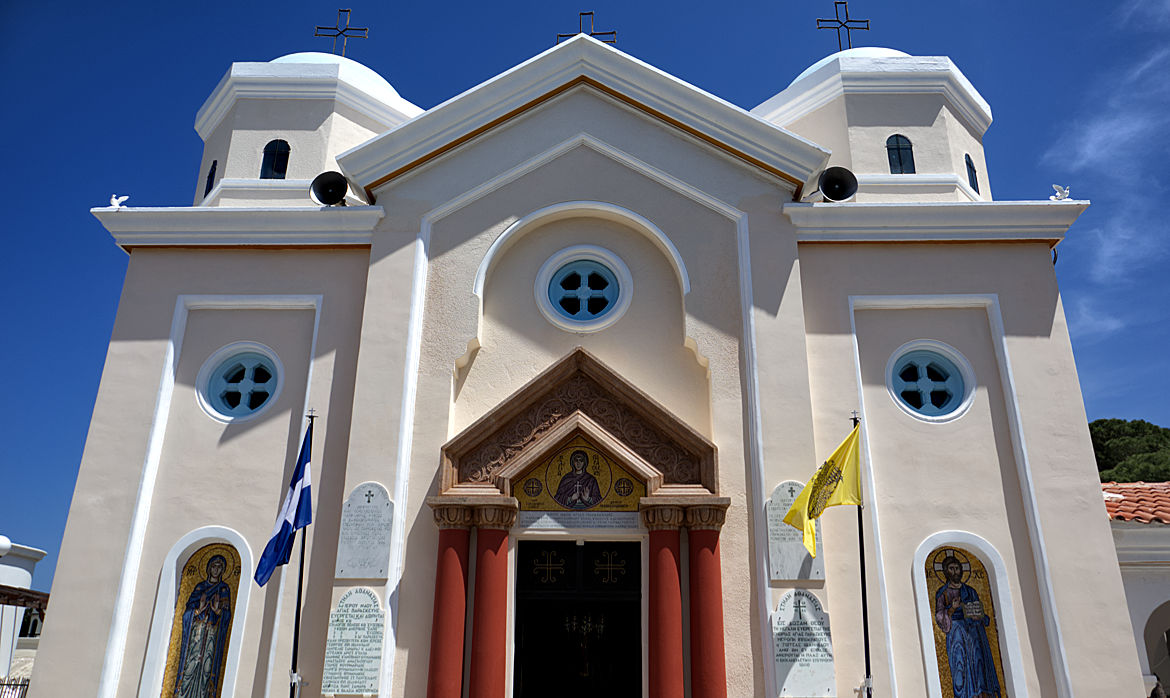
Today, various restaurants are housed within its rooms, including on the side facing the large square, where guests find seating at numerous tables beneath the foliage of massive trees. This all sits at the foot of the Basilica of Agía Paraskeví, which is accessible via stairs; it was built shortly before the Market Hall in 1932/33 and features interior walls decorated with traditional Byzantine-style paintings.
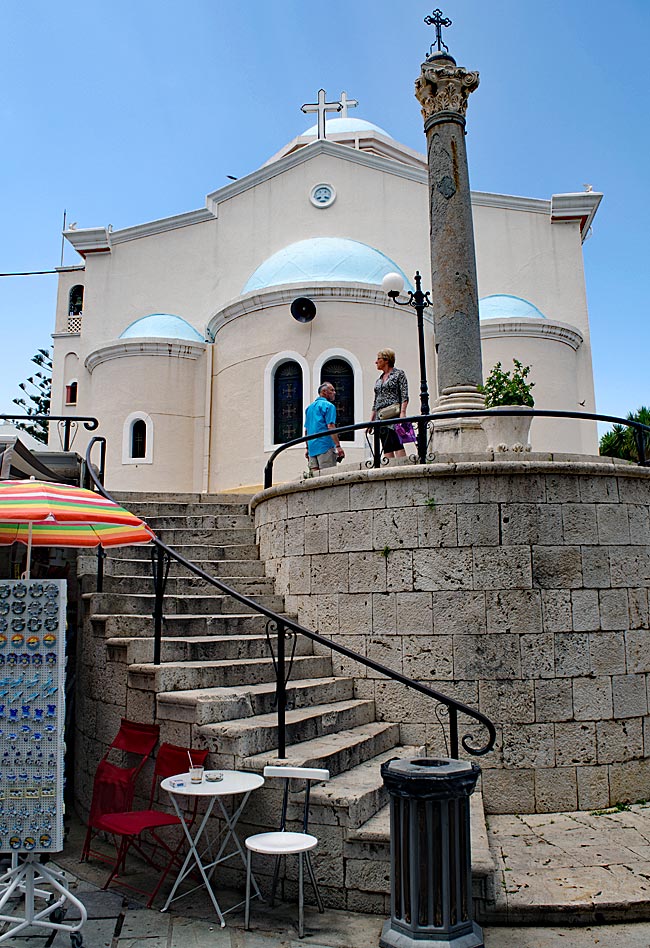
Basilica of Agía Paraskeví
The most striking structure on Liberty Square is the Defterdar Mosque, whose minaret rises high into the sky, visible from afar. However, the muezzin has fallen silent. The mosque, built in 1725 under Ottoman rule, no longer functions as one today; this is evidenced primarily by the tables and chairs of Café Aenáos located next to the Islamic ablution fountain, which occupies the space along with several small shops.
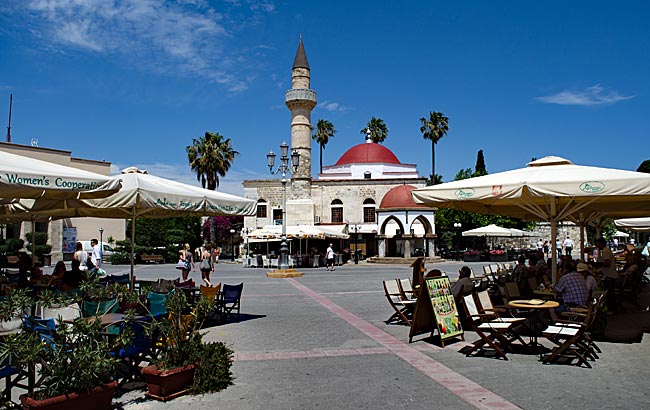
View of the Defterdar Mosque on Platía Eleftherías
Diagonally across from the mosque and opposite the Market Hall is another example of Italian construction on the island between the second half of the 1920s and the outbreak of the war. Built in 1936, this two-story building houses the Archaeological Museum; while it appears somewhat uninviting from the outside, its interior layout is modeled after a Roman villa. This includes an atrium and an inner courtyard that showcases the highlight of the exhibition: a floor mosaic. Discovered by Italian archaeologists in 1935, this work depicts the arrival of Asclepius, the god of healing arts, on Kos, where he meets the island’s famous physician and son, Hippocrates.
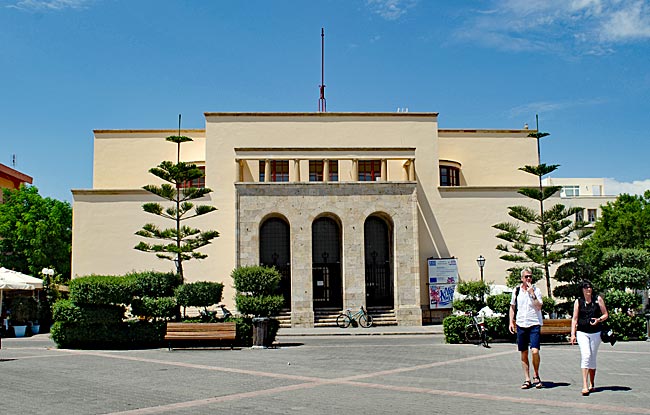
Archaeological Museum
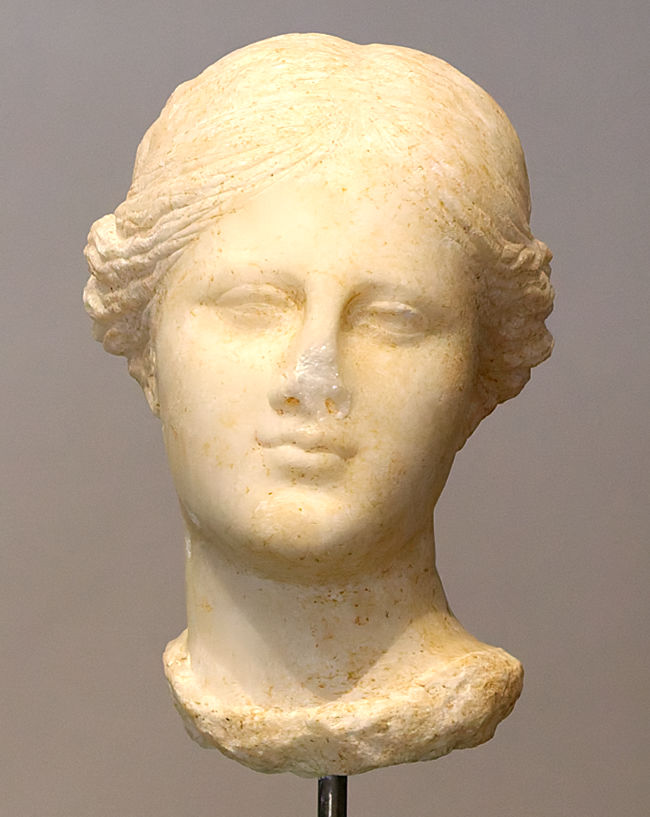
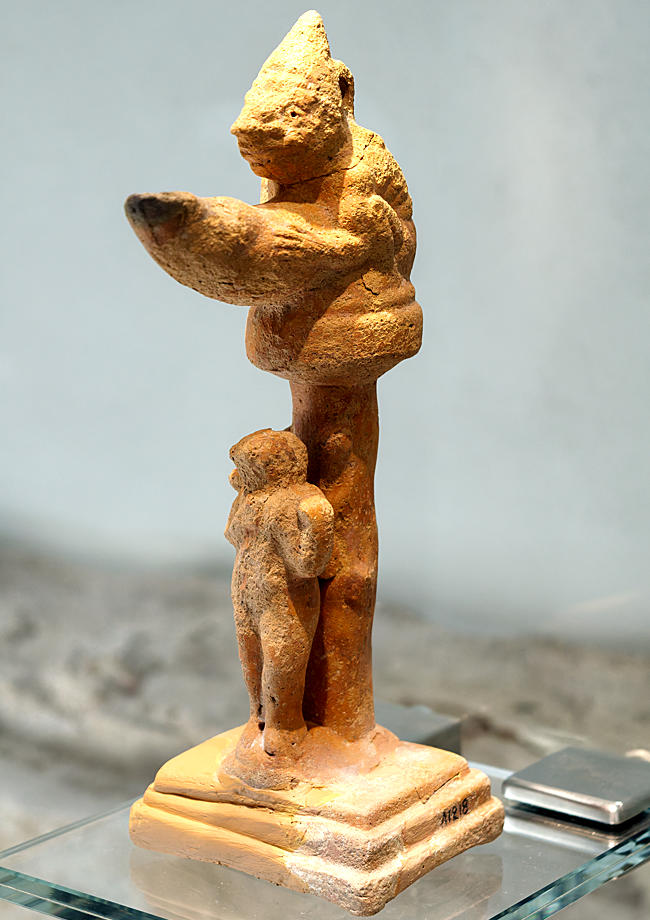
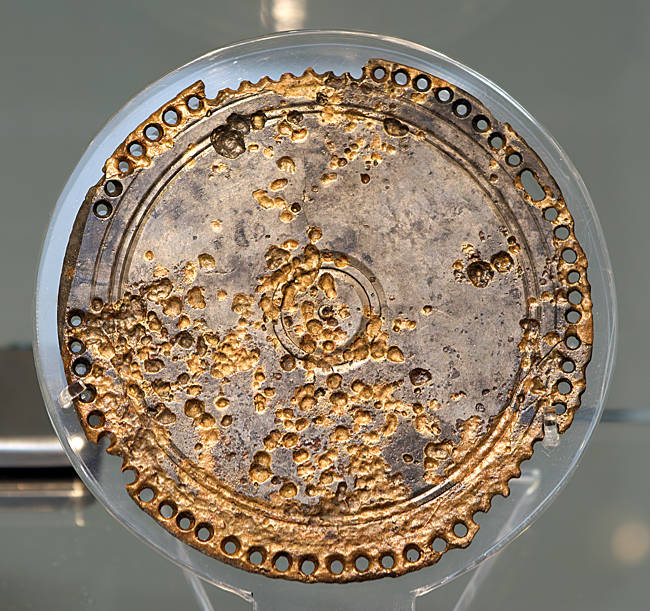
The depiction from the 3rd century AD is a find from the excavation sites on Kos, much like the objects primarily dating from the Hellenistic-Roman period found in the three exhibition halls. These are mostly fragments of sculptures and statues that were excavated and recovered by the Italians from sites such as the Casa Romana or the Agora. One of the oldest pieces in the collection is a statue from the 4th century BC depicting Hippocrates.
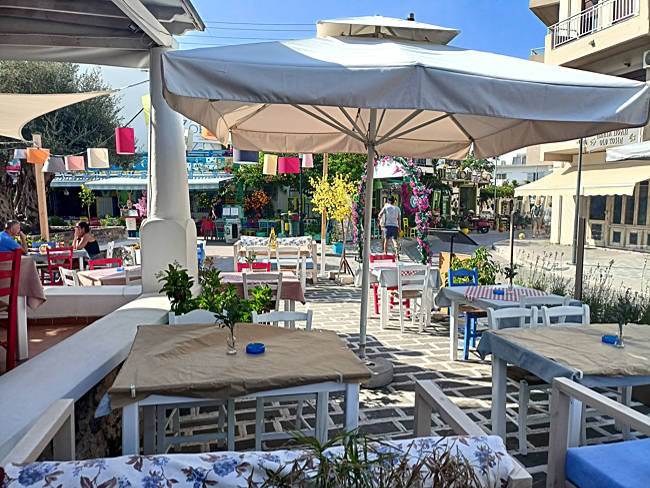
After a stroll through the lanes of the old town ...
The town of Kos — it's worth seeing
Introduction
Freedom Square with Market Hall, Defterdar Mosque & Archaeological Museum
Agora and Gate of Taxes
Hadji-Hassan Mosque, Plane Tree of Hippocrates & Palace of Justice
Knights of Rhodes Fortress Neratzia
Dionysus Sanctuary, Casa Romana, Odeon
Western Excavation Site
Asclepieion (slightly outside town)
previous page
 next page
Read more about Kos: The table of contents
Map
UNESCO World Heritage Site on Rhodes
A journey through the historic Old Town of Rhodes
Relics from various eras - ranging from antiquity to the period of Italian occupation - can be found almost everywhere on the island. Many have left their mark; in some places, they must be sought out, while in others, they appear in clustered, fascinating density and variety. Yet, nowhere else on the island are these traces as prominent as they are in the city of Rhodes. It is not for nothing that the historic Old Town was declared a UNESCO World Heritage site in 1988.
read more about Rhodes Old Town ...
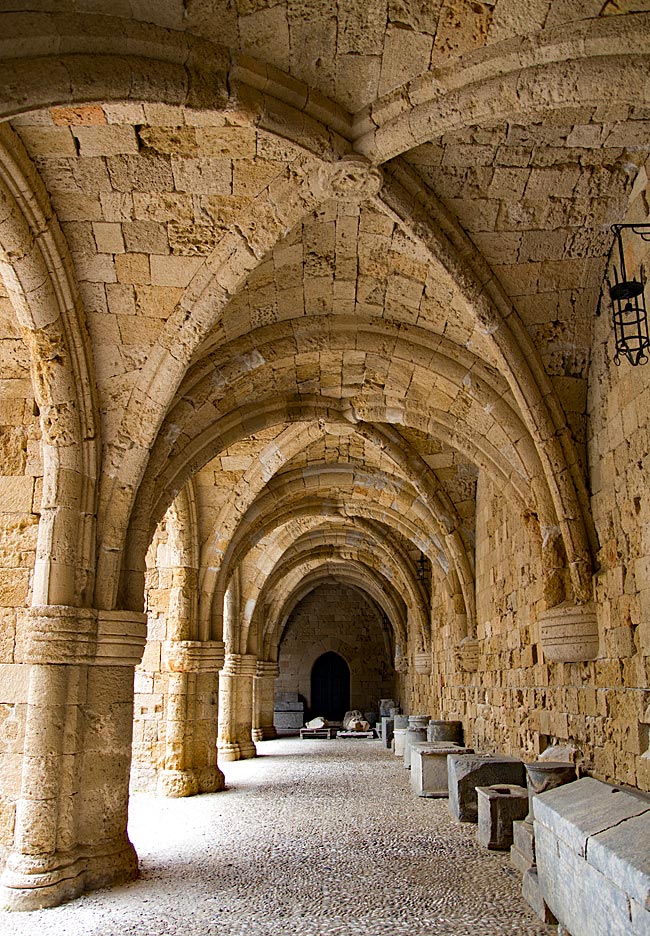
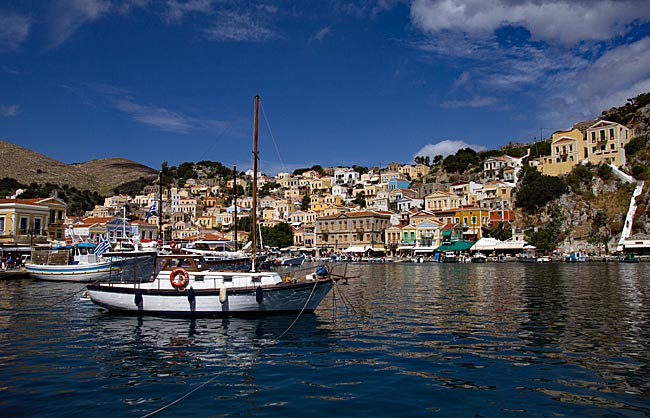
Symi
An excursion to the Greek Dodecanese island off the Turkish coast
A visit to this sparsely populated rocky island of about 60 square kilometers, with its namesake picturesque harbor town, is part of the standard tour itinerary offered in many locations on the Greek island of Rhodes. From the main island, it takes ships approximately two hours to reach the port of the small island located 23 kilometers north of Rhodes off the Turkish coast, which has belonged to Greece since 1947. As more of the Greek coast recedes into the distance to the port side, the ship draws closer to the Turkish shore; this part of the southern Aegean essentially connects Europe and Western Asia.
read more about Symi ...
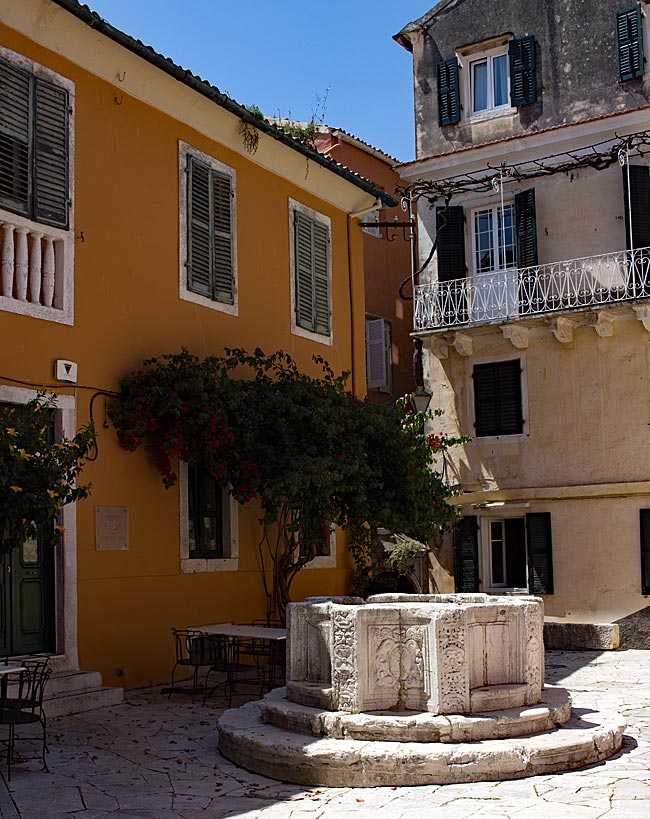
The "Green" Island of Corfu
From the sights of the capital, Kerkyra, to the Corfu Trail
The Greeks call not only the city but the island itself Kerkyra. According to legend, it was named after the nymph Gorgyra (also known as Kerkyra), who was brought to the island by the sea god Poseidon. A legend, indeed. In fact, the name appears in a modified form, "Korkyra," on written records as early as 1200 BC. The current name, Corfu, dates back to the Byzantine era. Once an independent island and later the first Roman province of modern Greece, it became part of the Eastern Roman (Byzantine) Empire after the fall of the Western Roman Empire in 395 AD. On a rocky promontory jutting into the sea, the Byzantines built a fortress in the early 6th century and named the city emerging from this core "Koryfo."
read more about Kerkyra ...
Zakynthos
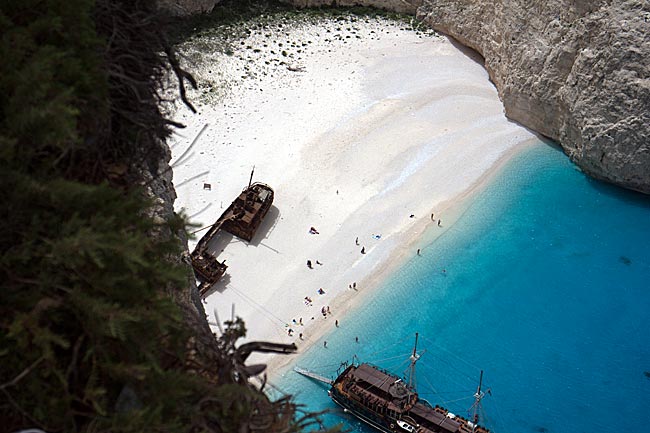
An island defined by the Caretta caretta
When searching for images of the 406 km² island online, one primarily encounters a very common recurring motif that has been captured from a similar angle by various photographers over the years: Navagio Bay on the northwestern coast. It's all junk, right? Well, that is a matter of perspective, and there are plenty of those during the season, whether they have a camera or not. The fact remains, however, that the rusting wreck of the motor vessel "Panagiotis" has become a landmark for Zakynthos.
read more about Zakynthos ...
More photos